
To put it simply, July is Alaska at its absolute peak. This is the month where the state’s wild, untamed beauty is on full display, with near-endless daylight fueling an explosion of life. If you want to see Alaska when it feels most alive, this is your moment.
The entire state is running on a different clock in July—the clock of the Midnight Sun. Anchorage gets up to 19 hours of daylight, and the further north you go, the longer the sun stays up. This isn't just a novelty; it completely changes the rhythm of your trip. You have more time for everything, and this constant light fills the air with a unique, buzzing energy you can feel from downtown markets to the most remote hiking trails.
July is also the sweet spot for weather. Temperatures in Southcentral Alaska usually hover around a comfortable 60-70°F (15-21°C), making it perfect for getting outside. Wildflowers are carpeting the alpine meadows, and the forests are a shade of green so vibrant it almost doesn't look real. It’s a sensory overload in the best possible way.
Before we dive in, here’s a quick snapshot of what to expect.
Alaska in July at a Glance
This table gives you a quick summary of the key conditions and highlights for a trip during Alaska's peak summer month.
| Aspect | What to Expect in July |
|---|---|
| Daylight | Peak Midnight Sun; 18-22 hours of daylight depending on location. |
| Weather | Warmest month. Southcentral: 60-70°F (15-21°C). Interior: Can reach 80°F (27°C). |
| Wildlife | Excellent viewing. Bears are active, salmon are running, and whales are feeding. |
| Crowds | Highest of the year. Book everything well in advance. |
| Costs | Peak season pricing for flights, lodging, and tours. |
| Activities | Ideal for hiking, fishing, kayaking, glacier tours, and wildlife viewing. |
| Mosquitoes | They're out in full force. Bring strong repellent. |
As you can see, July offers the best of everything, but it comes with peak-season crowds and prices. Planning ahead is absolutely key.
Beyond the Postcard Views
Look, the iconic sights are incredible, and you should definitely see them. But the real magic of an Alaskan July happens when you step just a little bit off the main tourist path. It's the difference between seeing a glacier from a massive cruise ship and hearing the thunderous crack of ice calving into the sea from a small boat tour. It’s not just about spotting a bear; it’s about learning its habits from a local guide who knows the land like the back of their hand.
The goal is to get beyond just looking at the scenery and actually engage with it. July is the month for making a real connection, whether that’s chatting with a fisherman in a tiny coastal town or stumbling upon a local festival that most visitors completely miss.
This guide is built to help you find that deeper, more authentic experience. We’re going to focus on:
- Local Culture: Tapping into the real Alaska through community events, from farmers' markets to quirky local fairs.
- Immersive Wilderness: Finding ways to actively experience nature, not just watch it from a distance.
- Offbeat Paths: Exploring the routes and towns that give you a quieter, more genuine feel for how Alaskans really live.
How to Navigate Peak Season Crowds and Costs
Let's be real: visiting Alaska in July means you won't have the place to yourself. The secret isn't trying to find total solitude—it's learning how to sidestep the biggest crowds and keep your budget from exploding. With a bit of smart planning, you can carve out your own quiet moments and enjoy a stress-free adventure in the Last Frontier.
The popularity of a July trip is no fluke. Alaska’s summer tourism has boomed, with summer 2023 seeing a staggering 2.65 million visitors—that's a 20% jump from pre-COVID levels. Cruise ships are a huge part of this, dropping off about 65% of all arrivals.
This handy infographic lays out why July is the month everyone wants to be here.
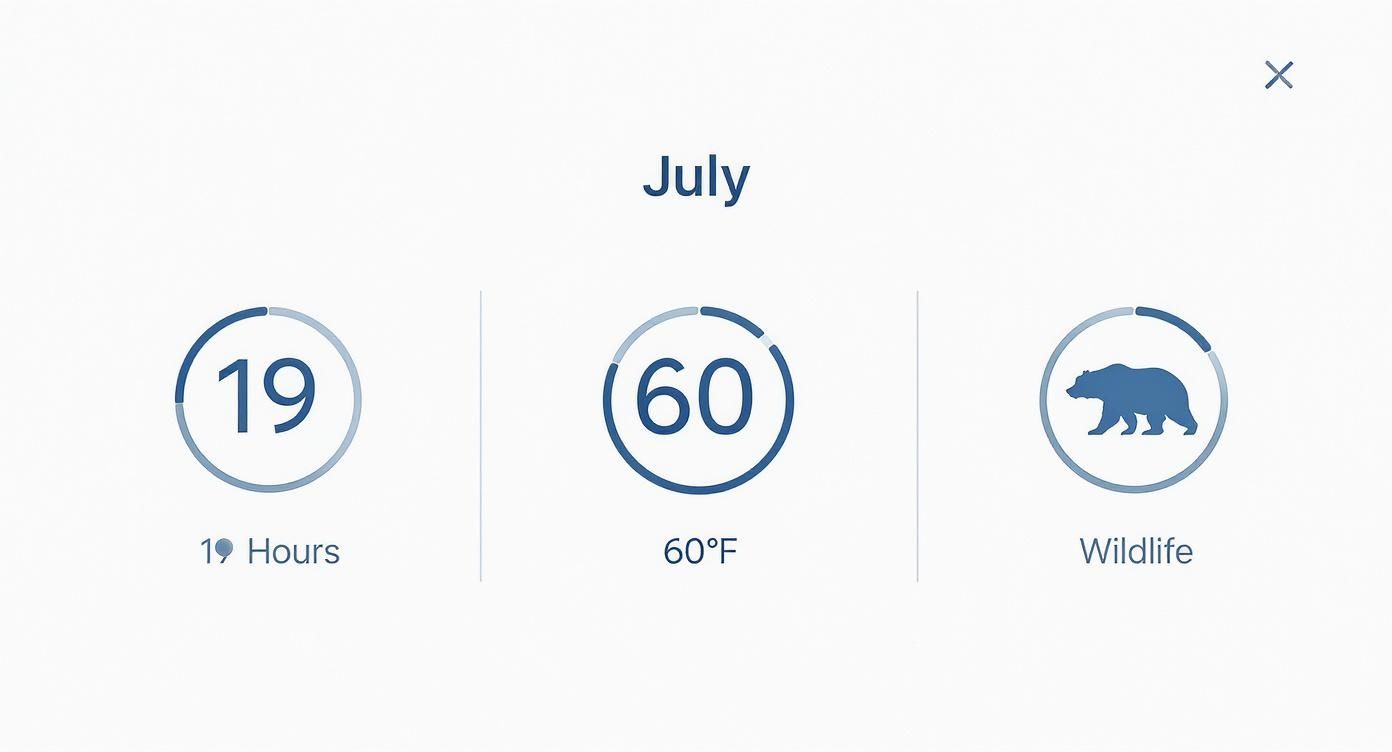
It’s the perfect storm of endless daylight, comfortable weather, and wildlife activity hitting its absolute peak. Of course, that also creates the perfect storm for peak season demand.
Proactive Planning for a Better Experience
Booking everything way, way in advance is the single best thing you can do to manage both crowds and costs. Think of it like trying to get a reservation at that one restaurant everyone's talking about—the best spots go to those who plan ahead. This goes for flights, rental cars, hotels, and especially the popular tours.
You'll want to have your main itinerary locked down six to nine months before you go. This isn't just about making sure you get a spot; it's about snagging better prices before demand sends them through the roof.
Smart Strategies for Escaping the Crowds
Even in the busiest month, you can find your own little pocket of wilderness. You just have to think a little differently about when and where you go.
- Become a Morning Person: Most big tour buses and cruise excursions run on a predictable mid-morning to late-afternoon schedule. If you get out the door at dawn, you can often have ridiculously popular trails or viewpoints all to yourself.
- Go Beyond the Hubs: Instead of staying right in the main tourist centers, look at the smaller towns nearby. Talkeetna, for instance, has a funky, authentic vibe and is a great alternative to the more developed spots near Denali. Hope is another gem—a quiet, historic base on the Kenai Peninsula.
- Travel Mid-Week: Weekends are always nuts. If you have any flexibility, schedule your visits to the big-ticket places like Denali National Park or Kenai Fjords for a Tuesday or Wednesday. The difference in crowd levels is noticeable.
You can find more helpful strategies for avoiding crowds in popular national parks that apply just as well to Alaska.
Budgeting for Peak Season Prices
There's no sugarcoating it: Alaska in July will hit your wallet hard. But a little savvy planning can make a real difference. Funnily enough, prices for tours and lodging can sometimes be a bit lower during the first week of July compared to the last two weeks, which tend to line up with summer vacation schedules across the country.
A classic mistake is getting so focused on the big expenses that you forget about the little things. Daily costs for food, gas, and coffee can add up faster than you'd think. Packing your own snacks, carrying a refillable water bottle, and booking places with a kitchenette can really help keep that daily spending in check.
A trip of this scale absolutely requires a detailed budget. To really get into the weeds of financial planning, check out our guide on https://coratravels.com/blog/how-to-budget-for-international-travel/. Getting a handle on these costs beforehand means you can actually relax and soak it all in once you’re here.
Ditch the Cruise Ship: Experience the Real Southeast Alaska
 For a lot of folks, Southeast Alaska is a string of picture-perfect views from the deck of a giant cruise ship. And while it’s absolutely stunning, that perspective misses the true pulse of the Inside Passage—the part that lives and breathes on its shores, in its quirky towns, and deep within its rainforests.
To really get the feel for this place in July, you’ve got to get off the boat and travel like an Alaskan.
That means swapping the rigid schedule of a port call for a more free-flowing, authentic adventure. The secret to unlocking this deeper experience is the Alaska Marine Highway System, our state-run ferry that’s the lifeblood for all the coastal communities. Think of it less like a tourist boat and more like a floating highway, connecting you to places like Juneau, Ketchikan, Sitka, and Skagway on your own time.
Traveling by ferry means you set the pace. You can linger in a town that just clicks with you and actually meet the people who call this wild, wonderful place home. It’s the difference between being a spectator and becoming part of the rhythm of Southeast Alaskan life.
Finding the Real Inside Passage
Once you’re on land, the real fun begins. The sheer scale of tourism here can be overwhelming. Take Ketchikan: with a local population of about 8,000, it once saw nearly 700,000 cruise passengers in one summer. When tourism ramped back up in 2022, the region saw 1.16 million more visitors than the year before, and towns like Skagway saw job growth jump by 41%.
To find the soul of these towns, all you have to do is walk a few blocks away from the main cruise docks. That’s where you’ll find the hidden spots most visitors never see.
- Hit the Local Trails: Every town is a doorway to the Tongass National Forest. Just pop into a coffee shop, ask a local for their favorite hike, and you’ll likely end up on a trail with incredible views and way fewer people.
- Check Out Community Museums: Skip the big tours and look for the smaller historical societies and cultural centers. These are the places that tell the real, unfiltered stories of the region’s Tlingit, Haida, and Tsimshian peoples and its rugged pioneer past.
- Discover Local Art: Seek out the small, independent galleries that feature local artists. This is where you'll find authentic carvings, paintings, and jewelry inspired by the landscape and Indigenous traditions—a world away from mass-produced souvenirs.
Connecting with Culture and Nature
A self-guided journey through Southeast is your chance to make a genuine cultural connection. The vibrant heritage of the Tlingit, Haida, and Tsimshian peoples is woven into the fabric of every single community. Visiting places like the Sitka National Historical Park, with its forest of towering totem poles, is a powerful way to connect with this living history.
This approach also lets you find true solitude. The Tongass National Forest is the largest in the nation, a sprawling temperate rainforest of ancient trees and misty fjords. By staying longer in one spot, you can book a guided kayak trip into a quiet cove or a fishing charter that takes you to secluded spots only the locals know about. If you're hoping to mix in some world-class angling, it's worth checking out where to discover some of the nation's premier angling destinations.
Choosing independent travel in Southeast Alaska is about embracing spontaneity. It’s deciding to stay an extra day because you heard about a local salmon bake, or taking a detour to a tiny fishing village that isn't on any cruise itinerary.
This way of traveling is more than just a different mode of transport; it’s a whole different mindset. Our guide to off-the-beaten-path travel has even more ideas for building a trip that’s truly your own. By slowing down and engaging with the communities of the Inside Passage, you'll discover a side of Alaska that most people never get to see.
Finding Solitude in Denali and Kenai Fjords
Let’s be honest: Denali and Kenai Fjords National Parks are the undisputed titans of any Alaska trip. The sheer scale is hard to wrap your head around, and their beauty is raw and staggering. But showing up in July can sometimes feel less like a wilderness escape and more like joining a very, very long line.
The good news is that both parks are vast enough to swallow those crowds whole, you just have to know where to look. Finding that quiet, personal connection with these landscapes means ditching the main tourist circuit and tapping into a more adventurous spirit. It’s about swapping the standard bus tour for a backcountry permit or the big tour vessel for a nimble kayak.
Here’s how you can experience the wild heart of Denali and Kenai Fjords, far from the selfie sticks and tour bus windows.
Beyond the Bus in Denali National Park
The Denali Park Road is the main artery for nearly everyone who visits, with park buses shuttling thousands of people back and forth every day. It's a fantastic introduction, for sure, but it’s only one way to experience the park’s mind-boggling six million acres. To truly feel its size, you have to get out of the vehicle.
A flightseeing tour is an incredible way to grasp the epic proportions of the Alaska Range. Many operators even offer glacier landings, setting you down on a silent, frozen river of ice where the only sounds are the wind and your own footsteps. It’s a perspective that completely reframes your understanding of this place.
For those who prefer to stay on the ground, venturing into the backcountry is the ultimate ticket to solitude.
- Go for a Backcountry Permit: This is your key to true immersion. The park is divided into units with limited permits to ensure you have a genuinely wild experience. You'll need to be self-sufficient and comfortable navigating off-trail, but your reward is having a massive piece of Denali all to yourself.
- Explore the Eastern Edge: The area near the park entrance gets busy, but it has several tough day hikes like the Mount Healy Overlook Trail. An early start gets you above the crowds for killer views down the Nenana River Valley before most people have even had their coffee.
- Try E-Biking: A newer option lets you cycle the first 15 miles of the park road at your own pace. This gives you the freedom to stop whenever and wherever a moose or caribou appears, without being stuck on a bus schedule.
Escaping the Crowds in Kenai Fjords
Kenai Fjords is famous for its massive tidewater glaciers and incredible marine wildlife, which draws huge crowds onto large tour boats cruising out of Seward. These tours are great, but for a more intimate encounter with the fjords, you need to get closer to the water.
Guided sea kayaking is probably the best way to do this. Paddling through quiet coves in Aialik Bay or Northwestern Fjord, you can hear the puffins chattering on the cliffs and feel the cold spray from a calving glacier. Kayaking puts you right at eye level with the environment, turning you from a passenger into an active participant.
Insider Tip: An often-overlooked secret is that smaller, chartered boats offer a far more personal and flexible day than the big tour vessels. A six-passenger charter can linger with a pod of orcas or poke into a hidden cove that the larger boats simply can’t access.
If you’d rather explore by land, there’s one hike that stands above all the rest.
- Conquer the Harding Icefield Trail: This is a seriously strenuous 8.2-mile roundtrip hike, but it is one of the most rewarding trails in all of Alaska. It climbs steeply from the valley floor through forests and alpine meadows, ending at a jaw-dropping overlook of the Harding Icefield—a seemingly endless sea of ice stretching to the horizon. It’s a powerful, humbling sight most visitors never see.
- Visit Exit Glacier Early or Late: The area around Exit Glacier is the most accessible part of the park, so it gets slammed. Get there before 9 a.m. or after 5 p.m. to experience the glacier’s powerful presence with just a fraction of the midday crowds.
By choosing these less-traveled paths, you can find a deep sense of solitude and forge a real connection with two of North America’s most magnificent wild places.
A Local's Guide to Alaskan Culture and Summer Festivals
To really get Alaska in July, you have to look past the jaw-dropping scenery and tap into its fiercely independent culture. That nonstop daylight doesn’t just make the flowers grow; it fuels a statewide season of community potlucks, quirky festivals, and an energy you won't find anywhere else. This is your chance to step away from the tour bus crowds and see what Alaska is really about.
Getting in on this side of things means looking for the small, real moments. It’s tasting fireweed honey at a tiny farmers' market, talking to an artist at a craft fair, or just grabbing a local beer next to residents soaking up every last minute of the Midnight Sun. These are the moments that give you a true feel for the Alaskan way of life.
Beyond the Mainstream July Events
While Anchorage and Fairbanks have their big events, the real heart of an Alaskan summer beats in the smaller towns. These are the gatherings driven by the community, for the community, and they feel a world away from slick, commercialized festivals. Forget massive crowds; these are the places you can actually strike up a conversation.
A perfect example is the Girdwood Forest Fair, usually held in early July. It’s not some polished corporate event; it's a wonderfully weird celebration of Alaskan creativity. You'll find local musicians, artists selling their wares, and food vendors all tucked into a temperate rainforest. It’s free-spirited, family-friendly, and a perfect window into the state’s artistic soul.
Likewise, celebrating the Fourth of July in a town like Seward is a totally different universe than a big city fireworks display. Think town-wide potlucks, a homespun parade, and the legendary Mount Marathon Race—a gut-busting local tradition that the whole town comes out for.
The trick is to find the events that are made by locals, for locals. That's where you'll find the authentic pulse of a community, far from the polished experiences designed just for tourists. It’s about being a participant, not just a spectator.
For more ideas on how to make your travels more meaningful, check out our guide on creating immersive travel experiences. It's packed with tips for connecting with a place on a much deeper level.
A Taste of Local Alaskan Life
Often, the easiest way to connect with the local culture is through your stomach. Alaska has a booming scene of small-scale producers who are passionate about what they do, from craft breweries to roadside food stands.
- Farmers' Markets: Just about every town has one. Anchorage's South Anchorage Farmers Market is a local institution, but the smaller ones in places like Homer or Palmer give you a fantastic taste of regional produce and handmade crafts.
- Craft Breweries: Alaskans take their beer seriously. Spots like Kenai River Brewing Company or Denali Brewing Company aren't just places to get a drink; they're community hubs where you can unwind and chat with the folks who live there year-round.
- Roadside Food Stands: Keep your eyes peeled for unassuming little stands selling everything from fresh-caught salmon to birch syrup. These are almost always family-run and offer some of the best, most authentic flavors you'll find anywhere.
To help you find an experience that's a bit more off-the-beaten-path, we put together a list of some smaller festivals that offer a true taste of local Alaskan life. These are the kinds of places where memories are made.
Unique July Festivals in Alaska
| Festival Name | Location | Primary Focus |
|---|---|---|
| Girdwood Forest Fair | Girdwood | Local art, music, and crafts in a forest setting. |
| Seward's Mount Marathon Race | Seward | A grueling mountain race and town-wide celebration. |
| Moose Pass Summer Festival | Moose Pass | A classic small-town fair with games, food, and music. |
| Bear Paw Festival | Eagle River | A community festival with a parade and local vendors. |
By seeking out these smaller, community-focused events, you're not just having a better time; you're also supporting local businesses and gaining a richer, more respectful understanding of what it really means to live in the Last Frontier.
Your Perfect Week-Long Alaskan Road Trip Itinerary
Ready to grab the keys and see Alaska on your own terms? A road trip is the absolute best way to feel the state's true scale and freedom, especially with July's endless daylight. This seven-day plan is a flexible guide for anyone with a rental car, hitting the highlights of the road system connecting Anchorage, the Kenai Peninsula, and the quirky mountain towns up north.
Don't treat this like a strict schedule. Think of it more as a framework you can build your own adventure on. I've mixed in the must-see sights with some off-the-beaten-path spots to give you a solid taste of both epic nature and real local life.
Days 1-2: Anchorage to Seward and Kenai Fjords
Your journey kicks off in Anchorage. Once you've got your rental car, point it south on the Seward Highway—easily one of the most incredible drives in the entire country. The road literally clings to the coast of Turnagain Arm, so budget extra time for all the scenic pullouts. You'll want to stop at places like Beluga Point to scan the water for whales.
When you get to Seward, set aside a whole day for Kenai Fjords National Park. The only real way to see the tidewater glaciers and all the marine life is on a boat tour. If you want something a bit more personal, look into a smaller charter boat or a guided sea kayaking trip. You’ll get way closer to the action and dodge the bigger crowds. Back in town, grab dinner on the harbor and watch the fishing boats haul in their catch.
Days 3-4: The Heart of the Kenai Peninsula in Homer
From Seward, you'll drive south to Homer, a funky arts town literally at the "End of the Road." The drive itself is gorgeous, winding through lush forests and past glassy lakes. Homer is famous for the Homer Spit, a long, skinny piece of land sticking out into Kachemak Bay that's packed with little shops, galleries, and fantastic seafood joints.
Use Homer as your basecamp for exploring the bay. You can book a water taxi over to the tiny village of Seldovia or to hike the trails in Kachemak Bay State Park. Homer is also a global hotspot for halibut fishing, with charters available for any skill level. The long evenings are perfect for walking the beach on the Spit and watching the Midnight Sun hang over the bay.
Local Tip: Don't just stay on the Spit. The town of Homer has a really vibrant arts scene. Spend an afternoon wandering through the galleries and studios on Pioneer Avenue. You can find some amazing stuff made by local artists who are clearly inspired by the landscape around them.
Days 5-6: Hatcher Pass and Talkeetna
Time to head back north, past Anchorage, and aim for Hatcher Pass. This is a local's favorite that a lot of visitors completely miss. It’s a high-altitude pass with insane mountain views, cool old mining ruins at Independence Mine State Historical Park, and amazing hiking through alpine meadows that are exploding with wildflowers in July. Just getting up there is an adventure, with switchbacks and dramatic views around every corner.
After you come down from the pass, keep driving north to Talkeetna. This quirky little town is where Denali climbers stage their expeditions, and it has a great, rustic, authentic feel. Spend the evening walking down Main Street, grabbing a beer at the Denali Brewing Company, and just soaking in the town’s weird and wonderful character. A flightseeing tour from here will give you a view of Denali and the Alaska Range you will never, ever forget.
Day 7: Return to Anchorage
Enjoy one last morning in Talkeetna before making the beautiful two-hour drive back down to Anchorage. If you have time before your flight, you could visit the Alaska Native Heritage Center in Anchorage to get a deeper appreciation for the region's Indigenous cultures. Another great option is a mellow bike ride along the Tony Knowles Coastal Trail.
This loop gives you a full-circle tour of Southcentral Alaska's best, sending you home with memories of glaciers, wildlife, and the undeniable spirit of the Last Frontier.
Your Top Questions About Alaska in July
Got questions about a July trip to Alaska? Good. It's a place that rewards a little bit of planning. Here are the straight-up answers to the questions we hear most often from travelers.
Seriously, How Bad Are the Mosquitoes?
Let’s not sugarcoat it: in the interior, especially around forests and marshy areas, they can be intense. Think of them as the unofficial state bird. A good insect repellent with DEET isn't just a suggestion; it's essential.
That said, you get a real break in breezy coastal towns like Seward or Homer. The wind coming off the water keeps them grounded. Just see it as a small price to pay for standing in some of the most raw, untouched wilderness on the planet.
What’s the Absolute Must-Pack Gear?
Layers. That’s the entire secret to packing for Alaska. One minute you could be soaking up the sun at a glorious 70°F (21°C), and the next, a chilly rain blows in and drops the temperature to 50°F (10°C).
- The Layering System: Bring thermal base layers, a fleece or puffy mid-layer, and a totally waterproof/windproof outer shell. Don't skimp on the shell; it's your best friend.
- On Your Feet: Waterproof hiking boots are a must. Trails can be muddy even on sunny days.
- Little Things That Matter: An eye mask is a game-changer for sleeping when it's still light out at midnight. Don't forget sunglasses and sunscreen, either—that sun is strong.
You’re not packing for one season; you’re packing for three. A beanie and a pair of light gloves might feel like overkill when you're stuffing them in your suitcase, but you'll thank yourself on that windy glacier cruise.
Do I Really Have to Book Everything Months Ahead?
Yes. One hundred percent. Trying to be spontaneous in Alaska in July is a recipe for stress and sky-high prices.
Rental cars, hotels, and the really popular tours (think Kenai Fjords cruises or the bus into Denali) are often fully booked six to nine months in advance. Booking early doesn't just guarantee you get a spot—it locks in a much better price. This is especially true for the smaller towns where your lodging options are limited to begin with.
Any Chance of Seeing the Northern Lights in July?
Afraid not. The same Midnight Sun that gives you all those extra hours for hiking and exploring is exactly what makes it impossible to see the aurora borealis. The sky just never gets dark enough.
For the northern lights, you’ll have to plan a return trip. Your best bet is to come back sometime between late August and April when the nights are long and dark.
At CoraTravels, we’re all about cutting through the noise and giving you the real, on-the-ground advice you need to travel with confidence. We believe local knowledge makes for better trips. See Alaska and the rest of the world like an insider at https://coratravels.com.