Asia is a continent of staggering diversity, a mosaic of ancient traditions and futuristic cityscapes. Yet, many travel guides present a surface-level view, directing you towards crowded landmarks and curated experiences that barely scratch the surface of local life. This guide is designed differently. It moves beyond the postcards to offer a blueprint for genuine cultural immersion across 12 of the most compelling asian countries to visit. Our focus is on the granular details that transform a trip from a simple vacation into a meaningful cultural exchange.
Instead of just listing famous temples or beaches, we provide a framework for navigating the nuanced social fabric of each destination. You will learn the unspoken rules of etiquette that govern daily interactions, discover the soul of a city within its distinct neighborhoods, and find practical, actionable advice for stepping off the beaten path. This isn't about simply seeing a new place; it's about understanding it. We've structured this roundup to help you connect with the local rhythm, whether you're a digital nomad setting up a base in Thailand, a food enthusiast exploring Vietnam's street food culture, or an adventurer seeking unpolished authenticity in the Philippines.
This resource is for the traveler who seeks more than just a checklist of sights. It is a curated collection of local insights designed to foster respectful, informed, and deeply rewarding travel. Prepare to explore the cultural depth, historical context, and vibrant daily life that truly define these remarkable Asian nations.
1. Thailand - The Digital Nomad & Cultural Immersion Hub
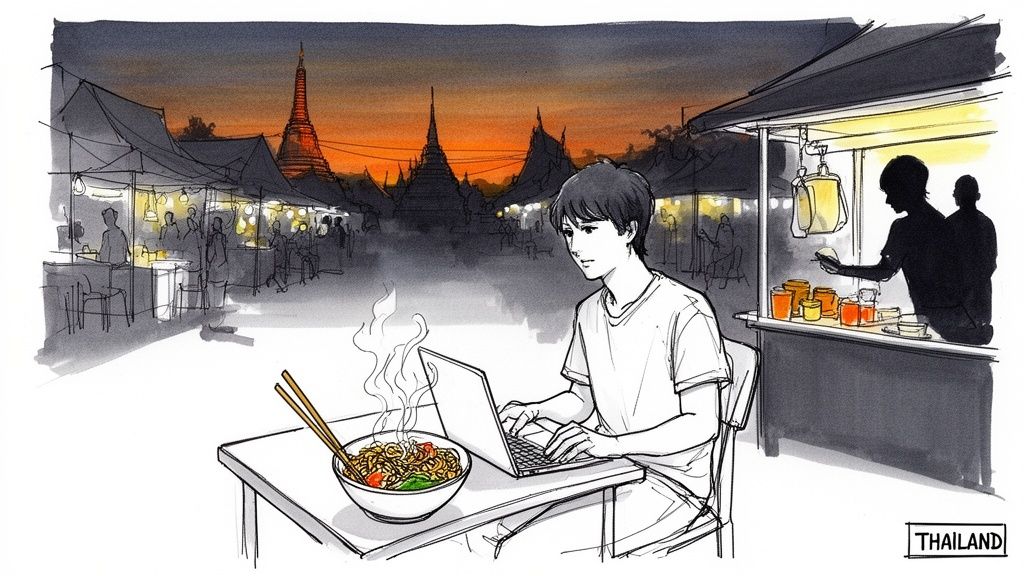
Thailand has long been a crown jewel for those seeking to explore the best Asian countries to visit, seamlessly blending ancient traditions with a forward-thinking, digital-friendly culture. It’s a place where you can spend your mornings volunteering at a temple in Chiang Mai and your afternoons working from a modern co-working space. This duality makes it a premier destination for travelers wanting more than a surface-level vacation. The country’s reputation as a hub for both digital nomads and cultural purists is well-earned, offering an affordable lifestyle without sacrificing authentic experiences.
Immersive Cultural Experience
Thailand excels at providing deep cultural immersion alongside modern convenience. Travelers can easily arrange a homestay in the rural Issan region for a farm-to-table experience, join a Muay Thai camp in the countryside, or participate in a silent meditation retreat at a forest monastery like Wat Suan Mokkh. This balance between the chaotic energy of city life and the tranquility of the countryside is its defining feature.
Off the Beaten Path
Escape the crowds of Phuket and Koh Samui by heading to the lesser-known Trang Islands, like Koh Kradan or Koh Mook, for pristine beaches without the overdevelopment. In the north, explore the Mae Hong Son Loop by motorbike, stopping in remote Karen, Hmong, and Shan villages to experience a side of Thailand few tourists see.
Advice from Local Guides
To truly connect with the local culture, a few key practices go a long way.
- Language is Key: Learning basic Thai phrases like "Sawasdee" (hello) and "Khop Khun" (thank you) is met with genuine appreciation.
- Respectful Conduct: The monarchy and religion are deeply revered. Avoid discussing politics, and always cover your shoulders and knees when visiting temples.
- Transportation Savvy: In cities like Bangkok, insist on using the meter in taxis or use the Grab app for fixed, fair pricing.
- Morning Markets: For a genuine slice of local life, visit a "talat sod" (wet market) in the early morning. It's the best place for fresh produce and observing daily rituals.
This blend of accessibility and authenticity makes Thailand an essential stop. If you're planning a trip, discover more about balancing work and exploration in our comprehensive guide to Bangkok's dual identity as a street food capital and digital nomad paradise.
2. Japan - Precision Culture & Unspoken Rules Mastery
Japan offers one of Asia's most profound cultural deep dives, where ancient traditions harmoniously coexist with hyper-modern technology. For the culturally curious traveler, Japan is a destination defined by its intricate system of unspoken etiquette. Mastering these nuances, from escalator positioning in different cities to the specific protocols of dining, rewards visitors with a truly authentic experience. Each region, whether it's the bustling energy of Tokyo or the serene temple stays in rural Koyasan, operates on its own rhythm, making it a fascinating puzzle to solve.

Immersive Cultural Experience
Japan excels in offering layers of cultural discovery. Participate in a traditional tea ceremony in a Kyoto machiya, stay overnight in a shukubo (temple lodging) on Mount Koya to join morning prayers with monks, or learn the art of kintsugi (golden joinery) from a master craftsman. It's this rewarding challenge of understanding and adapting to local customs that sets Japan apart from other Asian countries to visit.
Off the Beaten Path
Instead of the popular Kyoto-Tokyo route, explore the Shikoku island's 88-temple pilgrimage trail on foot for a deep spiritual journey. For natural beauty, visit the remote Iya Valley with its vine bridges or the artistic island of Naoshima in the Seto Inland Sea, which is dotted with contemporary museums and sculptures.
Advice from Local Guides
Connecting with Japanese culture means paying attention to the small details that govern daily life. A little effort goes a long way.
- Verbal Grace: Learning "Sumimasen" (a versatile 'excuse me' or 'sorry') is essential for navigating crowded spaces and interacting politely.
- Cash is Still King: While major cities are adapting, many smaller shops, rural inns, and local restaurants operate on a cash-only basis. Always have yen on hand.
- The Art of Queuing: Whether for a ramen shop or a train, orderly lines are a way of life. Always find the end of the queue and wait patiently.
- Dining Decorum: Slurping your noodles is considered a compliment to the chef, signifying your enjoyment. Conversely, tipping is seen as rude and is not practiced.
- Respectful Observation: To avoid crowds and witness genuine local worship, visit popular temples and shrines in the early morning.
To truly master the 'Precision Culture & Unspoken Rules' of this captivating country, explore a comprehensive Japan travel guide.
3. Vietnam - Authentic Street Life & Colonial History
Vietnam is one of the most compelling Asian countries to visit, offering an unfiltered look into a culture where ancient history and rapid modernization collide on every street corner. From the thousand-year-old Old Quarter in Hanoi to the electric buzz of Ho Chi Minh City, it’s a country that rewards travelers who embrace its vibrant chaos. The heart of Vietnam isn’t found in museums but in its alleyways, markets, and street food stalls, making it a prime destination for those seeking an authentic, unpolished experience.
Immersive Cultural Experience
Vietnam's true character shines through its incredible street life. The country offers a raw, sensory-rich journey where you can join locals for a morning bowl of pho at a tiny stall, sip egg coffee in a hidden alleyway cafe, or learn to cook regional specialties in a family home in Hoi An. Take an overnight cruise on a traditional junk boat in Bai Tu Long Bay to experience a quieter, more authentic version of Ha Long Bay.
Off the Beaten Path
Forgo the tourist-heavy Sapa and instead trek through the stunning landscapes of Ha Giang province in the far north. This motorbike loop takes you through breathtaking mountain passes and into villages of ethnic minorities who see few foreign visitors. In the south, explore the Can Tho or Chau Doc regions of the Mekong Delta to see floating markets and riverside life far from the day-trippers.
Advice from Local Guides
To truly immerse yourself in Vietnamese culture, it's crucial to understand its unwritten rules.
- Eat Where Locals Eat: The best food is often at nameless stalls with plastic stools. Look for the busiest spots, as a crowd indicates quality and freshness.
- Negotiation is Normal: At markets and with street vendors, friendly bargaining is part of the interaction. Always agree on a price before accepting a service or product.
- Transportation Smarts: Use ride-hailing apps like Grab for motorbikes and cars. It provides fixed pricing and avoids the common scams associated with hailing taxis on the street.
- Respect History: When visiting war remnants or historical sites, be respectful. Avoid insensitive jokes or behavior, as this history is deeply personal to the Vietnamese people.
This blend of raw energy and deep-rooted tradition makes Vietnam a uniquely rewarding destination. For travelers eager to dive deeper, our guide on discovering Hanoi's hidden cafes and street food culture offers a perfect starting point.
4. South Korea - Modern Culture & Neighborhood Exploration
South Korea presents a captivating blend of hyper-modernity and deeply rooted tradition, making it one of the most dynamic Asian countries to visit. It’s a nation where you can wander through a 600-year-old palace in the morning and attend a K-pop concert in a futuristic stadium by night. This contrast defines the travel experience, offering a journey through distinct neighborhood identities, from Seoul’s artistic Hongdae district to the traditional hanok houses of Bukchon. The country is perfect for travelers who thrive on urban exploration and want to dive into contemporary culture while still having access to serene historical sites.
Immersive Cultural Experience
South Korea excels at offering micro-cultures within its cities. Experience this firsthand by staying in a traditional hanok guesthouse in Jeonju, learning calligraphy from a local artist in Insadong, or partaking in the communal culture of a jjimjilbang (public bathhouse). The seamless blend of an incredibly efficient public transport system with a vibrant, 24/7 food and social scene makes deep, authentic exploration both accessible and exciting.
Off the Beaten Path
Instead of staying in central Seoul, explore the city's outer neighborhoods like Mullae, known for its hidden artist studios and metalworking shops. Swap the popular Busan for the historic city of Gyeongju, the ancient capital of the Silla Dynasty, often called the "museum without walls" for its royal tombs and temple ruins. For nature, hike Seoraksan National Park during the autumn for stunning foliage.
Advice from Local Guides
To navigate South Korean culture with respect and ease, keep these local norms in mind.
- Respectful Exchanges: When giving or receiving anything, from a credit card to a drink, use both hands to show respect. This simple gesture is deeply ingrained in the culture.
- Dining Decorum: In restaurants, it's customary to wait for elders or superiors to begin eating first. When drinking, pour for others before filling your own glass. Tipping is not expected and can be considered rude.
- Navigate Like a Local: Download Naver Maps or Kakao Maps, as Google Maps has limited functionality. The subway systems are extensive, affordable, and have English signage.
- Language Nuances: While English is spoken in tourist areas, learning basic Korean phrases is highly appreciated. To truly connect, understanding the slang you'll hear in K-Dramas can offer a deeper insight into daily conversations.
This focus on neighborhood-specific immersion makes South Korea a endlessly fascinating destination. For a deeper dive, explore our guide to Seoul's identity as a K-culture capital with 24/7 energy.
5. Indonesia - Island Cultures & Spiritual Traditions
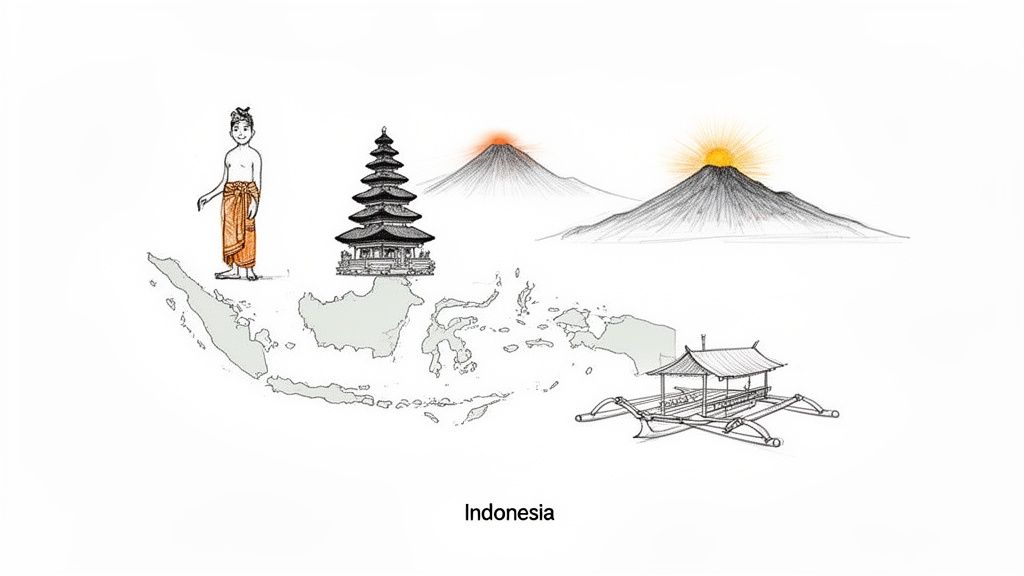
Indonesia is far more than a single destination; it's an archipelago of over 17,000 islands, each with its own distinct culture, spiritual traditions, and way of life. For travelers looking to go beyond the typical resort experience, Indonesia offers a profound journey into diverse local customs. From the artistic soul of Yogyakarta in Java to the pristine, less-traveled islands like Flores and Sumba, the country rewards those who seek authentic cultural immersion, making it a standout among Asian countries to visit for its sheer diversity.
Immersive Cultural Experience
Indonesia excels in offering countless "worlds within a world." You can explore ancient Hindu-Buddhist temples in Java one day and witness the unique funeral ceremonies and cave graves of the Toraja people in Sulawesi the next. Learn traditional batik-making in a workshop in Yogyakarta or take a local cooking class in a Balinese village to understand the spiritual significance of the ingredients. This immense cultural and spiritual spectrum provides an unparalleled opportunity for deep, immersive travel.
Off the Beaten Path
Move beyond Bali and explore the island of Flores, the gateway to Komodo National Park and the stunning three-colored crater lakes of Mount Kelimutu. For a truly remote adventure, visit the Raja Ampat islands in West Papua, a diver's paradise with some of the highest marine biodiversity on Earth and opportunities to stay in local homestays.
Advice from Local Guides
To connect respectfully with Indonesia’s varied cultures, adopting local customs is essential.
- Dress Modestly: When visiting temples, villages, or religious sites, always wear a sarong and cover your shoulders. This sign of respect is crucial, especially outside of major tourist hubs.
- Use Your Right Hand: The left hand is considered unclean. Always use your right hand when giving or receiving items, and especially when eating with your hands.
- Support Local: Opt for homestays ("losmen") over international hotel chains and eat at local "warungs" (small family-owned eateries) for a genuine taste of Indonesian life and to support the local economy directly.
- Learn Basic Phrases: A simple "Terima kasih" (thank you) or "Selamat pagi" (good morning) in Bahasa Indonesia will be warmly received and can open doors to more meaningful interactions.
This deep cultural tapestry makes Indonesia an endlessly fascinating destination. For those wanting to delve deeper, consider our guide on exploring the artistic heritage and spiritual heart of Yogyakarta.
6. Philippines - Island Life & Unpolished Authenticity
The Philippines stands out among Asian countries to visit by offering one of the region's most genuine, unpolished travel experiences. Comprising over 7,000 islands, it rewards travelers who seek authentic island life without the heavy commercialization found elsewhere. This is a destination for immersive cultural discovery, where Spanish colonial heritage blends with the palpable warmth of Filipino society and a vibrant, resilient local culture.
Immersive Cultural Experience
The Philippines excels in delivering raw, unfiltered adventure. You can hire a local guide in El Nido for an island-hopping day that feels personal, not packaged, or trek through the Cordillera highlands to stay with indigenous communities and witness the ancient rice terraces of Batad. Its charm lies in this informality, from joining a local fiesta to sharing a meal in a family-run guesthouse on a remote island. This focus on community and nature over polish makes it uniquely compelling.
Off the Beaten Path
Skip the crowded beaches of Boracay for the laid-back surf culture of Siargao or the pristine, untouched coastlines of Romblon province. Instead of Palawan's popular El Nido, consider a multi-day boat expedition from Coron to experience deserted islands, snorkel in vibrant coral gardens, and sleep in simple beach huts far from any tourist infrastructure.
Advice from Local Guides
To truly connect with the welcoming Filipino culture, embracing local norms is essential.
- Language Opens Doors: English is widely spoken, but learning a few Tagalog phrases like "Salamat" (thank you) and "Kumusta" (how are you) builds instant rapport.
- Respectful Interaction: Religion, particularly Catholicism, is central to life. Be mindful of traditions, especially in rural areas, and avoid sensitive discussions about politics or colonial history.
- Transportation Smarts: In cities, use the Grab app for reliable transport. For tricycles and jeepneys, always agree on the price before your journey begins.
- Bargain with a Smile: Haggling is expected and part of the culture at local markets. Approach it as a friendly interaction, not a confrontation.
This unvarnished authenticity is what makes the Philippines a truly memorable destination. To better prepare for your island adventure, read our guide on navigating the Philippines' diverse cultural landscape and transportation network.
7. Myanmar - Cultural Depth & Responsible Travel Navigation
Myanmar offers one of the most profound and least-filtered travel experiences, making it a unique choice among Asian countries to visit for those seeking genuine cultural immersion. It's a land where ancient Buddhist traditions, colonial echoes, and the daily lives of diverse ethnic groups create a complex and rewarding tapestry. For the culturally conscious explorer, Myanmar provides a rare window into a nation navigating its future while holding steadfast to its past, rewarding respectful visitors with deep, unfiltered local interactions.
Immersive Cultural Experience
Myanmar stands out for its authenticity. Unlike more developed destinations, here you can witness daily monastic routines in Mandalay, learn traditional fishing techniques from the Intha people on Inle Lake, or participate in a community-based tourism project in a rural village. This focus on heritage and community-centric experiences provides a journey that is as educational as it is breathtaking.
Off the Beaten Path
Instead of a flight, take the slow train from Mandalay to Hsipaw to interact with locals and see rural life unfold. From Hsipaw, arrange a multi-day trek to remote Palaung and Shan villages for an authentic homestay experience. For a different side of the country, head south to Hpa-An, known for its stunning karst landscapes and sacred caves.
Advice from Local Guides
Navigating Myanmar requires sensitivity and an awareness of the local context.
- Support Local Communities: Prioritize family-run guesthouses, hire local guides, and purchase from community markets to ensure your tourism dollars directly benefit the people.
- Dress with Respect: Modesty is paramount, especially when entering religious sites. Always cover your shoulders and knees, and remove shoes before entering temples and private homes.
- Handle Money Wisely: Bring sufficient cash (crisp US dollars are best for exchange) as ATMs are often unreliable outside major cities like Yangon.
- Mindful Communication: Learning a few Burmese phrases is highly appreciated. It is crucial, however, to avoid discussing sensitive political topics or criticizing the government.
Engaging with Myanmar responsibly allows for a rich understanding of its cultural complexities. For those interested in ethical travel, learn more about supporting local economies through our guide on how to be a responsible tourist in developing nations.
8. Taiwan - Hidden Cultural Gem & Neighborhood Living
Often overlooked, Taiwan is one of the most rewarding Asian countries to visit for those craving authentic culture without the overwhelming crowds. It presents a unique blend of traditional Chinese heritage, Japanese colonial influence, and a vibrant, democratic modernity. This is a place where you can explore a burgeoning arts scene in Taichung in the morning and wander through a lantern-lit, historical mountain village like Jiufen by evening. Its genuine local warmth and excellent infrastructure make it perfect for travelers who want to dive deep into neighborhood life.
Immersive Cultural Experience
Taiwan excels at offering immersive, neighborhood-level experiences. Spend days exploring the coffee culture of Jingshan, the alternative scene in Daan, or the historic streets of Wanhua. Participate in a traditional tea ceremony in Maokong's plantations, or learn the art of lantern making in the old town of Pingxi. This focus on local living, combined with world-class hiking, offers a deeply rewarding travel experience.
Off the Beaten Path
Instead of just sticking to Taipei, take the train down the scenic east coast to Hualien, the gateway to Taroko Gorge National Park. Explore the southern city of Tainan, Taiwan's oldest city and culinary capital, known for its historic temples and legendary street food. For a true escape, visit the outlying Penghu or Matsu islands to see traditional stone houses and a slower pace of life.
Advice from Local Guides
To genuinely connect with Taiwan's culture, embrace its local rhythms and customs.
- Neighborhood Transport: Use the YouBike bike-sharing system to explore city districts like a local. For longer distances, the EasyCard is essential for seamless metro and bus travel.
- Night Market Strategy: Visit famous markets like Raohe or Ningxia in the early evening (around 5-6 PM) to enjoy the food before the massive crowds arrive. Follow the lines; they always lead to the best stalls.
- Respectful Dialogue: Taiwanese people are incredibly friendly, but it is wise to avoid initiating discussions about the political relationship with mainland China.
- Temple Etiquette: Temples are active places of worship. Be quiet and observant, and feel free to watch ceremonies from a respectful distance. Covering shoulders and knees is appreciated.
This blend of urban exploration and cultural depth makes Taiwan a must-visit. To better plan your neighborhood-hopping adventure, see our detailed guide on navigating Taipei's diverse districts for an authentic city experience.
9. Cambodia - History, Spirituality & Responsible Tourism
Cambodia offers a journey that is as profound as it is beautiful, blending the monumental grandeur of its ancient past with the resilience of its modern spirit. While the sunrise over Angkor Wat is a bucket-list spectacle, the country’s true essence lies in understanding its complex history and engaging with its culture responsibly. It is a destination that rewards travelers who seek to connect on a deeper level, offering spiritual encounters and a humbling look at human perseverance. This makes it an essential visit among Asian countries for those who travel to learn and grow.
Immersive Cultural Experience
The experience goes far beyond the main temples of Siem Reap. Travelers can find authenticity by visiting smaller, quieter sites like Banteay Srei or Preah Khan in the early morning to witness monastic life. Attend a traditional Apsara dance performance, take a Khmer cooking class, or participate in a water blessing ceremony with a monk. This contrast between the world-famous landmarks and the quiet, everyday spirituality gives Cambodia its unique soul.
Off the Beaten Path
Escape the Siem Reap bubble and explore the colonial riverside town of Kampot, known for its world-famous pepper plantations. Journey to the remote province of Mondulkiri to engage in ethical elephant conservation projects, or visit the less-frequented temples of Preah Vihear and Koh Ker to see magnificent ruins without the crowds.
Advice from Local Guides
To experience Cambodia authentically and respectfully, it is crucial to travel with awareness.
- Hire Local Guides: Especially for sites like the Tuol Sleng Genocide Museum, a local guide provides essential context and personal insight into the Khmer Rouge era with the sensitivity it deserves.
- Temple Conduct: When visiting any temple, always cover your shoulders and knees. This simple act of respect is deeply appreciated in Khmer culture.
- Ethical Tourism: Choose tour operators carefully. Support social enterprises and avoid exploitative attractions like orphanage tourism or unethical animal encounters.
- Learn Basic Khmer: A simple "Arkoun" (thank you) or "Chum Reap Suor" (hello) will open doors to more genuine interactions with local people.
Engaging with Cambodia thoughtfully transforms a vacation into a meaningful cultural exchange. To further support the community, consider exploring Artisans Angkor, a social enterprise dedicated to reviving traditional Khmer crafts.
10. Malaysia - Multicultural Hub & Urban Neighborhood Exploration
Malaysia stands as a testament to harmonious diversity, offering a seamless blend of Malay, Chinese, and Indian cultures set against a backdrop of modern infrastructure and lush rainforests. It's a country where you can explore the colonial streets of George Town in the morning and ascend the futuristic Petronas Towers in Kuala Lumpur by evening. This rich cultural tapestry makes it one of the most compelling Asian countries to visit for travelers seeking depth, variety, and urban sophistication. The nation’s unique fusion is evident everywhere, from its architecture to its world-renowned culinary scene.
Immersive Cultural Experience
Malaysia excels in offering profound cultural immersion within a highly developed framework. Travelers can delve into the distinct personalities of Kuala Lumpur’s neighborhoods, from the bustling markets of Chow Kit to the trendy streets of Bukit Bintang. The island of Penang provides a concentrated dose of this multiculturalism, with its UNESCO-listed George Town offering a sensory overload of street art, historic temples, and legendary hawker stalls. This balance of authentic heritage and modern comfort is Malaysia’s signature appeal.
Off the Beaten Path
Instead of the popular Langkawi island, visit the Perhentian Islands on the east coast for incredible diving and a more rustic, backpacker vibe. Swap the highlands of Cameron for a stay in a traditional longhouse in Sarawak on the island of Borneo to experience the culture of indigenous tribes and explore pristine rainforests.
Advice from Local Guides
To truly appreciate Malaysia's layered identity, understanding local customs is essential.
- Neighborhood Immersion: Stay in distinct neighborhoods like George Town in Penang or Malacca's historic center to experience daily life up close, rather than just day-tripping.
- Respectful Dress: As a Muslim-majority country, modest dress (covering shoulders and knees) is appreciated, especially when entering mosques or in more rural areas.
- Hawker Center Timing: Visit hawker centers for lunch or early dinner. Many of the best stalls sell out of their specialties by mid-afternoon.
- Transportation Ease: Leverage Malaysia's excellent public transport, like Kuala Lumpur's LRT and monorail, for an efficient and affordable way to explore its urban centers like a local.
This blend of accessibility and deep-rooted tradition makes Malaysia an endlessly fascinating destination. For those captivated by this cultural mosaic, consider delving deeper with our guide to exploring Penang’s street food culture and colonial heritage.
11. Laos - Slow Travel & Authentic Buddhist Culture
Laos offers a refreshing counter-narrative to the fast-paced travel common in Southeast Asia. It’s one of the best Asian countries to visit for those seeking to truly disconnect and immerse themselves in an unrushed, authentic culture. The national philosophy of "Bo Pen Nyang" (no problem) is palpable, inviting travelers to slow down and appreciate the subtle beauty of daily life. From the serene Mekong River journeys to the spiritual calm of Luang Prabang's temples, Laos rewards patience with genuine connection.
Immersive Cultural Experience
Laos stands out for its commitment to preserving a tranquil, traditional way of life. The experience here is less about ticking off sights and more about absorbing the atmosphere. Witnessing the silent, dawn ritual of Tak Bat (alms-giving to monks) in Luang Prabang, taking a multi-day slow boat down the Mekong River, or learning traditional weaving in a village are profound experiences that simply cannot be rushed. This emphasis on mindful travel and community engagement offers a deeper adventure.
Off the Beaten Path
Instead of the well-trodden Vang Vieng, head to the Bolaven Plateau in the south to explore coffee plantations, stay in community-run lodges, and swim in remote waterfalls. For a truly off-grid experience, visit the remote province of Phongsali in the north, known for its trekking opportunities and diverse ethnic communities.
Advice from Local Guides
To connect respectfully with Laotian culture, it's essential to move with intention and awareness.
- Embrace Slow Travel: Transportation can be slow and unpredictable. Build extra days into your itinerary and treat the journey as part of the destination.
- Modest Dress is Key: When visiting temples or rural villages, always cover your shoulders and knees. This simple act of respect is deeply appreciated by locals.
- Cash is King: While ATMs exist in larger towns like Vientiane and Luang Prabang, they are scarce elsewhere. Carry enough Kip, especially small bills, for rural areas.
- Respect Monastic Life: If observing the alms-giving ceremony, do so from a distance, dress conservatively, and never use flash photography. Do not participate unless you are a practicing Buddhist and understand the ritual.
By adopting a slower pace, you open yourself up to the profound and gentle spirit that makes Laos a truly unique place.
12. Southeast Asia Travel Themes & Practical Notes
Planning a multi-country trip through Southeast Asia requires a different mindset than visiting a single destination. The region is a mosaic of rich cultural diversity, dramatic seasonal weather patterns, and varying levels of infrastructure. Popularized by digital nomads and iconic travel shows, its appeal lies in this very diversity, but navigating it smoothly requires practical, on-the-ground knowledge. Understanding these common themes is essential for anyone looking to craft a deeper, more immersive journey across these incredible Asian countries to visit.
Immersive Cultural Experience
Southeast Asia's charm is in its interconnected yet distinct cultures. A short flight can take you from the Buddhist temples of Thailand to the Islamic mosques of Malaysia or the Catholic churches of the Philippines. Immersive experiences here mean adapting to these shifts: learning to haggle with a smile in a Vietnamese market, understanding the concept of "face" in Thai culture, and participating respectfully in local ceremonies, whether it’s a Balinese offering or a Lao alms-giving.
Off the Beaten Path
Beyond the main tourist trail, a regional approach to off-the-beaten-path travel could mean taking a cargo boat between remote Indonesian islands, crossing a land border from Thailand to Cambodia instead of flying, or exploring the shared Mekong River culture across Laos, Cambodia, and Vietnam. It’s about seeing the connections and contrasts that define the region away from international airports.
Advice from Local Guides
To get the most out of your regional tour, keep these practical notes in mind for a richer cultural experience.
- Weather is Key: Always cross-reference your travel dates with each country's specific monsoon or typhoon season. What’s dry season in Thailand might be the wettest time of year in Bali.
- Cash is Still King: While cards are accepted in cities, carry small bills for street food, local markets, and rural transport. ATMs can be scarce in off-the-beaten-path areas.
- Navigate Like a Local: Download regional ride-hailing apps like Grab (most of SEA) and Gojek (Indonesia). They offer fair, fixed pricing and are often the safest option.
- Prioritize Responsibility: Be a conscious traveler. Support local businesses and actively avoid exploitative animal tourism or orphanage visits, which can do more harm than good.
Thinking regionally allows you to appreciate each country’s unique flavor. For a deep dive into navigating these cultural nuances, explore our guide on how to ethically engage with local communities while traveling Southeast Asia.
12 Asian Destinations: Culture, Islands & Travel Notes
| Destination | Implementation complexity 🔄 | Resource requirements ⚡ | Expected outcomes ⭐ / 📊 | Ideal use cases 💡 | Key advantages ⭐ |
|---|---|---|---|---|---|
| Thailand - The Digital Nomad & Cultural Immersion Hub | Moderate 🔄 — easy visas, local transport quirks | Low ⚡ — very affordable living & food | High cultural immersion & value ⭐⭐⭐⭐ 📊 | Digital nomads, budget travelers, food & culture explorers | Affordable long stays; strong nomad infrastructure; world-class street food |
| Japan - Precision Culture & Unspoken Rules Mastery | High 🔄 — strict etiquette, advance bookings | High ⚡ — expensive accommodation & services | Exceptional cultural insight & efficiency ⭐⭐⭐⭐⭐ 📊 | Culture enthusiasts, planners, food aficionados | Safety, punctual transit, deep traditions and reliability |
| Vietnam - Authentic Street Life & Colonial History | Moderate–High 🔄 — chaotic streets, safety navigation | Low ⚡ — very affordable day-to-day costs | Authentic street-level experiences & contrasts ⭐⭐⭐⭐ 📊 | Budget adventurers, street food explorers, history buffs | Vibrant street life, colonial heritage, dramatic landscapes |
| South Korea - Modern Culture & Neighborhood Exploration | Moderate 🔄 — hierarchy norms, dense neighborhoods | Moderate ⚡ — affordable food; mid-range stays | Strong modern cultural immersion & convenience ⭐⭐⭐⭐ 📊 | Neighborhood explorers, K‑culture fans, food lovers | Excellent infrastructure, creative scenes, tech-forward services |
| Indonesia - Island Cultures & Spiritual Traditions | High 🔄 — archipelago logistics, variable infra | Low ⚡ — generally affordable outside Bali hotspots | Diverse island & spiritual experiences ⭐⭐⭐⭐ 📊 | Island hoppers, spiritual travelers, creatives | Huge regional diversity; homestays; rich natural sites |
| Philippines - Island Life & Unpolished Authenticity | Moderate 🔄 — inter-island travel & weather risks | Low ⚡ — affordable; English lowers friction | Genuine island life & hospitality ⭐⭐⭐⭐ 📊 | Island hoppers, divers, English-speaking travelers | Warm hospitality, fewer crowds, easy island access |
| Myanmar - Cultural Depth & Responsible Travel Navigation | High 🔄 — political sensitivity, limited infra | Low–Moderate ⚡ — cash-dependent but affordable | Deep cultural authenticity with ethical caveats ⭐⭐⭐ 📊 | Responsible travelers, spiritual seekers, adventurers | Unfiltered cultural depth; unique temples and monastic life |
| Taiwan - Hidden Cultural Gem & Neighborhood Living | Moderate 🔄 — transit navigation; Mandarin needed | Moderate ⚡ — affordable vs. Japan; good services | Neighborhood-level authenticity & convenience ⭐⭐⭐⭐ 📊 | Neighborhood explorers, digital nomads, foodies | Clean, efficient transit; vibrant night markets; safe |
| Cambodia - History, Spirituality & Responsible Tourism | Moderate 🔄 — historical sensitivity; limited infra | Low ⚡ — budget-friendly | Powerful historical/spiritual impact; ethical considerations ⭐⭐⭐⭐ 📊 | History-conscious, responsible travelers, budget adventurers | Angkor & monastic culture; meaningful community opportunities |
| Malaysia - Multicultural Hub & Urban Neighborhood Exploration | Low–Moderate 🔄 — multicultural etiquette to learn | Moderate ⚡ — varied but generally affordable | Multicultural exposure with urban convenience ⭐⭐⭐⭐ 📊 | Multicultural explorers, infrastructure-minded travelers | Strong infrastructure, multilingualism, diverse cuisine |
| Laos - Slow Travel & Authentic Buddhist Culture | Low 🔄 — slow pace, limited services | Low ⚡ — very affordable long stays | Slow, authentic spiritual experiences & tranquility ⭐⭐⭐⭐ 📊 | Slow travelers, spiritual seekers, nature lovers | Minimal overtourism; preserved traditions and landscapes |
| Southeast Asia Travel Themes & Practical Notes | Variable 🔄 — country-dependent complexities | Variable ⚡ — generally high value for money | High cultural/culinary diversity; seasonal risks ⭐⭐⭐⭐ 📊 | Multi-country itineraries, digital nomads, responsible planners | Wide value-for-money, strong nomad/backpacker networks; ethical considerations |
Your Next Step: Traveling Deeper, Not Farther
Our journey through the best Asian countries to visit has taken us from the spiritual tranquility of Laotian temples to the hyper-modern streets of Seoul, and from the pristine beaches of the Philippines to the intricate cultural tapestry of Malaysia. We've explored how destinations like Thailand serve as hubs for digital nomads, while Japan offers a masterclass in precision and unspoken social rules. This guide was designed not just to give you a list, but to provide a framework for choosing a destination that aligns with your personal travel philosophy.
The real takeaway is this: a transformative trip to Asia is not defined by how many landmarks you see, but by how deeply you engage with the local culture. It’s about understanding the subtle etiquette of a Japanese tea ceremony, navigating the vibrant chaos of a Vietnamese street market with confidence, or engaging in responsible tourism that supports the communities you visit in Cambodia and Myanmar. Each country, from Indonesia's diverse island cultures to Taiwan's understated urban charm, offers a unique opportunity to step outside your comfort zone and into a different way of life. The most memorable experiences are rarely found in the main tourist squares; they are discovered in the quiet back alleys, the family-run food stalls, and the genuine interactions with local people.
Key Takeaways: From Planning to Immersion
To truly elevate your travel, shift your focus from a checklist of sights to a mindset of cultural immersion. This approach ensures your journey is respectful, enriching, and unforgettable.
Here are the core principles to carry forward:
- Align Your Destination with Your Travel Style: Are you seeking adventure, wellness, cultural depth, or a productive remote work environment? Use the categories in this article as a starting point. Choosing a country that naturally fits your interests, like Laos for slow travel or South Korea for modern urban exploration, sets the stage for a more fulfilling experience.
- Prioritize Neighborhood-Level Exploration: The soul of a city is rarely in its most famous monument. It’s in the specific neighborhoods we highlighted, like Gion in Kyoto or Kampong Glam in Singapore. Before you go, research two or three key districts and plan to spend significant time simply walking, observing, and participating in the local rhythm.
- Master the Basics of Local Etiquette: Small gestures of respect go a long way. Learning basic greetings, understanding tipping customs (or the lack thereof), and knowing how to dress for religious sites are non-negotiable. This preparation prevents embarrassing missteps and opens doors to more authentic connections.
- Embrace the Off-the-Beaten-Path Mentality: True cultural immersion happens where tourism is not the primary industry. Seek out local markets over tourist bazaars, eat at restaurants filled with locals, and use public transportation. This is how you move from being a spectator to a participant.
Your Actionable Next Steps
Thinking about which Asian countries to visit is the exciting first step. Now, it's time to translate that inspiration into a concrete plan.
- Shortlist Your Top Three: Based on the article, pick three countries that resonate most with you. Don't overthink it; go with your gut feeling.
- Conduct Deeper Research: For each of your top three, dive into the specific "Signature Experiences" and "Local Etiquette" sections we provided. Which one genuinely excites you the most and feels like the best fit for your comfort level and travel goals?
- Learn Five Key Phrases: Before you book anything, learn how to say "Hello," "Thank you," "Excuse me," "How much is this?" and "Delicious" in the local language of your chosen destination. This simple act begins the process of cultural engagement long before you leave home.
- Draft a Loose Itinerary: Using our suggested itineraries as a template, sketch out a rough plan. Focus on experiences rather than just places. Instead of "Visit Fushimi Inari Shrine," write "Hike Fushimi Inari at sunrise to avoid crowds and experience its spiritual atmosphere."
By adopting this deeper, more intentional approach to travel planning, you transform your trip from a simple vacation into a meaningful cultural exchange. You return home not just with photos, but with a profound understanding and appreciation for a different corner of the world.
Ready to move beyond the tourist trail and discover the hidden gems that make each destination unique? CoraTravels offers curated, neighborhood-specific guides that provide the deep local insights and off-the-beaten-path recommendations discussed in this article. Plan your next authentic adventure by exploring our guides at CoraTravels.