Walk into a Bangkok cafe, and the menu tells a story of the city itself. It’s a beautiful, sometimes chaotic, mix of serious Western-style coffee right next to intensely sweet Thai concoctions you won't find anywhere else. This isn’t just about getting a caffeine fix; it’s about experiencing a unique cultural mashup on every page. This guide is designed to take you off the well-trodden tourist path and into the heart of local life, one cup at a time.
Unlocking the Secrets of Bangkok Cafe Culture: More Than Just Coffee
Reading a Bangkok cafe menu is like getting a crash course in the city's modern identity. It’s where old-school traditions collide head-on with global trends. Unlike cafes in the West that might just focus on speed and efficiency, Bangkok's spots are destinations. They are designed for lingering—as social hubs, beautiful remote offices, and places to get a genuinely good meal. This guide will help you look past the obvious and dive into the cultural nuances that make the scene so special.
To truly understand the bangkok cafe menu, you have to understand the philosophy behind it. It's a blend of respect for the old ways and an obsession with the new.
- A Blend of Old and New: It's completely normal to see a meticulously prepared single-origin pour-over listed right above a classic Thai iced tea, loaded with condensed milk. They coexist happily, reflecting the city's dynamic character.
- Visuals are Key: Thais take presentation seriously. Drinks are often layered with vibrant colors, and desserts look like miniature works of art. Everything is designed to be photographed before it's consumed.
- Sweetness is Standard: The local palate leans sweet. Really sweet. If you're used to unsweetened drinks, you'll want to specify. Otherwise, expect a generous dose of sugar by default.
As you explore, you'll also notice a lot of cafes have gone digital. Instead of a physical book, you’ll scan a QR code at your table. It’s part of the city’s rapid modernization. For anyone curious about the tech driving this, many places use platforms providing QR code menu solutions.
At its heart, the Bangkok cafe menu is a story of adaptation. It shows a city that has fallen in love with global coffee culture but refuses to forget its own identity—from the powerful, earthy punch of local Robusta beans to the subtle, fragrant sweetness of pandan.
My goal here is to help you order like a local. We'll move past any confusion so you can discover the hidden gems and truly enjoy one of Bangkok's favorite pastimes.
Understanding Local Coffee And Tea Favorites
Walk into any local Bangkok café, and the menu tells a story. It’s a perfect blend of old-school Thai tradition and the global third-wave coffee scene. This isn't by accident. The city's coffee market is booming, hitting a valuation of 65 billion baht in 2025 with an 8.33% annual growth rate. That explosion fuels menus that have to satisfy both locals craving nostalgic flavors and coffee aficionados looking for the perfect pour-over.
This is what a typical menu structure looks like. You've got your coffee, your tea, and a whole lot of deliciousness in between.
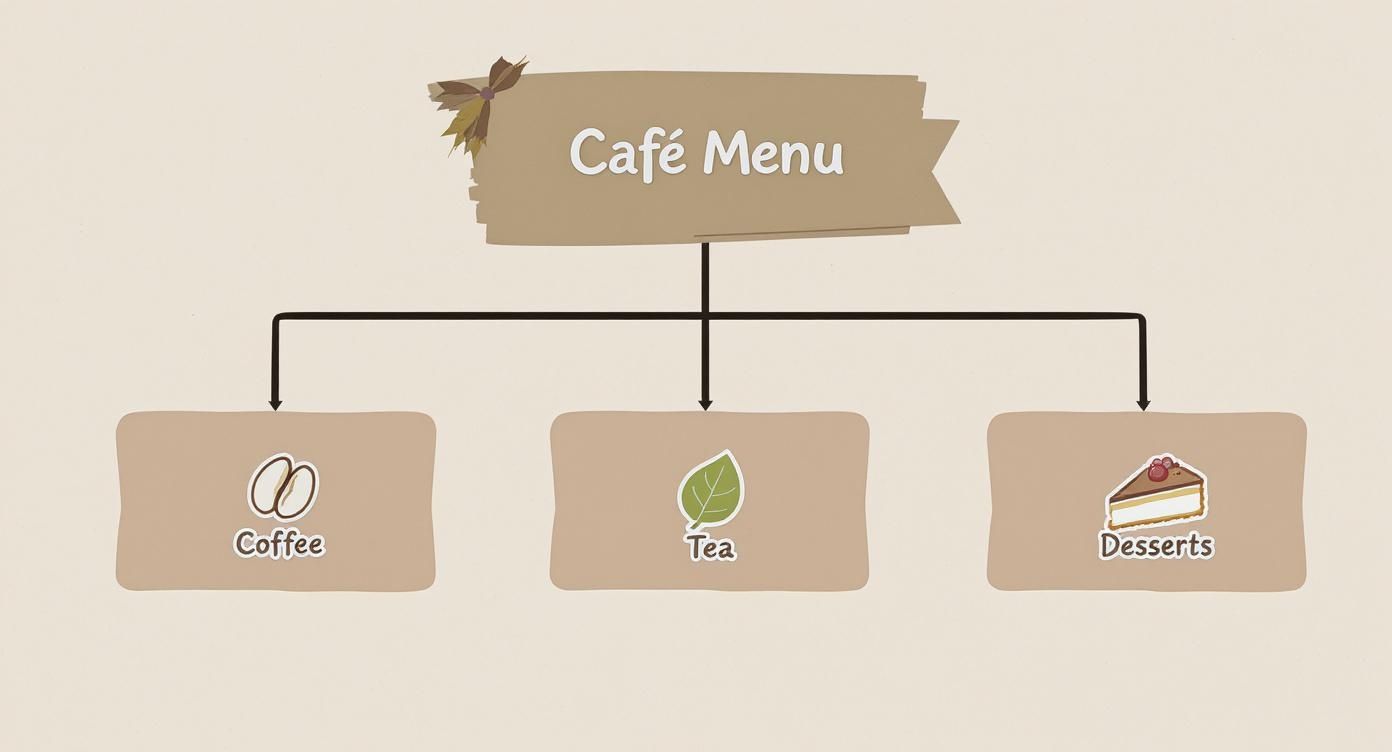
Coffee and tea are the twin pillars here, each with its own classics you absolutely have to try for a full cultural experience. Let’s break them down.
The Coffee: Old Meets New
Sure, you’ll find lattes and cappuccinos everywhere, but the real soul of Bangkok coffee lies in the traditional preparations that have been around for generations.
Gafae Boran (กาแฟโบราณ): This is "ancient coffee." It’s a powerful brew made by filtering dark-roasted Robusta beans (often mixed with grains) through a cloth "sock." The result is a bold, almost smoky coffee sweetened with a generous pour of condensed milk.
Oliang (โอเลี้ยง): This is Bangkok’s answer to a hot day—the classic Thai iced black coffee. Its name literally means "black cold." It’s made just like Gafae Boran but served over ice, usually with sugar but no milk. It's strong, refreshing, and unapologetically Thai.
Ordering a Gafae Boran is about more than just getting a caffeine fix. It’s a taste of the city’s past, a flavor perfected on street corners long before flat whites became a thing.
Thai Tea Favorites
Tea is just as important on any real Bangkok menu. The drinks are usually vibrant, incredibly fragrant, and offer a sweet escape from the city’s spicy food. For a deep dive into the world of tea, check out this a complete guide to different tea varieties.
Two drinks rule the scene, and you'll see them everywhere:
Cha Yen (ชาเย็น): You probably know this as Thai Iced Tea. You can’t miss its bright orange color. It's a strong black tea, often spiced with star anise and cardamom, then mixed with condensed and evaporated milk until it’s creamy, sweet, and perfect over ice.
Cha Manao (ชามะนาว): This is Thai Iced Lime Tea, the zesty, tart cousin of Cha Yen. It’s much simpler—just strong black tea, fresh lime juice, and sugar over ice. It's the ultimate thirst-quencher.
To give you a quick cheat sheet, here are the key players you'll find on almost every local menu.
Common Thai Beverage Menu Items
| English Name | Thai Name (Romanized) | Key Ingredients | Typical Serving Style |
|---|---|---|---|
| Thai "Ancient" Coffee | Gafae Boran | Robusta coffee, condensed milk, evaporated milk | Hot |
| Thai Iced Black Coffee | Oliang | Robusta coffee, sugar | Iced, no milk |
| Thai Iced Tea | Cha Yen | Black tea, condensed milk, evaporated milk, spices | Iced, creamy |
| Thai Iced Lime Tea | Cha Manao | Black tea, lime juice, sugar | Iced, tart |
Getting a handle on these four drinks is your first step to ordering like a local. They are the foundational flavors of Bangkok’s café culture and your ticket to a truly authentic experience.
Exploring Desserts and Savory Food Menus: A Taste of Local Life
Let’s be clear: in Bangkok, a café is rarely just a place for coffee. It's a culinary battleground where the food menu fights for just as much attention as the drinks. Walk into any decent spot and you'll see a delightful tug-of-war between classic Thai sweets and trendy, Western-inspired brunch plates. This is where you get a true taste of local creativity.
This isn’t just about filling bellies; it’s about the full experience. Everything is designed to be as beautiful as it is delicious.

The sweet stuff is where you’ll really see the soul of Thai tradition getting a modern makeover. These desserts aren’t just an afterthought; they’re often the main event.
Quintessential Thai Desserts to Try
When you flip to the food section of a bangkok cafe menu, you’ll find that Thai desserts aren't the sugar bombs you might be used to back home. They're much more nuanced, focusing on a delicate balance of textures and fragrant notes from things like coconut, pandan leaf, and perfectly ripe fruit.
Keep an eye out for these legends:
- Khao Niao Mamuang (Mango Sticky Rice): The undisputed king. Cafes take this street food classic and dial it up to eleven, using premium mangoes, warm coconut-infused rice, and a perfectly salty-sweet cream sauce. Some add crispy mung beans for crunch. It’s a game-changer.
- Thai Tea Crepe Cake: A modern masterpiece that perfectly blends a local flavor obsession with a fancy French technique. You get dozens of paper-thin crepes layered with a rich, fragrant Thai tea cream. The result is light, aromatic, and looks incredible on Instagram.
- Kanom Krok (Coconut Pancakes): You’ll find these on the street, but trendy cafes serve them too. They’re tiny coconut-rice pancakes, crispy on the outside and unbelievably gooey on the inside. They’re served in pairs and are impossible to eat just one of.
The Savory Side: Fusion on Display
Once you get past the sweets, the savory food menu is where things get really interesting. It’s a fascinating mix of comforting Western brunch dishes sitting right next to light, zesty Thai-inspired meals. This isn’t random; it reflects the city’s global palate and the local love for eating good food at any hour of the day.
The savory menu is like a delicious conversation between East and West. You might see avocado toast sprinkled with Thai chili flakes and lime, or a perfect croissant served with a pandan-coconut custard for dipping.
This fusion is also just smart business in a brutally competitive market. To give you an idea of the scale, big chains like Café Amazon sold a staggering 400 million cups in 2024. That averages out to 1.1 million cups a day. To keep up that momentum, they have to constantly innovate their food and drink menus. This pressure forces independent cafes to get seriously creative with their savory options to stand out. You can read more about Bangkok's wild cafe market on nationthailand.com.
What this means for you is a menu where spicy salads (yam), flavorful rice bowls, and inventive sandwiches share space with eggs benedict and fluffy pancakes. It guarantees you’ll find something to hit the spot, turning what could have been a quick coffee run into a proper, satisfying meal.
Navigating Prices, Payments, and Local Etiquette
Knowing what to order is half the battle; figuring out how to pay and what’s expected can make or break your cafe experience. The process in Bangkok is mostly straightforward and modern, but a few local habits are worth knowing. It'll help you handle everything from getting your drink just right to paying with a quick phone scan.
First things first: sweetness. Thai drinks are notoriously sweet by Western standards. If you don't want a sugar rush, you need to speak up. Luckily, baristas hear these requests all day long.
- Mai waan (ไม่หวาน) – Literally "not sweet." This is your go-to for no sugar. It's direct and perfectly understood.
- Waan noi (หวานน้อย) – This means "a little sweet." It's the ideal middle ground, letting you taste the intended flavor without it being overpowering.
Don’t be shy about using these. It's completely normal.
Understanding the Cost
The price on a bangkok cafe menu is a tale of two cities. You can find something for absolutely any budget. A traditional gafae boran from a tiny streetside stall might only cost 30-50 THB. It's delicious, strong, and incredibly easy on the wallet.
But walk into a specialty coffee shop in a fancy mall in Sukhumvit, and you could be looking at 120-180 THB for a single latte. The massive range means you can have a cheap, local experience one day and a premium, Melbourne-priced flat white the next.
Watch out for the small print. In more formal cafes, especially inside malls, the price you see isn't always the final price. Look for a note at the bottom of the menu that says "prices are subject to..." This usually means a 10% service charge and 7% VAT will be added to your bill.
Payments and Tipping
Bangkok runs on digital payments. While cash is always an option, QR code payments are everywhere. Most cafes have a small stand at the counter with a QR code for PromptPay, the national e-payment system that many travelers can now connect to their own banking apps. It’s incredibly convenient.
Credit cards are also fine in most mid-range and high-end spots. But if you're exploring smaller, independent cafes off the beaten path, they might be cash-only. It's always a good idea to have some baht on you just in case.
What about tipping? It's really not a thing in Thai cafes. If a service charge is already on your bill, you definitely don’t need to add anything extra. In smaller spots where you pay at the counter, it’s common to just leave the small coin change in the tip jar, but nobody will think twice if you don't. For a complete rundown on the local customs, our guide to tipping in Thailand breaks it down for every situation you'll run into.
Discovering Signature Menus Off the Beaten Path
If you really want to get to the heart of Bangkok’s café scene, you need to ditch the air-conditioned malls and tourist hubs. The real magic happens when you dive into the sois (side streets) of the city’s authentic local neighborhoods. This is where you find the independent spots, the places run by passionate owners who are pouring their entire creative vision into every single cup and plate.
This isn’t just about grabbing a coffee; it’s a full-on cultural deep dive. When you step into one of these cafés, you're stepping into a space that reflects the very soul of its community. Each neighborhood has its own distinct personality.
- Ari: This is Bangkok’s trendy, laid-back creative hub. Think leafy streets and design-forward cafés where the menus get inventive. You’ll find things like pandan-infused lattes or vibrant butterfly pea flower cold brews—drinks that feel uniquely Thai.
- Thonglor: As one of the city's most high-end districts, Thonglor is where you'll find chic, experimental cafés. Don't be surprised to see bold creations like a durian cheesecake or even a Tom Yum-spiced croissant sitting right alongside a perfectly pulled shot of specialty coffee.
- Old Town (Rattanakosin): Here, in the historic heart of Bangkok, old shophouses have been reborn as impossibly charming cafés. The menus often honor tradition, serving up classic Thai sweets and drinks that have been perfected over generations.
The Soul of Local Cafe Menus
What truly sets these off-the-beaten-path cafés apart is their obsession with signature items. These aren't just menu filler; they're the edible manifestos of the owners' passions. You’ll find creations you simply can't get anywhere else, from a closely guarded secret-recipe coconut coffee to a delicate cake made with a rare local fruit.
This hyper-local creativity is what drives the city's food scene.
Exploring these neighborhood cafés is like going on a flavor treasure hunt. The real prize isn't just a great cup of coffee, but a genuine connection to the city's creative spirit—one unique menu at a time.
It's also a smart survival tactic. The Thai food service market is massive, hitting around 967 billion baht in 2024, and it's incredibly competitive. With cafés and bars making up about 29.5% of that market, these little independent shops have to constantly innovate to stand out. This constant pressure is precisely why their menus are often so exciting and different. You can learn more about the Thai food and beverage market's growth.
By stepping just a few streets away from the main tourist drags, you'll discover what a Bangkok cafe menu can truly be. You’ll taste the difference that local ingredients and personal passion make, turning a simple coffee break into an authentic, memorable part of your trip.
Finding the Perfect Cafe for Remote Work
Bangkok isn't just a place to visit; for a massive global community of digital nomads and remote workers, it's a world-class home base. But not every spot with a great coffee menu is built for productivity. Finding a truly work-friendly cafe means looking past the latte art and understanding the delicate balance of amenities and local etiquette.
It’s more than just getting the Wi-Fi password. It’s about finding an ecosystem where you can actually get things done.

The best spots—the ones that are genuinely cool with the laptop crowd—tend to have a few things in common. Think of it as a quick checklist before you unpack your gear.
The Remote Work Checklist
When you're scouting for a place to park yourself for a few hours, keep an eye out for these tell-tale signs:
- Reliable Wi-Fi: This one’s a deal-breaker. Look for cafes that make it easy—many will print the password right on your receipt when you buy something, and it usually lasts all day.
- Ample Power Outlets: The real pro-nomad spots have outlets near multiple tables, not just one lonely plug hidden in a corner. It’s a dead giveaway that they expect people to stick around and charge up.
- Comfortable Seating: Those trendy wooden stools might look great on Instagram, but they’re a nightmare for a four-hour work session. Prioritize places with actual chairs and tables at a decent height.
Beyond the hardware, the menu itself can drop hints. Cafes with affordable all-day coffee and tea, or a self-serve water station, are usually much more accustomed to people camping out. This perfect storm of features is a huge reason why the city is often called a digital nomad paradise.
The unspoken rule of remote work in Bangkok is simple: be a good customer. Don't be the person who buys one Americano and hogs a four-person table for six hours. To show you respect the space, just make sure to order something new every couple of hours.
One last tip: be mindful of the local rhythm. Try to avoid setting up your mobile office right during the peak lunch rush (usually from 12 PM to 2 PM), when every table is in high demand. A little bit of etiquette goes a long way and lets you stay productive while respectfully plugging into the city’s amazing cafe scene.
A Few Common Questions About Bangkok Cafe Menus
Walking into Bangkok's cafes can bring up a few questions, especially when you're just getting the hang of things. Here are a few quick answers to help you order like you've been doing it for years.
How Do I Ask for My Coffee to Be Less Sweet?
You'll quickly learn that "sweet" is the default setting for many drinks in Thailand. If you prefer less sugar, it's easy to ask.
- Waan noi (หวานน้อย): This is your go-to phrase. It just means "a little sweet."
- Mai waan (ไม่หวาน): Use this if you want absolutely no sugar. It translates to "not sweet."
Baristas hear these requests all the time, especially in areas popular with expats and travelers, so don't feel shy about asking. It's a completely normal part of the ordering process.
Are Dairy-Free Milk Options Widely Available?
Yes, for the most part. Any modern, specialty cafe will almost certainly have dairy-free options. Soy milk is everywhere, and you won't have to look hard to find oat and almond milk, especially in neighborhoods like Sukhumvit, Silom, or Ari.
Just know that smaller, old-school shophouse cafes will likely stick to the classics: regular dairy and condensed milk.
Getting these little details down is what really makes a trip smooth. It lets you step off the main tourist drags and explore local neighborhoods with confidence.
Is It Expensive to Visit Cafes in Bangkok?
It really depends on what you’re looking for. The price range is huge. A classic Thai iced coffee from a street-side cart might only set you back 30-50 THB.
Step into a mid-range specialty cafe, and you can expect to pay around 80-150 THB for something like a latte. If you're settling in for brunch or a fancy dessert, prices usually fall between 150-350 THB. A Bangkok cafe can be incredibly cheap or match prices back home—it all depends on where you go.
At CoraTravels, we're all about sharing the kind of local knowledge that turns a good trip into a great one. Our guides are packed with insider tips to help you feel less like a tourist and more like a local. Discover more authentic travel insights at CoraTravels.