
There's a version of the American road trip that sticks to the interstate, ticking off major landmarks from a car window. This guide is not about that version. Instead, it's a curated collection of the best American road trips for travelers who seek genuine connection and cultural depth, moving beyond the superficial to uncover the soul of a place. We’ve designed these itineraries to immerse you in the authentic fabric of each region, from the Appalachian hollows to the sun-baked mesas of the Southwest.
This is more than just a list of routes; it’s a practical framework for experiencing America’s diverse landscapes and communities with respect and curiosity. For each journey, we provide actionable insights to help you navigate like a local. You'll find specific recommendations for finding hidden food gems in overlooked neighborhoods, engaging with regional art scenes, and understanding the cultural etiquette of small towns and sovereign Indigenous lands. Our focus is on the immersive experiences that don’t make it into standard travel guides.
We will cover legendary drives like the Pacific Coast Highway and Route 66, but our approach prioritizes the lesser-known detours and local secrets that define them. Forget the tourist traps and generic advice. This article equips you with the tools to plan a journey that is not just scenic, but meaningful. Prepare to trade the highway rest stops for family-owned diners, mainstream attractions for community markets, and a passive vacation for an active, culturally rich exploration. This is your guide to finding America’s story on the open road.
1. Pacific Coast Highway (CA-1): San Francisco to San Diego
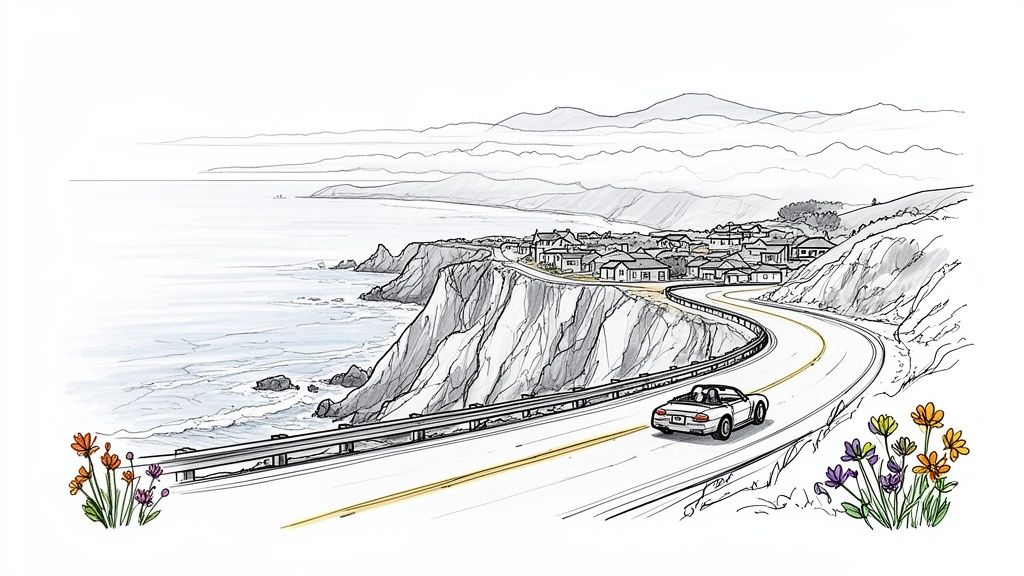
The Pacific Coast Highway, or CA-1, is arguably the most iconic of all American road trips. This 655-mile journey from San Francisco to San Diego traces California's dramatic coastline, offering a sensory overload of crashing waves, towering redwood forests, and sun-drenched beaches. It’s a route that demands a slow pace, ideally over 10 to 14 days, to fully absorb the shift from Northern California's rugged, misty cliffs to Southern California's vibrant beach culture. This trip isn't just about the drive; it's an immersion into the state's diverse local scenes.
Immersive Experience: Beyond the Main Tourist Sights
While iconic sights like Big Sur’s Bixby Bridge are essential, the real cultural experience lies beyond the main trail. Instead of a quick photo, visit at sunrise to experience its tranquil beauty without the crowds. Rather than staying in pricey Carmel-by-the-Sea, consider the more authentic towns of Cambria or Morro Bay. Explore the Funk Zone in Santa Barbara, a revitalized industrial area now home to local artist studios, surf shops, and small-batch wineries, offering a genuine taste of local creative culture.
Local Guides & Off-the-Beaten-Path Tips
- Eat Like a Local: Skip the chain restaurants. Stop at roadside farm stands for fresh strawberries in Watsonville. In San Luis Obispo, visit the Thursday Night Farmers' Market for an incredible taste of local food and culture. For an authentic meal, seek out the tiny, family-run Pescadero Taqueria for some of the best artichoke soup on the coast.
- Explore Urban Neighborhoods: Beyond the famous piers, delve into the cities. In San Francisco, explore the vibrant murals and taquerias of the Mission District. In San Diego, discover the craft breweries and independent boutiques of the North Park neighborhood.
- Travel Smart: Drive this route from north to south (San Francisco to San Diego) to keep the ocean on your side for the best views. Always check CalTrans for road conditions before you depart, as the Big Sur section is prone to closures.
2. Route 66: Chicago to Los Angeles
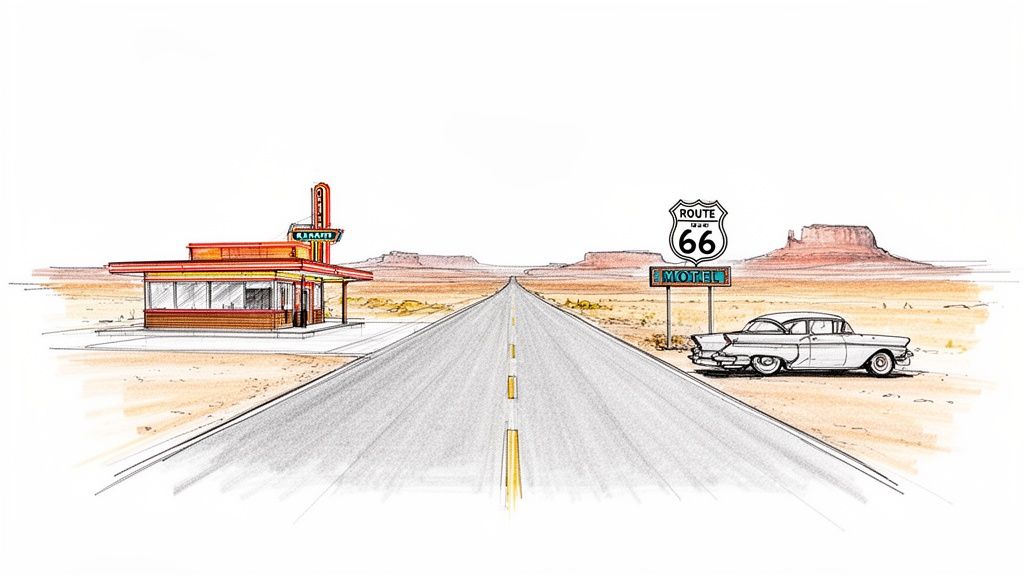
Known as the "Mother Road," Route 66 is the quintessential American road trip, a 2,448-mile journey through the heartland from Chicago to Los Angeles. This historic highway crosses eight states, offering a nostalgic look into classic Americana with its quirky roadside attractions, vintage motels, and authentic diners. A proper trip requires at least two weeks to truly step back in time and explore the small towns and forgotten landscapes that line this legendary path. It's an exploration of American history and culture, far from the interstate.
Immersive Experience: Beyond the Main Tourist Sights
While Cadillac Ranch in Texas is an essential stop, the soul of Route 66 lives in its human connections. Instead of just passing through, spend an afternoon at the Old Riverton Store in Kansas, one of the oldest continuously operating stores on the route, and listen to stories from the owners. In Santa Fe, look beyond the main tourist shops on the Plaza and duck into the smaller side streets to find genuine artisan galleries and local craft markets where you can meet the artists themselves.
Local Guides & Off-the-Beaten-Path Tips
- Eat Like a Local: Make it a rule to avoid chain restaurants. Instead, seek out family-owned diners in towns like Seligman, Arizona, or Tucumcari, New Mexico. Ask the staff for their favorite dish to get a real taste of regional cooking.
- Explore Urban Neighborhoods: When in St. Louis, go beyond the Gateway Arch and explore The Hill, a historic Italian-American neighborhood known for its incredible restaurants and bakeries. In Oklahoma City, discover the vibrant art and culture of the Paseo Arts District.
- Travel Smart: Ditch the interstate whenever possible. Use a detailed turn-by-turn guide to follow the original, pre-1937 alignments of Route 66. Stop at small-town visitor centers; the volunteers often have the best local stories and tips.
3. Appalachian Scenic Byway: North Carolina to Maine
The Appalachian Scenic Byway is less a single road and more a tapestry of routes tracing the spine of America's oldest mountain range. This journey, covering over 2,000 miles, is an immersion into the heart of Appalachian culture, offering dramatic vistas, authentic mountain towns, and a deep connection to folk traditions. Best experienced in segments, this trip is a slow, soulful exploration of the region's music, crafts, and resilient communities—a perfect choice for those seeking cultural depth over coastal glamour.
Immersive Experience: Beyond the Main Tourist Sights
While driving the Blue Ridge Parkway is a highlight, true Appalachian culture thrives in the small communities just off the main drag. Instead of sticking to popular overlooks, pull off in towns like Floyd, Virginia, to experience its Friday Night Jamboree for an authentic taste of local music. Rather than just visiting the large tourist centers in Asheville, explore the South Slope brewery district or the River Arts District to meet and support local makers directly in their studios.
Local Guides & Off-the-Beaten-Path Tips
- Eat Like a Local: Seek out family-owned diners serving classic Appalachian fare like biscuits and gravy, soup beans, or trout. In West Virginia, find a local church supper for an authentic community meal. Many small-town restaurants offer a more genuine culinary story than upscale city eateries.
- Explore Urban Neighborhoods: In larger stops like Asheville, North Carolina, venture beyond the downtown tourist corridor. Explore West Asheville's quirky shops and restaurants or the vibrant community of the South Slope to see where residents actually spend their time.
- Travel Smart: The Blue Ridge Parkway's speed limit is a suggestion to slow down and savor the journey. Travel during shoulder seasons (late spring or early fall) for stunning foliage without the peak summer crowds. Always be prepared for variable mountain weather.
4. Great River Road: Minnesota to Louisiana
The Great River Road is a 2,350-mile journey that follows the Mississippi River from its headwaters in Minnesota to the Gulf of Mexico in Louisiana. This quintessential American road trip is a deep dive into the nation's cultural heart, showcasing a remarkable transition from serene forests to the vibrant culture of the Deep South. It's a drive best experienced over three to four weeks, allowing time to explore the historic river towns, diverse cuisines, and rich musical heritage that define the ten states it crosses. This route is a living history lesson that unfolds with every mile.
Immersive Experience: Beyond the Main Tourist Sights
While seeing the Gateway Arch in St. Louis is a must, the true spirit of the Great River Road is found in its smaller, often overlooked communities. Instead of just passing through, spend a night in a historic river town like Red Wing, Minnesota, or Natchez, Mississippi. In New Orleans, venture beyond the French Quarter's well-trodden paths to explore the deep musical and cultural roots of the Tremé neighborhood, America's oldest Black neighborhood, for a more authentic experience.
Local Guides & Off-the-Beaten-Path Tips
- Eat Like a Local: Seek out regional specialties that tell a story. In Minnesota, find a local restaurant serving wild rice soup. In the Mississippi Delta, visit small, unassuming juke joints to experience authentic blues music and soul food. In Louisiana, look for family-owned restaurants serving Creole and Cajun cuisine far from the main tourist strips.
- Explore Urban Neighborhoods: Discover the unique cultural enclaves within the larger cities. In St. Louis, spend an afternoon in The Hill for its incredible Italian-American heritage. In New Orleans, explore the vibrant live music scene in the Marigny or the funky, artistic vibe of the Bywater.
- Travel Smart: Follow the official Great River Road scenic byway signs (marked with a green-and-white steamboat logo) to stay off the interstates. Plan your drive for the fall to enjoy stunning foliage in the northern states and milder weather in the south.
5. Southwest Deserts Loop: Arizona & Utah (Four Corners Region)
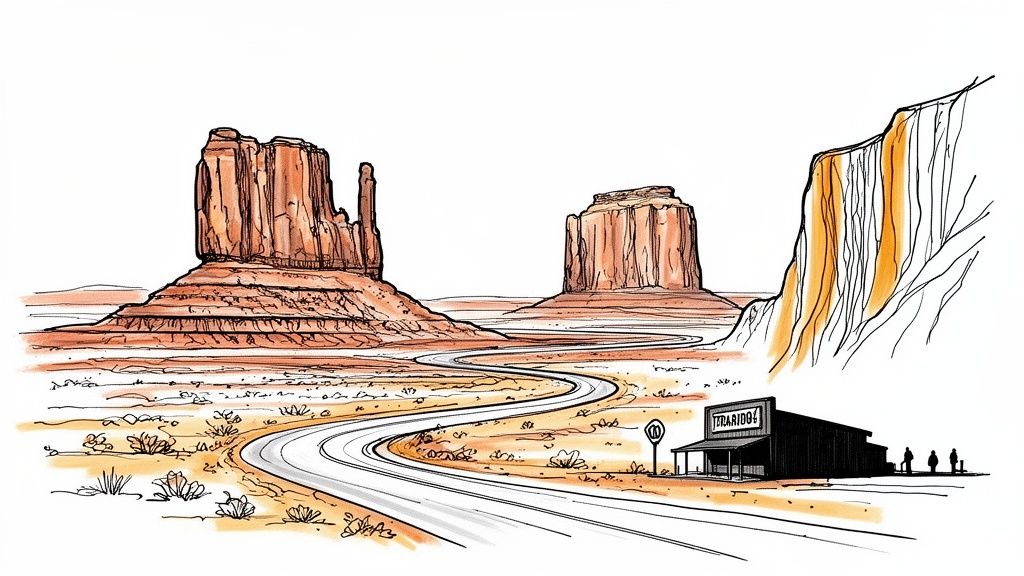
This spectacular 600-mile loop through the heart of the Four Corners region is one of the best American road trips for those seeking towering mesas and profound cultural history. The journey connects Arizona and Utah’s most breathtaking landscapes, including the Grand Canyon, Monument Valley, and Arches National Park, while offering deep insight into the enduring heritage of the Navajo and Hopi peoples. Spanning 7 to 10 days, this route is about the sacred lands and ancient stories embedded in its crimson rock formations—an immersive cultural experience contrasting desert beauty with vibrant, living traditions.
Immersive Experience: Beyond the Main Tourist Sights
Instead of just viewing Monument Valley from the visitor center, hire a local Navajo guide for a backcountry tour. They can take you to sacred sites inaccessible to the general public and share ancestral stories that bring the landscape to life. Similarly, while the Grand Canyon’s South Rim is magnificent, escape the crowds by visiting a lesser-known viewpoint like Desert View Watchtower for a more contemplative experience and to learn about the Hopi murals inside.
Local Guides & Off-the-Beaten-Path Tips
- Engage with Local Culture: Hire local guides, especially for Monument Valley and Canyon de Chelly. This is respectful and essential for a deeper understanding, and your investment directly supports the community. Always ask for permission before taking photos of people or their homes.
- Eat Like a Local: Seek out family-owned restaurants in towns like Chinle or Kayenta. Try authentic Navajo tacos on freshly made fry bread or a bowl of mutton stew for a genuine taste of the region.
- Travel Smart: Visit during the shoulder seasons (March-April or October-November) to avoid extreme summer heat. Roads on tribal lands can be rough; a high-clearance vehicle is recommended. Always carry extra water.
6. Pacific Northwest Loop: Oregon & Washington Coastline
The Pacific Northwest Loop is a 600-mile journey that captures the essence of Oregon and Washington, blending moody coastlines with vibrant urban culture. This route connects the creative hub of Portland with Seattle’s tech-meets-outdoors vibe, winding through misty rainforests and past dramatic sea stacks. Best experienced over 7 to 10 days, this is one of the best American road trips for those who appreciate both natural wonder and authentic local scenes, from world-class coffee to hyper-local food carts.
Immersive Experience: Beyond the Main Tourist Sights
While Cannon Beach and Pike Place Market are famous, the true spirit of the PNW lies in its smaller moments. Instead of only visiting Haystack Rock, explore the tide pools at low tide in quieter spots like Bandon or Yachats for a more intimate encounter with marine life. Rather than spending your time in Seattle’s tourist-heavy center, wander through the quirky, troll-adorned streets of Fremont or the Nordic-influenced community of Ballard to experience where locals actually live and play.
Local Guides & Off-the-Beaten-Path Tips
- Eat Like a Local: In Portland, dive into the food cart culture; visit pods with local favorites like Matt's BBQ or Nong's Khao Man Gai. In Seattle, skip the Starbucks lines and discover the city’s craft coffee scene at local roasters like Caffe Vita or Broadcast Coffee.
- Explore Urban Neighborhoods: Bypass Portland's polished Pearl District for the authentic vintage shops and vibrant street art of Southeast neighborhoods like Hawthorne. In Seattle, Capitol Hill offers a dynamic mix of nightlife and diverse culinary experiences that reveal the city's true pulse.
- Travel Smart: Visit during the shoulder seasons (May-June or September-October) for fewer crowds. Drive Highway 101 slowly. Always have a rain jacket handy, as the weather can change in an instant, especially on the Olympic Peninsula.
7. Blue Ridge Parkway: North Carolina to Virginia
Known as "America's Favorite Drive," the Blue Ridge Parkway is a 469-mile scenic journey that meanders through the Appalachian Highlands, connecting Virginia's Shenandoah National Park with the Great Smoky Mountains National Park. This is a road trip defined by its deliberate, unhurried pace, with a maximum speed limit of 45 mph and no commercial vehicles. The drive itself is the destination, offering breathtaking vistas, rich Appalachian culture, and a profound sense of tranquility, best experienced over five to seven days.
Immersive Experience: Beyond the Main Tourist Sights
Every overlook on the parkway offers a stunning view, but true immersion means stepping out of the car. Instead of just pulling over at Craggy Gardens, take the time to hike the Craggy Pinnacle Trail for a 360-degree view that most visitors miss. Rather than just driving through, plan an overnight stay in a smaller, authentic town like Floyd, Virginia, to experience its vibrant Friday Night Jamboree, a weekly celebration of local bluegrass music that offers a genuine taste of mountain heritage.
Local Guides & Off-the-Beaten-Path Tips
- Eat Like a Local: Bypass the limited parkway concessions and venture into nearby towns. In Asheville, explore the farm-to-table scene in the River Arts District. Stop at Mabry Mill's restaurant for their famous buckwheat pancakes, a historic and delicious parkway tradition.
- Explore Urban Neighborhoods: While the parkway is rural, it connects vibrant hubs. In Boone, North Carolina, explore King Street for its eclectic mix of independent bookshops, old-timey general stores, and craft breweries that capture the spirit of this mountain college town.
- Travel Smart: For stunning fall foliage without the overwhelming crowds, plan your trip for late September. You'll catch 70-80% of the color with only 20% of the October traffic. Always download maps for offline use, as cell service is unreliable, and check the National Park Service website for road closures.
8. Road Trip Planning — Seasons & Itineraries
Before you even book a car, strategic planning is the most critical part of crafting one of the best American road trips. Rather than just picking a route, this approach focuses on timing and pacing to elevate your journey from a simple drive to a truly immersive experience. It involves aligning your travel dates with optimal seasons and creating a flexible itinerary that allows for spontaneous discovery. A well-paced trip, perhaps allocating 10-14 days for a major route, prevents burnout and provides the space needed to genuinely connect with the places you visit.
Immersive Experience: Beyond the Main Tourist Sights
Effective planning means looking past the highlight reel. Instead of tackling a 3,000-mile cross-country route in two weeks, consider segmenting it. Focus a week on the Desert Southwest's national parks, then plan a separate trip for the historic towns of the Deep South. This thematic approach allows for deeper cultural immersion. Similarly, traveling in shoulder seasons like spring and fall often provides a more authentic experience with fewer crowds and more interactions with locals, whether in a New England village or a Pacific Northwest town.
Local Guides & Off-the-Beaten-Path Tips
- Pace Yourself: Don't overschedule. Build "buffer days" into your itinerary, especially for mountain or coastal drives where weather can be unpredictable. This flexibility allows for spontaneous detours to a local festival or an unexpected trail.
- Book Smart: For popular destinations during peak season, book key accommodations 6-8 weeks in advance. For the rest of your trip, allow for flexibility to discover hidden gems. When planning, selecting the right vehicle is crucial; explore the different car types available for your journey.
- Stay Informed: Always check road and trail conditions before you depart. National park websites and state transportation departments provide real-time updates on closures, which are common for seasonal routes like the Going-to-the-Sun Road in Montana.
9. Cultural & Respectful Travel Considerations
The best American road trips are defined not just by landscapes, but by the people and cultures that inhabit them. A truly immersive journey requires moving beyond the role of a passive observer to become a respectful and engaged visitor. This means understanding that many iconic routes, particularly in the Southwest and Alaska, pass through sovereign tribal lands, historic communities, and areas with deep cultural roots. Traveling with awareness and respect enriches your own experience while ensuring your presence is a positive one for the communities you visit.
Immersive Experience: Beyond the Main Tourist Sights
Instead of just driving through a reservation to see a monument, seek a deeper connection. Many tribal lands, like the Navajo Nation, require or highly recommend local guides for areas like Monument Valley or Canyon de Chelly. This isn't an inconvenience; it's an opportunity. A local guide provides unparalleled insight into the land’s history, stories, and spiritual significance that you would otherwise miss, transforming a scenic view into a meaningful cultural exchange.
Local Guides & Off-the-Beaten-Path Tips
- Support Local Economies Directly: Purchase crafts, art, and food directly from recognized local artisans and community-run businesses rather than third-party tourist shops. This ensures your money directly supports the creators and their families.
- Ask for Permission: Always ask before taking photographs of people, their homes, or private ceremonies. A simple, respectful request shows consideration and acknowledges that you are a guest in their community.
- Plan Around Local Events: Research community-run events or festivals happening along your route. Attending a public powwow or a local heritage festival offers an authentic window into living cultures, far more impactful than a staged tourist performance.
10. Local Food, Markets & Neighborhoods
Some of the best American road trips are defined not by the route, but by the richness of the local culture you engage with along the way. This approach prioritizes a deep dive into the culinary and community fabric of each stop, transforming a simple drive into a journey of authentic discovery. Instead of just passing through, you actively seek out the places where locals eat, shop, and live. This means trading tourist traps for the genuine heartbeat of a place, whether that’s a bustling farmers' market or a historic neighborhood diner.
Immersive Experience: Beyond the Main Tourist Sights
Instead of relying on top-rated tourist restaurants, seek out the places with a story. A drive along Route 66 isn't complete without experiencing the authentic Italian-American heritage of "The Hill" neighborhood in St. Louis, a cultural pocket far from the Arch. Likewise, instead of just grabbing a quick bite in Santa Barbara, plan your stop around the Saturday morning farmers' market to taste produce directly from the source and connect with local growers.
Local Guides & Off-the-Beaten-Path Tips
- Eat Like a Local: Prioritize family-owned diners, neighborhood taquerias, and dockside fish markets over national chains. Ask a local shop owner for their favorite lunch spot; their recommendation will be more valuable than any online review.
- Explore Urban Neighborhoods: Venture beyond downtown cores. In San Francisco, the Mission District offers a vibrant tapestry of murals and authentic Latin American food. In Asheville, the South Slope district is a hub for craft breweries and local artisans, providing a true taste of the city's modern culture.
- Travel Smart: Time your stops with local events. Check city calendars for weekly farmers' markets, seasonal food festivals (like wild rice harvests in the Great Lakes region), or neighborhood block parties. This is how you find the true rhythm of a place.
11. Safety, Logistics & Remote-Area Considerations
While the destination is thrilling, the journey itself is the heart of the best American road trips, and smart preparation is what makes it a success. This isn't a specific route but a crucial mindset for any long drive, especially those venturing into remote areas where services are sparse and conditions can change rapidly. Proper planning transforms potential crises into minor inconveniences, allowing you to fully immerse yourself in the experience without unnecessary stress. A well-prepared trip means you can focus on the stunning landscapes and local culture, not on a preventable emergency.
Immersive Experience: Beyond the Main Tourist Sights
The most memorable moments often happen far from cell service. Instead of just relying on your GPS, carry physical maps as a backup for national parks or desert regions where signals fail. Rather than assuming the next town will have a gas station, top off your tank whenever you see one, especially in places like rural Nevada or the Alaskan interior. This proactive approach lets you explore that intriguing side road or linger at a beautiful viewpoint without worrying about logistics.
Local Guides & Off-the-Beaten-Path Tips
- Pack for Self-Sufficiency: Always carry extra water (at least one gallon per person, per day), non-perishable food, a first-aid kit, and a portable power bank. For those towing an RV, mastering essential towing tips for travel trailers is non-negotiable for safety.
- Plan Ahead, Stay Flexible: Check weather forecasts and road conditions daily, particularly for mountain passes or desert crossings prone to sudden changes. Book necessary permits for parks or backcountry access well in advance, but always be prepared to alter your itinerary if conditions demand it.
- Communicate Your Plans: Inform someone of your route and expected timeline, especially when venturing off-grid. For solo adventurers, understanding basic precautions is key. You can find more comprehensive advice on solo travel safety tips here.
12. Popular Culture & Literary References
The best American road trips are more than just scenic drives; they are woven into the fabric of the nation's culture, immortalized in songs, literature, and movements that give the asphalt a soul. Understanding these cultural touchstones transforms a simple journey into a pilgrimage, connecting you with the stories and legends that have defined these iconic routes for generations. This isn't just about visiting a place, it's about experiencing the narrative that made it famous.
Immersive Experience: Beyond the Main Tourist Sights
Instead of just driving Route 66, listen to Bobby Troup's "(Get Your Kicks on) Route 66" and read Jack Kerouac's On the Road to feel the restless spirit that defined the Beat Generation's cross-country quests. When driving the Great River Road, go beyond the steamboat tours. Read Mark Twain’s Life on the Mississippi and listen to Delta blues classics in Clarksdale to understand the river’s profound influence on American music and literature.
Local Guides & Off-the-Beaten-Path Tips
- Create a Thematic Playlist: Before your trip, build a soundtrack that reflects the region. For the Delta blues on the Great River Road, include artists like Robert Johnson and Muddy Waters. For Route 66, mix in classic rock and roll from Chuck Berry and The Eagles.
- Visit Key Literary Sites: Seek out the actual places that inspired the art. Visit the Beat Museum in San Francisco before starting a PCH drive, or stop at Twain’s childhood home in Hannibal, Missouri. These places offer a deeper context that a simple drive-by cannot.
- Engage with Modern Movements: Explore how culture continues to evolve. In the Pacific Northwest, visit an independent coffee roaster to understand the region’s focus on sustainability and craft, a modern cultural movement that defines its identity just as much as its natural beauty.
12 Best American Road Trips — Comparison Guide
| Route | 🔄 Implementation complexity | ⚡ Resource requirements | ⭐ Expected outcomes | 💡 Ideal use cases | 📊 Key advantages |
|---|---|---|---|---|---|
| Pacific Coast Highway (San Francisco → San Diego) | Moderate — coastal driving, seasonal closures, requires vehicle | Medium–High — 10–14 days, car rental, mid–high lodging costs in peaks | ⭐⭐⭐⭐ — dramatic ocean vistas, varied landscapes, coastal towns | Scenic photographers, coastal explorers, food & wine seekers | Iconic views; well-developed services; flexible detours |
| Route 66 (Chicago → Los Angeles) | High — long distances, route finding to follow historic segments | High — 14–21 days, significant driving time, modest lodging in towns | ⭐⭐⭐ — immersive Americana, roadside attractions, historic sites | History buffs, nostalgia travelers, offbeat attraction seekers | Affordable small-town stays; authentic roadside culture |
| Appalachian Scenic Byway (NC → ME) | High — multi-state coordination, mountain driving skill required | High — 16–21 days, seasonal planning for foliage, mixed services | ⭐⭐⭐⭐ — deep cultural immersion, mountain vistas, hiking | Fall foliage viewers, cultural immersion, hikers | Authentic communities; rich heritage; excellent fall colors |
| Great River Road (MN → LA) | High — very long route with varied regional logistics | Very High — 18–24 days, varied amenities, festival timing matters | ⭐⭐⭐⭐ — diverse cultures, food traditions, musical heritage | Foodies, music/history enthusiasts, slow travelers | Diverse landscapes; river towns; deep historical context |
| Southwest Deserts Loop (AZ & UT) | Moderate — remote driving, permit/cultural permissions, some 4WD roads | Medium — 10–14 days, possible guided tours, limited services in places | ⭐⭐⭐⭐ — spectacular desert geology, cultural site visits | National park fans, Navajo-guided cultural tours, hikers | Iconic geology; stargazing; strong cultural-tour options |
| Pacific Northwest Loop (OR & WA coast) | Moderate — coastal weather planning, ferries/seasonality | Medium — 10–14 days, urban costs in Portland/Seattle, ferry fares | ⭐⭐⭐⭐ — lush coastlines, tide pools, vibrant neighborhood culture | Food & craft-beer lovers, wildlife viewers, short loop travelers | Compact itinerary; strong food/coffee scenes; sustainability focus |
| Blue Ridge Parkway (NC → VA) | Low–Moderate — leisurely driving, limited services on parkway | Low–Medium — 7–10 days, affordable nearby lodging, minimal gear | ⭐⭐⭐⭐ — continuous mountain overlooks, fall foliage | Short scenic drives, leaf-peepers, casual hikers | 275+ overlooks; no commercial traffic; abundant trails |
| Road Trip Planning — Seasons & Itineraries | Low — informational guidance, timeline templates | Low — requires time to plan, booking windows (6–8 weeks) | ⭐⭐⭐ — better timing and pacing, reduced surprises | First-time planners, multi-route itineraries, shoulder-season travel | Consolidated season/duration guidance; pacing templates |
| Cultural & Respectful Travel Considerations | Low — behavioral requirements, some permit/guide coordination | Low–Medium — possible guide fees, cash preference in some areas | ⭐⭐⭐⭐ — more respectful, ethical interactions, deeper meaning | Travelers to indigenous/heritage sites, community-focused visitors | Ethical engagement; supports local artisans/guides; reduces harm |
| Local Food, Markets & Neighborhoods | Low — curiosity-driven, neighborhood exploration | Low–Medium — market purchases, dining budget | ⭐⭐⭐⭐ — authentic regional flavors and everyday culture | Food-focused travelers, market & neighborhood explorers | Regional specialties; direct support for local producers |
| Safety, Logistics & Remote‑Area Considerations | Moderate — prep for remote risks, vehicle & emergency planning | Medium — extra supplies, possible 4WD, permits, insurance | ⭐⭐⭐⭐ — reduced disruptions, safer remote travel | Remote route travelers, long-distance planners, solo adventurers | Risk mitigation; fuel/permit planning; emergency readiness |
| Popular Culture & Literary References | Low — background reading/listening | Low — time investment, optional media | ⭐⭐⭐ — enriched context and expectations | Cultural-context travelers, educators, literature fans | Deepens narrative appreciation; frames visitor expectations |
Your Next Great American Story Starts Here
From the sun-drenched cliffs of California's Pacific Coast Highway to the misty, ancient peaks of the Blue Ridge Parkway, the American road trip is far more than just a journey between two points. It's a living, breathing tapestry of stories, landscapes, and cultures waiting to be discovered. As we've explored, the best american road trips are not defined by the miles you cover, but by the connections you make along the way. They are found in the spontaneous detours, the roadside diners with handwritten menus, and the quiet moments spent watching a desert sunset paint the sky.
This guide was designed to be your launchpad, not your final destination. We’ve covered iconic routes like Route 66 and the Great River Road, but the true magic happens when you use this information as a framework to build your own unique adventure. The most memorable trips are those that embrace the unexpected and prioritize authentic engagement over a packed itinerary.
Moving Beyond the Map: Your Action Plan for an Unforgettable Journey
The ultimate takeaway is this: travel with intention. The difference between a tourist and a traveler lies in curiosity and respect. Before you put the car in drive, commit to a mindset that values local connection and responsible exploration. Here are the core principles to guide your planning:
- Prioritize Local Voices: Instead of relying solely on major travel portals, seek out local blogs, community newspapers, and small business directories for the regions you plan to visit. Let the people who live there guide you to the true heart of their home.
- Embrace the Unplanned: Build flexibility into your schedule. That extra day you didn't plan for might lead you to a local music festival in a small Appalachian town or a hidden hot spring recommended by a park ranger in the Pacific Northwest.
- Plan for Practical Realities: A successful road trip is a well-prepared one. Revisit the sections on logistics, safety, and seasonal planning. Check road conditions, understand permit requirements for national parks, and ensure your vehicle is ready for the terrain, whether it's the desert heat of the Southwest or the unpredictable mountain weather.
- Engage with Culture Respectfully: Remember the importance of cultural and respectful travel. When visiting indigenous lands or historic sites, take the time to learn the history from the perspective of the people who belong to that place. Support local artisans and businesses, and always practice Leave No Trace principles.
The best american road trips are immersive, transformative experiences that challenge your perspective and leave an indelible mark. They invite you to step outside the familiar, to listen more than you speak, and to see the country not as a collection of landmarks, but as a community of diverse, vibrant places. The road is ready for you. The stories are out there. Now, it's your turn to go and find them.
Ready to move beyond the tourist trail and discover the authentic heart of America? The detailed local guides and off-the-beaten-path itineraries at CoraTravels are crafted to help you experience destinations like a local. Plan your next unforgettable journey with insights you won't find anywhere else at CoraTravels.