
Buenos Aires isn't just one city; it's a vibrant collage of barrios, each with its own distinct rhythm, flavor, and personality. Choosing where to stay or explore can completely shape your experience, moving you from Parisian-style boulevards to cobblestone streets echoing with tango. Forget the surface-level tourist maps that only point you to the most obvious landmarks. This guide dives deep into the best neighborhoods in Buenos Aires, offering a true local's perspective beyond the main touristic places.
We'll uncover the unspoken rules, the off-the-beaten-path gems, and the authentic cultural experiences that let you live like a true Porteño. This isn't just a list; it's a blueprint for immersive travel. Whether you're a foodie chasing the perfect parrilla, a digital nomad seeking a creative hub, or a history buff ready to get lost in colonial charm, this curated roundup will help you find the barrio that feels like home. Each section is structured to give you actionable insights: the unique vibe, who it’s best for, practical transit notes, and sample itineraries to help you hit the ground running.
To truly immerse yourself in the city's culture and connect with locals in these diverse communities, understanding the nuances of the language is key. To get a feel for the local accent and common phrases, you might consider exploring resources like Spanish stories to help you with the local language. This guide will provide the "where," but a little linguistic preparation can profoundly enhance the "how" of your adventure, turning a simple visit into a full cultural experience.
1. La Boca - Tango Heritage & Colorful Charm
La Boca is arguably the most visually iconic of Buenos Aires’ neighborhoods, a living postcard of the city's vibrant immigrant history and artistic soul. Situated at the mouth (or boca) of the Riachuelo river, its past is rooted in the Genoese sailors who settled here in the 19th century, painting their conventillo homes with leftover marine paint. This practical solution blossomed into a dazzlingly colorful aesthetic that defines the area today.

While the famous Caminito street museum is a tourist magnet, La Boca offers a much deeper cultural experience for those willing to explore its periphery. It is the spiritual home of tango and the legendary Boca Juniors football club, forces that shape the neighborhood's passionate, working-class identity. It’s one of the best neighborhoods in Buenos Aires for travelers seeking a raw, historical, and artistic immersion.
Immersive Local Experience
To truly understand La Boca, you must venture beyond the main tourist drag.
- Go Beyond Caminito: Wander a few blocks away from Caminito to streets like Necochea to find authentic cantinas and see daily life unfold. The colorful facades continue, but the crowds thin, offering a more genuine atmosphere.
- Visit a "Peña": For a truly local experience, find a peña (a traditional music and dance gathering) in a local bar. These are often impromptu and offer a more intimate view of tango and folk music than the polished shows on Caminito. Ask a local shopkeeper for recommendations on where to find one.
- See a Match (or Don't): While attending a Boca Juniors game at La Bombonera is an electrifying experience, tickets are notoriously hard to secure. Instead, watch a match at a local bar near the stadium to soak in the incredible passion of the fans.
Local Tip: Arrive in La Boca between 7 AM and 9 AM. You'll witness the neighborhood waking up without the tourist throngs, allowing for unobstructed photos and peaceful observation of its unique architecture.
2. San Telmo - Bohemian History & Antique Markets
San Telmo is the soulful, historic heart of Buenos Aires, where colonial architecture and cobblestone streets whisper tales of the city's past. As the oldest barrio, its atmosphere is thick with nostalgia, drawing a bohemian crowd of artists, musicians, and antique collectors. Its faded grandeur, once home to the city’s aristocracy, now provides a stunning backdrop for a thriving creative scene and a palpable sense of old-world charm.
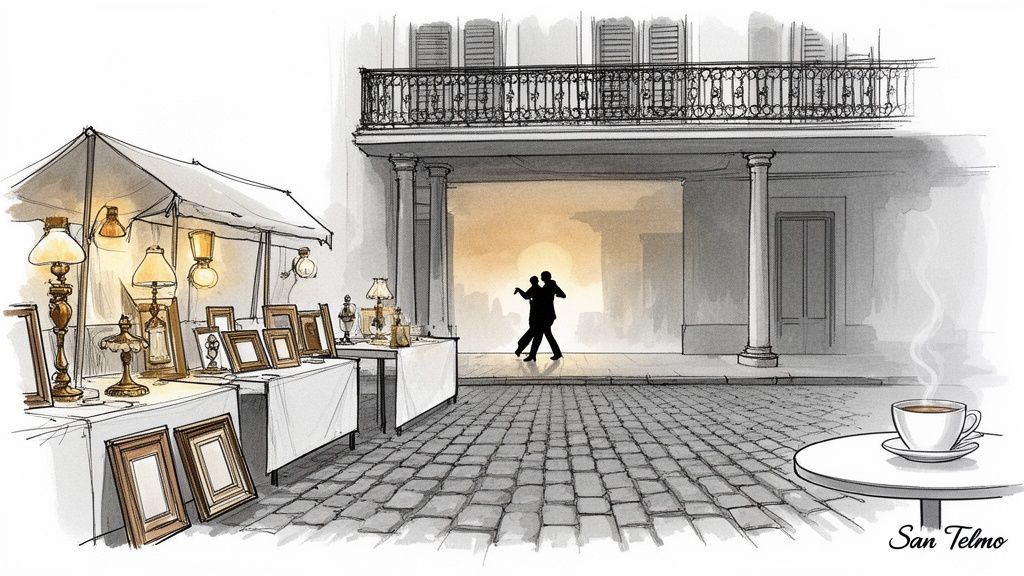
While the famous Sunday Feria de San Telmo is its main attraction, the neighborhood’s true magic lies in its everyday rhythm. It is a place where tango is not just a performance but a way of life, found in intimate milongas and impromptu street dances. This blend of living history and artistic energy makes San Telmo one of the best neighborhoods in Buenos Aires for those seeking cultural depth and an authentic, bohemian experience. The strategic thinking behind choosing a base here is similar to finding the right neighborhood in a vast city like Tokyo; understanding its unique vibe is key to a great trip.
Immersive Local Experience
To truly connect with San Telmo’s spirit, you must look beyond the Sunday market crowds.
- Explore the Side Streets: Wander away from the main thoroughfare of Calle Defensa onto streets like Pasaje de la Giuffra or Calle Chile. Here you'll find hidden art galleries, tiny artisan workshops, and quiet colonial courtyards that offer a peaceful respite and a glimpse into local life.
- Visit a "Bar Notable": San Telmo is home to several of Buenos Aires' historic cafes, or bares notables. Step into places like Bar El Federal or La Poesía to sip a cortado amidst antique wood fixtures and soak in an atmosphere that has remained unchanged for decades.
- Catch Live Music Mid-Week: While weekends are lively, the real local scene emerges from Thursday to Saturday nights. Seek out small venues and cultural centers for live tango, jazz, or folk music, offering a more intimate and authentic experience than the larger, tourist-focused shows.
Local Tip: Visit the Feria de San Telmo around 8 AM or 9 AM on a Sunday. You'll get the first pick of the best antiques and vintage treasures before the massive crowds descend, allowing you to chat with vendors and hear the stories behind their items.
3. Palermo Soho - Trendy Restaurants & Design Boutiques
Palermo Soho is the vibrant, beating heart of modern Buenos Aires, where cutting-edge design, world-class gastronomy, and bohemian chic collide. Once a quiet residential area of low-slung homes, it has transformed into the epicenter of porteño cool, with its cobbled streets now lined with independent fashion boutiques, innovative restaurants, and lively craft beer bars. It’s a magnet for the city's creative class, expats, and travelers seeking contemporary urban energy.
The neighborhood strikes a perfect balance between high-end sophistication and a relaxed, artistic vibe. By day, its plazas, like Plaza Serrano and Plaza Armenia, host bustling artisan markets. By night, the area comes alive as a premier destination for dining and nightlife. For those wanting to experience the pulse of contemporary Buenos Aires, Palermo Soho is undeniably one of the best neighborhoods in Buenos Aires.
Immersive Local Experience
To get beneath the trendy surface of Palermo Soho, you need to dive into its creative and culinary undercurrents.
- Explore the Pasajes: Duck into the hidden pasajes (passageways) like Pasaje Soria or Pasaje Russel. These charming, quiet lanes are filled with small, independent designer workshops, art galleries, and secluded cafes that most tourists miss.
- Attend a "Feria": On weekends, skip the main plaza crowds and seek out smaller, pop-up ferias (fairs) in local courtyards or event spaces. These often feature emerging designers and artists, offering a more authentic and less commercial shopping experience.
- Take a Street Art Tour: While well-known, a self-guided street art tour provides deep insight into the neighborhood’s soul. Focus on the side streets off main drags like Honduras and Gorriti to discover massive murals by local and international artists that tell stories of Argentine culture and politics.
Local Tip: For the best dining experience, book a table for 9:30 PM or later. Porteños dine late, and arriving earlier means you'll be eating in an empty restaurant. The real neighborhood buzz begins after 10 PM.
4. Palermo Hollywood - Entertainment Hub & Nightlife
Named for the television and film production studios that flocked here, Palermo Hollywood is the undisputed epicenter of Buenos Aires' contemporary nightlife and culinary scene. By day, its tree-lined streets are filled with digital nomads working from chic cafes, but by night, the neighborhood transforms into a buzzing playground for the city's fashionable and energetic crowd. It's where cutting-edge restaurants, secret speakeasies, and high-energy nightclubs converge.
The vibe is decidedly modern and international, a stark contrast to the historical feel of areas like San Telmo. This is the place to see and be seen, offering a glamorous glimpse into the city's modern identity. As one of the best neighborhoods in Buenos Aires for those seeking world-class dining and nightlife, Palermo Hollywood delivers an experience that is both sophisticated and thrillingly dynamic.
Immersive Local Experience
To experience Palermo Hollywood like a true Porteño, you need to adjust to its late-night rhythm and look beyond the obvious hotspots.
- Discover a "Puerta Cerrada": Seek out a "closed-door" restaurant for a unique dining experience. These are private, often un-signed supper clubs run out of chefs' homes. You'll need to book in advance, and a quick search for "puertas cerradas Palermo Hollywood" will reveal current popular options.
- Find a Themed Speakeasy: The neighborhood is famous for its hidden bars. Look for unassuming entrances like a flower shop or a New York-style subway station that lead to incredible cocktail lounges. Ask a local bartender for their current favorite secret spot.
- Start Your Night at a "Vermutería": Instead of a pre-dinner cocktail, embrace the local tradition of vermouth. Find a modern vermutería on a street like Arévalo around 7 PM to enjoy a classic aperitif with tapas before your late dinner.
Local Tip: Nightlife here doesn't truly begin until after midnight, and clubs often don't get busy until 1:30 AM or 2 AM. Plan for a late dinner around 10 PM and a leisurely drink afterward to sync with the local schedule.
5. Recoleta - Upscale Culture & Grand Architecture
Often called the "Paris of South America," Recoleta embodies the city's opulent, European-influenced golden age. This is Buenos Aires at its most stately and refined, where grand French-style apartment buildings line wide, tree-shaded avenues. It's a neighborhood defined by its embassies, luxury hotels like the Alvear Palace, and prestigious cultural institutions, offering a glimpse into the sophisticated lifestyle of the Porteño elite.

While the world-famous Recoleta Cemetery, the final resting place of Eva Perón, is the main draw, the neighborhood’s allure extends to its art galleries, manicured parks, and high-end boutiques. It stands out as one of the best neighborhoods in Buenos Aires for travelers who appreciate history, fine art, and architectural splendor, providing a tranquil and elegant base for exploring the city.
Immersive Local Experience
To experience Recoleta beyond its polished surface, you need to delve into its cultural and architectural details.
- Explore Architectural Gems: Instead of just admiring the main avenues, walk down smaller side streets like Pasaje Suipacha or Pasaje Bollini. These charming, lesser-known passages reveal hidden architectural details, quiet cafes, and a more intimate neighborhood feel.
- Visit El Ateneo Grand Splendid: Don’t just take a photo; sit down for a coffee on the former stage of this breathtakingly beautiful theater-turned-bookstore. Spend an hour browsing the shelves and observing locals, transforming a tourist stop into a cultural immersion.
- Discover the Weekend Market: While the Feria de Plaza Francia is popular, seek out the smaller, more authentic stalls set up by local artisans on the grassy areas behind the main market. Here, you'll find unique crafts and have the chance to chat with the artists themselves.
Local Tip: Visit the Museo Nacional de Bellas Artes (National Museum of Fine Arts) on a weekday afternoon. It's free to enter, and you'll find Porteños quietly sketching and enjoying masterpieces by Goya, Rembrandt, and Van Gogh without the weekend crowds.
6. San Isidro - Riverside Elegance & Historic Charm
San Isidro offers a tranquil escape from the bustling city center, representing the more refined, suburban side of Buenos Aires life. Located north of the capital along the shores of the Río de la Plata, this historic neighborhood is characterized by its cobblestone streets, grand 19th-century mansions, and lush, tree-lined avenues. Its past is rooted in the Argentine aristocracy who built their summer residences here, a legacy that imbues the area with an air of sophisticated, old-world elegance.
While the impressive neo-gothic Cathedral and the bustling weekend crafts fair in Plaza Mitre are well-known highlights, San Isidro provides a deeper connection to a more relaxed and affluent porteño lifestyle. It is the spiritual home of Argentine rugby and a hub for sailing, which shapes its active, outdoor-oriented identity. San Isidro is one of the best neighborhoods in Buenos Aires for travelers seeking a peaceful, green, and historically rich retreat with a strong local community feel.
Immersive Local Experience
To truly appreciate San Isidro, you must adopt its slower, more deliberate pace.
- Explore the Historic Quarter: Wander beyond the main plaza along streets like 25 de Mayo to discover hidden colonial-era homes, private gardens, and charming architectural details. The area around the Cathedral is a living museum of Argentine aristocratic history.
- Walk the Riverside (Paseo Costero): Join locals for a walk, jog, or bike ride along the scenic riverside promenade at sunset. This is where the community gathers to relax, enjoy mate, and watch the sailboats on the river, offering an authentic slice of daily life.
- Visit a Local Sailing or Rugby Club: While gaining entry might be tricky, having a drink at the public-facing bar of a club like the Club Náutico San Isidro or the San Isidro Club (SIC) offers a glimpse into the neighborhood's sporting soul and social fabric.
Local Tip: Arrive via the historic Tren de la Costa. This picturesque tourist train line runs along the river from Vicente López, offering stunning views and a charming, old-fashioned way to reach the heart of San Isidro.
7. Barracas - Emerging Arts District & Street Art
Barracas is a traditionally working-class neighborhood shedding its industrial past to become one of Buenos Aires' most exciting under-the-radar cultural hubs. Situated south of San Telmo, it's undergoing a vibrant transformation, with old warehouses and factory walls now serving as immense canvases for world-class street art. This shift has attracted a bohemian community of artists, designers, and students, fostering an authentic, creative atmosphere.
While it lacks the polish of Palermo or Recoleta, Barracas offers something increasingly rare: a glimpse into the city's evolving identity. It is one of the best neighborhoods in Buenos Aires for travelers seeking an off-the-beaten-path experience, where vibrant public art and a gritty, authentic local scene intersect. Its affordability and emerging gallery circuit make it a haven for budget-conscious creatives and curious explorers.
Immersive Local Experience
To truly appreciate Barracas, you have to explore its streets and engage with its burgeoning creative community.
- Street Art Safari: Dedicate an afternoon to a self-guided walking tour. Start at Pasaje Lanín, a street transformed by artist Marino Santa María, where every house facade is a colorful mosaic. Then, wander towards the larger murals along Avenida Regimiento de Patricios and the area around the old train tracks.
- Visit an Art Cooperative: Seek out artist-run spaces and independent galleries that often open their doors on weekends. These venues, unlike formal museums, offer a direct connection to the local artists and a chance to see contemporary porteño art in the making.
- Explore Local Bodegones: Skip the trendy restaurants and dive into a traditional bodegón. These classic, no-frills eateries serve hearty, homemade Argentine food. Ask a local artist or gallery owner for their favorite spot to get an authentic recommendation.
Local Tip: Much of the neighborhood's best street art is concentrated along the train line and former industrial corridors. The area around the Hipólito Yrigoyen train station is a great starting point for discovering large-scale, impressive murals away from any crowds.
8. La Candelaria - Colonial History & Religious Heritage
La Candelaria is the historical and political heart of Buenos Aires, a district where the nation’s most pivotal moments have unfolded. Often overshadowed by its more flamboyant neighbors, this compact area around Plaza de Mayo holds the city’s colonial soul. It's defined by imposing government buildings like the Casa Rosada and the Metropolitan Cathedral, standing as stoic monuments to Argentina's foundation and turbulent political past.
While technically part of Monserrat, locals often refer to this historic core as La Candelaria, named after one of its oldest churches. It’s less of a residential neighborhood and more of a living museum. This makes it one of the best neighborhoods in Buenos Aires for history enthusiasts and anyone looking to grasp the civic and religious roots that shaped the entire country.
Immersive Local Experience
To connect with La Candelaria's spirit, you must look beyond the grand facades and engage with its living history.
- Attend the Changing of the Guard: Witness the formal ceremony for the Changing of the Guard at the Casa Rosada. It’s a display of military tradition that offers a glimpse into Argentina's presidential history, performed by the Regiment of Mounted Grenadiers.
- Explore the Manzana de las Luces: Venture into the "Enlightenment Block," an underground network of 17th-century tunnels built by Jesuits. This subterranean complex offers a fascinating perspective on the city's colonial infrastructure and secretive past.
- Visit a Historic Café: Step into Café La Puerto Rico on Adolfo Alsina street. Founded in 1887, it’s one of the city's oldest Bares Notables, where you can soak in a timeless atmosphere over a café con leche far from the tourist crowds.
Local Tip: Visit the Plaza de Mayo on a Thursday afternoon around 3:30 PM to witness the weekly march of the Madres de Plaza de Mayo. It is a profound and moving demonstration that has been happening for decades, offering a powerful insight into Argentina's recent history.
9. Almagro - Bohemian Residential & Theater District
Almagro is the beating heart of authentic, middle-class porteño life, a neighborhood that hums with cultural energy away from the well-trodden tourist trails. This bohemian enclave is defined by its vibrant independent theater scene, historic tango venues, and a deeply-rooted residential character. It’s a place where traditional cafés sit next to experimental performance spaces, and the streets are filled with students, artists, and families rather than tour groups.
Unlike the polished glamour of Palermo or Recoleta, Almagro offers a grittier, more lived-in feel. Its affordability and central location make it a magnet for young professionals and creatives, fostering a dynamic community spirit. For travelers seeking an unfiltered glimpse into the city's artistic soul and daily rhythms, Almagro is undeniably one of the best neighborhoods in Buenos Aires.
Immersive Local Experience
To tap into Almagro's genuine vibe, you need to embrace its cultural offerings and residential pace.
- Explore the Abasto Scene: The area around the historic Abasto Shopping mall (a former market and Art Deco masterpiece) is the epicenter of tango history, once home to the legendary Carlos Gardel. Explore the surrounding streets to find tango-themed fileteado art and small, intimate milongas (tango dance halls).
- Catch an Off-Circuit Play: Almagro is the heart of Buenos Aires' teatro off (independent theater) circuit. Venues like El Camarín de las Musas or Timbre 4 offer cutting-edge performances. Check their schedules online and book a ticket for an experience entirely in Spanish, offering total immersion.
- Dine at a "Bodegón": Skip the trendy restaurants and find a traditional bodegón like El Banderín or Cantina Pierino. These family-run eateries serve hearty, classic Argentine dishes in a no-frills, nostalgic atmosphere where you'll be dining alongside generations of locals.
Local Tip: Many independent theaters in Almagro operate on a “a la gorra” system, where you pay what you can at the end of the show. It's a fantastic way to access local culture, but be sure to contribute generously to support the artists.
10. Villa Crespo - Hipster Neighborhoods & Street Culture
Villa Crespo is the effortlessly cool younger sibling to its trendy neighbor, Palermo. This former Jewish quarter has evolved into a hub for artists, designers, and young professionals, offering a more laid-back and authentic vibe. Known for its extensive street art, independent leather goods outlets (marroquinerías), and a burgeoning culinary scene, it’s a neighborhood that feels lived-in and creative, not curated for tourists.
The neighborhood strikes a perfect balance between residential calm and creative energy. It's one of the best neighborhoods in Buenos Aires for those looking to experience the city's modern, artistic pulse away from the main tourist circuits. Its streets are a gallery in themselves, and its independent spirit is a refreshing alternative to more commercialized areas.
Immersive Local Experience
To truly capture the essence of Villa Crespo, you need to dive into its creative and community-oriented spaces.
- Explore the Street Art Circuit: Wander around the streets of Gurruchaga, Serrano, and Castillo to discover an ever-changing canvas of murals by renowned local and international artists. The art here is dynamic and often carries a strong social message.
- Hunt for Vintage and Leather: The neighborhood is famous for its leather outlets along Calle Murillo. For a more unique find, explore the side streets for vintage clothing stores and independent designer boutiques that offer one-of-a-kind pieces.
- Visit a "Centro Cultural": Villa Crespo is home to numerous independent cultural centers, like the famous Club Cultural Matienzo. Check their schedules for underground concerts, art exhibitions, or film screenings to connect with the local creative community. Finding the best local scenes often means thinking outside the box, much like discovering the best arrondissement in Paris requires looking beyond the Eiffel Tower.
Local Tip: Villa Crespo's best cafes and bars are often hidden in plain sight. Don't be afraid to walk into unassuming doorways or what looks like a converted warehouse; you might discover your new favorite spot for coffee or a craft vermouth.
Top 10 Buenos Aires Neighborhoods Comparison
| Neighborhood | 🔄 Accessibility & Pace ⚡ | 💰 Cost / Budget | 📊 Expected Experience | Best for | 💡 Tips & ⭐ Key advantages |
|---|---|---|---|---|---|
| La Boca - Tango Heritage & Colorful Charm | Central and walkable; very touristy and can be crowded; some safety concerns at edges | Moderate–High in main areas | Vibrant, photogenic streets; strong live tango presence; tourist-focused | First-time visitors, photographers, tango lovers | 💡 Visit 7–9am and explore beyond Caminito; ⭐ Iconic colorful streets and authentic tango venues |
| San Telmo - Bohemian History & Antique Markets | Central, cobblestones; busy on Sundays during the fair | Low–Moderate | Authentic bohemian vibe with antiques, live music and galleries | Artists, vintage collectors, budget-conscious travelers | 💡 Arrive early (8am) for the Feria; ⭐ Rich antique markets and historic atmosphere |
| Palermo Soho - Trendy Restaurants & Design Boutiques | Easy to navigate on foot; busy weekends | High | Upscale dining, design boutiques, lively nightlife | Foodies, shoppers, design enthusiasts, young professionals | 💡 Reserve restaurants in advance; ⭐ World-class restaurants and stylish shopping |
| Palermo Hollywood - Entertainment Hub & Nightlife | Walkable but nightlife peaks late; active after midnight | High (especially nights) | Energetic, glamorous nightlife and late dining | Party-goers, nightlife enthusiasts, young international crowd | 💡 Go out after 1am and use taxis at night; ⭐ Best nightlife and DJ/club scene |
| Recoleta - Upscale Culture & Grand Architecture | Central, well-maintained, easy walking | Very High | Elegant, museum-rich, calm daytime culture | Culture enthusiasts, luxury travelers, architecture lovers | 💡 Visit museums on discount days; ⭐ Grand architecture and top museums |
| San Isidro - Riverside Elegance & Historic Charm | Suburban; requires train/car; relaxed pace | High | Riverside promenades, colonial charm, quieter residential feel | Families, those seeking relaxation, architecture fans | 💡 Take the train or remise; ⭐ Riverside views and polished streets |
| Barracas - Emerging Arts District & Street Art | Less central, improving walkability; best by day | Low | Authentic, gritty street-art scene and emerging galleries | Artists, budget travelers, adventurous visitors | 💡 Explore on foot during daylight; ⭐ Vibrant murals and affordable local culture |
| La Candelaria - Colonial History & Religious Heritage | Central civic area; walkable but institutional | Low–Moderate | Historic, governmental and religious landmarks; less nightlife | History buffs, students, educational tourists | 💡 Visit government sites during office hours; ⭐ Key historic sites (Casa Rosada, Cathedral) |
| Almagro - Bohemian Residential & Theater District | Residential with good subway links; local pace | Low | Strong theater and tango culture; authentic neighborhood life | Theater lovers, students, artists, budget-conscious | 💡 Check theater calendars ahead; ⭐ Affordable cultural venues and tango spots |
| Villa Crespo - Hipster Neighborhoods & Street Culture | Well-connected by subway; walkable local streets | Low–Moderate | Hipster, vintage stores, independent cafés and street culture | Hipsters, vintage shoppers, young professionals | 💡 Visit weekends for markets and shops; ⭐ Independent boutiques and evolving creative scene |
Choosing Your Buenos Aires Home Base
Navigating the vast and varied tapestry of Buenos Aires neighborhoods can feel like choosing a personality for your trip. We've journeyed from the vibrant, almost cinematic streets of La Boca and the bohemian, time-worn cobblestones of San Telmo to the chic, trend-setting avenues of Palermo Soho and Hollywood. We explored the Parisian elegance of Recoleta, the emerging artistic spirit of Barracas, and the authentic, off-the-beaten-path vibes of Villa Crespo and Almagro. Each barrio is more than just a location on a map; it's a living, breathing character in the grand story of this captivating city.
The key takeaway is this: the best neighborhood in Buenos Aires is not a universal truth but a deeply personal one. Your perfect fit hinges entirely on the kind of experience you're chasing. Are you here to get lost in tango's embrace and hunt for antique treasures? San Telmo is calling your name. Are you a digital nomad seeking a vibrant social scene, endless cafe options, and world-class nightlife? Palermo will feel like home. Or perhaps you're after a more authentic, residential experience, surrounded by local theaters and traditional parrillas, in which case Almagro offers a genuine slice of porteño life.
Synthesizing Your Decision: From Insight to Action
Don't let the sheer number of options overwhelm you. Instead, use this guide as a toolkit to build your ideal stay. Let's distill the process into actionable steps:
- Define Your "Non-Negotiables": What is the one thing your neighborhood must have? Is it walkability to green spaces like in Palermo? Proximity to historic landmarks as in San Telmo? Or is it a quiet, residential feel with great local restaurants, like in Villa Crespo or Colegiales? Start with your top priority.
- Match Your Vibe: Re-read the "Best for" sections for each neighborhood. Be honest about your travel style. A traveler who thrives on the polished grandeur of Recoleta might find the raw, artistic energy of La Boca overwhelming, and vice-versa. There is no right answer, only the one that is right for you.
- Consider Your Itinerary's Center of Gravity: While Buenos Aires' Subte and bus system are extensive, your daily commute matters. If you plan to spend most of your days exploring museums and historic sites, a base in San Telmo or Recoleta makes logistical sense. If your focus is on food, design, and nightlife, Palermo is an undeniable epicenter.
- Look Beyond the Obvious: While Palermo and Recoleta are fantastic, don't overlook the gems that offer deeper cultural immersion. Barracas, with its incredible street art, and Almagro, a hub of independent theater, provide a look into the city's modern creative soul, far from the main tourist trails.
Local Insight: The magic of Buenos Aires isn't just in the big sights; it's in the daily rhythms. It’s the morning medialuna from the corner panadería, the leisurely afternoon coffee at a café notable, and the sound of a tango melody drifting from an open window. Choosing a neighborhood is choosing which of these daily rhythms you want to make your own.
Once you have a shortlist of two or three contenders, the final step is to visualize your life there. Imagine your morning walk, your evening meal, and the sounds you'll fall asleep to. This mental exercise will often reveal your true preference. As you finalize your perfect home base, remember that the right lodging is crucial for comfort and immersion. To see what’s available across these unique areas, Explore diverse accommodation options in Buenos Aires to find a place that truly fits your chosen neighborhood's character.
Ultimately, this guide is your starting point, not your final destination. The true joy of Buenos Aires is found in the unexpected discoveries: the hidden courtyard, the friendly shopkeeper, the impromptu street performance. So pick your base, pack your bags, and arrive with an open heart and a curious spirit. Buenos Aires is ready to reveal its secrets to you, one beautiful barrio at a time.
Ready to transform your trip from a standard vacation into a deeply immersive cultural journey? At CoraTravels, we specialize in crafting personalized itineraries and self-guided tours that take you beyond the guidebooks and into the heart of Buenos Aires. Find your perfect neighborhood, then let us help you explore it like a local.