If you're looking for the absolute sweet spot to visit Acadia National Park, aim for the period between late August and mid-October. It's the perfect storm of comfortable, mild weather, thinning crowds from the summer rush, and the jaw-dropping spectacle of a New England fall.
Your Quick Guide to Acadia National Park Seasons
Picking the best time to visit Acadia is a lot like choosing your favorite type of music; every season plays a completely different tune. While that late summer to early fall window is a crowd-pleaser for good reason, the park’s entire vibe—and the cultural experience it offers—shifts dramatically throughout the year.
Are you picturing yourself on sunny, vibrant trails with the Atlantic breeze in your hair? Or does the quiet solitude of a coastline dusted in snow, followed by a visit to a cozy local pub, sound more like your speed? Your ideal trip really hinges on the kind of immersive experience you’re after. This quick guide is your starting point, helping you match your travel style to what Acadia has to offer before we get into the nitty-gritty details.
Comparing Acadia's Seasons
To really understand the trade-offs, let's break down what each season in Acadia actually feels like from a local's perspective. Think of the table below as a cheat sheet for comparing the big stuff: weather, crowds, and what you can actually do to connect with the park on a deeper level.
This timeline gives you a great visual for the flow of Acadia's seasons, from the peak summer chaos to the glorious fall colors and the peaceful winter hush.
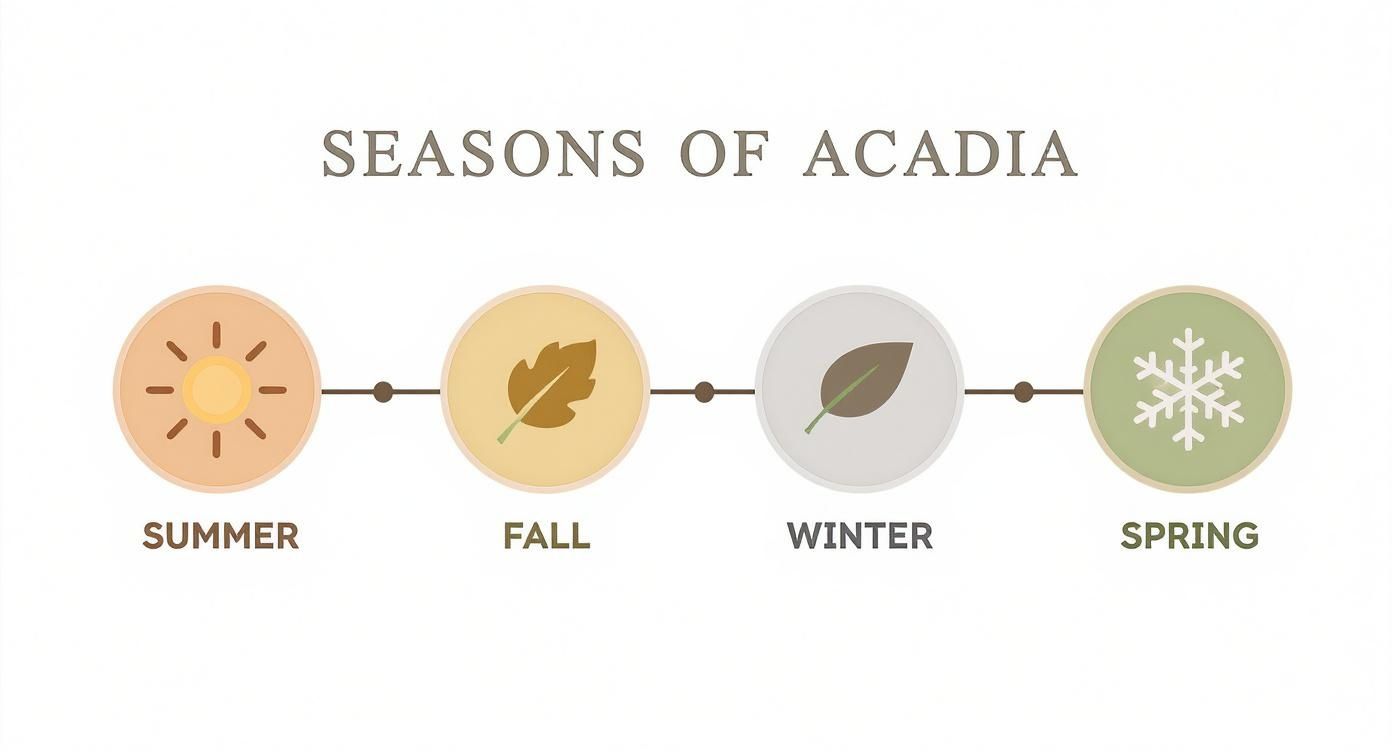
As you can see, summer is when everything is open and accessible, but fall offers that incredible balance of stunning scenery and a more relaxed, authentic atmosphere.
Acadia National Park Seasons at a Glance
Here’s a quick snapshot to help you decide. We've laid out the essentials for each season so you can easily compare what to expect on the ground.
| Season | Typical Weather | Crowd Level | Immersive & Off-the-Beaten-Path Highlights |
|---|---|---|---|
| Summer (Jun-Aug) | Warm & Humid (60-80°F) | Very High | Early morning hikes, kayaking on Long Pond, exploring Schoodic Peninsula |
| Fall (Sep-Oct) | Cool & Crisp (45-65°F) | High to Moderate | Hiking less-traveled trails for foliage, visiting local farms, quiet carriage road strolls |
| Winter (Nov-Mar) | Cold & Snowy (10-35°F) | Very Low | Cross-country skiing, snowshoeing the Ocean Path, ice fishing with locals |
| Spring (Apr-May) | Cool & Muddy (30-55°F) | Low | Birdwatching on the quiet side, watching harbors come to life, uncrowded scenic drives |
This table should give you a solid foundation for figuring out which season clicks with your travel plans.
If you're hunting for more ideas on how to plan your trips around the best that nature has to offer, take a look at our other guides on finding the perfect seasonal destination.
Navigating Summer in Acadia: Peak Season Insights
June through August is when Acadia truly comes alive. There's a buzz in the air you can feel—the days are long and warm, and every last corner of the park is finally open for business. This is prime time. The free Island Explorer bus is running its full schedule, ranger-led programs are in full swing, and the Atlantic is just barely warm enough for a brave soul to take a dip at Sand Beach. For most people, this is the classic Acadia they've been dreaming of.
But let's be real: embracing summer here also means dealing with its biggest headache: the crowds. This isn't just a small nuisance; it can absolutely make or break your trip if you show up without a plan. July and August are the undisputed champions of park visitation, consistently drawing the biggest numbers of the year. To put it in perspective, one recent July saw 797,030 visitors, and August followed that up by smashing the all-time monthly record with nearly 843,000 visits. You can read more about Acadia's record-breaking summer on BarHarborStory.com.
All those people lead to jammed roads and parking lots that are full before you've even had your morning coffee. But don't worry, a little bit of local strategy goes a very long way.
Embracing the Summer Buzz Like a Local
The secret to a fantastic summer visit isn't about skipping the famous spots—it's about visiting them smarter. Think of it like trying to find a quiet moment in a massive, bustling city. Instead of battling for a parking spot at Jordan Pond at noon, why not aim for popovers at the Jordan Pond House during the first or last seating of the day? Your reward will be fewer people and that incredible golden-hour light.
The same logic applies to popular trails like the Beehive or the Ocean Path. Tackling them at dawn isn't just about beating the traffic; it's about seeing the landscape glow in the soft morning light. It's a completely different, almost magical, experience that the afternoon crowds will never get.
"To truly connect with Acadia in the summer, you have to shift your schedule. The magic happens at the edges of the day—before the park fully wakes up and after the day-trippers have gone home. That’s when you find the solitude."
Finding Your Off-The-Beaten-Path Escape
Even with perfect timing, the main part of Mount Desert Island can still feel like a pressure cooker. When it does, that's your cue to explore the park's other, quieter personalities. The best move you can make is to head over to the Schoodic Peninsula, which we locals affectionately call the "quiet side" of Acadia. It has the same dramatic, rocky coastline you came for, but with a tiny fraction of the visitors and a more authentic Downeast Maine feel.
Here are a few ways to reclaim your Acadia summer experience:
- Explore Schoodic Point: Drive the scenic loop, hike the easygoing Sundew Trail, and just watch the waves crash against the granite. It’s all the drama of the main Park Loop Road, minus the conga line of cars.
- Kayak on Eagle Lake or Long Pond: While Jordan Pond gets all the attention, these other massive lakes offer just as stunning views and a whole lot more elbow room for paddling.
- Hike on the "Quiet Side": Trails near Southwest Harbor, like Acadia Mountain or St. Sauveur, offer tough climbs and incredible vistas over Somes Sound with far fewer people on the trail.
- Discover Local Culture: Skip the tourist traps in Bar Harbor and explore the working harbor of Bass Harbor or the quiet village of Seal Harbor. Watch the lobster boats come in and grab a fresh lobster roll from a no-frills local spot.
By mixing smart timing with a willingness to explore beyond the postcard spots, you get to enjoy all the best parts of summer in Acadia while carving out your own peaceful adventure.
Experiencing Autumn's Color and Calm
Ask anyone who knows Acadia well, and they'll probably tell you the same thing: fall is the season. It’s when the park truly hits its stride. From September through October, the thick, humid air of summer finally breaks, replaced by a crispness you can feel in your bones. The dense green canopy explodes into a riot of red, orange, and gold.
This is the park in perfect balance. Nature is putting on its most vibrant show, yet the summer crowds have thinned out. The frenetic energy of July and August fades, leaving a sense of peace that settles over the carriage roads and granite peaks. Even Bar Harbor shifts gears, becoming a cozier, more intimate version of itself as it prepares for the quiet of winter.
Timing Your Foliage Trip Perfectly
Catching peak fall color is more of an art than a science, but you can definitely stack the odds in your favor. The foliage season in Acadia isn't a single event; it's a gradual crescendo, with each part of the season offering a slightly different experience.
- Early to Mid-September: This feels like a bonus round of summer, just without the crowds. Days are still warm, nights are cool, and you'll start seeing the first hints of color popping up at higher elevations. It’s an amazing time for long hikes without the oppressive summer heat.
- Late September to Early October: Now things really start to accelerate. The landscape is dominated by the brilliant yellows and oranges of the maples, birches, and aspens. The air is unmistakably autumnal, and the light gets that warm, golden quality that photographers live for.
- Mid-October: This is generally considered the grand finale for peak foliage. The entire island is set ablaze with the fiery reds and deep crimsons of the oak trees. You'll find postcard-worthy scenes around every single bend. More people show up for this spectacle, but it’s still far more manageable than the summer rush.
"Autumn in Acadia isn't just a season; it's an immersive experience. The crunch of leaves underfoot on a quiet trail and the scent of pine in the crisp air connect you to the park in a way summer crowds simply can't."
If you’re looking for that sweet spot of great weather and smaller crowds, September and October are your best bet. Just to give you an idea, in a recent year, September saw 643,506 visitors, while October had 541,067. These shoulder months offer cooler temps for hiking and that incredible foliage, making them a fantastic value. You can find more details about Acadia's visitor statistics on CamperChamp.com.
Beyond the Park Loop Road: An Immersive Fall Experience
To really soak in the autumn atmosphere, you have to get away from the main drag. The Park Loop Road is gorgeous, of course, but the real magic is found on the less-traveled paths where you can actually find some solitude among the colors.
Instead of sitting in a line of cars, try exploring a hidden carriage road loop around Witch Hole Pond. Another killer option is to tackle the trails on Sargent Mountain. The climb pays off with sweeping, 360-degree views of the island's fall tapestry, far from the congestion below. For a full cultural experience, visit a local farm stand in one of the quieter towns like Town Hill to pick up fresh cider and apples, or attend a community craft fair. This is the real Acadia experience—raw, quiet, and completely unforgettable.
Discovering Acadia's Quiet Seasons in Winter and Spring
If you're the kind of traveler who picks solitude over sunshine, Acadia's off-season holds a completely different kind of magic. From November through May, the park sheds its summer crowds and shows off a quieter, more raw personality. This is the Acadia the locals know and love—a place of profound peace, stark beauty, and rich local culture.
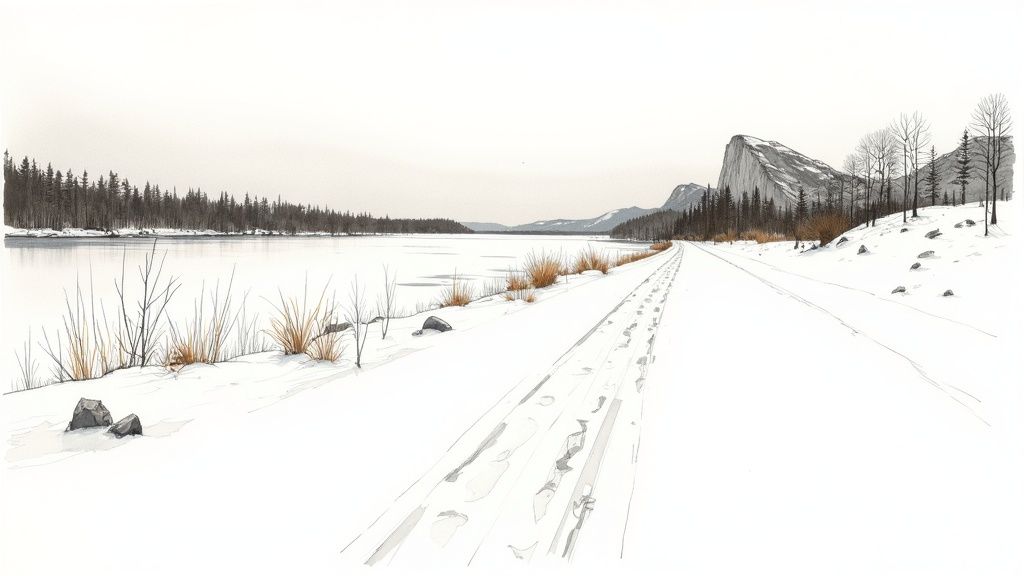
Picture this: a snow-dusted landscape where the only sound is the soft crunch of your boots on the Ocean Path. Winter completely transforms Acadia into a serene wonderland, a world away from the buzzing energy of July and August. While much of the Park Loop Road closes to cars, it swings wide open for anyone on foot, snowshoes, or skis.
Embracing the Winter Solitude and Local Culture
Winter is, without a doubt, the best time to visit Acadia if your main goal is to have an immersive, crowd-free experience. The famous carriage roads become perfectly groomed paths for cross-country skiing and snowshoeing, offering a totally unique way to experience the park’s historic bridges and silent forests. Frozen ponds like Eagle Lake and Jordan Pond turn into vast, quiet expanses, perfect for a winter hike around their edges.
Want to do winter like a local? Here are a few secrets:
- Ski the Carriage Roads: The groomed loops around Witch Hole Pond offer gentle terrain and stunning, quiet scenery. It's a favorite spot for local skiers for a reason.
- Snowshoe the Ocean Path: There's nothing quite like experiencing that dramatic coastline without another soul in sight. The section from Sand Beach to Otter Point is especially spectacular when draped in snow.
- Ice Fish on Eagle Lake: For a true Downeast Maine experience, join the locals for a day of ice fishing. It’s a masterclass in quiet contemplation and cultural immersion.
- Connect with the Community: Winter is when the local community reclaims the island. Visit a year-round pub in Bar Harbor or Southwest Harbor to chat with residents and hear their stories, offering a true taste of island life.
Witnessing the Spring Awakening Off the Beaten Path
Once the snow starts to melt, Acadia enters its "mud season." It’s a transitional time that asks for a little patience but rewards you with an uncrowded view of the park coming back to life. From late March through May, trails can be a mix of wet, muddy, and icy, so proper gear like waterproof boots and microspikes is non-negotiable for safe exploring.
This is the season of renewal. Migratory birds, including all sorts of warblers and even puffins (which you can spot on offshore boat tours), begin their return, making it a fantastic time for birdwatching on less-traveled trails. The air fills with the sound of melting ice and rushing brooks, and the first hints of green start poking through the dormant landscape.
Spring in Acadia is a lesson in resilience. It's not about perfect conditions; it's about witnessing the raw, powerful process of nature reawakening—and having the privilege of seeing the park's most popular spots completely on your own.
A spring visit means you can often have those iconic, postcard-perfect trails all to yourself. It’s a rare chance to see the park's fundamental beauty without distraction and to watch the working harbors gear up for the busy season ahead, just as the land prepares for the explosion of life to come.
Exploring Acadia Beyond the Beaten Path
If you want to really get Acadia, you have to look beyond the greatest hits album of Cadillac Mountain and Jordan Pond. The park's true spirit—the soul of Downeast Maine—is tucked away in its quiet corners, working harbors, and the trails that don't make the front page of the brochure. This is where Acadia stops feeling like a checklist and starts feeling like an immersive cultural experience.
Stepping away from the main loop is about more than just dodging crowds. It’s about tapping into the authentic rhythm of this place. It’s discovering the lobster boats bobbing in Southwest Harbor, finding an unbelievable lobster roll at some tiny roadside shack, and feeling the raw power of the coastline without a hundred other people jockeying for a photo.
A 3-Day Itinerary for an Immersive Experience
You can absolutely see Acadia’s icons without being swallowed by the masses. This approach is all about smart timing and pairing the popular spots with equally stunning, lesser-known alternatives. It's the best of both worlds.
- Day 1 Morning: Skip the Beehive Trail mob and opt for a sunrise hike up the Gorham Mountain Trail instead. The coastal views are just as breathtaking, but you’ll share them with a fraction of the people. Afterwards, hit a local bakery in Bar Harbor for an early breakfast before the town truly wakes up.
- Day 1 Afternoon: Drive the Park Loop Road, but be selective. Instead of pulling over at every packed scenic view, focus on the quieter stretches and pull-offs between Sand Beach and Otter Point.
- Day 2: This is your day for the "quiet side." Spend your time exploring the trails around Echo Lake and the working harbor of Southwest Harbor. The Acadia Mountain Trail gives you incredible views over Somes Sound that most visitors completely miss. End the day by exploring the galleries and shops that feature local artisans.
- Day 3: Yes, you're going to Jordan Pond, but you're going to do it right. Aim for the last seating of the day at the Jordan Pond House. The golden hour light across the pond is pure magic, and most of the day-trippers have already cleared out.
The 5-Day Hiker’s Deep Dive into Local Culture
For anyone who wants to lose themselves in Acadia’s rugged heart, this itinerary is for you. It’s built around challenging hikes and remote corners of the park that most people don’t even know exist, combined with authentic local encounters.
With over 150+ miles of hiking trails, this plan takes you from the infamous iron rung routes to serene coastal walks where your only companions might be the seabirds. The goal here is to connect with the wild, untamed side of the park. If this is your style, you should check out our guide on embracing off-the-beaten-path travel for more ideas on finding these kinds of authentic experiences.
Your deep dive could look something like this:
- Day 1: Test your nerve on the Precipice Trail (if it’s open) or get a similar thrill on the Jordan Cliffs Trail.
- Day 2: Get lost (in a good way) exploring the massive trail network on Sargent Mountain, the park’s second-highest peak.
- Day 3: Hop on a ferry to Isle au Haut. This is a remote, rugged, and utterly unforgettable piece of Acadia where you can hike for hours in near-perfect solitude.
- Day 4: Head down to the Wonderland and Ship Harbor Trails near Bass Harbor for some easy coastal hiking, then cap it off with a classic sunset at the Bass Harbor Head Light.
- Day 5: Discover a true hidden gem: the Beech Cliffs Trail. It’s got ladder climbs and knockout views over Echo Lake that will make you feel like you've found a secret. Afterward, visit the Tremont Historical Society to learn about the area's rich maritime history.
When you focus on the less-trafficked trails and remote sections, you don’t just see Acadia—you feel its wild, untamed character on a completely different level.
A Local’s Weekend on the Schoodic Peninsula
Want the ultimate insider trip? Spend a weekend on the Schoodic Peninsula. As the only part of Acadia National Park on the mainland, it offers a window into the unhurried, authentic pace of Downeast Maine. This is where you find dramatic granite headlands, sleepy fishing villages, and a profound sense of peace.
You can bike or drive the scenic Schoodic Loop Road, stopping to watch the waves explode against the rocks at Schoodic Point. Hike the quiet Sundew Trail through a mossy coastal forest, and just spend some time wandering around the charming village of Winter Harbor. Attend a local bean supper if you can find one, or visit the Schoodic Arts for All gallery. This is the perfect answer for anyone wondering what the best time to visit Acadia National Park is for a truly quiet, culturally rich escape.
Your Acadia Trip Planning Questions, Answered
Alright, so you’ve picked the perfect time of year for your trip. Now for the nitty-gritty. A few practical questions always come up when you start getting into the details, and this is where a little local knowledge goes a long way.
Think of this as your insider's guide to the logistics—from snagging that coveted sunrise reservation to packing like a Mainer.
Deciding when to visit is a huge first step, but trip planning involves a lot of moving parts. You might find broader insights on determining the best time to visit various destinations useful for other adventures down the road.
Do I Need a Reservation for Cadillac Mountain Sunrise?
Yes, you absolutely do. A vehicle reservation is mandatory to drive the Cadillac Summit Road from mid-May through mid-October. This isn't just for sunrise; it applies 24/7.
Reservations are released on Recreation.gov in two waves. 30% of them drop 90 days in advance, while the other 70% become available at 10 a.m. ET just two days beforehand. Be warned: they sell out in seconds. You need to be online and ready to click the moment they go live. This reservation is required in addition to your park entrance pass.
The reservation system for Cadillac is no joke. But if you miss out, don't sweat it. There are equally incredible, reservation-free alternatives. A sunrise hike up Gorham Mountain gives you stunning coastal views with a tiny fraction of the crowds.
How Can I Avoid the Traffic?
Let's be real: the traffic in July, August, and during peak fall foliage can be a nightmare. The secret is to avoid driving and parking in the busiest spots between 9 a.m. and 3 p.m. It's that simple.
Here are a few strategies the locals use to bypass the gridlock:
- Use the Island Explorer Bus: This free shuttle is your best friend. Seriously. It connects all the main park hubs with Bar Harbor and the surrounding villages. You can just leave your car behind.
- Bike the Carriage Roads: Rent a bike in Bar Harbor and explore Acadia's 45 miles of gorgeous, motor-free carriage roads. It's the most peaceful way to see the park's interior, and you won't see a single traffic jam.
- Go Early or Stay Late: The early bird really does get the parking spot. Show up at popular trailheads like Jordan Pond before 8 a.m. or swing by after 4 p.m. to miss the peak rush.
What Should I Pack for a Spring or Fall Visit?
Packing for Acadia's shoulder seasons boils down to one word: layers. Maine weather is famously fickle—you can easily get three seasons in a single day. A beautiful, sunny 60°F afternoon can turn into a raw, foggy 40°F evening in the blink of an eye.
Your packing list should absolutely include these items:
- A waterproof and windproof outer shell.
- A fleece or other insulated mid-layer for warmth.
- Moisture-wicking base layers (pro tip: avoid cotton at all costs).
- Sturdy, waterproof hiking boots that have good traction.
- A warm hat and gloves. You’ll be grateful for them on an early morning hike or a late-night stargazing session.
This layered system means you can adapt on the fly, staying comfortable and safe no matter what the coast throws at you. Proper prep is everything for a great trip; for more general advice, check out our guide on how to prepare for international travel.
At CoraTravels, we believe the best trips are built on local knowledge. We provide the insider context you need to explore destinations like Acadia with confidence and respect, ensuring you travel less like a tourist and more like a local.