
If you want to nail the timing for your trip to Australia, aim for the shoulder seasons. Spring (September-November) and autumn (March-May) are the sweet spots. You’ll find that magical combination of great weather, smaller crowds, and better prices pretty much everywhere you go.
Whether you're planning to explore vibrant laneway culture, venture deep into the outback, or find a deserted beach, these months offer the most immersive experiences, away from the peak tourist rush.
Understanding Australia's Climate and Seasons
Here’s the first thing you need to know: Australia isn't one destination. It's a massive continent with completely different climates running at the same time. Thinking you’ll get the same weather everywhere is like expecting Texas to feel like Alaska.
The secret to a great Aussie trip is understanding its two distinct weather personalities: the temperate south and the tropical north. This guide will help you line up your travel dreams with the right season, so you can skip the postcard clichés and have a real, local experience, discovering the culture and landscapes that lie off the beaten path.
The Two Australias Weather Wise
In the south—think Sydney, Melbourne, and Perth—you get the four seasons you’re probably used to. Summers are hot and built for the beach, while winters are mild to cool. This is the Australia of iconic skylines, sprawling wine country, and hidden laneway bars.
But head north to places like Cairns, Darwin, or the Kimberley, and the rules change completely. Up there, the year is split into two seasons: the Dry Season (roughly May to October) and the Wet Season (November to April).
The Dry Season is what most people picture: endless blue skies and comfortable days, perfect for exploring the Great Barrier Reef and ancient national parks. The Wet Season is a different beast—think high humidity, dramatic monsoonal downpours, and incredible lightning shows. Given Australia's unpredictable weather extremes, it's smart to look into travel health insurance trends for extreme weather before you go.
To travel like a local, you have to think like one. Aussies plan their own holidays around this divide—they’ll escape the southern winter to soak up the sun in the tropical north, or stick to their own stunning beaches during the southern summer.
Getting your head around this north-south split is the most important step in planning your trip. Whether you're chasing sun-drenched coastlines or ancient landscapes, knowing when to be where is everything. For a closer look at what each region offers, our guides on traveling in https://coratravels.com/countries/australia/ give you the local scoop. It’s all about crafting a journey that dodges the peak-season madness and puts you right in sync with the authentic rhythm of Australian life.
To make it even easier, here’s a quick rundown of what you can expect in Australia's main regions throughout the year.
Australia's Seasons at a Glance
| Season | Months | Southern Australia (Sydney, Melbourne, Perth) | Northern Australia (Cairns, Darwin, Broome) | Central Australia (Uluru, Alice Springs) |
|---|---|---|---|---|
| Summer | Dec-Feb | Hot and sunny. Peak beach season. Crowded and expensive due to school holidays. | Wet Season. Hot, humid, with heavy rain and potential cyclones. Lush green landscapes. Fewer crowds. | Very hot days (40°C+). Best for early morning and evening activities. Lower tourist numbers. |
| Autumn | Mar-May | Warm, pleasant days with mild evenings. Beautiful autumn foliage in cooler areas. Fewer crowds. | End of Wet Season. Humidity drops. Waterfalls are spectacular. A great time for wildlife viewing. | Warm to hot days with cool nights. Ideal for hiking and exploring. Comfortable weather. |
| Winter | Jun-Aug | Cool to cold, with some rain. Snow in alpine regions. Great for city culture and wine tasting. | Dry Season. Sunny, dry, and warm days. Peak tourist season. Perfect for the Great Barrier Reef. | Mild, sunny days and cold nights (can drop to freezing). The best time for comfortable outback travel. |
| Spring | Sep-Nov | Mild to warm weather. Wildflowers are in full bloom, especially in Western Australia. Ideal for everything. | End of Dry Season/Build-Up. Temperatures and humidity rise before the wet season begins. | Pleasant, warm days and cool nights. Another excellent window for outback adventures before the summer heat. |
This table should give you a solid starting point. Just remember that the "best" time really depends on what you want to do and see.
A Month-by-Month Guide to Your Australian Adventure
Alright, let's break down the rhythm of Australia, month by month. Think of this as your local guide to planning, helping you figure out everything from January's summer festival season to the holiday buzz in December. Nailing the best time to visit Australia is all about matching your trip to the immersive experiences you're really after—whether that's endless beach days or stumbling upon a hidden cultural gem.
For every month, I’ll point you to the regions that are at their absolute best. We're talking about places like Tasmania, where the summers are beautifully mild in February, or the Kimberley, which becomes accessible once the dry season kicks off in May. We'll also dive into the local pulse: cultural events, incredible wildlife moments like the whale migration, and those community festivals that give you a real slice of Aussie life, far from the tourist crowds.
This calendar is your key to finding that perfect window. It's designed to align with what you love, whether that’s tasting your way through the Barossa Valley or finally snorkelling the Great Barrier Reef. To get a handle on how the country’s climate shifts, the timeline below maps out the distinct seasonal patterns across Australia's main regions.
This just shows how Australia really operates on multiple calendars at once. The south has its classic four seasons, running right alongside the north’s distinct wet/dry cycle and the intense temperature swings you get in the centre.
The Peak Summer Buzz (December to February)
This is Australia’s high season, when the whole southern half of the country dives headfirst into summer. Expect long, sun-drenched days, packed beaches, and a social calendar overflowing with events. It’s the classic Aussie summer you see on postcards, but it definitely comes with peak-season prices and crowds.
Australian tourism is heavily seasonal, with the main rush hitting between December and February. This is when international visitors flock here for the beaches, outdoor lifestyle, and major events. To give you an idea, December 2019 saw Australia's highest monthly tourist arrivals ever at over 1.07 million. You can dig deeper into Australian travel trends to see how the numbers rise and fall through the year.
- December: The country is buzzing with holiday energy. Sydney’s New Year's Eve fireworks are famous for a reason, but for a more local vibe, head to Hobart for the finish of the Sydney to Hobart Yacht Race and the incredible Taste of Tasmania food festival. It's prime time for the southern coast's beaches, from Bondi to Bells Beach.
- January: The nation is in full holiday mode. The Australian Open turns Melbourne into the centre of the tennis world, while the Sydney Festival fills the city with music, art, and theatre. For an offbeat cultural hit, check out a local "sausage sizzle" fundraiser or a regional agricultural show. It's seriously hot in the Outback, which is why you'll find most locals escaping to the cooler coastlines.
- February: The summer heat sticks around, making it a perfect month to explore Tasmania’s rugged coastlines and national parks in beautifully mild weather. In Melbourne, the city’s arts scene is on fire with events like the St Kilda Festival, a massive free music fest right on the beach.
The Golden Autumn Months (March to May)
If you ask a local, many will tell you autumn is secretly the best season. The intense summer heat finally backs off, the crowds start to thin out, and the country gets this comfortable, golden glow. It’s an incredibly versatile time to visit, with fantastic conditions almost everywhere.
This is the time for immersive cultural journeys and off-the-beaten-path road trips. The weather is your friend, opening up regions that are too intense in summer or too cold in winter. It’s the perfect balance for a full cultural experience.
Down south, you'll see stunning autumn colours in places like Victoria's High Country. Up north, the end of the wet season brings a dramatic, lush transformation.
- March: Sydney's vibrant Gay and Lesbian Mardi Gras parade is a spectacular cultural highlight you won't forget. It's also prime time for wine lovers, as vineyards in the Barossa Valley (South Australia) and Margaret River (Western Australia) are in the middle of their harvest.
- April: The weather is pretty much perfect across large parts of the country. This makes it an ideal time for a city break in Sydney or Melbourne without the oppressive summer heat and crowds. Up north, the wet season's rains mean waterfalls in places like Litchfield and Kakadu National Parks are at their thundering, powerful peak.
- May: This month marks a big shift. The dry season officially kicks off in the tropical north, opening up destinations like the Kimberley and the Great Barrier Reef with clear skies and much lower humidity. In Sydney, the Vivid Sydney festival begins, turning the city into a stunning outdoor gallery of light art.
The Mild Winter Escape (June to August)
While the south cools down, the north enters its absolute prime. This is when you’ll hear Aussies talking about "going north for the winter," trading the city chill for tropical warmth. It’s a season of stark contrasts and unique opportunities for immersive travel.
Winter offers a different kind of adventure. In the south, it's all about cosying up in wine regions, enjoying the cities' indoor culture, or even hitting the ski slopes in the Australian Alps. It’s the perfect time to explore a city like a local, hopping between small galleries and neighbourhood pubs.
- June: The whale migration season officially starts along the east and west coasts. Head to Hervey Bay in Queensland or Augusta in Western Australia for some of the most incredible Humpback whale sightings you'll ever see. It's also the official start of the ski season in Victoria and New South Wales.
- July: This is the heart of the dry season up north. Conditions are perfect for snorkelling or diving the Great Barrier Reef, with amazing visibility and comfortable water temperatures. In the Red Centre, the days are mild and sunny—perfect for hiking around Uluru—but be warned, the nights get properly cold.
- August: Darwin, in the Northern Territory, comes alive with the Darwin Festival, a vibrant celebration of local arts, music, and food under starry, dry-season skies. It’s also a great time to witness the start of the spectacular wildflower season in Western Australia, a phenomenon that carpets the landscape in incredible colour.
The Rebirth of Spring (September to November)
Spring is a time of renewal, with perfect weather spreading across the continent. Temperatures are pleasant just about everywhere, making it another fantastic shoulder season for travel. Wildlife is active, landscapes are blooming, and there's an optimistic energy in the air.
This is arguably the best time to visit Australia if you want to do a bit of everything, from outback adventures to coastal road trips, all while avoiding the main tourist trail.
- September: The wildflower displays in Western Australia are at their absolute peak, creating a breathtaking natural spectacle. In the Outback, places like Uluru-Kata Tjuta National Park have warm days and cool nights, offering ideal conditions for exploring before the summer heat really kicks in.
- October: It's a fantastic time for wildlife. Baby koalas and kangaroos, known as joeys, start to emerge from their mothers' pouches. On Phillip Island near Melbourne, the nightly Penguin Parade is a heartwarming sight as hundreds of tiny penguins waddle back to shore.
- November: The "build-up" begins in the tropical north, with humidity rising before the wet season. For some, it’s a great time for storm-watching and witnessing dramatic lightning shows. Down in Melbourne, the city is completely consumed by the Melbourne Cup Carnival, a major horse racing event that’s a true cultural institution.
How to Travel Like a Local and Avoid the Crowds
If you really want to get under the skin of Australia, you have to think beyond the iconic postcards and learn to move with the local rhythm. It's less about what you see and more about when you see it. The real magic happens when you sidestep the biggest crowds, and the easiest way to do that is to embrace the ‘shoulder seasons’ for a more immersive experience.
These sweet spots—Australia’s spring (September to November) and autumn (March to May)—offer the perfect trifecta: fantastic weather, fewer people, and better prices. It’s your best shot at seeing the big-ticket sights with enough room to actually breathe and enjoy them.
The Shoulder Season Advantage
Think of the shoulder seasons as Australia’s best-kept secret. In autumn, the blistering heat of summer has finally broken, leaving behind warm, sunny days and ocean temperatures that are still perfect for a swim. Come spring, the entire country seems to wake up, bursting with blooming wildflowers and active wildlife, all under crisp, clear skies.
Choosing these months is the first real step toward a more authentic trip. It’s when you can linger over a glass of wine in the Barossa Valley without feeling rushed or find a whole stretch of sand to yourself on a world-famous beach. This is probably the single best answer for anyone asking about the best time to visit Australia.
Dodging the School Holiday Rush
Here's a massive insider tip: know the Australian school holiday calendar and plan around it. These periods—usually in April, late June to early July, late September to early October, and from mid-December to the end of January—are when the entire country seems to go on vacation at once.
During these weeks, popular family spots like the Gold Coast, coastal caravan parks, and major attractions get absolutely slammed. Prices for flights, car rentals, and accommodation can easily double or even triple overnight. Always check the specific dates for the state you're visiting, as they can vary slightly.
Planning your trip just a week or two outside these holiday windows can completely transform your experience. A destination that feels chaotic and overpriced one week can be blissfully calm and affordable the next.
Finding Your Off-the-Beaten-Path Escape
Traveling like a local also means looking beyond the usual suspects. While Sydney and the Great Barrier Reef are incredible, Australia is packed with amazing alternatives that deliver similar experiences with a fraction of the crowds. This is key to a full cultural experience.
- Instead of Bondi Beach, try the South Coast of NSW. Head down to Jervis Bay or the Sapphire Coast to find that classic Aussie beach town vibe, complete with charming towns and squeaky-clean sand.
- Instead of the Whitsundays, explore Lord Howe Island. This World Heritage-listed paradise is a true escape, limiting visitors to just 400 at a time. It doesn't get more serene than that.
- Instead of Melbourne's CBD, discover the laneway culture in Fitzroy or Carlton. We dive deeper into finding these authentic neighbourhood spots in our guide to exploring Melbourne Australia's cultural capital.
The goal is to find places where local life is just unfolding naturally. Timing is everything. Before the global travel pause, Australia welcomed a record 9.47 million international visitors in 2019, a number that shows just how popular some spots can get. By venturing just a little further afield, you'll connect far more deeply with the real Australia.
Planning Your Trip Around Australia's Best Experiences
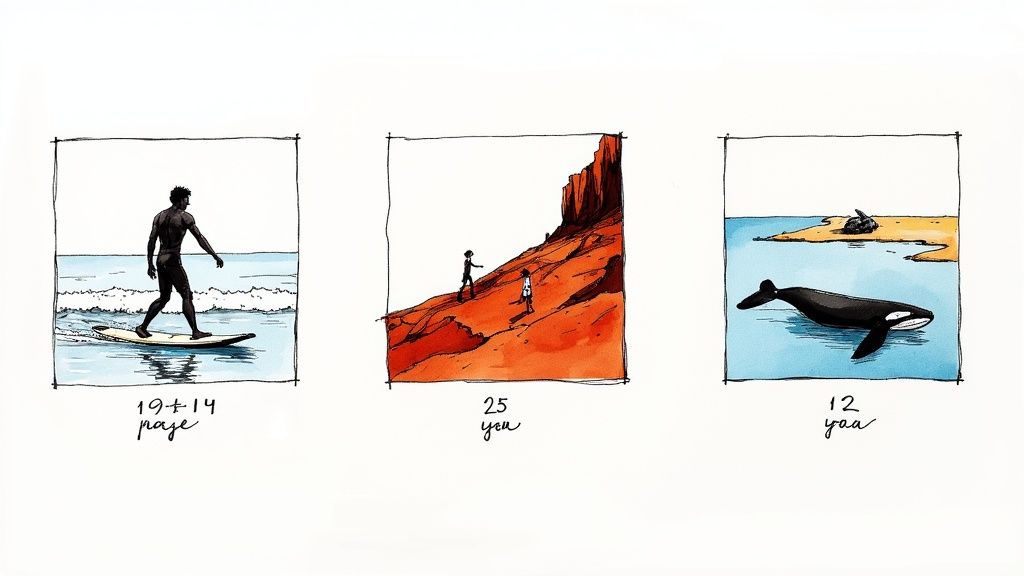
Let’s get one thing straight: the idea of a single “best time to visit Australia” is a complete myth. This country is massive, and the perfect time for your trip hinges entirely on what you’re hoping to do. Are you dreaming of sinking your toes into warm sand, kicking up red dust in the outback, or having an immersive cultural encounter you won’t find anywhere else?
So, we're going to flip the usual script. Instead of just looking at dates on a calendar, we’ll start with what you want to do and match that to the right season and place. This way, you’re building an itinerary around incredible moments, not just ticking off locations from a tourist brochure.
Think of Australia’s calendar as a series of different invitations. One season invites you to dive the Great Barrier Reef, while another calls you to get lost in Melbourne’s moody, art-filled laneways. Let’s figure out which invitation is for you.
For the Beach Lover and Coastal Explorer
If your perfect holiday is all about sun, sand, and saltwater, then Australia’s summer (December to February) is the classic go-to for the southern states. This is when the iconic beach culture around Sydney, Perth, and Adelaide is in full, glorious swing. For a real local feel, consider skipping the insane summer crowds at Bondi and heading for Sydney's Northern Beaches like Avalon, or check out the chilled-out surf towns along the NSW South Coast.
But here’s a pro tip: for a truly special coastal trip, aim for the shoulder seasons. Both spring (September-November) and autumn (March-May) give you warm water and sunny days but with a fraction of the people. Autumn, in particular, is magical; the ocean holds onto its summer heat, making it perfect for swimming and surfing in blissful peace.
For the Outback Adventurer
Heading into Australia's Red Centre is all about timing. The blistering heat of summer (December-February) isn't just uncomfortable; it can be downright dangerous for daytime exploring, with temperatures often pushing past 40°C (104°F). Ask any local guide, and they'll tell you the real magic happens in the cooler months.
The sweet spot for visiting Uluru, Kata Tjuta, and the endless outback landscapes is during autumn and winter (April to August). The days are warm with brilliant blue skies perfect for hiking, while the nights get crisp and cool—absolutely ideal for staring up at a sky full of stars.
An outback trip in winter allows for a much deeper connection to this ancient land. The cooler air makes long hikes through places like Kings Canyon not just bearable but truly profound, letting you soak in the sheer silence and scale of it all.
For the Wildlife Enthusiast
Australia’s incredible wildlife runs on its own clock, and timing your visit to match its schedule can lead to some truly unforgettable encounters away from the main tourist hubs.
- Whale Watching: The annual humpback whale migration is an absolute showstopper. The season runs from June to November, and you’ll find some of the best viewing spots in the world at Hervey Bay in Queensland or along the coast of Western Australia.
- Turtle Nesting: To see sea turtles nesting and their tiny hatchlings making a dash for the ocean, you need to be on the Queensland coast between November and March. Mon Repos near Bundaberg is a key conservation site where you can join respectful, guided night tours.
- Unique Marsupials: Spring (September-November) is when the bush truly comes alive. It's joeys-galore, with baby kangaroos and koalas starting to peek out of their mothers' pouches. It’s an amazing time for wildlife spotting in national parks.
For the Foodie and Culture Seeker
To really taste and feel Australia, you’ve got to tune into its cultural and culinary rhythms. The best immersive experiences are often tucked away in a Melbourne laneway or found in the rolling hills of a wine region, far from the tourist trail.
Autumn (March-May) is harvest season in Australia's top wine regions like the Barossa Valley (SA) and Margaret River (WA). It's a brilliant time for cellar door tours and local food festivals when the produce is at its peak.
For city culture, winter (June-August) is surprisingly fantastic. Sure, the weather’s cooler, but cities like Melbourne and Sydney are buzzing with festivals, live theatre, and gallery openings. It’s the perfect time to explore indoor markets, cozy up in a laneway bar, and eat your way through world-class restaurants just like a local would.
Matching Your Adventure with the Right Season
To pull it all together, here’s a quick local guide to help you align your travel style with the perfect season and region for an unforgettable Aussie trip.
| Travel Interest | Best Season(s) | Top Regions & Activities | Local Tip |
|---|---|---|---|
| Beaches & Surfing | Summer (Dec-Feb) | Southern Coasts (NSW, VIC, SA, WA). Hit iconic spots like Bondi or explore quieter surf towns. | Visit during autumn (Mar-May) for warm water, sunny days, and almost no crowds. |
| Outback Exploration | Autumn/Winter (Apr-Aug) | The Red Centre (Uluru, Kings Canyon). Enjoy warm hiking days and cool, clear nights for stargazing. | Summer temperatures are dangerously high (40°C+); avoid daytime hikes. |
| Wildlife Watching | Year-round (specifics vary) | Whales: Jun-Nov (QLD/WA). Turtles: Nov-Mar (QLD). Joeys: Sep-Nov (National Parks). | Book ethical, small-group tours well in advance, especially for popular events like turtle nesting. |
| Wine & Food Festivals | Autumn (Mar-May) | Barossa Valley (SA), Margaret River (WA), Yarra Valley (VIC). Experience harvest season and local food festivals. | Check regional festival calendars before you book; many small towns have amazing, hyper-local foodie events. |
| City Culture & Events | Winter (Jun-Aug) | Melbourne & Sydney. Explore galleries, theatres, and laneway bars. Major events like Vivid Sydney take place. | Winter is a great time for foodies. It’s when locals reclaim the best restaurants from the summer tourist rush. |
This table should give you a solid starting point for sketching out your ideal adventure. Remember, Australia rewards those who plan around its seasons, not against them.
Discovering Offbeat Adventures and Cultural Journeys

To really get a feel for Australia, you’ve got to push past the postcard views and jam-packed coastlines. The most unforgettable trips happen where the tour buses don't go, giving you a proper chance to connect with the country’s ancient soul and its vibrant, smaller communities. It’s all about swapping the tourist trail for a more authentic, immersive path.
Connecting with the world’s oldest living culture is an experience that stays with you. The best time to visit Australia for this is usually during the Northern Territory's dry season, from May to October. The weather is just right for joining a respectful, Indigenous-led tour through Kakadu or Arnhem Land. This is your chance to hear Dreamtime stories and learn about rock art from local guides who know this land like the back of their hand.
Finding Australia’s Hidden Gems
Outside of the Red Centre, countless other spots offer incredible adventures without the crowds. These are the places that reward anyone willing to dig a little deeper, offering that rare feeling of genuine discovery and an escape from the main touristic places.
- Flinders Ranges, South Australia: Your best bet is to visit in autumn (March-May) or spring (September-November). These ancient, rugged mountains hide dramatic gorges and a deep Aboriginal history. The landscape’s rust-red peaks are absolutely unreal during sunrise and sunset.
- Tasmania’s West Coast: For something truly wild, head to Tassie's remote west coast during the warmer months (December-March). Its beauty is raw and untamed—think dense rainforests crashing into a dramatic, storm-battered coastline that feels like the very edge of the world.
The real spirit of Australia isn't just in the famous landmarks; it's in the small towns, the local markets, and the community festivals. Timing your trip to catch one of these can turn a regular holiday into something much richer.
Immersive Stays and Local Connections
To really deepen that connection, think about where you lay your head at night. Stepping outside of standard hotels opens up a world of authentic experiences that put money directly into local hands. Consider unique stays that actually reflect the character of where you are for a full cultural experience.
- Farm Stays: Get a taste of rural life by staying on a working farm, especially in places like country New South Wales or Queensland.
- Eco-Lodges: Settle into an environmentally conscious lodge tucked away in nature, from the Daintree Rainforest to the Blue Mountains.
Choosing these kinds of adventures is more than just a travel strategy; it’s a way to leave a positive mark on the places you visit. This lines up with a more conscious way of travelling, a topic we dive into in our guides on off-the-beaten-path travel. By visiting during shoulder seasons or for local events, you help support a more sustainable model for tourism.
You can see how much timing matters in the numbers. Tourism brought A$60.8 billion into the economy and supported 1 in 21 jobs back in 2018-2019. Big events like the Sydney Olympics, held in September 2000, were strategically timed to pull in visitors. It just goes to show how lining up your trip with a specific window benefits both you and the local economy. You can find more insights on how tourism impacts the Australian economy on tra.gov.au. By exploring the lesser-known gems, you’re helping spread that benefit well beyond the usual tourist hubs.
Your Australia Trip: Burning Questions Answered
Even after hours of planning, a few nagging questions always seem to surface right before a big trip. Think of this as your final sanity check—quick, straight-to-the-point answers from a local guide to the questions we hear all the time. We're covering the practical stuff here: saving money, packing right, driving this massive country, and not getting on the wrong side of the local wildlife.
What Is the Absolute Cheapest Month to Visit Australia?
If you're hunting for the absolute rock-bottom prices, set your sights on Australia's winter shoulder season. May and June are consistently the cheapest months to fly into and travel around the country.
You've just missed the Easter holiday rush, and you're well ahead of the mid-year school holidays that clog everything up in July. This means flights and accommodation take a noticeable dip. While the south is getting cooler, it's actually a brilliant time for a city trip to Sydney or Melbourne to dive into museums and laneway cafes without the summer crowds. The real win? This is the start of the glorious dry season up north. You get stunning, sunny days in places like Cairns and Darwin before the main tourist wave hits.
How Many Weeks Do I Need to See Australia Properly?
This is the big one. People always underestimate the sheer size of this place—it's a continent, not a country you can zip across in a week. Trying to see it all is a recipe for a holiday spent in airports. For a first-time trip that feels satisfying, not frantic, you need a minimum of two to three weeks.
That gives you enough breathing room to properly settle into two or three different regions. For instance, you could tackle the iconic East Coast (think Sydney and the Great Barrier Reef), then fly into the Red Centre for Uluru, and finish up in a culture-heavy city like Melbourne. Got a month or more? Now you can start thinking about the wild, remote coast of Western Australia or the unique landscapes of Tasmania.
Don't make the classic mistake of overstuffing your itinerary. Australia's magic is often found in the unplanned moments—sticking around an extra day at a national park or just lingering on a quiet beach. Less is definitely more here.
Is It Better to Visit Australia in Spring or Autumn?
Honestly, you can't lose with either. Both spring (September-November) and autumn (March-May) are incredible "shoulder seasons" and are often cited as the best time to visit Australia overall. The decision really just boils down to what you want to see and do.
- Spring (September-November): This season is all about new life. Western Australia explodes with wildflowers, and the weather is warming up beautifully everywhere. It's a great time for wildlife, as little joeys (baby kangaroos and wallabies) start peeking out of the pouch.
- Autumn (March-May): The gift of autumn is warm water. The ocean temps are still lovely down south, making it perfect for swimming and snorkelling. Up north, the landscape is lush and green after the wet season, and places like Victoria's High Country show off some stunning autumn colours.
Both seasons give you that sweet spot of great weather, fewer people, and better prices than the peak summer months.
What Should I Know About Driving in Australia?
Renting a car and hitting the road is one of the best ways to see the country, but you need to go in prepared. First things first: we drive on the left side of the road. Get that sorted, and you're halfway there.
The distances between towns, especially in the Outback, can be genuinely massive. Never, ever pass a petrol station without filling up if you're not 100% sure where the next one is. Also, be incredibly vigilant for wildlife at dawn and dusk—kangaroos and emus on the road are a real and serious hazard. If you're heading anywhere remote, carrying extra water, food, and a satellite phone or emergency beacon isn't just a suggestion; it's a critical safety step. Your mobile phone will be useless outside of populated areas.
At CoraTravels, we believe the best trips are built on local knowledge and authentic experiences. Our guides are designed to help you travel like a local, with insider tips that go beyond the guidebook. Discover the real Australia with us at https://coratravels.com.