
Deciding when to visit Brazil is a bit like picking your favorite music—it really just depends on what you’re in the mood for.
If you're chasing that electric festival energy and long days on sun-drenched beaches, you can't beat the Brazilian summer from December to February. But if your dream is to track wildlife through pristine landscapes or connect with deep-rooted cultural festivals, the dry season between June and October is your golden window. For a sweet spot that balances great weather with fewer people and better prices, look at the shoulder months like April, May, and October.
Your Quick Guide to Brazil's Best Travel Seasons
Brazil is massive, practically a continent unto itself, with a climate that can completely flip depending on where you are. The sun could be absolutely scorching in Rio while the southern states enjoy crisp, cool weather. This is key: there's no single "best" time to visit the whole country. Instead, there are perfect windows for specific, immersive adventures.
So, the right timing for your trip boils down to a simple question: what kind of experience are you seeking? Are you dreaming of joining the world’s biggest party during Carnival, tracking jaguars in the Pantanal, or discovering the cultural soul of Brazil far from the tourist crowds?
Think of this guide as your cheat sheet, a local's take to help you get in sync with the country's real rhythm. We’ll skip the generic advice and give you the insights you need to plan a trip that goes beyond the typical tourist trail and connects you to a more authentic Brazil.
Brazil's Travel Seasons at a Glance
To make planning a little easier, we can break Brazil's calendar into four main periods. The timeline below gives you a visual feel for how the year flows, from the high-energy summer months to the prime wildlife-spotting dry season.
Here's a quick breakdown to help you match your travel style to the right season.
| Travel Period | Best For | Weather Overview | Crowds and Cost |
|---|---|---|---|
| Dec–Feb (High Season) | Carnival, beaches, New Year's | Hot, humid, sunny on the coast; rainy in the Amazon & Pantanal | Peak crowds, highest prices |
| Mar–May (Shoulder Season) | Good value, city exploration | Pleasant temps, less rain, lush landscapes post-summer | Fewer crowds, lower prices |
| Jun–Oct (Dry Season) | Wildlife, cultural festivals, hiking | Dry and sunny in most areas; cooler in the South | Moderate crowds, good value |
| Oct–Nov (Shoulder Season) | Blooming nature, fewer crowds | Warming up, spring blooms in the South, start of rains elsewhere | Low crowds, excellent prices |
This table should give you a solid starting point for figuring out when your ideal Brazilian adventure might take place.
Understanding these seasonal flows is the first step. For another expert perspective to help you map out your trip, The Ultimate Advisor's Guide to the Best Time to Visit Brazil is a fantastic resource worth checking out.
Now, let's get into what each of these seasons really feels like on the ground.
Embracing the Festive Peak from December to February
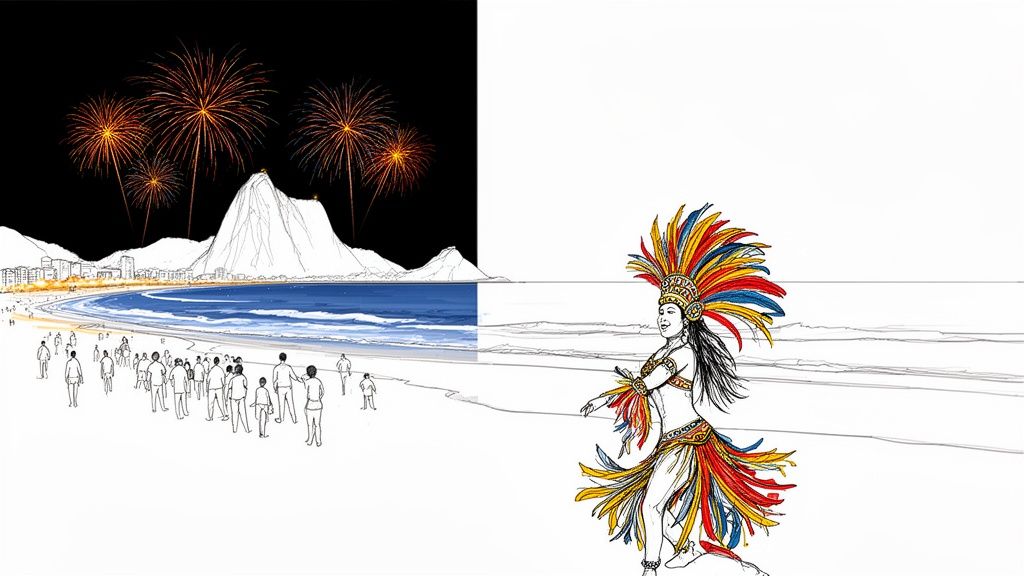
From December to February, Brazil doesn't just host a party; it becomes the party. This is the absolute height of summer, a season of pure, uncut energy when the entire country shifts into celebration mode. For sun-seekers and anyone looking to experience Brazil at its most vibrant, this window is magnetic, building up to the legendary New Year's Eve on Copacabana and the world-famous explosion of joy that is Carnival.
The atmosphere is electric, especially in iconic cities like Rio de Janeiro and Salvador. Days are long, hot, and steamy—perfect for soaking up the sun on a packed beach before diving headfirst into the thumping nightlife. There's no question this is Brazil at its most alive, but it's also at its most crowded and expensive.
Navigating the Vibrant Chaos Like a Local
The sheer scale of peak season can be a shock to the system. With millions of people descending on the main attractions, it can feel overwhelming if you don't have a local's game plan. Planning ahead isn’t just a good idea; it’s non-negotiable for a trip that feels thrilling instead of stressful.
The real key to connecting with the local spirit is looking beyond the main stage. While the Sambadrome parade in Rio is a technical marvel, the true heart of Carnival beats in the streets. This is where you find the 'blocos'—neighborhood street parties that embody the authentic, democratic soul of the celebration.
A local's secret to enjoying Carnival is to find a smaller, neighborhood 'bloco'. Instead of just watching the party from the sidelines, you become part of it, dancing shoulder-to-shoulder with residents in a celebration that feels raw, real, and rooted in the community.
An Insider's Guide to Peak Season Travel
Finding an authentic vibe during this whirlwind requires a bit of strategy. To dodge the biggest crowds and experience a different flavor of Carnival, think about heading to cities known for their own unique traditions. For a deep cultural dive, consider exploring the unique Frevo-driven Carnival in Recife and Olinda, which offers a powerful alternative to Rio's samba.
Here are a few tips for making the most of Brazil's festive peak:
- Book Everything Early: Flights, hotels, and event tickets should be locked down at least six months out. Prices can easily triple as the dates get closer.
- Explore Beyond Rio: Salvador in Bahia offers a powerful Afro-Brazilian take on Carnival, while Olinda and Recife have their own distinct, folkloric celebrations that are just as spectacular.
- Embrace the 'Bloco' Culture: Do some research on the schedules for smaller, local 'blocos' in Rio neighborhoods like Santa Teresa or Lapa. They offer a more intimate and less commercialized experience.
- Stay Hydrated and Sun-Safe: The summer heat is no joke. Always have water on you, wear sunscreen, and find some shade during the peak midday sun to keep going strong.
This season is a blockbuster for a reason, pulling in record crowds for its sun-drenched festivities. According to Brazil's tourism trends and visitor data, millions of international visitors arrive during this period. While this creates an incredible buzz, it also means adventurers can witness Iguaçu Falls at its most thunderous, with water flows significantly higher than in drier months.
Finding Brazil's Sweet Spot from March to May
Once the last of the Carnival glitter has been washed away, a different kind of magic settles over Brazil. If you ask a local about their favorite time of year, you'll hear a lot of them point right to the months between March and May. This is Brazil's autumn, a shoulder season that savvy travelers use as their secret weapon for a more immersive experience.
The intense summer humidity finally breaks, giving way to beautifully warm days and cooler nights, especially down south. The landscapes, still soaking wet from the summer rains, are impossibly green. Most importantly, the massive crowds from New Year's and Carnival have vanished, leaving a calmer, more authentic Brazil in their wake.
Why Autumn Is Prime Time for a Deeper Trip
This window from March to May is the perfect trifecta: great weather, lower prices, and far fewer people. It's the difference between hearing your own footsteps on the cobblestones of Paraty and shuffling shoulder-to-shoulder with a thousand other tourists.
This is the time for lingering over a coffee at a neighborhood padaria (bakery) in São Paulo or actually finding a prime spot on Ipanema without navigating a sea of umbrellas. The pace just slows down. Interactions with locals become less transactional and more genuine; conversations just seem to flow more easily when the high-season rush is gone. You get to see Brazil not as a spectacle, but as a living, breathing place.
This shoulder season is the sweet spot where accessibility meets authenticity. You get all the beauty of Brazil's iconic sights but with the invaluable addition of breathing room, allowing for spontaneous discoveries and a deeper connection to the local culture.
The On-the-Ground Benefits
Timing your trip for March to May is a strategic move that pays off, big time. After the absolute chaos of Carnival—when Rio's streets can swell with millions of people—the country takes a collective breath.
Visitor numbers drop off significantly. This dip in demand means flight and hotel prices can drop by 20-30% from their peak season highs, making it an excellent time for budget-conscious cultural explorers.
Here’s the practical breakdown of what that means for you:
- Better Prices: Your budget will stretch way further. Cheaper flights and hotels mean more money for local experiences, from cooking classes to guided historical tours.
- Goldilocks Weather: Most of the country is just right. The oppressive summer humidity is gone from the south, and the heavy downpours in the Amazon and Pantanal start to ease up.
- Fewer Crowds: You can actually enjoy places like Christ the Redeemer and Iguazu Falls without feeling like you're in a mosh pit. The photos are better, and the experience is a thousand times more profound.
- Lush Scenery: The whole country is still glowing green from the rainy season. It’s a photographer’s dream and a gorgeous time for hikes in national parks like Chapada Diamantina.
Brazil's Cultural Heartbeat: June to August
Most people picture Brazil as a year-round summer bash, but the stretch from June to August tells a completely different story. This is Brazil's winter, and while that might sound strange, it’s a season that’s arguably more authentic and soulful than any other. It’s a time to swap the crowded beaches for cozy mountain towns, witness once-in-a-lifetime wildlife spectacles, and join in on traditions that most tourists fly right over.
If you want to connect with the country’s heartland, this is the best time to visit Brazil. The vibe shifts from the high-energy coast to something a little more local, a little more real.
The Northeast Comes Alive for Festa Junina
The single biggest reason to be in the Northeast between June and July is for Festa Junina (the June Festival). It's the second-largest celebration in the entire country, right after Carnival, but it has thankfully stayed off the mainstream tourist circuit. Think of it as a massive, country-wide party celebrating rural life, where whole towns are decked out in colorful flags and lanterns.
Instead of samba, the air is filled with the sounds of forró, an accordion-led rhythm that’s impossible not to dance to. Locals pull on checkered shirts and straw hats, gathering around huge bonfires to eat traditional festival foods.
- Must-Try Foods: Look for treats made from corn and coconut, like pamonha (a sweet corn paste steamed in corn husks) or canjica (a creamy corn porridge).
- The Epicenter: The absolute biggest parties go down in the states of Pernambuco and Paraíba. The cities of Caruaru and Campina Grande even compete for the title of "Biggest Saint John's Festival in the World."
This isn't some show put on for visitors; it's a deeply rooted celebration of Brazilian heritage. Showing up for a Festa Junina is like getting a backstage pass to the country's cultural core.
The Absolute Best Time for Wildlife
For anyone with a camera and a sense of adventure, June through August is the undisputed peak season. This is the heart of the dry season in two of Brazil's most incredible ecosystems, which creates perfect conditions for spotting animals.
The dry season is like nature’s stage manager. It clears the brush and shrinks the waterholes, forcing animals out into the open and creating a natural theater for anyone patient enough to watch.
In the Pantanal, the world's largest tropical wetland, the waters recede and concentrate all the wildlife around the few remaining rivers and pools. This makes it the prime time to spot the elusive jaguar as it hunts capybaras along the riverbanks—your odds are exponentially higher these months. Over in the Amazon, lower water levels mean the jungle trails are finally exposed for hiking, and as a huge bonus, the mosquito population takes a nosedive, making every trek that much more enjoyable.
Crisp Air and a Touch of Europe in the South
While the rest of Brazil is enjoying dry, mild days, the South actually gets a proper winter. Cities like Gramado and Canela, nestled in the Serra Gaúcha mountains, feel more like cozy alpine villages, complete with fondue restaurants, artisan chocolate shops, and European-style architecture. Temperatures can dip near freezing, making it a popular escape for Brazilians who want to experience a completely different climate without leaving the country.
This season is perfect for:
- Hiking: The crisp, clear air is incredible for trekking through the breathtaking canyons of Aparados da Serra National Park.
- Wine Tasting: This is Brazil’s wine country, and winter is a fantastic time to tour the local vineyards and sample the wines without the summer crowds.
- Just Relaxing: It’s a chance to see a slower, more thoughtful side of Brazilian life, one that revolves around fireplaces and hearty, comforting food.
Exploring Nature's Prime Time from September to November
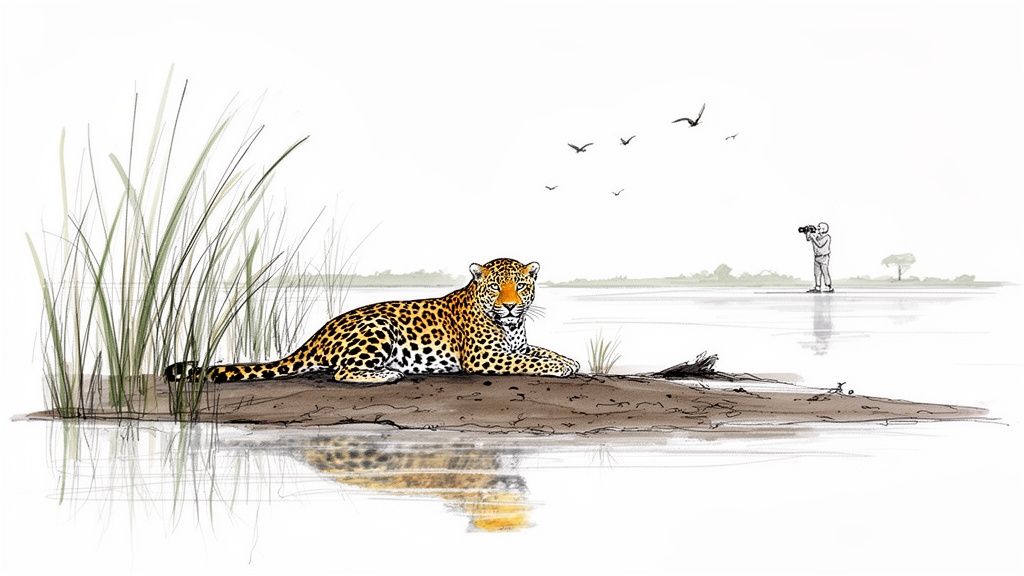
For anyone who dreams of adventure and getting deep into nature, Brazil's spring, from September to November, is an unbeatable window. This is when the dry season is wrapping up and the warmer weather starts to roll in, creating a perfect storm of conditions for the country's most spectacular wildlife and outdoor action.
It’s when Brazil’s wild heart beats the loudest. If your travel plans are all about raw, immersive encounters with the natural world, this is hands down the best time to visit Brazil. From tracking apex predators in the wetlands to riding perfect winds on the coast, the country truly comes alive.
The Ultimate Window for Wildlife Spotting
The Pantanal, the world’s largest tropical wetland, puts on its best show during these months. As the dry season hits its peak, water sources shrink, forcing animals to gather around the few remaining rivers and ponds. This natural bottleneck dramatically stacks the odds in your favor for spotting the region's most iconic residents.
This isn't just a good time for wildlife; it's the absolute pinnacle. The concentration of animals creates a safari-like experience that feels like you've stepped right into a National Geographic documentary. A simple boat trip can turn into the highlight of your entire trip.
For those hoping to see a jaguar, this is your holy grail. Sightings of these elusive big cats hunting along the riverbanks become surprisingly common. There’s nothing quite like watching these predators in their element, and this season offers your most reliable shot at it.
Adventure and Exploration Off the Beaten Path
The great conditions aren't just limited to the Pantanal. This time of year is perfect for travelers who want to get beyond the cities and into Brazil's rugged, beautiful landscapes.
- Hiking in National Parks: With comfortable temperatures and less rain, the trails in parks like Chapada Diamantina are in prime condition. You can explore its tabletop mountains, hidden waterfalls, and massive cave systems without the oppressive summer heat.
- Kitesurfing in the Northeast: The winds whipping along the coast of states like Ceará hit their peak consistency and power. Little villages like Cumbuco and Jericoacoara basically turn into global kitesurfing hubs, with world-class conditions for everyone from pros to first-timers.
- Southern Spring Blooms: Down south, the landscape is waking up. The cooler states of Santa Catarina and Rio Grande do Sul burst into color, making it a gorgeous time for a road trip through the German-influenced towns and vineyards of the Serra Gaúcha.
A Strategic Time for Smart Travel
This shoulder season hits that sweet spot, balancing incredible experiences with practical perks. If you're chasing Brazil's best weather, September to November is it. In Rio, for example, temperatures hang around a perfect 26-30°C (79-86°F) with fewer than 10 rainy days a month—a huge relief from the summer downpours.
You’ll also find that accommodation costs can be up to 25% lower than during the peak season. And for a unique cultural fix, you can catch pre-summer festivals like Blumenau's Oktoberfest, a celebration of German heritage in the south that pulls in over half a million visitors every year. To see just how this season stacks up, you can read more about Brazil's tourism trends and visitor data.
A Deeper Dive into Brazil's Cultural Soul
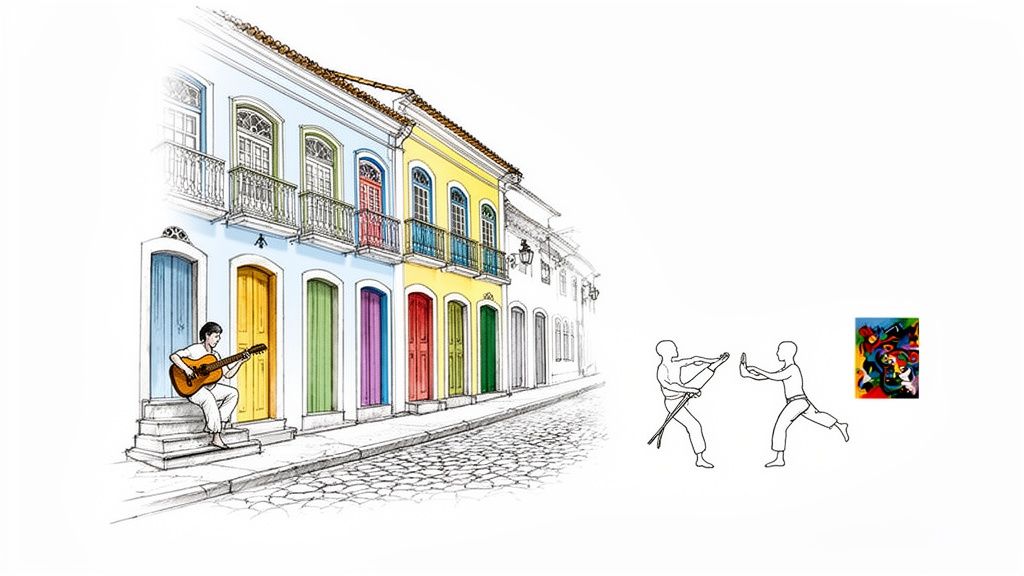
Sure, Christ the Redeemer and Copacabana are iconic. But to really get to the heart of Brazil, you have to peel back that first layer. The real magic isn't in the postcard pictures; it's found on the backstreets, in the rhythm of a drum, on a painted wall, and in the stories of the people who call this place home.
Timing a trip for cultural immersion means looking beyond the high season and finding those moments when local life is buzzing. It's about trading the main tourist drags for the pulse of a real neighborhood and discovering what truly makes Brazil tick.
Salvador: The Heart of Afro-Brazilian Heritage
Nowhere else in Brazil does the story of its Afro-Brazilian roots come alive like it does in Salvador, the capital of Bahia. Just walking through the Pelourinho, the city's UNESCO-listed historic center, is an experience. The air thrums with the sound of Olodum drummers practicing in the plazas and smells of acarajé (those amazing black-eyed pea fritters) frying on street corners.
If you really want to plug into the energy here, try these:
- Take a Capoeira Class: Watching a performance is one thing, but feeling the movements is another. Find a local mestre (master) and learn the basics of this incredible art form that's part martial art, part dance.
- Visit a Candomblé House: With a good, respectful local guide, you can get a glimpse into the Afro-Brazilian religion of Candomblé. It’s a spiritual practice that has deeply shaped the entire culture of Bahia.
- Explore Local Markets: Forget the souvenir shops. Get lost in the Mercado Modelo or the absolutely massive Feira de São Joaquim to see how locals really live, shop, and eat.
São Paulo: An Urban Canvas
People often write off São Paulo as just another concrete jungle, but they're missing the point. This city is one of the world's most exciting outdoor art galleries, where the walls literally talk about politics, society, and life itself.
The creative heart of it all is Vila Madalena. This bohemian neighborhood is a maze of alleys and streets where practically every surface is covered in incredible art. A walk down Beco do Batman (Batman Alley) is essential; it’s an ever-changing explosion of color from artists who come from all over. And if you're mapping out cultural hubs, an ultimate Rio de Janeiro tour guide can help you connect the dots between Brazil's two biggest cities.
Going beyond the main attractions to explore São Paulo's street art or Salvador's local markets allows you to read the city's story as written by its own people. It’s an unfiltered, authentic way to connect with the modern soul of Brazil.
Engaging Respectfully with Local and Indigenous Communities
For a connection that goes even deeper, think about experiences that put your money directly into the hands of local communities. This is how you move from being a tourist to being a guest, learning firsthand about different ways of life.
- Community-Run Amazon Lodges: Stay at an eco-lodge run by a local or Indigenous community. You'll get an unparalleled education on the rainforest while knowing your stay directly supports conservation.
- Visit a Quilombo: Explore a quilombo, a settlement founded by escaped slaves. These communities are guardians of unique cultural traditions and offer a powerful look into a history of resilience.
- Eat Like a Local: Seriously, skip the tourist restaurants. Head to the local botecos (neighborhood bars) and family-run spots. Ask for the prato do dia (dish of the day) and get a real taste of Brazilian home cooking.
Choosing these kinds of experiences changes a trip from a simple vacation into a real, meaningful exchange. It’s how you find the true rhythm of Brazil.
Your Brazil Travel Questions Answered
Planning a trip to a country as massive and diverse as Brazil always sparks a few questions. To wrap things up, we're tackling some of the most common queries we get from travelers. Think of this as your final check-in before you go.
What Is the Best Time to Visit Brazil on a Budget?
If you're watching your wallet, aim for the shoulder seasons. The sweet spots are from March to May and again from September to November.
Once the peak holiday crowds from December and February clear out, prices take a nosedive. We're talking savings of 20-40% on flights and hotels. You get beautiful weather across most of the country without the high-season price tag, allowing you to invest in more authentic, off-the-beaten-path experiences.
When Is the Best Time for Wildlife Watching?
For seeing Brazil's incredible animals, the dry season is king. Hands down.
If you're dreaming of jaguar spotting in the Pantanal, you need to be there between June and October. The wetlands recede, forcing animals to gather around the remaining waterholes, which makes them much easier to find.
The same logic applies to the Amazon, where the dry season runs from June to November. The water levels drop, opening up jungle trails for incredible hikes. The best part? Far fewer mosquitoes and a better chance of spotting animals on the forest floor.
Is It Safe to Travel During Carnival?
Carnival is an experience of a lifetime, but yes, you need to have your wits about you. The sheer size of the crowds in cities like Rio and Salvador means petty crime like pickpocketing does go up. But being smart about it makes all the difference.
Millions of people celebrate safely every single year. The trick is to follow the local lead:
- Leave your passport and credit cards in the hotel safe.
- Only carry enough cash for the day.
- Use ride-sharing apps or official taxis, especially after dark.
- Focus on neighborhood blocos for a more local, and often safer, vibe.
Stick to the well-lit, packed areas, and you'll be free to soak in one of the world's greatest parties without a worry.
Do I Need to Speak Portuguese to Travel in Brazil?
You can get by with just English in the main tourist zones of Rio and São Paulo, no problem. But honestly? Learning just a few basic Portuguese phrases will completely change your trip for the better.
Brazilians are incredibly warm and genuinely appreciate the effort. Just knowing how to say hello (olá), thank you (obrigado/obrigada), and how to order a coffee will open up so many more authentic conversations and connections. It’s what turns a good trip into a truly great one.