
If you're after the short and sweet answer, the absolute best time to visit Fiji is during its dry season, from May to October. This is when you'll find that postcard-perfect weather everyone dreams of: endless sunshine, lower humidity, and beautifully comfortable temperatures. It's the ideal setup for pretty much any Fijian adventure you have in mind.
Your Quick Guide to Fiji’s Best Travel Months

But let's be real, figuring out the perfect time for your Fiji trip goes way beyond just the weather forecast. It's about matching your personal travel style to the natural rhythm of the islands. Once you look past the stunning resorts, you'll discover a world of genuine culture, off-the-beaten-path adventures, and local experiences that can make your trip truly unforgettable.
This guide is designed to give you the real story, moving past the generic advice to help you have a full cultural experience. Whether you're dreaming of snorkeling in crystal-clear waters, participating in a village kava ceremony, or finding a secluded waterfall all to yourself, timing really is everything. For more ideas on getting your travel timing just right, check out our other guides on seasonal destinations.
Decoding Fiji’s Seasons
From a pure weather and tourism standpoint, you really can't beat the drier, cooler months from May through October. This period is Fiji's "winter," which means lower humidity and very little rain—creating that idyllic backdrop for lazy beach days and island hopping. Daily temperatures hover around a perfect 26-29°C (79-84°F).
Not surprisingly, this is also when you'll find the most visitors, all looking for that classic island paradise vibe. It’s peak season for a reason.
To make it even easier to choose, here’s a quick breakdown of what to expect throughout the year.
Fiji Travel Seasons at a Glance
This table gives you a snapshot of Fiji's travel seasons, highlighting the key differences in weather, tourist crowds, and pricing to help you pick your ideal travel window.
| Travel Season | Months | Weather Conditions | Crowd & Cost Level | | :--- | :--- | :--- | | High Season | June–September, Dec–Jan | Sunny, dry, low humidity, and comfortable temperatures. | High | | Shoulder | April–May, October | A great mix of good weather with fewer crowds. | Medium | | Low Season | November, February–March | Hot, humid, with a higher chance of rain and cyclones. | Low |
While the dry season gets all the hype, the shoulder and low seasons offer their own unique advantages, from lower prices to a more intimate and lush island experience.
Understanding Fiji’s Dry and Green Seasons
Forget the typical four seasons you might be used to. Fiji moves to a different rhythm, a tropical pulse that divides the year into two distinct periods: the Dry Season and what we locals affectionately call the Green Season.
Getting your head around this is the first real step in planning a trip that feels less like a package holiday and more like an actual experience. Think of it as choosing between two different versions of paradise—one is a sun-drenched, predictable haven, and the other is a vibrant, wild, and dramatic spectacle. The "best" time to visit really comes down to which version of Fiji is calling your name.
The Dry Season: A Picture-Perfect Escape (May to October)
Running from May to October, the Dry Season is Fiji's prime time for a reason. This is when the southeast trade winds kick in, bringing day after day of brilliant sunshine, lower humidity, and beautifully warm temperatures that hover around 26-29°C (79-84°F).
This is the Fiji you see on postcards. The skies are impossibly blue, the visibility in the ocean is phenomenal, and the weather is tailor-made for those classic island adventures. If you’re dreaming of maximizing your time outdoors without a single thought about rain, this is your window.
But, as with any paradise, there's a catch. This perfect weather makes it the most popular time to visit, which means:
- More People: Resorts fill up, especially on the main island of Viti Levu. You'll definitely feel the buzz, particularly during the Australian and New Zealand school holidays in June and July.
- Peak Prices: Flights and accommodation will be at their most expensive. You absolutely have to book well in advance to lock in anything reasonable.
- Less Room for Spontaneity: The best dive spots, unique tours, and hidden gems get booked solid, so a more structured itinerary is a must.
If your vision of Fiji is all about guaranteed sunshine for island hopping, diving crystal-clear waters, or just lazing on the beach, the Dry Season is a sure thing.
Local Insight: While the main tourist hubs are buzzing, this is actually a fantastic time to get off the beaten track. The calm seas make inter-island travel a breeze, opening up access to places like the lush island of Taveuni or the remote Lau Group. You can find a much more secluded and authentic experience away from the main crowds if you're willing to venture a little further.
The Green Season: Fiji in Full Bloom (November to April)
First, let's reframe the so-called "wet season." From November to April, Fiji doesn't just get wet; it transforms. Yes, you'll get higher humidity and the occasional short, intense downpour in the afternoon, but it's far more accurate to call it the Green Season. This is when the islands truly come alive.
The rain breathes life into the landscape, turning every hill and valley a stunning, brilliant green. Waterfalls that are just a trickle in the Dry Season become thundering cascades, and the air is thick with the scent of tropical flowers. It's a far more dramatic and sensory experience.
Choosing the Green Season isn't about avoiding rain; it's about embracing a different kind of adventure—one centered on immersion and tranquility.
Why You Might Just Love the Green Season
- Fewer Crowds, Lower Costs: With most tourists gone, you’ll often feel like you have entire beaches to yourself. This is, hands down, the most budget-friendly time to visit Fiji, with some serious deals to be had on flights and resorts.
- Lush, Vibrant Landscapes: For anyone into hiking or photography, this is when Fiji’s interior is at its absolute peak. The rainforests are spectacular, and the colours are unbelievably rich.
- A More Local Vibe: The slower pace just lets you sink into the culture. You're much more likely to experience true "Fiji Time," that beloved local mindset of moving at a relaxed, unhurried pace that naturally leads to deeper connections.
You do need to be aware of cyclone season, which falls within these months, peaking from January to March. While the actual statistical risk of a cyclone hitting during your specific trip is low, it’s a possibility. Good, comprehensive travel insurance is non-negotiable.
Ultimately, the Green Season is for the traveler who doesn't mind a bit of rain in exchange for a more intimate, vibrant, and affordable journey. It's your chance to see Fiji’s raw beauty and experience a much quieter, more authentic side of island life.
A Month-by-Month Guide to Fiji’s Weather and Culture
Knowing the difference between the Dry and Green seasons is a solid start, but the real magic of Fiji reveals itself when you look closer at the calendar. Each month has its own rhythm, blending unique weather with cultural events that offer a true window into the soul of these islands. Think of this as your personal almanac for planning a trip that goes way beyond the resort walls.
Pinpointing the best time to visit Fiji is all about matching your travel style to these subtle shifts. Are you chasing perfect visibility for a dive trip, or hoping to join in on a vibrant local festival? Let’s break it down, month by month, so you can find your perfect window.
This timeline gives you a great visual for Fiji's two main seasons. It contrasts the brilliant, sun-soaked days of the Dry Season with the lush, intensely green vibe of the, well, Green Season.
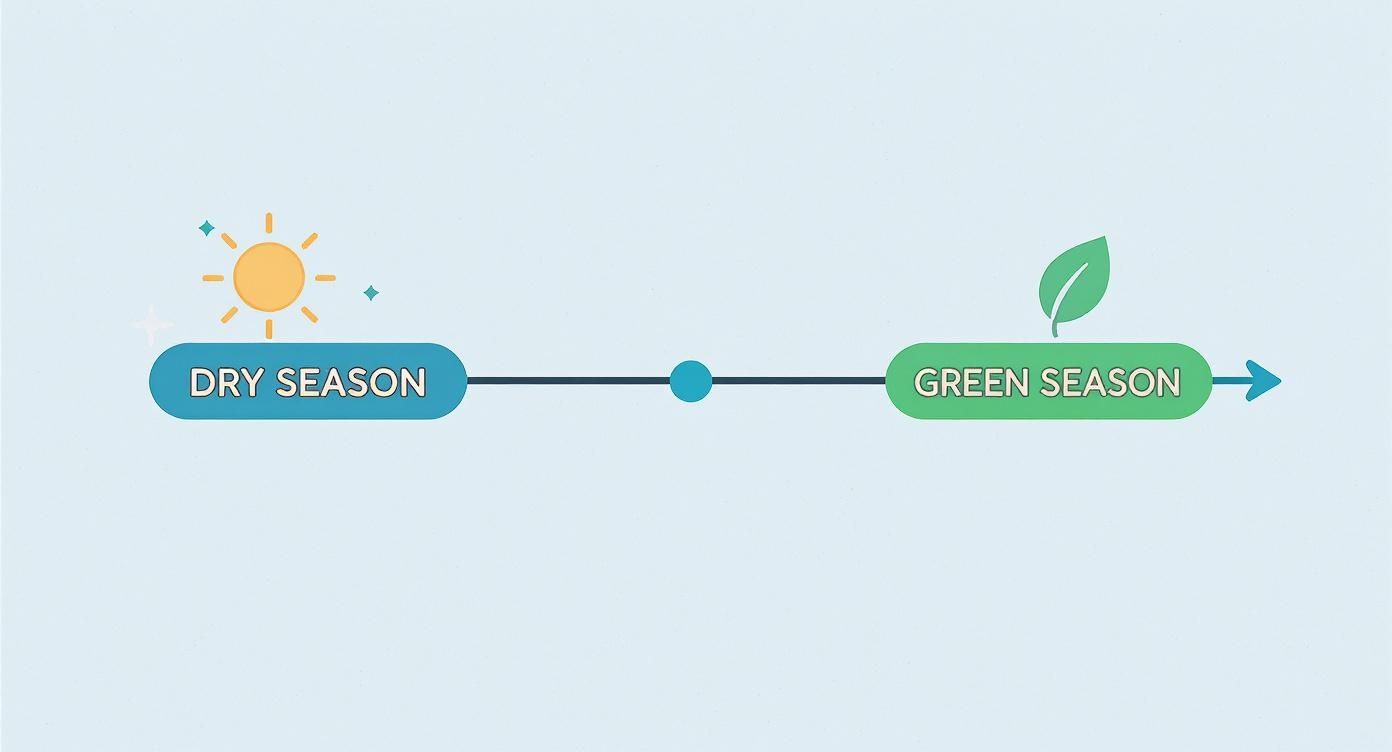
As you can see, your experience can change dramatically. You might be basking on a beach one month or exploring thundering waterfalls in a rainforest the next.
The Shoulder Months: April and May
As the Green Season starts to wind down, April emerges as a beautiful transition month. The heavy rains are mostly gone, the humidity drops, and the landscapes are still incredibly lush. It's a fantastic time for hikers and nature lovers to get out and explore before the main crowds show up.
May is one of Fiji's best-kept secrets. You get all the glorious sunshine and clear skies of the coming Dry Season, but without the high-season price tags. The water is exceptionally clear, making it a dream for snorkelers and divers who want the reefs (mostly) to themselves.
The Peak Dry Season: June to September
June and July are the heart of Fiji’s high season, and for good reason. The weather is consistently dry and sunny, with comfortable temperatures that are perfect for pretty much any activity you can think of. The islands are buzzing with energy. If you're near Nadi, the week-long Bula Festival in July is an absolute must-see, celebrating Fijian culture with parades, music, and incredible food.
August keeps the postcard-perfect weather coming. The trade winds are steady, which makes it a phenomenal month for sailing and other watersports. It's also prime time for family travel, so booking way in advance is key, especially if you want to snag a spot in one of the smaller, more authentic resorts.
By September, the peak crowds begin to thin out a bit, but the idyllic weather holds strong. This month strikes a great balance, offering fantastic conditions for exploring more remote islands like the Yasawas or Kadavu, where you can get a more intimate feel for village life.
Local Tip: If you're visiting during these peak months, try staying at smaller, locally-owned properties. You'll be supporting the local economy directly and will walk away with a much richer cultural experience than you'd find at the sprawling mega-resorts.
The Shoulder Months: October and November
October is another one of those sweet spots. The weather is still reliably dry and warm, and the underwater visibility is often at its absolute best. Manta ray sightings are common around the Yasawa Islands, offering a wildlife encounter you will never, ever forget.
November officially marks the beginning of the Green Season, but it usually eases in gently. You might get a few brief afternoon showers, but they rarely stick around long enough to disrupt plans. Culturally, this month is special, as the Indo-Fijian community celebrates Diwali, the festival of lights. Seeing homes and towns lit up with countless candles and lamps is a truly beautiful sight.
The Heart of the Green Season: December to March
December and January bring the holiday rush, mixing festive crowds with hotter, more humid weather. Rainfall definitely picks up, but it often arrives in short, intense bursts that are followed by plenty of sunshine. It's a vibrant, celebratory time to be in Fiji.
February and March are the wettest, most humid months of the year and are the peak of the cyclone season. For many, this is the "worst" time to visit, but for the right kind of traveler, it's a unique opportunity. The islands are at their most green, waterfalls are absolutely roaring, and you’ll find the fewest tourists and the lowest prices all year. It’s the perfect time to fully embrace "Fiji Time," relax with a good book, and connect with locals in a much quieter, unhurried setting.
To help you time your visit with Fiji's vibrant culture, here's a look at some key activities and events throughout the year.
Fiji Activity and Festival Calendar
This calendar breaks down the year month-by-month, highlighting prime activities and significant cultural festivals. Use it to plan your trip around experiences that go beyond the beach.
| Month | Primary Activity Highlight | Key Cultural Event |
|---|---|---|
| January | Waterfall Hikes & Rainforest Treks | New Year's Day Celebrations |
| February | Indoor Spas & Relaxation | N/A (Peak of wet season) |
| March | River Rafting (swollen rivers) | Holi (Festival of Colors) |
| April | Hiking in Lush Landscapes | Good Friday/Easter Celebrations |
| May | Diving & Snorkeling (excellent visibility) | Ratu Sir Lala Sukuna Day |
| June | Surfing (Mamanuca Islands) | National Sports Day |
| July | Beach Lounging & All Water Activities | Bula Festival (Nadi) |
| August | Sailing & Windsurfing | Hibiscus Festival (Suva) |
| September | Island Hopping (Yasawa & Mamanuca) | Constitution Day |
| October | Manta Ray Viewing (Yasawa Islands) | Fiji Day (National Day) |
| November | Cultural Village Visits | Diwali (Festival of Lights) |
| December | Festive Celebrations & Resort Activities | Christmas & Boxing Day |
Whether you're timing your trip for the perfect surf break or to witness a centuries-old cultural tradition, a little planning ensures you’ll connect with the Fiji that speaks to you most.
Timing Your Trip for Your Ideal Fijian Adventure
Let's be honest, the idea of a single "best time to visit Fiji" is a myth. The perfect time for your trip really boils down to what you want to do. Fiji's rhythm shifts with the seasons, and each part of the year offers a completely different kind of adventure.
The secret to an unforgettable trip is to think about your passions first. Are you dreaming of weightlessly drifting through an underwater coral garden, or are you hoping to paddle into the wave of a lifetime? When you match your travel dates to your interests, you're not just booking a generic holiday—you're crafting a trip that's truly yours.
For the Underwater Explorer: Diving and Snorkeling
If exploring Fiji’s world-famous soft coral reefs is at the top of your list, timing is absolutely critical. You'll find the most stunning underwater conditions during the dry season, from May to October.
This is when ocean visibility can hit an incredible 30 meters (100 feet). The calm seas and minimal rain mean less sediment washes off the islands, leaving the water gin-clear and perfect for both diving and snorkeling. It's the most reliable window for getting up close with manta rays, reef sharks, and those impossibly vibrant coral gardens.
For the Avid Surfer: Chasing the Swell
Fiji is home to some of the planet's most legendary breaks, but the best waves are definitely seasonal. If you're an experienced surfer looking to tackle giants like Cloudbreak, the prime time to go is Fiji's winter, from April to October.
This is when powerful low-pressure systems deep in the Southern Ocean send consistent, powerful swells marching toward the islands. It’s what creates those epic, magazine-cover conditions. On the flip side, the summer months (November to March) bring smaller, less intimidating waves—which are actually perfect for beginners or anyone just wanting a more laid-back surf session.
Local Insight: While the big-name breaks get all the glory, the Green Season offers plenty of fun, uncrowded waves at local spots. It’s a fantastic time to connect with the local surf scene and enjoy the water without the peak-season competition.
For the Culturally Curious: Immersive Experiences
Connecting with Fijian culture is a powerful experience you can have any time of year. But if you want a more authentic and personal connection with local life, the shoulder seasons—April, May, October, and November—are often the sweet spot.
During these months, the main tourist rush is either just beginning or starting to wind down, which allows for more meaningful, one-on-one interactions. Taking part in a traditional sevusevu (kava ceremony) in a village feels far more genuine when you're not just another face in a large tour group. Local markets are buzzing year-round, but they're especially vibrant during the dry season's harvest periods.
For the Off-the-Beaten-Path Explorer
If your idea of paradise is escaping the crowds to find Fiji’s wild, untamed heart, then the Green Season (November to April) is calling your name. This is when the main tourist trail goes quiet, revealing a totally different side of the islands for anyone willing to embrace a bit of rain.
This is the absolute best time to discover inland treasures that many visitors miss:
- Thundering Waterfalls: The rain transforms places like Taveuni's Tavoro Waterfalls from gentle cascades into spectacular, roaring displays of power.
- Lush Rainforests: The highlands of Viti Levu become intensely green and atmospheric, making for incredible trekking. You feel a world away from the coast.
- Secluded Islands: Remote island groups like Kadavu or the Lau Islands see even fewer visitors, offering a true sense of solitude and a chance to experience an untouched paradise.
Discovering Authentic Fiji Beyond the Resorts

Look, the resorts in Fiji are incredible. They’re a perfect postcard of paradise. But the real Fiji, the one that stays with you long after you leave, is found in its villages, remote islands, and deep green interiors.
To find it, you have to get off the beaten path. Swap the resort buffet for a meal at a tiny, family-run spot. Look beyond the main island of Viti Levu and see the country through a local lens.
Timing this kind of trip is less about chasing guaranteed sunshine and more about finding genuine connection. The shoulder months of April-May and October-November are absolutely perfect. There are fewer tourists, which means the atmosphere in local communities is more relaxed and genuinely welcoming.
Escaping to the Outer Islands
The Mamanuca and Yasawa Islands get all the attention, but for a truly immersive trip, you need to head for Fiji's lesser-known gems. Islands like Taveuni, the "Garden Island," and the rugged Kadavu archipelago offer a peek into a more traditional way of life.
- Taveuni: The best time to hit Taveuni is during the dry season (May to October). The hiking trails to its famous waterfalls are far less muddy and much easier to navigate.
- Kadavu: This is a haven for divers and eco-tourists. Plan your visit between June and September when the seas are calm, making boat trips to remote villages and pristine dive sites much smoother.
These outer islands run on a different clock—the authentic "Fiji Time." Going during the drier months means you can explore their raw beauty without weather getting in the way, letting you sink into that tranquil island rhythm. If you want to learn more about planning trips like this, check out our guide to immersive travel experiences.
The Art of a Respectful Village Visit
Visiting a traditional Fijian village is a privilege, not a tourist attraction. It’s one of the most powerful experiences you can have, but showing respect for local customs, known as vakaturaga, is non-negotiable.
Try to avoid visiting on a Sunday; it's a day of church and rest for most Fijians. A mid-week visit during the shoulder season is ideal, as you'll see daily life unfold at its natural pace, without the pressure of the peak tourist rush.
Crucial Etiquette Tip: Never, ever just wander into a village. You must go with a guide or arrange your visit beforehand. Upon arrival, you present a sevusevu—a gift of kava root—to the village chief. This single act of respect is your key to unlocking genuine hospitality.
Supporting Local and Finding Hidden Gems
Getting off the tourist trail is also about where you spend your money. This is how you find the real Fiji. Hire a local guide to show you a waterfall only they know about. Eat at a small roadside stand to taste authentic Fijian-Indian curry.
As tourism bounces back—visitor arrivals hit 929,740 in 2023, up 4% from 2019 levels—it’s more important than ever to spread the love. With around 84% of visitors coming for a holiday and staying an average of 9.5 nights, choosing local businesses makes a huge difference.
By traveling in the shoulder seasons, you’ll find that local guides and small shop owners have more time. They have time for a real conversation, to share stories that bring their culture to life. This is how a simple vacation becomes a deep, unforgettable experience.
Final Questions Before You Go
So, you've got a handle on the best seasons, the must-do activities, and how to get a taste of the real Fiji. But a few practical questions might still be floating around. This is where we clear up those last-minute details—the final check before you start packing.
How Far Out Should I Book My Trip to Fiji?
Nailing the booking window is almost as important as picking your season, especially if you want the best rooms without paying top dollar. It really comes down to when you plan to go.
For the high season (June to September, plus the Christmas and New Year's rush), you can't leave it late. The best bures and cheapest flights get scooped up fast. To be safe, lock in your flights and accommodation 6 to 9 months in advance. Any later, and you'll be fighting for scraps and watching prices climb.
Traveling in the shoulder months of April-May or October-November gives you more wiggle room. These months are a sweet spot of great weather and smaller crowds. You can comfortably book 3 to 5 months out and still have plenty of great options.
If you're eyeing the low season from January to March, you can be a bit more spontaneous and often find some killer last-minute deals. Even so, it's smart to book at least a month or two ahead if you've got your heart set on a specific resort.
What’s the Deal with Cyclone Season? Should I Avoid It?
Fiji's official cyclone season runs from November to April, right through the Green Season. The word "cyclone" sounds scary, but let's put it in perspective. The actual chance of a major cyclone hitting the exact resort you're staying at during your specific dates is pretty low.
That said, the risk is real, especially during the peak months from January to March. This is when you'll find the highest humidity, the heaviest downpours, and the greatest possibility of tropical storms messing with your plans, from boat transfers to diving trips.
If your dream trip revolves around guaranteed sunshine for things like sailing or diving, you’re better off booking outside of these high-risk months. But if you’re on a budget, don't mind a bit of rain, and want to see Fiji at its most incredibly lush—this season can be a bargain. Just make sure your travel insurance is solid.
What Are the Absolute Must-Pack Items?
Packing for Fiji is mostly about light, breezy clothes, but a few key items will make your trip a whole lot smoother.
- The Essentials: Swimwear, shorts, and t-shirts are a given. But the most useful item you can bring is a sulu (a sarong). It’s perfect for the beach, and absolutely essential for covering your shoulders and knees when visiting a local village—a sign of respect that goes a long way.
- Sun Gear: The Fijian sun is no joke. Pack a high-SPF, reef-safe sunscreen to protect your skin and the coral. A wide-brimmed hat and good sunglasses are non-negotiable.
- Smart Footwear: Flip-flops are great for the sand, but you'll need more. Bring sturdy water shoes for exploring rocky coastlines or riverbeds. If you plan on hiking to any waterfalls, proper hiking shoes are a must.
- Bug & First-Aid: Insect repellent is your best friend in the evenings and on any jungle treks. A small first-aid kit with the basics is also a good idea.
- Tech: An underwater camera or a waterproof phone case is perfect for capturing the incredible marine life. A portable power bank is also super handy for day trips when you're away from your room.
Can I Actually Do Fiji on a Budget?
Absolutely, but you have to break away from the honeymooner mindset. Fiji has a reputation for being expensive, and it can be if you just stick to the big-name resorts and private island transfers. The secret is to travel more like a local.
Instead of fancy resorts, look for dorm rooms (many resorts have them) or locally-run guesthouses. They’re a fraction of the cost and give you a much more authentic feel. For food, get out of the resort restaurants. Eating at local markets and tiny family-run spots is not only way cheaper but also where you’ll find the best Fijian and Indo-Fijian food.
Lastly, be smart about island hopping. The cost of boats can kill a budget. Instead of trying to see everything, pick one or two islands in the closer Mamanuca chain rather than the far-flung Yasawas. You’ll save a ton on transport and get to settle in and really connect with the place—fully embracing that relaxed "Fiji Time."
Ready to plan your own authentic journey? At CoraTravels, we provide insider guides built on local knowledge to help you experience destinations like Fiji with depth and respect. Discover hidden gems, understand cultural nuances, and travel with the confidence of a local. Start planning your unforgettable trip at https://coratravels.com.