Forget the tourist-packed pubs and predictable itineraries. The true spirit of Ireland lives not just in its sprawling cities but in its towns, from vibrant coastal villages echoing with trad music to quiet riverside hubs where history is etched into every stone. This guide moves beyond the surface, offering a genuine immersion into local life and uncovering some of the best towns to visit in Ireland. We bypass the superficial to deliver actionable, locally-sourced insights for the culturally curious traveler.
This roundup is designed for those seeking an authentic connection. Each town profile is packed with insider knowledge on unspoken etiquette, where locals actually eat, and how to engage with the culture respectfully and sustainably, avoiding the pitfalls of overtourism. We provide practical tips for everyone, from digital nomads and foodies to adventure seekers and families. For those looking to craft a memorable journey, exploring options for historic towns and cities breaks for two can be a perfect way to delve into the rich heritage that these unique locations offer.
Prepare to experience Ireland not just as a visitor, but with the insight of someone who calls it home. We will explore destinations that showcase the nation's character, providing clear itineraries and off-the-beaten-path recommendations to help you find its soul.
1. Dublin
While a capital city might seem an obvious choice, Dublin earns its place by offering a completely different experience depending on which side of the River Liffey you explore. It’s a city of two halves: the tourist-centric Southside and the grittier, more authentic Northside. True immersion means venturing beyond the well-trodden paths of Temple Bar to find the city's living culture.
Dublin’s soul is found not in its main attractions but in its literary nooks and neighborhood pubs. The city’s rhythm is relaxed, often referred to as "Irish time," where conversations in a cozy pub snug are valued over strict schedules. This is a city built for wanderers, where the stories of Joyce and Beckett feel alive on its cobblestone streets.
Local-Led Immersive Experience
To experience the city like a local, base yourself in a neighborhood like Stoneybatter or Smithfield on the Northside. Start your day with a "full Irish" breakfast at a local cafe, then explore the National Museum of Ireland or the Chester Beatty Library before the crowds arrive. In the afternoon, skip the big bus tours for a literary walking tour led by a local academic or actor. For an authentic evening, use the Luas Red Line tram to find a traditional pub in a residential area, where you can find a private booth, or "snug," for an intimate pint.
Off-the-Beaten-Path Tip: Dublin’s evening meal culture starts late. Most locals don’t sit down for dinner until 8 or 9 p.m. Plan for a late lunch or an afternoon snack to tide you over and dine amongst residents, not just tourists.
Best For & Practical Tips
- Best For: Culture enthusiasts, literary pilgrims, and first-time visitors seeking a blend of history and modern energy.
- Getting There: Dublin Airport (DUB) is a major international hub. The city is highly walkable, with an extensive public transport system (bus, Luas tram, DART train).
- When to Visit: The shoulder seasons of April-May and September-October offer pleasant weather with significantly fewer crowds than the summer months.
2. Galway
Known as Ireland’s bohemian heart, Galway offers a vibrant, artistic alternative to the east coast’s urban polish. The city thrives on spontaneity and creative energy, with colorful shopfronts lining pedestrian streets and the sound of traditional music spilling from pub doorways. Unlike more formal cities, Galway’s charm lies in its laid-back, welcoming atmosphere where conversations with locals are as much a part of the experience as the planned attractions.
This is a city that lives outdoors, from its bustling weekend market near St. Nicholas' Church to the crowds gathering at the Spanish Arch to watch the River Corrib meet the sea. Galway's soul is deeply connected to the Irish language and traditional arts, offering an authentic cultural immersion that feels both ancient and alive. It truly is one of the best towns to visit in Ireland for a taste of the wild west coast.
Local-Led Immersive Experience
To experience Galway like a local, stay in the quieter Woodquay or West End neighborhoods instead of the central tourist hubs. Start your day with coffee and a pastry at a local cafe, then wander through the Claddagh, a historic fishing village area. For an authentic afternoon, rent a bike and cycle the short coastal path to Salthill. In the evening, skip the heavily advertised "tourist music venues" and wander the smaller streets to find a pub where a spontaneous trad session is underway; these are often free and far more genuine.
Off-the-Beaten-Path Tip: Local dining habits in Galway differ from tourist patterns. Galwegians tend to eat earlier, between 6 and 8 p.m. Book a table for this time to dine alongside locals and ensure you get a spot at popular restaurants.
Best For & Practical Tips
- Best For: Creatives, music lovers, and travelers seeking an authentic, bohemian cultural experience.
- Getting There: Galway is easily reachable by train or bus from Dublin. The city center is very walkable, with bike rentals being the best way to explore the coastline.
- When to Visit: The off-season from November to April offers a more authentic experience with fewer crowds. For better weather with manageable tourist numbers, aim for May or September.
3. Cork
Often called "the real capital" by its proud residents, Cork distinguishes itself from Dublin with a fiercely independent spirit and a vibrant, food-centric culture. This walkable riverside city doesn’t operate on a large-scale tourism machine; instead, it feels genuinely lived-in. Its soul is found in the bustling lanes of the English Market, the chatter of independent bookshops, and the lively traditional music sessions that spill out of neighborhood pubs.
Cork’s identity is built on a foundation of culinary innovation and artistic expression, pioneered by figures like Darina Allen of Ballymaloe House. The city's compact size encourages exploration on foot, where you can move from a contemporary art gallery to a centuries-old pub in minutes. It offers an authentic slice of modern Irish life, making it one of the best towns to visit in Ireland for those seeking a creative, local-first experience.
Local-Led Immersive Experience
Base yourself near the city center or South Main Street to have everything within easy walking distance. Dedicate a full morning to the English Market, starting with a classic breakfast at The Farmgate Restaurant upstairs. In the afternoon, bypass the main shopping streets and instead explore the city’s independent bookshops like Connolly’s for local recommendations. For a true culinary deep-dive, book a market-to-table cooking class. For the evening, explore the Mardyke Studios and nearby galleries during an art opening before settling into a traditional pub for some music.
Off-the-Beaten-Path Tip: Cork’s best restaurants are in high demand. Locals typically dine between 7 and 9 p.m., so book your dinner reservations well in advance, as walk-ins are risky, especially during peak season.
Best For & Practical Tips
- Best For: Foodies, culture enthusiasts, and independent travelers seeking a genuine urban experience without Dublin’s crowds.
- Getting There: Cork Airport (ORK) offers international and European flights. The city is easily accessible by train or bus from Dublin and other major hubs.
- When to Visit: April-May and October provide pleasant weather and smaller crowds. The October Jazz Festival is a major highlight, though the city will be busier.
4. Killarney
As Ireland's premier outdoor adventure hub, Killarney is far more than just the starting point for the Ring of Kerry. It’s a town that seamlessly blends a vibrant, amenity-rich center with direct access to the raw wilderness of Killarney National Park, its mountains, and its legendary lakes. This unique balance allows you to experience rugged nature immersion without forgoing the comforts of a proper base, making it one of the best towns to visit in Ireland for active travelers.
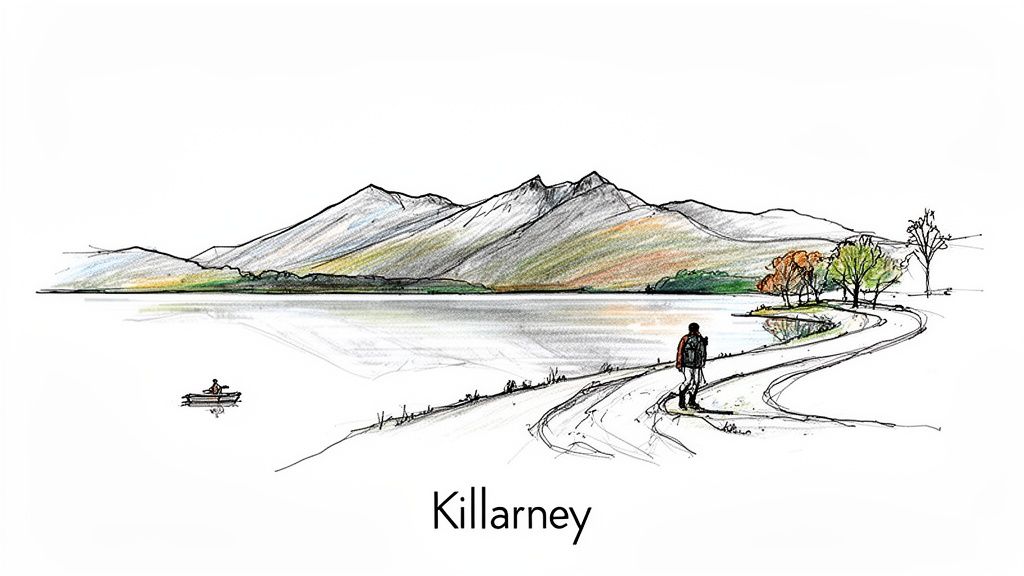
The town's spirit is rooted in mountain culture, where days are spent on the trails and evenings are for sharing stories in a cozy pub. It offers a genuine connection to the landscape, encouraging you to go beyond the main tourist routes and discover the quiet corners of MacGillycuddy's Reeks or the serene waters of Lough Leane. This is where adventure meets authentic Irish hospitality.
Local-Led Immersive Experience
To truly embrace Killarney's wild side, start your day with an early-morning cycle through the Gap of Dunloe (6-8 a.m.) to beat the tour buses. For a less-trafficked hike, skip the busier Torc Mountain and instead tackle the Caher Lake approach to MacGillycuddy's Reeks for breathtaking solitude. In the afternoon, rent a kayak or take a boat tour on Lough Leane for a unique perspective on the landscape. For dinner, explore the smaller villages along the Ring of Kerry like Beaufort or Glenbeigh for a more local pub experience.
Off-the-Beaten-Path Tip: While the Ring of Kerry is famous, driving or cycling it counter-clockwise allows you to travel against the flow of the large tour buses, which are required to travel clockwise. This simple trick dramatically improves the experience.
Best For & Practical Tips
- Best For: Adventure seekers, wellness travelers, and anyone looking for an active holiday with comfortable amenities.
- Getting There: Kerry Airport (KIR) is the closest, but Cork (ORK) and Shannon (SNN) are also accessible. Killarney is well-connected by train and bus from major cities.
- When to Visit: May-June and September-October provide the best balance of good hiking weather and fewer tourists than the peak summer season. Always pack layers and waterproofs.
5. Dingle
Perched on Ireland’s rugged westernmost peninsula, Dingle offers a potent blend of dramatic coastal scenery, bohemian culture, and a tangible connection to Irish heritage. Unlike more structured tourist hubs, Dingle retains the authentic soul of a working fishing village that happens to graciously welcome visitors, making it one of the best towns to visit in Ireland for an immersive cultural experience.
The town's magic lies in its unpolished charm. Here, the Irish language (Gaeilge) is a living, breathing part of daily life, and the rhythm is set by the tides and the lively traditional music spilling from its colorful pubs. It’s a place that reveals itself slowly, rewarding those who wander its narrow streets and listen to the stories carried on the Atlantic breeze.
Local-Led Immersive Experience
To truly settle into Dingle's pace, stay in the town center to ensure everything is walkable. Begin your day before the tour buses arrive, grabbing a coffee and watching the fishing boats in the harbor. Dedicate the afternoon to the breathtaking Slea Head Drive, but skip the large coaches and drive it yourself, stopping at Dunquin Pier and the ancient Gallarus Oratory. For your evening meal, book a table at a seafood-focused restaurant like Fenton's. Finish the night by finding a session at a traditional pub like An Droichead Beag or O'Flaherty's.
Off-the-Beaten-Path Tip: Many of Dingle’s most famous pubs double as shops (a holdover from old licensing laws). Don't be surprised to find yourself ordering a pint at a counter that also sells hardware or groceries.
Best For & Practical Tips
- Best For: Foodies, culture seekers, and adventure travelers looking for authentic village life. Check out other great coastal spots in our guide to the best beach towns in Ireland.
- Getting There: The nearest airport is Kerry (KIR). Driving is the most practical way to reach Dingle and explore the surrounding peninsula.
- When to Visit: May, September, and early October provide the best balance of decent weather and manageable crowds. Accommodation should be booked months in advance for the peak summer season.
6. Howth
A dramatic clifftop fishing village just north of Dublin, Howth offers a bracing dose of coastal beauty and maritime heritage without needing to travel far. It stands as one of the best towns to visit in Ireland for its ability to feel like a world away from the capital's bustle, despite being just a short train ride. Howth provides an authentic escape into a working fishing harbour, where the cries of gulls and the scent of saltwater replace city traffic.
The town's character is defined by its dual nature: a wild, rugged headland perfect for hiking and a cozy, traditional village below. Its charm lies in this contrast, where you can spend an afternoon scaling cliffs with panoramic sea views and an evening enjoying fresh seafood in a centuries-old pub. Howth isn’t a polished resort; it’s a living, breathing port that offers a genuine slice of Irish coastal life.
Local-Led Immersive Experience
For a truly local experience, take an early DART train from Dublin to arrive before the day-trippers. Start by watching the fishing boats unload their morning catch at the harbour between 6-8 a.m. From there, embark on the Howth Head cliff walk, aiming for the Bailey Lighthouse trail for a moderate two-hour hike. Plan your walk to coincide with the golden hour for spectacular sunset views over the Irish Sea. For dinner, book a table at a classic spot like The Abbey Tavern or Harbour House to sample the seafood you saw being landed that morning.
Off-the-Beaten-Path Tip: Most traditional music sessions in the village pubs happen on specific nights. Check local schedules online beforehand, as an impromptu performance is rare, and you’ll want to plan your visit around a guaranteed trad night.
Best For & Practical Tips
- Best For: Day-trippers from Dublin, nature lovers, and anyone seeking fresh seafood and stunning coastal walks.
- Getting There: The easiest way is via the DART (Dublin Area Rapid Transit) train from central Dublin, which takes around 30 minutes.
- When to Visit: Visit on a weekday between October and April to avoid the significant crowds of Dublin day-trippers. Always bring waterproof layers; the weather on the exposed cliffs can change in an instant.
7. Kinsale
Kinsale’s reputation as Ireland’s “gourmet capital” is well-earned, but this picturesque harbor town offers more than just exceptional food. Its brightly painted streets, maritime history, and sophisticated atmosphere create a unique coastal experience. Unlike other busy tourist spots, Kinsale feels genuinely cared for, with a strong sense of local pride evident in its pristine storefronts and world-class restaurants.
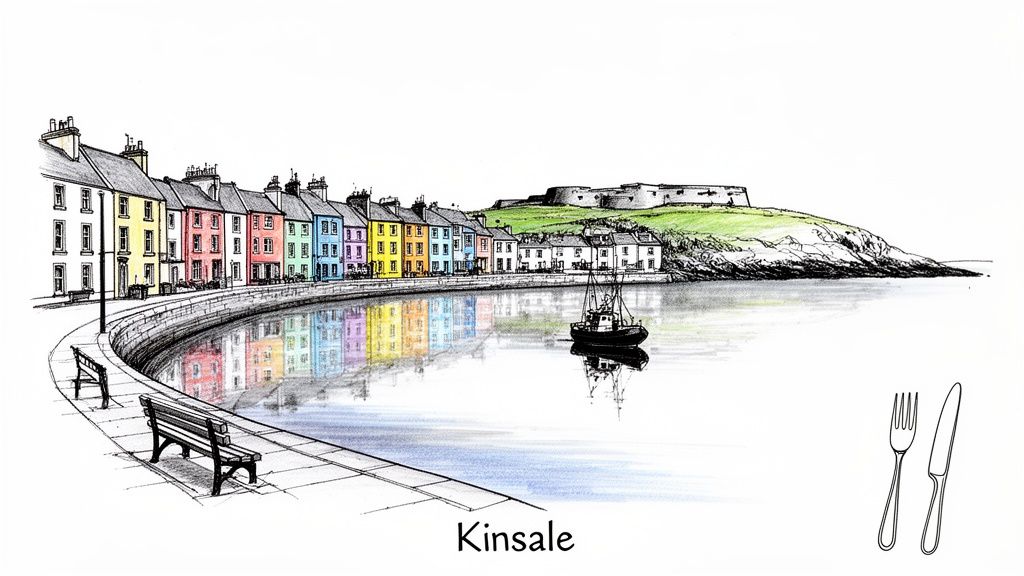
The town’s soul is found along its waterfront and in the narrow lanes winding away from the harbor. Kinsale’s rhythm is tied to the sea, from the morning fishing boats to the golden hour light reflecting off the water. It’s a place designed for leisurely strolls, where the focus is on savoring a perfectly prepared meal, browsing independent galleries, and soaking in the tranquil harbor views.
Local-Led Immersive Experience
To fully immerse yourself, stay in the town center to keep everything walkable. Start your day with a seafood-focused brunch at a local spot like Fishy Fishy Café before exploring the imposing Charles Fort, which provides historical context and stunning harbor views. In the afternoon, wander through the independent boutiques and art galleries on Main Street and its connecting side streets. For a dramatic coastal escape, take the Kinsale Head walk for an isolated perspective on the wild Atlantic.
Off-the-Beaten-Path Tip: Many top restaurants offer early bird dinner specials between 5 and 7 p.m., providing the same exceptional quality as their main menus for a 20-30% discount. Book reservations weeks in advance, especially during peak season.
Best For & Practical Tips
- Best For: Foodies, culture seekers, and couples looking for a sophisticated and scenic coastal retreat.
- Getting There: Kinsale is a 30-minute drive from Cork Airport (ORK). The town itself is very walkable, so a car isn't necessary once you arrive.
- When to Visit: April-May and September-October provide the best balance of pleasant weather and manageable crowds, ensuring you can secure those coveted dinner reservations.
8. Athlone
Positioned squarely in the heart of Ireland, Athlone is a riverside town that offers a refreshing alternative to the saturated coastal routes. Straddling the River Shannon, it serves as a natural bridge between east and west, but its true appeal lies in its understated authenticity. This is a working town with a burgeoning creative spirit, making it one of the best towns to visit in Ireland for those seeking genuine culture without the crowds.
Athlone’s charm isn’t about grand attractions; it’s about the subtle rhythm of life along the waterfront. The town rewards slow travel, encouraging visitors to settle in and observe. Its atmosphere is shaped by the ancient flow of the Shannon, the warmth of its historic pubs, and a friendly, unpretentious local community that values conversation over spectacle.
Local-Led Immersive Experience
To truly immerse yourself, plan a 2-3 night stay. Begin your exploration with a walk along the Shannon waterfront at different times of day to see how the light changes its mood. Instead of just a photo-op, settle into Sean's Bar, Ireland's oldest pub, for the full experience: feel the warmth from the peat fire and listen to the stories. For a more authentic music session, ask a local bartender for their off-the-beaten-path recommendation. Dedicate a morning to the ancient monastic site of Clonmacnoise, just a short drive away, before returning for a river boat tour for a completely new perspective on the town.
Off-the-Beaten-Path Tip: Athlone’s food scene is on the rise. Skip the obvious choices and ask for recommendations on new local breweries or restaurants. Locals are proud of these emerging spots and are happy to share their favorites.
Best For & Practical Tips
- Best For: Digital nomads, slow travelers, and history buffs looking for an affordable and authentic Irish base.
- Getting There: Athlone is easily accessible by train or bus from both Dublin and Galway, making it a perfect strategic stop. The town center is compact and walkable.
- When to Visit: Visit from May to September for the best weather for river activities. Weekdays offer a quieter, more local experience than weekends.
9. Cobh
Perched dramatically on the steep shores of Cork Harbour, Cobh (pronounced "Cove") is a town steeped in maritime history and poignant stories of farewell. Its waterfront, a rainbow of Victorian townhouses, was the last sight of Ireland for millions of emigrants. This isn’t just a picturesque postcard; it’s a living museum to Irish emigration and the final port of call for the RMS Titanic, making it one of the best towns to visit in Ireland for a tangible connection to the past.
Cobh’s identity is intrinsically linked to the sea, and its atmosphere shifts with the tides. Beyond the main waterfront, the town climbs steeply, revealing quiet residential streets and unparalleled views over the harbor. This is a place that asks you to slow down, to listen to the echo of ship horns and contemplate the journeys that began and ended here, all while enjoying the warmth of a genuine harbor community.
Local-Led Immersive Experience
To experience Cobh’s dual personality, stay in a guesthouse with a hillside view. Begin your morning with a climb to St. Colman's Cathedral before the tour buses arrive, taking in the panoramic harbor vista. Afterward, descend to the waterfront and visit the Cobh Heritage Centre to understand the scale of Irish emigration. For lunch, grab fresh fish and chips from a local takeaway and enjoy it on a bench by the water. In the afternoon, take the ferry to Spike Island, a former fortress and prison, to see the town from a different perspective. Finish your day with dinner at a harbor-side restaurant like The Quays Bar and Restaurant.
Off-the-Beaten-Path Tip: To capture the iconic photo of the "Deck of Cards" houses with the cathedral in the background, walk up West View road. It’s a steep but short climb that offers the perfect angle, especially in the soft light of the late afternoon.
Best For & Practical Tips
- Best For: History buffs, photographers, and travelers seeking a poignant connection to Ireland's diaspora stories.
- Getting There: Cobh is a short and scenic 25-minute train ride from Cork's Kent Station. Driving from Cork City is also straightforward.
- When to Visit: April-May or September-October provides the best balance of pleasant weather and fewer crowds, allowing for a more reflective experience.
10. Kenmare
Nestled between the famous Ring of Kerry and the wild Beara Peninsula, Kenmare stands out as a sophisticated haven of culinary excellence and natural beauty. Unlike some of its more crowded Ring of Kerry counterparts, Kenmare offers a perfect balance of rugged adventure and refined comfort. It’s an elegant market town where colorful, well-kept buildings house upscale galleries, boutique shops, and award-winning restaurants.
The town’s atmosphere is one of genuine hospitality rather than aggressive tourism. Kenmare invites a slower pace, encouraging visitors to appreciate the convergence of two stunning landscapes while enjoying some of Ireland’s best food. It’s a town designed for those who want to hike a mountain pass in the morning and savor a gourmet meal in the evening, making it one of the best towns to visit in Ireland for balanced travel.
Local-Led Immersive Experience
Stay in the town center to enjoy its walkable convenience. Begin your day with a walk along the Kenmare Bay waterfront for peaceful exercise and stunning perspectives. Instead of driving the entire Ring of Kerry, consider a guided tour of the local stone circles and archaeological sites to understand their historical context. For an alternative scenic drive, take the less-traveled Ring of Beara for its dramatic, untamed coastal views. In the evening, explore the main streets and book an early-bird special at one of the acclaimed restaurants for a fantastic meal at a better value.
Off-the-Beaten-Path Tip: Kenmare is a dining destination, and its best restaurants are small and book up quickly, especially on weekends. Always make reservations a day or two in advance to avoid disappointment.
Best For & Practical Tips
- Best For: Foodies, outdoor enthusiasts, and couples looking for a romantic and scenic base in the Southwest.
- Getting There: Kenmare is best reached by car, approximately 1 hour and 30 minutes from Cork Airport (ORK) or 45 minutes from Killarney. A car is essential for exploring the surrounding peninsulas.
- When to Visit: May, June, and September offer the best combination of good weather and manageable crowds. The September Fair is a major local event worth experiencing.
Top 10 Towns to Visit in Ireland — Comparison
| Town | Experience Complexity 🔄 | Access & Cost ⚡ | Expected Experience ⭐📊 | Ideal Use Cases 💡 | Key Advantages |
|---|---|---|---|---|---|
| Dublin | Urban, busy neighborhoods; moderate logistical complexity (tourist crowds) | Major transport hub; higher accommodation and dining costs | Rich cultural & literary heritage, museums, nightlife, coworking options | City culture, museums, nightlife, digital nomad base | World-class amenities, transport links, literary sites, varied neighborhoods |
| Galway | Compact and walkable; pedestrian streets can be crowded | Cheaper than Dublin; west-coast weather may affect plans | Bohemian arts, nightly traditional music, island/mountain access | Traditional music, arts immersion, gateway to Connemara | Organic music scene, vibrant street life, island/day-trip access |
| Cork | Highly walkable city center; low navigation complexity | Moderate cost; affordable compared with Dublin, limited regional transit | Food-focused culture, historic markets, independent creative scene | Food tours, local markets, short-city cultural stays | English Market, strong restaurant scene, independent shops |
| Killarney | Moderate: outdoor logistics, some attractions require transport | Moderate–high in peak season; car recommended for wider region | Outdoor adventure, hiking, lakes and mountain scenery | Hiking, cycling Ring of Kerry, nature immersion | Killarney National Park access, varied trail difficulties, tourism amenities |
| Dingle | Small-town navigation; limited services—book ahead | Moderate; accommodation scarce in peak season, car useful | Authentic fishing-village vibe, fresh seafood, traditional music | Seafood & culture, coastal drives, island trips | Genuine music sessions, excellent seafood, dramatic coastal scenery |
| Howth | Low complexity; direct DART access but hilly terrain | Low cost day-trip from Dublin; limited overnight stays | Cliff walks, working harbor, fresh seafood, maritime views | Day-trips from Dublin, coastal hikes, quick seafood escapes | Easy public transport access, panoramic cliff trails, fresh catch markets |
| Kinsale | Low–moderate: compact but dining requires reservations | Higher costs due to gourmet reputation; accessible from Cork | Gourmet dining, picturesque harbor, maritime history | Food-focused trips, romantic getaways, boutique shopping | Michelin-level restaurants, well-preserved harbor, culinary events |
| Athlone | Low complexity; compact riverside town | Low cost; centrally located between major cities | Quiet small-town authenticity, river activities, music heritage | Digital nomad base, slow travel, central hub for day trips | Sean's Bar history, affordable stays, strategic location on Shannon |
| Cobh | Low complexity; walkable waterfront and heritage sites | Moderate cost; short train from Cork, limited lodging | Maritime & emigration history, Titanic exhibits, scenic harbor walks | History and cultural tours, peaceful waterfront stays | Titanic connection, St. Colman's Cathedral views, Spike Island access |
| Kenmare | Low–moderate: small town with upscale services; car useful | Higher cost (upscale/hospitality focus) | Refined town base with access to Ring of Kerry and coastal walks | Comfort + nature, upscale exploration of southwest | Balance of natural beauty and high-quality dining/hospitality |
Your Guide to Traveling Ireland Like a Local
From the urban energy of Dublin to the coastal charm of Dingle, and the historic heartbreak of Cobh, this guide has journeyed through the heart and soul of Ireland’s most captivating towns. We’ve explored not just the postcard views but the living, breathing communities that make each destination unique. The key takeaway is simple: the truly best towns to visit in Ireland are the ones you connect with on a deeper, more personal level. It’s not about checking off a list; it’s about finding the place that speaks to your specific travel style.
Whether you're a digital nomad seeking inspiration in Galway's creative scene, a family making memories along the Ring of Kerry from Killarney, or a history buff tracing ancestral lines in Cobh, each town offers a distinct narrative. The common thread is the immense value of stepping off the beaten path. A truly immersive Irish experience isn't found in a tour bus window but in a conversation struck up in a local pub, a hike along an unmarked coastal path, or a meal made from ingredients sourced just a few miles away.
Turning Inspiration into Action
Now that you're equipped with insider knowledge, it's time to craft your own authentic Irish adventure. To make your trip as meaningful as possible, consider these final, actionable steps:
- Prioritize Slow Travel: Instead of rushing to see five towns in five days, choose two or three and give yourself time to settle in. Use our suggested itineraries as a starting point, but allow for spontaneity. The best moments often happen when you have no plans at all.
- Engage with Local Culture: Don’t just observe, participate. Attend a local Gaelic games match, find a pub with a trad (traditional music) session, or visit a farmer's market. These are the gateways to understanding the local way of life and supporting the community directly.
- Plan Your Logistics Smartly: Getting between these towns often involves a mix of train, bus, and car travel. Book inter-county transport in advance, especially during peak season. For those longer journeys, investing in good quality portable neck support for flights can make all the difference in arriving refreshed and ready to explore.
- Travel with Respect: Remember the overtourism notes for places like Dingle and Killarney. Support small, locally owned businesses, respect the natural environment by leaving no trace, and always be mindful that you are a guest in someone's home.
Ultimately, your journey through Ireland is a story waiting to be written. By choosing to travel with curiosity, respect, and a spirit of adventure, you move beyond the role of a tourist and become a welcome visitor. You’ll leave not just with photographs, but with a genuine connection to the incredible people and timeless landscapes of the Emerald Isle.
Ready to transform your travel plans into a deeply personal and culturally rich experience? At CoraTravels, we create bespoke itineraries and provide the insider knowledge you need to explore Ireland beyond the guidebooks. Visit CoraTravels to discover how our local expertise can help you craft the authentic Irish adventure you've been dreaming of.