Venezuela's national identity is not just found in its landscapes but is woven into the fabric of its annual celebrations. This guide moves beyond the surface-level descriptions, offering a practical roadmap to experiencing the country's most vibrant and authentic festivities. We are bypassing the overly polished tourist traps to bring you directly into the heart of community life, where tradition is a living, breathing part of the culture.
This listicle is designed for the traveler seeking genuine immersion. You will find actionable advice on navigating everything from the massive, country-wide events like Carnaval to the deeply local and spiritual Fiestas de San Juan. We will cover specific neighborhood rituals, what to eat, how to participate respectfully, and tips for staying safe while venturing off the beaten path.
Consider this your local’s guide to the most important celebrations in Venezuela. It’s more than just a schedule of events; it’s an invitation to understand the cultural soul of the nation through its most joyous, solemn, and significant gatherings. Prepare to experience the music, food, and community spirit that truly define this rich and complex country, far from the generic postcard views.
1. Carnaval de Venezuela: The Nation's Most Electric Street Party
Venezuelan Carnival, celebrated nationwide on the Monday and Tuesday before Ash Wednesday, is far more than just a pre-Lenten party. It's a vibrant, chaotic, and deeply cultural explosion of music, dance, and tradition that showcases the country's rich diversity. While large cities host impressive parades, the most authentic celebrations in Venezuela are often found in smaller, historic towns where unique local customs have been preserved for generations.
Where to Experience Authentic Carnival
- El Callao: For a truly immersive cultural experience, head to this town in Bolívar state. Its Carnival is a UNESCO Intangible Cultural Heritage of Humanity, celebrated for its unique Afro-Antillean roots. Expect to see colorful Madamas in traditional dress, masked Diablos Danzantes (Dancing Devils), and hear the infectious rhythm of Trinidadian calypso music filling the streets. This is an off-the-beaten-path destination that rewards adventurous travelers with unparalleled authenticity.
- Carúpano: This coastal city in Sucre is famous for its massive, high-energy street parties and parades that attract visitors from all over the country. For a more local feel, explore the celebrations in the surrounding fishing villages, where the atmosphere is less commercial and more community-driven.
Tips for an Immersive Experience
To experience Carnival like a local, you must be prepared to participate. This is not a spectator sport.
Local Insight: The tradition of jugar carnaval (playing Carnival) is central to the experience. This means getting soaked with water balloons, sprayed with foam, or covered in cornstarch. Embrace the mess; it's all part of the communal fun. Venture into neighborhood (barrio) celebrations where spontaneous block parties often eclipse the official parades in energy and authenticity.
For a full cultural experience, hire a trusted local driver to navigate the inevitable road closures. Be sure to book accommodations and transport at least 3 to 6 months in advance, as popular destinations fill up quickly. Wear comfortable, closed-toe shoes and prepare for a vibrant, participatory street party.
2. Fiestas de San Juan (St. John's Festival): An Afro-Caribbean Rhythm Celebration
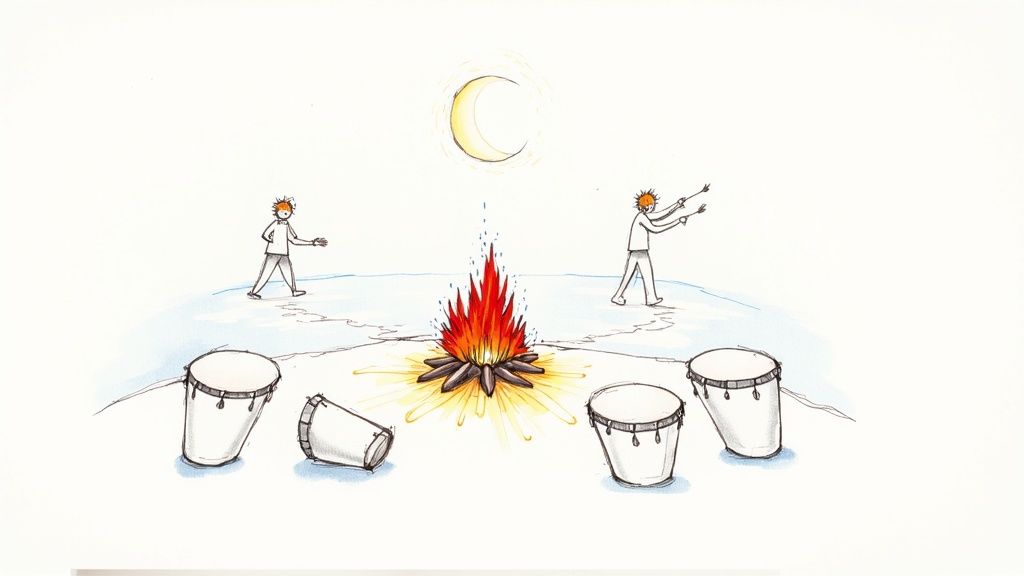
Celebrated with hypnotic drumming and deep-rooted spiritual fervor on the night of June 23rd into the 24th, the Fiestas de San Juan Bautista (St. John the Baptist) is one of the most powerful Afro-descendant celebrations in Venezuela. This festival merges Catholic saint veneration with African spiritual traditions, centered around the beat of the drum to honor St. John and give thanks for blessings and harvests. It’s a raw, energetic, and profound expression of cultural resilience and faith that pulses through coastal communities.
Where to Experience Authentic Fiestas de San Juan
- Curiepe: Located in the Barlovento region of Miranda state, this town is the epicenter of the celebration. The energy is palpable as the entire community gathers to dance to the complex rhythms of the mina and curbata drums, which are played nonstop for nearly 24 hours.
- Chuao: For a more intimate, off-the-beaten-path experience, this remote cacao-growing town in Aragua (accessible only by boat) offers a deeply traditional celebration. Here, the festival is intertwined with the cacao harvest, adding another layer of cultural significance away from major tourist crowds.
Tips for an Immersive Experience
To truly connect with the festival, you must feel the rhythm and understand its significance. Let the beat of the drums guide your participation.
Local Insight: The central tradition involves the sangueo, a slow, processional dance where participants carry the statue of St. John. Don't be shy; locals will often invite you to join the procession and dance alongside them. The celebration is not just a party, it's a spiritual release.
For a full cultural experience, seek out a local guide in the Barlovento area who can explain the meaning behind the different drum rhythms and rituals. Wear light, comfortable clothing suitable for dancing all night in a warm, humid climate, and be prepared for large, joyous crowds. Participating in the Fiestas de San Juan offers a unique window into the soul of Afro-Venezuelan culture.
3. Navidad: A Season of Gaita Music and Culinary Tradition
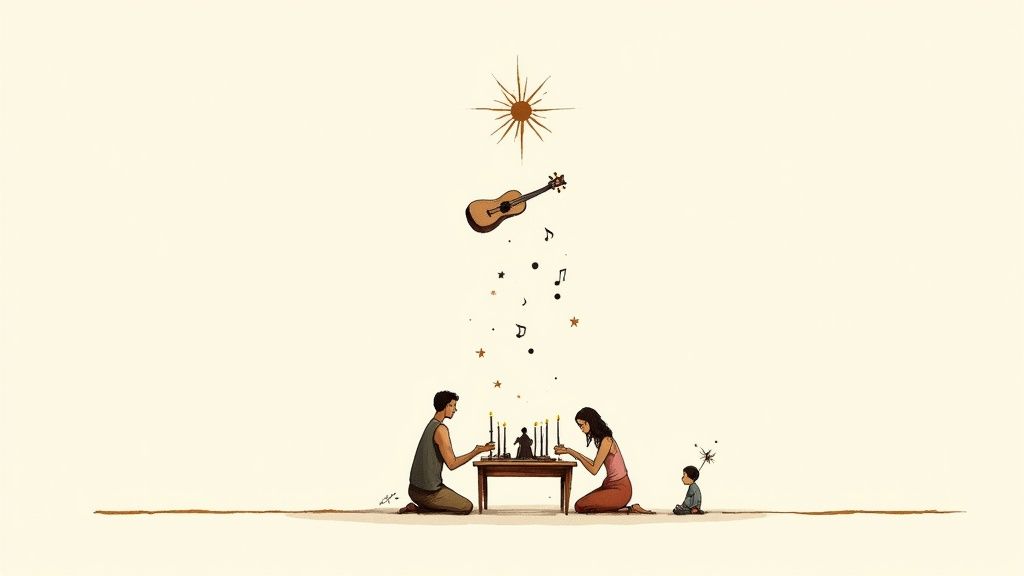
Christmas in Venezuela is not a single day but an entire season of vibrant festivities that blends deep-seated religious devotion with unique cultural expressions. Beginning in early December, the air fills with the sounds of Gaita music, a folk genre from Zulia state that has become the nation’s Christmas soundtrack. Far from being just another holiday, celebrations in Venezuela during this time are defined by family gatherings, specific culinary rituals, and a sense of communal joy that permeates every neighborhood.
Where to Experience an Authentic Christmas
- Maracaibo: As the birthplace of Gaita music, Maracaibo offers the most authentic experience. A local guide can take you to the best amaneceres gaiteros (all-night Gaita parties) in neighborhoods like Santa Lucía to hear live bands and see the city’s fervent Christmas spirit firsthand, far from tourist centers.
- Andean Towns: For an off-the-beaten-path experience, visit towns in Mérida or Táchira. Here, Christmas is celebrated with paraduras del niño (processions re-enacting the search for Jesus), a deeply spiritual tradition accompanied by local music and shared meals that offers a unique cultural immersion.
Tips for an Immersive Experience
To truly understand a Venezuelan Christmas, you must engage with its core traditions of food and family.
Local Insight: The making of hallacas is a cherished family ritual. If you are invited to a home to help prepare them, accept the offer. It's an intimate cultural experience where stories are shared over a production line of stuffing, wrapping, and tying these corn dough parcels. It's a genuine honor to be included.
Look for local neighborhood parrandas navideñas, where groups of carolers go from house to house singing and sharing festive drinks. Be sure to try pan de jamón (ham-filled bread) and ponche crema (a Venezuelan eggnog). Remember to book any travel well in advance, as this is a peak season for domestic movement.
4. Fiestas de la Virgen de Coromoto (Virgin of Coromoto Festival)
On September 8th, Venezuela’s deep-rooted Catholic faith comes alive during the Fiestas de la Virgen de Coromoto. This nationwide event honors the country's patron saint, with the most fervent celebrations centered in Guanare, Portuguesa state, where the Virgin is said to have appeared. More than a single-day event, this is a pilgrimage that sees thousands of devotees journey to the Basilica of Coromoto, creating one of the most significant religious celebrations in Venezuela. The atmosphere is one of profound devotion, blending solemn prayer with vibrant cultural expression.
Where to Experience Authentic Devotion
- Guanare: As the epicenter of the celebration, the National Shrine to the Virgin of Coromoto is the primary pilgrimage destination. Witnessing the massive influx of devotees, many of whom travel for days on foot, is a powerful cultural and spiritual experience.
- Regional Processions: For a more intimate, off-the-beaten-path experience, look for smaller parish-led events in the Andean states of Mérida or Táchira. Local guides can help you find these processions where regional traditions infuse the ceremonies with unique character, away from the large crowds in Guanare.
Tips for an Immersive Experience
To respectfully observe this deeply spiritual event, focus on the communal aspects and the journey itself.
Local Insight: Many pilgrims participate in overnight vigils (velorios) or prayer circles outside the basilica in Guanare. Joining or respectfully observing these gatherings offers a profound glimpse into the local faith and community spirit. It is a time for shared stories, songs, and collective prayer.
Plan transportation and lodging months in advance, as Guanare and surrounding towns fill up completely. Wear comfortable walking shoes, as processions can last for hours. For more information on spiritual journeys, you can learn more about religious tourism in the region. Arriving very early is crucial if you wish to attend the main mass services.
5. Día de Muertos: A Quiet and Intimate Remembrance
Celebrated across the country on November 1st and 2nd, Día de Muertos (Day of the Dead) in Venezuela offers a more solemn and family-centric experience compared to the grand public festivals in other Latin American nations. This observance is a poignant blend of Catholic All Saints' Day and All Souls' Day traditions with enduring indigenous and African ancestral reverence. The focus is on private remembrance, making it one of the most personal and heartfelt celebrations in Venezuela.
Where to Experience Authentic Observances
- Andean Towns (Mérida & Táchira): In these regions, indigenous roots run deep. Families gather in local cemeteries not just to clean and decorate graves with flowers, but to spend the entire day, sharing food, stories, and prayers beside their departed loved ones. This is a truly off-the-beaten-path cultural experience.
- Afro-Descendant Coastal Communities: In towns along the coast of Aragua or Miranda, the observances blend Catholic prayers with rituals rooted in African traditions, offering a different but equally profound cultural immersion into ancestral reverence.
Tips for an Immersive Experience
To respectfully observe this tradition, focus on quiet participation and understanding the deep family connections. It is a time for reflection, not for partying.
Local Insight: The home altar, or altar de muertos, is a central element. A local guide might be able to facilitate a respectful visit to a family home where you can see these private tributes with photos, candles, the deceased's favorite foods, and a glass of water, believed to quench the spirit's thirst after its long journey.
If you are invited to a family's home during this time, it is a sign of great trust. Bring a simple offering of white flowers or candles. In cemeteries, maintain a respectful distance unless invited to approach. Observe quietly, noting the blend of sorrow and quiet joy as families reconnect with their ancestors and each other.
6. Fiestas Patronales: The Heartbeat of Local Communities
Beyond the major national holidays, the true essence of Venezuelan culture is often discovered in its Fiestas Patronales. These are hyper-local, multi-day festivals where each town and municipality honors its patron saint with a unique blend of Catholic devotion and folk tradition. Far from a simple religious observance, these events are vibrant, community-wide parties filled with processions, music, traditional foods, and local crafts, offering one of the most authentic celebrations in Venezuela for those willing to venture off the beaten path.
Where to Experience Authentic Patron Saint Festivals
- San Benito Festival: In towns across the Andes (Mérida, Trujillo) and Zulia, particularly around December and January, communities celebrate San Benito de Palermo. These festivals are renowned for their powerful Afro-Venezuelan drumming, as participants dance in processions carrying the saint's statue.
- San Antonio de Padua: Celebrated on June 13th, especially in the state of Lara (near Barquisimeto), this festival is known for the Tamunangue. A local guide is essential to fully appreciate this complex and beautiful seven-part dance ritual that combines religious piety with lively folk music.
Tips for an Immersive Experience
To truly connect with the local culture, you must go beyond observation and participate in the communal spirit. Arrive early for the main procession to witness the community's devotion firsthand.
Local Insight: The best part of any Fiesta Patronal is the shared meal. Seek out the community sancocho (a hearty stew) or a food stall selling regional specialties like cachapas or arepas. Sharing food is the quickest way to have a full cultural experience and feel like part of the family.
These festivals provide unparalleled opportunities for immersive travel experiences because they are not designed for tourists. Research the specific dates for the town you're visiting and consult local municipal offices for an event schedule. Support local artisans by purchasing their handmade goods.
7. Año Nuevo (New Year's Celebration)
Venezuelan New Year's, celebrated from the evening of December 31st into January 1st, is a deeply personal yet widely communal affair. It blends intimate family dinners with explosive public festivities, marking a moment of reflection and hopeful anticipation for the year ahead. Across the country, the air fills with the sounds of fireworks and music, as Venezuelans embrace traditions meant to secure luck, love, and prosperity.
Where to Experience New Year's
- Mérida: For a unique, off-the-beaten-path celebration, head to the Andes. Many locals participate in the Quema del Año Viejo, creating and burning effigies representing the old year. This provides a deeply symbolic and communal experience outside the main urban centers.
- Coastal Towns: Smaller towns along the coast, like those in Falcón or Sucre, offer a more relaxed celebration. Families often gather on the beach for dinner and to watch local fireworks displays over the water, providing an intimate and scenic alternative to big city parties.
Tips for an Immersive Experience
To truly connect with the spirit of the celebration, understanding local customs is key. Many of these traditions are performed in the final moments before midnight.
Local Insight: Participate in the tradition of eating twelve grapes, one for each chime of the clock at midnight, making a wish with each one. Also, wear yellow underwear for luck and have cash in your hand or pocket to attract wealth in the coming year.
For the most authentic experience, accept an invitation to a family home. Here you will share a traditional hallaca dinner and witness these personal rituals firsthand. Remember that any international travel requires good planning; you can review our guide on how to prepare for international travel to ensure a smooth trip. A local guide can help arrange trusted transport for the evening.
8. Feria de San Sebastián (San Sebastián Fair)
Held annually in the heart of the Venezuelan Andes, the Feria de San Sebastián is a cornerstone of the region's cultural calendar, particularly in the city of San Cristóbal, Táchira. Celebrated throughout the second half of January, this fair honors Saint Sebastian, the city's patron saint, but has grown into a massive international event. This vibrant fair is one of the most important celebrations in Venezuela, blending solemn religious devotion with high-energy bullfights, agricultural expositions, and electrifying concerts.
Where to Experience the Fair
- San Cristóbal, Táchira: As the epicenter of the festivities, San Cristóbal offers the most comprehensive experience. The Plaza de Toros Monumental becomes a major focal point for bullfighting events, while the Parque de Exposiciones hosts agricultural showcases and craft markets.
- Pregonero, Táchira: For an off-the-beaten-path experience, visit this smaller Andean town during its own patron saint festival. Here, the fair is less about international spectacle and more about local traditions, with a focus on community, agriculture, and folk music, offering a more intimate cultural immersion.
Tips for an Immersive Experience
To truly appreciate the fair, you need to dive into both its sacred and secular elements. A local guide can help you navigate the packed schedule of events.
Local Insight: The heart of the fair is its agricultural roots. Spend time at the livestock exhibitions (exposiciones agropecuarias) to understand the region's ranching culture. This is where you'll connect with locals and see the traditions that gave birth to the modern celebration.
For the best experience, visit the craft fairs early to purchase unique handmade goods directly from artisans. Don’t miss the food stalls offering Andean delicacies like pizca andina (a cilantro and milk-based soup) and pastelitos andinos. If hotels in San Cristóbal are full, consider booking accommodations in nearby towns like Táriba or Palmira for a quieter stay.
9. Fiestas Decembrinas: A Month-Long Christmas Celebration
In Venezuela, Christmas isn't just a day; it's an entire month-long season known as Fiestas Decembrinas. Starting from December 1st, the country immerses itself in a festive atmosphere that blends Catholic traditions with uniquely Venezuelan music, food, and family gatherings. This extended period of celebration is characterized by the ubiquitous sound of Gaita music, elaborate decorations, and a constant circuit of parties, making it one of the most vibrant and heartfelt celebrations in Venezuela.
Where to Experience Authentic December Festivities
- Maracaibo: As the birthplace of Gaita music, Maracaibo is the epicenter of the holiday sound. A local guide can direct you to the most authentic live Gaita concerts and competitions in public squares and dedicated venues, offering a full cultural experience beyond the main tourist zones.
- Galipán: Located in the mountains above Caracas, this small village offers a unique, off-the-beaten-path Christmas experience. The cooler climate, stunning views, and local traditions provide a festive atmosphere away from the city's hustle, perfect for an immersive escape.
Tips for an Immersive Experience
To fully embrace the Venezuelan holiday spirit, you must dive into its musical and social traditions. The season is as much about community as it is about family.
Local Insight: The heart of the Fiestas Decembrinas is the Gaita music. This folk genre, with its distinct rhythm of furruco, maracas, and cuatro, tells stories of love, protest, and daily life. Attending a live Gaita show is non-negotiable for an authentic experience.
For a deeper cultural immersion, seek out a local church's Misas de Aguinaldo, a series of nine dawn masses before Christmas Eve, which are often followed by community gatherings with coffee and pastries. Plan your travel early, as transportation becomes challenging closer to the 24th. Most importantly, accept invitations to family gatherings; it's the best way to experience the warmth of Venezuelan hospitality.
10. Semana Santa (Holy Week): A Solemn and Profound Cultural Observance
Semana Santa, the week leading up to Easter Sunday, is one of the most profound and widely observed celebrations in Venezuela. It’s a time of deep religious reflection marking the passion, death, and resurrection of Jesus Christ. Far from being just a series of church services, Holy Week manifests in solemn street processions, traditional foods, and deeply rooted customs that transform towns and cities into stages for living history.

Where to Experience Authentic Holy Week
- Mérida: The Andean city offers a unique blend of Catholic tradition and indigenous spirituality. Processions here snake through mountain towns against a stunning natural backdrop, creating a truly atmospheric and contemplative experience.
- Coro: As a UNESCO World Heritage site, Coro’s colonial architecture provides a historically potent setting for its traditional processions. For a true off-the-beaten-path experience, a local guide can take you to smaller surrounding villages where centuries-old rituals are preserved with intense community focus.
- Caracas: The capital's devotion is centered around the Nazareno de San Pablo. On Holy Wednesday, thousands of devotees dressed in purple robes accompany the revered icon in a massive procession through the city streets.
Tips for an Immersive Experience
To truly connect with the local culture during Semana Santa, approach the events with respect and an open mind. This is a time of genuine devotion for many Venezuelans.
Local Insight: Participate in the Quema de Judas (Burning of Judas) on Easter Sunday. Communities create effigies representing Judas Iscariot, often stylized to look like unpopular political figures, and burn them in the street. This cathartic ritual symbolizes the triumph of good over evil and is a uniquely Venezuelan blend of solemnity and social commentary.
Plan travel well in advance, as many businesses close and transportation becomes limited, especially from Holy Thursday onward. Attend a Palm Sunday mass to witness the blessing of palm fronds and sample traditional Lenten dishes like pastel de chucho (sweet plantain and fish pie) for a full cultural experience.
10-Point Comparison: Venezuelan Celebrations
| Festival | Implementation Complexity 🔄 | Resource Requirements ⚡ | Expected Outcomes 📊 / ⭐ | Ideal Use Cases 💡 | Key Advantages ⭐ |
|---|---|---|---|---|---|
| Carnaval de Venezuela (Venezuelan Carnival) | 🔄🔄🔄 (high: large logistics & permits) | ⚡⚡⚡ (high: security, floats, staging) | Major tourism & cultural visibility 📊 — ⭐⭐⭐ | Large-scale cultural tourism, parade showcases | Strong cultural preservation; economic boost ⭐⭐⭐ |
| Fiestas de San Juan (St. John's Festival) | 🔄🔄 (moderate: community-led rites) | ⚡⚡ (moderate: bonfires, drums) | Community cohesion & heritage continuity 📊 — ⭐⭐ | Rural/coastal cultural immersion, ethnographic visits | Authentic Afro-indigenous rituals; intergenerational ties ⭐⭐ |
| Navidad (Christmas) | 🔄🔄 (moderate: many private & public events) | ⚡⚡⚡ (variable: month-long spending & events) | Extended family engagement & local commerce 📊 — ⭐⭐⭐ | Family-centered cultural experiences; music (Gaita) events | Long season supports artisans and music traditions ⭐⭐⭐ |
| Fiestas de la Virgen de Coromoto | 🔄🔄 (moderate: pilgrimage coordination) | ⚡⚡ (moderate: transport, lodging) | Religious renewal & pilgrimage tourism 📊 — ⭐⭐ | Spiritual pilgrimage, religious tourism in Guanare | Reinforces national religious identity; pilgrimage economy ⭐⭐ |
| Día de Muertos (Day of the Dead) | 🔄🔄 (low–moderate: family and small community rituals) | ⚡ (low: altars, food) | Ancestral remembrance & family bonding 📊 — ⭐⭐ | Intimate familial observance and cultural memory work | Preserves indigenous practices and grieving rituals ⭐⭐ |
| Fiestas Patronales (Patron Saint Festivals) | 🔄🔄🔄 (moderate–high: municipal coordination) | ⚡⚡⚡ (moderate–high: parades, services, fairs) | Local identity promotion & economic activity 📊 — ⭐⭐⭐ | Local community engagement and regional tourism | Preserves regional diversity; inclusive participation ⭐⭐⭐ |
| Año Nuevo (New Year's Celebration) | 🔄🔄 (low–moderate: public events + family plans) | ⚡⚡ (moderate: fireworks, security) | Nationwide unity & hospitality sector boost 📊 — ⭐⭐ | Family gatherings; urban public celebrations | Wide participation; renewal rituals and social bonding ⭐⭐ |
| Feria de San Sebastián (San Sebastián Fair) | 🔄🔄 (moderate: event programming & stalls) | ⚡⚡ (moderate: vendors, performances) | Regional tourism and artisan sales 📊 — ⭐⭐ | Cultural fairs, artisan markets, regional visitors | Supports artisans; preserves colonial-era cultural forms ⭐⭐ |
| Fiestas Decembrinas (December Holiday Season) | 🔄🔄🔄 (high: month-long coordination across sectors) | ⚡⚡⚡ (high: concerts, decorations, retail) | Extended economic & cultural impact 📊 — ⭐⭐⭐ | Seasonal tourism, retail promotion, cultural programming | Promotes music industry (Gaita) and retail activity ⭐⭐⭐ |
| Semana Santa (Holy Week) | 🔄🔄🔄 (moderate–high: solemn processions & logistics) | ⚡⚡ (moderate: crowd control, services) | Deep spiritual significance & tourism in colonial towns 📊 — ⭐⭐⭐ | Religious observance, reflective tourism, colonial heritage | Preserves colonial religious traditions; intergenerational rites ⭐⭐⭐ |
Your Journey Into Venezuela's Festive Heart
From the thundering drums of San Juan's coastal fiestas to the solemn, candlelit processions of Semana Santa in the Andes, the tapestry of celebrations in Venezuela is as diverse and vibrant as its landscapes. We've journeyed through nationwide spectacles like Carnival and the deeply personal rituals of local patron saint festivals, uncovering the heart of a nation that expresses its history, faith, and unyielding spirit through communal joy. This guide has aimed to move beyond the postcard image, offering you a roadmap to experience these events not as a tourist, but as an active participant.
The key to unlocking an authentic experience lies in understanding the context behind the color and sound. It’s knowing that the Feria de la Chinita in Maracaibo is more than a fair; it’s an outpouring of regional pride and devotion. It's appreciating that Christmas traditions, from the hallacas to the patinatas, are threads connecting families across generations and distances. True immersion happens when you step away from the main parade route to share a meal, learn the steps of a traditional dance, or simply listen to the stories of those around you.
Key Takeaways for the Immersive Traveler
To truly connect with the spirit of Venezuelan festivities, keep these core principles at the forefront of your planning:
- Look Beyond the Obvious: While major events in cities like Caracas or Maracaibo are spectacular, the most unique and profound celebrations in Venezuela often unfold in smaller towns and rural communities. Research local fiestas patronales or regional variations of national holidays for a less commercialized, more intimate experience.
- Participation is Key: Don’t be a passive observer. Whether it's trying your hand at making an hallaca, joining a spontaneous street dance during Carnival, or simply offering a respectful greeting during a religious procession, active and humble participation is your bridge to genuine connection.
- Safety and Awareness are Non-Negotiable: As we've stressed, preparation is paramount. Engage with trusted local guides, stay informed about the current situation in the regions you plan to visit, and prioritize safe transportation and accommodation. This diligence is what allows you to relax and fully immerse yourself in the moment.
Ultimately, experiencing these celebrations is about more than just a party; it's a powerful lesson in resilience, community, and the enduring importance of culture. Each firework, each shared song, each collective prayer is a testament to a people's will to preserve their identity and find joy, even in the face of adversity. By approaching these events with curiosity, respect, and an open heart, you are not just visiting Venezuela-you are connecting with its very soul. Let this guide be your starting point for a journey that will undoubtedly leave an indelible mark, filled with vibrant memories and a deeper understanding of this complex and captivating country.
Ready to transform your travel plans into an unforgettable cultural deep-dive? CoraTravels provides detailed, on-the-ground guides and personalized itineraries that connect you with trusted local experts for the most authentic experiences of celebrations in Venezuela. Explore our resources at CoraTravels and travel with the confidence of an insider.