To truly understand Colombia, you must first understand its food. The country's soul isn't just found in its vibrant cities or lush landscapes; it's simmered in the soups of the Andes, fried on the Caribbean coast, and wrapped in banana leaves in the Tolima region. This guide is your key to unlocking that authentic culinary heart. It moves beyond the standard tourist fare to offer a full cultural immersion, connecting you with the real flavors and stories that define Colombia traditional food.
This is not simply a list of what to eat. It's a practical roadmap for the curious traveler, the digital nomad, and the cultural explorer. We’ll break down the essential dishes, from the hearty Bandeja Paisa to the comforting bowl of Ajiaco, but we won't stop there. For each item, you will discover:
- Regional Roots: Learn where each dish comes from and why it matters to the local identity.
- Off-the-Beaten-Path Experience: Understand the subtle but important differences between a quick street snack and a lovingly prepared home-cooked meal, and where to find the latter.
- Where to Eat Like a Local: We'll point you toward the bustling plazas de mercado (local markets) and humble, family-run restaurants where Colombians actually eat, far from the tourist traps.
- Insider Ordering Tips: Gain the confidence to order correctly, customize your meal, and navigate local dining etiquette for a full cultural immersion.
Prepare to venture outside of the main touristic places. This culinary journey is designed to equip you with the knowledge to not just taste Colombian food, but to experience it. Forget generic recommendations; it's time to eat, connect, and explore Colombia one delicious, authentic bite at a time.
1. Ajiaco: Bogotá's Comforting Embrace in a Bowl
In the cool, high-altitude climate of Bogotá, few dishes offer the comforting warmth of Ajiaco. Far more than a simple chicken and potato soup, this iconic dish is a cornerstone of the capital's culinary identity and a true taste of traditional Colombian food. Its roots trace back to the Muisca people, indigenous to the Cundiboyacense plateau, making it a meal steeped in history.
The magic of Ajiaco lies in its foundation of three distinct potato varieties. The small, yellow papa criolla disintegrates during the slow cooking process, creating a thick, creamy, and naturally golden broth. The waxy papa sabanera and the starchy papa pastusa hold their shape, providing satisfyingly different textures in every spoonful. Shredded chicken breast and chunks of sweet corn on the cob complete the base soup.
How to Eat Ajiaco Like a Local
Ajiaco is an interactive experience, not just a dish. It arrives at the table with a trio of essential accompaniments, allowing you to customize your bowl to perfection for an immersive meal.
- Cream: A generous dollop of heavy cream (crema de leche) cuts through the richness and adds a velvety smoothness.
- Capers: A spoonful of briny capers provides a sharp, salty contrast to the creamy soup.
- Avocado: Sliced or cubed avocado is served on the side, meant to be added for a buttery, cooling element.
The traditional pairing is a plate of white rice, which can be mixed into the soup or eaten separately. This combination creates a hearty, complete meal that locals cherish, especially for Sunday lunches with family—a core cultural experience.
Local Insight: For a truly authentic experience, look for a restaurant that also includes guascas. This local herb is the soul of Ajiaco, imparting a unique, slightly grassy, and indispensable flavor that separates a good Ajiaco from a great one. If it doesn't have guascas, it's not a true Bogotá Ajiaco.
Where to Find the Best Ajiaco
While tourist-centric spots in La Candelaria serve Ajiaco, venture into neighborhoods like Chapinero or Teusaquillo for a more local, off-the-beaten-path experience. Small, family-run restaurants often have the most beloved recipes. Ask a local for their favorite "ajiaco santafereño" spot; you'll be directed to a place where tradition is served by the bowlful, far from the main touristic places.
2. Arepa: The Versatile Cornerstone of Colombian Cuisine
If there is one food that defines Colombia, it is the arepa. This humble, disc-shaped flatbread made from ground maize dough is the ever-present foundation of Colombian cuisine, enjoyed at any time of day. Its origins are deeply rooted in pre-Hispanic indigenous culinary traditions, making it one of the most authentic and widespread examples of Colombia traditional food. From a simple breakfast with butter to a hearty dinner stuffed with savory fillings, the arepa's versatility is unmatched.

The beauty of the arepa lies in its regional diversity. In the Andean region, you’ll find the thick, fluffy arepa de chócolo, a sweet corn version often served with fresh cheese. Along the Caribbean coast, the famous arepa de huevo is a deep-fried delight, with a perfectly cooked egg encased inside. In Antioquia, the small, thin, and plain white corn arepa is a mandatory side for almost every meal, especially the Bandeja Paisa.
How to Eat an Arepa Like a Local
The way an arepa is eaten depends entirely on its type and the region. It's less a single dish and more a culinary canvas, offering an immersive glimpse into daily life. A street vendor might hand you a grilled arepa con queso bursting with melted cheese, meant to be eaten on the go. In a restaurant, a plain arepa might serve as an edible utensil to scoop up sauce or beans.
- As a Main: Stuffed arepas (arepas rellenas) are a full meal. Common fillings include shredded beef (carne desmechada), chicken and avocado salad, or black beans and cheese.
- As a Side: Simple grilled arepas are often served alongside breakfast eggs, with soups like Ajiaco, or as part of a larger platter.
- As a Snack: An arepa con queso or a simple arepa with butter and salt is a classic afternoon snack, often paired with a hot chocolate or coffee.
Colombians have a deep-seated love for this staple, and you’ll see it prepared on home stovetops, street-side grills, and in dedicated restaurants called areperías.
Local Insight: For a true off-the-beaten-path experience, skip the fancy restaurants and find a neighborhood street corner grill, especially in the evening. Look for a vendor with a long line of locals; that's where you'll find the freshest, most authentic arepas. The simple ones, grilled over charcoal and handed to you hot with a slab of local cheese, offer the most genuine taste.
Where to Find the Best Arepas
You are never far from an arepa in Colombia. For the most immersive experience, visit a local market like Plaza de Mercado de Paloquemao in Bogotá or Mercado del Río in Medellín. Here, you can see various regional styles being made fresh. In smaller towns and neighborhoods, listen for the sizzle and follow the smell of toasted corn to a street vendor for an unforgettable and truly local bite, well away from the tourist crowds.
3. Bandeja Paisa: The Hearty Soul of Antioquia on a Platter
If Ajiaco is Bogotá's comforting hug, Bandeja Paisa is Antioquia's exuberant, generous feast. This monumental platter, originating from the mountainous "Paisa" region surrounding Medellín, is not merely a dish; it's a statement of abundance and cultural pride. This giant of Colombian traditional food was conceived to provide hardworking farmers with enough calories to last a full day in the fields, and its heartiness remains its defining characteristic.
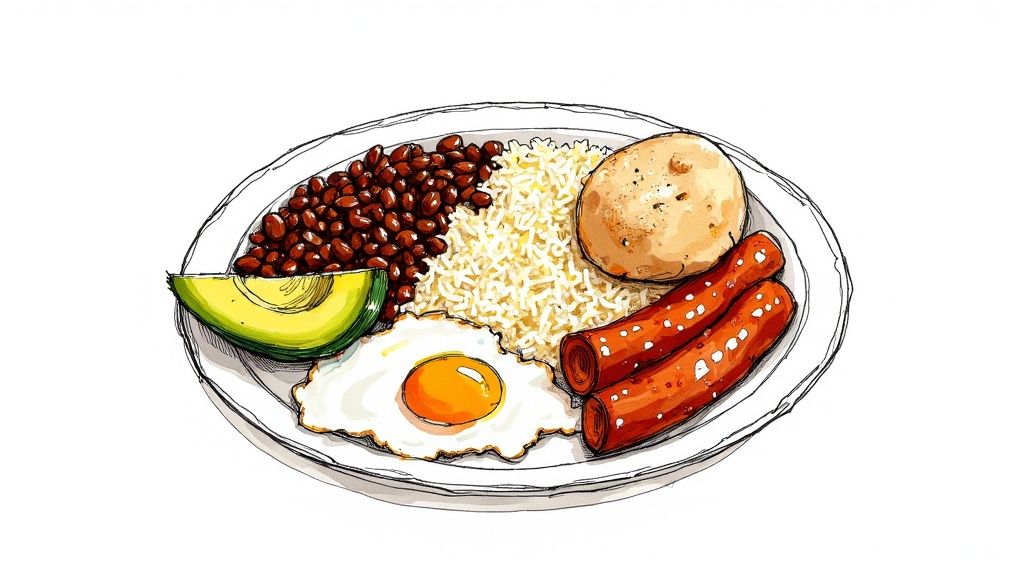
The platter is a carefully arranged mountain of individual components, each perfectly prepared. A classic Bandeja Paisa includes savory red beans cooked with pork, fluffy white rice, crispy chicharrón (fried pork belly), seasoned ground beef (carne molida), a link of smoky chorizo, and a fried egg (huevo frito) with a runny yolk. This protein-heavy core is balanced with sweet fried plantain (plátano maduro), a slice of fresh avocado, and a small side arepa.
How to Eat Bandeja Paisa Like a Local
Tackling a Bandeja Paisa is a marathon, not a sprint. Locals don't just dive in; they strategize. The key is to mix components to create balanced bites for a full cultural experience.
- Combine and Conquer: Use your fork to break the egg yolk over the rice and ground beef, creating a creamy sauce.
- Balance the Flavors: Pair a rich, salty piece of chicharrón or chorizo with a sweet bite of fried plantain or a cooling slice of avocado.
- Use the Arepa: The arepa acts as a utensil or a starchy palate cleanser, perfect for scooping up the last bits of beans and rice.
This dish is almost exclusively a lunch meal due to its sheer size. Arrive with an empty stomach and be prepared for a post-meal nap, a common and accepted local tradition.
Local Insight: A true Paisa will judge a Bandeja Paisa by its chicharrón. It should be "carnudo," with a generous ratio of meat to fat, and so perfectly crispy that it crackles audibly when you bite into it. If the chicharrón is limp or overly fatty, the entire platter is considered a failure.
Where to Find the Best Bandeja Paisa
While famous restaurants in Medellín’s El Poblado cater to tourists, the most authentic platters are found in Envigado or Sabaneta, just outside the city. These local eateries are where families go for a true taste of home, offering an off-the-beaten-path experience. For more insights into the region's culinary scene, explore the gastronomy of Medellín, the city of eternal spring. Asking a taxi driver for their favorite spot is a surefire way to find a hidden gem.
4. Empanadas: The Ultimate Colombian Street Food Staple
Walk down any bustling Colombian street, and you will inevitably encounter the irresistible aroma of freshly fried empanadas. These crispy, crescent-shaped cornmeal pockets are the undisputed king of Colombian street food, a beloved snack enjoyed by everyone at any time of day. While the concept of a savory pastry is found throughout Latin America, the Colombian version stands out for its distinctive corn-based dough and its deep connection to everyday life.
The classic Colombian empanada features a vibrant yellow dough made from pre-cooked cornmeal (masarepa), which gives it a signature crunch. Inside, a savory mixture of shredded, seasoned beef and soft-cooked potatoes, known as guiso, is the most traditional filling. However, variations are endless, with chicken, cheese, or even vegetarian fillings becoming increasingly common. They are a perfect, portable representation of delicious and accessible Colombia traditional food.
How to Eat Empanadas Like a Local
Colombian empanadas are rarely eaten plain. The experience is all about the sauce and the social setting, typically enjoyed standing at a street cart or in a small specialty shop. This is a truly immersive cultural experience.
- Aji Picante: The most crucial accompaniment is aji, a fresh, vinegar-based hot sauce. Each vendor has their own recipe, but it usually contains finely chopped onion, cilantro, chili, and lime juice. It’s not just for heat; it adds a bright, acidic kick that cuts through the richness of the fried pastry.
- Lime: A wedge of lime (limón) is often served alongside. A quick squeeze over the empanada before your first bite enhances all the flavors.
- Sauces: Many modern empanada spots also offer a variety of other sauces, like pineapple, rosada (a mix of ketchup and mayo), or a creamy garlic sauce.
Locals grab an empanada for a quick breakfast, a mid-afternoon snack, or as a late-night bite after a night out. It is the go-to food for convenience and flavor. For more insights into these ubiquitous snacks, you can learn more about Colombian street food culture.
Local Insight: The best empanadas are often found at unassuming street corner stalls that have been run by the same family for generations. If you see a crowd of locals, especially during a break from work, that’s your sign that you’ve found a high-quality, off-the-beaten-path spot. Don't be shy; just point to what you want and enjoy it on the spot.
Where to Find the Best Empanadas
Empanadas are everywhere, from Bogota to Cartagena. In Medellín, look for small empanaderías in neighborhoods like Laureles or Envigado, where they specialize in nothing but these fried delights. In Cali, you’ll find them served as part of a larger platter of fried goods called a picada. The true local guide experience is to buy them hot and fresh from a vendor who fries them to order right in front of you.
5. Ceviche: The Caribbean Coast's Zesty, Fresh Catch
On the sun-drenched Caribbean coast of Colombia, where the pace is slow and the sea is central to life, Ceviche is a refreshing and vibrant testament to the region's culinary soul. While often associated with Peru, Colombia's version is a distinct and essential part of its coastal food identity. This dish involves "cooking" fresh raw fish in the acidic power of citrus juices, typically lime, and tossing it with red onion, cilantro, and sometimes a hint of spice.
The Colombian style, particularly popular in cities like Cartagena and Santa Marta, often leans towards a simpler, purer flavor profile. It celebrates the quality of the local catch, most commonly using firm white fish like grouper (mero) or red snapper (pargo rojo). Unlike some other Latin American variations, it rarely includes corn or sweet potato, focusing instead on the bright, clean interplay between the fish and the lime marinade, known as leche de tigre (tiger's milk).
How to Eat Ceviche Like a Local
Ceviche in Colombia is an appetizer or a light lunch, rarely a heavy main course. It is almost always served chilled to combat the coastal heat and is enjoyed in a straightforward, unfussy manner for a genuine cultural experience.
- Crackers are Key: The most common accompaniment is a sleeve of saltine crackers (galletas de soda). Locals use them to scoop up the ceviche, adding a crunchy, salty texture to each bite.
- A Touch of Heat: A small bottle of local hot sauce (ají) is often on the table. A few drops can add a pleasant kick without overpowering the delicate fish.
- Keep it Simple: Don't look for complex side dishes. The beauty of Colombian ceviche is its simplicity, often enjoyed with just a cold beer or a fresh fruit juice.
This dish is a perfect example of a beloved Colombia traditional food that connects directly to its coastal environment and lifestyle.
Local Insight: For a truly authentic, off-the-beaten-path experience, try a cóctel de camarones (shrimp cocktail) from a street vendor. This popular variation is often sweeter, incorporating tomato sauce or even a touch of mayonnaise into the mix, and is served in a cup. It's a different but equally beloved coastal classic.
Where to Find the Best Ceviche
While upscale restaurants in Cartagena’s Walled City offer gourmet versions, the soul of ceviche is found in more humble, local settings. Head to the Mercado de Bazurto for a raw, unfiltered experience where vendors prepare it fresh. In Santa Marta or Taganga, look for small beachfront kiosks and local cevicherías where fishermen deliver their daily catch directly to the kitchen. Ask for the "pescado del día" to ensure you're getting the freshest option available, far from the main tourist areas.
6. Sancocho: The Hearty Soul of Colombian Gatherings
If one dish could represent the communal spirit and diverse landscape of Colombia, it would be Sancocho. This robust, slow-cooked stew is the undisputed champion of family lunches, riverside gatherings, and celebratory meals across the nation. Unlike dishes tied to a single city, Sancocho is a pan-Colombian staple, with each region proudly offering its own distinct version based on local ingredients and traditions.
The core of any Sancocho is a rich broth made by simmering bone-in meat for hours until tender. To this base, a hearty medley of root vegetables is added, typically including plantain, yuca (cassava), and potato, which thicken the stew and absorb the savory flavors. Corn on the cob is a classic addition, providing a sweet contrast. Popular versions include Sancocho de Gallina (hen), Sancocho de Costilla (beef rib), and coastal varieties made with fresh fish like bocachico.
How to Eat Sancocho Like a Local
Sancocho is a full, immersive meal, often served as the centerpiece of a social event. It is traditionally cooked in a large pot over an open wood fire (paseo de olla), which imparts a signature smoky flavor and represents a full cultural experience.
- The Accompaniments: The stew is almost always served with a side of white rice, which can be eaten separately or mixed directly into your bowl to soak up the delicious broth.
- The Toppings: A small bowl of hogao (a cooked tomato and onion sauce), fresh cilantro, and lime wedges are typically provided. A spoonful of ají picante (hot sauce) is also essential for those who enjoy a bit of heat.
- The Avocado: Like Ajiaco, slices of creamy avocado are a non-negotiable side dish, adding a cool, buttery texture that complements the rich stew perfectly.
This combination of flavors and textures creates a deeply satisfying meal that feels both rustic and celebratory.
Local Insight: For a truly authentic, immersive experience, join a "paseo de olla" (pot outing), a popular Colombian tradition where families and friends gather by a river to cook a massive Sancocho over a wood fire. It's less about the food itself and more about the shared experience of cooking, talking, and enjoying nature together.
Where to Find the Best Sancocho
Authentic Sancocho is best enjoyed outside the main tourist hubs. Head to traditional, no-frills restaurants on the outskirts of cities like Cali (famous for Sancocho de Gallina) or Medellín. In the Coffee Region, look for rustic roadside eateries, especially on a Sunday, where you’ll find locals enjoying this beloved national dish. Ask for the sancocho del día to taste whatever is freshest and most traditional to that specific locale.
7. Tamales: A Celebratory Gift Wrapped in a Leaf
Across Colombia, the tamal is more than just a meal; it's a symbol of celebration, family, and tradition. This pre-Hispanic dish, with roots deep in indigenous culture, consists of a savory corn masa dough filled with meats, vegetables, and legumes, all wrapped in a plantain or corn leaf and slowly steamed to perfection. The act of making tamales is often a communal affair, a labor of love reserved for Christmas, family gatherings, and special occasions.
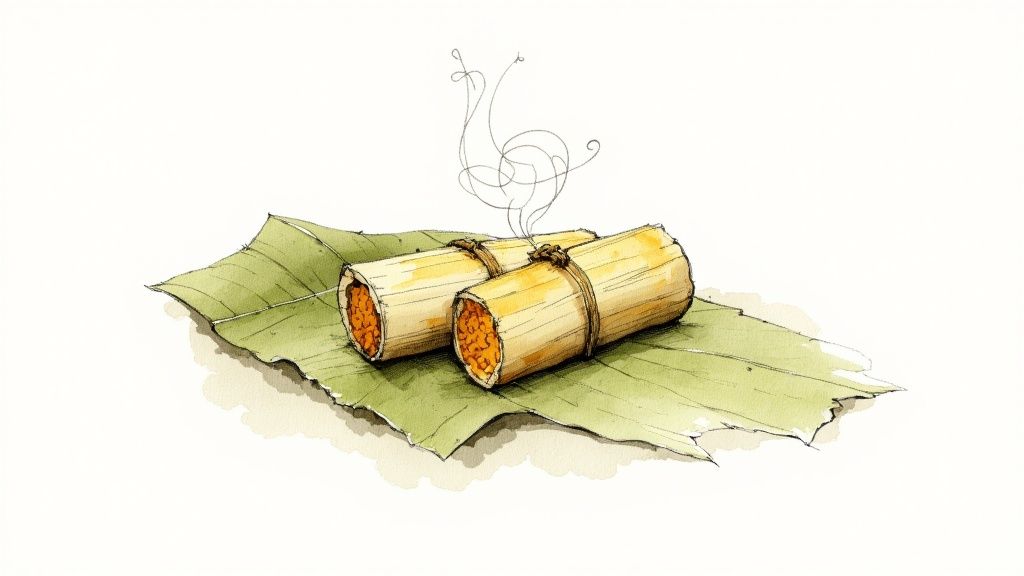
The incredible diversity of Colombia is reflected in its tamales. The Tamal Tolimense from the Tolima region is perhaps the most famous, a hefty package containing a whole piece of chicken, pork ribs, a hard-boiled egg, carrots, and peas, all mixed with rice and masa. In contrast, the Tamal Santandereano is flatter, made with a ground corn masa called maíz pelado, and filled with pork, chicken, chickpeas, and sometimes even pickled vegetables, wrapped in a chicagua leaf that imparts a distinctive flavor.
How to Eat Tamales Like a Local
Colombian tamales are typically a breakfast or brunch dish, especially on weekends. They are almost never eaten directly from the leaf wrapper. Instead, the steaming hot package is presented on a plate, and you carefully unwrap it, letting the fragrant steam escape—a cherished cultural experience.
- Accompaniments: The classic pairing for a tamal is a piece of arepa or a crusty bread roll to scoop up the soft masa and sauce.
- Beverage: A hot cup of chocolate santafereño (hot chocolate with cheese) is the traditional and perfect partner for a savory tamal, creating a delightful sweet and salty contrast.
- The "Hogo": While many tamales are perfectly seasoned on their own, some might be served with a side of hogao, a simple cooked tomato and onion sauce, for added flavor.
Unwrapping a tamal is like opening a gift, revealing a complete and hearty meal that connects you directly to the country's rich culinary history.
Local Insight: Don't mistake the leaf wrapper for part of the meal! It serves only as a cooking vessel and a plate. Also, note that the masa consistency varies greatly by region; some are smooth and firm, while others are wetter and more porridge-like. Trying different regional tamales is a core part of any immersive Colombian food journey.
Where to Find the Best Tamales
For a truly authentic experience, skip the fancy restaurants. The best tamales are found in small, dedicated tamalerías or at local neighborhood bakeries (panaderías) on weekend mornings. In Bogotá, the La Perseverancia market square is a fantastic, off-the-beaten-path place to sample different styles. Ask around for a local's favorite spot; these cherished family recipes are often the most delicious and offer an authentic taste of this beloved colombia traditional food.
8. Patacones: The Crispy, Golden Heart of Colombian Sides
Across Colombia, from the sweltering Caribbean coast to the bustling Andean cities, you will find the indispensable and deeply satisfying crunch of a Patacón. These twice-fried green plantain discs are a fundamental pillar of Colombian traditional food, representing a delicious culinary heritage with strong Afro-Caribbean roots. Simple in concept but perfect in execution, Patacones are more than just a side dish; they are a textural masterpiece.
The transformation from a hard, starchy green plantain into a crispy, golden treasure is a two-step process. First, thick chunks of plantain are fried until soft. Then, they are removed, smashed flat into a disc, and fried a second time until they are irresistibly crispy on the outside and tender on the inside. A final sprinkle of salt makes them ready to serve alongside virtually any meal.
How to Eat Patacones Like a Local
Patacones are rarely eaten plain and are often the vehicle for a variety of delicious toppings and sauces. Their versatility is their greatest strength, making them a staple in homes, casual restaurants (corrientazos), and as a popular street food snack, offering a simple yet immersive experience.
- With Hogao: This classic Colombian Creole sauce made from tomatoes, onions, and garlic is the most traditional topping.
- As a Base: In coastal regions, you'll find patacón pisao, a large, plate-sized patacón topped with shredded beef, chicken, or fresh seafood ceviche.
- As a Side: They are the default accompaniment for fried fish (mojarra frita), hearty stews (sancochos), and grilled meats.
- With Dips: Simply served with a side of creamy guacamole, garlic sauce (salsa de ajo), or spicy ají is a common and beloved combination.
Local Insight: For the best Patacones, the key is using green plantains (plátano verde), not ripe yellow ones. The high starch content of the green plantain is what gives it that signature crispy, savory, potato-like quality. Ripe plantains are sweet and will result in a completely different, softer dish known as maduros.
Where to Find the Best Patacones
You can find good Patacones almost anywhere in Colombia, but the experience differs by location. On the streets of Cartagena or Santa Marta, vendors serve them hot from the fryer in a paper cone, perfect for snacking while you explore. For a more complete meal, visit a coastal restaurant specializing in seafood, where a basket of fresh Patacones is guaranteed to be on your table, often served with a simple lime and garlic dip. These small, local eateries are where you'll taste this staple at its most authentic, far from the main touristic places.
9. Fritanga: A Communal Feast of Fried Delights
In the heart of Colombia's countryside and bustling market squares, Fritanga is more than just a dish; it's a social event. This hearty platter is a carnivore's dream, a communal celebration of fried meats and regional starches that embodies the spirit of Colombian gatherings. It showcases a no-waste culinary philosophy, where various cuts of meat and offal are fried to crispy perfection and served together for sharing.
The foundation of a classic Fritanga is a glorious mix of fried meats. You’ll typically find chunks of beef (carne de res), pork belly (chicharrón), pork ribs (costillas de cerdo), and various sausages like chorizo and blood sausage (morcilla). This mountain of meat is served alongside fried companions like small yellow potatoes (papa criolla), cassava (yuca), and sweet plantains (plátano maduro), creating a rich tapestry of flavors and textures.
How to Eat Fritanga Like a Local
Fritanga is rarely an individual pursuit; it's a meal meant to be shared among friends and family. It arrives on a large platter or tray, often with small forks or toothpicks for communal plucking. This is a truly immersive cultural experience.
- Dive In Together: Don't wait for individual plates. The joy of Fritanga comes from everyone picking directly from the central platter.
- Pair with Lime and Ají: Squeeze fresh lime wedges over the meats to cut through the richness. A side of spicy ají (Colombian hot sauce) is essential for adding a zesty kick.
- Add Arepas and Avocado: Small, simple arepas are used to scoop up bits of meat or to cleanse the palate. Slices of fresh avocado provide a cool, creamy contrast to the fried elements.
This dish is a weekend staple, often enjoyed with a cold local beer or a refreshing glass of refajo (a mix of beer and a popular Colombian soda).
Local Insight: For the most authentic Fritanga, venture to a piqueteadero, a type of casual, often open-air eatery specializing in this dish. These off-the-beaten-path spots, found along highways outside major cities or in dedicated market squares like Bogotá's Plaza de Mercado 12 de Octubre, are where locals go for the real deal. It’s a loud, lively, and delicious cultural experience.
Where to Find the Best Fritanga
While you can find Fritanga in many restaurants, the best versions are often found outside the main tourist zones. Look for roadside piqueteaderos on the way to towns like La Calera or Choachí outside Bogotá. In any city, ask a taxi driver where they go for the best "fritanga para el fin de semana" (weekend Fritanga), and you'll be pointed toward a truly local gem.
10. Lechona: The Centerpiece of Colombian Celebration
When a grand celebration is in order, Colombians turn to Lechona, a monumental dish originating from the Tolima and Huila departments. This is not everyday fare; it's a show-stopping culinary event. A whole pig is deboned, and its shell is meticulously stuffed with a savory mixture of yellow peas, pork meat, spices, and often rice. The entire creation is then slow-roasted for up to twelve hours in a brick oven until the skin becomes a perfect, glass-like sheet of crackling.
The magic of Lechona is in its contrasting textures and deep flavors. The crisp, salty skin gives way to a tender, flavorful filling where every ingredient has melded together during the long cooking process. It’s a communal dish designed for sharing, often serving dozens of people at weddings, baptisms, and large family gatherings, making it a true symbol of Colombian hospitality and festivity.
How to Eat Lechona Like a Local
Lechona is typically served straight from the pig, with the cook scooping out a generous portion of the filling and breaking off a shard of the impossibly crispy skin for each plate. It's a simple yet deeply satisfying cultural experience.
- The Arepa: A small, plain white corn arepa is the classic accompaniment. It's used to scoop up the filling and balance the richness of the pork.
- Insulso: In the Tolima region, you might find it served with a piece of insulso, a bland, slightly sweet, and spongy cake made from corn flour and panela. It's designed to cleanse the palate.
- No Cutlery Needed: Often served at standing-room-only parties, it's perfectly acceptable to eat with the arepa and your hands, especially when grabbing that coveted piece of crispy skin.
This dish is a core part of any festive gathering, representing abundance and the joy of sharing a meal as a community, solidifying its place in the heart of Colombia traditional food.
Local Insight: The "best" Lechona is a subject of fierce regional debate. The Tolimense version is purist, containing only peas and pork in its filling. Other regions add rice, which many Tolima natives consider inauthentic. Trying both is the only way to pick your side in this delicious rivalry, a fun part of a full cultural immersion.
Where to Find the Best Lechona
Bogotá has a dedicated "Lechonería Zone" in the Quiroga neighborhood, where dozens of restaurants specialize in this single dish. For a more authentic, off-the-beaten-path experience, head to El Espinal in Tolima, widely considered the cradle of Lechona. Here, family-run establishments have perfected their recipes over generations, offering a taste you simply won't find anywhere else outside the main tourist centers.
Comparison of 10 Classic Colombian Dishes
| Dish | 🔄 Complexity | ⚡ Resources & Time | ⭐📊 Expected outcome / Impact | 💡 Ideal use cases | Key advantages |
|---|---|---|---|---|---|
| Ajiaco | Medium — staged potato cooking, moderate skill | Moderate time (1–2 h); needs three potato types, fresh avocado, good broth | ⭐⭐⭐ Hearty, comforting; strong cultural recognition (high impact) | Family meals, cold climates, cultural menus | Balanced nutrition; scalable; signature national dish |
| Arepa | Low — simple technique but requires practice for texture | Low resources; quick (15–20 min); needs masarepa flour | ⭐⭐⭐ Versatile staple; portable and widely liked | Breakfast, street food, versatile accompaniment | Gluten-free (with masarepa), inexpensive, customizable |
| Bandeja Paisa | High — many separate components and timing | High resources & prep time; multiple proteins and sides | ⭐⭐⭐ Very filling and impressive; high-calorie, high-impact presentation | Festive meals, restaurant showcase, large gatherings | Complete meal in one platter; culturally iconic |
| Empanadas | Medium — dough skill and frying technique | Low–medium time; frying oil and fillings required | ⭐⭐ Portable, popular street snack; quick satisfaction (moderate impact) | Street food, quick snacks, casual meals | Inexpensive, portable, wide filling variety |
| Ceviche | Low–Medium — simple technique but strict sourcing | Low cook time (30–40 min); requires sushi-grade fresh fish | ⭐⭐⭐ Light, refreshing, low-calorie; high flavor impact when fresh | Appetizer, warm climates, coastal menus | Fast to prepare, healthy, vibrant flavors |
| Sancocho | Medium — long simmering and staged addition of roots | High time (2–3 h); needs root vegetables and bone-in meat | ⭐⭐⭐ Hearty, nourishing; improves with time (good leftover profile) | Sunday family meals, communal gatherings, meal prep | Economical, nutritionally complete, batch-friendly |
| Tamales | High — labor-intensive wrapping and coordinated steaming | High effort; many ingredients; best in large batches (1–2 h steaming) | ⭐⭐⭐ Portable, filling; strong cultural/ceremonial impact | Holidays, family events, communal cooking | Make-ahead friendly; culturally significant; portable |
| Patacones | Low — simple frying and flattening technique | Very quick (5–10 min); needs green plantains and oil | ⭐⭐ Crispy side/snack; immediate texture impact (best fresh) | Side for seafood, snacks, street food | Fast, inexpensive, gluten-free when plain |
| Fritanga | Medium — marinating and frying multiple pork cuts | Medium–high time; requires specific pork cuts and frying oil | ⭐⭐ Very rich and flavorful; high-fat, high-impact for celebrations | Festive events, traditional community meals | Uses whole animal cuts (economical), bold flavors |
| Lechona | Very high — whole-animal stuffing and slow roasting | Very high cost & time (4–6+ h); specialized equipment & sourcing | ⭐⭐⭐ Spectacular centerpiece; feeds many; ceremonial impact | Major celebrations, festivals, large family gatherings | Show-stopping presentation; feeds large groups; culturally symbolic |
Your Culinary Map to Colombia: Bringing the Flavors Home
Your journey through the landscape of Colombia traditional food has just begun. As we've seen, this is not merely a list of dishes; it is a vibrant, living map of the nation's soul. From the hearty, mountainous embrace of a Bandeja Paisa in Medellín to the light, zesty notes of a coastal Ceviche in Cartagena, each meal is a direct connection to a specific region's history, climate, and cultural identity. You've learned that an arepa is not just one thing but a universe of possibilities, and that the true spirit of a Fritanga lies in the shared, joyous experience.
This guide was designed to be more than a simple checklist. It's a compass pointing you away from the well-trodden tourist trails and into the heart of authentic Colombian life. The most memorable culinary encounters rarely happen in polished, five-star restaurants. They are found in the bustling plazas de mercado, at the humble street cart with a long line of locals, and in the family-run eatery tucked away on a quiet side street. This is where the real essence of Colombia traditional food is preserved and celebrated daily.
From Knowledge to Experience: Your Next Steps
To truly transform this information into unforgettable memories, you must be an active participant. Don't just eat; engage. Here are actionable steps for a truly immersive experience:
- Embrace the "Menu del Día": When you see a sign for the "menu of the day," go for it. This is your most direct route to tasting what locals are genuinely eating. It’s an authentic, budget-friendly window into the daily culinary rhythm of the city you're in.
- Talk to the Vendors: Don't be shy. Ask the woman selling empanadas what her favorite filling is. Inquire about the different types of ají (hot sauce) available. These small interactions can lead to incredible recommendations and a much richer understanding of the food you're consuming.
- Seek Out Hyper-Regional Specialties: Now that you know the big ten, dig deeper. If you're in Santander, ask for carne oreada. In the Amazon, be adventurous and inquire about local fish preparations. Every department has its own unique culinary secrets waiting to be discovered off the beaten path.
Key Takeaway: The ultimate goal is not just to taste every dish on this list but to understand the why behind them. Why is Ajiaco the comfort food of Bogotá? Why is Sancocho the ultimate Sunday family meal? Answering these questions elevates your travel from simple tourism to genuine cultural immersion.
Beyond the Plate: A Lasting Connection
Mastering the landscape of Colombia traditional food provides you with a unique and powerful tool for connection. Food is the universal language, and sharing a meal is one of the most profound ways to bridge cultural divides. By showing genuine interest in dishes like Lechona or Tamales, you are showing respect for the heritage and hard work of the people who prepare them. You move beyond being a passive observer and become part of the local fabric, even if just for a moment.
This culinary exploration will undoubtedly become the sensory backbone of your Colombian adventure. The aroma of roasting coffee, the sizzle of patacones hitting hot oil, the comforting warmth of a perfectly made Sancocho these are the memories that will stay with you long after you've returned home. Let your palate guide you, be curious, and remember that every bite tells a story. The rich, diverse, and delicious narrative of Colombia is waiting for you to take part.
Ready to turn your culinary curiosity into a perfectly planned adventure? CoraTravels specializes in crafting immersive, off-the-beaten-path itineraries that connect you with the authentic heart of Colombian culture. Let us help you find the best local markets and hidden culinary gems by visiting us at CoraTravels.