
You can absolutely travel through Costa Rica on a budget, and a daily spend of $60 to $120 per person is a realistic target for an immersive cultural experience. The secret? You have to sidestep the tourist traps and travel like a local. It's all about embracing local transportation, eating at the fantastic family-run "sodas," and choosing authentic, locally-owned spots over sterile resorts. This is how you'll get to experience the real Pura Vida—the off-the-beaten-path version—without the painful price tag.
Embracing Pura Vida Without the Hefty Price Tag
Let's get one thing straight: Costa Rica isn't the super-cheap backpacker paradise it might have been a decade ago. The word is out, and prices have risen to match its popularity. But that doesn't mean an incredible, affordable adventure is off the table. It just means you need to travel smarter—more like a local would.
This guide goes beyond the generic advice. We're diving into a real-world plan for seeing the country's mind-blowing nature and vibrant culture without emptying your wallet. Forget the overpriced tourist shuttles and soulless hotel chains. We’re focusing on an immersive, cultural experience that connects you with the heart of Costa Rica, saving you big on the "big three" travel expenses: where you sleep, what you eat, and how you get around.
Setting a Realistic Daily Budget
First things first, you need to know what you're up against. As of 2025, the average daily budget for a backpacker in Costa Rica falls between $60 to $120. Hostel prices have crept up to $25 to $30 a night, and it's tough to find a decent mid-range hotel for under $100.
Even the local food scene has felt the pinch. A simple, delicious meal at a local soda will now likely run you $10 to $15. A lot of this is due to the strengthening Costa Rican colón, which has simply made everything more expensive for those of us visiting with foreign currency. For a deeper dive into the numbers, you can check out our comprehensive travel insights on https://coratravels.com/countries/costa-rica.
This chart gives you a clear snapshot of the daily costs for two different travel styles.
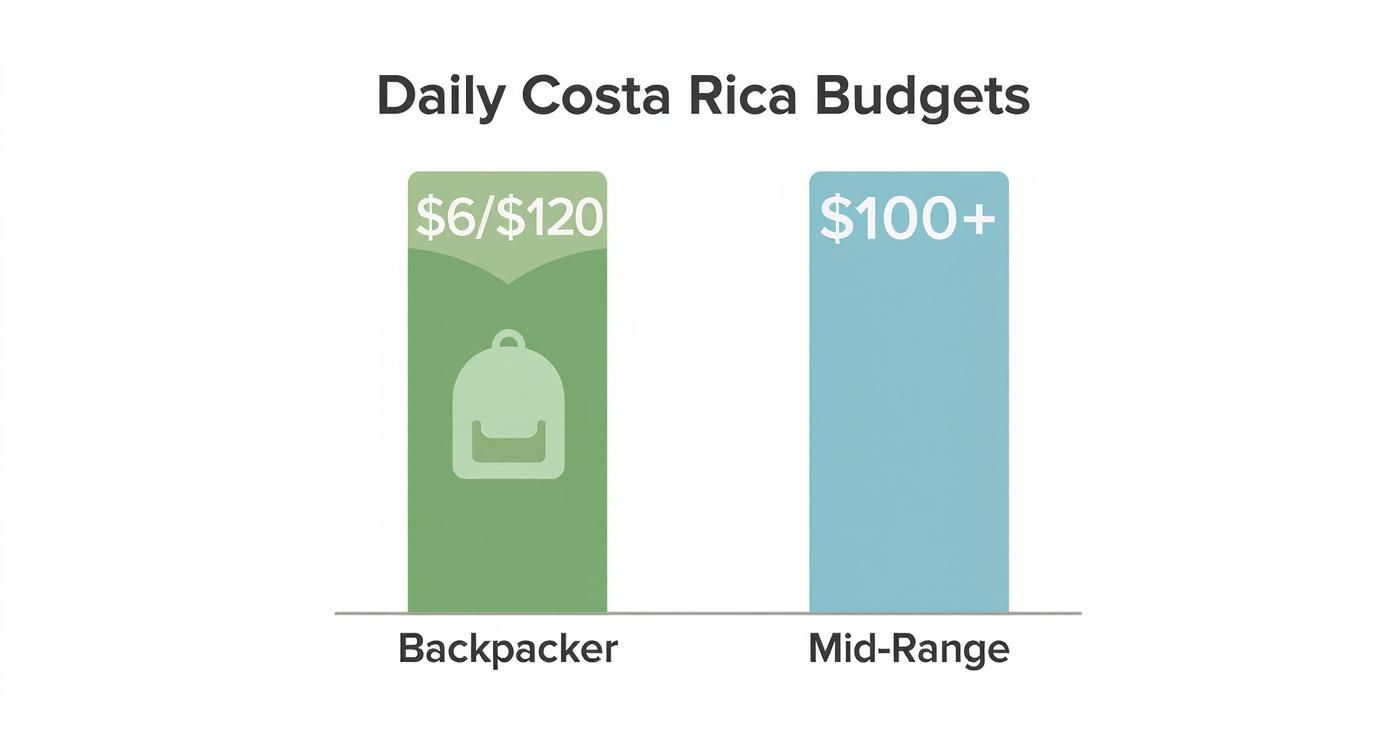
As you can see, backpackers can get by on a much tighter budget by being strategic. But even mid-range travelers can slash their expenses by adopting a few local habits.
Here’s a quick breakdown to help you visualize your daily spending.
Realistic Daily Budget Estimates in Costa Rica
A quick look at potential daily expenses per person, comparing different travel styles and highlighting key savings tips.
| Expense Category | Backpacker Budget | Mid-Range Budget | Smart Money-Saving Tip |
|---|---|---|---|
| Accommodation | $25 - $35 (Hostel) | $80 - $120 (Hotel/Cabina) | Opt for locally-owned cabinas over hotels; they're cheaper and more authentic. |
| Food | $20 - $30 | $40 - $60 | Eat your main meal (casado) at a local soda for lunch—it's the best value. |
| Transport | $5 - $15 (Public Bus) | $30 - $50 (Shared Shuttle) | The public bus system is extensive, safe, and a fraction of the shuttle cost. |
| Activities | $10 - $30 | $50 - $100 | Focus on free activities like hiking local trails and enjoying public beaches. |
| Daily Total | $60 - $110 | $200 - $330 | - |
This table shows just how much your choices matter. Sticking to local options can easily cut your daily costs in half without sacrificing the experience.
Beyond Budgeting: The Mindset for an Authentic Trip
Honestly, traveling Costa Rica on a budget is more about a mindset shift than just pinching pennies. It’s about being willing to trade the predictability of a resort for the adventure of being a temporary local. This means stepping off the well-trodden Gringo Trail and embracing a little bit of spontaneity.
The most memorable moments in Costa Rica rarely come from a pre-booked tour. They come from the unplanned detours—a conversation at a local market, a tip from a cabina owner about a hidden waterfall, or spotting a sloth from the window of a public bus. These experiences aren't just free; they are the very essence of an immersive journey.
This approach—seeking out local guides, exploring off-the-beaten-path places, and aiming for a full cultural experience—is the core philosophy of this guide. It will not only save you money but will leave you with a much deeper connection to the country.
Navigate and Stay Like a Tico for an Immersive Experience
If you really want to stretch your travel budget in Costa Rica, this is where the magic happens. Getting around and finding a place to sleep is your biggest opportunity to either burn through cash or dive deep into the local way of life. It all comes down to a simple choice: move and rest like a tourist, or like a Tico.
Forget the private shuttles and sterile hotel chains. This is about embracing the public bus system and discovering the charm of locally-owned lodging. It’s not just about saving a buck; it’s about plugging directly into the rhythm of the country and gaining a truly immersive experience.
Master the Public Bus System
The public bus is the lifeblood of Costa Rica. It’s how farmers get to market, students get to school, and how you’ll get from a volcano to the beach for a fraction of the price of tourist transport. A four-hour journey on a comfortable coach might cost you ₡7,500 ($15 USD). That same route in a private shuttle? Expect to pay $40-$60 USD, easy.
Making the bus your go-to is the single biggest money-saver for getting around. Here’s how you do it without feeling lost:
- Think in Hubs: Most long-distance routes radiate out of San José. If you're trying to get from one smaller town to another, you’ll probably have to connect through the capital. This is key to exploring off-the-beaten-path destinations.
- Buy Tickets in Advance: Just head to the bus terminal (terminal de buses) the day before you want to travel and buy your ticket in person. This locks in your seat and saves you a ton of stress on travel day.
- Pay with Colones: Always have local currency. Some drivers might take USD for short local hops, but you will always get a better, more honest price paying in colones.
- Just Ask a Local Guide: Seriously, don't be shy. Ticos are incredibly friendly. If you have no idea which bus bay (parada) is yours, just show your ticket to any official or driver. They’ll point you in the right direction, becoming your informal local guides.
Mastering the bus does more than save you money—it forces you to slow down to the local pace. You'll hear stories, see the real countryside unfold, and feel like an actual traveler, not just another tourist on a conveyor belt. It's a mobile cultural experience.
Find Authentic and Affordable Lodging Off the Beaten Path
Hostels are always a solid bet for backpackers, but the real soul of Costa Rican budget lodging is found just off the main tourist drag. These places offer a richer, more personal experience, often for the same price as a dorm bed and put you in the heart of local communities.
Skip the generic and look for these spots to really connect with the culture.
Beyond the Hostel Dorm
- Cabinas: This is Costa Rica’s answer to a guesthouse or motel. A cabina is usually a simple, clean, private room with its own bathroom, almost always run by a local family. They’re a fantastic alternative to a soulless hotel room and typically run between $40-$60 per night.
- Family Homestays (Casas de Familia): Want full immersion? A homestay is the way to go. You get a private room in a family’s home, and it often includes incredible home-cooked meals. It's the best Spanish practice you could ever ask for and a true window into daily life.
- Eco-Lodges and Fincas: Many rural farms (fincas) and eco-lodges have rustic, budget-friendly rooms. Imagine waking up on a working coffee or cacao farm. It's an unforgettable experience that puts you right in the heart of nature and the country's agricultural backbone, far from the main tourist places.
Choosing these places does more than save you money. It puts your cash directly into the hands of local families and small business owners, supporting the communities you’re there to see. Your bed for the night becomes a gateway to real connection.
Eat Your Way Through Costa Rica for a Full Cultural Experience
One of the best windows into Costa Rican culture is through its food. Luckily for us budget travelers, it’s also the secret weapon for saving serious cash. Forget the tourist traps—eating like a Tico (a local) is all about fresh, simple ingredients and supporting the small, family-run spots that are the heart of every community.
Your mission, should you choose to accept it, is to skip the restaurants with English menus and US dollar prices. You're looking for the soul of local dining: the soda. These humble, no-frills eateries are the backbone of the country's food scene, serving up delicious, hearty meals that are unbelievably affordable and offer a full cultural experience with every bite.
The Art of the Soda
A soda is so much more than a cheap restaurant. It’s a neighborhood hub, a family kitchen, and your best friend when you’re trying to make your money last. Spotting a good one is part of the fun: look for simple plastic chairs, a hand-painted sign, and a menu focused on local staples. You won't find a fancy website, just good, honest food.
The casado is the undisputed king of the soda menu. It’s a massive plate with your choice of protein (fish, chicken, pork, or beef), rice, beans, a simple salad, and fried plantains. But don't stop there. Be adventurous and try some other Tico classics.
- Gallo Pinto: The national dish of rice and beans, typically served for breakfast with eggs and tortillas. This is the fuel that powers the entire country.
- Olla de Carne: A rich, comforting beef stew slow-cooked with root vegetables like yucca, taro, and sweet potatoes. It’s perfect for a cooler day up in the mountains.
- Chifrijo: A legendary bar snack. It's a bowl layered with rice, beans, chicharrones (fried pork belly), and fresh pico de gallo, served with tortilla chips for scooping.
- Patacones: Green plantains, smashed and twice-fried until crispy. They're the perfect vehicle for everything from refried beans to fresh ceviche.
The unwritten rule of the soda is simple: be polite, be patient, and pay in colones. These are family businesses, not fast-food chains. A little basic Spanish goes a long way, and you'll find the prices are always better when you use the local currency.
If you want to get a head start, check out a guide to authentic Costa Rican food to get familiar with the names and ingredients you’ll see on menus.
Navigating the Mercado and Feria for an Immersive Taste
For an even deeper dive into local life—and even bigger savings—head straight for the local mercado (market) or the feria del agricultor (farmer's market). These places are a sensory explosion and the absolute best spot to stock up on snacks, picnic supplies, or ingredients if your hostel has a kitchen. They are the definition of an immersive experience.
The feria, which usually happens on the weekend, is where farmers from all over the region come to sell their produce directly. This is your chance to try tropical fruits you’ve never even seen before, straight from the source.
Must-Try Market Finds
- Tropical Fruits: Go way beyond pineapple and mango. Keep an eye out for mamón chino (rambutan), granadilla (a sweet, crunchy type of passion fruit), and cas (a sour guava used to make incredible drinks).
- Queso Turrialba: A fresh, mild, and slightly salty white cheese that’s a staple in Tico households. It's perfect with bread or crackers.
- Local Snacks: Look for vendors selling fresh empanadas, tamales, or chorreadas (sweet corn pancakes). They're delicious, filling, and cost next to nothing.
Shopping at the market doesn't just save you a ton of money; it connects you to the agricultural rhythm of the country. Buying directly from the people who grow the food supports local families and lets you taste everything at its absolute freshest.
Find Adventure Beyond the Tourist Trail
Some of the most powerful travel moments in Costa Rica have absolutely nothing to do with your wallet. The country’s real treasures—its wild, untamed nature and warm, vibrant culture—are often found off the beaten path. Forget the expensive zip-lining tours and exclusive resorts. The real adventure is found in the local waterfalls, hidden beaches, and community trails that don't carry a hefty price tag.

This is about chasing genuine connection, not pre-packaged tourism. It's about learning to spot the opportunities for adventure that are hiding in plain sight, whether that means joining a local fútbol game in the town square or just spending an afternoon people-watching from a park bench. This is the essence of a full cultural experience.
Embrace Free Natural Wonders
While the big national parks usually charge entrance fees around $15-$20, a surprising amount of Costa Rica's natural beauty is completely open to the public. You just have to know where to look and be willing to hop on a local bus and walk a little.
Take La Fortuna, for example. Instead of shelling out for a pricey hot springs resort, you can head to El Choyin. It's a section of the river where the very same geothermal waters flow freely for anyone to enjoy. It’s a huge local hangout and a perfect example of a world-class experience on a shoestring budget.
The secret to finding these gems is simple: ask a local guide. The owner of your cabina, the server at your favorite soda, or a friendly face at the bus stop will almost always point you toward a favorite swimming hole or a quiet beach that you'll never find in a guidebook.
Here are a few incredible, low-cost spots to get you started:
- Montezuma Waterfalls: A short, beautiful hike from the town of Montezuma leads to a stunning three-tiered waterfall with big swimming pools. Access is completely free.
- Cascada Poza Azul near Dominical: This small but gorgeous jungle waterfall is another free gem. You’ll probably have it all to yourself, offering a quiet escape from the busier spots.
- Cahuita National Park: Unlike most parks, the entrance to Cahuita on the Caribbean coast works on a donation basis. You give what you can and get to explore stunning beaches and trails teeming with monkeys, sloths, and toucans.
Discover Off-the-Beaten-Path Regions
Some of the most rewarding and affordable travel in Costa Rica happens when you stray from the main tourist circuits. Regions that are less developed for international tourism often keep a more authentic charm and have much lower prices. This is where you find the true immersive experience.
A perfect example is the southern Caribbean coast, just south of Puerto Viejo. Towns like Manzanillo have a quieter, more Afro-Caribbean vibe. Here, you can rent a bike for about $8 a day and just cruise between Playa Cocles, Playa Chiquita, and Punta Uva, each with its own unique character and pristine sand.
Another fantastic area is the Central Valley, outside of San José. Most travelers just pass through, but towns like Zarcero (famous for its topiary garden) or the Orosi Valley offer lush landscapes, coffee plantations, and hiking trails that feel like a local secret. It's a peaceful and incredibly affordable alternative to the bustling coast.
Connect with Local Culture for Free
True cultural immersion doesn't come from a guided tour. It happens in the small, everyday moments of connection with the local community. These experiences are not only free but are often the most memorable parts of a trip.
Here's how to find those moments:
- Visit the Central Park: Every single town has a central park, usually right in front of the main church. It’s the social heart of the community. Grab a snack from a street vendor and just watch life happen.
- Join a Pick-Up Soccer Game: If you see a mejenga (a casual soccer game) happening in a park or on the beach, don’t be shy. A friendly smile is usually all it takes to get an invitation to play.
- Explore a Local Market: Even if you don’t buy much, wandering through a weekend feria del agricultor (farmer's market) is a vibrant cultural experience. The sights, sounds, and smells are a direct line to the local way of life.
Sample Itineraries for an Off-the-Beaten-Path Adventure
Alright, let's put this all into practice. Knowing the strategies is one thing, but seeing how a real trip can unfold on a budget is where the magic happens.
These aren't your typical tourist trails. I've designed these flexible itineraries to get you away from the crowds and into the heart of what makes Costa Rica so special. We're focusing on specific regions that are off the beaten path, mixing in a few well-known spots with places that feel genuinely local. This is how you have a rich, immersive trip while sticking to that $50-$70 daily budget.
A 7-Day Immersion in the Southern Pacific
If you're after rugged coastlines, mind-blowing wildlife, and a taste of local life without the Guanacaste crowds, this one's for you.
Days 1-2: San Gerardo de Dota Hop on an early bus from San José heading towards San Isidro de El General. Just tell the driver you need to get off at the entrance to San Gerardo. You'll descend into a cool, misty valley that’s a world-renowned birding hotspot, famous for the Resplendent Quetzal. Grab a local cabina and spend your days hiking community trails for a fraction of what you'd pay in a national park.
- Insider Tip: It gets surprisingly chilly here, so pack layers to avoid buying an overpriced sweater. The local sodas serve incredible, hearty meals like olla de carne that are perfect for the climate.
Days 3-5: Uvita & Dominical Catch a bus back to the main highway and flag down the next one heading south to Uvita. This will be your home base for exploring the wild Marino Ballena National Park, known for its "Whale's Tail" sandbar ($6 entrance). For a bit more action, rent a surfboard in the funky nearby town of Dominical or tackle the self-guided hike to the Nauyaca Waterfalls ($10).
Days 6-7: Return to San José Enjoy one last morning walk on the beach before catching a direct bus back to the capital. This route gives you a perfect mix of cloud forest highlands and wild coastline, all done on public transport.
The 10-Day Central Valley & Caribbean Vibe
This journey shows you two completely different sides of Costa Rica, combining the cultural heartland with the laid-back, Afro-Caribbean rhythm of the eastern coast—a truly immersive cultural experience.
It's worth noting that choosing itineraries like these has a real impact. In the first seven months of 2025, Costa Rica saw about 50,000 fewer tourists than in the same period of 2024. A big reason is the rising costs that have pushed the average family vacation price to $7,800. This downturn hits the small, local operators the hardest. When you travel off the beaten path, you're directly supporting the family-run sodas and local guides who need it most.
Days 1-3: Orosi Valley From San José, a cheap local bus will get you to the ridiculously lush Orosi Valley. Base yourself in Orosi town, one of the country's oldest communities. You can visit the colonial church, hike to stunning viewpoints, and check out local coffee fincas (farms) without the premium price tags you'll find in the more famous coffee regions.
Days 4-7: Cahuita Head back to San José to grab a direct bus to the Caribbean. The main draw in Cahuita is the national park, which unbelievably still operates on a donation basis. The beachside trail here is world-class for spotting wildlife—sloths, monkeys, and toucans are practically guaranteed.
Days 8-10: Puerto Viejo & South Rent a bike (~$8/day) and cruise the coastline south of Puerto Viejo. You'll find one stunning hidden beach after another, like Playa Chiquita and Punta Uva. Stay in simple cabinas and feast on Caribbean-style rice and beans at the countless sodas lining the road.
Itemized Budget for a 10-Day Journey
Here’s a sample breakdown to show you that a daily budget under $70 isn't just a dream—it's completely doable when you prioritize local experiences.
Sample 10-Day Off-the-Beaten-Path Budget
| Day | Location/Activity | Est. Transport Cost | Est. Lodging Cost | Est. Food/Misc Cost | Daily Total |
|---|---|---|---|---|---|
| 1-3 | Orosi Valley (Hiking, Coffee) | $5 (Bus) | $30/night | $25/day | $60 |
| 4 | Travel Day (Orosi > SJO > Cahuita) | $18 (Buses) | $35 (Cabina) | $20 | $73 |
| 5-7 | Cahuita (Nat'l Park, Relax) | $0 | $35/night | $25/day | $60 |
| 8-9 | Puerto Viejo (Bike Rental) | $8/day | $40/night | $30/day | $78 |
| 10 | Travel Day (PV > SJO) | $15 (Bus) | - | $15 | $30 |
This itinerary proves you can pack a trip with amazing culture and nature without breaking the bank. It really just comes down to choosing your destinations wisely and being willing to travel like a local.
Your Top Costa Rica Budget Questions, Answered
When you're planning an immersive trip to Costa Rica on a shoestring, a few key questions always pop up. Getting the local scoop on money, timing, and activities can make all the difference between a stressful trip and a smooth one.
Here are the straight-up answers to the most common queries I hear, packed with practical advice to help you travel smarter and stretch your budget further.
Is It Cheaper to Use US Dollars or Colones?
You’ll see US dollars accepted in tourist-heavy areas, but here’s the deal: you will always get a better deal paying in the local currency, the Costa Rican colón (CRC). It’s a simple matter of math and a key part of an immersive experience.
When you pay in USD at a local soda (a small, family-run eatery), a market, or on a public bus, the vendor sets the exchange rate. And trust me, they’re not rounding in your favor.
The best move? Hit a bank ATM right after you land and pull out a stash of colones. Make sure it's an official bank ATM, like Banco Nacional, to dodge sketchy fees. Paying for daily essentials—from your morning coffee to a bus ticket—in colones ensures you’re paying what the locals pay. This one habit adds up to real savings.
What Is the Cheapest Time of Year to Visit?
For the absolute best prices, you’ll want to visit during the "green season," which runs from May to November. Flights and accommodation can be 20-40% cheaper than during the peak dry season (December through April). This is the best time to explore off-the-beaten-path regions without the crowds.
And don't let the name "rainy season" put you off. It's not a constant downpour. Most days you get brilliant, sunny mornings perfect for hiking or hitting the beach, followed by a classic tropical rain shower in the afternoon. Plus, the country is unbelievably lush and vibrant this time of year.
For the sweet spot of lower prices and less rain, I always recommend the shoulder months: May, June, and November.
Are National Parks in Costa Rica Expensive?
This can be a real budget-buster if you're not careful. Entrance fees for the big-name national parks, like Manuel Antonio or Arenal Volcano, will set you back $15-$20 per person. While they are absolutely stunning, those costs stack up fast.
The secret that savvy budget travelers learn is to look beyond the famous park gates. Countless communities have their own private reserves, wildlife corridors, or locally-run trails that are way cheaper—sometimes even free—and offer incredible wildlife sightings with a tiny fraction of the crowds. Your best local guides are the people who live there.
Ask the owner of your cabina or a friendly local for their favorite spots. You’ll often find hidden gems that lead to a much more intimate experience with nature. A classic example is Cahuita National Park on the Caribbean coast, which operates on a donation basis. You get world-class wildlife for whatever you can contribute.
How Can I Save Money on Tours and Activities?
The golden rule here is to book locally and directly. Avoid the temptation to pre-book everything on international websites before you even leave home. Those sites almost always tack on hefty commissions that you end up paying for.
Instead, wait until you're on the ground. Walk into town, find the local tour operators, and talk to them face-to-face. You'll get much better prices and a genuine feel for the person who will be your guide. This direct interaction is a key part of an immersive cultural experience.
For many adventures, like hiking to a waterfall, you might not even need a tour at all. A cheap public bus ride and a bit of walking can get you there for pennies on the dollar. Another great move is to rally a few people from your hostel to split the cost of a guide or a taxi for those more remote excursions. It saves money and is a great way to make new friends on the road.
At CoraTravels, we believe the best travel experiences come from understanding the local pulse. Our guides are built on insider knowledge to help you navigate cultural nuances and discover the authentic heart of every destination, turning a good trip into an unforgettable journey. Find more local insights and start planning your next adventure at https://coratravels.com.