Paris is a world unto itself, but its true cultural context lies just beyond the Périphérique ring road. This comprehensive guide moves past the typical tourist circuits to offer a curated collection of authentic day trips from Paris, designed for travelers seeking genuine immersion. We focus on the destinations that reveal the rich tapestry of French history, art, and daily life that exists just a short train ride from the capital. This isn't just about seeing landmarks; it's about understanding their significance and experiencing them on a deeper, more local level.
This guide provides the practical, actionable details you need to explore independently and thoughtfully. For each destination, you'll find:
- Strategic Transport Options: Clear instructions for navigating trains, cars, or guided tours, including travel times and station specifics.
- Off-the-Beaten-Path Highlights: We go beyond the main attractions to uncover hidden gems, from forest hiking trails in Fontainebleau to the local markets that supplied Monet's kitchen in Giverny.
- Actionable Local Insights: Learn the best times to visit to avoid crowds, what to eat at a local bistro, and the cultural context needed to appreciate each site fully.
We've structured this listicle to help you find the perfect escape, whether you are a history buff fascinated by Gothic architecture, a nature lover eager for a forest walk, or an art enthusiast wanting to stand exactly where Impressionist masters set their easels. Forget generic itineraries. Our goal is to equip you with the knowledge to craft a meaningful and memorable excursion, transforming a simple day trip into a full cultural experience. Let's explore the stories waiting just outside the city limits.
1. Versailles: Royal Excess & Garden Strategy
While the Palace of Versailles is one of the most famous day trips from Paris, a truly immersive visit requires more than just showing up. The key is to treat it not as a single museum but as a vast estate with its own rhythm and logic. Approaching your visit with a strategy for navigating its crowds, grounds, and hidden spaces transforms a potentially overwhelming tourist experience into a fascinating study of power, landscape design, and intimate royal life.
This approach focuses on understanding how the estate was designed to be experienced. By moving beyond the Hall of Mirrors and exploring the quieter domains, you uncover a more personal side of French history often missed by the main tourist circuit.
Getting There
- Train: The most common and efficient option is the RER C train from central Paris stations (like Saint-Michel Notre-Dame or Musée d'Orsay) to the Versailles Château Rive Gauche station. The journey takes about 40 minutes, and the palace is a 10-minute walk from the station.
- Car: Driving takes 45-60 minutes, but be prepared for traffic and paid parking. This option offers flexibility but is often less convenient than the train.
Off-the-Beaten-Path & Immersive Experiences
To escape the crowds and discover the authentic Versailles, prioritize the estate's outer-lying areas. Most visitors concentrate on the main Château, leaving vast sections of the grounds relatively peaceful.
- Explore the Trianons & Hamlet: The Grand Trianon, Petit Trianon, and especially Marie Antoinette's Hamlet offer a completely different atmosphere. These were private retreats, and their smaller scale provides a more intimate glimpse into the royal family's life.
- Rent a Bicycle: The 1,800-acre gardens are too vast to cover on foot. Renting a bike near the Grand Canal allows you to explore far-flung groves and pathways that few tourists reach.
- Strategic Timing: Arrive right at the 9 AM opening to see the main palace before the crowds descend, or wait until after 3 PM when tour groups begin to leave. The golden hour light in the gardens between 4 PM and 6 PM is spectacular and serene.
- Local Guide Insight: A specialized guide can bring the history to life, explaining the complex court etiquette and political intrigue that unfolded within the walls, transforming rooms from museum pieces into stages for historical drama.
2. Monet's Giverny: Gardens as Living Artwork
A day trip to Giverny offers a rare opportunity to step directly into a painting. Claude Monet’s house and gardens are not just a historical site; they are the living, breathing source material for his Impressionist masterpieces. Understanding the garden as Monet's three-dimensional canvas, a space where he experimented with light, color, and reflection, transforms a simple visit into a profound artistic immersion.
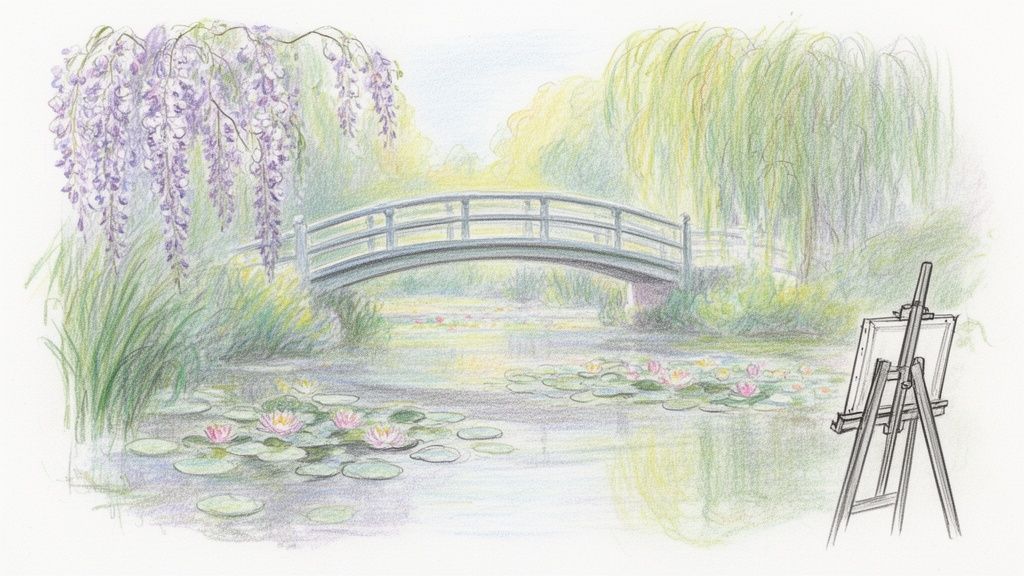
This approach focuses on experiencing the landscape as the artist did. By observing the famous Japanese bridge and water lily pond at different times and angles, you witness the shifting light that obsessed Monet and gain a deeper appreciation for his work beyond the museum wall.
Getting There
- Train: The most direct route is a 45-minute train from Paris's Gare Saint-Lazare to Vernon-Giverny. From Vernon, you can take a shuttle bus (navette), a taxi, or enjoy a scenic 45-minute walk to the gardens.
- Car: Driving from Paris takes approximately 1 hour and 30 minutes. This provides flexibility for exploring the surrounding Normandy countryside, though parking at Giverny can be limited during peak season.
Off-the-Beaten-Path & Immersive Experiences
To truly connect with Monet's vision, you must find moments of quiet contemplation away from the main crowds that gather on the Japanese bridge.
- Strategic Timing: Arrive before the 9:30 AM opening to be among the first in, or visit after 4 PM when the tour buses depart. The best light for photography is in the early morning or late afternoon.
- Walk from Vernon: For a more immersive arrival, skip the shuttle and walk the scenic path from Vernon station. The 5km route follows an old railway line and offers a peaceful transition into the artistic landscape.
- Hire a Local Art Guide: A guide can provide invaluable context, showing you reproductions of Monet's paintings while standing in the exact spots where he created them, linking the real-life subject to the final artwork.
- Visit the Musée des Impressionnismes: Located next door, this museum provides essential context on Monet's artistic evolution and his influence on the Impressionist movement.
3. Fontainebleau: Forest Hiking & Royal Hunting Lodge
Fontainebleau offers a unique dual experience that sets it apart from other royal day trips from Paris. While its opulent château is a Renaissance masterpiece, the true magic lies in pairing the palace visit with an immersion into its vast, ancient forest. This approach allows you to step into the world of French royalty not just through architecture, but through their aristocratic leisure pursuits like hunting, hiking, and reconnecting with nature.
Treating Fontainebleau as both a historical site and a natural park reveals a more complete story. You can trace the footsteps of kings in the morning and lose yourself on a tranquil forest trail in the afternoon, creating a perfectly balanced excursion.
Getting There
- Train: The most direct route is a Transilien R train from Paris Gare de Lyon towards Montargis or Montereau. Get off at Fontainebleau-Avon. The journey takes about 40 minutes. From the station, take Bus Line 1 (direction Les Lilas) to the "Château" stop.
- Car: Driving takes around 60-75 minutes via the A6 motorway. This offers great flexibility for exploring different parts of the forest but requires payment for parking near the château.
Off-the-Beaten-Path & Immersive Experiences
To experience the authentic Fontainebleau, use the château as your starting point, not your final destination. The forest is where local life and adventure unfold.
- Hike the Sentiers Denecourt: Follow the distinctive blue-marked trails (known as sentiers bleus) which lead to stunning viewpoints and unique rock formations. Download an offline map before you go, as cell service can be spotty.
- Rent a Bike: A bicycle is the best way to move between the town, the palace, and the trailheads. You can rent one at the train station for about €15 per day to efficiently cover more ground.
- Try Bouldering: Fontainebleau is a world-famous bouldering destination. Even if you're a beginner, you can rent a crash pad from a local outfitter and try some of the easier circuits for a unique physical challenge.
- Find the Croix du Calvaire Viewpoint: For an unforgettable end to your day, hike up to this viewpoint for a panoramic sunset over the forest canopy. It’s a local favorite and offers a serene alternative to crowded palace interiors.
4. Chartres Cathedral: Architecture & Pilgrimage Routes
A day trip from Paris to Chartres offers more than a visit to a famous church; it's an opportunity to read a story written in stone and light. The key to a meaningful visit is to approach the cathedral not as a monument but as a living text, a medieval encyclopedia designed to communicate theology, science, and social order. By focusing on how its stained glass, portals, and labyrinth were meant to be experienced by pilgrims, you transform a sightseeing stop into an immersive journey into the medieval mind.
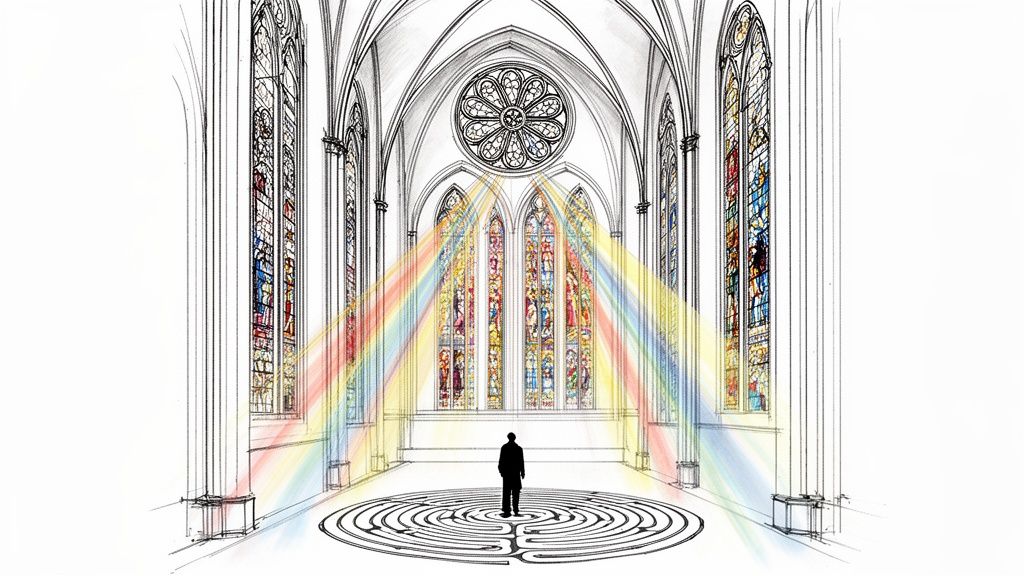
This approach shifts your focus from just looking at the architecture to understanding its purpose. By engaging with its symbolic elements and exploring the surrounding old town, you connect with a history of faith, pilgrimage, and community that has unfolded here for centuries.
Getting There
- Train: The most direct route is the SNCF TER train from Paris Montparnasse station to Chartres. The journey is straightforward, taking about 1 hour to 1 hour and 15 minutes, making it a very accessible day trip. The cathedral is a scenic 10-minute walk uphill from the station.
- Car: Driving from Paris takes around 1.5 hours, depending on traffic. This option provides flexibility to explore the surrounding countryside, but train travel is generally more efficient for a day focused solely on the town.
Off-the-Beaten-Path & Immersive Experiences
To experience Chartres beyond the surface, engage with it as a historical pilgrim would. This means looking for the details that tell deeper stories and exploring the infrastructure that supported this major medieval destination.
- Hire a Local Guide: The cathedral's symbolism is dense and complex. Hiring a local expert guide for a 1.5-hour tour is a fantastic investment to decode the narratives in the stained glass and portals, revealing layers of meaning most visitors miss.
- Walk the Labyrinth: If uncovered during your visit (check the schedule), walk the floor labyrinth as a meditative practice. This isn't a maze but a single path, designed for contemplation and symbolic pilgrimage.
- Explore Pilgrimage Infrastructure: Wander down the Rue Chantault and other old merchant streets. Here, you can see the historic buildings and pathways that once housed and served the millions of pilgrims who traveled to see the cathedral's relics.
- Attend a Service: For a full cultural immersion, attend a vespers service or mass. Hearing the organ and choir in this sacred space connects you to the cathedral’s living purpose, which has remained unchanged for over 800 years.
5. Chantilly: Horse Culture & Renaissance Château
The Domain of Chantilly offers more than just a magnificent Renaissance château; it presents a deep dive into France’s aristocratic equestrian heritage. The authentic experience here isn't just viewing art, but witnessing a living tradition centered on horsemanship. By focusing on the Great Stables (Grandes Écuries) and its demonstrations, you connect with a culture that has shaped this estate for centuries, offering a unique alternative to typical château day trips from Paris.
This approach immerses you in the rhythm of the estate’s equestrian life. Understanding the synergy between the castle, the gardens, and the stables reveals Chantilly’s true character as a center for both art and horsemanship, providing a rich, multi-faceted cultural experience.
Getting There
- Train: The fastest route is the TER train from Paris Gare du Nord to Chantilly-Gouvieux. The journey takes just 25 minutes, followed by a 20-minute walk or a short bus ride (D navette) to the château.
- Car: Driving from Paris takes approximately one hour, though traffic can be unpredictable. Paid parking is available on-site, making this a flexible option if you plan to explore the surrounding forest.
Off-the-Beaten-Path & Immersive Experiences
To fully appreciate Chantilly's unique blend of high art and equestrian prowess, go beyond a quick tour of the castle and engage with its living traditions. The estate's design encourages a slow, deliberate exploration of its different facets.
- Prioritize the Grandes Écuries: Dedicate ample time to the Great Stables, an architectural masterpiece in its own right. Visit the Living Museum of the Horse and, most importantly, schedule your visit around the equestrian demonstrations to see the art of dressage in action.
- Explore the Town's Craft Heritage: For a complementary cultural experience, visit Chantilly’s Musée de la Dentelle to discover the delicate local tradition of lacemaking, a craft historically intertwined with the aristocracy.
- Aristocratic-Style Leisure: Pack a picnic to enjoy in the Anglo-Chinese Garden. This quieter, more whimsical part of the grounds was designed for leisurely afternoons and offers a serene escape from the more formal French gardens.
- Local Guide Insight: A local expert can guide you through the town's charming streets, pointing out architectural details and historical anecdotes that connect the château to the community that has long supported it.
6. Rouen: Medieval Town & Impressionist Painting Site
Rouen offers a profound cultural experience where history is not just preserved but felt on every corner. It's a city that seamlessly blends its dramatic medieval past with its pivotal role in art history. Moving beyond the typical tourist checklist allows you to connect with the city's living soul, from its bustling markets to the quiet stones that witnessed the final moments of Joan of Arc.
This approach focuses on experiencing the city as its famous artistic observers did. By seeing the light change on the cathedral façade and walking the same streets as medieval merchants, you transform a simple day trip into a journey through time and artistic vision.
Getting There
- Train: The most direct way to make this day trip from Paris is via the TER train from Gare Saint-Lazare to Rouen-Rive-Droite. The journey is fast, taking about 1 hour and 30 minutes, and the station is a short walk from the historic center.
- Car: Driving takes approximately 2 hours without traffic. While offering flexibility, finding parking in the old town can be challenging. The train is generally more convenient and relaxing.
Off-the-Beaten-Path & Immersive Experiences
To truly understand Rouen's character, step away from the main thoroughfares and engage with its layered history and local life. The city's charm lies in its details, often missed by those rushing from one monument to the next.
- Chase Monet's Light: Instead of just looking at the cathedral, experience it as Monet did. Visit in the morning to see the cool east light on the façade, then return in the late afternoon to witness the warm glow that inspired his famous series.
- Hire a Specialist Guide: For a deeper understanding of the city's structure, consider a local guide specializing in medieval urbanism (around €40-€60 for 2 hours). They can reveal the stories behind the leaning half-timbered houses and ancient alleyways.
- Walk Rue Martainville at Golden Hour: This street, with its historic buildings and unique atmosphere, feels like stepping into an Impressionist painting as the sun sets. It’s a photographer’s dream and a peaceful escape from the central square.
- Experience the Historical Soundscape: Check the schedule for organ recitals at the city’s historic churches, like Saint-Ouen Abbey. Hearing the music in its intended architectural space offers a powerful connection to the past.
7. Giverny + Vernon Combination: Complete Local Integration
While most visitors treat Giverny as a singular destination, a more enriching day trip from Paris pairs Monet's famous gardens with the adjacent town of Vernon. This approach shifts the focus from a sterile artist pilgrimage to a deeper understanding of the local context that fueled Monet's work. By exploring Vernon’s markets, riverside paths, and community life, you see the world Monet inhabited, not just the one he painted.
This combined visit allows you to trace the connection between daily life and artistic practice. Instead of viewing Giverny in isolation, you experience the sensory inputs of the region, from the local produce at the market to the changing light on the Seine that Monet himself observed.
Getting There
- Train: The most direct route is a TER train from Paris Saint-Lazare station to Vernon-Giverny. The journey is approximately 50 minutes. From the Vernon station, Giverny is a scenic 7km walk, bike ride, or a short shuttle bus ride away.
- Car: Driving from Paris takes about 1 hour and 15 minutes, offering flexibility to explore the surrounding Normandy countryside. Parking is available in both Vernon and Giverny.
Off-the-Beaten-Path & Immersive Experiences
To fully integrate into the local rhythm, use Vernon as your base of operations and treat Giverny as just one part of the regional experience. This strategy immerses you in the authentic Normandy atmosphere.
- Explore Vernon Market: Plan your visit for a market day (typically Tuesday, Thursday, or Saturday mornings) to see the town at its most vibrant. This provides a genuine taste of local life far from the Giverny crowds.
- Walk the Riverside at Sunrise: Trace Monet’s observation routes along the Seine in Vernon. The early morning light reveals the same subtle shifts in color and reflection that inspired his series paintings.
- Visit the Musée de Vernon: This often-overlooked museum provides a broader art context, showcasing works by artists who lived in or were inspired by the region, including some of Monet’s contemporaries and friends. It offers a richer narrative than Giverny alone.
- Local Guide Insight: A walking tour with a Vernon local can reveal hidden medieval architecture, wartime history, and anecdotes about Monet's presence in the town, providing a complete cultural picture.
8. Loire Valley (Day Trip From Paris): Château Hopping & Renaissance Architecture
Tackling the Loire Valley as one of the quintessential day trips from Paris requires a sharp, focused strategy. With over 300 châteaux, the goal is not to see everything but to curate a journey that tells a specific story. A successful visit focuses on 2-3 key sites, revealing the evolution of Renaissance architecture, the influence of powerful women like Catherine de' Medici, and the strategic interplay between landscape and power.
This approach transforms a simple tour of old castles into a narrative experience. By connecting the dots between Amboise, Chenonceau, and Chambord, you witness a progression of design and ambition, understanding these estates not just as buildings but as political and cultural statements.
Getting There
- Train: Take the high-speed TGV from Paris Montparnasse to Tours (Saint-Pierre-des-Corps station). The journey is just over an hour. From Tours, you can join a guided minibus tour or rent a car to reach the châteaux.
- Car: Driving from Paris takes about 2.5-3 hours. While offering maximum flexibility, the long drive time makes for a very packed day. A hybrid approach of taking the train to Tours and renting a car locally is often more efficient.
Off-the-Beaten-Path & Immersive Experiences
To grasp the soul of the Loire Valley beyond the main postcard views, you must be selective and strategic with your time. Focus on the details and the connections between the estates.
- Choose a Focused Route: A perfect day trip itinerary is Amboise in the morning (royal history and Leonardo da Vinci's final home) followed by Chenonceau in the afternoon (the iconic "ladies' château" spanning the River Cher).
- Rent a Car Locally: For true mobility between sites, renting a car at the Tours or Amboise train station is essential. This allows you to explore the smaller villages and wineries that tour buses miss.
- Engage with the Landscape: Don't just rush through the interiors. Spend significant time in the gardens, like those at Villandry or Chenonceau, to understand Renaissance landscape design as an extension of the château's power.
- Taste the Terroir: The Loire is a premier wine region. For a deeper cultural immersion, explore some of the local wineries; you can learn more about Loire Valley wine tours on coratravels.com. Also, grab lunch at a village boulangerie instead of a tourist café for an authentic taste of the region.
9. Beauvais Cathedral: Gothic Ambition & Structural Drama
The Cathédrale Saint-Pierre de Beauvais is not just another church; it’s a gripping tale of architectural hubris, catastrophic failure, and sheer human determination. This day trip from Paris offers a powerful lesson in medieval engineering, where builders reached for the heavens and almost touched them. The cathedral still holds the record for the highest Gothic vault ever constructed, but its incomplete, patched-together state tells a more compelling story than any finished masterpiece.
Visiting Beauvais is an emotional and intellectual experience. You’ll witness the visible scars of its collapses and the incredible efforts taken to keep it standing. This raw, honest structure provides a unique window into the extreme risks and profound faith that defined the Gothic era.
Getting There
- Train: The most direct route is a TER train from Paris Gare du Nord to Beauvais. The journey takes approximately 1 hour and 15 minutes, making it an easy half-day trip. The cathedral is a short walk from the Beauvais station.
- Car: Driving from Paris takes about 1.5 hours, depending on traffic. This option gives you the flexibility to explore the surrounding Picardy region, though train travel is generally more straightforward for a focused cathedral visit.
Off-the-Beaten-Path & Immersive Experiences
To fully appreciate the drama of Beauvais, you need to look beyond its beauty and see its history of structural struggle. It’s an immersive experience for those curious about how great things are built and why they sometimes fail.
- Prepare with Context: Before you go, read about Gothic engineering and the cathedral's specific history of collapses in the 13th and 16th centuries. This knowledge will transform your visit, allowing you to identify the massive steel reinforcements and unusually dense buttressing that hold the choir up.
- Seek Out the Scars: Walk the perimeter and interior slowly. Look for the points where the structure was repaired and reinforced. Unlike pristine cathedrals, Beauvais wears its history of near-disaster openly, offering a rare, honest look at architectural vulnerability.
- Combine with the Astronomical Clock: Inside the cathedral is a magnificent 19th-century astronomical clock. Time your visit to coincide with one of its daily animations to see this mechanical marvel in action, adding another layer to your experience.
- Local Guide Insight: A tour with a local historian can point out the subtle signs of structural stress and repair that an untrained eye would miss, turning your visit into a fascinating architectural detective story.
10. Vernon: Monet's Adopted Town
While Giverny attracts legions of art lovers, its often-overlooked neighbor, Vernon, offers a more authentic glimpse into the world that inspired Claude Monet. This charming working town on the Seine was where the artist did his shopping, socialized, and drew inspiration from the riverside light. Visiting Vernon contextualizes Monet's life beyond his famous garden, revealing the Norman community that formed the backdrop to his creative genius.
This approach focuses on experiencing the region as Monet did: not as a tourist attraction, but as a living landscape. By exploring Vernon’s medieval streets, bustling market, and quiet riverbanks, you connect with the authentic Norman atmosphere that is essential to understanding his work.
Getting There
- Train: The fastest route is the direct train from Paris Saint-Lazare station to Vernon-Giverny. The journey takes about 50 minutes, making it an easy and efficient choice for a day trip from Paris.
- Car: Driving from Paris takes approximately 1.5 hours, depending on traffic. This option offers the flexibility to explore other small villages in the Normandy region at your own pace.
Off-the-Beaten-Path & Immersive Experiences
To truly appreciate the area, step away from the Giverny crowds and immerse yourself in Vernon’s local rhythm. The town provides a richer, more rounded cultural experience.
- Visit on Market Days: Plan your visit for a Tuesday, Thursday, or Saturday morning to experience the vibrant local market. It’s a fantastic place to see daily Norman life and sample regional products.
- Walk the Bridges at Dawn or Dusk: For a true Monet experience, walk across the Seine bridges during the "golden hours." This allows you to see the light and reflections that captivated the artist and inspired some of his most famous series paintings.
- Stay Overnight for Relaxed Pacing: Consider basing your stay in Vernon rather than making a quick trip to Giverny. This allows for a more relaxed pace and the opportunity to dine at modest local bistros recommended by residents, far from the tourist-heavy restaurants.
- Explore Beyond the Center: Wander away from the main square to discover charming side streets with traditional half-timbered houses and the remains of the medieval castle, offering a quiet escape and a deeper sense of the town's history.
11. Practical Day-Trip Planner: Timing, Costs & Priorities
The most memorable day trips from Paris aren't just about the destination; they're the result of smart, realistic planning. A successful outing requires treating your time and budget as finite resources, focusing on a deeply immersive experience in one or two key locations rather than a rushed tour of many. This strategic approach prevents travel fatigue and transforms a simple trip into a seamless, rewarding cultural dive.
This method forces you to prioritize what truly matters, ensuring you have enough time to explore beyond the main attraction, discover a local café, or simply absorb the atmosphere without constantly watching the clock.
Getting There
- Pre-Booking: For popular routes like those to the Loire Valley or Mont Saint-Michel, booking high-speed TGV trains in advance is crucial for better prices and seat availability.
- Local Transit: Once you arrive at a regional station, plan your "last-mile" travel. Research local bus schedules, taxi availability, or bike rental shops near the station to get to your final destination efficiently.
Off-the-Beaten-Path & Immersive Experiences
Strategic planning is your best tool for uncovering an authentic experience. Use it to build flexibility and local flavor into your itinerary.
- Prioritize Ruthlessly: Choose one primary attraction (e.g., a specific château in the Loire Valley) and a secondary, nearby point of interest (like a local market or vineyard). This prevents a checklist mentality and encourages deeper exploration.
- Buffer Your Budget: Factor in a 15-20% buffer for unexpected costs like a taxi ride back to the station, a spontaneous boat tour, or a local artisan purchase. For a deeper dive into how currency exchange rates are determined and how they might impact your travel budget, you might want to consult this guide on Understanding Currency Exchange Rates.
- Verify Return Times: Always check the schedule for the last train back to Paris before you even leave your destination's station. Regional lines often have infrequent evening services, and missing the last one can be a costly mistake.
- Seek Local Guidance: Before your trip, look up the local tourism office website for your destination. They often have downloadable maps of walking tours, information on local market days, and tips that aren't in major guidebooks.
12. Seasonality & Crowds: When to Visit
Choosing the right time for your day trips from Paris can be as important as choosing the destination itself. Timing dictates everything from the vibrancy of Monet's garden at Giverny to the number of people sharing the Hall of Mirrors with you. By aligning your travel calendar with the natural rhythm of the seasons and local event schedules, you can elevate a good trip into an unforgettable one, ensuring the best light, ideal weather, and more manageable crowds.
This strategic approach allows you to experience destinations at their peak, whether that means capturing the perfect light on a Gothic cathedral or enjoying a forest hike in full foliage. It’s about being intentional with your timing to unlock a more authentic and immersive cultural experience.
Getting There
- Train: Seasonal schedules can vary slightly, especially on holidays. Always check the SNCF or RATP websites for the most current timetables before departing. Off-peak travel (mid-day, weekdays) often means cheaper fares and quieter trains.
- Car: Weather significantly impacts driving times. A summer drive to Normandy is straightforward, but winter conditions can add considerable time. Check road conditions and be aware that parking at popular sites becomes scarce during peak tourist months like July and August.
Off-the-Beaten-Path & Immersive Experiences
To truly master seasonal travel and avoid the crowds, look beyond the obvious high and low seasons. Understanding the nuances of each month can reveal hidden opportunities for the best day trips from Paris.
- Gardens & Nature: Aim for April to June for peak blooms at places like Giverny or the châteaux gardens. September offers a second, quieter bloom season with beautiful autumnal light and far fewer tourists.
- Urban & Cathedral Visits: The shoulder seasons of spring and autumn provide the best light for photography in places like Chartres or Rouen, with mild weather perfect for walking.
- Check Local Calendars: Before booking, check for local events. A trip to Chantilly could coincide with a major horse race, while Versailles has its spectacular Fountain Shows on specific dates, which can dramatically affect crowd levels.
- The "Secret" Season: Late October and early November offer a quiet, atmospheric window. The tourist rush is over, and the autumn colors in forests like Fontainebleau are magnificent, providing a peaceful, immersive experience. You can find more details about a seasonal approach in our guide to the best time to go to Paris.
Day Trips from Paris — 12 Destinations Compared
| Item | 🔄 Planning Complexity | ⚡ Resources (time & cost) | ⭐ Expected Outcome/Quality | 📊 Ideal Use Cases | 💡 Key Advantage / Quick Tip |
|---|---|---|---|---|---|
| Versailles: Royal Excess & Garden Strategy | High — long routes, crowd management | Full day (4–6+ hrs); €30–60 incl. entry & transport | ⭐⭐⭐⭐ — Spectacle & deep historical insight, but crowded | Grand-palace photography, court-history intro | Arrive at opening or after 15:00; rent a bike for grounds |
| Monet's Giverny: Gardens as Living Artwork | Medium — timed visits for blooms & light | 3–4 hrs; ~€30–35 incl. transport & entry | ⭐⭐⭐⭐ — Intimate artistic immersion; seasonal variation | Impressionism study, color & composition observation | Visit April or early Sept; be patient at the bridge |
| Fontainebleau: Forest Hiking & Royal Hunting Lodge | Medium — mixes palace logistics + trail navigation | Full day (6–7 hrs); €45–60 incl. transport, palace, bike | ⭐⭐⭐ — Combined architecture + active nature experience | Hikers wanting history, mixed-interest groups | Download offline trail maps; combine palace + hike |
| Chartres Cathedral: Architecture & Pilgrimage Routes | Low–Medium — straightforward but benefits from guidance | Half–day to full day (3–6 hrs); €35–45 incl. train & tower | ⭐⭐⭐⭐ — Powerful medieval theology & stained-glass reading | Gothic architecture, pilgrimage studies, photography | Arrive early (8–9 AM); hire guide to decode symbolism |
| Chantilly: Horse Culture & Renaissance Château | Medium — schedule around demos and events | 4–5 hrs; €50–60 incl. train, museums, château | ⭐⭐⭐ — Unique equestrian focus plus art collections | Equestrian culture, family visits, lesser-crowded château | Time visit with horse demonstrations and race calendar |
| Rouen: Medieval Town & Impressionist Painting Site | Medium — full-day travel with walking exploration | Full day (6–7 hrs); €35–50 incl. train & museums | ⭐⭐⭐ — Mix of working-city authenticity and art history | Monet studies + medieval urbanism | Compare Monet views on-site; explore markets and old streets |
| Giverny + Vernon Combination: Complete Local Integration | Medium–High — fuller schedule or overnight stay | Full day or overnight (7–8+ hrs); €40–120 depending on lodging | ⭐⭐⭐⭐ — Contextualized artistic experience, calmer than Giverny alone | Slow-travel, contextual art-study, overnight base | Base in Vernon, walk riverside at sunrise, visit markets |
| Loire Valley (Day Trip): Château Hopping & Renaissance Architecture | High — logistics for multiple sites, often needs car/tour | Minimum 8–10 hrs; ~€130–195 for car/train + entries | ⭐⭐⭐⭐ — Comparative architectural narrative across châteaux | Renaissance architecture survey, patronage studies | Focus on 2–3 sites; consider overnight or local car rental |
| Beauvais Cathedral: Gothic Ambition & Structural Drama | Low — simple, focused visit with contextual reading | Half-day (2–4 hrs); low cost (train + small donation) | ⭐⭐⭐ — Intense case study of medieval engineering & failure | Architectural history, candid engineering lessons | Read on Gothic construction beforehand; guided talk if possible |
| Vernon: Monet's Adopted Town | Low — easy base or short visit, walkable to Giverny | Half-day to overnight; moderate cost (train + B&B) | ⭐⭐⭐ — Authentic local context that complements Giverny | Base town for Giverny, market & riverside observation | Stay overnight for slower pace; visit market days (Tue/Thu/Sat) |
| Practical Day-Trip Planner: Timing, Costs & Priorities | Low — planning tool to simplify choices | N/A (applies across trips) | ⭐⭐⭐⭐ — Fewer rushed itineraries and clearer budgets | All travelers planning day trips from Paris | Choose one major + one nearby site; book train/tickets in advance |
| Seasonality & Crowds: When to Visit | Low — consult calendar & event schedules | Variable by destination and month | ⭐⭐⭐⭐ — Maximizes blooms, light, and lower crowds | Photographers, garden lovers, shoulder-season travelers | Gardens: Apr–June & Sept; check fountains/race/event calendars |
Making Your Trip Your Own: Travel with Local Intent
The allure of Paris is undeniable, but the true fabric of France reveals itself in the towns, forests, and châteaux that lie just beyond its orbit. This guide has armed you with the practical details for a dozen potential journeys, from the architectural ambition of Beauvais Cathedral to the royal grandeur of Versailles and the serene, painterly landscapes of Giverny. We’ve explored not just the “what” to see, but the “how” and “why”: how to navigate train schedules, when to visit to avoid the crowds, and why a place like Chantilly is as much about equestrian culture as it is about its stunning château.
But the most critical takeaway is this: the best day trips from Paris are not passive sightseeing excursions. They are active invitations to engage with a story much larger than your own. Think of these destinations less as items on a checklist and more as living, breathing communities with unique rhythms. The goal is to step into that rhythm, even for just a few hours.
From Tourist to Traveler: A Shift in Mindset
Transforming your journey from a standard tourist visit into a memorable cultural immersion requires a conscious shift in approach. It’s about choosing curiosity over convenience and connection over consumption. Instead of just photographing Chartres Cathedral, consider the centuries of pilgrims who walked the same stones. When visiting Fontainebleau, venture beyond the château into the forest to understand its dual role as a royal playground and a natural sanctuary.
This approach requires a bit more planning but delivers exponentially richer rewards. Here are the core principles to apply to any day trip you choose:
- Seek Local Context: Before you go, ask yourself: What is this town known for beyond its main attraction? In Vernon, it’s the quiet, workaday life that supported Monet. In Rouen, it's the resilient medieval spirit that has endured through centuries of turmoil. Understanding this context turns a beautiful old building into a meaningful historical landmark.
- Prioritize Immersive Actions: Your actions on the ground matter most. Opt for the market day bistro over the tourist-centric café. Take the regional TER train with locals instead of a private tour bus. Linger in a park or by a river, observing daily life unfold. These small choices are what bridge the gap between seeing a place and truly experiencing it.
- Embrace Spontaneity: While planning is essential, the most authentic moments often happen when you deviate from the script. Allow yourself to get lost down a cobblestone alley in Rouen, follow a walking path in the Loire Valley that isn't in the guidebook, or strike up a conversation (even with broken French) with a shopkeeper in Chartres.
Ultimately, the power of these day trips from Paris lies in their ability to offer a concentrated dose of French life outside the capital's metropolitan hustle. Each journey is an opportunity to connect with history, art, and nature on a more intimate scale. By traveling with intent, you're not just visiting a place; you're participating in its ongoing story, creating memories that are deeper, more personal, and far more enduring than a simple photograph.
Ready to build an itinerary that goes beyond the surface? The team at CoraTravels specializes in crafting bespoke travel plans that focus on authentic, immersive experiences. Let us help you design your perfect day trips from Paris with insider access and local knowledge. CoraTravels