London isn't just a city of landmarks; it's a living museum told through its thoroughfares. While many guides point you to the crowded center, the true magic lies in understanding the rhythm and history of its most iconic avenues. This guide moves beyond the typical tourist trail, offering an immersive look at the famous streets in London through a local lens. We’ll skip the surface-level summaries and instead equip you with the knowledge to travel with confidence and curiosity.
This is not just another list. For each street, we provide actionable insights to help you navigate like a local. You will discover what to see beyond the main storefronts, learn the best times to visit to avoid crowds, and find hidden gems often missed by casual visitors. We'll uncover stories that bring the architecture to life and share practical transport tips and local etiquette to ensure a respectful, authentic experience. Prepare to walk the paths of mods, tailors, artists, and literary giants. This curated journey is designed to connect you with the authentic pulse of the city, revealing the distinct character that makes each of these celebrated London streets genuinely unforgettable.
1. Oxford Street
Oxford Street is arguably the most famous shopping street in London, a sprawling 1.9 km retail artery connecting Marble Arch to Tottenham Court Road. While it’s known globally for its flagship department stores like Selfridges and John Lewis, its history stretches back to a Roman road. Today, it stands as a bustling symbol of London's commercial energy, attracting millions with its endless parade of high-street brands.
Immersive Experience & Off-the-Beaten-Path Exploration
To experience Oxford Street like a local, timing is everything. Visit on a weekday morning to avoid the densest crowds. Instead of sticking to the main thoroughfare, duck into the side streets. St Christopher's Place, a pedestrianized alleyway just off Oxford Street, offers a charming village-like atmosphere with independent boutiques and quaint eateries, providing a peaceful escape. For a true cultural dive, explore the food halls within the big department stores, which offer gourmet products and unique culinary gifts often missed by tourists. For a truly local detour, wander south into Fitzrovia to find hidden pubs like The Wheatsheaf, a historic watering hole once frequented by literary figures like Dylan Thomas.
Practical Information for Your Visit
- Best Time to Visit: Weekday mornings (before 11 am) or during off-peak seasons like autumn for a more manageable experience.
- Transport: The street is served by multiple Tube stations. Use Marble Arch, Bond Street, Oxford Circus, or Tottenham Court Road to access different sections and avoid the bottleneck at Oxford Circus station.
- Pro Tip: Look up! The upper floors of many buildings feature stunning historical architecture that most shoppers, focused on the windows below, never notice.
For more ideas on what to see in the area, check out these other essential places to visit in London to round out your itinerary.
2. The Strand
The Strand is a historic thoroughfare in the City of Westminster, connecting Trafalgar Square to Fleet Street. Once lining the original bank of the River Thames, it was the address of choice for aristocratic mansions. Today, this grand street blends its regal past with a vibrant cultural present, hosting iconic theaters, prestigious hotels like The Savoy, and stunning architectural landmarks. It’s a key artery of central London that beautifully illustrates the city's evolution from a medieval power center to a modern metropolis.
Immersive Experience & Off-the-Beaten-Path Exploration
To truly appreciate The Strand, venture beyond the main road. Discover the tranquil oasis of Victoria Embankment Gardens, a series of public parks running parallel to the street, perfect for a quiet stroll away from the traffic. For a unique glimpse into legal London, slip into the courtyards of the historic Inns of Court near Temple. Another local secret is the Roman Bath, a mysterious spring-fed bathhouse tucked away on Strand Lane, believed to have Tudor or even Roman origins and rarely visited by tourists. For a real hidden gem, find the 'secret' Savoy Passage, a narrow gaslit alley that feels like stepping back into Victorian London.
Practical Information for Your Visit
- Best Time to Visit: Weekday mornings offer a calmer atmosphere for architectural sightseeing. Evenings are magical when the West End theaters come alive.
- Transport: The street is well-served by Tube stations including Charing Cross, Temple, and Covent Garden, each providing access to different points of interest.
- Pro Tip: Don't miss the chance to explore Somerset House. While its major exhibitions require tickets, you can freely wander its magnificent neoclassical courtyard, a stunning public space that hosts ice rinks in winter and fountains in summer.
3. Carnaby Street
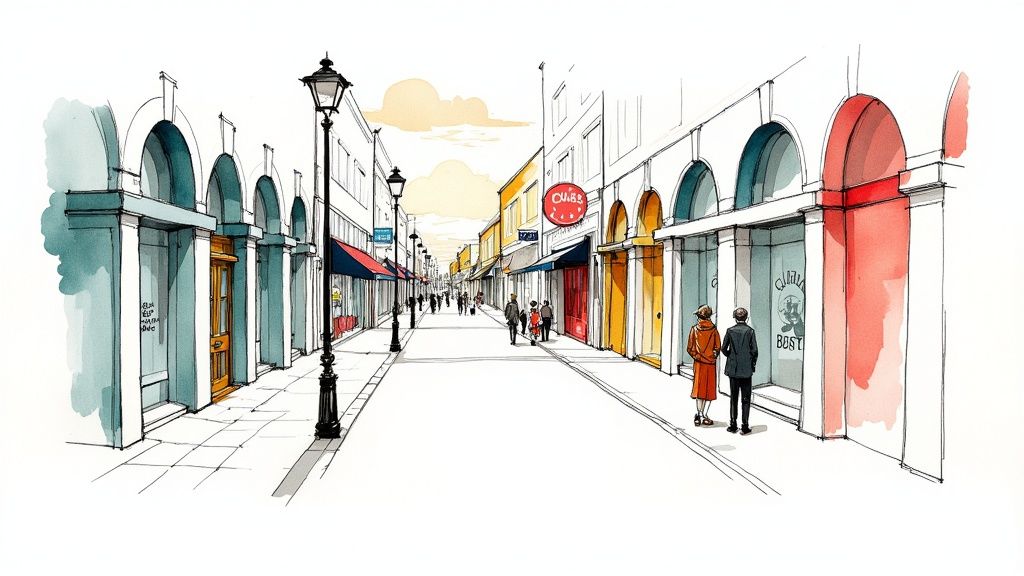
Carnaby Street is the pedestrianized heart of Soho's historic counterculture, forever etched in London's history as the epicenter of the 1960s "Swinging London" mod movement. This vibrant, colorful street remains a symbol of youth culture and fashion innovation, pioneered by designers like John Stephen and Vivienne Westwood. Today, it beautifully merges its rebellious heritage with a modern collection of independent boutiques, concept stores, and quirky eateries.
Immersive Experience & Off-the-Beaten-Path Exploration
To truly absorb the street's creative energy, explore the 14 smaller streets that branch off the main walkway, including the charming Newburgh Quarter. Here you will find vintage shops and specialist independent retailers away from the main crowds. For a taste of history, find a quiet table at Kingly Court, a three-story food and dining destination hidden through a small archway. It offers a stunning open-air courtyard perfect for escaping the Soho buzz while remaining in the center of the action. For a genuine off-the-beaten-path experience, look for the plaque marking the former location of the iconic Marquee Club, where music legends like The Rolling Stones and Jimi Hendrix played.
Practical Information for Your Visit
- Best Time to Visit: Arrive on a weekday morning to see the iconic arch and art installations without the crowds. The street truly comes alive during the Christmas season with its famously themed light displays.
- Transport: The closest Tube stations are Oxford Circus (Central, Victoria, and Bakerloo lines) and Piccadilly Circus (Piccadilly and Bakerloo lines), both just a short walk away.
- Pro Tip: Don't just shop. Carnaby Street is a living gallery, often featuring impressive art installations and hosting live music events. Check the official Carnaby London website for a schedule before your visit.
4. Regent Street
Regent Street is one of London's most elegant and architecturally significant shopping streets, curving gracefully from Piccadilly Circus to All Souls Church near Regent's Park. Designed by the visionary architect John Nash in the early 19th century under the patronage of the Prince Regent, it was one of the world's first purpose-built shopping streets. Its Grade II listed facades create a unified, grand panorama, making it a standout among the famous streets in London.
Immersive Experience & Off-the-Beaten-Path Exploration
To truly appreciate Nash's design, start your walk at Piccadilly Circus and look north to see the street’s famous curve unfold. While the big brands are the main draw, the real magic lies in the details. Don't miss the iconic Tudor-revival building housing Liberty London, famous for its unique fabrics and eclectic homewares. For a quieter moment, explore the small, elegant arcades that branch off the main street, such as the Princes Arcade, which offers a more intimate shopping experience. An offbeat tip is to visit the rooftop terrace of the Apple Store; it's a publicly accessible space offering a fantastic, free view down the length of the street.
Practical information for Your Visit
- Best Time to Visit: The Christmas season is magical, with spectacular light displays. For shopping, a weekday morning is less crowded.
- Transport: Piccadilly Circus and Oxford Circus Tube stations are at either end of the main shopping section, providing easy access.
- Pro Tip: Combine your visit with a trip to neighboring Soho for a vibrant contrast of independent restaurants and bars. Also, look for the RIBA (Royal Institute of British Architects) building at 66 Portland Place, just past the top of Regent Street, for more architectural splendor.
5. Baker Street
Baker Street is a legendary address in Marylebone, immortalized as the home of the world’s most famous detective, Sherlock Holmes. Originally laid out in the 18th century, this historic thoroughfare has become a pilgrimage site for fans of Arthur Conan Doyle's works. Beyond its literary fame, the street is a key artery in London, connecting Regent's Park to the north with the bustling shopping district of Marylebone to the south, perfectly blending cultural heritage with contemporary city life.
Immersive Experience & Off-the-Beaten-Path Exploration
To truly appreciate Baker Street, venture beyond the queue for the Sherlock Holmes Museum. A short walk away is Marylebone High Street, a charming and far more relaxed alternative to Oxford Street, featuring high-end boutiques, artisan delis, and cozy cafes. For a dose of culture, skip the main tourist traps and visit the Wallace Collection, a world-class art museum in a historic London townhouse that offers free admission. Another local secret is to wander into the beautifully restored courtyard of the Chiltern Firehouse for a coffee or cocktail in a chic, secluded setting.
Practical Information for Your Visit
- Best Time to Visit: Arrive at the Sherlock Holmes Museum right at opening time on a weekday to avoid the longest lines. The surrounding Marylebone area is pleasant at any time but especially vibrant on weekends.
- Transport: Baker Street station is one of London's oldest and best-connected Tube stations, served by five different lines (Bakerloo, Circle, Hammersmith & City, Jubilee, and Metropolitan), making it exceptionally easy to reach from anywhere in the city.
- Pro Tip: Look for the silhouette of Sherlock Holmes that adorns the tiles inside Baker Street station. It’s a small, often overlooked detail that adds to the area's unique character.
6. Brick Lane
Brick Lane is the vibrant, multicultural heart of East London, a street that pulses with creative energy and historical depth. Stretching through Shoreditch, this iconic thoroughfare is a living gallery of world-class street art, a haven for vintage fashion lovers, and the undisputed curry capital of London. Originally a path for brick and tile manufacturing in the 15th century, it has since been shaped by waves of French Huguenot, Irish, Jewish, and Bangladeshi immigrants, each leaving an indelible mark on its character.

Immersive Experience & Off-the-Beaten-Path Exploration
The real magic of Brick Lane unfolds on Sundays with the bustling Brick Lane Market, but locals know the best treasures are found in the labyrinthine alleys of the Old Truman Brewery. Here you’ll find independent designer markets, pop-up galleries, and food stalls away from the main crush. For an authentic taste of the area, grab a bagel from Beigel Bake, a 24/7 institution beloved by locals. A key cultural tip is to visit on a weekday morning to photograph the incredible street art by artists like Banksy and D*Face without the crowds. For a true local experience, explore the nearby Fournier Street to see beautifully preserved 18th-century Huguenot silk weavers' houses.
Practical Information for Your Visit
- Best Time to Visit: Sunday for the main market and vibrant atmosphere, or early weekday mornings for street art photography.
- Transport: The closest stations are Aldgate East (District, Hammersmith & City lines) and Shoreditch High Street (Overground). Liverpool Street Station is also a short walk away.
- Pro Tip: Don't be afraid to haggle respectfully at the vintage stalls. Also, explore the side streets like Hanbury Street for some of the most impressive and large-scale murals.
7. Bond Street
Bond Street is the epitome of London's luxury, an elegant thoroughfare in Mayfair where the world’s most prestigious brands reside. Comprising Old and New Bond Street, it has been the playground for aristocrats and the ultra-wealthy since the 18th century. Today, it’s a global beacon for high fashion, fine art, and exquisite jewelry, housing iconic names from Chanel and Cartier to the historic Sotheby's auction house.
Immersive Experience & Off-the-Beaten-Path Exploration
To experience Bond Street beyond the price tags, immerse yourself in its cultural offerings. Many visitors don't realize that the world-class art galleries dotted along the street and its tributaries are free to enter. Pop into the Halcyon Gallery or wander into the Royal Arcade for a glimpse of Victorian elegance. For a truly unique experience, check the schedule for Sotheby's pre-sale exhibitions. These events allow you to view museum-quality art, jewelry, and historical artifacts up close, completely free of charge. For an offbeat cultural detour, locate the quiet and historic St George's Hanover Square, a beautiful church where many famous figures, including Theodore Roosevelt, were married.
Practical Information for Your Visit
- Best Time to Visit: Weekday afternoons offer a vibrant atmosphere without the weekend crowds. Visiting during the summer or New Year sales can make luxury a little more accessible.
- Transport: Bond Street and Green Park Tube stations are the most convenient access points. Both are just a short, pleasant walk away.
- Pro Tip: Look for the "Allies" statue of Franklin D. Roosevelt and Winston Churchill sitting on a bench on New Bond Street. It's a popular photo spot and a charming, often-missed historical tribute.
8. Portobello Road
Portobello Road, winding through the heart of Notting Hill, is one of the most famous streets in London, renowned for its vibrant antiques market and bohemian spirit. The street, lined with iconic pastel-coloured Victorian townhouses, truly comes alive on Saturdays when it hosts the world’s largest antiques market. Its enduring charm was famously captured in the 1999 film Notting Hill, but its soul lies in the eclectic mix of antique stalls, independent shops, and diverse food vendors that define its unique character.

Immersive Experience & Off-the-Beaten-Path Exploration
For the best antiques, arrive before 10 am on a Saturday to browse as vendors are setting up. True local immersion means venturing beyond the main market; explore the quieter side streets like Westbourne Grove for high-end boutiques and charming cafes. For a cinematic treat, catch an independent film at the historic Electric Cinema, one of the UK's oldest working cinemas, complete with plush armchairs and cashmere blankets. For a true off-the-beaten-path gem, walk to the end of Portobello Road near the Westway to discover the more local, less-touristy section of the market selling vintage clothes and bric-a-brac.
Practical Information for Your Visit
- Best Time to Visit: Saturday mornings for the full market experience, or weekdays for a relaxed stroll through the neighborhood's permanent boutiques.
- Transport: Use Notting Hill Gate (Central, Circle, District lines) or Ladbroke Grove (Hammersmith & City, Circle lines) Tube stations for easy access.
- Pro Tip: While many vendors now accept cards, bring cash for smaller stalls and better bargaining power. Also, the market gets incredibly crowded, so keep your valuables secure.
To discover more unique neighborhood experiences, explore our guide to London beyond the tourist trail and uncover the city's hidden gems.
9. Charing Cross Road
Charing Cross Road is London's literary heart, a world-famous destination for bibliophiles. immortalized in Helene Hanff's book 84, Charing Cross Road, this street is a sanctuary of new, second-hand, and antiquarian bookshops. Stretching from Trafalgar Square to St Giles' Circus, it offers a quieter, more intellectual atmosphere compared to its West End neighbours, representing the city's rich literary heritage and attracting readers from across the globe.
Immersive Experience & Off-the-Beaten-Path Exploration
To truly immerse yourself in the street's character, venture beyond the iconic Foyles flagship store. Duck into the smaller, specialist shops like Gosh! Comics for graphic novels or Quinto Bookshop for rare and second-hand treasures. For a true local experience, ask the knowledgeable booksellers for their personal recommendations; they often highlight obscure gems you won't find on bestseller lists. For a hidden cultural spot, find Cecil Court, a magical pedestrian alley off the main road filled with antiquarian bookshops and print sellers, often nicknamed 'Bookseller's Row'.
Practical Information for Your Visit
- Best Time to Visit: Weekday afternoons are ideal for quiet browsing, allowing you to peruse the shelves without the weekend crowds.
- Transport: The street is easily accessible via Leicester Square (Northern and Piccadilly lines) and Tottenham Court Road (Central, Northern, and Elizabeth lines) Tube stations.
- Pro Tip: Create a wishlist of books you're searching for before you go. The sheer volume can be overwhelming, and having a list helps focus your hunt in the various specialist stores.
10. Savile Row
Savile Row is the undisputed global epicentre of bespoke tailoring, a modest Mayfair street synonymous with unparalleled craftsmanship and sartorial elegance. For over two centuries, its legendary tailoring houses have dressed royalty, world leaders, and cultural icons, making it one of the most famous streets in London for discerning gentlemen. This is not a place for fast fashion; it's a living museum of a meticulous art form, where a "bespoke" suit is born from a pattern cut for a single client.
Immersive Experience & Off-the-Beaten-Path Exploration
To truly appreciate Savile Row, look beyond the price tags. Many of the heritage houses, like Henry Poole & Co, are welcoming to those genuinely interested in the craft. Instead of just window shopping, consider booking a tour or consultation in advance to understand the intricate process. For a less formal experience, visit on a quiet weekday and simply observe the artisans at work through the grand windows. A hidden gem is the nearby Burlington Arcade, an elegant covered shopping gallery that offers a similar feel of old-world luxury. For a real off-the-beaten-path moment, find the plaque at 3 Savile Row, marking the location of The Beatles' final public performance on the rooftop of Apple Corps.
Practical Information for Your Visit
- Best Time to Visit: Weekday mornings or early afternoons provide a quieter atmosphere, ideal for observing the tailors at work.
- Transport: The closest Tube stations are Piccadilly Circus (Piccadilly and Bakerloo lines) and Green Park (Jubilee, Piccadilly, and Victoria lines), both a short walk away.
- Pro Tip: Do your research. Each tailoring house has a unique "cut" and specialty. Knowing whether you prefer the structured shoulder of Huntsman or the softer silhouette of Anderson & Sheppard will enhance your appreciation.
Top 10 London Streets Comparison
| Street | Atmosphere & Quality (⭐) | Visiting Complexity (🔄) | Cost / Accessibility (⚡) | Typical Experience / Impact (📊) | Ideal Use Cases (💡) |
|---|---|---|---|---|---|
| Oxford Street | High-energy, large-scale retail variety ⭐⭐⭐ | Very busy; long crowds and slow movement 🔄 | Moderate–high prices; excellent transport links ⚡ | Mass retail draw; strong commercial and seasonal impact 📊 | Major-brand shopping, window-shopping, seasonal events 💡 |
| The Strand | Historic, refined cultural and hospitality scene ⭐⭐ | Compact, easy to navigate but touristy near attractions 🔄 | High-end dining/accommodation; central access ⚡ | Cultural & theatrical hub with riverside appeal 📊 | Theatres, luxury dining, Somerset House visits 💡 |
| Carnaby Street | Trendy, youthful boutique vibe with 1960s heritage ⭐⭐ | Short pedestrianised lane; can be densely crowded 🔄 | Moderate–high (boutiques); very walkable ⚡ | Fashion-forward, photogenic streetscape and events 📊 | Independent fashion, street culture, nightlife 💡 |
| Regent Street | Architecturally grand, premium retail experience ⭐⭐⭐ | Long, well-designed avenue; busy pedestrian flows 🔄 | High prices; superb transport and continuity ⚡ | Flagship shopping and strong visual/architectural impact 📊 | Flagship stores, architecture walks, seasonal displays 💡 |
| Baker Street | Mixed literary/cultural and commercial atmosphere ⭐⭐ | Easy to access; tourist clustering at key sites 🔄 | Moderate costs; major transport interchange ⚡ | Literary tourism (Sherlock) combined with everyday retail 📊 | Museum visits, transport hub, family sightseeing 💡 |
| Brick Lane | Bohemian, multicultural, street-art–driven energy ⭐⭐ | Market layouts vary; busy weekends and winding streets 🔄 | Generally affordable dining; variable shopping costs ⚡ | Creative/culinary hotspot; strong cultural and photographic impact 📊 | Street art walks, curry houses, vintage markets (Sundays) 💡 |
| Bond Street | Ultra-luxury, highly polished retail environment ⭐⭐⭐⭐ | Straightforward to navigate but exclusive atmosphere 🔄 | Extremely expensive; easily accessible by Tube ⚡ | High-value luxury retail and art-market influence 📊 | Luxury shopping, galleries, high-end people-watching 💡 |
| Portobello Road | Colourful, antique-focused bohemian market ⭐⭐ | Very crowded Saturdays; best early or weekdays 🔄 | Variable — antiques can be costly; market bargains ⚡ | Antique trade and photogenic streetscape; tourism spike on market days 📊 | Antique hunting, photography, Notting Hill ambience 💡 |
| Charing Cross Road | Dense literary culture; specialist bookshops ⭐⭐ | Narrow street of shops; easy to browse but can feel cramped 🔄 | Generally affordable; rare books can be expensive ⚡ | Premier destination for book discovery and intellectual tourism 📊 | Book collecting, specialist browsing, literary events 💡 |
| Savile Row | World-class bespoke tailoring; exceptional quality ⭐⭐⭐⭐ | Appointment-driven, bespoke process with long lead times 🔄 | Extremely expensive; selective access ⚡ | High prestige tailoring with long-term cultural/commerce impact 📊 | Bespoke suits, heritage tours, specialist craftsmanship visits 💡 |
Your Next Chapter in London's Story
We've journeyed through London's iconic arteries, from the high-fashion pulse of Bond Street to the vibrant, spice-scented chaos of Brick Lane. Each of these famous streets in London offers more than just a route from one point to another; they are living museums, each with a distinct personality and a story to tell. By now, you know that the true magic isn't just in visiting these places, but in understanding how to experience them. It's about looking beyond the storefronts of Oxford Street to find the historic pubs tucked away in a side alley or knowing the best time to visit Portobello Road to avoid the crowds and connect with the vendors.
This guide was designed to be a launchpad, not a rigid itinerary. The real adventure begins when you use these insights to forge your own path. True immersion happens in the unplanned moments: striking up a conversation with a bookseller on Charing Cross Road, discovering a hidden courtyard just off Regent Street, or letting your curiosity lead you to a street artist's impromptu performance. These are the experiences that transform a trip into a collection of personal stories.
Weaving Your Own London Narrative
The key takeaway is that every street holds multiple layers. A single stroll can encompass centuries of history, cutting-edge fashion, and profound cultural shifts. To truly connect with the city's soul, consider these final steps:
- Go Beyond the Checklist: Instead of trying to see every famous street in a single day, choose one or two that resonate with you. Dedicate quality time to exploring their nooks and crannies.
- Embrace Spontaneity: Use our transport tips to get to a neighborhood, but then put your phone away. Let the architecture, sounds, and smells guide your next turn. The most memorable discoveries are often the ones you weren't looking for.
- Engage with Locals: Ask a Savile Row apprentice about their craft or a Brick Lane vendor about their family's recipes. These conversations are the threads that connect you to the authentic fabric of London life.
By adopting this mindset, you move from being a tourist to becoming an active participant in the city's ongoing story. You'll find that the true essence of London isn't found in a single landmark but in the dynamic energy that flows through its famous streets. If you're inspired to share London's charm with future guests, explore how to get started on creating a perfect Airbnb welcome book that highlights local gems like these streets. This approach allows you to pass on the gift of local discovery.
Ultimately, these streets are a canvas. We’ve provided the map and the color palette, but the masterpiece you create will be uniquely yours. Let your curiosity be your compass, and you will uncover a London that is endlessly fascinating and deeply personal.
Ready to turn your London daydreams into a perfectly planned reality? CoraTravels specializes in crafting bespoke travel itineraries that dive deep into the culture and character of destinations like London. Visit CoraTravels to start building a journey that goes beyond the famous streets and into the heart of the city.