Forget the tourist traps hawking sangria on La Rambla. This guide is your key to unlocking the real food in Barcelona, a city where life pulses to the rhythm of deeply rooted culinary rituals. We're taking you off the beaten path, away from the crowds, and into the neighborhood spots where you can have an immersive experience. This is your roadmap to eating like you've lived here for years, turning your trip into a full cultural immersion, one delicious bite at a time.
Beyond Paella A True Taste of Barcelona
Barcelona’s food scene is so much more than a checklist of famous dishes; it’s the city’s living, breathing identity. The real magic happens far from the crowded hotspots, tucked away in neighborhood taverns, bustling local markets, and family-run bodegas where the city’s true flavors are hiding in plain sight. This guide is about showing you how to find them for a full cultural experience.
You won't just learn what to eat. You'll understand how, when, and where to eat it—from mastering the institution of the midday ‘menú del día’ to embracing the sacred weekend vermouth hour outside of main touristic places. It’s about learning the cadence of the city through its meals, guided by local knowledge.
A Legacy of Flavor
The city's obsession with food is nothing new. Barcelona serves up around one million meals every single day, a tradition that stretches back to its medieval golden age when Catalan cooks were giants of European gastronomy. We're talking cookbooks like the famous 'Sent Soví' from 1324 spreading their influence across the continent. That legacy is alive and well in the city's 38 fresh food markets.
To really get Catalan food, you have to know its building blocks. No local guide to authentic food in Barcelona would be complete without paying respect to world-class Spanish olive oil, the absolute cornerstone of its culinary identity. This "liquid gold" is the foundation for countless recipes.
The real magic of Barcelona's food culture isn't found just on a plate. It’s in the lively chatter of a tapas bar, the shared bottle of vermouth among friends, and the daily ritual of shopping at a neighborhood market. This is the immersive experience you're looking for.
This is about connecting with the city on a much deeper level. If you're passionate about trips that revolve around food, you should check out our guide to the best places to visit for foodies.
Understanding the Local Dining Rhythm
To truly have an immersive experience with Barcelona’s food scene, the first thing you have to do is ditch your own internal clock and sync up with local time. Seriously. It’s not just about what you eat, but when you eat it. If you show up for dinner at 7 PM, you’ll probably be dining with other tourists in an empty room. Mastering the city's daily rhythm is step one to eating like a local and getting off the beaten path.
First, forget everything you know about a big, savory breakfast. For most locals, the day kicks off with a simple esmorzar: a strong café con leche and maybe a croissant or a xuixo (a deep-fried, cream-filled pastry), usually grabbed on the way to work. It’s a quick, light start meant to get you out the door.
This timeline shows just how deep these traditions run, connecting Barcelona’s medieval culinary roots to the vibrant market culture that shapes the city's daily eating rituals today.
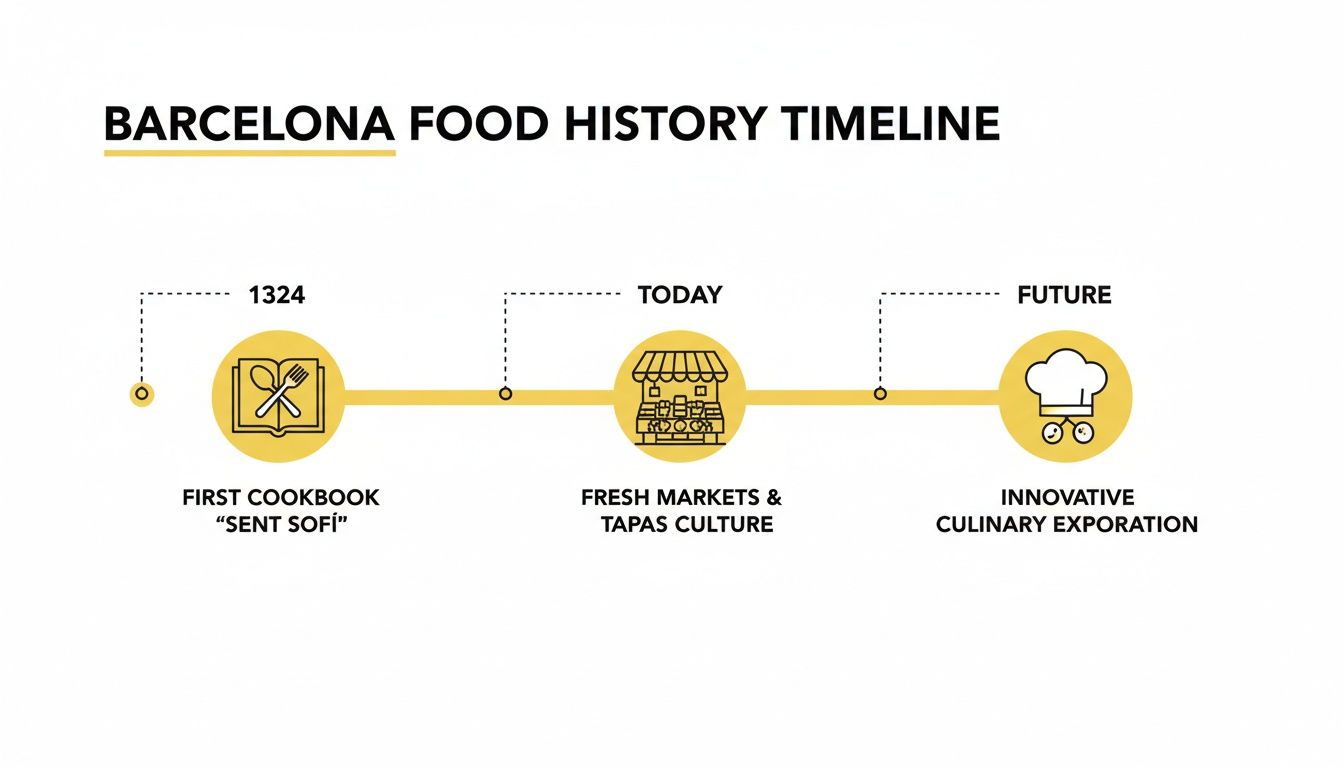
It’s clear that today’s buzzing food scene didn't just appear overnight; it’s built on centuries of history, which is what makes eating here a full cultural experience.
The Mid-Morning and Midday Meals
That light breakfast is really just a prelude to the real morning meal around 11 AM. It's called esmorzar de forquilla, which literally means "fork breakfast," a tradition that was once essential for manual laborers but is still loved by many. This is where you'll find heartier stuff like botifarra sausage with white beans or a rich tripe stew—serious fuel to get you through to a late lunch.
But the main event of the day, without question, is dinar, or lunch. This is not some sad sandwich scarfed down at a desk. In Barcelona, lunch is a leisurely affair enjoyed between 2 PM and 4 PM. This is prime time for the city's best-kept secret: the menú del día. For a fixed price, usually between €12 and €18, you get a full three-course meal, a drink, and bread. It’s a cultural institution and, hands down, the best way to eat incredibly well outside of main touristic places.
The 'menú del día' isn't just a budget option; it's a window into the local culture. It’s a moment to pause, socialize, and savor a proper meal, reflecting a work-life balance that prioritizes a midday break. It is a truly immersive experience.
The Evening Rituals Unfold
After a big lunch, the evening starts slowly. Around 5 or 6 PM, you'll see locals having a merienda, a small snack to bridge the long gap until dinner. It could be anything from a piece of fruit to a pastry or a small sandwich. It’s especially common for kids after school, but plenty of adults need that little pick-me-up, too.
As the sun starts to dip, another beloved ritual takes over: fer el vermut. This is the classic aperitif hour. Friends gather for a glass of vermouth—often on tap, served with an orange slice and an olive—paired with simple snacks like potato chips, olives, or cockles. The whole point is to whet your appetite and socialize before dinner. It’s a quintessentially Catalan experience, especially on the weekends.
Finally, dinner, or sopar, happens late. Most locals don’t even start thinking about dinner until after 9 PM, with restaurants really coming to life around 10 PM. The meal itself is usually lighter than lunch, often just a few shared tapas plates or a smaller main dish. Leaning into this late schedule is the key to finding those atmospheric, buzzing spots filled with local energy.
To help you get into the swing of things, here’s a quick guide to the daily food flow in Barcelona. Following this schedule will make you feel less like a visitor and more like you're having a full cultural experience.
The Daily Food Rituals of Barcelona
| Meal Time | Catalan Name | Typical Time | What Locals Eat |
|---|---|---|---|
| Early Breakfast | Esmorzar | 8 AM - 10 AM | Coffee and a pastry (croissant, xuixo) |
| Second Breakfast | Esmorzar de Forquilla | 10 AM - 12 PM | Hearty dishes like sausage and beans, stews |
| Lunch | Dinar | 2 PM - 4 PM | The main meal; often the menú del día |
| Afternoon Snack | Merienda | 5 PM - 6:30 PM | A small sandwich, fruit, or pastry |
| Aperitif | Fer el Vermut | 6 PM - 8 PM | Vermouth with olives, chips, or canned seafood |
| Dinner | Sopar | 9 PM - 11 PM | Lighter than lunch; typically tapas or a small plate |
Syncing up with these times is your ticket to the best food experiences. You’ll find restaurants at their most vibrant, kitchens at their sharpest, and you'll be sharing the space with Barcelonans doing what they do every day.
Exploring Markets Beyond La Boqueria
Everyone knows La Boqueria. It’s an undisputed icon, but if you want an immersive experience, you have to venture beyond its packed-out aisles. To get off the beaten path, this local guide will show you the neighborhood markets. These are the true epicenters of daily life, where Barcelonans actually shop, catch up on gossip, and grab a bite outside of main touristic places.
Think of these markets as the city's pantries. They offer a direct line to the heart of Catalan gastronomy, bypassing the tourist filter for a full cultural experience.
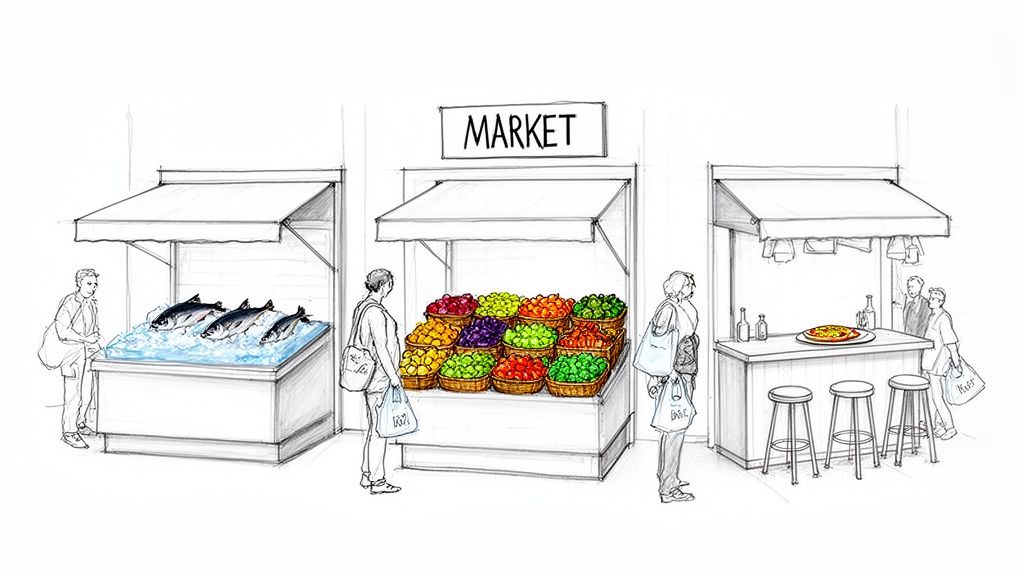
La Boqueria is like the city's magnificent central train station—impressive, but not where the quiet rhythm of daily life unfolds. The neighborhood markets are the smaller, local stops where you can feel the community's pulse. This is where you’ll find a more relaxed pace and a genuine connection to the food in Barcelona.
La Boqueria, an 800-year-old pilgrimage site for food lovers, can see up to 60,000 visitors daily. But it's just one of the city's 38 fresh food markets. These off-the-beaten-path hubs are where fishmongers hawk prized Palamós red prawns and where market bars serve tapas made with ingredients sourced just feet away. These vital centers are what truly power the city’s food scene. You can learn more about how these historic markets shape Catalan cooking and eating on llull.cat.
Discovering the Authentic Market Experience
Each neighborhood market, or mercat, has its own personality. Stepping inside one is like getting a hyperlocal snapshot of the community it serves.
Mercat de Sant Antoni: After a massive renovation, this gorgeous iron-clad market is now a three-in-one marvel. It’s part fresh food hall, part clothing market, and on Sundays, it hosts a fascinating book and coin market under its eaves. It’s far less frantic than La Boqueria but every bit as impressive.
Mercat de Santa Caterina: You can’t miss its wavy, mosaic-covered roof. Located in El Born, this market is a local favorite for its high-quality produce and fantastic butcher stalls. It's an architectural gem and a genuine neighborhood hub.
Mercat de la Concepció: Tucked away in the Eixample neighborhood, this market is famous for its breathtaking flower stalls that spill right out onto the street. Inside, it’s a peaceful hall with a top-notch selection of fresh goods—a truly off-the-beaten-path experience.
The real charm of a Barcelona market isn't just in what's for sale; it's in the interactions. Watch how locals greet their favorite vendors by name, ask for advice on what looks best that day, and simply take their time. This is shopping as a social ritual, a key part of an immersive cultural experience.
Market Etiquette and Insider Tips
Navigating a local market with confidence is all about understanding it's a place of relationships, not a supermarket. Point at what you want instead of grabbing the produce yourself—the vendor knows their stock and will pick out the best for you.
A simple "bon dia" (good day) goes a long way in setting a friendly tone.
The best time to visit is in the morning, when the stalls are piled high and buzzing with energy. Always look for what’s in season. In late winter, you’ll see mounds of calçots (a type of sweet green onion), and in spring, the stalls will be overflowing with artichokes. This is the rhythm that dictates the menus of the best restaurants in the city.
The Magic of the Market Bar
Maybe the most essential part of the market experience is a stop at a bar de mercat. These are small, often counter-only bars tucked right among the stalls, serving food made with ingredients pulled directly from their neighbors. It doesn’t get any fresher than this.
Pull up a stool for a mid-morning snack or a full-on lunch. A classic move is to order a glass of cava paired with a plate of sizzling grilled prawns or a simple but perfect sandwich. It's here, amidst the clatter of plates and the calls of vendors, that you'll get the most authentic—and delicious—taste of local life.
A Food Lover's Map of Barcelona's Neighborhoods
To really get the food in Barcelona, you have to stop thinking of it as one big city. Instead, picture it as a cluster of distinct villages, each with its own flavor. Every neighborhood—or barri—tells a story through its tiny bars and family-run restaurants. This local guide will help you navigate these unique food scenes, getting you off the tourist circuit and into the real, delicious heart of the city for an immersive experience.
Think of the city as a giant cookbook. Each neighborhood is a different chapter, full of its own signature recipes and local secrets. The only way to read the whole book is to wander from one chapter to the next.
El Born: The Historic Heart with a Modern Twist
El Born is a beautiful maze of medieval streets, but its food scene is completely in the now. Here, ancient stone walls are home to creative tapas bars and stylish wine spots. It’s that perfect mix of old-world atmosphere and contemporary energy, a place where history provides the backdrop for modern culinary adventures.
This is the perfect neighborhood for a night of aimless wandering. You could start with a glass of Catalan wine at a rustic spot like La Vinya del Senyor, right in the shadow of the stunning Santa Maria del Mar church, then drift to another place for inventive small plates.
- Vibe: Trendy, historic, and buzzing, especially after dark.
- Must-Try: Look for modern takes on classic tapas. Chefs here love playing with high-quality local ingredients to create something new.
- Best For: A sophisticated tapas crawl, pre-dinner drinks, or finding a romantic spot tucked away in a narrow alley.
Gràcia: A Bohemian Village with a Local Soul
Once its own separate town, Gràcia still feels like a village that just happens to be inside a major city. Life revolves around its leafy squares (plaças), which are lined with relaxed cafés and restaurants. The food here is honest and authentic. This is the definition of an off-the-beaten-path neighborhood perfect for a full cultural experience.
Gràcia is where you go to hit the brakes. Settle in for a long, lazy lunch in a sun-drenched square, or get lost in the side streets to find tiny spots serving anything from traditional Catalan stews to amazing Lebanese food. It’s a genuine melting pot. To explore more neighborhoods like this, check out our guide on seeing Barcelona beyond Las Ramblas.
Gràcia’s culinary soul lives in its plaças. These squares are the city’s outdoor living rooms, where friends and families meet for a vermouth, a coffee, or a simple, satisfying meal. Eating here is less about the food itself and more about plugging into the rhythm of the community.
Poble Sec: The Epicenter of the Tapas Crawl
If you’re after a high-energy, totally authentic, and wallet-friendly food night, make a beeline for Poble Sec. Specifically, you want Carrer de Blai. This pedestrian-only street is Barcelona's undisputed pintxos capital, an off-the-beaten-path gem beloved by locals. Bar after bar lines the pavement, their counters groaning under the weight of colorful, bite-sized snacks.
The ritual couldn’t be simpler. You grab a plate, load it up with whatever looks good, and just hang on to your toothpicks. When you're done, the bartender just counts your sticks to figure out the bill. With most pintxos costing just €1 to €3, it's a ridiculously fun way to have an immersive experience trying a ton of different flavors.
Barceloneta: Fresh Seafood by the Sea
As the city’s old fishing quarter, it’s a no-brainer that Barceloneta is the go-to spot for seafood. Sure, some restaurants on the beach can be touristy, but the neighborhood's backstreets are packed with no-frills bodegas and classic restaurants serving whatever the boats brought in that morning. These are the spots to find for a true local experience.
This is where you come for a proper seafood paella or its delicious noodle-based cousin, fideuà. The trick is to look for the places crammed with locals—they usually have simple decor because all the focus is on the incredible quality of the food. For a truly authentic experience, find a small tavern and order grilled sardines, fried calamari, or the legendary bomba de la Barceloneta—a seriously good potato-and-meat croquette "bomb."
Thinking about food through its neighborhoods is the key to unlocking the true variety and character of food in Barcelona. It turns every meal into an adventure.
Essential Catalan Dishes You Must Try
To really get the soul of food in Barcelona, you have to push past the tourist-trap menus and dive into the dishes locals have been eating for generations. Catalan cuisine is its own thing, totally distinct from the rest of Spain, with a rich history and flavors that tell the story of the land here—from the mountains right down to the sea. This is your local guide to tasting that heritage.
This isn't just about culture; it’s a huge economic engine. Catalonia drives 23% of Spain's total food sector net sales, making it a global reference point for the Mediterranean Diet. That economic muscle is built on centuries of tradition, from the 14th-century 'Llibre de Sent Soví' cookbook to today's culinary rockstars.
The Simple Genius of Pa amb Tomàquet
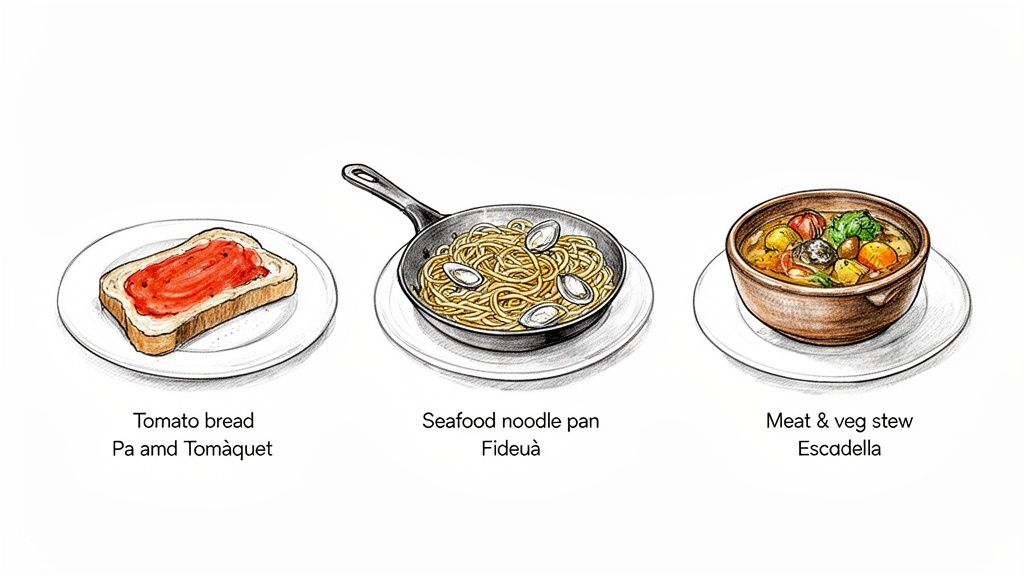
First things first. Let's talk about the absolute cornerstone of every Catalan table: Pa amb Tomàquet (bread with tomato). To an outsider, it might just look like tomato toast, but for a local, it's a non-negotiable ritual. It’s the perfect example of how Catalan cooking can take simple, quality ingredients and turn them into something unforgettable.
It’s just a slice of good, hearty bread (pa de pagès), toasted, then rubbed with a raw garlic clove and smeared with a fresh, ripe tomato. A generous drizzle of extra virgin olive oil and a pinch of salt finish it off. You’ll find it with almost every meal—sometimes it’s made for you, but often, they’ll just bring you the ingredients so you can do it yourself.
Hearty Dishes from Land and Sea
When you’re ready for something more substantial, look for dishes that embrace the region's "mar i muntanya" (sea and mountain) philosophy. This concept is all about combining ingredients from the coast with those from the inland mountains, creating an incredible depth of flavor you won’t find anywhere else.
Escudella i Carn d'Olla: This is pure Catalan comfort food. It's a massive meat and vegetable stew, traditionally a Christmas thing but honestly enjoyed all winter. It’s a two-course meal: first comes the rich broth served with big pasta shells (galets), followed by a huge platter of all the meats and veggies that were cooked in it.
Fideuà: People often mistake this for paella, but fideuà is a spectacular dish in its own right. Instead of rice, it uses short, thin noodles that are toasted and then cooked in a rich seafood broth until crispy on the bottom. It’s usually loaded with prawns, cuttlefish, and mussels and served with a big dollop of garlicky aioli. For the real deal, you have to get this at a seaside spot in Barceloneta.
The best way to find these traditional dishes is to venture into a 'casa de menjars' or a 'masia' (a rustic farmhouse restaurant, often just outside the city). These off-the-beaten-path establishments are where recipes have been passed down for generations and the focus is entirely on authentic flavor.
Finding the Right Dish in the Right Place
Knowing what to eat is only half the battle; knowing where is just as important. Different spots specialize in different things, and matching your craving to the right venue is the key to a great meal.
For a true local, immersive experience, find a xampanyeria in Barceloneta. These are bustling, often standing-room-only bars that pour cheap and cheerful glasses of cava alongside simple, perfect snacks like cured sausages or Cantabrian anchovies.
And while you're digging into Barcelona's unique Catalan flavors, it helps to understand where it all fits in the bigger picture of Spanish cuisine. Knowing the context gives you a much richer appreciation for how regional differences shape the country’s incredible culinary world.
So, Are You Ready to Eat Like a Local?
You’ve got the local guide's inside track now. You know that an immersive experience of Barcelona’s food scene isn't about ticking off a list of dishes—it’s about tuning into the city's rhythm. The real culinary soul of this place lives in its neighborhood chatter, the energy of its local markets, and in those timeless Catalan recipes passed down through generations.
Your first step? Forget what you know about meal times. A late lunch and an even later dinner is non-negotiable here. From there, it's about diving into the barrios. Each one has its own distinct flavor, cherished dishes, and off-the-beaten-path spots that locals would queue around the block for. When you eat this way, a simple meal becomes the story you'll tell when you get home.
The real magic happens when you wander off the tourist trail. Let our local guide's advice lead you to that tiny bodega for a glass of vermouth, that neighborhood market stall for a mid-morning snack, or a family-run joint tucked away in a quiet plaça outside of main touristic places.
These are the moments that stick with you. You're ready to explore the incredible food in Barcelona, not with a map, but with the confidence of someone who gets it. So go on—savor the real flavors, listen to the stories bubbling up from every kitchen, and raise a glass. Your full cultural experience starts now.
Your Barcelona Food Questions Answered
Diving into a new city's food scene always brings up a few questions. From local customs to just trying to figure out the menu, a little insider knowledge can make all the difference between a great meal and a tourist trap.
Here are some straight-up, practical answers to the most common questions about eating your way through Barcelona. Think of it as your final cheat sheet before you hit the streets.
Do I Need to Tip in Barcelona Restaurants?
This is probably the number one question from travelers, and the short answer is no. Tipping isn't mandatory or even widely expected in Barcelona. Unlike in places like the US, restaurant staff here earn a full living wage, so tips aren't a critical part of their income.
That said, if the service was genuinely fantastic, a small gesture is always appreciated. Leaving about 5-10% of the bill is considered very generous. For a casual coffee or a round of drinks, most locals just round up the bill to the nearest euro or leave a few coins. You’ll almost never see a dedicated tip line on a credit card receipt, so leaving a little cash is the way to go.
What's the Real Difference Between Tapas and Pintxos?
People often use these terms interchangeably, but they’re two totally different things with their own rituals. Getting it right is a quick way to feel less like a tourist.
- Tapas are basically small plates of food meant for sharing. They can be anything from a simple bowl of olives or a slice of Spanish omelet (tortilla de patatas) to more complex dishes like sizzling garlic shrimp (gambas al ajillo).
- Pintxos (or pinchos) come from the Basque Country and are much smaller, usually single-bite snacks. The classic pintxo is served on a slice of bread and held together with a toothpick (un palillo).
You’ll find streets lined with pintxos bars, especially Carrer de Blai in the Poble Sec neighborhood. The experience is brilliantly informal: you just grab a plate, help yourself to whatever looks good on the bar, and hold onto your toothpicks. When it's time to pay, the bartender just counts your toothpicks to tally up the bill.
Local Tip: Don't walk into a pintxos bar and ask for "tapas." It’s a dead giveaway. Just embrace the local flow—grab a plate, point at what you want, and enjoy the casual, stand-up vibe of a proper pintxos crawl.
Is It Hard to Find Good Vegetarian or Vegan Food in Barcelona?
Not at all. While traditional Catalan food is definitely heavy on meat (carn) and seafood (marisc), Barcelona has a seriously creative and growing vegetarian and vegan scene. Over the last decade, the city has become incredibly friendly to plant-based diets.
You'll find dozens of amazing, fully vegetarian and vegan restaurants, especially in neighborhoods like Gràcia, El Born, and El Raval. But even beyond those specialty spots, most traditional restaurants now clearly mark vegetarian options on their menus.
Plus, many of the absolute best Catalan dishes are naturally vegan or easily can be:
- Pa amb Tomàquet: The iconic tomato bread is a vegan's best friend.
- Escalivada: A smoky, delicious dish of roasted eggplant, peppers, and onions.
- Pimientos de Padrón: Small green peppers, flash-fried and salted—just double-check they’re cooked in olive oil.
It never hurts to be clear about your needs. A simple "sin jamón, por favor" (without ham, please) is a useful phrase, as ham has a funny way of showing up as a surprise garnish on things.
At CoraTravels, we believe that understanding these small cultural details is what transforms a good trip into a great one. Our guides are built on local knowledge to help you navigate new places with the confidence of an insider. Discover more and start planning your next authentic adventure at https://coratravels.com.