South Dakota's landscape is etched with more than just prairies and mountains; it's a living museum of boom, bust, and bygone eras. The silent remnants of these once-thriving communities offer a direct connection to the state's rugged history. This guide moves beyond the typical tourist trails, providing an immersive, off-the-beaten-path look into the heart of these abandoned settlements.
Here, you will find a curated list of notable ghost towns in South Dakota, each presented with practical, actionable insights for respectful exploration. We will cover not just the history, but the essential details for planning a visit:
- Access and Permissions: Learn which sites are on public land, which require permission, and how to navigate private property with respect.
- Practical Visiting Details: Get specific tips on the best seasons to visit, road conditions, and what to pack for a safe and memorable trip.
- Local Context and Etiquette: Understand the unwritten rules of visiting these fragile historical sites to ensure they are preserved for future generations.
This is more than a simple list; it's a blueprint for an authentic adventure. Prepare for an immersive journey into the state's forgotten corners, where every weathered plank and rusted nail has a tale to tell.
1. Deadwood
While many ghost towns in South Dakota are just whispers on the prairie, Deadwood is a roaring echo of the Old West. Founded in 1876 during the Black Hills Gold Rush, it was a lawless boomtown synonymous with figures like Wild Bill Hickok and Calamity Jane. Today, it’s not entirely abandoned; instead, it's a National Historic Landmark that masterfully balances preservation with tourism. This unique status allows visitors to walk through authentic 19th-century streets while still having modern amenities nearby, making it the most accessible and immersive ghost town experience in the state.
Immersive Local Experience
Deadwood offers a rare chance to step directly into a living history book. The entire town is a designated National Historic District, preserving its original gold rush-era architecture. Beyond the main street, you can explore the preserved structures and ruins that hint at its wilder past.
- Mount Moriah Cemetery: This is no ordinary graveyard. Hike up the hill to pay respects at the final resting places of Wild Bill Hickok, Calamity Jane, and Seth Bullock. The Victorian-era tombstones and scenic overlook provide a somber, beautiful connection to the town's legendary inhabitants.
- Days of '76 Celebration: If you visit in late July, you can experience this award-winning annual rodeo and parade, which has been celebrating Deadwood's heritage for over a century.
Off-the-Beaten-Path & Visiting Tips
To escape the crowds and find a more authentic atmosphere, consider visiting during the shoulder seasons (spring or fall). The crisp air and fewer tourists make exploring the historic streets and surrounding hills a more personal experience.
Local Insight: For a truly unique perspective, take a guided historical tour. Local guides often share lesser-known stories about the town's hauntings, hidden tunnels, and notorious characters that you won't find in standard guidebooks. Exploring the history of places like this is a key part of appreciating our cultural past; for more on this topic, you can read about historical heritage sites at coratravels.com.
For an off-the-beaten-path photo opportunity, find the overlook on Mt. Roosevelt Trail for a stunning panoramic view of Deadwood Gulch, capturing the historic town nestled in the Black Hills.
2. Garnetiferous
Far from the gold-crazed frenzy of its neighbors, Garnetiferous offers a look into a more niche chapter of Black Hills mining history. Established in the late 1800s, this small settlement was unique among ghost towns in South Dakota for its focus on gemstone extraction, specifically garnets. While gold prospectors swarmed the region, the residents here carved out a living mining these deep red gems. The town’s eventual decline, tied to shifting markets and the high cost of extraction, left behind a quieter, more subtle ruin field than its boisterous gold rush counterparts.

Immersive Local Experience
Visiting Garnetiferous is less about seeing intact buildings and more about connecting with the raw, rugged landscape that defined its existence. The experience is an active one, requiring exploration and a keen eye to spot the remnants of a community built around a specialized industry.
- Explore the Mine Tailings: Carefully hike around the old mining areas where you can still find small, low-grade garnets in the leftover rock piles (tailings). This hands-on connection to the town's purpose is a powerful way to understand its history.
- Identify Foundation Ruins: The remains of cabins and processing structures are scattered throughout the forested area. Identifying these stone foundations helps you piece together the layout of the original settlement and imagine daily life for its miners.
Off-the-Beaten-Path & Visiting Tips
Garnetiferous is a true off-grid destination with no signs or services. Preparation is crucial for a safe and respectful visit. Ensure you have detailed maps or GPS coordinates, as the site is not marked on standard tourist maps.
Local Insight: The ground is uneven and can be treacherous, so sturdy hiking boots are essential. Always be aware of your surroundings, respect any "No Trespassing" signs indicating private property, and practice Leave No Trace principles to preserve the site's integrity for future explorers. To dive deeper into similar destinations, explore our guide to authentic off-the-beaten-path travel.
For a unique perspective, visit after a light rain, which can wash dust off the mine tailings and make the small, discarded garnets easier to spot glinting in the sunlight. This provides a tangible link to the town’s namesake and purpose.
3. Tin Camp
Where some ghost towns leave behind silent buildings, Tin Camp offers a more subtle and challenging experience for dedicated explorers. This ephemeral mining settlement near Custer appeared in the 1880s during a speculative tin boom. When the discovered deposits proved to be commercially unviable, the camp was abandoned almost as quickly as it was founded, leaving very little behind. For those interested in the raw, unfiltered history of South Dakota’s mining rushes, Tin Camp is a ghost town in its purest form, a place defined more by absence than presence.
Immersive Local Experience
Visiting Tin Camp is less about seeing standing structures and more about historical detective work. The site, located deep within the Black Hills National Forest, requires a keen eye and a sense of adventure to appreciate. Exploring its remains is a unique way to connect with the forgotten stories of prospectors who bet everything on a mineral that never panned out.
- Foundation Hunting: The primary remnants of Tin Camp are scattered stone foundations, depressions in the earth where cabins once stood, and discarded mining equipment. Locating these requires careful observation and often a bit of bushwhacking, making each discovery a rewarding piece of a historical puzzle.
- Archival Research: Before you go, consult historical mining maps at local museums or online archives. Understanding the camp's original layout transforms a simple hike into a guided exploration of a town that has been reclaimed by nature.
Off-the-Beaten-Path & Visiting Tips
Access to Tin Camp is rugged and best attempted during the dry summer and fall months when forest service roads are most reliable. A high-clearance vehicle is strongly recommended. The thrill lies in its obscurity; you will likely have the entire area to yourself, offering a profound sense of solitude and discovery.
Local Insight: The true value of visiting sites like Tin Camp is understanding the historical context. Consider hiring a local historical guide who specializes in the Black Hills mining era. They can pinpoint the exact locations of former shafts and living quarters while explaining why the tin boom failed, offering a narrative that brings the empty forest to life.
For an exceptional photo opportunity, focus on capturing the small details: a rusted piece of metal half-buried in pine needles, a moss-covered foundation wall, or the faint outline of an old roadbed. These images tell a more compelling story of abandonment than any wide shot ever could.
4. Keystone
Keystone offers a fascinating look at a town that stood on the brink of becoming a ghost town but was saved by a new kind of boom: tourism. Established in the 1880s during the Black Hills gold rush, Keystone was a bustling mining community. As the mines dwindled, the town’s fate seemed sealed until the creation of nearby Mount Rushmore National Memorial transformed it into a gateway community. This has created a unique hybrid, where historic mining-era buildings stand alongside modern tourist shops, representing a town that adapted rather than vanished.
Immersive Local Experience
Keystone’s charm lies in its dual identity as both a historic mining town and a modern tourist hub. Visitors can peel back the layers of commercialism to find authentic remnants of its past, making it one of the more unique ghost towns in South Dakota to explore.
- Keystone Historical Museum: Housed in an old schoolhouse, this museum offers a deep dive into the town's mining and timber history. It provides essential context for understanding the historic structures you'll see scattered around town, far from the main tourist strip.
- Big Thunder Gold Mine: Experience Keystone's origins firsthand by touring this authentic 1890s gold mine. It allows you to step back in time and understand the difficult work that built the town, offering a tangible connection to its past.
Off-the-Beaten-Path & Visiting Tips
To truly appreciate Keystone's historical roots, venture away from the main thoroughfare. The best times to visit are early in the morning or during the spring and fall shoulder seasons when the crowds heading to Mount Rushmore are smaller.
Local Insight: For a deeper connection to the area's history, explore the side streets behind the main commercial strip. You'll find original miners' cabins and historic buildings that most tourists miss. These quiet corners offer a glimpse into the authentic, gritty life of a 19th-century mining settlement.
For a great photo opportunity, take a drive on the historic Iron Mountain Road. The route offers spectacular views of the Black Hills and creatively framed vistas of Mount Rushmore through its pigtail bridges and rock tunnels, blending natural beauty with historical engineering.
5. Hill City
Hill City presents a fascinating case study among ghost towns in South Dakota, existing in a state between vibrant community and preserved relic. Established during the 1870s Black Hills Gold Rush, it nearly faded away multiple times, only to be revived by tin mining, lumber, and eventually tourism. Today, it’s not truly abandoned but has embraced its near-ghost-town past, preserving its historic core while serving as a hub for travelers exploring the Black Hills. This unique blend offers a glimpse into a town that survived, showcasing the resilience needed to avoid becoming another whisper on the prairie.
Immersive Local Experience
Hill City provides a tangible connection to the region's industrial and cultural heritage, allowing visitors to experience history in motion. Instead of just viewing static ruins, you can engage with the very industries that kept the town alive.
- Black Hills Central Railroad: The crown jewel of Hill City's living history is the 1880 Train. Riding this vintage steam train between Hill City and Keystone is an immersive journey back in time, offering the same stunning Black Hills views that miners and settlers saw over a century ago.
- South Dakota State Railroad Museum: Located near the 1880 Train depot, this museum offers a deeper dive into the railroad's crucial role in the development of the Black Hills, explaining how it saved towns like Hill City from extinction.
Off-the-Beaten-Path & Visiting Tips
To experience Hill City’s quieter, more authentic side, step away from the main street attractions and explore the surrounding natural landscape that has defined its history. Visiting on a weekday in late spring or early fall helps avoid the peak summer crowds.
Local Insight: Many visitors miss the historic mining claims and small, forgotten structures scattered in the woods just outside of town. Ask for a map of nearby national forest trails at the local visitor center; trails like the Mickelson Trail often pass by remnants of old mining operations, offering a more solitary connection to the area's gold rush past.
For a unique photo, capture the 1880 Train as it crosses the wooden trestles with the Black Hills wilderness as a backdrop. Check the train schedule and find a safe, public vantage point along the route for a truly spectacular and historic shot.
6. Spokane
Unlike the preserved streets of its more famous counterparts, Spokane is a true ghost town reclaimed by the Black Hills forest. Established in 1890 around the Spokane Mine, this silver and gold mining camp boomed and busted in just a few decades. When the mine proved unprofitable and closed in 1940, the town was swiftly abandoned. Today, only skeletal stone walls, a crumbling schoolhouse, and a few scattered foundations remain, offering a haunting glimpse into a community swallowed by nature. It's an ideal destination for explorers wanting an authentic, ruin-centric ghost town experience in South Dakota.
Immersive Local Experience
Visiting Spokane is an exercise in historical imagination, requiring you to piece together the town’s story from the ruins left behind. The site is an open-air museum where every crumbling wall and rusted artifact tells a story of hope and failure.
- Explore the Ruins: The most prominent remains include the imposing mine superintendent's house and the eerie shell of the schoolhouse. Carefully navigating the overgrown paths reveals building foundations and deep, fenced-off mine shafts that serve as stark reminders of the town’s industrial past.
- Historical Documentation: For history buffs, the real immersion comes from cross-referencing your visit with historical records. Researching old maps and photographs before you go allows you to identify specific structures and visualize the town's original layout.
Off-the-Beaten-Path & Visiting Tips
Spokane is accessed via a rough forest service road, making a high-clearance vehicle advisable. The lack of crowds ensures a quiet, contemplative visit, but it also means you are completely on your own, so come prepared with water, snacks, and a first-aid kit.
Local Insight: The key to appreciating Spokane is to respect its fragile state. Leave everything exactly as you find it, a practice known as "take only pictures, leave only footprints." This ensures the site remains a preserved historical puzzle for future adventurers and historians to solve. Your responsible exploration helps protect these unique ghost towns in South Dakota.
For a powerful photo opportunity, capture the stone walls of the schoolhouse with the dense forest canopy growing through its windows. This shot perfectly encapsulates nature’s slow but relentless reclamation of the land.
7. Mystic
Where many ghost towns boomed and busted spectacularly, Mystic offers a quieter, more subtle tale of the Black Hills. Established in the late 1880s, it served as a modest railroad, mining, and logging hub. Its existence was always precarious, struggling against larger, more prosperous towns. As the timber thinned and the small-scale mines played out, Mystic faded not with a bang, but with a gradual whisper, leaving behind a few poignant remnants for modern explorers to discover.

Immersive Local Experience
Mystic provides an authentic look into the life of a working-class pioneer community, free from commercial restoration. Its remaining structures and pioneer cemetery stand as a direct link to the loggers and miners who carved out a living in these hills. This is one of the ghost towns in South Dakota where the sense of solitude and the passage of time is most palpable.
- Pioneer Cemetery: The small, secluded cemetery is the heart of Mystic's story. The weathered headstones, many belonging to children, tell a somber story of the hardships faced by its residents. It's a powerful and reflective space that commands respect.
- Historic Logging Heritage: Unlike gold-centric towns, Mystic’s identity was deeply tied to logging. As you explore the area, imagine the constant buzz of sawmills and the immense labor required to harvest timber in this rugged terrain, a crucial but often overlooked part of Black Hills history.
Off-the-Beaten-Path & Visiting Tips
Accessing Mystic is best during late spring through early fall when forest service roads are clear and passable. The townsite is located along the Mickelson Trail, making it an excellent historical stop for hikers and cyclists exploring the route. Remember, the remaining structures are fragile and located on what may be private property, so observe from a distance.
Local Insight: For a full-day adventure, combine your visit to Mystic with a hike on a nearby trail, like the one to the Black Elk Peak Lookout. The contrast between the high-altitude panoramic views and the intimate, forested hollow of Mystic provides a profound sense of the Black Hills' diverse landscape and history.
For a unique photo, focus on the details of the pioneer cemetery, capturing the textures of the old headstones with the deep green forest as a backdrop. This approach tells a more personal story than a wide shot of the few remaining buildings.
8. Rochford
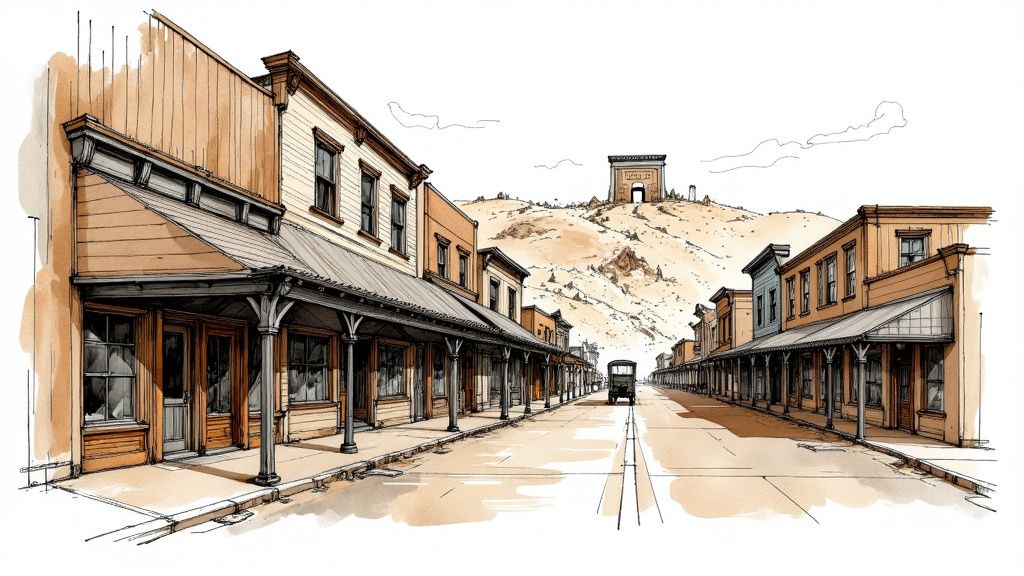
Unlike towns that vanished completely, Rochford exists in a captivating limbo between a living community and a genuine ghost town. Established in the late 1870s during a Black Hills gold rush, it once bustled with over 500 residents, saloons, and mining operations. As the gold dwindled, so did the population, leaving a quiet shell of its former self. Today, a handful of residents preserve Rochford's spirit, making it one of the most authentic, semi-inhabited ghost towns in South Dakota, offering a glimpse into a community that refuses to fade away completely.
Immersive Local Experience
Rochford provides a rare opportunity to see historic preservation in action, driven by the few locals who call it home. The town's remaining structures are a mix of restored buildings and atmospheric ruins, offering an unfiltered look at a frontier settlement's life cycle.
- Moonshine Gulch Saloon: Step into this historic, quirky saloon that has been a community hub for generations. Its walls are covered in memorabilia, offering a living museum experience where you can chat with locals and hear stories about the town’s past and present.
- The "Small of America": Rochford is famously home to the "University of Rochford" and the "Mall of America," both humorous, tiny, rustic buildings that showcase the town's unique character and sense of humor. They are perfect examples of its resilient, offbeat identity.
Off-the-Beaten-Path & Visiting Tips
To truly experience Rochford, plan your visit around interacting with the community. Because it is a small, semi-private place, respect for residents and their property is paramount. It is far from major services, so arrive with a full tank of gas and any necessary supplies.
Local Insight: For an authentic cultural experience, try to visit during a local event, like the St. Patrick’s Day parade. These small gatherings offer a chance to engage with the community and understand the town's modern-day culture. It’s a powerful reminder that history is not just in buildings but in the people who keep its stories alive.
For a unique photo, capture the iconic "Welcome to Rochford" sign with the tiny log cabin general store in the background. This shot perfectly encapsulates the town's blend of history, humor, and rustic charm that defines its place among the ghost towns in South Dakota.
8-Site Comparison: South Dakota Ghost Towns
| Town | Access & Complexity 🔄 | Facilities & Resources ⚡ | Expected Outcomes (Quality & Impact) ⭐📊 | Ideal Use Cases 💡 | Key Advantages ⭐ |
|---|---|---|---|---|---|
| Deadwood | Low 🔄 — paved roads; easy access; seasonal crowds | High ⚡ — hotels, museums, guided tours, restaurants | Very high ⭐⭐⭐⭐ 📊 — immersive, well‑interpreted heritage; strong tourism impact | Heritage tourism, reenactments, museum visits | Authentic artifacts; well‑preserved Victorian district; strong tourism infrastructure |
| Garnetiferous | High 🔄 — remote, rough trails; wayfinding required | Low ⚡ — minimal services; self‑sufficient visit needed | Medium ⭐⭐ 📊 — geological interest; quieter authentic experience | Gemstone collecting, off‑the‑beaten‑path exploration, geology study | Visible garnet deposits; less commercialized; scenic setting |
| Tin Camp | Very high 🔄 — obscure location; challenging terrain | Very low ⚡ — no facilities or signage | Low–medium ⭐⭐ 📊 — archaeological value; pristine natural context | Historical archaeology, specialist fieldwork, experienced hikers | Truly abandoned; clear example of boom‑and‑bust mining cycle |
| Keystone | Low 🔄 — highly accessible; heavy tourist flow | High ⚡ — strong visitor services; commercial amenities | High ⭐⭐⭐ 📊 — convenient, combined attractions (Mount Rushmore) | Family tourism, gateway visits, combined memorial tours | Economic adaptation; preserved architecture; excellent accessibility |
| Hill City | Low–moderate 🔄 — town access; seasonal peaks | High ⚡ — museums, train excursions, lodging | High ⭐⭐⭐ 📊 — authentic atmosphere with active heritage interpretation | Railroad excursions, museum visits, outdoor recreation | Active community stewardship; robust tourism amenities |
| Spokane | High 🔄 — remote; limited wayfinding | Low ⚡ — minimal infrastructure or interpretation | Low–medium ⭐⭐ 📊 — undisturbed site valuable for research | Archaeological study, quiet historical visits, documentation | Relatively undisturbed site; prairie landscape preservation |
| Mystic | High 🔄 — remote roads; limited access windows | Low ⚡ — few amenities; bring supplies | Medium ⭐⭐ 📊 — authentic isolation; nearby natural attractions | Combined hikes (Harney Peak), cemetery research, quiet exploration | Strong sense of isolation; preserved log structures; hot springs nearby |
| Rochford | Moderate 🔄 — rough/seasonal roads; small population | Low–moderate ⚡ — some restored buildings; limited services | High ⭐⭐⭐ 📊 — authentic frontier character with lower crowds | Heritage photography, small‑community visits, preservation support | Excellent preservation; maintained by local community; fewer tourists |
How to Explore South Dakota's Past Responsibly
From the bustling, revived streets of Deadwood to the quiet, forested remains of Spokane and Mystic, the ghost towns of South Dakota offer a profound connection to a past forged by ambition and grit. Exploring these sites is more than a simple road trip; it is an immersive journey into the state's very soul. Each decaying cabin, abandoned mine shaft, and overgrown trail tells a story of boom, bust, and the relentless spirit of pioneers who carved out lives in the rugged Black Hills.
This journey is not just about what you see, but how you see it. The true cultural experience lies in respectful observation. As you wander through places like Rochford or the remnants of Tin Camp, you are walking through an open-air museum where the exhibits are fragile and irreplaceable.
Key Principles for Responsible Exploration
To ensure these historical treasures endure for future adventurers, embracing a thoughtful approach is essential. Your actions directly impact the preservation of these unique landscapes.
- Leave No Trace, Take Only Memories: This is the golden rule. Resist the urge to pick up souvenirs like old nails, glass fragments, or pieces of wood. The most valuable thing you can take with you is a powerful photograph and the memory of the experience.
- Respect Private Property: Many of these historic sites are on or adjacent to privately owned land. Always heed "No Trespassing" signs. A telephoto lens can be a great tool for capturing images from a respectful distance without intruding.
- Prioritize Safety and Preparation: The terrain around these ghost towns can be challenging and unpredictable. Cell service is often non-existent. Before heading into the more remote areas near Mystic or Spokane, it's invaluable to first learn how to read topographic maps. This skill will help you navigate safely and understand the landscape's contours, ensuring your off-the-beaten-path adventure is a safe one.
Beyond the Destination: A Mindful Journey
The stories of South Dakota’s ghost towns are etched into the very fabric of the Black Hills. They serve as a powerful reminder that history is not just found in books but is alive in the whispering pines, the crumbling foundations, and the silent, empty spaces. By visiting with curiosity and respect, you become more than a tourist; you become a temporary steward of this incredible heritage.
Your adventure among the ghost towns in South Dakota is an opportunity to slow down, disconnect from the modern world, and listen to the echoes of the past. It’s a chance to understand the full cultural experience of a place defined by its dramatic history and resilient spirit. Let these ruins inspire you, and may your footprints be the only mark you leave on this remarkable landscape.
Ready to uncover more hidden gems and authentic cultural experiences? The expert-curated guides from CoraTravels are designed for curious explorers like you, offering deep local insights that go beyond the typical tourist trail. Plan your next unforgettable, off-the-beaten-path adventure with CoraTravels.