Europe is more than its iconic capitals and crowded landmarks. For travelers seeking a full cultural experience, a world of authentic encounters lies just beyond the well-trodden tourist trails. This guide unveils some of the best hidden gems in Europe, focusing on destinations where local life thrives and immersive experiences are the norm. From the mystical mountain palaces of Sintra, Portugal, to the ancient Roman history of Plovdiv, Bulgaria, each location offers a chance to connect with a place on its own terms.
We bypass the surface-level attractions to deliver practical, actionable insights for a deeper journey. This roundup is for those who want to see Europe not just as a visitor, but through the eyes of those who call it home. Guided by local voices and a focus on respectful immersion, we explore destinations that prioritize cultural depth, community connection, and the quiet magic found off the beaten path. For those seeking further historical exploration beyond these paths, Slovenia also offers unique cultural experiences like the stunning Brdo pri Kranju estate. This curated list is your starting point for a trip that is both memorable and meaningful, packed with tips to help you engage with the authentic soul of each place.
1. Ghent, Belgium - Medieval Charm Without Bruges Crowds
Often overshadowed by its famous neighbor, Bruges, Ghent offers an equally stunning yet far more authentic Flemish experience. This vibrant university city masterfully blends medieval architecture-like the Gravensteen castle and Saint Bavo's Cathedral-with a progressive, creative energy. Its picturesque canals and cobbled streets are alive with local culture, not just tourist groups, making it one of the most rewarding hidden gems in Europe for those seeking genuine immersion.
A Local's Perspective
Ghent’s soul is found in its dynamic neighborhoods and thriving independent scene. It's a city for wanderers. While tourists crowd the Graslei and Korenlei, locals head to the Patershol district for cozy, traditional restaurants or to the Vooruit arts center, a converted factory now hosting everything from experimental theater to electronic music nights. The city’s large student population fuels a laid-back, forward-thinking atmosphere that keeps it from feeling like an open-air museum.
Immersive Cultural Experience
To truly experience Ghent like a resident, follow these insider tips:
- Stay Local: Book accommodation in the Sint-Jacobs or Patershol neighborhoods to be surrounded by authentic pubs and daily life.
- Embrace Two Wheels: With nearly 40% of city transport done by bike, renting one is the best way to explore. It allows you to discover quiet corners and scenic paths along the Leie river. For more ideas on two-wheeled adventures, you can explore some of the best bike tours in Europe.
- Taste the City: Don't leave without trying Gentse Waterzooi, a creamy local stew. Avoid the main squares and find a small eatery in a side street for the most authentic version.
- Visit the Sunday Market: The Sunday flower market at Kouter is a beloved local ritual that offers a beautiful, peaceful start to the day.
2. Sintra, Portugal - Mystical Mountain Town with Palaces
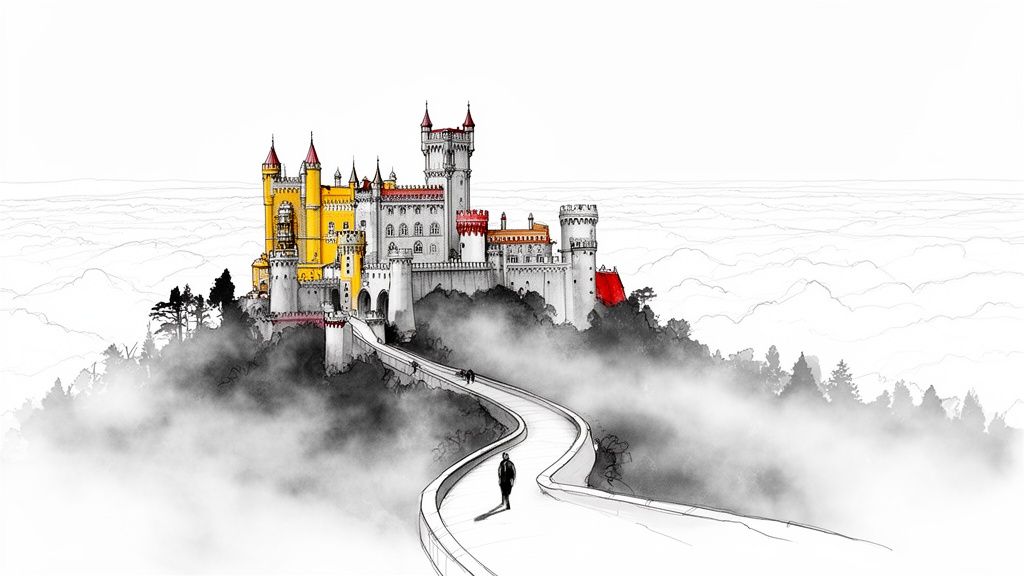
Perched in misty hills just outside Lisbon, Sintra is a UNESCO World Heritage site that feels like a fairy tale come to life. Famous for its romantic 19th-century palaces, lush forests, and magical atmosphere, it offers an enchanting escape. While many travelers focus on Lisbon or the Algarve, Sintra provides one of Europe’s most unique mountain experiences, a true hidden gem for those who venture beyond the typical day-trip itinerary.
A Local's Perspective
The true magic of Sintra reveals itself after the day-trippers have gone. Locals know the town’s soul isn't just in the grand palaces but in the quiet, fog-shrouded forests connecting them. Instead of rushing between ticketed sites, residents take meandering hikes, discovering hidden viewpoints and ancient stone paths. The real experience is found exploring the mysterious Quinta da Regaleira estate with its underground tunnels and esoteric wells, or simply enjoying a quiet coffee in the town center as evening mist rolls in.
Immersive Cultural Experience
To immerse yourself in Sintra's mystical charm, follow these insider tips:
- Stay Overnight: Most tourists leave by 4 PM. Staying in the town center allows you to experience the peaceful, atmospheric evenings when the streets empty out.
- Start Early at Quinta da Regaleira: Arrive before 9 AM to explore the incredible initiatic wells and sprawling gardens in relative solitude before the crowds descend.
- Hike the Forest Trails: Skip the long lines for palace interiors. The most stunning views are often of the exterior architecture. Hike between sites on forest paths to avoid crowded roads and experience the misty atmosphere.
- Eat Like a Local: Avoid tourist traps and find authentic family-run tascas (casual restaurants) on quieter side streets like Rua da Ferraria.
3. Plovdiv, Bulgaria - Ancient Roman City with Vibrant Arts Scene
As one of Europe's oldest continuously inhabited cities, Plovdiv offers a breathtaking journey through time, yet it remains one of the continent's best-kept secrets. This Bulgarian gem layers Thracian, Roman, and Ottoman history upon a vibrant, modern cultural landscape. Its colorful Old Town sits beside stunning Roman ruins like the still-functioning Ancient Amphitheater, creating a unique atmosphere where millennia-old history feels alive and accessible.
A Local's Perspective
The true spirit of Plovdiv is found in Kapana, the "Creative District." Once a neighborhood of craftsmen, its name literally means "The Trap" due to its maze of cobblestone streets. Today, it has been reborn as a dynamic hub of art galleries, independent studios, cozy cafes, and vibrant street art. Locals gather here for everything from morning coffee to evening craft beer, making it the city’s beating heart. This district perfectly encapsulates Plovdiv’s identity: a city that honors its deep past while passionately embracing contemporary creativity.
Immersive Cultural Experience
To immerse yourself in Plovdiv's unique culture, go beyond the main sights with these local tips:
- Stay Local: Book a guesthouse in the Old Town (Varosha) to wake up surrounded by centuries of history and traditional Bulgarian revival architecture.
- Explore Kapana After Dark: Visit the Kapana district on a weekend evening when the area is most alive, with locals spilling out of bars and live music filling the streets.
- See a Show at the Roman Theater: Visit from June to September for the best weather and a chance to catch a live opera or concert at the spectacular Roman Amphitheater.
- Eat Smart: Enjoy incredible multi-course meals with local wine for under €10 at family-run mehanas (taverns) tucked away on side streets.
4. Matera, Italy - Ancient Sassi District and Lunar Landscape
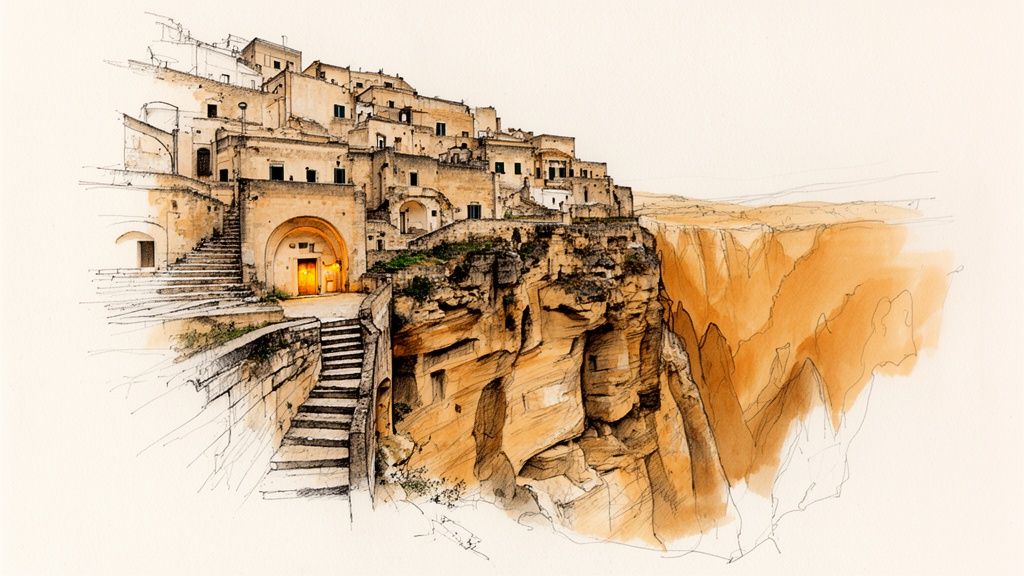
Carved directly into limestone cliffs, Matera's ancient Sassi districts are one of Europe's oldest continuously inhabited settlements. This southern Italian city presents a breathtaking lunar landscape of stone dwellings, rock-hewn churches, and winding alleyways. Long considered a place of poverty, Matera has transformed into a major cultural destination, blending its profound history with contemporary art and authentic culinary traditions, offering a journey back in time that remains one of the most compelling hidden gems in Europe.
A Local's Perspective
Matera's magic reveals itself at the edges of the day. While film crews and day-trippers focus on the central viewpoints, locals know the city's spirit is found in the quiet moments just after sunrise or as the lights begin to twinkle in the evening. Life here is connected to the stone. Residents cherish the Sassi Caveoso for its raw, unrestored character and the Murgia plateau for its panoramic views and ancient rupestrian churches, which tell a story that guidebooks often miss. The city isn’t just a historical site; it’s a living community proud of its resilient heritage.
Immersive Cultural Experience
To truly immerse yourself in the ancient rhythms of Matera, consider these local insights:
- Stay in a Cave: Book a stay in a restored sasso (cave dwelling). This provides an unparalleled experience of the city's unique architecture and history.
- Explore at Dawn or Dusk: Wander through the Sassi between 6-8 a.m. or after 6 p.m. to experience the incredible light and profound solitude, capturing photos without the crowds. For more tips on unique destinations, check out these guides to off-the-beaten-path travel.
- Taste the City: Seek out a small trattoria away from the main piazza and order orecchiette con le cime di rapa or crapiata, a hearty local bean soup.
- Hike the Murgia: Cross the ravine to the Murgia plateau to explore ancient rock churches and get the most iconic panoramic views of the Sassi at sunset.
5. Rila Monastery, Bulgaria - Spiritual Mountain Sanctuary
Tucked away in the dense forests of the Rila Mountains, this Eastern Orthodox monastery is Bulgaria's most sacred site yet remains one of the more profound hidden gems in Europe for international visitors. Its stunning architecture, vibrant frescoes, and deep spiritual atmosphere offer a powerful alternative to the more crowded religious sites in Western Europe. The complex, with its arcaded balconies and the central Nativity of the Mother of God Cathedral, provides a window into centuries of Bulgarian faith and artistic heritage, far from typical tourist trails.
A Local's Perspective
While many visitors come for a quick photo, Bulgarians see Rila as the spiritual heart of the nation. It’s a place for pilgrimage, quiet reflection, and connection to history. Locals appreciate the monastery not just for its beauty but for its role as a guardian of Bulgarian culture during centuries of Ottoman rule. True immersion means experiencing its rhythm, waking to the sound of bells, and walking the same stone paths as generations of monks and pilgrims. It's a living, breathing center of faith, not merely a historical monument.
Immersive Cultural Experience
To truly connect with the monastery's profound spirit, consider these tips:
- Stay Overnight: Book a simple room within the monastery walls. This allows you to experience the serene quiet after day-trippers have left and to witness the monastic routine.
- Attend the Morning Liturgy: For a deeply authentic spiritual experience, join the monks for the early morning service. It’s a powerful and moving ritual, even for non-religious visitors.
- Dress with Respect: This is an active place of worship. Ensure your shoulders and knees are covered. Women may want to bring a headscarf, though it's not strictly mandatory for tourists.
- Explore the Surroundings: The monastery is the gateway to Rila National Park. Take one of the well-marked trails behind the complex for stunning mountain views and peaceful contemplation.
6. Kotor, Montenegro - Fjord Town Without Croatian Crowds
Tucked away in Europe's southernmost fjord, Kotor offers the dramatic beauty of the Dalmatian coast without the overwhelming crowds of its Croatian neighbors. This fortified medieval town, a UNESCO World Heritage site, is a maze of cobblestone streets, Venetian palaces, and ancient churches, all dramatically set against towering limestone cliffs. Its rich seafaring heritage and stunning natural scenery make Kotor one of the most breathtaking hidden gems in Europe, providing a more relaxed and affordable Adriatic experience.
A Local's Perspective
While tourists focus on climbing the city walls, locals know the soul of Kotor is found on the water and in the surrounding villages. The Bay of Kotor, or "Boka," is a world of its own. Residents spend their time at small, family-run konobas (taverns) along the bay, enjoying fresh seafood and local wine with uninterrupted fjord views. The real magic isn't just in the old town's history but in the serene lifestyle dictated by the mountains and the sea, a rhythm that has remained unchanged for centuries.
Immersive Cultural Experience
To immerse yourself in the local Boka Bay culture, consider these insider suggestions:
- Stay Local: Opt for an apartment in the quieter village of Dobrota, just a short walk from the Old Town. You'll have better sea access, authentic restaurants, and a more peaceful base.
- Explore by Water: Rent a kayak to explore the fjord at your own pace. You can discover hidden coves, tiny fishing hamlets, and sea caves that are inaccessible by land.
- Eat Smart: For the best meals, walk along the harbor towards Dobrota. The family-owned restaurants here serve fresher food at lower prices than those inside the city walls. Be sure to try the local black risotto and a glass of Vranac wine.
- Chase the Sunrise: Hike or drive up the serpentine road towards Lovćen National Park at dawn. The view of the bay from the fortress is unforgettable, and you’ll have it almost entirely to yourself.
7. Krakow's Jewish Quarter (Kazimierz) - Cultural Heritage and Nightlife
While Krakow has grown popular, its historic Jewish Quarter, Kazimierz, remains one of the most poignant hidden gems in Europe. This district offers a profound blend of sorrowful history and vibrant rebirth, where centuries of Ashkenazi Jewish heritage converge with a contemporary cultural renaissance. Unlike the polished centers of Prague or Vienna, Kazimierz provides a raw, authentic look at history through its synagogues, cemeteries, and thriving arts scene, offering cultural depth far from the main market square crowds.
A Local's Perspective
Kazimierz is a neighborhood of two halves: by day, it’s a living museum; by night, a hub of creativity. While tourists might stick to Szeroka Street, locals gather in the smaller squares like Plac Nowy for the legendary zapiekanki (open-faced sandwiches) or explore the hidden courtyards filled with indie galleries and vintage shops. The area pulses with life, from the haunting melodies of klezmer music spilling from bars like Klezmer Hois to the intellectual buzz in its many bohemian cafes. It’s this dual identity that makes Kazimierz a place for reflection and connection, not just sightseeing.
Immersive Cultural Experience
To truly connect with the spirit of Kazimierz, follow these insider tips:
- Stay Within the Quarter: Book your accommodation in Kazimierz itself to fully immerse yourself in its unique atmosphere, from quiet mornings to lively evenings.
- Take a Jewish Heritage Tour: Engage a specialist guide for a tour. Their insights provide crucial context and sensitivity that you simply cannot get from a guidebook, especially when visiting sites like the Remuh Synagogue and its historic cemetery.
- Experience the Nightlife: Dedicate evenings to the district's vibrant nightlife, live music venues, and atmospheric bars to feel its contemporary pulse.
- Attend the Culture Festival: If possible, plan your trip around the Jewish Culture Festival (late June/early July). It is an authentic, world-renowned celebration of contemporary Jewish culture, not a performance for tourists.
8. Brașov, Romania - Transylvanian Gateway with Mountain Access
Nestled in the heart of Transylvania, Brașov is a captivating city that serves as the perfect gateway to the Carpathian Mountains. Far from the hustle of Bucharest, it offers a more relaxed, authentically Romanian experience. Its stunning Gothic architecture, centered around the historic Piața Sfatului, is framed by forested peaks, creating a dramatic backdrop. This city is a true cultural crossroads, blending medieval Saxon heritage with modern Romanian energy, making it one of the most dynamic hidden gems in Europe for adventurers and culture seekers alike.
A Local's Perspective
Brașov's charm extends well beyond its beautiful main square. Locals know the city's real character is found in its blend of urban life and immediate access to nature. While tourists focus on the Black Church, residents spend weekends hiking or skiing in Poiana Brașov, just a short cable car ride away. The city is a burgeoning hub for digital nomads, drawn by its affordability and vibrant yet unpretentious atmosphere. Its local culture thrives not in grand monuments, but in the cozy neighborhood bars serving strong palincă and the traditional eateries dishing out hearty Transylvanian cuisine.
Immersive Cultural Experience
To immerse yourself in Brașov's unique rhythm, consider these insider tips:
- Stay Local: Opt for an apartment in the Centrul Istoric (Historic Center) to live amongst the cobbled streets and Saxon townhouses, experiencing the city's daily pulse.
- Explore the Peaks: Take the cable car up to Poiana Brașov for breathtaking views and access to hiking trails. For serious treks, hire a local guide, as Carpathian trails can be poorly marked.
- Taste the City: Skip the tourist traps and seek out a small restaurant for ciorbă de burtă (tripe soup) or mici (grilled meat rolls). These are staples of local comfort food.
- Visit in Winter: Visit between November and March for a truly authentic experience. You'll find fewer crowds and see the city as the locals do, often blanketed in snow.
9. Český Krumlov, Czech Republic - Alpine Town Beyond Prague Tourists
While Prague draws millions, the fairy-tale town of Český Krumlov offers a far more intimate glimpse into Bohemian history. Tucked into a dramatic bend of the Vltava River, this UNESCO World Heritage site is a stunning composition of Gothic, Renaissance, and Baroque architecture, all dominated by its magnificent castle. It presents the charm of a pristine historic European town but retains a genuine, artistic soul often lost in more crowded destinations, making it one of the most enchanting hidden gems in Europe.
A Local's Perspective
Český Krumlov’s magic isn't just in its postcard-perfect views; it's in its thriving creative community. Locals know the real town awakens when the day-trippers depart. They gather in traditional hospodas (pubs) in the riverside Latrán neighborhood, which is also dotted with independent artist studios and quirky galleries. The town’s spirit is bohemian and unhurried, a stark contrast to Prague's bustling commercialism. Events like the annual Shakespeare Festival showcase its deep connection to the arts, attracting performers and enthusiasts who value culture over crowds.
Immersive Cultural Experience
To connect with the true character of this Bohemian jewel, follow these insider tips:
- Stay on a Side Street: Avoid the main square and book a small guesthouse or Airbnb on a residential side street for a quieter, more local experience.
- Explore from the River: Rent a canoe or kayak to see the town from the Vltava River. This offers a completely different perspective and a peaceful escape from the streets.
- Eat and Drink Locally: Skip the tourist traps and find a small neighborhood pub for authentic goulash and world-class Czech beer at a fraction of the price.
- Visit Off-Season: Visit between November and April to experience the town with minimal tourists, enjoying its tranquil, misty atmosphere.
10. Chefchaouen, Morocco - Blue Mountain Town with Bohemian Culture
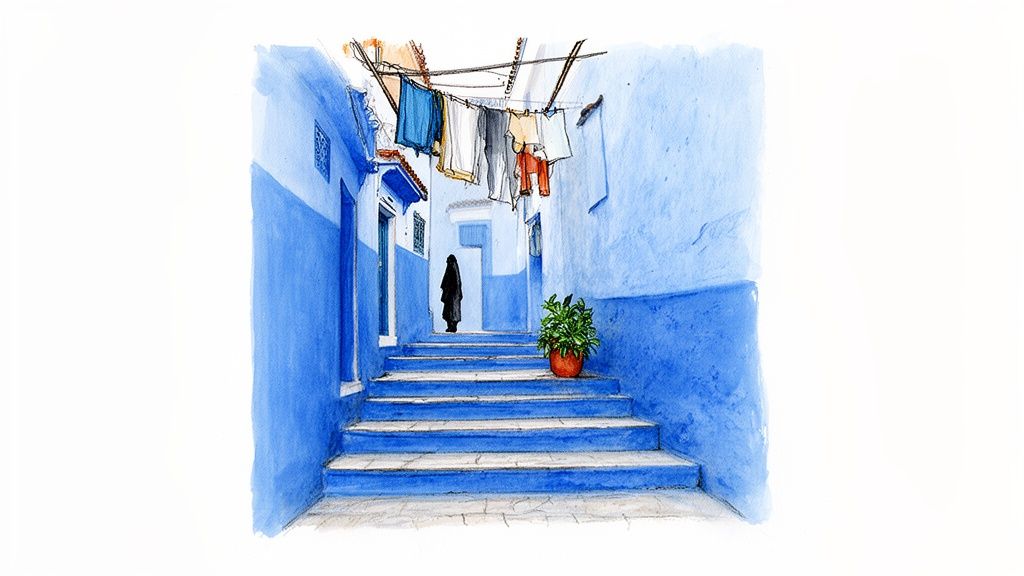
While technically in North Africa, Chefchaouen’s deep Andalusian Spanish heritage and proximity to Spain make it a unique and accessible addition to a European itinerary. Morocco’s famed “Blue Pearl” blends Amazigh (Berber) roots with a contemporary bohemian spirit. Though its popularity is growing, its labyrinthine medina, nestled in the Rif Mountains, offers a cultural immersion far removed from the intensity of Marrakech, making it a visual and cultural highlight for those exploring the fringes of Europe.
A Local's Perspective
The real magic of Chefchaouen, or "Chaouen" as locals call it, reveals itself away from the main square of Plaza Uta el-Hamam. True local life unfolds in the smaller, unnamed alleyways where children play and artisans work in tiny studios. While tourists focus on photography, residents gather at the Ras el-Maa waterfall to cool off, do laundry, and socialize. The town’s artistic soul isn't just for show; it’s a living part of the community, with local musicians often playing traditional music in quiet courtyards in the evenings.
Immersive Cultural Experience
To connect with the town’s genuine character beyond its photogenic facade, consider these tips:
- Stay in a Riad: Choose a traditional riad deep within the medina. While navigating the maze can be a challenge, it provides an unparalleled immersive experience.
- Explore at Dawn and Dusk: The medina is most atmospheric in the early morning and late evening when day-trippers have left. You’ll have the blue streets almost to yourself.
- Eat Authentically: Skip the tourist-heavy restaurants in the main plaza. Wander into the residential areas to find small, family-run eateries where a tagine costs half the price and tastes twice as good.
- Engage Respectfully: The blue city is a living neighborhood, not a film set. Always ask for permission before photographing people, especially older residents. A simple smile and a polite gesture go a long way.
10 Hidden European Gems Comparison
| Destination | Implementation Complexity 🔄 | Resource Requirements ⚡ | Expected Outcomes ⭐📊 | Ideal Use Cases 💡 | Key Advantages |
|---|---|---|---|---|---|
| Ghent, Belgium – Medieval Charm Without Bruges Crowds | Low–Medium: compact, walkable; good bikes/public transit; some crowding on summer weekends | Moderate: affordable lodging and dining; limited direct flights; bike rental recommended | ⭐⭐⭐⭐ 📊 Authentic local culture, vibrant student nightlife, manageable tourist pressure | Local culture seekers, cyclists, foodies, festival-goers | Authentic vibe; canals & guild houses; affordable; strong bike infrastructure |
| Sintra, Portugal – Mystical Mountain Town with Palaces | Medium: short train from Lisbon but steep terrain and palace queues | Moderate: inexpensive transport; palace fees; uphill walking requires good mobility | ⭐⭐⭐⭐ 📊 Romantic architecture, mystical forests, strong photo appeal (mist-dependent) | Architecture lovers, hikers, romantic getaways, off-season visitors | UNESCO palaces; ethereal forest atmosphere; accessible day trip from Lisbon |
| Plovdiv, Bulgaria – Ancient Roman City with Vibrant Arts Scene | Low–Medium: compact city; fly via Sofia then regional transfer; Cyrillic may complicate navigation | Low: very affordable daily costs; good public transport; growing nomad infrastructure | ⭐⭐⭐⭐ 📊 Deep historical layers + contemporary art scene; high cultural immersion | Budget travelers, history buffs, art & music audiences, digital nomads | Ancient amphitheater; Kapana creative quarter; very low cost of living |
| Matera, Italy – Ancient Sassi District and Lunar Landscape | Medium: accessible by train/bus but steep stone steps; mobility-challenging in Sassi | Moderate–High: cave accommodations can be pricier; seasonal variability | ⭐⭐⭐⭐ 📊 Dramatic photography and historical atmosphere; quieter than major Italian hotspots | Photographers, history aficionados, food & wine travelers seeking quieter Italy | Unique cave dwellings (Sassi); film locations; strong local cuisine |
| Rila Monastery, Bulgaria – Spiritual Mountain Sanctuary | Medium–High: remote (1.5–2 hr from Sofia); requires car or guided transfer; modesty rules | Low: inexpensive monastery guesthouses and meals; limited nearby services | ⭐⭐⭐⭐ 📊 Profound spiritual/artistic experience; strong monastery authenticity | Pilgrims, spiritual seekers, religious art historians, hikers | Major Byzantine frescoes; authentic monastic life; mountain trails |
| Kotor, Montenegro – Fjord Town Without Croatian Crowds | Medium: coastal access, narrow medieval streets; cruise-day congestion possible | Low–Moderate: affordable overall but limited rooms in high season; ferry connections available | ⭐⭐⭐⭐ 📊 Dramatic fjord scenery with authentic maritime culture; daytime cruise crowds risk | Nature lovers, sailors, budget coastal travelers, off-peak visitors | Stunning Boka Bay fjord; Venetian architecture; strong seafood tradition |
| Krakow (Kazimierz) – Jewish Quarter Cultural Heritage & Nightlife | Low: easy tram access from Krakow center; emotionally heavy sites need sensitive approach | Low–Moderate: central city costs; many English resources and tours | ⭐⭐⭐⭐ 📊 High cultural and educational impact; alive contemporary arts and music scene | Cultural heritage travelers, music fans, museum-goers, respectful nightlife visitors | Rich Jewish history; live klezmer scene; museums and memorials |
| Brașov, Romania – Transylvanian Gateway with Mountain Access | Low–Medium: good rail/road links; gateway to Carpathians; winter conditions can complicate travel | Low: very affordable; digital nomad friendly; seasonal equipment for outdoor activities | ⭐⭐⭐⭐ 📊 Strong mix of medieval town life and outdoor adventure; authentic Transylvanian culture | Hikers, skiers, history buffs, budget travelers, digital nomads | Black Church, mountain access, affordable outdoor base |
| Český Krumlov, Czech Republic – Alpine Town Beyond Prague Tourists | Low–Medium: walkable medieval center; limited lodging in peak season | Low–Moderate: affordable but books up in summer; seasonal festivals | ⭐⭐⭐⭐ 📊 Fairy-tale architecture and active arts scene with lower commercialization than Prague | Photographers, artists, bohemian travelers, off-season visitors | Intact medieval center; artist community; river activities |
| Chefchaouen, Morocco – Blue Mountain Town with Bohemian Culture | Medium: mountainous medina maze; increasing tourist pressure and commercialization | Low: generally affordable; peak-season prices rising; local transport limited | ⭐⭐⭐⭐ 📊 Extremely photogenic blue medina; growing bohemian/digital-nomad scene but risk of touristification | Photographers, bohemian travelers, day-trippers from larger Moroccan hubs | Unique blue architecture; Rif mountain access; relaxed mountain climate |
Your Guide to a Deeper European Journey
The path less traveled is often the most rewarding. Moving beyond the well-trodden tourist circuits of Europe’s mega-cities, as we've explored from Ghent to Plovdiv, unlocks a profoundly different kind of travel experience. It’s a journey measured not in landmarks ticked off a list, but in moments of genuine connection, unexpected discovery, and a deeper appreciation for the continent's rich cultural tapestry. The destinations highlighted in this guide, from the mystical palaces of Sintra to the ancient Sassi of Matera, are more than just alternatives; they are vibrant, living communities offering a truer sense of place.
Choosing these hidden gems in Europe is a conscious decision to engage with local life on its own terms. It means savoring a quiet coffee in Brașov's council square, getting lost in the blue-washed alleys of Chefchaouen, or feeling the centuries of spiritual devotion at Rila Monastery. These are the experiences that foster a real understanding of a region's history, traditions, and contemporary pulse. By stepping away from the crowds, you create space for spontaneity and authentic interaction, which are the cornerstones of memorable travel.
Your Next Steps to Authentic Exploration
To transform this inspiration into a tangible itinerary, here are some actionable steps to guide your planning process:
- Prioritize Your Interests: Reflect on what truly excites you. Are you drawn to the artistic renaissance of Krakow's Kazimierz, the serene mountain spirituality of the Rila Mountains, or the dramatic fjord-like landscapes of Kotor? Let your passions guide your destination choice.
- Embrace Slower Travel: Instead of rushing between cities, consider dedicating more time to a single region. This allows you to settle in, observe the daily rhythms, and discover personal favorites, whether it's a local bakery, a quiet park, or a friendly shopkeeper.
- Prepare for Local Immersion: True cultural immersion requires a bit of preparation. Learn a few key phrases in the local language, research dining etiquette, and understand the historical context of the place you’re visiting. This respect and curiosity will open doors to more meaningful interactions.
The Lasting Impact of Off-Path Adventures
The true value of seeking out these lesser-known destinations lies in the perspective they provide. They remind us that the heart of Europe beats strongest not in its crowded monuments, but in the everyday life of its towns and neighborhoods. This approach fosters a more sustainable and respectful form of tourism, one that supports local economies and preserves cultural integrity for future generations.
As you finalize your plans, remember to handle practicalities. For those planning their journey from across the Atlantic, understanding communication logistics is key. You might also want to know how to dial Europe from the USA for staying in touch with family or managing bookings on the go. Taking care of these small details beforehand frees you to fully immerse yourself in the experience upon arrival. Ultimately, your journey to uncover Europe's hidden gems is an investment in stories, memories, and a connection to the world that guidebooks alone can never provide.
Ready to plan your own immersive journey? CoraTravels provides detailed local guides and cultural context for destinations just like these, helping you navigate with the confidence of a local. Discover unspoken etiquette and neighborhood secrets before you even pack your bags at CoraTravels.