
Your Quick Guide To Traveling From Osaka To Nara
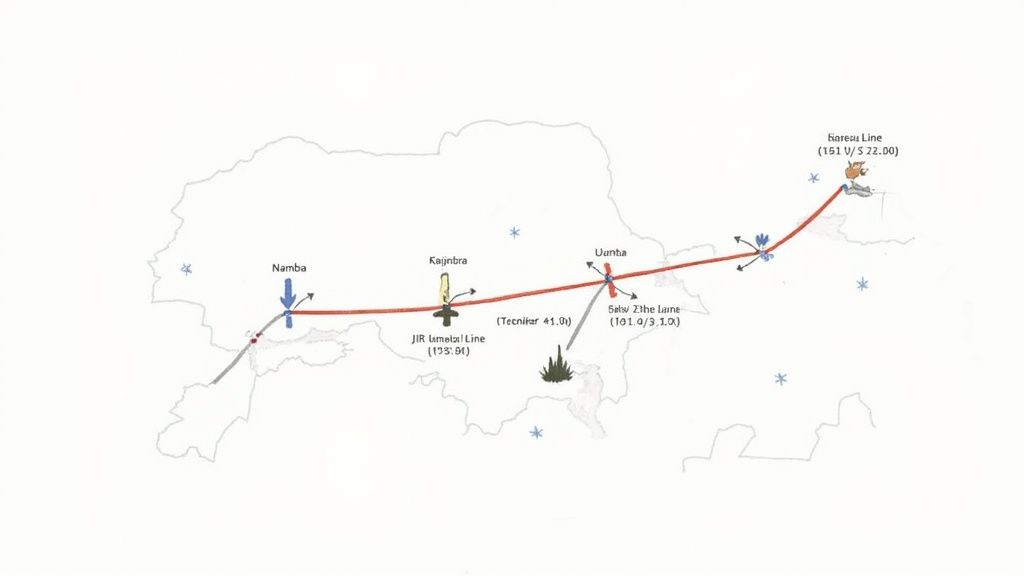
Jumping from Osaka to Nara takes under an hour, costs less than a lunch out, and feels effortless once you’ve got the basics down. You’ve essentially got two front-runners:
- The Kintetsu Nara Line for a speedy, direct ride into the heart of Nara’s sights.
- The JR Yamatoji Line if your itinerary revolves around that trusty Japan Rail Pass.
Before you roll your suitcase, plan to pack light and smart—here’s a handy primer on how to pack like a pro for international travel.
Osaka To Nara Train Options At A Glance
Here’s a quick snapshot to lay out travel times, ticket prices, and convenience so you can pick the ride that suits your day-trip style:
| Feature | JR Yamatoji Line | Kintetsu Nara Line |
|---|---|---|
| Cost | ¥800 (covered by JR Pass) | ¥560 |
| Travel Time | 50–60 min | 35–45 min |
| Departure Stations | JR Namba, Tennoji, Osaka (Umeda) | Osaka-Namba |
| Proximity To Deer Park | 20-min walk from Nara Station | 5-min walk from Kintetsu Nara |
| Seat Reservations | Available on some Rapid services | Unreserved, frequent departures |
Whether you’re maximizing your JR Pass or chasing the fastest shuttle to deer and temples, this chart lays it out at a glance.
Choosing Your Starting Point
Your Osaka departure station sets the tone for the trip. Stay near one of these hubs, and you’ll waste zero time fumbling for connections.
For the Kintetsu Line
Osaka-Namba Station is the go-to. It sits at the edge of Dotonbori and Minami, so you can grab a bite before departure and be in Nara in just over half an hour.For the JR Line
You have options: JR Namba, Tennoji, or Osaka Station in Umeda. If you’re already hanging around the north side, Umeda works—but Tennoji often feels more direct for this particular route.
Planning your launchpad makes all the difference. While you’re plotting your Osaka stay, check out our comprehensive guide on https://coratravels.com/guides/osaka-japans-kitchen-comedy-central/ to soak up local tips on food, fun, and Kansai humor.
Choosing Your Train: JR vs. Kintetsu Explained
Figuring out whether to take the JR or Kintetsu train from Osaka to Nara isn't really about which one is fastest—it’s about strategy. The Kintetsu Line is like a purpose-built shuttle, designed to drop you right on the doorstep of Nara Park. On the other hand, the JR Yamatoji Line is your trusty workhorse, especially if you're trying to squeeze every last yen of value out of a Japan Rail Pass.
Each train offers a totally different experience. Your choice comes down to what you value more for your day trip: getting to the deer and temples as fast as humanly possible, or fitting this leg of your journey into a bigger, pass-covered trip across Japan.
The Kintetsu Line: The Convenience King
If your main goal is getting to the heart of Nara's sights with zero fuss, the Kintetsu Railway is almost always the winner. The Limited Express zips you from Osaka-Namba Station to Kintetsu-Nara Station in just 35 minutes. It feels less like a commute and more like a direct portal to ancient Japan.
Once you arrive, you’re literally a five-minute walk from the entrance of Nara Park. This is a massive advantage, especially if you're on a tight schedule. It means less time fumbling with maps and more time feeding the bowing deer or staring up at the Great Buddha in Todai-ji Temple.
Local Insight: The Kintetsu Line is more than just convenient; it's a piece of local history. It was a huge deal when it opened back in 1914, connecting the two cities after a wildly ambitious construction project started in 1910. It completely changed daily life for thousands of people and is still a point of pride. You can read more about its pioneering railway history on osaka.com.
The JR Yamatoji Line: The Pass Holder's Best Friend
Now, if you're traveling with an active Japan Rail (JR) Pass, the decision is pretty much made for you. The JR Yamatoji Line is fully covered by the pass, making the ¥800 journey feel like a free ride. This line connects major hubs like JR Namba and Tennoji Station straight to JR Nara Station, slotting perfectly into a wider travel plan on the JR network.
But there's a trade-off. The Rapid Service takes about 50 minutes, and more importantly, JR Nara Station is a good 20-minute walk from Nara Park. That extra stroll can feel like a lot after a long day, but it’s a small price to pay when you consider the savings from your JR Pass.
So, How Do You Choose?
It really just boils down to your personal travel style and what your itinerary looks like for the day.
Go with Kintetsu if:
- You're buying a single ticket and want the most bang for your buck.
- Your absolute top priority is maximizing your time in Nara.
- You want to land as close as possible to Nara Park to hit the ground running.
Go with JR if:
- You have an active Japan Rail Pass and want to use it.
- You're starting your trip from a big JR station like Tennoji anyway.
- You don't mind a bit of a longer walk in exchange for a "free" trip covered by your pass.
A Guide To Tickets Passes And Smart Savings
Navigating Japan’s fare systems often gives newcomers pause, but the hop from Osaka to Nara is refreshingly simple once you know your options. Essentially, you’ve got two big tools: a rechargeable IC card and one of the region’s rail passes. Each brings its own kind of ease and value.
Think of an IC card—whether it’s Suica, Pasmo or the Kansai-favorite ICOCA—as your personal travel wallet. Here’s how it smooths out the whole process:
- Tap In And Out: No need to hunt for exact change or tickets.
- Auto-Fare Calculation: The gate figures out the correct fare based on distance.
- Recharge Stations: Top up at any station kiosk, convenience store or ticket machine.
- Versatility: Works on trains, buses, even vending machines around cities.
For a straightforward day trip, loading up an IC card is often the quickest route. You walk in, tap your card, and let the system do the rest—no language barriers, no lost coins.
Decoding Rail Passes For Your Nara Trip
Rail passes operate like an all-you-can-ride buffet on rails: pay a flat rate and board as many trains as you like within the covered zone and time frame. But just like an endless buffet, they only pay off if you dine heavily—in this case, ride frequently.
Use this mini-decision guide to see if a pass makes sense for you:
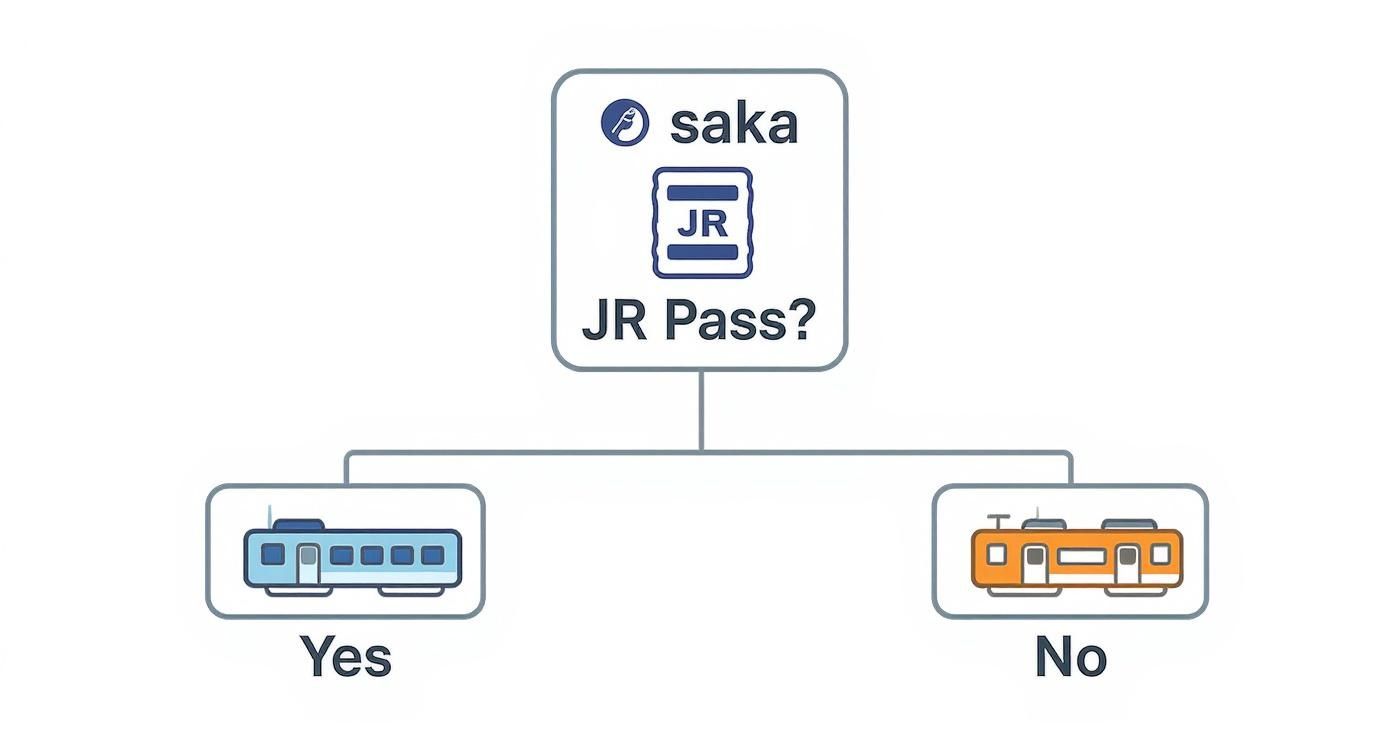
Often, your choice narrows down to:
The Japan Rail (JR) Pass
- Covers JR’s Yamatoji Line directly into Nara.
- Excludes private operators like Kintetsu.
- Ideal if you’re already carrying a nationwide JR Pass for longer hauls—Osaka → Nara is then “free.”
- Not cost-effective if you buy it just for the Kansai region.
Kintetsu Rail Pass
- Valid across the entire Kintetsu network, including direct Osaka-Namba → Kintetsu-Nara service.
- Sold in 1, 2 or 5-day increments to suit your itinerary pace.
- Targets travelers who plan multiple stops—think Nara plus side trips to Yoshino, Ise-Shima or even Kyoto’s southern fringes.
A 1-Day Kintetsu Rail Pass rings in at around ¥1,500, versus a ¥1,120 round-trip ticket Osaka → Nara (¥560 each way). You break even if you make two or more detours on the same day.
Making The Smart Choice
Here’s a quick breakdown to point you in the right direction:
- One-Off Day Trip: Stick with an IC card for the easiest, most flexible payment on either JR or Kintetsu lines.
- Active JR Pass Owner: Roll with the JR Yamatoji Line—your pass covers the fare, so there’s no extra spend.
- Focused Kansai Exploration: Grab a Kintetsu Rail Pass if you’ll weave through multiple spots on that network beyond Nara itself.
Remember, the goal is to spend less time wrestling ticket machines and more time soaking up Tōdai-ji Temple, wandering Nara Park and sampling local mochi. With the right pass—or simply an IC card in hand—your journey becomes a hassle-free part of the adventure.
Crafting Your Immersive Nara Day Trip Itinerary
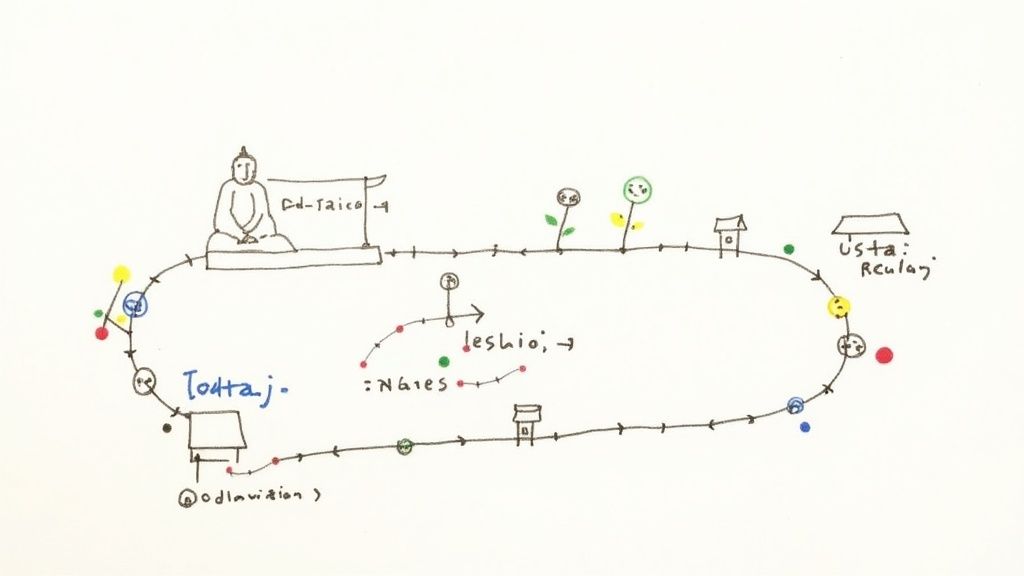
Your trip from Osaka to Nara can be so much more than just a quick train ride. With a thoughtful route, you’ll weave through ancient temples, pause in hidden gardens and stroll the historic lanes of Naramachi—all in one seamless loop.
This itinerary begins at Kintetsu-Nara Station and leads you past the must-see icons before guiding you into quieter corners. Think world-famous shrines, tranquil greenery and merchant-era streets, balanced to give you a genuine feel for Nara’s old-world soul.
Morning: The Sacred And The Serene
Arrive before 9 AM to enjoy a peaceful start. From the station, follow the signs into Nara Park and you’ll soon be greeted by the famous sika deer. Pick up a handful of shika senbei (deer crackers) and watch them bow in return—a delightfully playful ritual.
Next up is Todai-ji Temple. Its Daibutsuden hall is the world’s largest wooden building, sheltering a 15-meter-tall bronze Buddha. The scale alone inspires awe, just as it has since 752.
After marveling at the grand hall, step off the main path. Nara’s magic often hides in quiet spots tucked just beyond the crowds.
Midday: Gardens And Green Tea
A short walk from Todai-ji brings you to two contrasting garden experiences:
Isuien Garden
This paid garden uses “borrowed scenery” to frame Todai-ji’s Nandaimon Gate and Mount Wakakusa as living backdrops.Yoshikien Garden
Free for international visitors, this three-part garden combines a pond, moss landscape and tea ceremony space—perfect for a reflective break.
Choose one, find a bench and sip in the calm. To explore the deeper philosophy behind these gardens, see our guide to Kyoto temple traditions.
Afternoon: Discovering Old Town Naramachi
From the gardens, head south into Naramachi, the old merchant quarter where time seems to slow. Narrow lanes wind between traditional machiya (wooden townhouses), each hiding its own story.
Be sure to seek out:
Kosho-no-Ie (Naramachi Lattice House)
A lovingly restored home you can explore for free, offering a glimpse into merchant life.Artisan Shops
Look for craftsmen creating Nara Fude calligraphy brushes or intricate wood carvings—handed down through generations.Harushika Sake Brewery
For ¥500, taste a flight of local sake and keep the tasting cup as a souvenir.
Here, there’s no schedule to keep—just follow your curiosity down side streets, pop into a cozy café or peek into a tucked-away shrine. These unscripted discoveries are what turn a simple day trip into a true cultural immersion.
Discovering Nara's Soul: Off-the-Beaten-Path Experiences
Sure, the Great Buddha and the bowing deer are must-dos. But the real soul of this ancient capital reveals itself when you step off the main tourist drag. To have a full cultural experience, you have to slow down. It’s in the quiet, authentic moments that the city truly comes alive.
This is how a simple trip from Osaka transforms into something much deeper—a connection to living history, ancient forests, and flavors perfected over centuries. This is the heart of off-the-beaten-path travel.
Venture Into The Kasugayama Primeval Forest
Right behind the famous Kasuga Taisha Shrine is a world that feels a million miles away from the crowds. The Kasugayama Primeval Forest is a sacred space, untouched for over a thousand years. A gentle hike along its mossy, stone-lined paths feels like stepping back in time. This isn't just any forest; it's a UNESCO World Heritage site, offering a peaceful escape where you can feel the deep link between Shinto beliefs and the natural world.
Explore Horyu-ji Temple: A Glimpse Into Ancient Japan
Just a short train or bus ride west of central Nara, you’ll find the Horyu-ji Temple area. This place is a heavyweight of Japanese history. Founded way back in 607, its complex holds some of the oldest wooden buildings still standing anywhere in the world. Unlike the bustling Todai-ji, Horyu-ji has a quiet, contemplative vibe. As you walk through its pagoda and halls, you're literally walking through 1,400 years of history, experiencing Japanese Buddhism right at its source.
Taste Authentic Nara: A Full Cultural Experience
To truly know a place, you have to eat its food. Ditch the busy main streets and find a family-run spot in the Naramachi district for regional specialties.
- Kakinoha-zushi: Nara's signature dish. Pressed sushi, usually mackerel or salmon, wrapped in a persimmon leaf which imparts a subtle, earthy flavor.
- Miwa Somen: Incredibly thin noodles, a local delicacy perfect served chilled on a warm day.
- Kuzu Mochi: A refreshing, jelly-like dessert made from arrowroot starch, often served with sweet soybean powder (kinako) and brown sugar syrup.
- Local Sake: Nara is a birthplace of refined sake. Pop into a small brewery for a tasting to appreciate the craft.
By choosing these smaller, local spots, you're doing more than just eating; you're taking part in Nara’s living culinary history and supporting the community that keeps it alive.
Your Osaka To Nara Travel Questions Answered
Planning that quick jaunt from Osaka to Nara often sparks a last-minute “what now?” Don’t worry—we’ve rounded up the top questions and given you straightforward advice. Think of this as the final touch on your perfect day (or overnight) itinerary.
We’ll walk you through station choices, JR Pass hacks, ideal time allotments, and whether you should sleep under Nara’s stars or head back to Osaka by dinner.
Which Station In Osaka Is Best For Traveling To Nara
Your station hinges on the train you prefer. Here’s a quick breakdown:
- Kintetsu Nara Line: Board at Osaka-Namba Station. From there, it’s a five-minute walk straight into Nara Park.
- JR Yamatoji Line: Covered by a Japan Rail Pass. Catch it at JR Namba or Tennoji Station. You can also leave from Osaka (Umeda), but expect extra stops.
Can I Use My Japan Rail Pass From Osaka To Nara
Yes—but only on the JR Yamatoji Line. Your pass won’t work on Kintetsu trains.
That said, if your JR Pass is active, it’s a wallet-friendly ride. Buying a single ticket? Kintetsu usually wins for speed and drops you closer to Nara’s must-see spots.
How Much Time Should I Plan For A Nara Day Trip
Aim for at least 6 to 8 hours on the ground. Travel time tacks on about 35–50 minutes each way from Osaka.
That gives you room to:
- Gaze up at Todai-ji’s colossal Buddha
- Hand-feed and snap selfies with bowing deer
- Wander the lantern-lit paths of Kasuga Taisha
- Lose yourself in Naramachi’s pretty backstreets
Underestimating Nara is easy. Giving yourself a full day means you might discover a tucked-away garden or stumble into a tearoom when you least expect it.
Is It Better To Stay Overnight Or Day Trip From Osaka
A well-planned day trip hits all the highlights. You’ll time your return for sushi in Dotonbori and still brag about a deer encounter before sunset.
On the other hand, an overnight stay feels like hitting the “pause” button on time. Picture morning mist drifting through deer-filled meadows or lanterns glowing at Kasuga Taisha long after the day-trippers head home. It’s a side of Nara you simply can’t see on a tight schedule.
Beyond trains and hotels, staying connected matters. Explore seamless options like an eSIM for international travel to dodge hefty roaming fees.
At CoraTravels, we believe real adventures start with local know-how. Our guides cut through the noise so you can travel smart—and curious. Discover more insider tips and destinations at https://coratravels.com.