Mexico's ancient cities are more than just pyramids and stone carvings; they are living landscapes that tell a story of innovation, cosmology, and human resilience. While iconic sites like Chichén Itzá and Teotihuacán are essential stops, a truly immersive journey goes deeper. This guide is designed for the traveler who seeks to understand the cultural context behind the stones and find the authentic pulse of these historic locations.
We will skip the generic advice and focus on how to connect with these places meaningfully. You'll learn how to navigate crowd rhythms, hire community guides who share stories passed down through generations, and explore the nearby villages that keep ancient traditions alive. The goal is to trade overwhelming tourist trails for quiet jungle paths and genuine cultural encounters, ensuring your exploration of ruins in Mexico is both respectful and unforgettable.
This roundup provides actionable strategies for each site, from major landmarks to off-the-beaten-path alternatives like Cobá and Bonampak. We’ll cover practical logistics like ticketing and transport, but also delve into local etiquette and suggest itineraries that connect you to regional food and culture. For those inspired to connect on a deeper level, understanding the local language is invaluable. Discover the best way to learn Spanish to enrich your travels through Mexico's ancient sites. Let's step beyond the main plazas and into the heart of Mesoamerica.
1. Chichén Itzá
Dominating the northern Yucatán Peninsula, Chichén Itzá is one of the most recognized ruins in Mexico and a UNESCO World Heritage site. This sprawling complex, a fusion of Maya and Toltec traditions flourishing between 600 and 1200 CE, is a testament to sophisticated engineering and celestial knowledge. The iconic centerpiece, El Castillo (Pyramid of Kukulkan), functions as a massive, 365-step calendar dedicated to the feathered serpent god.
Beyond this famous pyramid, the site reveals the grandeur of its civilization through structures like the Great Ball Court, the largest of its kind in ancient Mesoamerica, and the Temple of the Warriors with its vast group of carved columns. The Sacred Cenote, a natural limestone sinkhole, offers a chilling glimpse into ritualistic practices where valuable objects and human sacrifices were offered to the gods.
Gaining an Immersive Experience
To truly connect with Chichén Itzá, bypassing the surface-level tourist circuit is key. The site's immense popularity often overshadows its profound cultural significance.
- Strategic Timing is Everything: Arrive precisely at the 8:00 AM opening. This not only helps you evade the peak heat but also allows for an hour or two of relative tranquility before the tour buses from Cancún and Mérida descend. The ethereal morning light casting long shadows across the monuments creates an unforgettable atmosphere.
- Connecting with Local Guides: At the entrance, you will find licensed guides. Hiring one is crucial for understanding the intricate cosmology, architectural symbolism, and hidden details you would otherwise miss. Opt for a guide of Maya descent to hear stories and interpretations passed down through generations.
Off-the-Beaten-Path Tip: Instead of staying in a distant resort, base yourself in the small, unassuming village of Pisté, just a few kilometers away. This offers a genuine local perspective, simpler accommodations, and the chance to enjoy authentic Yucatecan food at family-run eateries far from the tourist crowds.
Practical & Cultural Insights
- Beyond the Main Plaza: While El Castillo is the main draw, dedicate time to the less-crowded southern section, known as "Old Chichén." Here you'll find structures like the Nunnery and the Temple of the Phalli, showcasing a more classic Puuc architectural style.
- Essential Preparations: The site offers very little shade. Bring a wide-brimmed hat, sunglasses, high-SPF sunscreen, and at least two liters of water per person. Wear comfortable walking shoes, as the complex is extensive.
- Respect the Site: Climbing the structures, including El Castillo, is strictly prohibited to preserve them. Always stay on marked paths and never touch the ancient carvings. This is not just a tourist attraction; it is a sacred ancestral site.
2. Palenque
Emerging from the dense, misty jungles of Chiapas, Palenque offers an atmospheric journey into the heart of the Maya Classic period (600-800 CE). This UNESCO World Heritage site is renowned not for its size but for its exceptional artistry and architectural grace. These ruins in Mexico are celebrated for their intricate stucco reliefs and some of the most detailed hieroglyphic inscriptions ever discovered, providing a rich narrative of its rulers and cosmology.
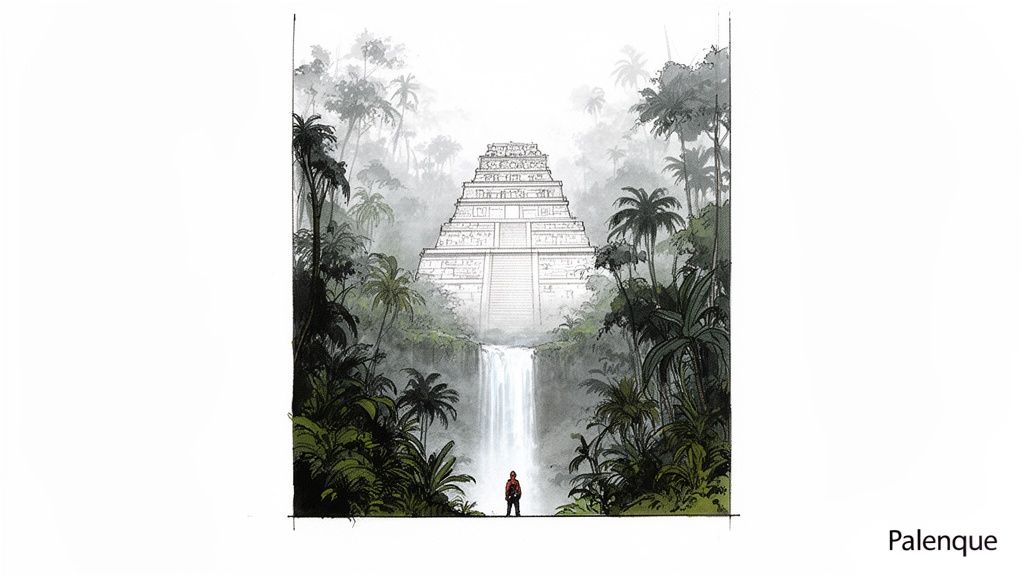
The city's soul is the Temple of the Inscriptions, a funerary pyramid that housed the tomb of the great ruler K'inich Janaab' Pakal. Unlike many other sites, Palenque’s structures, including The Palace with its unique four-story observation tower, are harmoniously integrated into the lush, mountainous terrain. The sound of howler monkeys and cascading waterfalls provides a primal soundtrack to any exploration of this deeply spiritual place.
Gaining an Immersive Experience
To truly appreciate Palenque, you must embrace its jungle setting and the patient, scholarly approach it invites. The site’s magic lies in its details and its wild, untamed environment.
- Explore the Unexcavated Paths: Only a small percentage of Palenque has been excavated. Ask your local guide or park rangers about trails leading to smaller, less-visited structure groups like Group C or the Bat Group, still partially claimed by the jungle. This offers a sense of discovery and a glimpse into what the first explorers might have seen.
- Connecting with Local Guides: The narrative of Palenque is written in stone. To unlock the meaning behind the hieroglyphs, hire one of the specialized, licensed guides at the entrance. Their insights into Maya dynastic history and mythology transform the site from a collection of buildings into a living storybook.
Off-the-Beaten-Path Tip: Stay in the laid-back neighborhood of El Panchán, nestled in the jungle between Palenque town and the ruins. It’s a hub for travelers with rustic cabañas, community-run eateries, and live music, offering a far more immersive cultural experience than staying in the main town.
Practical & Cultural Insights
- Embrace the Jungle Morning: Arrive when the gates open at 8:00 AM. The early morning mist often hangs low among the temples, creating a mystical, otherworldly scene. This also allows you to explore the main plazas before the jungle heat and humidity become intense.
- Essential Preparations: The Chiapas jungle is no joke. Wear lightweight, long-sleeved clothing and sturdy hiking boots with good grip, as stone paths can be slippery. Potent insect repellent is non-negotiable. Carry ample water and consider bringing a rain poncho, as showers can appear suddenly.
- Respect the Natural Setting: Palenque is a protected ecological zone as much as it is an archaeological site. Stay on designated paths to avoid damaging fragile ecosystems and unexcavated structures. Listen to the wildlife from a distance and do not feed the animals.
3. Teotihuacán
Just 50 kilometers northeast of Mexico City lies Teotihuacán, a monumental city that was once one of the largest in the Western Hemisphere. Flourishing between 100 BCE and 750 CE, this vast metropolis was home to over 125,000 people. Despite its profound influence on Mesoamerican cultures for centuries, the civilization that built these grand structures remains a mystery, making it one of the most enigmatic ruins in Mexico. Its sophisticated urban planning is evident in the grand Avenue of the Dead, which connects the iconic Pyramid of the Sun and Pyramid of the Moon.
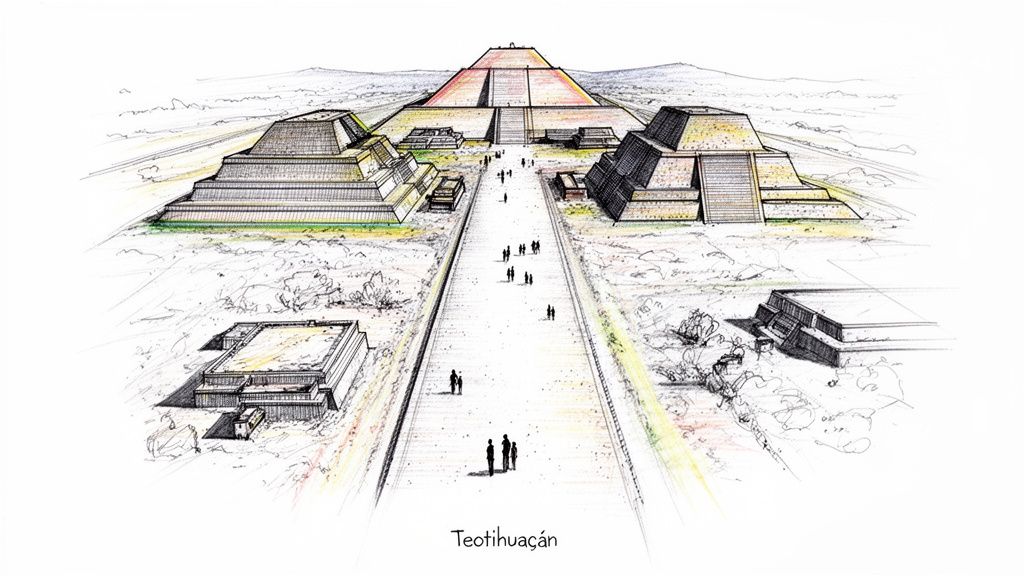
This UNESCO World Heritage site showcases breathtaking scale and astronomical precision. Unlike sites built by the Maya or Aztecs, Teotihuacán’s origins are debated, yet its cultural legacy is undeniable. The city's layout was designed to mirror the cosmos, with structures aligned to celestial events, revealing an advanced understanding of astronomy and engineering that continues to captivate archaeologists and visitors alike.
Gaining an Immersive Experience
To truly grasp the scale and spirit of Teotihuacán, you must move beyond the main thoroughfare. The key is to see it not just as a pair of pyramids but as a sprawling ancient city.
- Explore the Residential Compounds: The real magic lies beyond the main axis. Explore the outer residential compounds like Tepantitla and Tetitla. These areas house stunning, well-preserved murals depicting daily life and religious beliefs, and you'll often have them almost entirely to yourself, offering a quiet, intimate look into the city's soul.
- Connecting with Local Guides: The standard tour guides offer basic facts. For a richer understanding, seek out a licensed guide with a background in archaeology. They can illuminate the complex urban planning, explain the symbolism in the murals, and take you to lesser-known areas often missed by casual visitors.
Off-the-Beaten-Path Tip: Skip the tourist-trap restaurants near the main gates. For an authentic and affordable meal, head into the nearby town of San Juan Teotihuacán. Find a small, local comedor and try regional specialties like barbacoa or mixiotes for a full cultural experience.
Practical & Cultural Insights
- Reverse the Tourist Flow: Most visitors enter and head straight for the Pyramid of the Sun. Instead, arrive early and go directly to the Pyramid of the Moon at the northern end. This allows you to climb it with fewer people and enjoy a spectacular panoramic view down the Avenue of the Dead.
- Authentic Local Transport: For a budget-friendly and immersive travel experience, take the bus from Terminal Autobuses del Norte in Mexico City. It’s a direct, efficient route used by locals and is a great way to observe daily life outside the capital.
- Essential Preparations: The site is vast and completely exposed to the sun. A wide-brimmed hat, high-SPF sunscreen, and sturdy walking shoes are non-negotiable. Bring ample water, as the walk along the 2.5-kilometer-long Avenue of the Dead is more strenuous than it appears.
4. Tulum
Perched dramatically on a 12-meter-tall cliff overlooking the turquoise Caribbean Sea, Tulum offers one of the most visually stunning settings for any of the ruins in Mexico. Dating from the Late Postclassic period (c. 1200–1521 CE), this site was a crucial seaport for the Maya, facilitating a thriving trade network. Its most prominent structures, including the Castillo and the Temple of the Frescoes, served as both fortifications and ceremonial centers, remaining active until shortly after the Spanish conquest.
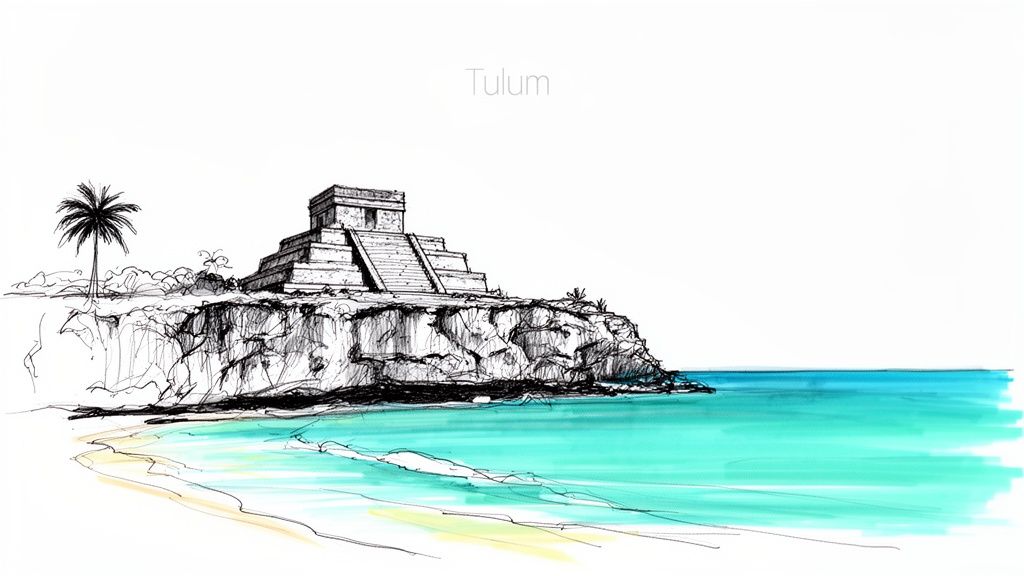
Unlike the sprawling jungle cities of its predecessors, Tulum is a compact, walled site whose true magic lies in its unique coastal location. The combination of ancient stone, white-sand beach, and vibrant blue water has made it one of Mexico's most iconic and frequently visited archaeological treasures.
Gaining an Immersive Experience
Tulum's popularity can make an authentic visit challenging, but with the right approach, you can connect with its historical essence beyond the crowds.
- Embrace the Early Morning Light: Arrive at the 8:00 AM opening to witness the ruins in near solitude. The low, golden morning light against the Caribbean backdrop is breathtaking, and you'll have about an hour before the large tour groups arrive. This is the best time for quiet reflection and photography.
- Connecting with Local Guides: A guide is essential for understanding Tulum's role as a late-period Maya trading hub. They can explain the significance of the murals in the Temple of the Frescoes and the astronomical alignments of the main structures, details easily missed on a self-guided tour.
Off-the-Beaten-Path Tip: Bypass the overpriced and commercialized restaurants in the "Hotel Zone" and head into Tulum Pueblo (the town). Here you’ll find authentic taquerias and family-run restaurants serving genuine Quintana Roo cuisine at a fraction of the price, offering a true taste of the local culture.
Practical & Cultural Insights
- Optimal Season for Solitude: The peak season (December-March) is incredibly crowded. For a more peaceful experience surrounded by lush, vibrant jungle foliage, plan your visit for May through July. The weather is still beautiful, and the visitor numbers are significantly lower.
- Essential Preparations: The site is completely exposed with minimal shade. A wide-brimmed hat, sunglasses, reef-safe sunscreen, and plenty of water are non-negotiable. Wear a swimsuit under your clothes to take advantage of the beach access within the site.
- Beyond the Ruins: Enhance your visit by exploring the region’s natural wonders. Combine your trip with a visit to a nearby cenote, like the famous Gran Cenote or the less-crowded Cenote Tankah. There are many incredible natural swimming holes to explore; you can discover the best cenotes near the area to cool off after your archaeological exploration.
5. Uxmal
Nestled in the rolling hills of the Puuc region, Uxmal stands as a magnificent example of Late Classic Maya architecture. Flourishing between 600 and 1000 CE, its name translates to "thrice-built," hinting at its layered history. This UNESCO World Heritage site is distinguished by its ornate and intricate Puuc style, featuring elaborate stone mosaics, geometric friezes, and Chac rain god masks, making it one of the most aesthetically stunning ruins in Mexico.
Unlike the more rigid designs of other sites, Uxmal’s layout is harmonious with the landscape. The Pyramid of the Magician, with its unique rounded sides, dominates the complex. Other key structures, such as the Governor's Palace and the expansive Nunnery Quadrangle, showcase sophisticated masonry and an advanced understanding of engineering, particularly in their methods of water collection in this arid region.
Gaining an Immersive Experience
Uxmal offers a more tranquil and immersive encounter than its northern neighbor, Chichén Itzá. Its grandeur is best appreciated with a thoughtful approach that prioritizes authenticity over spectacle.
- Go Beyond the Main Site: To truly understand the region, dedicate a full day to the Ruta Puuc. After exploring Uxmal, continue to the smaller but equally fascinating off-the-beaten-path sites of Kabah, Sayil, and Labná. This circuit reveals the interconnectedness of these ancient cities and you'll often have these incredible ruins to yourself.
- Connecting with Local Guides: Engage a local guide specializing in Puuc architecture. These guides, often found near the entrance, can illuminate the complex symbolism of the stone carvings and explain the ingenious water management systems, like the chultunes (cisterns), that allowed Uxmal to thrive.
Off-the-Beaten-Path Tip: Base yourself in the vibrant colonial city of Mérida, about an hour's drive away. This allows you to combine your archaeological explorations with the cultural richness of a historic Yucatecan city, complete with exceptional cuisine, bustling markets, and lively plazas that offer a full cultural experience.
Practical & Cultural Insights
- Embrace the Morning Solitude: Arriving at the 8:00 AM opening is crucial. The early hours grant you cooler temperatures and the profound silence of the site before most visitors arrive. You can explore the vast courtyards and admire the detailed facades in near-solitude.
- Essential Preparations: The site is very exposed with minimal shade. A wide-brimmed hat, high-SPF sunscreen, and sunglasses are non-negotiable. Bring at least two liters of water per person, as the Yucatán heat can be intense. Comfortable walking shoes are a must for navigating the uneven terrain.
- Reconsider the Light Show: While the evening light and sound show is advertised, it often feels like a generic tourist attraction. Devoting that time to exploring the nearby Puuc Route sites or enjoying Mérida offers a richer cultural payoff.
6. Monte Albán
Majestically perched on a flattened mountop overlooking the Oaxaca Valley, Monte Albán was the powerful Zapotec capital for over a millennium. Flourishing from approximately 500 BCE to 800 CE, this UNESCO World Heritage site is a stunning example of urban planning and astronomical precision. It stands as one of the most culturally significant ruins in Mexico, offering unparalleled panoramic views and a deep connection to the origins of Oaxacan identity.
The vast Grand Plaza is flanked by pyramids, temples, and an ancient ball court. Key structures include the observatory, uniquely aligned with celestial bodies, and Building J, which features carved slabs known as danzantes (dancers). These carvings represent some of the earliest known written texts in Mesoamerica, depicting captives and providing a stark look into the city's military and political dominance.
Gaining an Immersive Experience
To appreciate Monte Albán's true scale and significance, you must look beyond its architectural beauty and engage with its living cultural context, which still thrives in the valleys below.
- Combine with Valley Culture: Plan your visit to Monte Albán as part of a broader exploration of the Oaxaca Valley. Combine your trip with visits to the smaller but equally fascinating ruins at Mitla and Yagul. This provides a more comprehensive understanding of the region's Zapotec and Mixtec heritage and takes you off the main tourist trail.
- Connecting with Local Guides: Engaging a local guide, especially one of Zapotec descent, is invaluable for a full cultural experience. They can decipher the complex cosmology, explain the symbolism of the danzantes, and share oral histories that bring the ancient stones to life in a way no guidebook can.
Off-the-Beaten-Path Tip: Immerse yourself in the region's vibrant culture by staying in Oaxaca City. Time your visit to coincide with a major market day (Wednesday or Saturday) to witness indigenous commerce and traditions that have continued for centuries, connecting the ancient past with the living present.
Practical & Cultural Insights
- Embrace the Morning Light: Arrive right at the 8:00 AM opening. The early morning sun casts dramatic, soft light across the plaza, ideal for photography and quiet contemplation before the larger tour groups arrive.
- Authentic Local Transport: For a genuine local experience, take a colectivo (shared van or taxi) from Oaxaca City's center. It’s an incredibly affordable and efficient way to get to the site, allowing you to travel alongside residents.
- Prepare for Elevation: The site sits at an elevation of 1,940 meters (6,365 feet). The mountain air can be cool in the morning and intensely sunny by noon. Dress in layers, wear a hat, and bring plenty of water and sunscreen.
7. Chichen Itza Alternative: Cobá
Deep within the Quintana Roo jungle, Cobá offers a rugged and adventurous alternative to its more famous neighbors. Flourishing between 600 and 1000 CE, this vast ancient Maya city is not a single manicured park but a sprawling network of settlements connected by stone causeways, or sacbeob. Its semi-excavated state, with many structures still draped in vines, makes exploring these ruins in Mexico feel like a genuine off-the-beaten-path expedition.
The site’s crowning glory is Nohoch Mul, which at 42 meters (137 feet) is the tallest pyramid on the Yucatán Peninsula. Unlike many other major sites, visitors are still permitted to climb its 120 steep stone steps. The panoramic view from the top, a breathtaking canopy of unbroken jungle stretching to the horizon, is a reward that few other Mayan sites can offer.
Gaining an Immersive Experience
Cobá’s magic lies in its immersive jungle environment and its sprawling, decentralized layout. To truly appreciate it, you must embrace the spirit of exploration.
- Embrace the Journey: The main archaeological groups are spread far apart. Instead of walking the long, hot jungle paths, rent a bicycle or hire a tricycle taxi (bicitaxi) from local community members near the entrance. This transforms the visit into a dynamic and fun exploration through the shaded causeways.
- Connecting with Local Guides: The site's layout is confusing, and its most fascinating elements are not immediately obvious. A local guide is essential to navigate the jungle paths, explain the significance of the stelae (carved stone slabs), and bring the history of this powerful city-state to life.
Off-the-Beaten-Path Tip: Stay overnight in the quiet village of Cobá itself or in nearby Valladolid. This allows you to enter the park at the 8:00 AM opening, experiencing the jungle as it awakens with the sounds of howler monkeys and tropical birds before the day-trippers from Tulum and Playa del Carmen arrive.
Practical & Cultural Insights
- A Post-Ruin Reward: The area around Cobá is dotted with stunning cenotes. After your climb, head to one of the nearby cenotes like Choo-Ha, Tamcach-Ha, or Multum-Ha. A refreshing swim in these cool, subterranean freshwater pools is the perfect way to have a full cultural and natural experience.
- Jungle Essentials: This is a true jungle environment. Wear sturdy walking shoes or hiking boots. Bring effective insect repellent, a hat, and more water than you think you'll need; there are no vendors inside the vast complex.
- Respect the Climb: If you choose to climb Nohoch Mul, be extremely cautious. The steps are ancient, uneven, and can be slippery. Use the central guide rope for both ascent and descent, and never attempt the climb during or just after rainfall.
8. Dzibilchaltún
Often overshadowed by its more famous neighbors, Dzibilchaltún is a remarkable archaeological site just a short drive from Mérida. What makes these ruins in Mexico so unique is its incredible longevity; it stands as one of the longest continuously occupied settlements in Mesoamerica, with a history stretching over 3,000 years. This endurance offers a rare, off-the-beaten-path window into the entire arc of Maya civilization.
The site is best known for the Temple of the Seven Dolls, a modest yet architecturally significant structure engineered so that on the equinoxes, the rising sun shines directly through its doorways. Beyond this temple, the sprawling grounds include the remains of extensive residential compounds and a large cenote, Xlakah, which was a vital water source and a sacred ceremonial center.
Gaining an Immersive Experience
To appreciate Dzibilchaltún, you must look beyond its main temple and immerse yourself in its subtle, long-spanning history. Its proximity to Mérida makes it an easy yet profound half-day trip that reveals the everyday realities of ancient Maya life.
- Focus on Domestic Life: While most visitors head straight for the Temple of the Seven Dolls, spend your time exploring the less-trafficked residential sacbés (pathways) and household platforms. This is where the site's 3,000-year story truly comes alive, revealing how ordinary people lived over millennia.
- Connecting with Local Guides: The significance of Dzibilchaltún isn't immediately obvious. A local guide is essential for interpreting the subtle archaeological features and explaining the site's incredible timeline. They can bring the story of its continuous occupation to life, from its Preclassic origins to its Postclassic decline.
Off-the-Beaten-Path Tip: Stay in Mérida's historic center to complement your visit. The city's colonial architecture, vibrant markets, and world-class museums provide the perfect cultural context for understanding the long history of the Maya people before and after the Spanish arrival, completing your cultural experience.
Practical & Cultural Insights
- Embrace the Midday Cenote Swim: Unlike purely ceremonial cenotes at other sites, Xlakah was central to daily life. Plan your visit to end at the cenote around noon or early afternoon. A refreshing swim in its cool, clear waters provides a powerful, tangible connection to the ancient inhabitants who relied on it for survival.
- Essential Preparations: The site is very open with limited shade. Wear a hat, light clothing, and sturdy walking shoes. Bring your swimsuit, a towel, and biodegradable sunscreen if you plan to swim in the cenote.
- Respect the Natural Environment: The cenote is a delicate ecosystem. Do not wear chemical-based sunscreens or insect repellents in the water. Follow all posted rules to help preserve this unique natural and historical feature.
9. Bonampak
Tucked deep within the Lacandón jungle of Chiapas, Bonampak offers an unparalleled window into the Maya world. While a smaller site, its global significance comes from housing the most remarkably preserved and vibrant murals among all known Maya ruins in Mexico. Flourishing between 600 and 800 CE, its main structures contain brilliant, multi-colored frescoes that bring the ancient civilization to life with astonishing clarity.
The murals within the aptly named Temple of the Murals depict elaborate courtly scenes, the brutal realities of battle, and intricate ritualistic ceremonies. The remote jungle setting makes this the ultimate off-the-beaten-path expedition, far from the crowds of more accessible sites.
Gaining an Immersive Experience
The journey to Bonampak is as much a part of the adventure as the site itself. A superficial day trip is impossible; embracing the remote expeditionary nature of the visit is essential for a meaningful experience.
- Partner with the Lacandón Community: The site is located on Lacandón land, and the only authentic way to visit is by arranging a tour directly through the local community in Lacanjá Chansayab. This ensures your visit supports the indigenous guardians of the forest and provides an unparalleled cultural exchange.
- Connecting with Local Guides: Seek out a Lacandón guide with specific expertise in Maya iconography. Their ability to decipher the complex narratives painted on the walls is the key to unlocking the site’s true historical value and offers a full cultural experience.
Off-the-Beaten-Path Tip: Combine your archaeological tour with an immersive jungle experience. Many Lacandón guides offer add-ons like rainforest treks to hidden waterfalls and stays in rustic, community-run eco-lodges. This transforms a simple ruin visit into a profound cultural and natural immersion.
Practical & Cultural Insights
- Plan a Multi-Day Expedition: A visit to Bonampak cannot be rushed. Plan for a minimum of two to three days. One full day is typically required for travel from Palenque, with another day dedicated to exploring Bonampak and the nearby Yaxchilán ruins.
- Essential Preparations: You are entering a remote jungle. No services are available at the site. Pack all necessary food, ample water (at least 3 liters per person), insect repellent, high-SPF sunscreen, and a rain jacket. Visit during the dry season (November to April).
- Respect the Murals: Photography with flash is strictly forbidden inside the Temple of the Murals, as the intense light damages the ancient pigments. Respect the barriers and never touch the walls. You are a guest in a place of immense cultural importance to the Lacandón Maya.
10. Mitla (Xaachii)
Nestled in the Oaxaca Valley, Mitla stands apart from other ruins in Mexico for its breathtaking and unique artistry. Known as Xaachii, or "place of the dead," it served as a primary religious center for the Zapotec and later the Mixtec people. What makes Mitla extraordinary is not colossal pyramids but its intricate and perfectly executed geometric stonework, known as grecas. These elaborate mosaics, crafted from thousands of individually cut and polished stones, create mesmerizing patterns across palace walls.
The site is organized into five main groups of structures, with the Group of the Columns being the most impressive. Unlike the grand scale of other sites focused on celestial events, Mitla's focus is on the intimate, terrestrial, and spiritual, creating a powerful connection between the underworld and the living.
Gaining an Immersive Experience
To appreciate Mitla's genius, you must look beyond the stone and see the artistic and spiritual intent behind the patterns. It's a site that rewards close observation rather than a quick walkthrough.
- Focus on the Details: The beauty of Mitla lies in its precision. Take your time to appreciate how the individual stones fit together perfectly without mortar. Notice the variations in the fretwork patterns from one building to the next; each tells a different symbolic story, offering a quieter, more contemplative experience.
- Connecting with Local Guides: Finding a guide with specific knowledge of Mixtec-Zapotec cosmology is invaluable. Ask at the entrance for a guide who can explain the symbolism of the grecas, which are not merely decorative but represent concepts like the feathered serpent, the sky, and the underworld.
Off-the-Beaten-Path Tip: Combine your visit to Mitla with a stop at the nearby petrified waterfalls of Hierve el Agua and a local mezcal distillery. This classic Oaxaca Valley day trip offers a profound mix of natural wonder, ancient history, and living cultural tradition for a full cultural experience.
Practical & Cultural Insights
- Optimal Lighting is Key: Visit in the very early morning or late afternoon. The low-angle sunlight rakes across the facades, creating sharp shadows that make the complex geometric mosaics pop with three-dimensional depth, revealing details that are washed out in the harsh midday sun.
- Essential Preparations: The Oaxacan sun is intense. A wide-brimmed hat, sunglasses, and sunscreen are non-negotiable. The village of Mitla itself has excellent markets and restaurants; plan to have lunch there to savor authentic Oaxacan cuisine.
- Respect the Craftsmanship: These intricate stone mosaics have survived for centuries. Do not touch or lean on the walls. The delicate stonework is irreplaceable. Remember that this was a profoundly sacred site, and its ceremonial importance is still felt by local Zapotec communities today.
Comparison of 10 Mexican Ruins
| Site | Access / Complexity 🔄 | Resources & Logistics ⚡ | Expected Experience ⭐ | Ideal Use Cases 📊 | Key Advantage / Quick Tip 💡 |
|---|---|---|---|---|---|
| Chichén Itzá | Medium — well-developed but very crowded | High — strong visitor infrastructure; entry fee (~580 MXN); long lines | ⭐⭐⭐⭐ — monumental, educational, less intimate | Day-trip, first-time cultural overview, photography | Arrive at opening; hire a local guide; stay in nearby Pisté |
| Palenque | High — jungle terrain, some steep climbs | Medium — ~2 hr from Villahermosa; limited on-site amenities | ⭐⭐⭐⭐ — immersive, refined art and jungle atmosphere | Archaeology enthusiasts, jungle/nature combination | Visit Dec–Feb; stay in El Panchán; wear hiking boots |
| Teotihuacán | Low — easy from Mexico City but popular | High — excellent transport and museum; 1 hr from CDMX | ⭐⭐⭐⭐ — vast urban planning, climbable Pyramid of the Sun | Day-trip from Mexico City, urban history | Go early; explore residential murals; eat in San Juan town |
| Tulum | Low — very accessible from Riviera Maya; extremely busy | Medium — good tourist services; beach access; higher fees | ⭐⭐⭐ — scenic seaside ruins, later-period architecture | Combine beach time with quick cultural stop | Arrive at opening; explore Tulum Pueblo for authentic food |
| Uxmal | Medium — ~1 hr from Mérida, compact site | Low — fewer amenities but manageable access | ⭐⭐⭐⭐ — exceptional Puuc masonry, quieter than mega-sites | Architecture-focused visitors, tranquil alternative | Visit Nov–Mar; explore the full Ruta Puuc; stay in Mérida |
| Monte Albán | Medium — travel to Oaxaca; high elevation plateau | Medium — on-site museum; combine with Oaxaca City | ⭐⭐⭐⭐ — panoramic views, strong Zapotec cultural context | Cultural-depth trips, combine with Oaxaca markets | Hire Zapotec guide; take a local colectivo |
| Cobá | High — spread-out jungle trails; active exploration | Low — sparse infrastructure; bring water/snacks | ⭐⭐⭐⭐ — adventurous, climbable pyramid, off-the-beaten-path | Adventure travelers wanting jungle exploration | Rent a bike; stay in Cobá village; swim in a cenote |
| Dzibilchaltún | Low — very near Mérida; easy but overlooked | Low — basic amenities; very affordable entry | ⭐⭐⭐ — intimate, domestic archaeology and cenote swim | Short, off-the-beaten-path visit from Mérida | Explore residential compounds; swim midday |
| Bonampak | Very High — remote Lacandón jungle; expedition logistics | Very Low — no facilities; 4WD and long travel required | ⭐⭐⭐⭐⭐ — unparalleled murals, full cultural immersion | Expedition travelers, mural enthusiasts | Plan 2+ day trip; arrange a Lacandón-guided visit |
| Mitla (Xaachii) | Medium — near Oaxaca; compact and walkable | Low — limited on-site services; short visit time | ⭐⭐⭐⭐ — unique geometric mosaics, exceptional artisanal detail | Art/architecture enthusiasts; combine with Hierve el Agua | Hire a specialist guide; visit early/late for best light |
Your Journey Through Time: Integrating Ancient Sites into Modern Travel
The archaeological wonders of Mexico are far more than static monuments; they are vibrant gateways into millennia of human history, innovation, and culture. As we've journeyed from the colossal Avenue of the Dead at Teotihuacán to the intricate geometric friezes of Mitla, and from the jungle-shrouded temples of Palenque to the coastal fortress of Tulum, a clear theme emerges. The most profound way to experience these ruins in Mexico is not as a tourist ticking off a checklist, but as a respectful guest engaging with a living legacy.
Each site, whether a world-famous landmark like Chichén Itzá or an off-the-beaten-path gem like Bonampak, offers a unique portal into the past. Yet, the true magic lies in connecting these ancient stones to the present. It’s about understanding that the descendants of the people who built these cities are still here, their languages and traditions echoing through modern Mexico. This guide was designed to move beyond the surface, providing actionable strategies to help you forge that deeper, more immersive cultural connection.
Key Takeaways for an Immersive Archaeological Journey
To transform your trip from a simple vacation into a rich cultural immersion, remember these core principles:
- Go Beyond the Main Plaza: While iconic structures are a must-see, the real stories often lie in the less-trodden areas. Exploring residential complexes or outlying structures provides a more complete picture of daily life and offers a quiet escape from the crowds.
- Prioritize Local Expertise: The experience of walking through a site with a certified local guide, especially one of indigenous descent, is incomparable. They provide not just historical facts but cultural context, oral traditions, and a personal connection to the land that a guidebook can never replicate.
- Seek Out Off-the-Beaten-Path Alternatives: For every major site, there are smaller, less-visited ruins nearby that offer a more intimate and adventurous experience. Pairing a famous site with a lesser-known one provides a balanced and richer perspective.
- Contextualize Your Visit: The journey is part of the adventure. Instead of rushing back to a resort, explore nearby towns. Savor a meal at a local cocina económica, visit a community market, or stay in a family-run guesthouse. This approach offers authentic cultural exchanges and supports local economies.
Planning Your Next Steps: From Inspiration to Itinerary
With this wealth of information, you are now equipped to plan a truly memorable exploration of Mexico’s ancient heart. Start by identifying a region that calls to you. Are you drawn to the dense, mystical jungles of Chiapas, home to Palenque and Bonampak? Or perhaps the sun-drenched, culturally rich valleys of Oaxaca, where Monte Albán and Mitla stand as testaments to Zapotec ingenuity?
Once you have a region in mind, use the practical tips in this guide to build a loose framework. A well-planned trip often involves balancing a major, must-see site with one or two smaller, off-the-beaten-path locations. For instance, you could pair a visit to the grand city of Uxmal with a tranquil morning exploring the nearby ruins of Dzibilchaltún. To fully integrate these incredible ancient sites into your modern travel plans, it's essential to explore suitable accommodation options that enhance your overall journey. Choosing a base that aligns with your travel style, whether it’s a boutique hotel or a rustic eco-lodge, can make all the difference.
Ultimately, exploring the magnificent ruins in Mexico is an active, participatory experience. It’s an invitation to listen to the whispers of history, to appreciate the enduring creativity of humanity, and to connect with the vibrant cultures that continue to thrive in the shadows of these ancient pyramids. Let curiosity be your compass, and you will find a journey that resonates long after you return home.
Ready to turn your travel dreams into a perfectly crafted reality? At CoraTravels, we specialize in designing custom itineraries that connect you with the authentic heart of Mexico, from its most famous ruins to its best-kept secrets. Let us help you plan an unforgettable journey. Explore your options with CoraTravels.