Bali is often reduced to a postcard image of infinity pools, beach clubs, and yoga retreats. But the island’s true essence, its vibrant soul, lies far beyond these well-trodden paths. This guide is your map to that deeper experience, focusing on genuine, immersive activities that connect you with the authentic rhythm of Balinese life. We’re intentionally skipping the obvious tourist traps and diving straight into the cultural heart of the island with the help of local insights.
This isn't just another list of generic things to do in Bali. It's a curated collection of actionable insights designed for the curious traveler seeking a full cultural immersion. We will move past the surface-level attractions to explore Bali’s off-the-beaten-path locations, from the spiritual highlands to rugged, less-visited coastlines. You’ll learn how to respectfully participate in local life, find the best family-run warungs hidden in plain sight, and understand the unspoken etiquette that governs daily interactions for a truly immersive experience.
Our goal is to provide a practical blueprint for traveling with intention. You will discover adventures outside of main touristic places, learn about local food customs from local guides, and get insider tips on navigating the island like a seasoned visitor. Forget the generic advice. This is your guide to experiencing Bali through the eyes of those who call it home, ensuring your journey is not only memorable but also meaningful and respectful. Prepare to uncover the experiences that transform a simple vacation into a genuine connection with one of the world's most fascinating cultures.
1. Rice Terraces Trek in Tegallalang
Exploring Bali's rice terraces is a must-do, but the real magic lies beyond the crowded main viewpoints. Instead of just snapping a photo, immerse yourself in this ancient landscape by trekking through the working paddies with a local guide. These walks reveal the intricate subak irrigation system, a UNESCO World Heritage cultural landscape that has sustained Balinese life for over a thousand years, offering a truly off-the-beaten-path perspective.
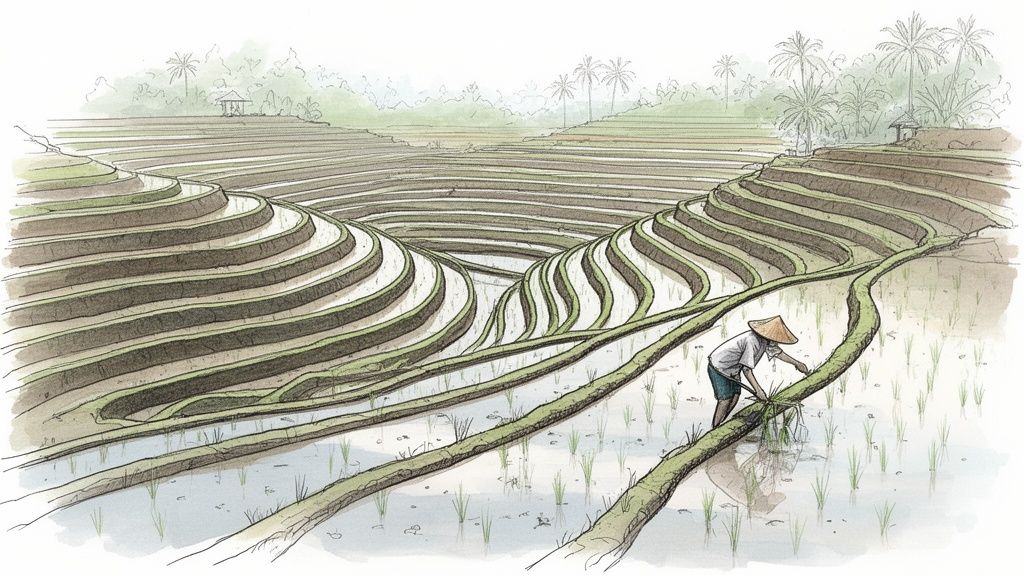
This experience is one of the most rewarding things to do in Bali for those seeking a genuine connection to the land and its people. By venturing onto quieter paths, you can witness the daily agricultural rhythms and interact respectfully with local farmers, ensuring a full cultural experience.
Finding Your Path
While the main Tegallalang viewpoint is famous, the real adventure is found on lesser-known trails outside the main touristic places.
- Ceking Village: From the main road, look for small signs leading into the valley. These paths offer a more authentic and peaceful walk away from the crowds.
- Jatiluwih: For a grander scale, the Jatriluwih rice terraces (also a UNESCO site) offer expansive, well-marked trekking routes with far fewer tourists than Tegallalang.
- Penestanan: Near Ubud, the Penestanan terraces are easily accessible on foot and provide a quiet, local alternative for a shorter walk that feels off the beaten path.
Insider Tips for an Immersive Trek
To truly appreciate the experience, a bit of planning goes a long way. Hiring a local guide for a small fee (€10-15) can transform your walk into a living history lesson, as they share insights into the subak system, rice cultivation, and local traditions.
- Start Early: Begin your trek around 7:00 AM to avoid the midday heat and tourist crowds.
- Wear Proper Footwear: The paths can be muddy and slippery. Sturdy shoes with good grip are essential.
- Be Respectful: Remember these are working farms. Stick to the designated paths, do not step on the rice plants, and always give farmers the right of way.
- Best Time to Visit: The dry season (April to October) offers the best trekking conditions. The paddies are at their most vibrant green just before harvest season.
2. Temple Rituals and Spiritual Ceremonies
Bali's spiritual heartbeat is found not just in its temples, but in the living rituals performed daily. To truly connect with the island's soul, move beyond sightseeing and respectfully witness an authentic ceremony. This offers a profound glimpse into Balinese Hinduism, a unique blend of local animism and Hindu traditions that permeates every aspect of daily life, providing a full cultural experience far from tourist centers.
Observing these sacred practices is one of the most enriching things to do in Bali, providing a deeper understanding of the culture that shapes the island. It’s an opportunity for an immersive experience of devotion and community spirit, far from the typical tourist trail.
Finding an Authentic Ceremony
Authentic ceremonies happen constantly across the island, from small family altars to grand temple festivals, well outside of main touristic places.
- Tirta Empul Temple: Participate in a melukat, a spiritual cleansing ritual in the holy spring waters. It's best experienced during a full moon (Purnama) for heightened spiritual significance.
- Besakih Temple: The island's "Mother Temple" hosts dozens of Odalan (temple anniversary) festivals throughout the year. Check local calendars for dates, as they change annually based on the Balinese calendar.
- Local Village Temples: Ask your local guide or host about nearby community ceremonies. These smaller, off-the-beaten-path events offer an intimate and genuine look at Balinese spiritual life.
Insider Tips for Respectful Observation
To attend a ceremony respectfully, cultural awareness is key. Hiring a local guide (€15-25) is highly recommended; they can explain the rituals, ensure you follow etiquette, and facilitate a meaningful, immersive experience.
- Dress Appropriately: Always wear a sarong and sash, which are often available for rent at temple entrances (€2-5). Your shoulders and knees must be covered.
- Be Mindful of Your Position: Never sit higher than a priest or point your feet toward altars. When entering inner sanctums, remove your shoes.
- Ask Before Photographing: Many ceremonies are sacred and private. Always ask for permission before taking photos or videos; sometimes it is prohibited entirely. To further enrich your spiritual journey in Bali, you might consider understanding the significance of mala beads, often used in Eastern spiritual practices to aid meditation and prayer during temple rituals.
- Best Time to Attend: Ceremonies often take place early in the morning (5:00-7:00 AM) or around sunset (5:00-7:00 PM).
3. Warung Dining and Street Food Exploration
To truly taste Bali, you must eat where the locals eat. This means venturing beyond tourist-centric restaurants and discovering the island's vibrant warungs (small, family-run eateries) and street food stalls. Here, you’ll find authentic Balinese cuisine prepared with time-honoured recipes, offering a direct taste of the island's culture and a full cultural experience.
This immersive experience is one of the most enriching things to do in Bali for food lovers, as it supports community businesses and reveals daily culinary rituals. By choosing a bustling local spot outside of main touristic places, you’re not just eating a meal; you’re participating in the neighbourhood's daily life. Learn more about the best places to visit for foodies on coratravels.com.
Finding Your Spot
While warungs are everywhere, knowing where to look enhances the experience. A local guide can show you the best off-the-beaten-path gems.
- Gianyar Markets: Visit the morning markets (5:00-9:00 AM) for an incredible array of breakfast dishes and local snacks.
- Denpasar Neighbourhoods: Explore the side streets for legendary nasi kuning (yellow rice) and soto ayam (chicken soup) stalls.
- Warung Bodag Maliah: Located near Ubud, this spot is famous among locals for its authentic dishes in a serene, rice paddy setting.
Insider Tips for an Authentic Meal
A little local know-how can transform your dining experience from intimidating to incredible. Asking a local, "Di mana warung enak?" (Where's the good warung?) is the best way to find hidden gems.
- Eat with the Locals: Join the breakfast rush between 6:00 and 7:00 AM for the freshest bubur ayam (chicken porridge) and nasi goreng (fried rice).
- Point and Choose: Don't let a language barrier stop you. Most warungs have dishes displayed in a glass case (etalase); simply point to what looks good.
- Follow the Queue: The longest line of locals is always the best sign of quality and safety.
- Cash is King: Bring small denominations of Rupiah, as vendors rarely have change for large bills.
4. Surfing and Beach Culture in Uluwatu
Experiencing Bali’s legendary surf scene is about more than just catching waves; it’s an immersion into a vibrant coastal culture. From the gentle breaks of Canggu to the powerful reef barrels of Uluwatu, surfing connects you to the island's daily rhythm, the local communities who live by the ocean, and a deep-rooted respect for the sea. This is an immersive experience that goes beyond the typical beach holiday.

This is one of the most dynamic things to do in Bali, offering a way to engage with the island's modern identity while appreciating its natural power. By understanding the etiquette and hiring local guides, you move beyond being a tourist and become a respectful participant in the local lineup.
Finding Your Break
Bali offers waves for every skill level, each with its own unique community and atmosphere, some well off the beaten path.
- Canggu (Batu Bolong): Ideal for beginners, with long, rolling waves over a sand and reef bottom. It’s a great place to take your first lesson.
- Padang Padang: An intermediate-friendly reef break with a beautiful beach. It offers a more authentic feel than the more crowded beginner spots.
- Uluwatu: Reserved for advanced surfers, this world-class break offers powerful waves against a stunning cliffside backdrop. The local surf scene here is strong and commands respect.
Insider Tips for a Respectful Session
A successful surf experience in Bali hinges on preparation and respect for local culture and ocean safety. Hiring a local guide (€30-50) is highly recommended, not just for instruction but to learn about currents, tides, and crucial lineup etiquette for a full cultural experience.
- Start at Dawn: Arrive at your chosen break before 7:00 AM to enjoy the best conditions and avoid the intense crowds and sun.
- Check Conditions: Use apps like Magic Seaweed or Surfline to check swell, wind, and tide forecasts before you go.
- Respect the Locals: Never "drop in" on another surfer's wave. Observe the lineup, be patient, and give priority to local riders. These are their home breaks, not just tourist attractions.
- Know Your Tides: Conditions can change dramatically. A mellow high-tide spot can become a hazardous low-tide reef break in a matter of hours.
5. Mountain Hiking and Volcanic Trekking
Beyond the coastlines, Bali's dramatic volcanic heart offers some of its most profound experiences. Trekking up its active volcanoes with a local guide provides not just an adventure but a deep connection to the island's geological and spiritual core. These off-the-beaten-path hikes reveal the raw power that shaped the landscape and offer a powerful sense of solitude away from the beach crowds.

This is one of the most rewarding things to do in Bali for adventure seekers, offering unparalleled views and insight into the reverence locals hold for these sacred peaks. The pre-dawn ascents reward hikers with some of the most spectacular sunrises in Southeast Asia, creating an unforgettable immersive experience.
Choosing Your Ascent
Bali's volcanic treks cater to various fitness levels, from popular sunrise walks to challenging multi-day expeditions outside of main touristic places.
- Mount Batur: The most popular choice, this sunrise trek is a moderately challenging 4-5 hour round trip, perfect for first-time volcanic hikers.
- Mount Agung: Bali's highest and most sacred peak, this is a demanding 8-12 hour climb for experienced hikers seeking a true physical and spiritual challenge.
- Batur Caldera: For a less strenuous but equally stunning option, a day-long loop around the vast crater lake offers incredible views without the steep summit climb.
Insider Tips for a Safe and Memorable Climb
A successful volcanic trek requires careful preparation. Engaging a licensed local guide through an established operator is crucial for safety and enriching the experience with geological and cultural context.
- Start Before Dawn: For the classic Mount Batur sunrise, you'll need to begin your hike around 2:00 AM to reach the summit by 6:00 AM.
- Gear Up Properly: Wear proper hiking boots with ankle support. The sharp volcanic rock can be unforgiving.
- Stay Hydrated & Fueled: Bring at least two liters of water and salty snacks. Altitude can suppress your appetite, so it's important to keep energy levels up.
- Check Conditions: Always check the volcanic activity status before attempting a climb, especially for Mount Agung. Your guide will have the most current information.
6. Village Life and Homestay Cultural Immersion
To truly understand Bali, step beyond the infinity pools and into the heart of a local village. A homestay offers a profound opportunity to experience daily Balinese life not as a tourist, but as a temporary member of a family. This immersive approach allows you to witness domestic routines, participate in meal preparations, and understand the deep-rooted social structures that define the island’s culture, providing a full cultural experience.
This experience is one of the most meaningful things to do in Bali for travelers seeking genuine connection. By staying in a traditional compound outside of main touristic places, you gain insights into family roles, agricultural practices, and community ceremonies, fostering a much deeper appreciation for the local way of life. Learn more about these kinds of immersive travel experiences to see how they can transform your journey.
Finding Your Balinese Home
Different villages offer unique cultural textures. Choose a location based on the experience you seek, from serene farming communities to coastal fishing hamlets off the beaten path.
- Sidemen Valley: Known for its artistic community and stunning rice terraces, offering stays in traditional family compounds.
- Tegallalang Farming Villages: Time your stay with the rice planting or harvest seasons for an incredible agricultural experience.
- Amed Fishing Villages: Ideal for those wanting to experience coastal life, with opportunities to learn traditional fishing methods.
Insider Tips for a Respectful Stay
To make the most of your homestay, approach it with an open heart and a willingness to participate. A local guide or host can facilitate this immersive experience.
- Learn Basic Phrases: Simple greetings like 'selamat pagi' (good morning) and 'terima kasih' (thank you) go a long way.
- Offer to Help: Showing eagerness to assist with cooking or gardening is a sign of respect and opens doors to authentic interaction.
- Bring a Small Gift: A small, thoughtful gift from your home country is a wonderful gesture of goodwill.
- Stay a Few Days: Plan for at least 3-5 nights. This allows time for the initial awkwardness to fade and real connections to form.
7. Balinese Craft Workshops and Artisan Studios
Beyond the art galleries, Bali offers a chance to engage directly with its rich creative heritage. Taking a workshop with a local artisan is a deeply personal way to understand the island's culture, where art is interwoven with daily life and spiritual practice. These sessions connect you with skills passed down through generations, from intricate batik dyeing to patient wood carving, for a truly immersive experience.
This hands-on experience is one of the most memorable things to do in Bali, allowing you to create your own unique souvenir while supporting the local creative economy. By visiting family-run studios, you witness firsthand the dedication and spirituality embedded in each craft.
Finding Your Creative Niche
Different villages specialize in distinct art forms, making it easy to find an off-the-beaten-path workshop that matches your interests.
- Mas Village: The heartland of wood carving, where you can find masters working on intricate sculptures for temples and export.
- Celuk Village: Famous for its silversmiths. Entire families contribute to the jewelry-making trade, offering workshops where you can craft your own ring or pendant.
- Batubulan Village: Known for its stone carvers, who chisel volcanic rock into statues of deities and demons for Balinese homes and gardens.
- Ubud: A central hub for various crafts, especially traditional batik making and painting classes.
Insider Tips for an Authentic Workshop
To ensure a meaningful and respectful experience, seek out genuine, small-scale workshops rather than large-scale tourist operations. A local guide can help you find them.
- Go Small: Choose workshops with a maximum of 4-6 people for personalized instruction. Look for recommendations on platforms like Airbnb Experiences or ask your local host.
- Visit Early: Arrive at a studio between 7:00 AM and 9:00 AM to see artisans at work before the day's heat and interruptions begin.
- Ask About Heritage: Legitimate artisans are proud of their multi-generational practice. Inquire about their family history in the craft to connect with the tradition's lineage.
- Wear Old Clothes: Batik dyes, wood dust, and silver polish can be messy. Dress accordingly to fully immerse yourself without worry.
8. Rice Paddy Agricultural Work Experience
To truly understand Bali’s spiritual and agricultural heart, step beyond a simple trek and participate in the rice cultivation process yourself. This visceral, off-the-beaten-path experience involves working alongside local farmers, hand-planting seedlings in flooded paddies, or harvesting and threshing mature grain. It is a profound way to comprehend how the subak system is a living cultural and communal philosophy.
This is one of the most immersive things to do in Bali, offering an unparalleled connection to the land and its people. By sharing in their labor, you gain a deep appreciation for the physical demands and ancient rhythms that sustain the island’s way of life, a full cultural experience you can't find in main touristic places.
Finding an Authentic Opportunity
Genuine work experiences require local connections, as these are not standard tourist activities. A local guide is essential for arranging this.
- Homestay Connections: The best way to arrange this is through your homestay host or village connections, who can introduce you to a farming family.
- Tabanan Region: Explore the farms in Bali's "rice basket" west of Ubud for a less tourist-oriented setting.
- Seasonal Work: Align your visit with planting season (typically December-February) or harvest season (around June-August) for the most active opportunities.
Insider Tips for a Respectful Experience
This is physically demanding work, so preparation and the right attitude are crucial. Treat it as a cultural exchange, not an adventure sport.
- Commit to the Work: Plan for at least a full day, from early morning to late afternoon, to genuinely contribute and learn.
- Dress Appropriately: Wear clothes and shoes you are prepared to ruin in mud and water. Essential items include a wide-brimmed hat, sunscreen, and a reusable water bottle.
- Observe and Learn: Move slowly and watch the farmers’ techniques before you start. The work has a specific rhythm and method that is best learned by observation.
- Show Gratitude: Bring a fair payment for the family's time and guidance, and also offer to provide meals or snacks for the entire crew helping you.
9. Night Markets and Street Food Markets
To truly understand Balinese culture, dive into the island's bustling markets. These lively hubs are where daily life unfolds, revealing the heart of local food sourcing and community connections. Visiting a pasar malam (night market) or pasar tradisional (traditional morning market) offers an unfiltered, sensory-rich experience far from the typical tourist trail and outside of main touristic places.
This immersion is one of the most authentic things to do in Bali for a full cultural experience. It’s an opportunity to see how seasonal availability dictates menus and to observe the intricate relationships between vendors and locals, offering a real taste of the island's culinary soul.
Finding Your Market
Each market has a distinct personality, from chaotic morning hubs to relaxed evening food stalls. A local guide can help you navigate these off-the-beaten-path locations.
- Gianyar Night Market: Located in a farming town, this market offers an authentic, food-focused experience with an emphasis on locally-grown ingredients.
- Pasar Badung (Denpasar): Bali's largest traditional market is an overwhelming sensory experience. Arrive early in the morning to see the raw, energetic trade of produce and goods.
- Sindhu Market (Sanur): This market transforms from a daytime traditional market into a lively night market, making it a great place to sample a wide variety of local dishes.
Insider Tips for a True Local Experience
Navigating a busy Balinese market is an adventure. A few local customs will help you blend in and get the most out of your visit. Going with a local friend or guide can unlock better prices and deeper conversations with vendors.
- Timing is Key: Visit wet markets between 5:00-6:00 AM for the freshest produce and most activity. Arrive at night markets around 6:30 PM just as they come to life.
- Order with Confidence: If you don't speak the language, simply point to what you want. It's a common and accepted practice.
- Ask First: Always confirm the price before committing to a purchase to avoid any surprises.
- Bring Small Bills: Carry small denominations of Indonesian Rupiah, as vendors rarely have change for large notes.
10. Balinese Healing Practices and Traditional Medicine
Exploring Bali's approach to wellness reveals a deep connection between the physical, spiritual, and natural worlds. Traditional healing is not just a spa treatment; it's an integrated part of daily life. Immersing yourself in these practices offers a profound insight into the Balinese worldview, where health is a state of holistic balance, providing a full cultural experience.
This is one of the most culturally immersive things to do in Bali, moving beyond tourism to experience a living tradition. Whether you try a potent herbal drink or seek a consultation with a local healer, you are engaging with practices that have been passed down through generations.
Finding Authentic Wellness Experiences
While luxury spas are plentiful, authentic healing is often found in more humble, off-the-beaten-path settings.
- Balinese Massage: Ask your homestay host or a trusted local guide for a recommendation. Word-of-mouth is key to finding skilled, home-based therapists who offer powerful treatments for a fraction of spa prices.
- Jamu Herbal Drinks: Spot vendors selling this vibrant yellow tonic at morning markets or from mobile carts. A daily glass is a local ritual for maintaining health and vitality.
- Balian Consultation: For those seeking spiritual guidance, consulting a traditional healer (balian) can be a transformative experience. Seek referrals from trusted Balinese contacts, as reputation is paramount.
Insider Tips for a Respectful Healing Journey
Approaching these practices with respect and an open mind is essential for a meaningful experience. A local guide can help bridge cultural gaps, especially when consulting a balian.
- Communicate Clearly: Balinese massage involves deep pressure point work. Don't hesitate to communicate your comfort level to your therapist.
- Stay Hydrated: Drink plenty of water before and after a massage, as the practice is intended to release toxins.
- Understand the Purpose: A balian is sought for spiritual or energetic imbalances, not as a replacement for a medical doctor for serious physical ailments.
- Be Respectful: When visiting a healer, dress modestly (cover shoulders and knees), bring a small offering (canang sari), and be prepared to offer a donation (dana) for their time and energy.
11. Language Learning and Conversational Indonesian
Learning a few phrases in Bahasa Indonesia is polite, but truly dedicating time to conversational practice unlocks a deeper, more authentic Bali. This effort to communicate in the local language opens doors to genuine connections, allowing for conversations that go far beyond transactional tourist interactions. It's a sign of respect that is deeply appreciated and leads to a full cultural experience.
This immersive experience is one of the most transformative things to do in Bali for long-term travelers and culture enthusiasts. It shifts your role from a passive observer to an active participant in the community, enabling you to understand the nuances of daily life, humor, and local perspectives directly from the source.
Finding Your Learning Path
Bali offers diverse options for language learning, catering to different budgets and schedules, often found outside of main touristic places.
- Language Schools: Places like Cinta Bahasa in Ubud offer structured courses, from intensive one-week programs to more extensive monthly immersions.
- Private Tutors: For maximum flexibility, find a local tutor through community boards or by asking at your accommodation. This allows for personalized, self-paced learning.
- Conversation Exchanges: Cafes in areas like Ubud often host language exchange meetups where you can practice with locals eager to learn English.
Insider Tips for an Immersive Practice
Focusing on practical conversation over perfect grammar is key. Locals value the effort to connect far more than flawless sentence structure. A local guide can help you practice.
- Start with Essentials: Master 20-30 core phrases for greetings, ordering food, and asking simple questions. Repetition in real-world settings builds confidence quickly.
- Practice Daily: Use your new skills at every opportunity, whether at a local warung, the market, or with your Gojek driver.
- Be Fearless: Don't worry about mispronunciation. Balinese people are incredibly forgiving and encouraging of anyone trying to speak their language.
- Immerse in Media: Supplement your learning by listening to Indonesian music or watching local YouTubers to get a feel for the rhythm and flow of the language.
12. Nightlife Beyond Tourist Clubs and Beach Bars
While Bali’s beach clubs are famous, the island’s authentic nightlife pulses in its local neighborhoods, far from the tourist crowds. Experiencing a late-night warung, joining a community karaoke session, or observing a temple festival gathering offers a genuine glimpse into how Balinese people socialize, bond, and relax after dark. This is an off-the-beaten-path way to get a full cultural experience.
This immersive experience is one of the most memorable things to do in Bali for travelers seeking true cultural immersion. By stepping away from the international party scene, you can connect with local residents on their own terms and witness the unscripted, everyday social fabric of the island.
Finding Local Social Hubs
Authentic nightlife happens in unassuming places outside of main touristic places, often requiring a bit of exploration to find.
- Warung Karaoke: Look for these spots in areas like Denpasar. They are simple, community-focused venues where working-class locals unwind with spirited singing.
- Late-Night Food Carts: Near traditional markets, you'll find mie goreng carts that become social hubs for people finishing their work shifts.
- Neighborhood Warungs: Find a simple roadside stall where older men are drinking Bintang and playing cards. These are the epicenters of local gossip and community.
- Temple Festivals: If your visit coincides with a local ceremony (odalan), the evening gatherings often include informal socializing and performances open to respectful observers.
Insider Tips for a Genuine Night Out
To navigate this world respectfully, a little cultural awareness is key. Going with a local friend or local guide is the best approach, but if you venture out solo, these tips will help.
- Go with a Guide: For your first time, ask a trusted local guide or friend to take you. Solo travel to these spots can be intimidating and is not always wise.
- Ask for Recommendations: Ask your guesthouse owner or a friendly shopkeeper where they and their friends go to relax in the evening.
- Embrace Karaoke: Even if you sing terribly, attempting a song is a fantastic icebreaker and shows you don’t take yourself too seriously.
- Show Hospitality: Offer to buy a round of drinks or snacks. This simple gesture of generosity is both expected and deeply appreciated.
- Dress Casually: Wear a simple t-shirt and shorts. Formal or flashy clothing will make you stand out uncomfortably.
- Observe Respectfully: You may encounter cultural practices like cockfighting. It's important to observe without judgment and with respect for local traditions.
12-Item Comparison: Bali Activities
| Activity | 🔄 Implementation Complexity | ⚡ Resource Requirements | ⭐ Expected Outcomes | 💡 Ideal Use Cases | 📊 Key Advantages |
|---|---|---|---|---|---|
| Rice Terraces Trek in Tegallalang | Moderate — multiple route lengths; slippery in rain | Low — good footwear, water, optional guide (€10–15) | High cultural insight; photogenic views | Day hikers, budget cultural explorers | Low-cost immersion; farmer interaction; authentic landscapes |
| Temple Rituals and Spiritual Ceremonies | Low logistical, high cultural complexity (etiquette required) | Minimal — sarong (€2–5), time; guide helpful (€15–25) | Deep spiritual understanding; restricted access at times | Respectful observers, cultural learners, photographers | Authentic ritual access; low cost; profound meaning |
| Warung Dining and Street Food Exploration | Low — easy to access but variable hygiene and menus | Very low — cash only, €1.50–4 per dish | Genuine local flavors; rapid neighborhood insight | Foodies on a budget, market explorers | Extremely affordable; supports families; authentic meals |
| Surfing and Beach Culture in Uluwatu | Variable — beginner-friendly to advanced dangerous breaks | Moderate — lessons/rentals (€10–40), timing knowledge | High engagement with surf community; skill gains; risk | Surfers, adventure seekers, community immersion | World-class breaks; year‑round warm water; cultural connection |
| Mountain Hiking and Volcanic Trekking | High — predawn starts, altitude, safety risks | Moderate — guides (€20–40), proper gear, fitness | Dramatic vistas; geological & spiritual insight | Experienced hikers, photographers, solitude seekers | Unique landscapes; fewer crowds; transformative views |
| Village Life and Homestay Cultural Immersion | Moderate — requires arrangements and cultural flexibility | Low — stays €10–25/night (meals often included); time (3–5+ days) | Deep relationship-building; everyday cultural exposure | Slow travelers, cultural researchers, long stays | Deepest immersion; direct support to families; high value |
| Balinese Craft Workshops and Artisan Studios | Low–Moderate — skill level varies by craft | Moderate — workshop fees €15–40; materials provided | Tangible skills and souvenirs; craft knowledge | Creative travelers, souvenir seekers, artisan supporters | Hands-on learning; supports artisans; memorable keepsakes |
| Rice Paddy Agricultural Work Experience | High — physically demanding; multi-day commitment | Low monetary cost but high physical effort; arranged via hosts | Visceral agricultural understanding; strong community ties | Agritourism participants, volunteers, immersive researchers | Unparalleled authenticity; meaningful storytelling; communal work |
| Night Markets and Street Food Markets | Low logistical, high sensory complexity; bargaining needed | Very low — cash, €1–3 per dish; timing (early/late) | Market literacy; diverse tasting; vendor connections | Food explorers, photographers, bargain hunters | Affordable variety; lively atmosphere; direct vendor support |
| Balinese Healing Practices and Traditional Medicine | Low–Moderate — vet practitioners; cultural sensitivity | Low — massages €6–15, jamu €0.5–1; variable session length | Wellness experience; cultural health perspective; mixed efficacy | Wellness seekers, culturally curious, complementary therapy users | Affordable care; spiritual integration; local remedies |
| Language Learning and Conversational Indonesian | Moderate–High — requires sustained time investment (30+ hrs) | Moderate — tutors €5–15/hr; classes €200–400/month; immersion | Better access to local life; stronger relationships; bargaining power | Long-term visitors, expats, serious learners | Unlocks authentic interactions; shows respect; practical gains |
| Nightlife Beyond Tourist Clubs and Beach Bars | Low–Moderate — safety & norm awareness needed | Very low — drinks/food €0.5–3; local company recommended | Authentic socializing; insight into everyday humor & bonding | Social travelers with local contacts, night explorers | Cheap entertainment; genuine local interaction; conviviality |
Your Guide to a More Meaningful Bali Trip
Bali is far more than a checklist of beautiful beaches and scenic temples; it is a living, breathing culture that rewards curiosity with profound experiences. As we've explored, from trekking through ancient rice terraces with a local guide to participating in artisan workshops, the most memorable things to do in Bali are those that connect you to its people and traditions. Moving beyond the surface-level attractions allows you to discover the island’s authentic soul through an immersive experience, a discovery that transforms a simple vacation into a meaningful journey.
This guide was designed to be your starting point, a map to experiences that lie just off the beaten path. Whether you choose to immerse yourself in village life with a homestay, learn the delicate art of Balinese cooking, or simply share a meal at a local warung, each action is a step toward a full cultural experience. The goal is not just to see Bali, but to participate in it, well outside of main touristic places.
Key Takeaways for an Authentic Balinese Adventure
To truly make the most of your time, remember these core principles that weave through all the activities we've discussed:
- Embrace Spontaneity: While planning is essential, the most cherished moments often arise from unplanned detours. An invitation to a local ceremony or a conversation at a night market can become the highlight of your trip.
- Prioritize Cultural Immersion: Step away from the tourist crowds. Learning a few phrases in Bahasa Indonesia, understanding local etiquette, and engaging with local artisans are small efforts that yield immense rewards.
- Travel with Respect: Bali's culture is deeply spiritual and communal. Approaching every interaction with humility, respect, and a genuine desire to learn will open doors that remain closed to the average tourist.
Your Next Steps: From Planning to Participation
Now that you're equipped with ideas and insider tips from local guides, it’s time to put them into action. Start by identifying the travel style that resonates most with you. Are you seeking off-the-beaten-path adventures on volcanic peaks, spiritual solace in Ubud, or a deep cultural dive in a rural village?
Once you have a focus, begin building a flexible itinerary. For longer stays, especially for digital nomads or those planning an extended immersion, practicalities become paramount. Ensuring you have the right protections in place is crucial for peace of mind. For those embarking on a more meaningful Bali trip that involves extended cultural immersion, understanding the differences between travel insurance and health insurance for living abroad is crucial for comprehensive planning. This ensures you are covered not just for travel mishaps, but for your overall well-being as you settle into the local rhythm.
Ultimately, the best things to do in Bali are not found in any guide, but are discovered through personal engagement. Use this article as a launchpad, but let your own curiosity be your compass. Ask questions, listen to stories, and be open to the unexpected. The Island of the Gods has countless secrets to share with those who travel with an open heart and a respectful mind.
Ready to craft your own unique Bali story? The team at CoraTravels specializes in creating personalized itineraries that go beyond the typical tourist trail, connecting you with authentic local experiences. Visit CoraTravels to start planning a journey that truly reflects your travel style and curiosity.