
Peru conjures images of mist-shrouded Inca ruins and vibrant textiles, but the country’s true soul lies far beyond the well-trodden tourist circuit. While iconic sites like Machu Picchu are essential, a deeper journey awaits those willing to look closer. This guide is designed to take you there, focusing on authentic, immersive experiences that connect you directly with the land and its people. We're moving past the surface-level checklists to reveal the heart of Peru, from the high Andes to the deep Amazon and the bustling streets of Lima.
This is not just another list of places to see; it's a practical roadmap for how to experience them. We will detail 12 essential things to do in Peru, focusing on culturally-rich activities often missed by casual travelers. Drawing on insights from local guides, artisans, and community leaders, this article provides the actionable advice you need for a truly meaningful adventure. You will learn how to navigate a Sacred Valley market with respect, choose an ethical Amazon eco-lodge, find the best street food in Lima, and participate in ancient weaving traditions.
We will cover everything from trekking through pristine cloud forests in the Cordillera Blanca to connecting with indigenous communities for a homestay experience. Whether you're an independent traveler seeking off-the-beaten-path adventures, a food enthusiast ready to dive into Nikkei cuisine, or a culture seeker looking for genuine connection, this comprehensive roundup is your key. Prepare for a journey that prioritizes authentic cultural immersion over simple sightseeing, giving you the tools to explore Peru with depth, awareness, and a sense of discovery.
1. Trek to Machu Picchu via an Alternative, Local Route
For many, reaching Machu Picchu on foot is the ultimate Peruvian pilgrimage. While the famous Inca Trail is legendary, consider alternative treks like the Salkantay or Lares for a more off-the-beaten-path experience. These routes traverse equally stunning Andean landscapes, passing through remote indigenous communities and offering a deeper sense of solitude and discovery away from the main tourist crowds.
The Immersive Experience
The Lares Trek, in particular, is renowned for its cultural immersion. Known as the "weavers' route," it connects you with Quechua-speaking communities, offering opportunities to witness daily life in a way the more commercialized Inca Trail cannot. The journey culminates with a visit to Machu Picchu, but the heart of the experience lies in the connections made along the way—sharing coca tea with local families and learning about their enduring relationship with the Apus (mountain spirits).
Planning Your Trek
Booking an alternative trek still requires careful planning to ensure a safe and ethical adventure.
- Choose the Right Route: The Salkantay Trek is physically demanding with dramatic alpine scenery, while the Lares Trek is gentler and focuses on cultural interaction. Research which best suits your interests and fitness level.
- Hire Local Guides: Opt for a Cusco-based operator that employs guides from the region. Their local knowledge provides unparalleled context and ensures your money directly supports the communities you visit.
- Acclimatize Properly: Arrive in Cusco (11,152 ft / 3,399 m) at least 3-4 days before your trek begins. This is critical for preventing altitude sickness.
- Ethical Support: Choose operators who guarantee fair wages and proper equipment for their porters and muleteers. This ensures your adventure supports the local economy sustainably.
This trek is a perfect example of why Peru is celebrated as one of the best adventure travel destinations in the world.
2. Explore the Vibrant Markets of the Sacred Valley
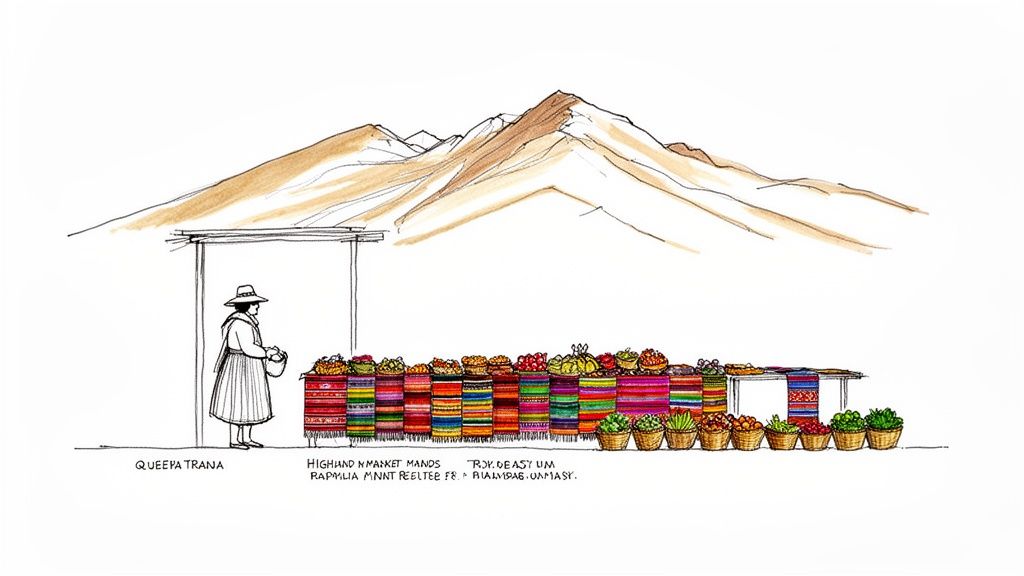
Beyond the ancient ruins, the Sacred Valley pulses with life in its bustling local markets. For an authentic cultural immersion, exploring the markets of Pisac, Chinchero, and Ollantaytambo is one of the most essential things to do in Peru. These aren't just souvenir stops; they are vibrant social hubs where Quechua communities gather to trade everything from colorful hand-woven textiles and intricate ceramics to mountains of fresh produce like potatoes, corn, and quinoa.
The Immersive Experience
Visiting these markets offers a direct connection to Andean traditions that have endured for centuries. You can witness live textile weaving demonstrations in Chinchero, where artisans from cooperatives like the Centro de Textiles Tradicionales del Cusco share their ancient techniques. Engaging with vendors provides a genuine glimpse into daily life, far from the curated experiences of larger tourist sites. This is where you can buy directly from the creators, ensuring your money supports local families and preserves their cultural heritage.
Planning Your Market Visits
Each market has its own unique character and peak days, making a well-planned trip crucial for the best experience.
- Go Early and on Weekdays: The famous Pisac Sunday market is massive, but visiting on a Tuesday or Thursday (or arriving before 9 AM on Sunday) helps avoid the largest tour crowds and see more local commerce.
- Hire a Local Guide: A guide can help you navigate the stalls, translate conversations with Quechua-speaking vendors, and explain the cultural significance of different products, from medicinal herbs to ceremonial items.
- Negotiate Politely: Haggling is expected, but do it with a smile. A good starting point is to offer around 60-70% of the initial asking price and meet somewhere in the middle. Learning a few words in Quechua can build great rapport.
- Shop Ethically: Know the difference between baby alpaca and synthetic blends. Ethical collectives like Awamaki promote fair-trade practices and can be a great place to start your search for authentic, high-quality textiles.
3. Indigenous Villages and Homestays in the Sacred Valley
Beyond the major ruins, one of the most enriching things to do in Peru is to connect directly with the living culture of the Andes. Community-based tourism in the Sacred Valley allows you to step away from the tourist crowds and into the daily lives of Quechua families. Staying in villages like Chinchero or Ollantaytambo offers an authentic exchange, where you share meals, learn ancient traditions, and gain a profound respect for the enduring spirit of the Andean people.
The Immersive Experience
A homestay transforms your visit from passive observation to active participation. Instead of just buying a textile, you might spend an afternoon with a local artisan cooperative like Awamaki, learning the backstrap loom weaving techniques passed down through generations. You’ll help prepare traditional meals using ingredients grown in the family's own garden and listen to stories about the land from those who know it best, providing a rich, unscripted cultural immersion that standard tours cannot replicate.
Planning Your Homestay
Arranging an authentic homestay requires a bit of research to ensure your visit genuinely supports the local community and provides a meaningful experience.
- Book Ethically: Connect with established community-based tourism projects. Organizations like Kawsay Lodge in Ollantaytambo or direct community initiatives ensure your money directly benefits host families.
- Stay Longer: Plan for at least two nights. A single night can feel transactional; a longer stay allows you to settle into the rhythm of village life and form genuine connections.
- Hire Local Guides: Engage a guide from the village itself for a deeper understanding of the area's history, farming practices, and customs. This offers unparalleled local insight and supports the community directly.
- Shop Directly: Purchase textiles and crafts from the artisans' homes or community workshops. This cuts out middlemen and ensures the creators receive the full, fair value for their intricate work.
4. Kayak and Camp in the Tambopata National Reserve
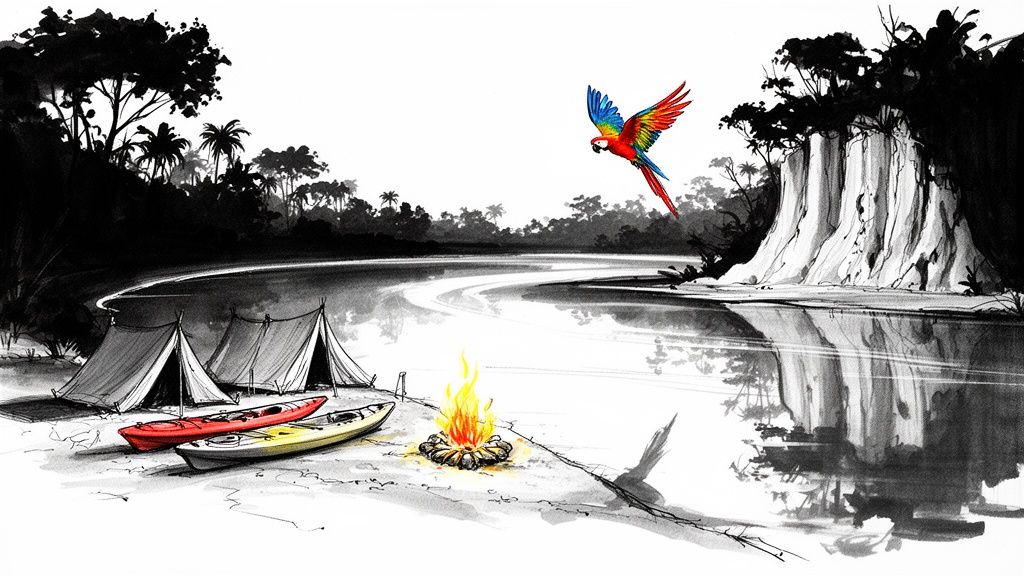
For those seeking an intimate connection with the Amazon, a multi-day kayaking and camping expedition into the Tambopata National Reserve is one of the most immersive things to do in Peru. This adventure takes you beyond the standard jungle lodge stay, allowing you to paddle silently down remote tributaries, navigate serene oxbow lakes, and sleep amidst the symphony of the rainforest. It’s an unparalleled way to experience one of the most biodiverse places on Earth.
The Immersive Experience
Unlike lodge-based tours, this journey lets you access areas unreachable by motorized boats, spotting wildlife like giant river otters, caimans, and monkeys with minimal disturbance. The experience includes jungle treks and canopy tower climbs, but the true magic lies in the quiet moments: paddling at dawn as the forest awakens or listening to an indigenous guide identify unseen creatures by their calls alone. This is a true off-the-beaten-path cultural and natural immersion.
Planning Your Expedition
Booking a kayaking trip requires choosing a specialized operator focused on conservation and authentic experiences. These expeditions blend adventure with deep ecological respect.
- Book a Specialist: Partner with conservation-focused operators like Rainforest Expeditions or Peruvian Nature Tours. They provide expert naturalist guides from local communities and handle all logistics.
- Learn from Local Guides: The depth of your experience depends on your guide. Request a guide from the local Ese Eja community, whose ancestral knowledge of the forest's plants, animals, and stories is irreplaceable.
- Ethical Support: Choose companies that hire local, bilingual naturalists and contribute to community projects. Tipping your guide and camp staff directly supports their families and the local economy.
- Pack Smart: Essential gear includes a headlamp, quality rain gear, high-SPF sunscreen, binoculars, and a camera with a good zoom lens to capture wildlife from a respectful distance.
5. Indulge in Lima's World-Class Fine Dining and Nikkei Cuisine
Lima has firmly established itself as a global culinary capital, making a gastronomic pilgrimage one of the most essential things to do in Peru. The city's food scene is a vibrant fusion of indigenous ingredients, colonial Spanish influences, and diverse immigrant culinary traditions. This is most famously expressed through Nikkei cuisine, a spectacular blend of Peruvian flavors and Japanese techniques that has captivated food lovers worldwide.
The Immersive Experience
Dining at world-renowned restaurants like Central, Maido, or Kjolle is more than a meal; it's a narrative journey through Peru's diverse ecosystems. Chefs like Virgilio Martínez and Mitsuharu Tsumura craft tasting menus that tell a story, sourcing rare ingredients from the Amazon jungle, the high Andes, and the Pacific coast. Each course is a lesson in biodiversity, tradition, and innovation, providing a profound connection to the country's rich cultural and natural heritage.
Planning Your Culinary Tour
Securing a table at Lima's top restaurants requires foresight and planning, as they are often booked months in advance.
- Book Well Ahead: For globally acclaimed restaurants like Central and Maido, reservations should be made 3-4 months in advance, especially for peak dinner times. Use their official websites for booking.
- Explore Beyond the Top Tier: Fantastic culinary experiences await beyond the world's best lists. Discover chef-driven gems like Mérito in Barranco or Isolina for traditional criollo fare in a tavern setting.
- Timing is Key: Plan your culinary adventures at the beginning of your trip while in Lima, before heading to higher altitudes in places like Cusco where heavy, rich meals can be harder to digest.
- Hire a Local Food Guide: For a deeper dive, hire a local guide for a tour of a specific neighborhood like Barranco, where they can introduce you to hidden culinary spots and explain the history behind the dishes.
6. Savor Authentic Flavors at Lima's Street Food Stalls and Markets
While Lima’s Michelin-starred restaurants get global acclaim, the city’s true culinary soul is found in its bustling markets and neighborhood street food stalls. This is where you can experience the working-class food culture that forms the foundation of Peru's gastronomic revolution. Exploring these spots offers a direct, hands-on immersion into the authentic tastes of the coast, from smoky, grilled anticuchos to the freshest ceviche imaginable.
The Immersive Experience
Diving into a market like Terminal Pesquero de Chorrillos or a local neighborhood like Surquillo puts you shoulder-to-shoulder with Limeños doing their daily shopping. Unlike a formal restaurant, here you can chat with vendors, learn about exotic Amazonian fruits, and watch as your ceviche is prepared just moments after the fish arrives from the docks. It’s an unfiltered, sensory-rich experience that reveals why Lima is considered one of the best things to do in Peru for food lovers.
Planning Your Culinary Tour
Navigating Lima's food scene is an adventure in itself. Success lies in knowing where and when to go for the best and safest experience.
- Go Where the Locals Go: Look for street carts with long lines and high turnover in neighborhoods like Barranco, Surquillo, or even central Lima. This is a clear sign of quality and freshness.
- Time Your Ceviche: For the absolute best ceviche, visit market stalls or dedicated cevicherías between noon and 2 PM. This is when the daily catch is at its freshest.
- Engage with a Local Guide: A food tour with a local expert can take you to trusted, off-the-beaten-path stalls and markets you’d never find on your own, while also providing cultural and historical context.
- Safety First: Stick to well-lit, busy areas, especially in the evening when anticucho carts fire up their grills. Opt for food that is cooked fresh in front of you.
7. Hike to Cloud Forests and Mountain Lakes in the Cordillera Blanca
For serious trekkers, the Cordillera Blanca near Huaraz offers a more rugged and less crowded alternative to the Inca Trail, making it one of the most rewarding things to do in Peru for alpine enthusiasts. This is South America's premier mountaineering hub, home to over 50 peaks exceeding 18,700 feet (5,700 meters). The trails here wind through dramatic landscapes of razor-sharp granite peaks, vast U-shaped valleys, and dozens of impossibly turquoise glacial lakes.
The Immersive Experience
Unlike the structured Inca Trail, trekking in the Cordillera Blanca offers true wilderness immersion. You’ll navigate high-altitude passes, camp beside pristine lakes like the famous Laguna 69, and witness the towering ice walls of peaks like Huascarán and Alpamayo. The experience is deeply connected to local Andean life, as you pass through remote villages where Quechua is still the primary language, offering a glimpse into a culture deeply intertwined with the mountains.
Planning Your Trek
This region demands respect for altitude and weather. Proper planning is not just recommended; it's essential for safety and enjoyment.
- Acclimatize in Huaraz: Spend at least 2-3 full days in Huaraz (10,013 ft / 3,052 m) before attempting any serious trek. Use this time for day hikes to test your altitude tolerance, such as the popular trek to Laguna 69.
- Hire Accredited Local Guides: Safety is paramount. Always hire a certified local guide through a reputable Huaraz-based agency like Andean Ascents or the official Cordillera Blanca Guides Association (AGCB). This ensures your guide is trained in high-altitude first aid and has intimate knowledge of the terrain.
- Choose Your Route: Options range from the classic 4-day Santa Cruz Trek to more challenging multi-week circuits like the Huayhuash Trek. Discuss your fitness level and experience with your guide to select the right itinerary.
- Pack for Extremes: Be prepared for intense sun during the day and freezing temperatures at night. Layering is key, and bringing appropriate medication for altitude sickness is a wise precaution.
8. Participate in Traditional Weaving Workshops in Andean Villages
Beyond simply buying a souvenir, immersing yourself in a multi-day weaving workshop is one of the most authentic things to do in Peru for a true cultural exchange. These hands-on experiences, often hosted in traditional Quechua communities, invite you to learn ancient textile arts directly from master artisans. You will discover the entire process, from shearing alpaca wool and spinning it into yarn to foraging for plants, roots, and insects to create brilliant natural dyes.
The Immersive Experience
Unlike a quick demonstration, a dedicated workshop allows you to connect deeply with local families, often through a homestay arrangement. You’ll learn to set up a backstrap loom, master foundational techniques, and understand the sacred symbolism woven into each geometric pattern (pallay). This intimate setting provides a window into daily Andean life, building genuine rapport as you share meals and stories while creating your own textile masterpiece to take home.
Planning Your Workshop
To ensure an authentic and respectful experience, it's best to connect with established cooperatives that prioritize fair-trade principles and cultural preservation.
- Book in Advance: Small-group workshops with reputable organizations like the Awamaki cooperative in Ollantaytambo or studios in Chinchero often require booking 4-6 weeks ahead.
- Go for Depth: Choose a workshop lasting at least 3 days. A shorter session only scratches the surface, while a longer duration allows for meaningful skill development and a deeper connection with your host artisan and their family.
- Learn from a Master Artisan: The experience is defined by the direct connection with the weaver. These workshops are not tours; they are apprenticeships where knowledge is passed from one person to another.
- Ask Questions: Inquire about the sourcing of natural dyes and the meanings behind different designs. This demonstrates respect for the craft and its cultural significance, and turns a craft lesson into a cultural one.
9. Explore Nazca Lines and Desert Archaeological Sites by Small Aircraft
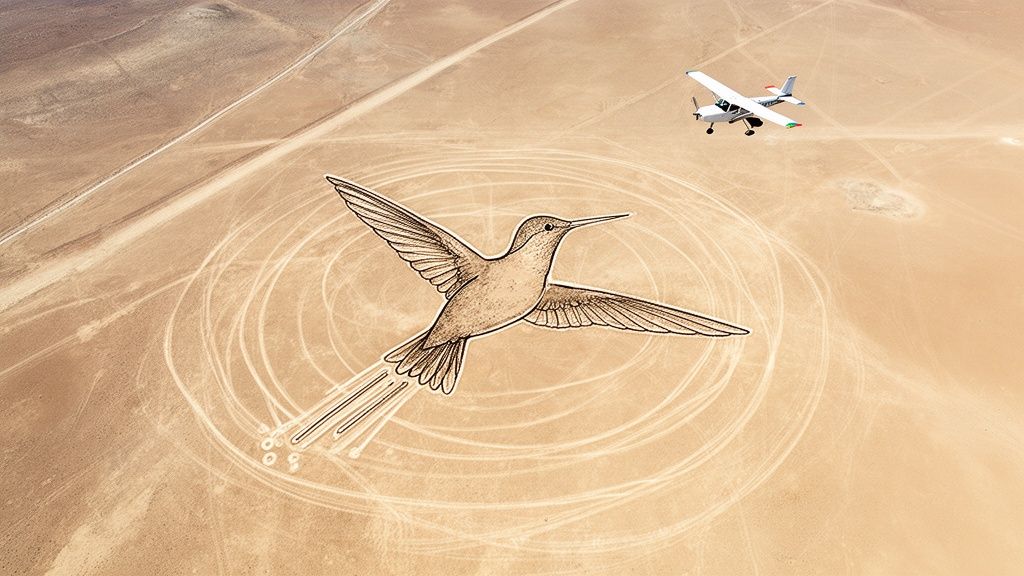
One of the most enigmatic things to do in Peru is to witness the mysterious Nazca Lines, a series of ancient geoglyphs etched into the desert floor that are only truly visible from the sky. Taking a small-aircraft scenic flight offers a breathtaking perspective of these massive figures, including the hummingbird, spider, and astronaut, which have puzzled historians and archaeologists for decades. The flight provides an unparalleled view of the sheer scale and precision of these pre-Incan creations.
The Immersive Experience
A flight alone reveals the "what," but a ground tour provides the crucial "why." To truly grasp the context of these ancient wonders, combine your aerial tour with visits to key archaeological sites. The Antonini Museum in Nazca offers artifacts discovered in the region, while the Chauchilla Cemetery provides a haunting look at pre-Incan mummification practices with remarkably preserved remains. This dual approach transforms a simple sightseeing trip into one of the most immersive travel experiences you can have, connecting the aerial mystery to the civilization that created it.
Planning Your Tour
The quality and safety of your flight are paramount, so careful planning is essential for a memorable and secure experience.
- Book Smart: Choose reputable, certified flight operators like Aeroica or Alas Peruanas and avoid street vendors. It's best to book directly or through a trusted travel agency.
- Fly Early: Schedule your flight for the early morning, ideally between 7 AM and 9 AM. The air is typically calmer, and the angled sunlight provides better visibility and contrast for viewing the lines.
- Hire a Local Archaeology Guide: Enhance your ground tour by hiring a specialized local guide who can explain the history of the Nazca culture, their sophisticated irrigation systems (puquios), and the theories behind the lines.
- Prepare for Flight: If you're prone to motion sickness, take medication beforehand. The small planes bank sharply to give passengers on both sides a good view, which can be disorienting.
10. Explore the Amazon from a Jungle Eco-Lodge
Swap the Andean highlands for the world’s largest rainforest by immersing yourself in Peru’s Amazon basin. Staying at an eco-lodge, often accessible only by riverboat from hubs like Puerto Maldonado or Iquitos, is one of the most profound things to do in Peru. These lodges are more than just accommodations; they are research and conservation centers offering a gateway to staggering biodiversity, from macaws and monkeys to giant river otters and elusive jaguars.
The Immersive Experience
Unlike a simple tour, an eco-lodge stay is a multi-day immersion into the jungle's rhythms. Guided by local naturalists, you’ll embark on canopy walks, night-time caiman spotting excursions, and visits to clay licks where hundreds of parrots gather. This approach provides an authentic connection to the Amazon's delicate ecosystem, learning from guides whose ancestral knowledge brings the rainforest to life in a way no guidebook can.
Planning Your Amazon Stay
A successful jungle adventure hinges on choosing the right lodge and preparing for the unique environment. These lodges focus on conservation, community support, and education.
- Choose Ethically: Select lodges with proven conservation commitments and community partnerships. Reputable operators like Rainforest Expeditions (Posada Amazonas) or Explorer's Inn channel tourism revenue directly into local conservation and social projects.
- Hire Local Experts: The experience is defined by your guide. Insist on a certified, bilingual naturalist from the local community for the richest interpretation of the flora and fauna around you. Their personal stories and deep connection to the land are invaluable.
- Venture Farther Out: Lodges located deeper in the jungle, requiring longer boat rides, generally offer more pristine habitats and better wildlife viewing opportunities, away from the more developed areas near town.
- Support the Community: Tipping your guides and lodge staff directly supports their families and reinforces the value of conservation-based employment in the region.
11. Shamanic and Ayahuasca Experiences in the Amazon
For travelers seeking profound spiritual and personal insights, the Peruvian Amazon offers a unique opportunity to participate in ancient plant medicine ceremonies. Led by indigenous shamans, these experiences, often centered around the potent brew Ayahuasca, are deeply rooted in local tradition. This is not a casual tourist activity but a serious, introspective journey that requires respect, research, and careful preparation, making it one of the most transformative things to do in Peru for those who feel called to it.
The Immersive Experience
Participating in a ceremony offers a direct connection to the spiritual worldview of Amazonian communities. These multi-day retreats, typically held in secluded jungle lodges, involve strict dietary protocols (dieta), personal consultations with the shaman, and participation in sacred rituals. The goal is often healing, self-discovery, and a deeper understanding of the interconnectedness of nature. This is a far cry from a typical jungle tour; it's an intense, internal pilgrimage guided by generations of ancestral knowledge.
Planning Your Journey
Safety and ethics are paramount when considering this experience. The surge in popularity has led to a wide range of operators, so due diligence is essential to ensure a safe and authentic ceremony.
- Verify Credentials: Thoroughly vet your chosen retreat center and shaman. Look for established centers with long-standing relationships with indigenous communities, like those associated with reputable lodges such as Rainforest Expeditions, which prioritize cultural respect and safety.
- Prioritize Health: Consult your doctor before your trip, disclosing any medical conditions or medications, as Ayahuasca has powerful contraindications. Absolute honesty with the shaman about your health history is non-negotiable.
- Choose Ethically: Select centers that practice fair trade, transparently support their local communities, and prioritize the well-being of participants over profit. Avoid operators making grandiose claims or pressuring you to book.
- Respect the Sacred: Treat the ceremony with reverence. Follow all instructions from your guide and shaman, and refrain from taking photos or sharing sensitive details of your experience publicly.
12. Navigate Lima's Neighborhoods and Street Art Culture on Foot
Beyond its celebrated culinary scene, Lima offers a vibrant, raw energy best discovered on foot. Exploring neighborhoods like the bohemian Barranco and upscale Miraflores reveals a living gallery of street art, historic architecture, and local life. This is not just a casual stroll; it’s a method for understanding the city’s contemporary pulse, where every corner mural and hidden café tells a story about modern Peru.
The Immersive Experience
Walking allows you to connect with the city's artistic soul in a way a taxi tour never could. Follow Barranco’s iconic Bajada de los Baños walkway down to the sea, discovering murals and independent galleries along the way. In contrast, the polished district of Miraflores offers high-end boutiques and sleek cafés like Aymoré, while markets like Mercado de Chorrillos provide an unfiltered glimpse into daily commerce. This ground-level exploration is one of the most authentic things to do in Peru for culture seekers.
Planning Your Walk
A self-guided tour is easy to plan and offers the most freedom, but local art tours can provide deeper context.
- Go Early: Explore Barranco in the morning to enjoy the vibrant art and coastal views before the afternoon crowds arrive.
- Join a Local Art Tour: Connect with a local artist-led tour. These guides can provide insider access to studios, explain the socio-political context behind the murals, and introduce you to the artists themselves.
- Engage Respectfully: Ask for permission before photographing artists at work. Local baristas at spots like Café Altazor are often great sources for tips on new murals or nearby artist studios.
- Chart a Course: Plan a route that connects key points of interest but leaves room for spontaneous detours down interesting-looking streets, where the best, most authentic discoveries are often made.
12 Things to Do in Peru — Comparison Table
| Experience | Complexity 🔄 | Resources & Cost ⚡ | Expected Outcomes 📊 | Ideal Use Cases 💡 | Key Advantages ⭐ |
|---|---|---|---|---|---|
| Trek to Machu Picchu via the Inca Trail | High — multi-day guided route, permit constraints, altitude planning | Medium–High — permits, guide/porter fees, gear; USD $600–1,200 | Cultural & archaeological immersion; scenic sunrise arrival; ⭐⭐⭐⭐ | Fit travelers seeking direct Incan route and guided history | Direct access to Incan sites; regulated groups; local guides; biodiversity |
| Sacred Valley Markets (Pisac, Ollantaytambo, Chinchero) | Low — day-trip logistics, variable market schedules | Low — short transport, cash purchases; affordable | Local commerce and artisan contact; shopping & cultural exchange; ⭐⭐⭐ | Short visits for artisan shopping, photography, market immersion | Direct artisan support; lower altitude; accessible & affordable |
| Indigenous Villages & Homestays | Low–Medium — arrange homestay, cultural prep, language barriers | Low — homestay fees, modest tips; flexible length | Intimate cultural immersion and household-level support; ⭐⭐⭐⭐ | Travelers wanting sustained cultural exchange and responsible tourism | Authentic daily life, direct income to families, flexible scheduling |
| Kayak & Camp in Tambopata National Reserve | Medium — river logistics, campsite management, jungle safety | High — flights + guided packages; USD $1,500–3,500 for 5–7 days | High biodiversity and conservation learning; wildlife encounters; ⭐⭐⭐⭐ | Nature-focused travelers seeking remote biodiversity & field education | Exceptional biodiversity; expert naturalists; regenerative practices |
| Lima Fine Dining & Nikkei Cuisine | Low — reservations and timing; formal dining protocols | Medium–High — tasting menus USD $80–150+; advance booking | Culinary excellence, ingredient provenance, innovative menus; ⭐⭐⭐⭐⭐ | Foodies and special-occasion diners seeking top-tier gastronomy | World-class chefs; regional sourcing; unique Nikkei fusion |
| Lima Street Food & Markets | Low — market navigation and hygiene caution | Low — very affordable meals ($3–25); carry cash | Authentic working‑class flavors and vendor interactions; ⭐⭐⭐⭐ | Budget travelers and hands-on culinary exploration | Fresh seafood, affordable options, vibrant market culture |
| Hike to Cordillera Blanca Lakes & Peaks | Medium–High — remote access, multi-day trekking, altitude risk | Medium — transport to Huaraz, guide fees, gear; moderate cost | Alpine scenery, solitude, glacial lakes; strong mountaineering value; ⭐⭐⭐⭐ | Experienced hikers seeking high-altitude scenery and remote trails | Dramatic alpine landscapes; fewer tourists; expert local guides |
| Traditional Weaving Workshops | Low–Medium — workshop booking, language prep, homestay logistics | Low–Medium — workshop fees, homestay costs; short intensives | Hands-on skill transfer and meaningful souvenirs; ⭐⭐⭐⭐ | Travelers wanting craft skills, ethical shopping, cultural depth | Direct artisan support; tangible learning; cultural transmission |
| Nazca Lines by Small Aircraft | Medium — flight booking, weather dependency, motion‑sickness risk | Medium — flight + transfers USD $90–200+; short time commitment | Unique aerial perspective with archaeological context; ⭐⭐⭐ | Short, distinctive aerial experience and archaeology-focused visits | Aerial viewing of geoglyphs; quick day-trip; combined ground museums |
| Amazon Eco-lodges & Wildlife Immersion | Medium — remote logistics and ethical lodge selection | High — flights + lodge packages USD $1,500–3,500 | Immersive biodiversity experiences and conservation impact; ⭐⭐⭐⭐ | Conservation-minded travelers seeking wildlife and indigenous knowledge | Intense biodiversity access; indigenous guides; eco-practices |
| Shamanic & Ayahuasca Experiences | High — vetting practitioners, medical & ethical screening required | Variable — ceremony + lodge costs; can be costly | Possible profound spiritual experiences; significant safety/ethical risks; ⭐⭐ | Well-researched, medically cleared participants prioritizing ethics | Deep cultural practices (when ethical); potential transformation—highly conditional |
| Navigate Lima Neighborhoods & Street Art | Low — walkable self-guided or artist-led tours; safety awareness | Low — minimal costs for cafés/guides; flexible | Contemporary cultural insight, photography, local daily life; ⭐⭐⭐ | Urban explorers, art lovers, café culture seekers | Low-cost cultural immersion; supports local artists and guides |
Your Peruvian Adventure: Putting It All Together
Peru is not a country you simply see; it is a country you feel. From the sacred hum of the Andes to the vibrant pulse of Lima's streets, the experiences we’ve explored are more than just items on a travel checklist. They are invitations to connect, to learn, and to be transformed. The real magic of discovering the best things to do in Peru lies not just in reaching the summit of a trek or tasting a world-renowned dish, but in the moments between: sharing a meal during a homestay in the Sacred Valley, learning a single Quechua word from a weaver in Chinchero, or listening to the symphony of the Amazon rainforest at dawn.
This journey is about balancing iconic sights with immersive, local-led encounters. While the majesty of Machu Picchu is undeniable, the true depth of your adventure will be found when you venture beyond the main plazas and into the heart of Peruvian life. It’s about choosing the small, family-run restaurant over the tourist chain, opting for a community-based trek, and allowing your itinerary to be flexible enough for spontaneous discoveries.
Key Takeaways for Your Peruvian Journey
To craft an unforgettable and respectful trip, keep these core principles at the forefront of your planning:
- Embrace Intentional Travel: Your choices matter. Prioritize experiences that directly support local artisans, guides, and communities. Whether it's a weaving workshop, a jungle tour with an indigenous guide, or a stay at a community-owned eco-lodge, your tourism can be a powerful force for good.
- Respect Altitude and Pace: The Andes are a formidable and beautiful force. Rushing your acclimatization in Cusco or Huaraz is a recipe for disappointment. Build in rest days, stay hydrated with coca tea, and listen to your body. The mountains aren’t going anywhere.
- Look Beyond the Obvious: While Lima's fine dining is spectacular, don't miss the street-side carts selling picarones or the bustling energy of the Surquillo Market. In Cusco, wander away from the Plaza de Armas to discover hidden courtyards and local workshops. The most authentic stories are often found just a few blocks off the beaten path.
- Prioritize Safety and Preparation: Peru is a vast and wild country. From navigating bustling city streets to trekking at high altitudes, being prepared is crucial. As you finalize your Peruvian adventure, don't forget to consider essential practicalities like ensuring your trip is protected. Researching comprehensive travel insurance options can provide peace of mind, covering everything from unexpected trip cancellations to medical emergencies in remote locations.
Ultimately, the most enriching things to do in Peru are those that foster a genuine connection. It's the conversation with a local artist in Barranco, the shared silence watching condors soar in the Colca Canyon, and the humbling realization of standing before the ancient Nazca Lines. This guide is your starting point, a map of possibilities. The true adventure begins when you step onto Peruvian soil with an open heart, ready to create your own story.
Travel thoughtfully, tread lightly, and carry the profound spirit of this incredible land with you long after you’ve returned home.
Ready to turn your Peruvian dream into a perfectly planned reality? For curated itineraries, local-led tours, and in-depth guides that take you far beyond the typical tourist trail, explore CoraTravels. Let us help you discover the authentic heart of Peru, one unforgettable experience at a time.