Is tipping required in Thailand? The short answer is no, it's not mandatory. However, as you venture beyond the main tourist hubs, you'll find that a small, thoughtful gesture of thanks for exceptional service is a deeply appreciated part of the cultural exchange. Unlike Western cultures where tipping is a calculated percentage, in Thailand, it's a personal sign of gratitude—a way to connect with the local people who make your experience memorable.
Understanding Thailand's Tipping Culture
Figuring out local customs can be daunting, but in Thailand, the approach is relaxed and personal. It’s less about hitting a specific percentage and more about acknowledging great service with a heartfelt "thank you." This guide is designed to help you navigate these nuances with confidence, whether you're at a bustling street food stall in a small town or a high-end restaurant in Bangkok, ensuring your interactions are respectful and authentic. We'll explore the cultural "why," which is the key to an immersive trip. For a broader look at local customs, check out our complete travel overview for Thailand.
This infographic boils it down to the three main ideas to remember for a full cultural experience.

As you can see, the main takeaway is simple: it's optional, it's always appreciated, and it's not about strict percentages.
A Tradition of Gratitude, Not Obligation
Tipping isn't a deeply rooted part of traditional Thai culture. Historically, the culture has a broader tradition of "giving extra" (sin nam jai, or "water of the heart") as a sign of appreciation. This concept is about spontaneous kindness rather than a formal transaction.
While locals don't typically tip each other, the rise in tourism means service staff in popular destinations have grown accustomed to it. However, once you travel off the beaten path, this expectation fades, returning to the core cultural value of simple gratitude.
The core idea is simple: a tip is a direct, personal "thank you" for a job well done. It's a small gesture that communicates appreciation beyond the basic transaction, creating a positive interaction and fostering a deeper connection with the local community.
Dining and Tipping Like a Local
Eating in Thailand is a profound cultural experience. Whether you're sampling Isaan specialties in the northeast or enjoying fresh seafood in a small coastal village, knowing the local tipping customs helps you show appreciation respectfully. The "rules" are subtle and change significantly once you leave the main tourist areas.
The biggest difference you'll notice is between a local food stall and a formal restaurant. For the incredible vendors cooking up magic on the sidewalks or in village markets, tipping isn't really a thing. Their prices are set for a simple, direct exchange.
That said, a small gesture of kindness is a wonderful way to connect.
Tipping for Street Food and in Local Eateries
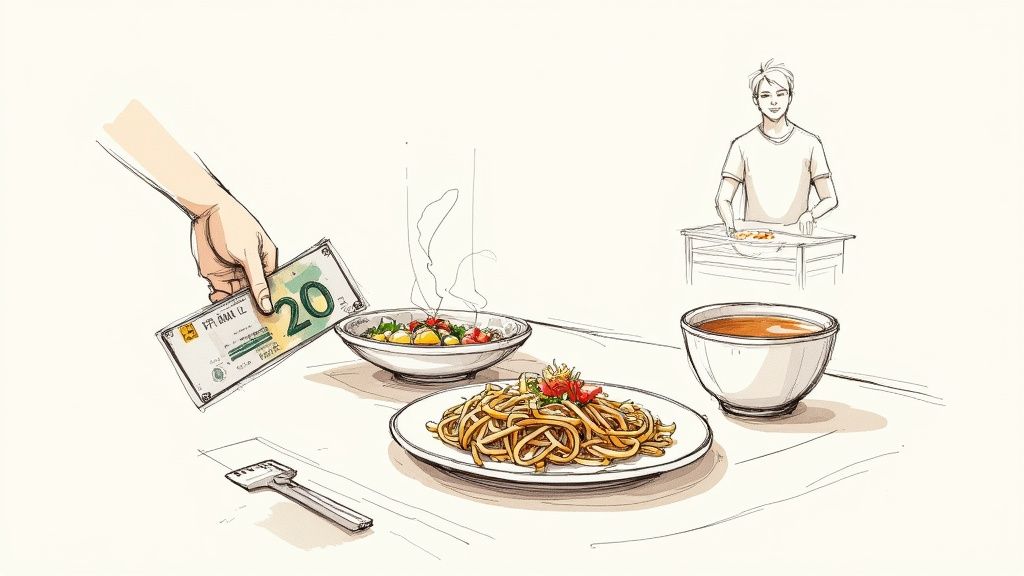
In non-touristic areas and at street food stalls, you won't see a tip jar. The local way to show thanks is to round up your bill to the nearest 5 or 10 Baht. If a bowl of noodles costs 45 Baht, you can hand the vendor a 50 Baht note and say "mai bpen rai," which means "it's okay, no change needed."
This isn't seen as a formal tip but rather a polite courtesy—a small act of generosity that fosters goodwill and is always appreciated, connecting you to the rhythm of local life. For a taste of this, dive into our guide on why Bangkok street food is a paradise for travelers.
Navigating Sit-Down Restaurants
When you move into a sit-down restaurant, the etiquette for tipping in Thailand gets a few more layers. First, check the bill. Many spots, especially in tourist-heavy areas, automatically add a 10% service charge.
When a service charge is on your bill, you don't need to leave an additional tip. In local, family-run restaurants off the beaten path, you will almost never see this charge.
If you are at a local restaurant with no service charge, leaving a small tip for great service is a fantastic gesture. Here’s how to handle it smoothly for an authentic cultural experience:
- Cash is King: Always leave the tip in cash, even if you pay by card. This ensures it goes directly to the staff.
- Keep it Discreet: Don't make a big show of it. Just leave the cash discreetly on the table or in the bill folder.
- Think Local, Not Western: Forget the 15-20% rule. A modest tip of 20-100 Baht is considered perfectly appropriate and generous, reflecting local norms.
Tipping Drivers for Taxis and Local Transport
Hopping into a metered taxi, a classic tuk-tuk, or a local songthaew (shared truck taxi) is part of any immersive Thai adventure. Each mode of transport has its own subtle tipping etiquette. Knowing the difference will make you feel less like a tourist and more like a savvy traveler who understands local customs.
The main factor is whether your fare is metered or pre-negotiated. If the price is calculated for you (metered taxi), rounding up is a nice touch. If you've already negotiated a price (tuk-tuk or private car), the deal is considered done.
The Simplicity of Metered Taxis
In a standard metered taxi, the local custom for tipping in Thailand is easy. Just round up the fare to the next convenient number. If your meter reads 82 Baht, you can hand the driver 90 Baht or even 100 Baht and say "keep the change." It's a small, appreciated gesture.
Tuk-Tuks and Negotiated Fares
With tuk-tuks and other local transport where you negotiate the fare beforehand, a tip isn't expected. The agreed-upon price is the final price. This holds true for boat drivers on canals or motorcycle taxi drivers in smaller towns.
Of course, exceptional service changes things.
If your driver goes above and beyond—sharing local insights, pointing out a hidden temple, or waiting patiently while you explore—a tip of 20-50 Baht is a fantastic way to acknowledge their extra effort and show your gratitude.
Using Ride-Sharing Apps Like Grab
Apps like Grab are common in cities. While you can tip through the app, handing your driver a small cash tip often feels more personal and is deeply appreciated. A simple 20 Baht note, passed over with a smile and a "khop khun khrap/kha" (thank you), creates a human connection that technology can't replicate.
Tipping at Hotels, Spas, and Guesthouses
Whether you’re at a five-star resort or a family-run guesthouse in a rural village, a small gesture for personal service is a welcome sign of respect. It’s your way of directly acknowledging the individuals who make your stay memorable. This is particularly true in smaller, off-the-beaten-path accommodations where your business directly supports the local community.
The trick is knowing who and when to tip to ensure your thanks reach the right people.
Acknowledging Local Staff
For staff like porters or housekeepers, a small tip is customary and genuinely appreciated. The amounts are modest—a tip of 20-50 Baht is perfectly normal and a meaningful gesture in the local economy. It shows an understanding of the local tipping culture in Thailand.
Here’s a simple breakdown:
- Porters/Bellhops: For help with luggage, a 20-50 Baht tip handed directly to them is a great way to say thanks.
- Housekeeping: To ensure the person who cleaned your room receives your thanks, leave 20-50 Baht on the pillow or another obvious spot each morning, as staff often rotate.
Gratuity for Massages and Local Wellness Experiences
An immersive Thai experience isn't complete without a traditional massage. The etiquette here varies significantly between a high-end spa and a local, independent shop.
At a luxury hotel spa, check the bill. If a 10% service charge is included, no extra tip is needed. If not, leaving around 10% of the treatment cost is standard.
For a local, independent massage shop—the kind you find tucked away in a quiet soi—a direct tip makes a huge difference. For a one-hour Thai massage, a tip of 50-100 Baht is considered very generous. This directly rewards the therapist for their skill and hard work, a personal thank you for a restorative experience.
Tipping Local Guides on Your Adventures
When you get off the beaten path with a local guide—trekking in the hills of the north, exploring a floating market with a local, or taking a private cooking class in a village—your guide is your bridge to the real Thailand. They offer immersive experiences that go far beyond a standard tour.
Tipping here is not about leaving a few coins; it's a direct thank you for their expertise, energy, and companionship. They are sharing their culture and ensuring you have a safe, authentic adventure. In these personal settings, a good tip is generally expected as a sign of appreciation for an unforgettable experience.
How Much to Tip Your Guide and Driver
For private or small-group tours that offer a true cultural deep-dive, knowing the right amount to tip is key. This is especially true in places like Chiang Mai, Northern Thailand's cultural heart, a hub for incredible local guides who offer off-the-beaten-path experiences.
Here’s a solid rule of thumb for an immersive tour:
- Private Full-Day Guide: Plan on tipping 200-300 Baht per person for a guide who has spent the day sharing their local world with you.
- Driver: If you had a separate driver, it's a kind gesture to tip them 50-100 Baht for their work.
Tipping both the guide and driver separately ensures each person is recognized for their role. It’s a way to acknowledge the full team that made your unique, local experience possible.
Making the Gesture Meaningful
The best time to give the tip is at the end of your tour as you say goodbye.
Hand the cash directly to your guide and driver. A warm smile and a sincere "khop khun khrap" (if you're male) or "khop khun kha" (if you're female) makes the gesture personal and respectful. This small act shows the local experts who connected you to the real Thailand that their hard work was truly valued.
How to Give a Tip Gracefully for an Immersive Experience
Understanding the right amount for tipping in Thailand is just the first step. Knowing how to give it is what transforms a simple transaction into a moment of genuine cultural connection. The way you hand over a tip is tied to the Thai concept of "face"—a value placed on politeness, humility, and avoiding flashy displays. The goal is discretion and respect.
Mastering the Art of Discretion
The physical act of tipping shows you've been paying attention to local customs. Getting this small detail right makes your gratitude feel genuine.
Here’s how to handle it smoothly:
- Use Clean, Small Bills: Use crisp Baht notes. A 20 Baht or 50 Baht note is perfect for most situations. Handing over a wad of coins can feel clumsy.
- Hand it Directly: Instead of leaving cash on a counter, gently pass the money directly to the person. (The main exception is in restaurants, where leaving it on the table is standard).
- Use Your Right Hand: In Thai culture, the right hand is for giving. Using your right hand, or both hands together for extra respect, is a simple gesture that shows cultural awareness.
Think of it less like a payment and more like a personal gift. This mental shift frames the interaction perfectly, emphasizing respect and appreciation and creating a more immersive experience.
Ultimately, the money is only half of the gesture. A warm, genuine smile paired with a sincere "khop khun khrap" (if you're male) or "khop khun kha" (if you're female) is what people will remember, blending your gratitude perfectly with Thai etiquette.
Your Tipping Questions Answered
Even after getting the lay of the land, you’ll have questions once you're exploring Thailand. Let's clear up common tipping dilemmas, especially for those seeking an immersive, off-the-beaten-path experience.
We'll cover the big ones, so you can focus on your adventure.
Is It Rude If I Don't Tip?
Not at all. It is absolutely not considered rude if you choose not to tip. Tipping is not mandatory in Thai culture, and no one will be offended if you just pay the bill. A tip is a bonus for great service, not a requirement. A genuine smile and a warm "thank you" can go just as far in showing your appreciation.
Should I Use US Dollars or Thai Baht?
Always, always tip in Thai Baht (THB). Tipping in foreign currency creates a hassle for the recipient, who must find an exchange and lose a portion of the tip to fees. Using local currency is practical and respectful, showing you've put thought into the gesture.
Tipping in foreign currency, especially coins, can come across as thoughtless as they often cannot be exchanged. Stick to Baht to ensure your gesture is useful.
What If a Restaurant Already Added a Service Charge?
If your bill includes a 10% service charge, you are all set. This is most common in hotels and tourist-oriented restaurants. In local, family-run eateries off the beaten path, you will rarely see this. If there is a service charge, consider the tip paid. If your server was truly fantastic, a small extra cash tip of 20-50 Baht is a kind gesture but not expected.
Is Tipping Expected in Rural or Non-Touristy Areas?
The further you travel from major tourist centers, the less common tipping becomes. In small villages and off-the-beaten-path spots, the custom essentially disappears. In these areas, your business is deeply valued, and paying the stated price is perfectly sufficient. The best way to show gratitude here is with a sincere compliment on the food, a friendly chat, or by supporting their local business. This is the essence of a true cultural experience.
At CoraTravels, we believe understanding these cultural nuances transforms a good trip into a great one. Our guides are built on local insights to help you travel with confidence and connect more deeply with the places you visit. Find your next authentic adventure on https://coratravels.com.