Guatemala's traditions are an incredible fusion of ancient Mayan cosmology and Spanish colonial history, creating a cultural tapestry you won't find anywhere else. Forget the postcards; experiencing the solemn beauty of a Semana Santa procession or the explosive joy of a Giant Kite Festival is to witness living history, right before your eyes.
Beyond Postcards: A Deeper Look into Guatemalan Culture
Welcome to a country where ancient traditions aren't history—they're just how things are done. This guide is your ticket past the typical tourist trails and into the very soul of Guatemala, a place where Mayan beliefs and Spanish colonial history have swirled together into something vibrant and completely unique. We’re going to look at these traditions the way local communities do, giving you a chance for a full cultural immersion that goes far beyond the surface.
Think of this as your invitation to a culture that is deeply rooted in its past yet dynamically alive right now. We'll uncover experiences and off-the-beaten-path insights that reveal the authentic heart of Guatemalan life. To really connect, the key is to show up with respect and genuine curiosity. For more on this approach to travel, check out our guide to immersive travel experiences.
The Annual Rhythm of Celebration
Life in Guatemala moves to the beat of profound and visually stunning annual events. These aren't just holidays; they are deeply ingrained cultural moments that pull entire communities together in faith, remembrance, and celebration. Each festival offers a unique window into the nation's soul, blending indigenous beliefs with centuries of Catholic influence into something entirely new.
The infographic below maps out the timeline of some of Guatemala's most iconic traditions, hitting highlights like Easter, Independence Day, and the Day of the Dead.
As you can see, these major celebrations are spread throughout the year, each with its own distinct character and meaning.
An Immersive Cultural Journey
To truly understand the traditions in Guatemala, you have to look beyond the main tourist spots and connect with the local communities that keep these customs breathing. This means a few things:
- Seeking local guides: A knowledgeable local can unlock the subtle symbolism and unwritten rules of a ceremony that you would absolutely miss on your own.
- Exploring regional variations: A tradition like Semana Santa in Antigua is a world away from how it’s celebrated in a small Mayan village near Lake Atitlán. Each place has its own flavor.
- Participating respectfully: This is about knowing when to take photos (and when not to), how to dress, and understanding that many events you witness are sacred.
Our goal is to shift you from being a spectator to a respectful participant, giving you the context to truly appreciate the depth and beauty of Guatemala's living culture.
Essential Guatemalan Traditions at a Glance
To help you get a quick handle on what's what, here's a quick overview of the major cultural traditions we’ll be diving into. This table gives you a snapshot of their primary locations and the best time of year to experience them firsthand.
| Tradition | Primary Location | Best Time to Experience | Cultural Significance |
|---|---|---|---|
| Semana Santa | Antigua, Guatemala City | Holy Week (March/April) | A profound blend of Catholic devotion and Mayan ritual, known for its elaborate street carpets (alfombras). |
| Día de los Muertos | Throughout Guatemala | November 1st & 2nd | A celebration of life and remembrance, where families honor deceased loved ones with offerings and visits to cemeteries. |
| Giant Kite Festivals | Sumpango & Santiago Sacatepéquez | November 1st | Massive, intricate kites are flown to communicate with the spirits of the dead and ward off evil. |
| Burning of the Devil | Throughout Guatemala | December 7th | Communities burn effigies of the devil to cleanse their homes and spirits ahead of Christmas festivities. |
| Mayan Fire Ceremonies | Iximché, Lake Atitlán | Year-round | Sacred rituals led by Mayan priests (Ajq'ij) to connect with ancestors, nature, and cosmic energies. |
This is just the start, of course. Each of these traditions is a deep well of history, community, and artistry, offering a glimpse into the heart of what makes Guatemala so unforgettable.
Witnessing Faith and Art During Semana Santa
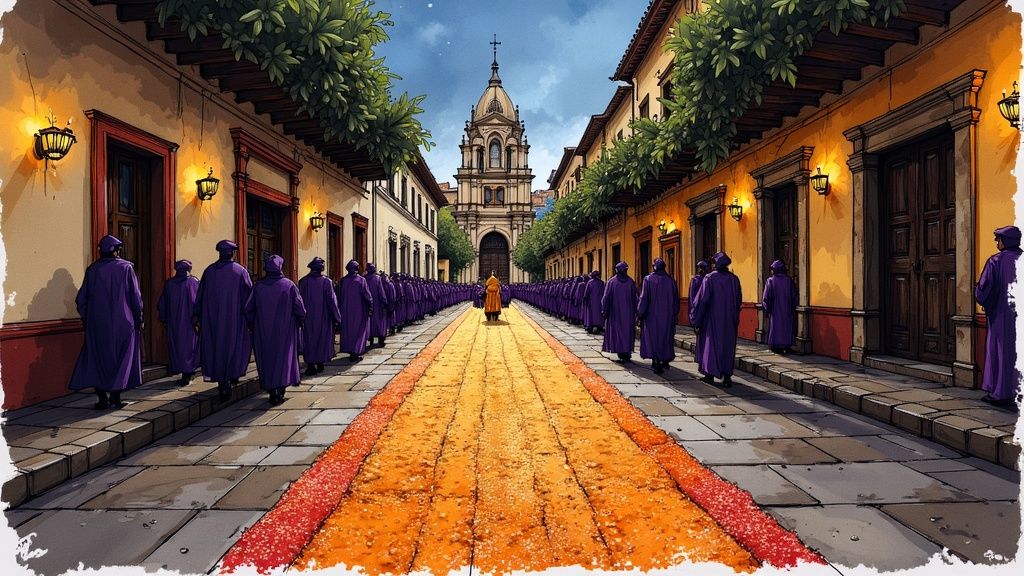
Of all the traditions in Guatemala, Semana Santa—or Holy Week—is hands down the most powerful and visually stunning. It’s a time when entire towns seem to hold their breath, transforming cobblestone streets into open-air art galleries. The air grows thick with the scent of copal incense and the sound of somber funeral marches. For a traveler, it’s like stepping directly into the nation's spiritual heart.
The colonial city of Antigua is ground zero for this tradition. In the week leading up to Easter, the city puts on a spectacle of faith, grief, and breathtaking artistry. The most iconic part? The alfombras, or carpets, meticulously crafted from colored sawdust, pine needles, flowers, and even vegetables. Families and businesses spend hours creating these intricate offerings on the streets.
Each alfombra is a fleeting masterpiece, often showing religious scenes, Mayan symbols, or vivid geometric patterns. They are painstakingly designed, only to be destroyed moments later by the processions walking over them. This powerful act is a symbol of life's temporary nature, a core part of the week's observance.
The Solemn Processions
The processions are the main event. Throughout the week, enormous wooden floats called andas are carried through the streets on the shoulders of hundreds of purple-robed devotees, known as cucuruchos. These floats can weigh several tons and depict scenes from the Passion of Christ. The ground literally trembles as they pass with a slow, hypnotic sway that is impossible to forget.
The atmosphere is heavy with reverence. Marching bands play haunting dirges, and clouds of incense hang in the air. The sheer scale of it all, the collective devotion on display, is staggering—it’s an experience that hits all your senses at once.
Beyond Antigua: An Off-the-Beaten-Path Perspective
While Antigua gets all the fame, Semana Santa unfolds across Guatemala, often with unique local twists that blend Catholic rites with indigenous beliefs. To really see this syncretism in action, you have to get out of the main tourist hub.
- Lake Atitlán: In towns like Santiago Atitlán, the folk saint Maximón—a blend of Mayan gods and Judas Iscariot—takes center stage. His effigy is paraded through the streets in a chaotic, cigar-smoke-filled procession that feels worlds away from Antigua's solemnity.
- Quetzaltenango (Xela): Guatemala's second-largest city offers a more local, less crowded vibe. The processions here are just as impressive, but you’ll be watching alongside Guatemalan families, not massive international crowds.
- Livingston: Over on the Caribbean coast, the Garifuna community infuses Holy Week with its own distinct cultural rhythms, blending Catholic traditions with African and indigenous influences.
Exploring these regional differences shows you the true spiritual diversity of Guatemala. For travelers drawn to these unique journeys, our collection of guides on religious and spiritual destinations can offer a deeper look.
Navigating the Experience Respectfully
Semana Santa draws huge crowds—and that's an understatement. In 2023, official estimates reported over 250,000 visitors in Antigua alone, and local hotels saw a 70% spike in occupancy. You can read more about the impact of Guatemalan culture on tourism at Green Global Travel.
To connect with the spirit of Semana Santa, you have to remember you’re witnessing a sacred religious event, not just a street festival. Quiet reverence, modest dress, and situational awareness are everything.
To make sure your presence is a positive one:
- Give processions space: The cucuruchos are performing an act of penance. Never block their path or get in their way.
- Ask before you photograph: Taking pictures is generally fine, but always be mindful. Ditch the flash, especially at night, and be discreet when people are in moments of prayer.
- Support local artisans: Families spend a lot of their own money creating the alfombras. Buying food or crafts from local vendors is a great way to support the community that makes it all happen.
- Book way, way in advance: Hotels and transport fill up months ahead of time. Plan accordingly to avoid getting left out.
Honoring Ancestors with Giant Kites
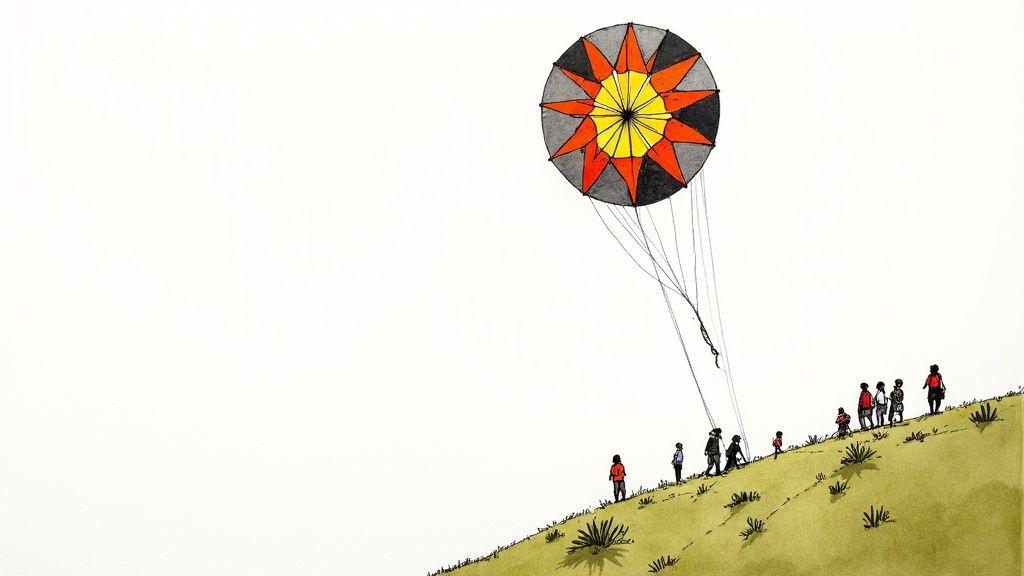
While people all over the world find ways to honor their ancestors, few do it with the spectacular, high-flying artistry you’ll find in Guatemala. On November 1st, All Saints' Day, the skies above towns like Sumpango and Santiago Sacatepéquez just explode with color for the Festivales de Barriletes Gigantes—the Giant Kite Festivals. It's easily one of the most stunning traditions in Guatemala, a powerful and joyful act of remembrance connecting the living with those who have passed on.
Forget the little diamond-shaped kite you flew as a kid. We're talking about colossal works of art, some stretching up to 20 meters in diameter. Teams of local artisans—often entire families or community groups—spend the better part of a year designing and building these giants from bamboo frames and thousands of pieces of colorful tissue paper. The tradition is thought to be over a century old, born from the belief that the sound of the paper flapping in the wind would scare away bad spirits, letting the souls of loved ones visit in peace.
The Art and Soul of the Kites
Every giant kite, or barrilete, is more than just a pretty object; it's a vibrant, flying mural telling a story. The intricate designs often touch on religious themes, Mayan cosmology, or even powerful social and political messages. You might see kites calling for environmental protection and social justice right next to ones celebrating indigenous identity or a bountiful harvest.
The kites generally fall into two categories:
- The Flyers (Voladores): These are the ones actually meant to take flight. They're built for aerodynamics, often with long, flowing tails to help them catch the wind.
- The Exhibition Kites (Exhibición): These are the true giants of the festival. Because of their sheer size and weight, many are too massive to ever leave the ground and are instead displayed as breathtaking artistic installations.
Watching a team of dozens of people struggle together to raise one of these massive structures is a spectacle in itself. That moment is pure community pride and collective effort, and the result is a visual feast that fills the whole area with incredible energy.
A Festival of Joyful Remembrance
The atmosphere at the festivals is absolutely electric. It’s a fascinating blend of solemn remembrance and a massive, vibrant party. Families gather in the cemeteries to eat, drink, and share stories, making it feel less like a memorial and more like a lively family reunion, with the kites acting as a brilliant bridge between worlds.
The kites are seen as spiritual messengers, carrying notes and prayers from the living up to the souls of the ancestors in the heavens. It’s a beautiful, tangible expression of a connection that transcends death.
This tradition is most famous in Sumpango and Santiago Sacatepéquez, where local organizers estimate that over 100 kites take to the sky or are put on display each year, with some weighing as much as 200 kilograms. It’s an unbelievable sight that draws around 50,000 visitors annually. If you want to get a better sense of the day, you can find more details about Guatemala’s Day of the Dead traditions here.
Beyond the Kites: Fiambre and Cemetery Visits
The kites are the main event, but they're part of a much wider set of customs for Día de los Muertos. Families also spend the day at the cemetery, meticulously cleaning and decorating the graves of their loved ones with flowers—especially bright orange marigolds, whose strong scent and color are believed to help guide the spirits home.
Another absolute cornerstone of the celebration is sharing fiambre. This traditional salad is an incredibly complex and symbolic dish, often containing dozens of ingredients like various meats, cheeses, and pickled vegetables. Each family has its own secret recipe, and it's said that the dish combines all the favorite foods of departed relatives, making sure they have a wonderful feast when they return. Sharing fiambre at the cemetery is a central ritual of the day—a true culinary expression of community and remembrance.
Discovering Daily Mayan Traditions
Once you look past the massive festivals, you’ll find the real heartbeat of Mayan culture. It’s in the quiet, everyday traditions in Guatemala that hold communities together. While the grand street processions are what catch your eye, it’s these daily practices that offer a much deeper look into a world where the sacred is just part of normal life, especially far from the main tourist drags. This is where the living, breathing soul of Mayan identity is found.
These traditions aren't museum pieces; they are the active, vital systems for community governance, spiritual health, and cultural survival. To witness them is to shift from being a spectator to a privileged guest, seeing customs that have held strong for centuries.
The Guardians of Local Faith: Cofradías
Wander through the highland towns and you'll eventually hear about the cofradías. These are religious brotherhoods that act as the caretakers for local saints and traditions that cleverly blend indigenous beliefs with Spanish Catholicism.
Each cofradía is tasked with looking after a specific saint's effigy, organizing its festival, and keeping alive rituals that often go back way before any Christian influence. Becoming a member is a huge honor and a massive responsibility in the community, often passed down through family lines. They're the unseen organizers behind so many local fiestas, making sure the unique spiritual character of their village stays strong.
Weaving Stories into Fabric
One of the most stunning and accessible daily traditions is tejido, or traditional weaving. This is so much more than a craft—it's a visual language passed down from mother to daughter for generations. Using ancient backstrap looms, women create incredibly complex textiles where every single color, pattern, and symbol has a deep meaning, telling stories of Mayan cosmology, village history, or personal identity.
The specific designs on a woman's huipil (blouse) can tell you a lot:
- Her home village: Every community has its own distinct patterns, like a visual dialect.
- Her marital status: Certain designs might signal if a woman is single or married.
- Ceremonial significance: Special, elaborate garments are woven for huge life events like weddings and religious ceremonies.
The best and most respectful way to connect with this tradition is by visiting a weaving cooperative. You can watch artisans at their looms, hear the stories behind the symbols directly from them, and buy textiles right from the women who made them. It’s the surest way to know your money is supporting the community directly.
Witnessing Sacred Ceremonies
All through the highlands, spiritual guides known as ajq'ij still perform sacred Mayan fire ceremonies. You might find them at ancient ruins, inside caves, or on remote mountain tops. These rituals are done to mark key dates on the Mayan calendar, to seek balance in the world, or to ask ancestors and nature for guidance. It's a powerful experience, full of chanting and offerings like candles, sugar, and copal incense.
To witness a ceremony is to be invited into a deeply sacred space. It is a moment of connection between the physical and spiritual worlds, and your role as an observer is to be present with quiet respect.
Hiring a local, indigenous guide for something like this is absolutely non-negotiable. They provide the crucial context, make sure you don't accidentally intrude, and help create a respectful interaction. Never, ever try to visit a sacred site on your own when a ceremony is happening.
A Guide to Respectful Cultural Engagement
Interacting with these intimate traditions demands a bit of thought. How you act can either build a bridge or a wall. To make sure your experience is a positive one for everyone involved, it’s essential to approach these moments with awareness and respect.
Here's a quick guide to help you navigate these cultural encounters gracefully.
| Do | Don't |
|---|---|
| Hire local guides to get real insight and make sure your presence is appropriate. | Assume photography is welcome. Always, always ask permission before taking photos of people, their homes, or ceremonies. |
| Dress modestly, covering shoulders and knees, especially when visiting communities or sacred sites. | Interrupt or interfere with any ritual or community gathering. Just observe from a respectful distance. |
| Buy handicrafts directly from artisans or at cooperatives to support the local economy. | Treat sacred practices like a tourist attraction. Show genuine curiosity and reverence. |
By keeping these simple principles in mind, you stop being just another tourist. You become a welcome guest, and in return, you’ll gain a much richer and more meaningful understanding of the powerful daily traditions in Guatemala.
The Rhythms of Guatemalan Life
To really get Guatemala, you have to listen. The whole country moves to a unique rhythm—a soundtrack made of bright marimba notes, the shuffle of dancing feet on cobblestones, and the energetic buzz of a local market. These are the sounds that reveal the country's soul, far away from the big, scheduled festivals.
This is where you find the true pulse of daily life. It’s in these simple, everyday moments—sharing a space where music is played, a story is danced, or a bargain is made—that you connect with the living, breathing culture of Guatemala on a much deeper level.
The Soundtrack of a Nation: The Marimba
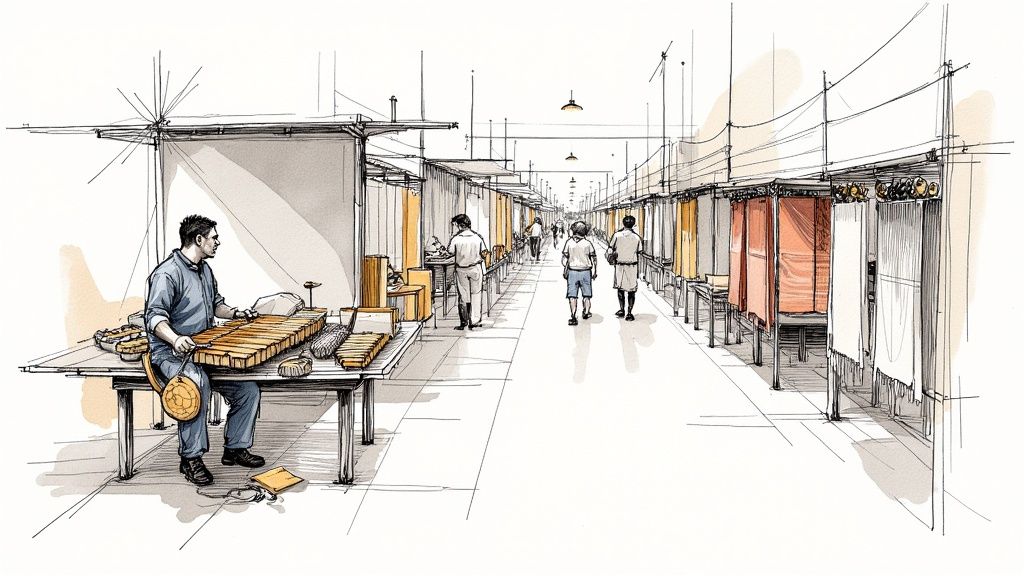
Walk through any town plaza or pop into a family party, and you're almost guaranteed to hear the warm, wooden notes of the marimba. This xylophone-like instrument is so much more than just music; it's the national instrument and a powerful symbol of Guatemalan identity. Its happy, rippling sound is the unofficial soundtrack to birthdays, holidays, and any community get-together.
Whether played by one musician or a whole group, the marimba’s melodies are woven directly into the social fabric. It's a sound that pulls people together, bringing a sense of home and shared history that every Guatemalan recognizes instantly.
Stories Told Through Dance
Beyond the music, traditional dances are like living history books. They preserve tales of conquest, faith, and local folklore through incredible, dramatic performances. One of the most famous is the Baile de la Conquista, or "Dance of the Conquest." This elaborate, masked dance reenacts the Spanish invasion and the fall of the K'iche' Mayan hero, Tecún Umán.
Dancers wear ornate wooden masks and brilliant costumes to become Spanish conquistadors and Mayan warriors. Through their choreographed movements, they tell a complex story of conflict and the eventual merging of two very different worlds. Seeing this dance is a powerful way to understand how history is remembered and passed down through generations.
The Heartbeat of the Community: The Local Market
If you want to experience the raw, unfiltered essence of daily Guatemalan life, go straight to the local market. Places like the famous market in Chichicastenango are more than just places to shop. They are vibrant social centers where community life explodes in a riot of color, sound, and smell. This is where neighbors catch up on gossip, ancient bartering traditions live on, and culture is lived out loud.
The market is a microcosm of Guatemalan society itself—a place where commerce, community, and tradition intersect. It offers one of the most authentic windows into the local way of life you can find.
Navigating a Guatemalan market is a full-sensory experience. Here are a few tips to make the most of it:
- Embrace respectful negotiation: Bargaining is part of the fun, but it should be a friendly, smiling exchange, not an aggressive argument. Start with a polite offer and enjoy the back-and-forth.
- Spot the real deal: Look for the intricate, slightly imperfect patterns of handwoven textiles or the unique character of handmade pottery. Buying directly from the artisans ensures your money supports them and their craft.
- Go beyond souvenirs: The market is also where you'll find amazing local produce, fragrant spices, and incredible street food. Diving into the food stalls is a non-negotiable part of the experience. For more on that, check out our guide to the best places to visit for foodies for some culinary inspiration.
Celebrating National Pride on Independence Day
Come September 15th, a palpable wave of patriotic pride washes over Guatemala. This is Independence Day, and it’s one of the most unifying and vibrant traditions in Guatemala. You’ll see the blue and white of the national flag decorating just about every street corner, and the air hums with music and a genuine sense of shared history. The whole country pretty much stops to celebrate who they are.
The real heart of the celebration is found in the local, community-driven events. From the biggest cities to the tiniest highland villages, the day is all about lively parades. School marching bands, who have been practicing for months, are the stars of the show. Their crisp uniforms and the booming echo of their drums create an infectious energy that pulls families out onto the streets to cheer them on.
The Symbolic Race of the Independence Torch
One of the most powerful and unique traditions you'll witness is the Independence Torch Race, or Antorcha de la Independencia. In the days leading up to the 15th, students, local athletes, and community groups form relay teams to run a lit torch through cities and towns all over the country. It’s a deeply symbolic act, meant to reenact the journey of the horseback messengers who spread the news of independence back in 1821.
Seeing the runners, their faces lit by the flame and glowing with pride, is incredibly moving. It’s like watching a history lesson come to life, a physical thread connecting different towns and generations, all fueled by the enduring spirit of freedom.
Independence Day is more than just a public holiday; it's a powerful expression of national unity and a joyful remembrance of the country's journey to sovereignty.
These celebrations mark the day Central America signed its Declaration of Independence from Spain in 1821. It's a massive affair, with official numbers showing that over 1.5 million people take part in activities each year. The day is packed with colorful parades, traditional dances, and that iconic torch race. To get a sense of how this compares to other major events, you can read more about Guatemala's diverse cultural festivals.
Experiencing the Celebrations Like a Local
If you want to truly catch the spirit of the day, you have to dive into the local festivities. While Guatemala City puts on the largest, most official parades, the experience in smaller towns often feels more intimate and personal—a different kind of magic altogether.
- Antigua Guatemala: The colonial city is a stunning backdrop for the parades, where the sounds of the marching bands bounce off the cobblestone streets.
- Quetzaltenango (Xela): The celebrations here have a distinctly local flavor. The big civic parade feels less like a tourist show and more like a genuine community get-together.
- Highland Villages: Up in the highlands, the day often mixes civic pride with local Mayan customs, creating a unique cultural experience that connects you right to the heart of the community.
No matter where you find yourself, it’s an incredible chance to see Guatemalan pride in its purest, most joyful form.
A Traveler's FAQ
Diving into a culture as rich as Guatemala's always brings up a few questions. Getting good answers ahead of time is the key to making sure your interactions are respectful, safe, and genuinely memorable. Think of this as your practical cheat sheet for navigating the amazing traditions in Guatemala with confidence.
We'll cover everything from when to put the camera down to how to find a guide who can give you the real story, not just a rehearsed tour. This is all about helping you get past the surface-level stuff and connect with the heart of Guatemalan culture.
What's the Etiquette for Photography During Ceremonies?
This is one of the most critical things to get right. You'll see incredible beauty you want to capture, but it's crucial to remember that most of these events are sacred religious moments, not a show put on for tourists.
- Always Ask First. Before snapping a photo of anyone, especially during a ceremony or at a local market, get permission. A simple point to your camera and a warm smile usually does the trick.
- Read the Room. Look around. If no other locals have their phones or cameras out, that’s your cue to keep yours tucked away.
- No Flash. Ever. Using a flash is incredibly disruptive and seen as disrespectful, especially during solemn events like Semana Santa processions or at a Mayan fire ceremony.
- Keep Your Distance. Instead of getting right up in the action, use a zoom lens from farther back. The goal is to be a quiet observer, not part of the event itself.
Some communities and sacred sites ban photography altogether. Those rules aren't suggestions—always respect them.
How Can I Find a Real Local Guide?
Hiring a local guide is hands-down the best investment you can make for an immersive experience. They're the ones who can get you off the beaten path, explain the local context, and make sure your money goes directly into the community.
A great local guide isn't just a translator; they're a cultural bridge. They can explain the subtle symbolism in a weaver's huipil or the deep history behind a village dance, unlocking a level of understanding you’d never get on your own.
To find someone reputable, start by asking at your locally-owned hotel or hostel. Community tourism projects and weaving cooperatives are also fantastic resources, as their guides are often members of the community. Be wary of unsolicited guides who approach you on the street, particularly around major tourist hubs.
Is Tipping Expected for Cultural Experiences?
Tipping in Guatemala can be a bit nuanced. It’s not always expected in the same way it is in the U.S. or Europe, but it's a powerful way to show your gratitude for great service, especially in the tourism world.
When you hire a guide, take a workshop like weaving or cooking, or feel someone has gone above and beyond, a tip is a very welcome gesture. A good rule of thumb is around 10% of the cost, but ultimately, give what you feel the experience was worth. Showing appreciation is never the wrong move.
At CoraTravels, we believe that traveling with respect and knowledge creates better experiences for everyone. Our guides are built on local insights to help you go beyond the checklist and connect with the true spirit of a place. See how to travel like a local with our insider guides at https://coratravels.com.