Thinking about that classic overnight train from Hanoi to Sapa? It's an iconic journey for a reason, but there’s one crucial detail everyone should know right off the bat: the train doesn't actually roll into Sapa town.
Instead, you're in for a rustic 8 to 9-hour ride through the dark to Lào Cai station. From there, it's a final, scenic one-hour drive up into the mountains to reach Sapa itself.
Your Essential Hanoi to Sapa Train Guide
Swapping the electric buzz of Hanoi for the quiet, mist-draped mountains of Sapa is a core Vietnamese travel experience. The overnight train is more than just a way to get from A to B; it's a rite of passage, a slow-moving bridge between two completely different worlds, offering a glimpse into the country's soul.
You’ll leave behind the city's chaotic, yet charming, maze of alleyways (something we dive deep into in our guide to Hanoi's hidden lanes) and begin a rhythmic chug towards the terraced rice fields and ethnic minority villages of the north.
This guide isn't just about timetables and ticket prices. We want to get you ready for the whole immersive experience—from the moment you step into the organized chaos of Hanoi Railway Station to that first jaw-dropping view of the Hoang Lien Son mountains. This is your first step towards an authentic, off-the-beaten-path Sapa adventure, best explored with a local guide who can show you the hidden trails and share the stories of their community.
Understanding Your Train Options
The modern journey from Hanoi involves a roughly 296-kilometer overnight train ride to Lào Cai, followed by a 35-kilometer transfer up the mountain to Sapa. This route is served by a handful of different operators, each offering a distinct level of comfort and vibe. You can read more about the history of this route and its cultural significance in Vietnam's train travel culture.
Your main decision comes down to two choices:
- Vietnam Railways: The state-run operator. This is your no-frills, authentic option. It's the go-to for travelers on a tighter budget or anyone looking for a less tourist-focused, more local experience where you can observe daily life.
- Private Tourist Carriages: Companies like Sapaly Express, Chapa Express, and the very plush Victoria Express run their own fancy carriages that get attached to the main Vietnam Railways train. Think of them as a "train within a train," offering much better comfort, cleanliness, and service.
Hanoi to Sapa Train Options at a Glance
Navigating the different train operators can feel a bit confusing at first. This table breaks down the key players to help you quickly figure out which option best fits your travel style and budget.
| Operator Type | Typical Comfort Level | Price Range | Best For |
|---|---|---|---|
| Vietnam Railways (SP Trains) | Basic & Authentic | $ | Budget travelers, backpackers, and those seeking a truly local, immersive experience. |
| Mid-Range Private (e.g., Sapaly, Chapa) | Comfortable & Clean | $$ | Most travelers, families, and couples looking for a good balance of comfort and value. |
| Luxury Private (e.g., Victoria Express) | Hotel on Rails | $$$ | Honeymooners, luxury travelers, or anyone wanting the most premium and restful journey possible. |
Ultimately, your choice here really sets the tone for your Sapa adventure. Private carriages ensure you arrive well-rested, while the standard train offers a more rugged, memorable journey where you might just end up sharing snacks and stories with a Vietnamese family.
Your choice here really shapes the entire journey. Going for a private carriage pretty much guarantees a comfortable and quiet night's sleep. The standard Vietnam Railways train, on the other hand, offers a more raw, local adventure where you might find yourself sharing a cabin with a friendly Vietnamese family heading home.
It all comes down to what you're looking for. Do you want a seamless, comfortable trip to kick off your mountain retreat? Or are you after an experience that feels a little more off the beaten path and closer to the local way of life? Let's break it down further.
Choosing Your Perfect Sleeper Cabin
Deciding on your sleeper cabin is about more than just finding a place to crash; it’s about choosing the kind of experience you want for your overnight journey into the mountains. The train from Hanoi to Sapa offers a whole spectrum of options, each one fitting a different travel style and budget.
Your choice really boils down to two main paths. First, you have the state-run Vietnam Railways, which gives you a raw, authentic local experience. Then there are the private tourist carriages, which offer a much more curated and comfortable journey—think of them as a hotel on rails that just happens to be attached to the same train.
This flowchart breaks down the choice based on what you're looking for.

As you can see, your decision splits into distinct paths depending on whether you prioritize luxury, budget, or a more authentic trip, with each leading to a specific type of train service.
Vietnam Railways The Authentic Choice
If you're after a truly immersive, off-the-beaten-path vibe, the standard Vietnam Railways cabins are the way to go. These are the most budget-friendly options by a long shot and are where you're most likely to be sharing the journey with local families.
- Hard Sleeper: This is the most basic option. Cabins have six hard berths (bunks) with just a thin mattress and a pillow. It’s functional, very affordable, and offers absolutely zero frills.
- Soft Sleeper: This is a significant step up in comfort. These cabins feature four softer berths with thicker mattresses and plusher bedding, which makes for a much more restful night.
Local Insight: While "hard sleeper" might sound a bit intimidating, it’s a fantastic way to experience local life firsthand. That said, for most Western travelers, the soft sleeper strikes the perfect balance between authenticity and getting a decent night's sleep before a big trekking adventure.
Private Carriages Comfort and Convenience
If your main goal is to arrive in Sapa feeling refreshed and ready to explore, then a private tourist carriage is your best bet. Several different companies, like Sapaly Express and Chapa Express, operate their own beautifully maintained cabins on the train.
These carriages feature upscale 4-berth cabins with clean, comfortable bedding, air conditioning, and nice little extras like complimentary water and snacks. The service is attentive, and the atmosphere is quiet and geared specifically toward tourists.
At the very top end of the scale is the Victoria Express. It offers a level of luxury comparable to a boutique hotel room, complete with elegant decor and premium service.
It's pretty amazing to think that this whole railway connection has such deep roots. The line to Lào Cai was originally built between 1906 and 1920 during the French colonial era. It was a massive engineering project that was instrumental in transforming Sapa into the popular highland resort it is today. You can read more about the historical context of Sapa's development on ethosspirit.com.
How to Book Your Train Tickets Stress-Free
Alright, let's talk about booking your train tickets from Hanoi to Sapa. This can feel like the first real hurdle of your trip, but I promise it’s much simpler than it looks. You've basically got three ways to go about it: booking directly, using an online travel agency (OTA), or just asking your hotel in Hanoi to handle it. Each has its pros and cons.
You could try the official Vietnam Railways website. But honestly? It can be a real headache for foreign travelers. Between the language barriers and payment systems that don't always play nice with international cards, it’s often more trouble than it's worth, even if the prices are direct.
The Easiest Route: Online Travel Agencies
For most people, the most straightforward and reliable method is using a trusted online travel agency. This is my go-to recommendation. Platforms like Baolau or 12Go Asia are built for this stuff, specializing in Southeast Asian travel and making the whole process incredibly smooth.
They lay out all the options in one place—from the state-run Vietnam Railways trains to all the different private tourist carriages—in a clean, easy-to-compare format. Prices are clear, you can pay with your card from back home, and an e-ticket or voucher lands right in your inbox. This completely sidesteps any language or payment drama.
Here’s a peek at what the booking interface on 12Go Asia looks like.
As you can see, you can easily filter by departure time, the train operator, and price. It makes finding the perfect ticket for your schedule and budget a breeze.
Booking through sites like these also helps keep your travel plans organized. Having all your tickets in one digital spot is a huge help; for more on that, check out our guide on how to prepare for international travel.
Other Booking Methods to Consider
Another really common option is to just ask your hotel or a local travel agent in Hanoi to book the tickets for you. This is a great choice if you prefer a face-to-face chat and want to support local businesses. Agents in the Old Quarter often have solid connections and can lock in tickets for you, sometimes bundling them with your Sapa transfer for a seamless cultural journey.
Insider Tip: If you're traveling during peak season (September-November, March-May) or a big holiday like Tet, book your tickets at least a few weeks ahead. The popular sleeper cabins, especially on the private tourist trains, sell out way faster than you'd think.
No matter how you book, always double-check your departure station. The Hanoi–Lào Cai line is a critical northern route feeding into Vietnam's larger rail network. This system is anchored by the historic North–South railway, a massive project built between 1899 and 1936 that stretches an incredible 1,726 kilometers from Hanoi all the way down to Ho Chi Minh City. You can read more about this amazing feat of engineering and its role in Vietnamese history on Wikipedia).
What the Overnight Journey Is Really Like
The whole adventure kicks off at Hanoi Railway Station. Forget quiet, orderly platforms—this place is buzzing. You'll find yourself in a sea of organized chaos, a mix of local families hauling oversized bags and fellow travelers buzzing with excitement. Your first mission: find the signs for the "SP" trains. These are the ones heading north toward the mountains and Lao Cai.
Once you find your carriage and step aboard, the vibe changes completely. You'll shuffle down a narrow corridor to find your cabin, which will be your cozy little moving home for the next eight hours. This is where the real experience begins—figuring out where to stash your backpack, claiming a bunk, and then feeling that first gentle lurch as the train pulls away from the city lights.
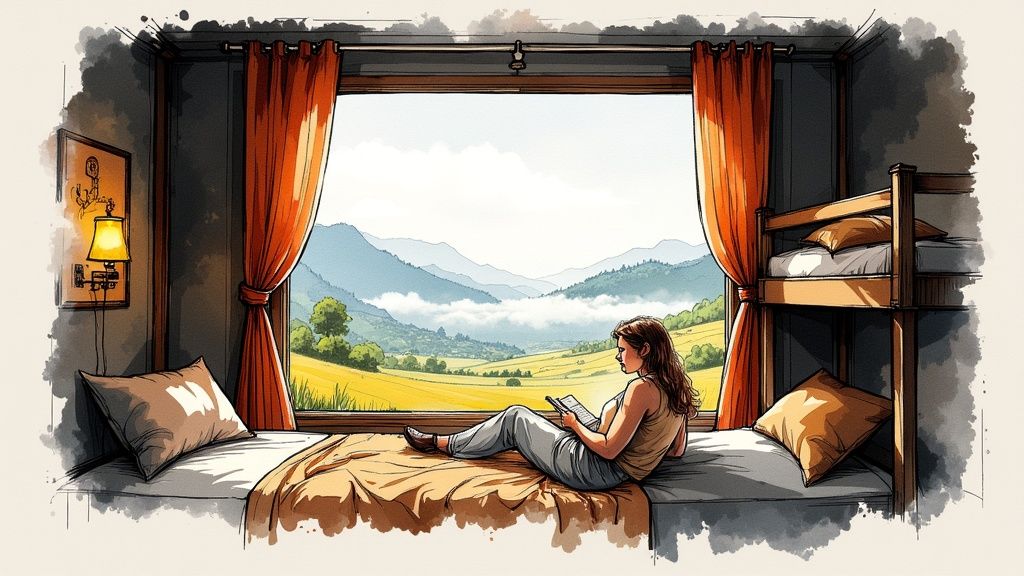
Soon, the only sounds are the gentle rocking and the steady, rhythmic click-clack of the wheels on the track. It's a surprisingly soothing soundtrack that sends most people right to sleep, though it definitely takes a minute to get used to.
Settling in for a Comfortable Night
Turning your tiny cabin into a comfortable space is all about a little prep. The train gives you the basics, but a few small items from your bag can be the difference between a rough night and a genuinely good rest. Think of it as building your own personal bubble of comfort.
To really guarantee some peace, think about noise. A good pair of the best headphones for sleeping comfortably can be a game-changer. Beyond that, a few other things are non-negotiable for me:
- Snacks and Water: Some of the private carriages provide a small bottle of water and a snack, but don't count on it. It’s always smart to bring your own. A bag of chips or some fresh fruit you picked up in Hanoi will feel like a lifesaver around midnight.
- A Power Bank: Outlets are a gamble—they might be occupied, or they might not work at all. A fully charged power bank means your phone will be ready for all the photos you’ll want to take in the morning.
- Comfy Clothes: Ditch the jeans. Change into something loose like sweatpants or leggings. Trust me, it makes sleeping on a moving train so much easier.
The best part of this journey isn't just about getting from A to B. It's about the shared experience. You might end up swapping stories and travel tips in hushed tones with your cabin mates as the train rumbles through the dark Vietnamese countryside.
Waking Up to the Mountains
The most unforgettable part of the trip happens right as the sun starts to come up. After a night of being gently rocked to sleep, you'll wake up, peek out the window, and see a completely different world. The city lights of Hanoi are long gone, replaced by a stunning, misty panorama.
As the train chugs closer to Lao Cai, the landscape transforms. You’ll start seeing endless stretches of lush, green rice paddies, dotted with tiny farming villages that are just beginning to stir. The air itself feels different—cooler, cleaner.
Then, you'll spot them: the first foothills of the Hoang Lien Son mountain range, their peaks often wrapped in a soft morning fog. This is the moment you've been waiting for. It’s that first breathtaking glimpse of the region's raw, untamed beauty, turning a simple train ride into a core memory of your Sapa adventure.
Arriving in Lao Cai and Getting to Sapa
Your overnight train from Hanoi pulls into Lao Cai station just as the early morning light starts to hit the mountains. You've made it, but this isn't Sapa just yet—it's the gateway. The last leg of your journey is a scenic 35-kilometer drive up a winding road, and it’s an adventure all on its own.
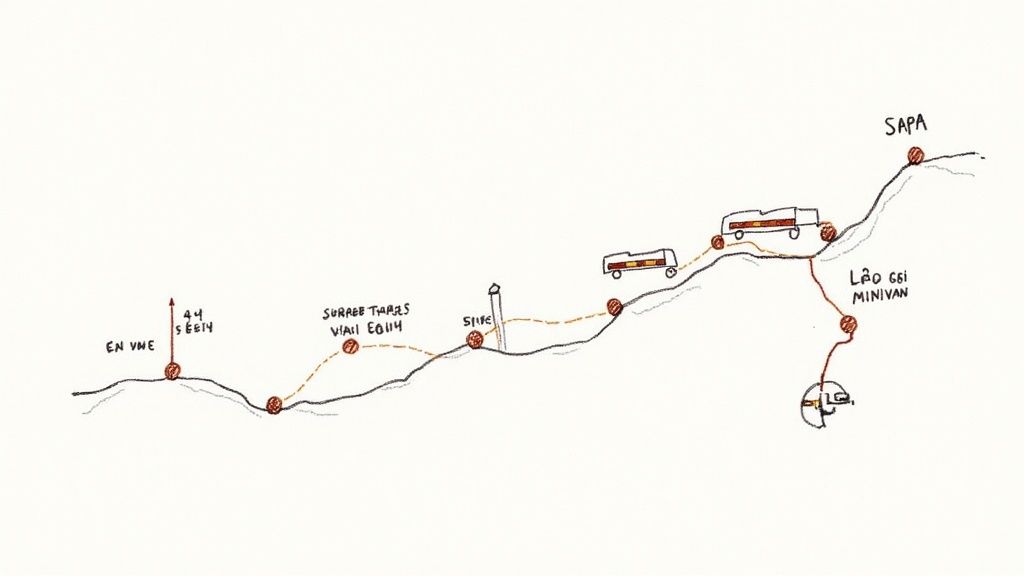
The second you step out of the station, you'll be met with a friendly chaos of drivers offering you a ride. After a night on the train, this can feel a bit much. Knowing your options ahead of time is the key to a smooth, stress-free transfer.
Navigating Your Transfer Options
Getting from Lao Cai to Sapa really comes down to your budget, how much you value comfort, and what kind of experience you're after. The drive itself takes about an hour and gives you your first incredible glimpses of the terraced valleys you came to see.
- Shared Minivan: This is the go-to for most travelers, and for good reason. Drivers wait right outside the station, fill up their vans (usually 10-15 people), and then head off. It’s the perfect balance of cost and convenience.
- Private Taxi: If you’re traveling with family, a small group, or just want to get going immediately, a private taxi is your best bet. You’ll have more space for luggage and can leave the second you’re ready.
- Local Bus: For the true budget backpacker or anyone craving an authentic local experience, there's the public bus. The stop is a short walk from the station, and the ride is dirt cheap. It takes longer and makes more stops, but it's a real slice of daily life in the mountains.
Local Insight: Always, always agree on the price with a minivan or taxi driver before getting in. Don't be afraid to politely walk away if the price feels off. A great way to get a fair price is to connect with a local guide in Sapa beforehand; they can often arrange a trusted driver to meet you.
Lao Cai Station to Sapa Transfer Options
Here’s a quick breakdown of what you can expect for each transfer option. Keep in mind that prices can fluctuate a bit depending on the season and your bargaining skills, but this table will give you a solid idea of what to budget.
| Transfer Option | Average Cost (VND) | Travel Time | Best For |
|---|---|---|---|
| Shared Minivan | 50,000–60,000 | ~1 hour | Solo travelers, couples, and budget-conscious groups. |
| Private Taxi | 400,000–500,000 | ~50 minutes | Families, small groups, or those prioritizing comfort and speed. |
| Local Bus | 30,000–40,000 | ~1.5 hours | Budget backpackers and travelers seeking an authentic local experience. |
Ultimately, there's no "wrong" choice here—just the one that fits your travel style best. Pick what works for you, and get ready for the stunning mountain views that await.
What About Sleeper Buses and Private Cars?
The overnight train is classic, but it's not your only move for getting from Hanoi up to Sapa. Sometimes a more direct route makes more sense for your schedule or wallet. Let's look at the alternatives: sleeper buses and private cars, both of which skip the whole train-then-transfer shuffle in Lao Cai.
Sleeper buses are the go-to for budget travelers and anyone trying to squeeze every last minute out of their itinerary. These coaches run overnight directly from Hanoi and drop you right in Sapa town, usually arriving early enough to grab breakfast and start your day. It’s a no-fuss, efficient way to travel, and you'll be sharing the ride with locals and other backpackers.
The Sleeper Bus Experience
Hopping on a sleeper bus is a real slice of Vietnamese travel. Just know what you're getting into.
The Good: The main draws are cost and convenience, hands down. Tickets are often 30-50% cheaper than a soft sleeper berth on a train. Plus, you arrive directly in Sapa, which means you don't have to spend extra time or money on the transfer from Lao Cai.
The Not-So-Good: Comfort can be a real issue, especially if you're tall—the berths are built for a smaller frame. The ride up the winding mountain roads can also get pretty bumpy. While the drivers are pros, navigating those hairpin turns at night is a legitimate concern for some travelers.
Local Tip: If you go the bus route, spring for a "VIP" or "limousine" bus. It only costs a few bucks more, but you get a much comfier bed, better amenities, and you’re usually booking with a more reliable company.
Private Cars and Limousine Vans
If comfort, a flexible schedule, and a quiet ride are your priorities, booking a private car or a spot in a shared limousine van is the way to go. This is easily the fastest and most direct option, clocking in at around 5.5 to 6 hours.
A private car gives you total freedom—leave when you want, stop for photos whenever you see a great view, or pull over for a coffee. Limousine vans are a great middle ground, offering plush, roomy seats for about 9-12 people. It’s the comfort of a private car with a friendlier price tag, making it perfect for families, small groups, or anyone who just wants a totally stress-free start to their mountain getaway.
Final Questions Answered
Still have a few things you're wondering about? We get it. Here are the most common last-minute questions we hear from travelers making the same journey.
Is the Hanoi to Sapa Train Safe for Solo Travelers?
Absolutely. The overnight train is a well-trodden path and generally very safe for solo travelers, including women.
In the standard 4-berth cabins, the door locks securely from the inside. Being in a shared space with other travelers (often other tourists) can actually add a sense of security. The private tourist carriages also have dedicated staff who keep an eye on things all night.
Just use the same common sense you would anywhere: keep your passport, phone, and cash on you or tucked away securely in your locked bag, not just lying out on the bunk.
When Should I Book My Tickets?
The golden rule is to book at least one to two weeks in advance. This is especially true if you’re traveling during the peak seasons (that’s September-November and March-May) or on a weekend, when things get busy.
If your trip falls over a major holiday like Tet (Vietnamese New Year), you need to be thinking months ahead. Seriously. The best cabins and all the tickets can sell out in a flash.
Traveling in the low season? You might get away with booking just a few days out, but why risk it? Booking early guarantees you get the cabin and travel time you actually want.
What Are the Bathrooms and Food Like on the Train?
Every carriage has a couple of toilets, usually at either end. To be blunt, their cleanliness can be a real mixed bag, so it’s always a smart move to bring your own toilet paper and some hand sanitizer.
Most of the private tourist trains will give you a complimentary bottle of water and a small snack, which is a nice touch. You might see a snack cart doing the rounds, but the selection is pretty slim.
Our advice? Have a proper dinner in Hanoi before you board. For a truly local experience, grab a bánh mì or some xôi (sticky rice) from a street vendor near the station to eat on the train. Pack your own drinks and snacks for the ride—it’s just easier and you’ll have what you actually like.
At CoraTravels, we believe the best trips come from understanding the local way of life. Our guides are built on insider knowledge to help you travel with confidence and cultural respect. Start planning your next authentic adventure with CoraTravels.