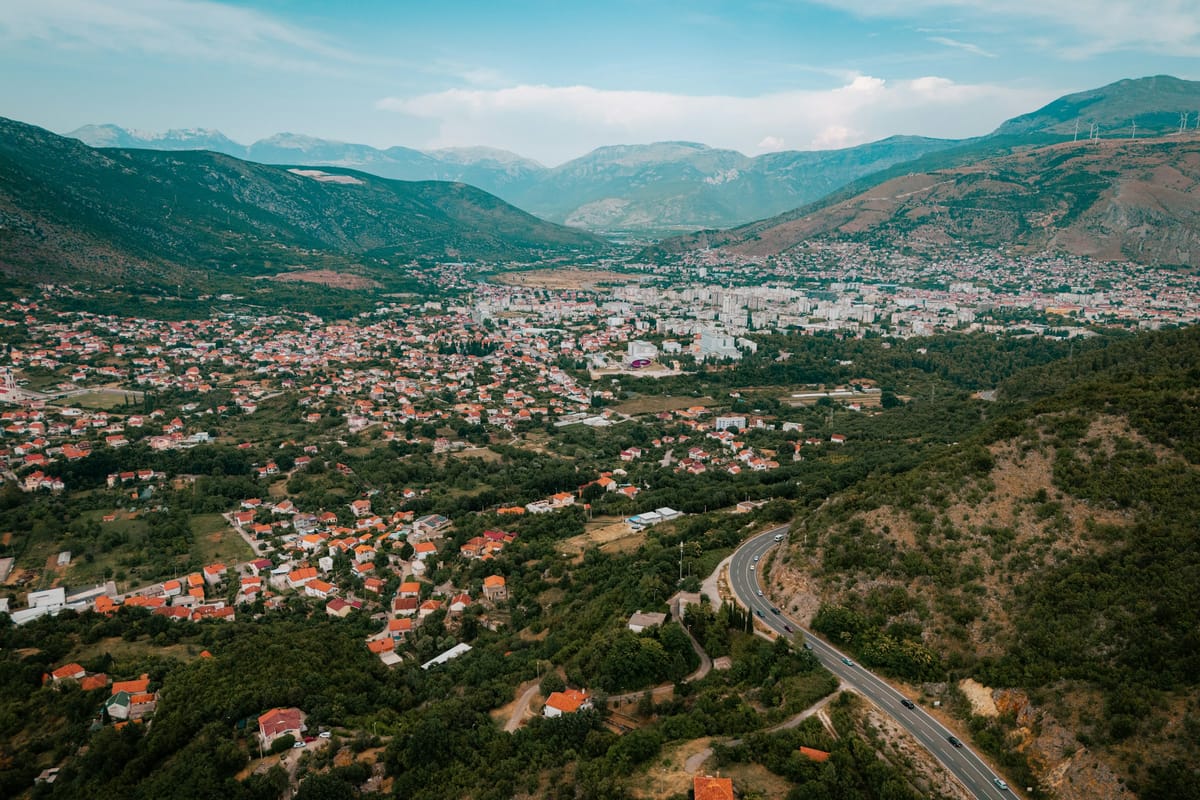
🇧🇦 Bosnia and Herzegovina
Bosnia and Herzegovina Travel Guide - Where Sevdah Melancholy Meets Coffee Philosophy and War-Tested Hospitality
2 destinations · Budget level 1
Overview
Bosnia and Herzegovina sits at Europe's cultural crossroads where Ottoman East meets Austro-Hungarian West in complex, sometimes painful coexistence. Bosnian identity forged through 400 years of Ottoman rule, Habsburg influence, Yugoslav socialism, and 1990s war creates layered national character - legendary hospitality masking deep historical trauma, spontaneous joy alongside melancholic sevdah soul. The concept of 'sevdah' defines Bosnian emotional landscape - derived from Arabic 'sawda' (black bile), it means quiet longing and pleasure in one's own romantic sorrow, expressed through traditional music mixing Ottoman and Slavic influences with Sephardic Jewish melodies. Coffee culture ('kahva') centers social life - elaborate three-pour ritual in copper džezva pot sharing similarities with the coffee ceremonies found in Istanbul's traditional neighborhoods, conversations lasting hours, never rushing through this sacred ceremony. Three main ethnic groups (Bosniaks, Croats, Serbs) maintain distinct identities tied to religion (Islam, Catholicism, Orthodox Christianity) while younger generation cautiously builds shared future. Unique cultural concepts shape daily life: 'merak' (deep contentment from simple pleasures), 'ćejf' (being carried away by the moment), 'sijelo' (evening neighborhood gatherings over endless coffee). Post-war society navigates complex reconciliation - ethnic divisions persist through separate school curricula and political entities (Federation and Republika Srpska), yet cities slowly rebuild multiethnic character, locals emphasize hospitality over hatred, spontaneous warmth contradicts international stereotypes. Bosnians insist you eat, drink coffee three times, and stay longer - refusing hospitality genuinely hurts feelings, guests treated as blessings from higher power.
Travel tips
Coffee Ceremony Protocol: Bosnian coffee poured three times - 'dočekuša' (welcome coffee), 'razgovoruša' (conversation coffee), 'sikteruša' (farewell coffee) signals time to leave, rushing through coffee deeply disrespectful, expect 30-45 minute minimum per serving. Burek Semantics: Only meat-filled phyllo pastry called 'burek' - cheese version is 'sirnica', spinach is 'zeljanica', locals will correct you firmly if you call non-meat versions 'burek', this matters culturally. War Sensitivity: Never casually discuss 1990s conflict unless local initiates conversation, avoid asking 'which side' someone was on, ethnic tensions still raw, younger generation more comfortable but older folks carry trauma. Sevdah Appreciation: If invited to traditional music performance, show quiet respect during melancholic songs about love and loss, locals express deep emotions through this genre, clapping between songs not during. Religious Respect: Bosnia has mosques, Orthodox churches, Catholic churches, and synagogues coexisting - cover shoulders/knees in mosques, women need headscarves (provided), remove shoes, approach all faiths with equal respect. Landmine Awareness: Stick to paved roads and marked trails in rural areas, abandoned buildings dangerous, 1990s war left unexploded ordnance in forests and hillsides, tourist areas cleared but don't wander off-trail. Spontaneity Culture: Bosnians operate on flexible time with 'ćejf' mentality (living in moment), appointments suggestions not contracts, locals decide activities impulsively, embrace this laid-back approach rather than rigid schedules. Food Refusal Offense: Accepting offered food/drink sacred duty, hosts serve multiple times, refusing implies you dislike their hospitality, leave small amount on plate to signal fullness otherwise they'll keep serving.
Cultural insights
Bosnian culture revolves around hospitality codes, coffee philosophy, sevdah melancholy, and remarkable resilience despite geographic positioning that invited endless invasions. Sevdah music genre uniquely Bosnian - this emotional folk tradition expresses 'black bile' melancholy through songs about impossible love, longing, and bittersweet acceptance, locals connect deeply to these themes, performances often bring tears. Regional identities complex - cosmopolitan Sarajevans differ from conservative rural villagers, Mostar bridge divers maintain unique Herzegovina swagger, Banja Luka Serbs feel culturally distinct from Bosniak populations, urban-rural divide significant with city folks viewing villagers as backwards. Coffee culture elevated to philosophical practice - 'kahva' drunk from small ceramic 'fildžan' cups with copper 'džezva' pot, served with sugar cubes and 'rahat lokum' (Turkish delight), locals nurse single coffee for hours discussing politics, philosophy, and gossip in traditional 'kafana' houses, this ritual backbone of social interaction. Evening 'sijelo' tradition gathers neighbors for multi-hour coffee sessions discussing community news, preserving oral storytelling culture, younger generation maintains this despite digital distractions. Post-war reconciliation ongoing complex process - ethnic groups maintain separate educational systems teaching different versions of history, cities like Mostar physically divided between Croatian west and Bosniak east, yet daily life requires cooperation, younger generation increasingly intermarries and rejects divisions their parents' generation fought over. The Old Bridge of Mostar, recognized as a UNESCO World Heritage Site, stands as a powerful symbol of this reconciliation and the country's Ottoman architectural legacy. 'Merak' cultural concept describes blissful contentment from simple pleasures - sitting in garden drinking homemade rakija, watching sunset over mountains, sharing meal with extended family, locals prioritize these moments over material accumulation. Food traditions sacred - 'ćevapi' grilled meat fingers considered cultural treasure alongside 'burek', grandmothers' recipes passed down with religious reverence, Sunday family feasts lasting 3-4 hours unite extended families. Music culture passionate - besides sevdah, locals embrace turbo-folk, traditional 'ganga' singing in Herzegovina, contemporary Balkan pop, everyone has strong opinions about which genre represents 'real' Bosnian identity.
Best time to visit
Spring (April-May): Perfect weather 15-25°C, wildflowers bloom in Una and Sutjeska national parks, fewer tourists mean authentic interactions, Orthodox Easter and Catholic Easter celebrations (different dates) offer cultural immersion, locals emerge from winter with outdoor coffee culture reactivated, relatively low rainfall except occasional April showers. Summer (June-August): Hot 25-35°C especially in Herzegovina region (Mostar exceeds 35°C regularly), Sarajevo Film Festival in August attracts international cinema crowd, locals escape to mountains or Adriatic coast weekends, evening promenades ('korza') peak with dressed-up families strolling, tourist season brings higher prices but vibrant energy, swimming in Neretva River and visiting Kravice Waterfalls most pleasant. Autumn (September-October): Ideal season with comfortable 15-28°C temperatures, autumn colors stunning in Dinaric Alps, grape and plum harvests mean fresh rakija production, locals process 'ajvar' (red pepper spread) and preserve winter foods, fewer tourists but full tourist infrastructure still operating, September especially perfect for hiking and cultural exploration. Winter (November-March): Cold 0-10°C in valleys, excellent skiing at Jahorina and Bjelašnica Olympic mountains near Sarajevo, traditional kafana culture peaks with locals spending hours indoors over coffee and rakija, December-January brings Orthodox Christmas (January 7) and Catholic Christmas (December 25) celebrations, authentic local life without tourist crowds, southern Herzegovina milder than northern mountains, February-March best for winter sports with longer sunny days.
Getting around
Buses: Extensive network connects all cities and towns, locals rely on buses as primary intercity transport, companies like Globtour and Centrotrans operate frequently, Sarajevo to Mostar €10-12 (2.5 hours), locals don't book advance usually except holidays, buses often smoky despite no-smoking signs, scenic mountain routes stunning, cross-border connections to neighboring Croatia available for travelers exploring the Balkans. Trains: Limited rail network slowly rebuilding from war damage, Sarajevo-Mostar route (€8, 2.5 hours) scenic through mountains, Sarajevo-Banja Luka connects Federation and Republika Srpska, locals avoid trains except specific scenic routes, service infrequent and slow but rewarding for landscapes, no international connections require planning. City Transport: Sarajevo has trams, trolleybuses, and buses run by GRAS (public) and Centrotrans (private), tickets 1.60 KM from kiosks or 1.80 KM from driver, Mostar entirely walkable in Old Town, other cities mainly walking or short taxi rides, locals know exact schedules but tourists struggle with Cyrillic-only signage outside Sarajevo. Taxis: Mark taxi with 'TA' designation official, agree price before entering non-metered cabs, Sarajevo airport to center should be 20 KM maximum (€10), locals negotiate firmly, ride-sharing apps limited, short city rides typically 5-15 KM. Car Rentals: Essential for exploring countryside, Una National Park, Sutjeska, abandoned Olympic bobsled track, and rural areas without bus service, €25-40/day from companies like Europcar and Budget, mountain roads narrow and winding require confident driving, parking free except Sarajevo center, locals recommend for flexibility despite road conditions. Cycling: Minimal cycling infrastructure, locals don't cycle as transport culturally, Sarajevo hills too steep, Mostar cobblestones difficult, occasional bike rentals available but better suited for specific riverside trails than general transport.
Budget guidance
Budget Travel (€20-35/day or 40-70 KM/day): Hostel dorms €8-15 (15-30 KM), street food ćevapi and burek €3-6 (6-12 KM) per meal, local buses €1-3 (2-6 KM), free mosque and church visits, hiking national parks with small entry fees €3-5 (6-10 KM), local beer €1.50-2.50 (3-5 KM) in non-touristy spots, living like students and budget locals possible. Mid-Range (€35-70/day or 70-140 KM/day): Private room or budget hotel €25-50 (50-100 KM), restaurant meals with grilled meat and salads €8-18 (15-35 KM), occasional taxis €5-15 (10-30 KM), museum entries €3-8 (6-15 KM), domestic wine €2-5 (4-10 KM) per glass, comfortable authentic lifestyle matching middle-class locals, organized day trips to national parks €20-40. Luxury (€70+/day or 140+ KM/day): Boutique hotels €60-150 (120-300 KM), fine dining with traditional peka slow-cooked meals €25-60 (50-120 KM), private guides and wine tours, spa treatments at hotels, still fraction of Western Europe costs, quality-to-price ratio excellent even in luxury tier. Bosnia incredibly affordable - locals earn €400-600 monthly average, tourist budgets stretch far, €50/day (100 KM) lives very comfortably with occasional splurges, best value in Europe for authentic cultural experiences without tourist-trap pricing outside peak summer in Sarajevo and Mostar main attractions.
Language
Bosnia and Herzegovina officially uses three languages - Bosnian, Croatian, and Serbian - which locals speak interchangeably as they're mutually intelligible variants of same South Slavic language, political decision post-war to establish separate identities despite linguistic near-identity. Bosnian and Croatian use Latin alphabet exclusively, Serbian uses both Latin and Cyrillic (official script), locals switch between scripts mid-sentence, road signs increasingly Cyrillic in Republika Srpska. Essential phrases: 'Dobar dan' (DOH-bar dahn - good day), 'Hvala' (HVAH-lah - thank you), 'Molim' (MOH-leem - please/you're welcome), 'Oprosti' (oh-PROH-stee - sorry), 'Živjeli!' (ZHEE-vye-lee - cheers!), 'Govorite li engleski?' (goh-voh-REE-teh lee EN-gleh-skee - do you speak English?), 'Koliko košta?' (KOH-lee-koh KOHSH-tah - how much?), 'Gdje je...?' (g-DYEH yeh - where is?). Coffee and food terms critical: 'Kahva' (KAH-vah - coffee in local dialect, not 'kafa'), 'Ćevapi' (CHEH-vah-pee - grilled meat sausages), 'Burek' (BOO-rehk - meat pastry only), 'Rahat lokum' (rah-HAHT loh-KOOM - Turkish delight), 'Rakija' (RAH-kee-yah - fruit brandy). Cultural concepts: 'Sevdah' (SEV-dah - melancholic traditional music and emotional state), 'Merak' (MEH-rahk - untranslatable contentment feeling), 'Ćejf' (CHAYF - state of relaxation and living in moment). English spoken by younger urban generation and tourism workers, rare in rural areas and among older population, German common among 50+ generation from Yugoslav-era work migrations, Russian understood by some, locals deeply appreciate any language attempts even if broken, learning basic phrases opens hearts instantly and brings generous hospitality responses. Regional dialect variations exist but visitors won't notice subtleties locals debate passionately.
Safety
Bosnia very safe with low violent crime against tourists, locals protective and helpful despite international reputation suggesting otherwise, biggest threats are infrastructure-related and historical rather than current. Landmines critical concern - 1990s war left unexploded ordnance in rural areas, forests, hillsides, and abandoned buildings, stick strictly to paved roads and marked hiking trails, never enter war-damaged structures, red signs with skull indicate mine danger, tourist areas completely cleared but venturing off-trail in countryside potentially deadly, locals know safe zones but don't assume. Pickpockets exist in crowded Sarajevo Baščaršija bazaar and Mostar Old Bridge tourist areas during peak summer, locals don't flash valuables unnecessarily, use hotel safe for passports and large cash, generally opportunistic theft not aggressive robbery. Traffic aggressive - locals drive assertively, speed limits ignored, drinking and driving prevalent despite laws, pedestrian crossings treated as suggestions, defensive walking required, road conditions variable especially mountain highways, winter driving treacherous without experience. Tap water excellent quality throughout country, locals drink freely from taps, bottled water unnecessary expense except personal preference. Emergency numbers: 112 (general), 122 (police), 123 (fire), 124 (ambulance), operators may have limited English, hospitality means locals will help call if needed. Political discussions can escalate - avoid war topics, Kosovo opinions, ethnic divisions unless local initiates and relationship established, passionate viewpoints normal but foreigners weighing in unwelcome, younger generation more relaxed but older folks carry trauma. Scams minimal - occasional taxi overcharging of tourists, agree prices beforehand for non-metered cabs, bar/club drink spiking extremely rare but possible in sketchy late-night venues, street vendor haggling expected in bazaars not scams, locals generally honest and take pride in treating guests fairly. LGBTQ+ travelers should be discreet - conservative society especially rural areas and Republika Srpska, Sarajevo more tolerant but public displays of affection inadvisable, locals publicly polite but privately traditional views, small underground scene in capital. Health facilities good in Sarajevo and major cities, limited in rural areas, EU health cards not valid so travel insurance essential, pharmacies ('apoteka') well-stocked with many medicines available without prescription that require prescription in Western countries. Air quality poor in Sarajevo valley during winter due to coal heating and geography trapping smog, locals mask up on worst days, respiratory issues may worsen, avoid strenuous outdoor activity during pollution peaks. Stray dogs present in some areas, usually harmless but occasionally aggressive if cornered or protecting territory, locals know which strays friendly, don't approach or feed unfamiliar dogs.
Money & payments
Convertible Mark (BAM or KM) is official currency, symbol 'KM' used in stores and restaurants, pegged to Euro at fixed rate 1 EUR = 1.95583 BAM (approximately 2 KM per euro for easy mental math). Banknotes come in 10, 20, 50, 100, 200 KM denominations, coins in 5, 10, 20, 50 fening (fennig) and 1, 2, 5 KM. ATMs abundant in cities and towns, Raiffeisen Bank, UniCredit, and Sparkasse ATMs reliable with reasonable fees, avoid Euronet ATMs charging exorbitant fees, locals prefer ATM withdrawals over exchange bureaus. Cards accepted in hotels, larger restaurants, and modern shops in cities, cash essential for kafanas, markets, rural areas, street vendors, and small family businesses, locals carry cash primarily, chip-and-PIN standard. Euros sometimes accepted in tourist areas at poor exchange rate, always use KM for fairness, locals won't accept euros in non-tourist businesses. Typical costs: Bosnian coffee 1.50-2.50 KM (€0.75-1.25), Ćevapi portion 5-10 KM (€2.50-5), Burek slice 2-3 KM (€1-1.50), Restaurant meal with drink 15-25 KM (€7.50-12), Beer in bar 2.50-5 KM (€1.25-2.50), Rakija shot 2-4 KM (€1-2), Hostel bed 15-30 KM (€7.50-15), Budget hotel 50-100 KM (€25-50), Local bus ticket 1.60-2.80 KM (€0.80-1.40), Intercity bus Sarajevo-Mostar 20-25 KM (€10-12), Museum entry 6-15 KM (€3-7.50), National park entry 6-10 KM (€3-5). Tipping appreciated but not obligatory - 5-10% in restaurants if service good, round up for taxis and coffee bills, not expected in simple ćevabdžinicas (grill shops) where locals eat daily, hotel porters 2-5 KM appreciated, tour guides 10-20 KM for good service. Budget €25-35/day (50-70 KM) living authentically very possible eating street food and staying hostels, €50-70/day (100-140 KM) extremely comfortable with restaurant meals and mid-range accommodation, exceptional value compared to Western Europe with authentic experiences not tourist-trap pricing. Exchange money at licensed exchange bureaus ('mjenjačnica') in city centers, banks offer fair rates, airport exchange terrible rates like everywhere, locals recommend withdrawing KM from ATMs upon arrival for best combination of convenience and rate. Keep small denominations (1, 5, 10 KM notes and coins) for markets, street vendors, and tipping, breaking large 100-200 KM notes can be difficult in small shops and rural areas.
Destinations in Bosnia and Herzegovina
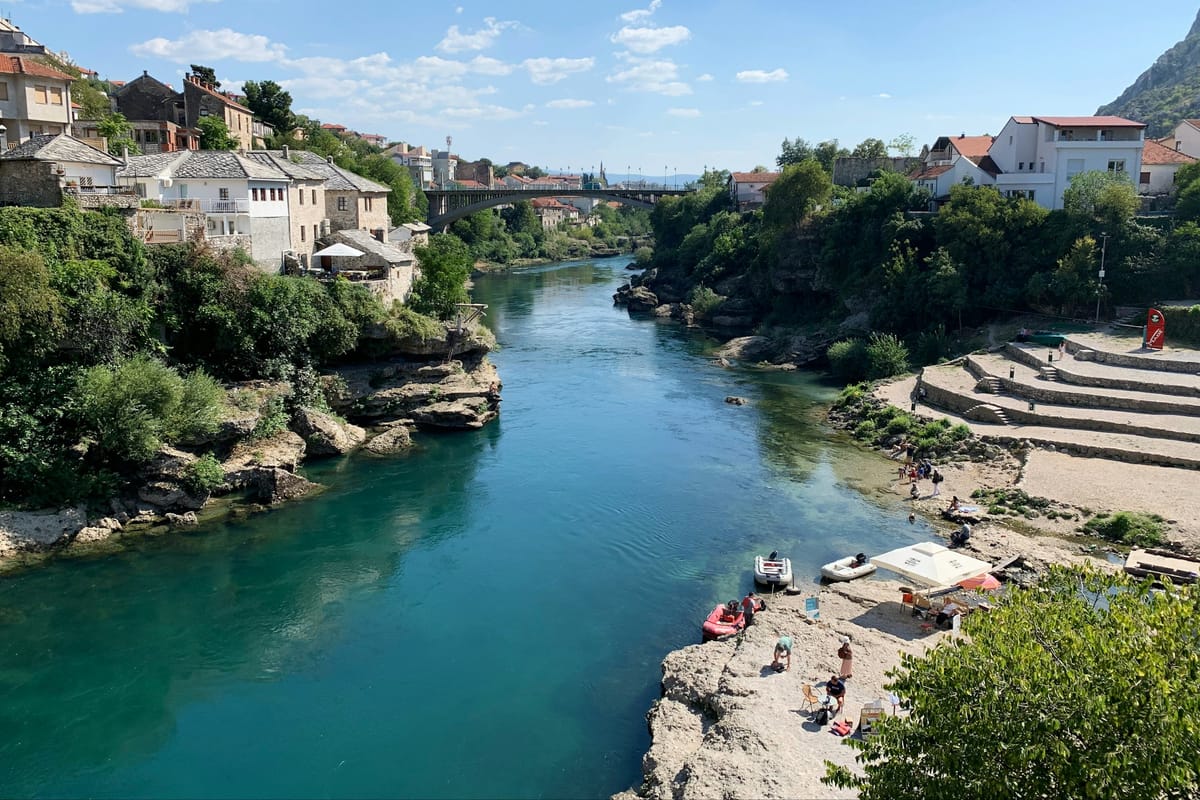
Mostar, Central Europe
Mostar: Bridge Divers & Ottoman Soul
Bridge Diving Culture: Young men leap 24 meters from Stari Most into the icy Neretva River - locals have done this for 450+ years to prove virility and brave…
Sarajevo, Eastern Europe
Sarajevo: Where East Meets West
Coffee Culture Obsession: Bosnians drink coffee for hours - it's social ritual, not caffeine fix. Sarajevo Roses: Red resin fills mortar shell craters in sid…