🇲🇰 North Macedonia
North Macedonia Travel Guide - A Young Name on an Ancient Land
1 destinations · Budget level 1
Overview
North Macedonia is the youngest country in the Balkans by name, but one of the oldest by claim - a landlocked nation of roughly 1.8 million people still negotiating who gets to call themselves 'Macedonian' and what that word even means. In 2019, after 27 years of deadlock, the country added 'North' to its name to end a dispute with Greece over the legacy of Alexander the Great and ancient Macedon; Bulgaria disputes the very existence of a separate Macedonian language and history. Locals shrug this off with dark humor more than outrage - it's the backdrop noise of daily life, not a daily grievance. What actually shapes the culture is layered history: five centuries of Ottoman rule left bazaars, burek, and minarets; Yugoslav socialism left tower blocks, secularism, and a nostalgia for Tito-era stability; post-1991 independence left a scramble to build institutions and a national story almost from scratch. Ethnic Macedonians (roughly two-thirds of the population, Orthodox Christian) and ethnic Albanians (around a quarter, mostly Muslim, concentrated in the west around Tetovo and Gostivar) live largely parallel lives - different schools, different media, different neighborhoods - punctuated by a brief but serious 2001 insurgency that still shapes political life, though daily interactions between ordinary people are overwhelmingly peaceful and often warmer than outsiders expect. Family and village ties remain the backbone of identity even as the country hemorrhages its young people abroad - about 535,000 citizens, close to a third of the resident population, now live outside the country, and surveys find a majority of young Macedonians want to leave. What stays behind is a culture where hospitality is close to a moral obligation, where a cup of Turkish-style coffee can anchor a two-hour conversation, and where a small country compensates for geopolitical powerlessness with fierce pride in its food, its saints, and its mountains.
Travel tips
Name Sensitivity: Don't call the country just 'Macedonia' in front of Greeks, and don't imply ethnic Macedonians are the same people as ancient Macedonians when talking to Bulgarians or Greeks - locals have strong views but mostly find the dispute tiresome, not a conversation starter you need to avoid entirely. Coffee Culture: A coffee invitation is a social contract, not a quick errand - sitting for 60-90 minutes over one small cup of 'makedonsko kafe' (Turkish-style coffee) is normal, and finishing fast signals you want to leave. Hospitality Reflex: Refusing food or rakija in someone's home can read as an insult - take at least a symbolic portion, and expect to be fed well past the point of comfort in villages. Religious Sites: Cover shoulders and knees in Orthodox monasteries (headscarves optional for women, often available at the door) and remove shoes before entering mosques in Tetovo, Skopje's Čaršija, and elsewhere. Ethnic Geography Awareness: Western towns like Tetovo and Gostivar are majority-Albanian and functionally bilingual with Kosovo-leaning culture; central and eastern towns are overwhelmingly ethnic Macedonian - greetings and expectations shift accordingly. Smoking & Pace: Smoking indoors is still common in kafanas despite bans, and 'Macedonian time' runs 15-30 minutes loose for informal meetups - build slack into plans. Bargaining: Haggling is expected in Skopje's Old Bazaar (Čaršija) for souvenirs and textiles but not in regular shops, cafes, or restaurants. Toasting: 'Nazdravje!' (cheers) typically opens a rakija round before the meal rather than after - pace yourself, it's often 40%+ homemade plum or grape brandy.
Cultural insights
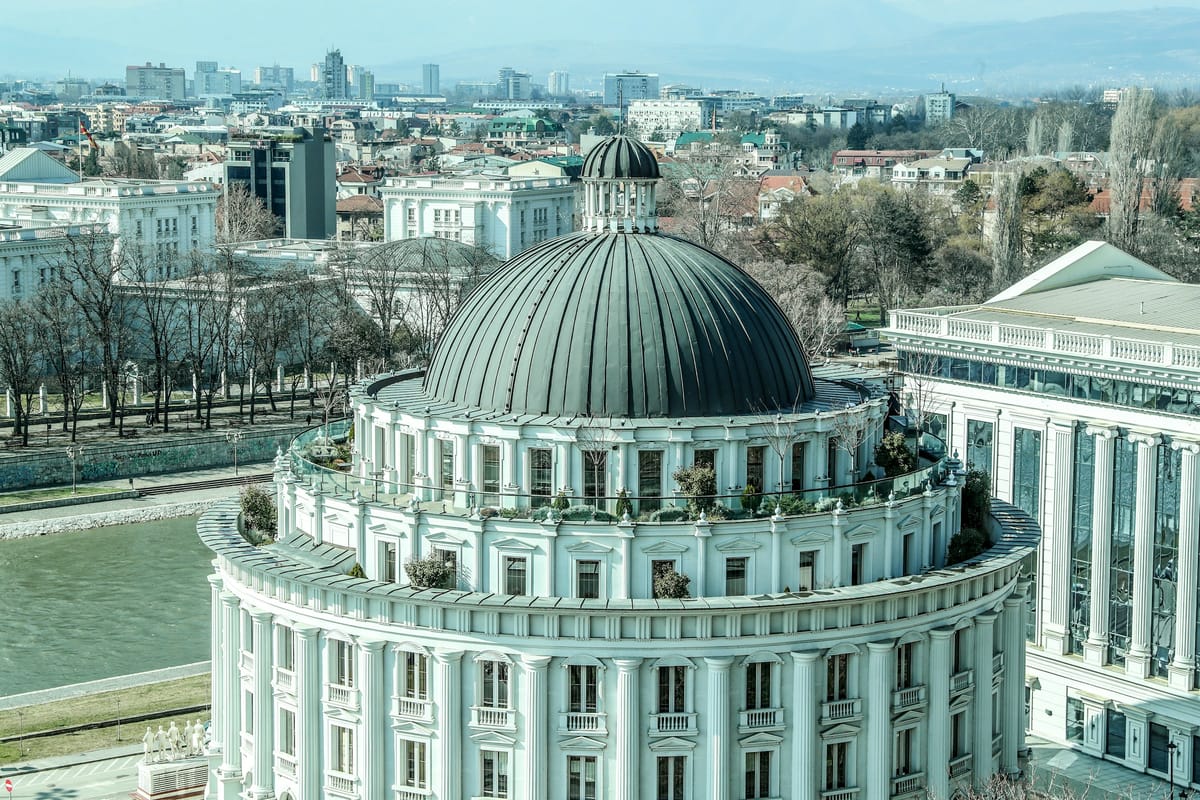
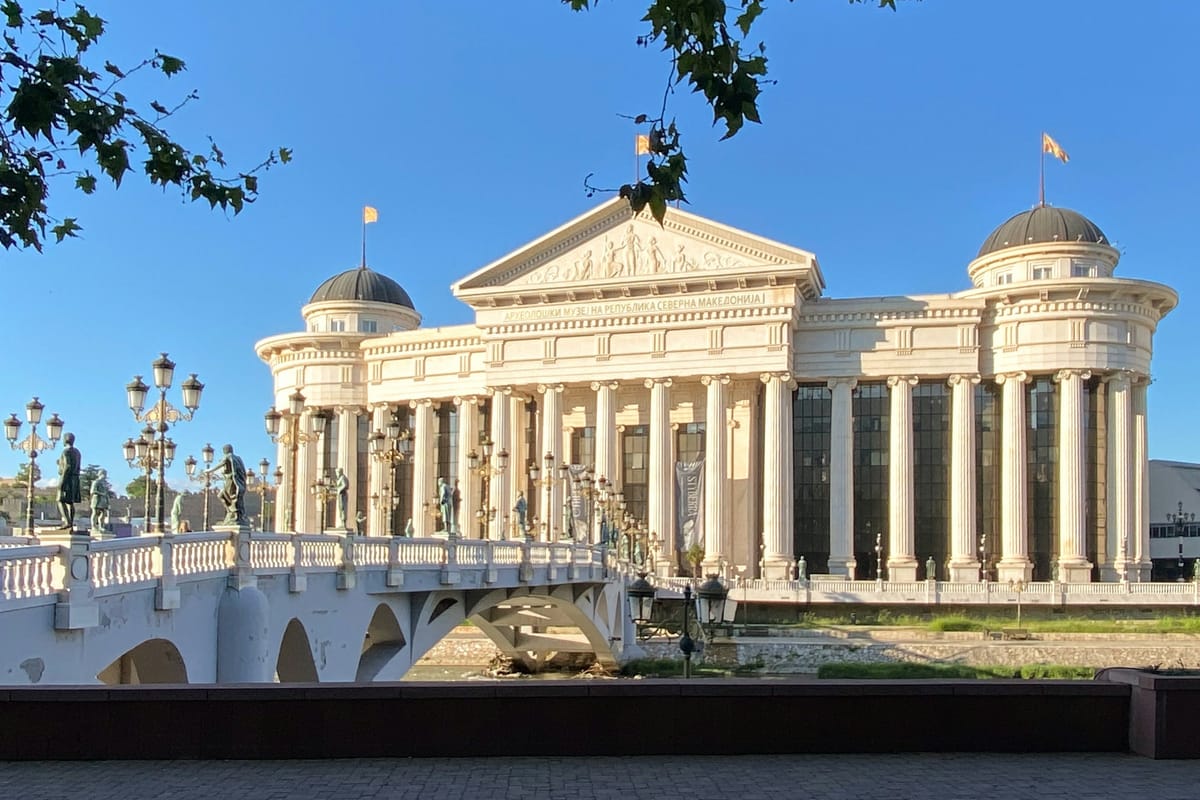
Family and 'komšiski' (neighborly) bonds remain the real social safety net in a country where state institutions are young and trust in them is low - extended families pool resources, grandparents raise grandchildren while parents work abroad, and village neighbors still show up uninvited to help with harvests, funerals, and weddings. The most vivid expression of this is the Galičnik Wedding Festival: a real wedding re-enacted every year in a near-abandoned mountain village using customs essentially unchanged for 600 years, including the symbolic 'Teškoto' dance that historically marked men leaving home for seasonal labor abroad - a tradition that now doubles as a monument to the same emigration pattern still emptying the country today. Religion maps closely onto ethnicity: Macedonian Orthodox Christianity (about 60% of the population) carries deep symbolic weight even for non-practicing locals, centered on Ohrid, once called the 'Jerusalem of the Balkans' for its legendary 365 churches and the 9th-century legacy of Saint Clement, who taught the Slavic alphabet there - while Islam (roughly a third of the population, mostly ethnic Albanian and Turkish communities in the west) shapes a parallel religious and social calendar most visible in Tetovo and Skopje's Čaršija. The 2001 armed conflict between Macedonian security forces and ethnic Albanian insurgents lasted only months but still underlies a quiet, largely unspoken ethnic segregation in schooling, media, and politics - most travelers never see tension directly, but locals are acutely aware of which town, neighborhood, or even café belongs to which community. National identity-building is unusually visible and contested: the 'Skopje 2014' urban renewal project flooded the capital with neoclassical facades, a 22-meter equestrian statue widely understood to represent Alexander the Great, and a replica Arc de Triomphe, provoking the 2016 'Colorful Revolution' protests where citizens threw paint at the new monuments they saw as expensive nationalist kitsch built on borrowed history - many locals today view the whole district with embarrassed irony rather than pride, a tension worth understanding before assuming the statues reflect universal sentiment. Regional character varies sharply for a small country: Skopje splits between an Ottoman-era Old Bazaar that still runs at Ottoman pace and the hyper-planned 'new' government quarter; Bitola carries a genteel, slightly melancholic 'European' elegance from its days hosting foreign consulates under Ottoman rule, with locals calling it 'Monastir' with pride, like Serbia's own quieter provincial towns where kafana culture defines civic life; Ohrid runs on tourism and lake-centered spirituality; Tetovo and Gostivar feel closer culturally to Pristina than to Skopje. Generational divides are stark - older Macedonians often hold Yugo-nostalgia for Tito-era job security and a bigger, more respected country, while the young, facing roughly 30% youth unemployment, see leaving as the rational life plan rather than a failure, a dynamic also reshaping neighboring Albania's villages and much of the wider Western Balkans.
Best time to visit
Spring (April-June): Mild and green, 15-24°C in Skopje, wildflowers across the Mavrovo and Pelister national parks, Orthodox Easter (dates vary, often differing from Western Easter) brings church processions and dyed eggs, fewer crowds than summer and the best light for photographing Ohrid's old town. Summer (July-August): Hot and dry, Skopje regularly hits 32-38°C in the valley and can feel punishing without AC, while Lake Ohrid moderates to the high-20s with the lake itself around 23-24°C - swimmable and the obvious summer base. The Ohrid Summer Festival (classical music, opera, theatre) runs July-August, and Galičnik's wedding festival happens around St. Peter's Day (July 12). Autumn (September-October): Widely considered the best window - warm days (18-28°C), cool nights, grape harvest and rakija-making season in the Tikveš wine region around Kavadarci, and comfortable hiking weather in Pelister and Galičica national parks without summer heat. Winter (November-March): Cold and raw, 0-7°C in Skopje with occasional snow, smog can settle heavily in the Skopje valley on windless days (a real air-quality issue, not just inconvenience), but Mavrovo ski resort runs December-March and Orthodox Christmas (January 7) and Epiphany/Vodici (January 19, marked by locals jumping into icy rivers to retrieve a thrown cross) offer a different, more intimate cultural window with almost no tourists.
Getting around
Trains: Limited but cheap - three lines radiate from Skopje to Negotino, Bitola, and Kičevo, with about two daily departures each way on the Skopje-Bitola route (roughly 3 hours, around €6). There is no rail line to Ohrid, the country's top destination, so most visitors combine train to Bitola with a short onward bus or taxi, or skip trains entirely. Buses: The real backbone of intercity travel - frequent, affordable services connect Skopje to Ohrid (3-3.5 hours, roughly €7-9), Bitola, and Tetovo from Skopje's Center Bus Terminal about 2.5km from downtown; buy tickets at the station rather than online, and book a day ahead for weekend departures to Ohrid, which fill fast. City Transport: Skopje runs city buses on a prepaid card system (around 40 denar per ride, roughly €0.65), useful for reaching the airport or outer neighborhoods, though the compact old town and city center are very walkable. Taxis & Ride-hailing: Cheap by Western standards (a cross-town ride in Skopje typically runs 150-250 denar, roughly €2.50-4), but insist on the meter or agree a price upfront - overcharging tourists at stations and airports is the most common petty scam. Local apps like Vozi or Lifka are more reliable than hailing on the street. Car Rental: The best way to reach Pelister, Galičica, and Mavrovo national parks and remote monasteries - expect around €25-35/day, mountain roads that are narrow but scenic, and occasional rough surfaces off the main highways. Flights: Skopje International Airport (Alexander the Great Airport) and the smaller Ohrid St. Paul the Apostle Airport both have seasonal low-cost connections to Western Europe, useful for an Ohrid-only trip without transiting Skopje.
Budget guidance
Budget Travel (€25-40/day or 1,500-2,500 MKD): Hostel bed €10-15, street food like burek or kebapčinja €1.50-3, local bus tickets under €1, museum entries €1-3, homemade house wine or rakija €1-2 a glass - North Macedonia is one of the cheapest countries in Europe to travel comfortably on a shoestring. Mid-Range (€45-80/day or 2,800-5,000 MKD): Private Airbnb or 3-star hotel €30-55/night, restaurant meals with drinks €8-15, a half-day taxi or short car rental, guided monastery or lake tours €15-30, still noticeably cheaper than Croatia or Greece for comparable quality. Comfortable/Luxury (€100+/day): Boutique lakeside hotels in Ohrid €70-150/night, fine dining €25-45, private wine tours in the Tikveš region, spa and ski packages at Mavrovo - even at the top end, North Macedonia runs 30-50% below Western European prices. Local salaries average around €700-900/month, which explains why prices stay low for visitors - tip 10% at sit-down restaurants if a service charge isn't already included, and round up for taxis and casual service.
Language
Macedonian is a South Slavic language written in Cyrillic, mutually intelligible to a large degree with Bulgarian and understandable to many speakers of Serbian, Croatian, and Bosnian. Albanian is the second most spoken language, dominant in Tetovo, Gostivar, and surrounding western municipalities, and co-official in areas where Albanians form at least 20% of the population - road signs and official documents in those towns appear in both languages. Essential phrases: 'Здраво' (Zdravo - hello), 'Добар ден' (Dobar den - good day, more formal), 'Ви благодарам' (Vi blagodaram - thank you, formal) or the casual 'Фала' (Fala), 'Молам' (Molam - please/you're welcome), 'Како си?' (Kako si? - how are you, informal), 'На здравје!' (Na zdravje! - cheers). English is reasonably common among under-40s in Skopje and Ohrid's tourism sector, much less so in villages and among older generations, where German (from Yugoslav-era 'gastarbeiter' labor migration) or Serbian is more likely to bridge a gap than English. Attempting even a few Cyrillic phrases earns real goodwill - locals are used to being confused with Bulgarians, Serbians, or lumped into 'the Balkans' generically, so showing specific interest in Macedonian (versus just 'Balkan') language or history stands out.
Safety
North Macedonia is rated low-risk by most Western governments (comparable to 'exercise normal precautions') and violent crime against tourists is rare - this is one of the safer countries in the Balkans to travel, solo or otherwise. The main risks are petty and avoidable: taxi overcharging at the airport, bus, and train stations (always ask for the meter or agree a fare before getting in), informal 'guides' at tourist sites in Ohrid and Skopje's Čaršija offering unlicensed tours at inflated prices, and occasional counterfeit-bill or bad-rate tricks at unofficial currency exchange booths - stick to banks or clearly licensed exchange offices. Air quality in Skopje's valley is a genuine winter health concern, among the worst in Europe on still, cold days from November to February - travelers with respiratory conditions should check air quality indexes before a winter visit. Political and ethnic tensions tied to the 2001 conflict and the broader Macedonian-Albanian divide are real but almost never visible to tourists; avoid wading into name-dispute or ethnic-identity debates with strangers, as locals' views can be surprisingly intense even when daily life looks calm. Tap water is safe to drink throughout the country, including Skopje and Ohrid. Mountain driving in Mavrovo, Galičica, and Pelister requires caution - roads are narrow, poorly lit, and sometimes icy in winter. Emergency numbers: 112 (general EU-style emergency), 192 (police), 193 (fire), 194 (ambulance). LGBTQ+ travelers should be discreet outside central Skopje - attitudes remain conservative, particularly outside the capital.
Money & payments
The Macedonian Denar (MKD, written ден) is the currency; it is not pegged 1:1 to the euro but trades in a stable, managed range around 61.5 denar per euro. Euros are sometimes accepted informally for larger purchases like private tours or accommodation deposits, but locals use denar for everyday spending and getting change in euros is rare, so carry local currency for daily use. ATMs are widely available in Skopje, Ohrid, and Bitola, less so in smaller towns and villages - withdraw enough cash before heading to rural areas or national parks. Cards are accepted at hotels, mid-range and upscale restaurants, and supermarkets in cities, but cash is essential at the Old Bazaar, village guesthouses, local buses, and rural eateries. Typical costs: Turkish-style coffee 40-60 denar (€0.65-1), burek or a kebapčinja portion 60-120 denar (€1-2), a 0.5L domestic beer 80-120 denar (€1.30-2), a sit-down restaurant meal 350-500 denar (€6-8), a glass of homemade rakija 50-100 denar (€0.80-1.60), a short taxi ride 100-200 denar (€1.60-3.30). Tipping is appreciated but not obligatory - round up or leave 10% at restaurants with table service, less expected at cafes or takeaway counters.