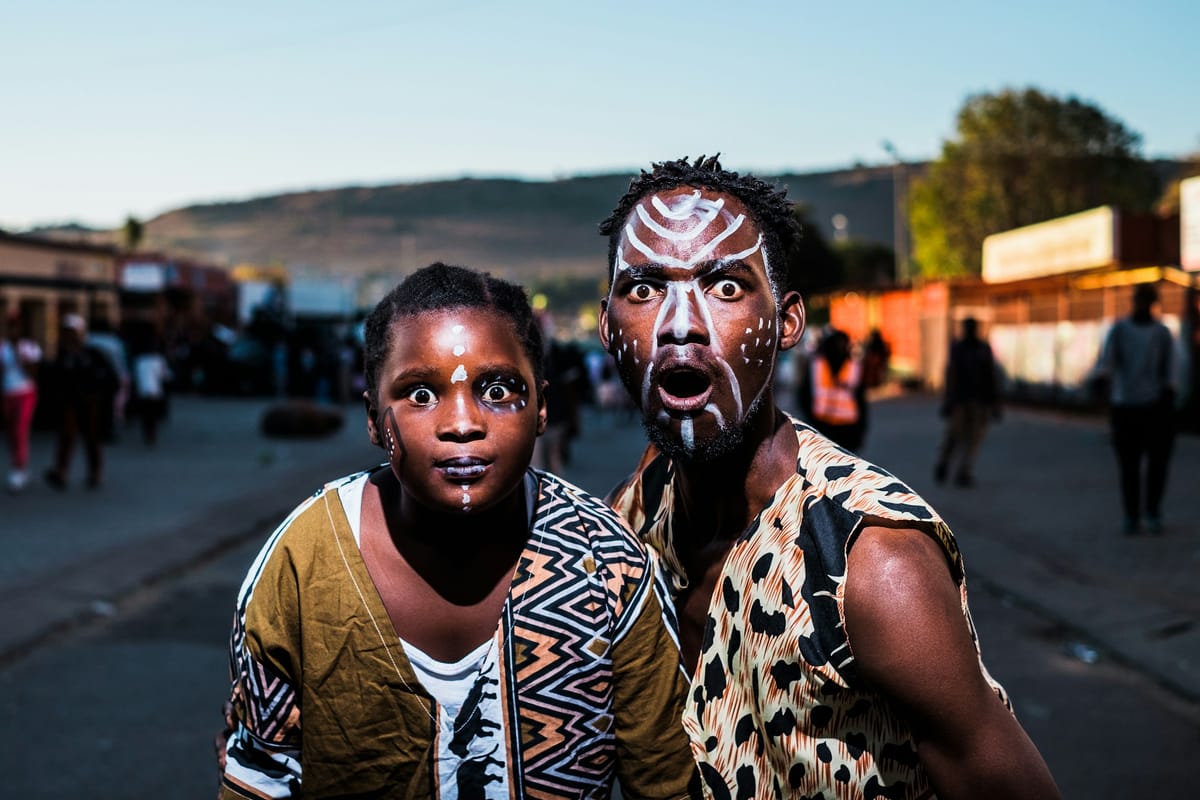
🇿🇦 South Africa
South Africa Travel Guide - Where Ubuntu Spirit Forged the Rainbow Nation
2 destinations · Budget level 2
Overview
South Africa sits at Africa's southern tip where Nguni-speaking kingdoms, Dutch Afrikaner settlers, British colonial ambitions, and waves of Indian and Cape Malay immigrants collided over four centuries to create one of the world's most culturally complex societies. The concept of 'ubuntu' (umuntu ngumuntu ngabantu - 'a person is a person through other persons') defines South African humanity at its best: collective dignity over individual achievement, community care over personal advancement, forgiveness over revenge made constitutional in the Truth and Reconciliation Commission under Desmond Tutu and Nelson Mandela. Archbishop Desmond Tutu's 'Rainbow Nation' metaphor holds eleven official languages together - Zulu (23% of population), Xhosa (16%), Afrikaans (14%), English, and seven others - each carrying distinct world views, humor, and social codes. Apartheid's 46-year racial classification experiment ended in 1994 but permanently reshaped physical landscapes: townships built on city peripheries still house millions, and spatial inequality maps almost exactly onto racial geography three decades later. Modern South Africans navigate this weight with remarkable resilience and sharp dark humor - load shedding (rolling power cuts causing 2-12+ hours of daily blackouts) becomes braai opportunity, political dysfunction channels into explosive creative energy through amapiano music's global rise and vibrant design culture. Braai culture transcends race, class, and language - the social institution of cooking over open fire where neighbors become family, strangers become guests, and the national identity gets built one boerewors roll at a time. Johannesburg hustles harder than any African city, Cape Town seduces with Mediterranean beauty hiding deep racial tensions, Durban pulses with Zulu pride and holds the largest Indian population outside India, while Mpumalanga's Lowveld connects ancient African cosmologies to the landscape.
Travel tips
Braai Etiquette: If invited to a South African braai, never arrive empty-handed - bring drinks, salads, or firewood as contribution. The 'braaier' managing the fire holds respected position, never interfere with their method. Expect 3-5 hours minimum - rushing out early offends. Load Shedding Reality: Rolling power cuts happen daily across most of the country - download the EskomSePush app to track schedules, carry power banks everywhere, book accommodation with backup generators, embrace the candle dinners as genuinely local experience. Petrol Station Culture: Attendants fill your tank (pumping yourself would be bizarre), check oil and tires if asked - tip R10-20 minimum, more if they clean your windshield. This is expected, not optional. Ubuntu Hospitality: Locals genuinely ask 'How are you?' expecting a real answer - conversations start easily in queues and shops, engage authentically rather than rushing away. Safety in Context: South Africa has higher crime than most destinations, but the vast majority of tourists experience nothing beyond minor incidents - use common sense, avoid walking alone at night in unfamiliar areas, keep car doors locked in Johannesburg traffic. Photography Respect: Never photograph people in townships or informal settlements without explicit permission - these are homes and communities, not tourist spectacles. Respectful interaction transforms experience entirely. Yellow Line Driving: On single-lane highways, move partially into the emergency lane when a faster driver flashes to pass - standard local protocol, not aggression. Tipping Imperative: 15% at restaurants is baseline (10% minimum), R20-50 per bag for porters, R5-20 petrol attendants, R10-20 parking attendants - service workers earn minimum wage and tips constitute major income.
Cultural insights
South African culture operates on multiple simultaneous frequencies that outsiders rarely grasp immediately. Ubuntu philosophy isn't abstract theorizing - it manifests in practical daily generosity: neighbors sharing food during power cuts, strangers helping with car trouble without expectation, communities gathering for funerals of distant relatives as social obligation. The apartheid spatial legacy shapes where people live, work, and socialize more than any policy can quickly undo - most South Africans still live in racially homogeneous neighborhoods, but public spaces, universities, and workplaces increasingly mix. The 'Born Free' generation (those born after 1994) navigates identity differently than their parents - less defined by racial categories, more fluid in friendships, yet inheriting the economic inequalities those categories created. Zulu culture values protocol deeply - greetings matter and cannot be rushed, elders command profound respect regardless of class, and the inkosi (chief) governance system still carries cultural weight in KwaZulu-Natal. Xhosa culture around the Eastern Cape maintains ulwaluko male initiation as serious adult rite marking social manhood, izibongo praise poetry as living oral art form, and deep family clan structures that govern obligation and identity. Afrikaner culture centers on family, land, Calvinist faith, and braai as masculine ritual - the 'plaas' (farm) remains cultural touchstone even for urban Afrikaners three generations from the soil. Cape Malay culture in Cape Town's Bo-Kaap neighborhood blends Malaysian-Indonesian ancestry, Islamic faith, and Afrikaans language into architecture, Cape Malay cuisine (bobotie, koesisters, denningvleis), and the haunting nagtroepe New Year minstrel carnival. Amapiano music exploded from Soweto and Pretoria townships into global consciousness - the log drum-driven soulful house expresses precisely South African joyful resilience, and constitutes the country's most significant cultural export in decades. South Africa's twelve UNESCO World Heritage Sites, including Robben Island where Mandela was imprisoned and the Cradle of Humankind fossil site, reflect how history and deep human origins converge here. 'Just now' means sometime today (maybe), 'now now' means soon, 'just now just now' means actually now - time operates socially, not mechanically. 'Eish' (frustration/surprise), 'lekker' (wonderful/delicious), 'shame' (sympathy or affection), 'ag' (mild exasperation) form the emotional vocabulary crossing every cultural line. The Truth and Reconciliation Commission's model - confess, forgive, rebuild without blanket amnesia - shaped national consciousness uniquely and stands as South Africa's profound contribution to post-conflict human civilization, an approach as distinct as Rwanda's community gacaca courts but rooted in different soil.
Best time to visit
Garden Route & Cape Town (November-February): Summer brings long days 25-32°C, beach season, outdoor living, wildflowers returning to fynbos - peak prices December/January mean booking accommodation months ahead is non-negotiable. Wine harvest in Stellenbosch and Franschhoek runs February-March. Kruger & Safari Regions (May-September): Dry winter season is gold for game viewing - vegetation thins completely, animals cluster around waterholes making sightings almost guaranteed, temperatures 10-25°C (genuinely cold nights), lower malaria risk. The quality of safari experience here rivals East African wildlife corridors in Kenya at often lower prices. Whale Watching (June-December): Southern right whales calve in Hermanus Bay and Walker Bay - June-November peak, clifftop watching from the coastal path is completely free and extraordinary. No boat needed. Cape Town Winter (June-August): Winelands operate beautifully, accommodation costs drop 30-40%, rain is mostly brief not sustained, 14-20°C with clear sunny days between fronts - best time for uncrowded Cape exploring. Durban & KwaZulu-Natal Year-Round: Subtropical warmth 18-28°C year-round with brief summer rainy season November-February makes beach visits possible in any month. Namaqualand Wildflowers (August-September): Post-winter desert transforms briefly into extraordinary carpet of orange and purple daisies - spectacular and worth routing through.
Getting around
Car Rental: Essential for any travel beyond major cities - South Africa drives on the left, road network generally excellent, watch for potholes on secondary routes and aggressive minibus taxis in urban areas. R400-600/day economy car, book ahead during December peak. Lock doors in Johannesburg traffic. Gautrain: Modern express train linking Johannesburg CBD, Sandton (business hub), Midrand, Tshwane (Pretoria), and OR Tambo International Airport - clean, safe, punctual, R40-90 per ride, every 12 minutes peak. Essential for airport transfers, eliminates the stressful OR Tambo taxi experience entirely. MyCiTi Bus (Cape Town): Modern BRT system covering city center, V&A Waterfront, Blouberg, and airport - requires myconnect smart card (R35 from stations), R15-30 per trip, frequent service 6am-midnight on main routes. Uber/Bolt: Available in all major cities - safer and cheaper than traditional metered taxis, English interface, used extensively by locals and tourists alike. Locals genuinely prefer these over street hailing. Minibus Taxis: The real backbone carrying 80% of South African commuters - not recommended for tourists due to overcrowding, unfamiliar routes, and aggressive driving culture. Worth observing as profound social institution, impractical for independent use. Baz Bus: Hop-on-hop-off backpacker bus running Cape Town to Johannesburg via Garden Route - R2,500-5,500 for full passes, deposits directly at hostels, social travel experience. Domestic Flights: FlySafair and Airlink offer budget routes, Cape Town to Johannesburg from R800-2,500 booked early, saves 18-hour drive.
Budget guidance
Budget Travel (R300-600/day): Backpacker hostel dorm R80-200, township eateries or supermarket self-catering R30-100, Uber sharing or local transport R30-80, free beaches and national parks' public areas - this is living genuinely alongside South Africans and surprisingly enriching. Mid-Range (R600-1,500/day): Guesthouse or Airbnb R300-700, restaurant meals R80-250, Uber rides R50-150, Kruger day entry R220, wine tastings R100-200, comfortable self-drive travel. Budget Safari (R800-2,000/day all-in): Kruger National Park rest camp chalets R700-1,500/night self-catering, self-drive in your own car with R220 day entry, incredible wildlife encounters without guide markup - lion and elephant sightings are standard, not guaranteed but frequent. Luxury Safari (R3,000-10,000+/day): Private game lodges R2,000-6,000+ per person per night all-inclusive with qualified rangers, exceptional food, and exclusive-use reserves - expensive globally but competitive with luxury safari markets in Botswana and Tanzania. South Africa's real value is the flexibility to budget safari brilliantly or splurge on world-class lodge hospitality. Petrol R22-25/liter means Cape Town to Johannesburg costs R700-1,000 in fuel for a typical car.
Language
South Africa's eleven official languages create social texture unlike anywhere - switching between isiZulu, Afrikaans, and English in a single Johannesburg conversation is completely normal. English is the business language and default for interracial communication, widely spoken in cities and tourist areas though rural areas vary. Essential South African English slang: 'Howzit' (how are you - standard casual greeting), 'Lekker' (good/nice/delicious - most versatile word in the vocabulary), 'Eish' (frustration or mild amazement - sounds like 'aysh'), 'Just now' (later, timing unclear), 'Now now' (soon, not immediately), 'Shame' (expressing sympathy or affection - 'ag shame, look at that puppy'), 'Ag' (mild frustration or resignation), 'Yebo' (yes - Zulu, universally understood), 'Sharp sharp' (excellent, all good - said with enthusiasm). Zulu greetings: 'Sawubona' (I see you - singular), 'Sanibonani' (I see you all - plural), response is 'Yebo' or 'Ngiyabona'. Xhosa and Zulu feature click consonants - attempting any click consonant in Xhosa brings enormous delight and appreciation from locals even when the attempt is imperfect. Afrikaans: 'Dankie' (thank you), 'Lekker bly' (lovely stay), 'Totsiens' (goodbye). Any effort beyond English signals genuine respect for South Africa's complexity and consistently earns warmer hospitality than English-only travelers experience.
Safety
South Africa requires more active safety awareness than most destinations, but the majority of travelers experience only genuine hospitality. Violent crime in certain urban areas is serious - this isn't something to dismiss. Practical rules: don't walk alone at night in unfamiliar areas of Johannesburg CBD, Cape Town's outskirts, or downtown areas after dark. 'Smash and grab' theft at traffic lights is real - keep car doors locked, bags off seats and out of sight, windows up in urban traffic. ATM safety critical: use machines inside shopping malls or bank branches during business hours, shield your PIN completely, be extremely wary of 'helpful strangers' offering assistance - card skimming and cash-swapping scams target ATMs regularly. Don't photograph police, military installations, or government buildings. Malaria: genuine risk in Limpopo, Mpumalanga, and northern KwaZulu-Natal especially November-April - prophylaxis strongly recommended for Kruger and wildlife areas during these months, repellent and long sleeves at dusk are essential. Wildlife: maintain absolute distances in national parks, never approach elephants, buffalo, or hippos on foot or vehicle, follow ranger instructions without question - animals are genuinely dangerous. Sun intensity is severe at southern hemisphere altitude - SPF 50 minimum, protective hat essential even for short outdoor periods. Load shedding creates safety considerations after dark in some areas - stick to well-lit, populated areas when grid is down. Emergency numbers: 10111 (SAPS police), 10177 (national ambulance), 112 (general emergency from mobile phone). Travel insurance with emergency medical evacuation coverage is essential given the distances in rural areas.
Money & payments
South African Rand (ZAR/R) is the currency, trading approximately R19-21 per euro. Cards widely accepted in cities, supermarkets, and tourist areas - load shedding occasionally takes card machines offline, so carry R200-500 cash at all times. ATMs most safely used inside shopping malls and bank branches. Typical costs: Takeaway coffee R40-60, Street kotas (Soweto sandwich) R30-50, Bunny chow (half loaf) R40-80, Supermarket beer 500ml R19-35, Restaurant meal per person R80-200, Glass of Cape wine at winery R30-80, Quality wine bottle from bottle store R60-200, Braai boerewors R80-150/kg, Budget hostel dorm R80-200/night, Mid-range guesthouse R400-800/night, Kruger National Park day entry R220, Big 5 private safari day R1,500-3,500. Tipping culture is economically non-negotiable: restaurant waitstaff earn minimum wage R25-30/hour and depend heavily on tips - 15% is standard (10% minimum for adequate service), R20-50 for safari and tour guides (often constitutes majority of their income), R10-20 petrol attendants, R10-20 hotel housekeeping daily, R5-10 for parking attendants who appear outside most venues. Using South Africa's hospitality industry without tipping is genuinely taking from people earning poverty wages.
Destinations in South Africa
Cape Town, Southern Africa
Cape Town: Mountain, Sea & Rainbow Nation
Load Shedding Reality: Power cuts scheduled daily, locals plan lives around electricity schedules. Mountain Weather: Table Mountain creates microclimates - s…

Johannesburg, Southern Africa
Johannesburg: Gold City, Township Soul
Altitude Ambush: Joburg sits at 1,753 metres (5,751 feet) above sea level — that equatorial sun burns faster than you expect, and winter nights (dropping to …