Turkey is a landscape saturated with history, where layers of civilization are visible in the soil itself. But to truly experience its ancient past, you need to go beyond the postcard views of Ephesus or the hot-air balloons over Cappadocia. This guide is built to provide an authentic, immersive way to connect with the most incredible ancient sites in Turkey, focusing on local experiences that transform a simple visit into a profound journey.
We will explore not just the monumental ruins but the living culture surrounding them. You will discover tips from local guides with generational knowledge, find off-the-beaten-path trails leading to forgotten temples, and understand the rhythms of daily life in villages that have coexisted with these sites for centuries. This is not about surface-level facts; it's about practical, actionable advice for the independent traveler. Before you immerse yourself in Turkey's rich history, make sure to consult a general Turkiye Visa guide to understand entry requirements.
Forget the crowded tour buses and generic itineraries. Prepare to travel with insider tips on navigating these timeless places with respect, curiosity, and a sense of genuine discovery. We will provide specific transport options, entrance fee insights, and notes on avoiding overtourism. From the world's first temple at Göbekli Tepe to the sunken secrets of the Lycian coast, this listicle is your blueprint for digging deeper into the stories etched in stone and experiencing Turkey’s ancient soul firsthand.
1. Ephesus: Beyond the Crowds of a Roman Metropolis
Stepping into Ephesus is not just visiting ruins; it's walking through a complete Roman metropolis. As one of the most magnificent and best-preserved ancient sites in Turkey, this former Ionian Greek port city offers an unparalleled glimpse into the grandeur of the Roman Empire in the eastern Mediterranean. Its sprawling marble streets, elaborate public buildings, and intricate private homes create a tangible connection to the past, making it an essential stop for anyone exploring the country's rich history.
What Makes Ephesus a Must-Visit?
Ephesus was a bustling center of commerce, religion, and culture. Its well-preserved structures allow you to reconstruct daily life with remarkable clarity. The centerpiece is the stunning Library of Celsus, a two-story architectural marvel that once housed over 12,000 scrolls. The Great Theatre, which could seat 25,000 spectators, still echoes with the ghosts of gladiatorial contests and dramatic performances. Beyond these iconic landmarks, you can wander through the Terrace Houses, where wealthy Ephesians lived, their homes adorned with intricate mosaics and frescoes that reveal their sophisticated lifestyles. It’s this combination of monumental public spaces and intimate domestic details that truly sets Ephesus apart.
Actionable Tips for an Immersive Experience
To transform your visit from a simple tour into a deep cultural dive, consider these local insights:
- Hire a Local Guide for Deeper Stories: Forgo the audio guides and hire a licensed guide at the entrance. They can share generational knowledge, pointing out subtle details like the ancient brothel advertisement carved into the marble street and explaining the social hierarchies reflected in the architecture of the Terrace Houses.
- Stay in Authentic Selçuk: Skip the large coastal resorts and stay in the nearby town of Selçuk. This offers a more immersive experience with family-run guesthouses and restaurants serving genuine Aegean cuisine. It’s the perfect base for exploring the Ephesus Archaeological Museum and the Basilica of St. John at a slower pace.
- Explore Off-the-Beaten-Path: Most tourists stick to the main Marble Street. Take the side paths to find the quieter public latrines, the Varius Baths, and smaller agoras. This is where you’ll find solitude and a deeper sense of the city's daily life.
- Wear Proper Footwear: The site is vast and requires extensive walking on uneven, ancient marble stones that can be slippery. Comfortable, sturdy shoes are non-negotiable for exploring beyond the main thoroughfare.
Pro-Tip: Plan a full day. Combine your Ephesus visit with a trip to the nearby House of the Virgin Mary, a quiet pilgrimage site, and the ruins of the Temple of Artemis, one of the Seven Wonders of the Ancient World. This creates a comprehensive historical journey through the region’s layered past. While exploring Turkey's ancient wonders, you might notice architectural parallels with other great civilizations; for those interested in a comparative study, exploring the monumental ruins in Mexico offers a fascinating look at how different cultures approached city-building and ceremonial architecture.
2. Cappadocia: Living History in Fairy Chimneys and Underground Cities
Cappadocia is not a single site but a surreal, living landscape where nature's artistry and human resilience are etched into the very rock. This region's famous "fairy chimneys," soft volcanic tuff cones sculpted by millennia of wind and water, became canvases for entire civilizations. It was here that early Christians, fleeing persecution, carved out a hidden world of cave dwellings, ornate churches, and sprawling underground cities, creating one of the most unique ancient sites in Turkey that feels like stepping onto another planet.
What Makes Cappadocia a Must-Visit?
The allure of Cappadocia lies in its profound fusion of geological spectacle and intimate human history. You can delve eight stories deep into the earth at underground cities like Derinkuyu or Kaymaklı, complete with stables, wineries, and ventilation shafts that supported thousands. At the Göreme Open-Air Museum, you can explore rock-cut monasteries and churches adorned with stunning Byzantine frescoes that have survived for centuries. This is a place where you don't just observe history; you inhabit it, whether you are hiking through a valley past hidden chapels or sleeping in a modern cave hotel that follows ancient construction principles.
Actionable Tips for an Immersive Experience
To experience Cappadocia beyond the typical tourist trail and connect with its authentic soul, consider these local strategies:
- Stay in an Off-the-Path Village: Skip the crowded center of Göreme and book a family-run cave hotel in a quieter village like Uçhisar, Ortahisar, or Mustafapaşa. This offers a more peaceful stay, supports local families, and provides a genuine taste of Cappadocian hospitality.
- Hike with a Local Guide: While hot air balloons are famous, the best way to find hidden gems is by hiking. Hire a local guide for the lesser-known Pancarlık or Zemi valleys to discover fresco-filled churches that are not on any map and learn about the local flora and geology.
- Explore a Quieter Underground City: Instead of the busy Kaymaklı or Derinkuyu, ask a local guide to take you to Özkonak or Mazı Underground City. They are often less crowded, allowing for a more atmospheric and less claustrophobic exploration.
- Connect with Local Artisans: Visit Avanos, a town on the banks of the Kızılırmak (Red River) with a pottery tradition dating back to the Hittites. Take a workshop with a master artisan to learn ancient wheel-throwing techniques using the local red clay.
Pro-Tip: Forgo the commercial hot air balloon tours for a more intimate and budget-friendly alternative. A sunrise hike to the top of Akdağ mountain or a viewpoint over Rose Valley offers equally breathtaking panoramic views of the balloons rising over the fairy chimneys, creating a serene and unforgettable memory without the crowds or cost.
3. Troy (Truva): A Local Perspective on a Legendary Site
More than just the mythical backdrop for Homer's Iliad, Troy is a complex archaeological puzzle box revealing 3,000 years of continuous human settlement. Located on the windy plains of northwestern Anatolia, this legendary site comprises nine distinct cities built one on top of the other. Visiting Troy, one of the most famous ancient sites in Turkey, isn't about seeing a single grand city; it's about peeling back layers of history with a local guide to connect epic poetry to tangible, excavated reality.
What Makes Troy a Must-Visit?
The magic of Troy lies in its layered complexity. While it lacks the monumental preservation of Ephesus, it offers something more profound: a vertical timeline of civilization. You can physically trace the evolution of a city, observing how walls were rebuilt and how cultures shifted over millennia. The site allows you to stand where Achilles may have fought and Priam may have ruled, connecting the world's most enduring myths to actual archaeological evidence. The excellent Troy Museum, located near the entrance, displays stunning artifacts unearthed from the different layers, providing crucial context before you explore the ruins themselves.
Actionable Tips for an Immersive Experience
To decode Troy's intricate history and transform your visit into a meaningful archaeological journey, follow these tips:
- Hire a Guide at the Entrance: The site’s significance is not immediately obvious. A licensed local guide is essential to point out the subtle differences between Troy II's ramparts and Troy VI's formidable defensive walls, bringing the city's complex stratigraphy to life with local anecdotes and historical context.
- Stay in Çanakkale for Local Culture: Use the vibrant port city of Çanakkale as your base. It offers an authentic atmosphere with excellent seafood restaurants along the Dardanelles frequented by locals, and provides easy access to both Troy and the Gallipoli Peninsula historical sites.
- Explore the Surrounding Villages: Venture beyond the ruins to the nearby villages of Tevfikiye and Kumkale. Here you can experience rural Turkish life, enjoy tea at a local çay bahçesi (tea garden), and get a sense of the agricultural landscape that has sustained this region for millennia.
- Context is Everything: Before your trip, read a brief summary of the Iliad and the history of Troy's excavation. Arriving with this background knowledge will dramatically enhance your appreciation for what your local guide is explaining.
Pro-Tip: Combine your visit to Troy with a tour of the Gallipoli battlefields, just a short ferry ride and drive away. This creates a powerful historical itinerary that contrasts the ancient mythology of the Trojan War with the stark, modern reality of World War I, offering a deep perspective on this historically crucial region of Turkey.
4. Pergamum (Bergama): A Full Cultural Experience Beyond the Acropolis
Dramatically perched atop a steep acropolis, Pergamum offers a breathtaking panorama of both the modern town of Bergama and a powerful Hellenistic kingdom. This ancient Greek city was a major center for culture, education, and medicine, boasting a library that rivaled Alexandria's and a pioneering medical sanctuary. Visiting Pergamum is an exploration of intellectual and architectural ambition that extends from the mountaintop to the heart of the living town below.
What Makes Pergamum a Must-Visit?
Pergamum’s allure lies in its dual identity: the magnificent Acropolis and the groundbreaking Asclepeion. The Acropolis is home to the stunningly steep Theatre, an engineering marvel seating 10,000 spectators with awe-inspiring acoustics. Nearby, the foundations of the Altar of Zeus hint at the city's former glory. Down in the valley, the Asclepeion was one of the ancient world's most famous healing centers, functioning like a modern spa-meets-psychiatric-hospital. It offers a fascinating look into early holistic medicine, a perfect complement to the political and cultural might displayed on the acropolis.
Actionable Tips for an Immersive Experience
To fully appreciate the scope of Pergamum’s influence, from royal decrees to medical diagnoses, follow these insider tips:
- Seek Out a Specialist Guide: When hiring a guide, specifically ask for one with expertise in the Asclepeion. Their insights can bring the innovative healing practices to life, explaining the function of the sleep chambers, sacred pools, and the long underground tunnel used for patient therapy.
- Explore Modern Bergama: The ancient site is integrated with a living town. After your visit, wander through Bergama’s bazaar to discover a thriving community of artisans. Find a local lokanta (tradesman's restaurant) for an authentic taste of Aegean home cooking, far from the tourist cafes.
- Visit the Red Basilica: Don't miss the Kızıl Avlu (Red Basilica) in the lower town. This massive Roman temple, later converted into a church, is one of the most imposing ancient structures in Turkey and is often overlooked by tour groups rushing to the acropolis.
- Ascend Smartly, Descend Slowly: Take the cable car up to the Acropolis to save energy. Afterwards, walk down the ancient path to explore the intermediate ruins and absorb the connection between the ancient city and the modern town below.
Pro-Tip: Plan for a full day to see the Acropolis, the Asclepeion, and the Red Basilica. For a truly immersive experience, stay overnight in a restored Ottoman house in Bergama rather than day-tripping from a larger city. The Hellenistic roots run deep here; brushing up on some basic Greek words can enrich your understanding of the inscriptions and the site's historical context.
5. Göbekli Tepe: An Off-the-Beaten-Path Journey to Prehistory
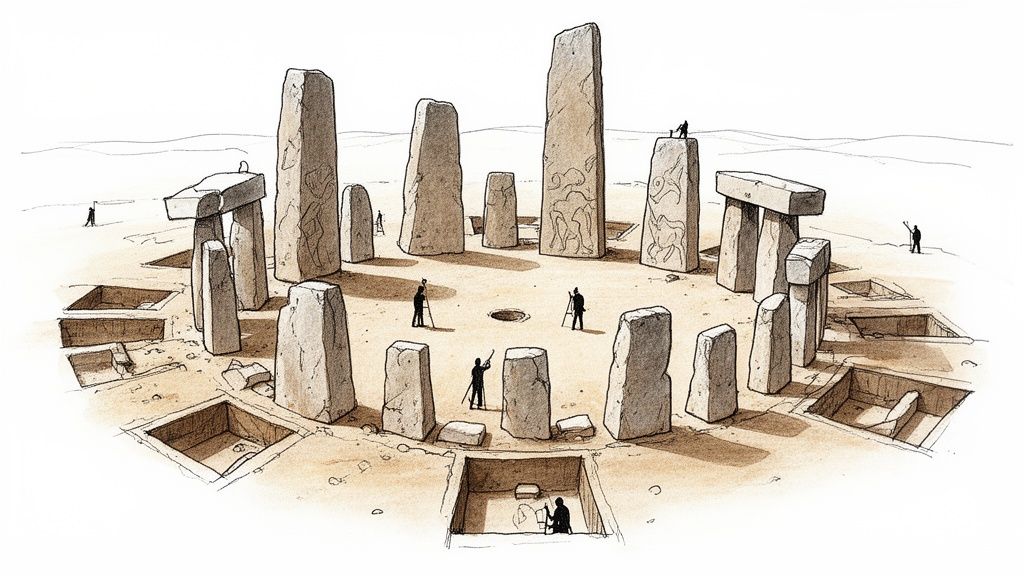
Prepare to have your understanding of human history fundamentally altered. Göbekli Tepe, located in southeastern Anatolia, is not merely another ancient site; it is a profound testament to the dawn of belief. Dating back to approximately 9600 BCE, this megalithic complex predates Stonehenge by 6,000 years. It stands as the world's oldest known temple, a revolutionary discovery that suggests organized religion may have been the catalyst for civilization itself, found far from the usual tourist trail.
What Makes Göbekli Tepe a Must-Visit?
Göbekli Tepe forces us to reconsider the capabilities of hunter-gatherer societies. The site consists of massive, T-shaped limestone pillars, some weighing over 10 tons, arranged in complex circular enclosures. These pillars are intricately carved with stylized depictions of animals like foxes, snakes, and boars, suggesting a rich symbolic and spiritual world. Visiting this remote site offers a paradigm-shifting realization: that complex ritual and spiritual collaboration were central to the human story long before the first cities were built.
Actionable Tips for an Immersive Experience
To fully grasp the magnitude of this site and its surrounding culture, a thoughtful approach is essential:
- Book a Tour with a Specialist Guide: Navigating this region independently can be challenging. An organized tour from Şanlıurfa with a guide specializing in prehistory is crucial. They can explain the latest research findings, which are constantly evolving, and provide insights that bring the silent stones to life.
- Immerse Yourself in Şanlıurfa's Culture: Known as the "City of Prophets," Şanlıurfa is a destination in itself. Immerse yourself in the local culture by visiting the sacred Balıklıgöl (Pool of Abraham), exploring the bustling historic bazaar, and staying overnight to experience the city's unique blend of Turkish, Kurdish, and Arab traditions.
- Combine with Other Regional Sites: This region is rich in history beyond Göbekli Tepe. Ask your guide about visiting Karahan Tepe, a sister site that is reshaping archaeological understanding, or the ancient city of Harran, famous for its distinctive beehive-shaped houses.
- Allow Ample Time for Contemplation: Do not rush your visit. Plan to spend at least two to three hours at the site to walk the circular viewing platform, absorb the atmosphere, and contemplate its profound implications away from any crowds.
Pro-Tip: For a truly comprehensive cultural journey, dive deep into the local cuisine of Şanlıurfa. Participate in a local cooking class or visit a traditional Sıra Gecesi (a night of music, food, and storytelling) to experience the living culture of this ancient land.
6. Pamukkale & Hierapolis: Finding Serenity Off the Main Path
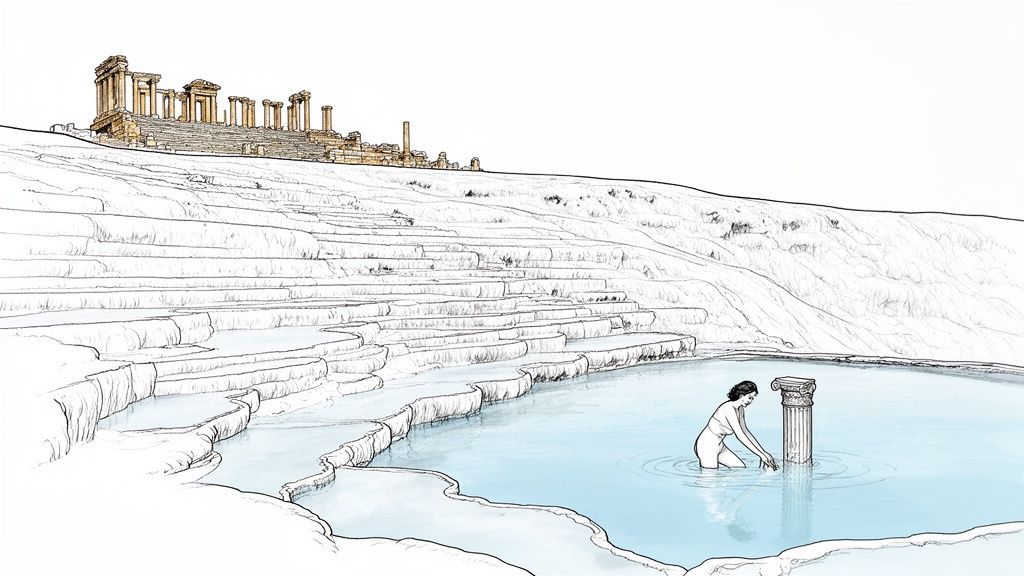
Pamukkale, meaning "cotton castle" in Turkish, is where nature’s artistry and ancient civilization converge in a breathtaking landscape. This UNESCO World Heritage Site is famous for its ethereal white travertine terraces, but the real experience lies in exploring the sprawling ruins of Hierapolis, an ancient Greco-Roman spa city, away from the main tourist throngs. It is one of the most unique ancient sites in Turkey, offering a chance for quiet discovery amidst a popular destination.
What Makes Pamukkale a Must-Visit?
The site offers a dual experience unlike any other. You can walk barefoot through the warm, calcium-rich pools of the travertines. Then, you can explore the extensive city of Hierapolis that thrived because of them. Walk through the monumental Frontinus Gate, visit one of Anatolia’s best-preserved ancient theaters with stunning acoustics, and wander the vast necropolis filled with elaborate sarcophagi. The highlight for many is swimming in the Antique Pool (often called Cleopatra's Pool), where you can paddle amongst submerged Roman columns, literally immersing yourself in history.
Actionable Tips for an Immersive Experience
To truly connect with this natural and historical marvel, a strategic approach is key to avoiding the overwhelming crowds:
- Enter Through the North Gate: Most tour buses use the south entrance. By arriving at the north gate, you can explore the vast and quiet Necropolis first, walking through the ancient city towards the travertines. This reverses the typical tourist flow and allows for a more peaceful experience.
- Stay in Karahayıt for Local Flavor: Instead of Pamukkale village, stay in the nearby spa town of Karahayıt. It’s known for its iron-rich "red water" thermal pools and offers a more local, less tourist-centric atmosphere with authentic restaurants.
- Explore the Martyrion of St. Philip: Most visitors stick to the main path. Venture up the hill behind the theatre to discover the Martyrion of St. Philip, an important and often deserted Christian pilgrimage site with incredible views over the entire complex.
- Visit in the Off-Season: To experience the travertines in true serenity, visit during the winter months (November-February). The steam rising from the warm water creates a mystical atmosphere, and you'll share the site with only a handful of other visitors.
Pro-Tip: For a more comprehensive historical tour, combine your visit with the nearby archaeological site of Laodicea, one of the Seven Churches of Asia. Afterwards, head to Denizli to visit the Hierapolis Archaeology Museum, which houses many of the artifacts excavated from the city, providing crucial context to the ruins you’ve just explored.
7. Xanthos and Letoon: An Immersive Dive into Lycian Culture
Discovering the twin UNESCO World Heritage sites of Xanthos and Letoon offers a journey into the heart of the Lycian civilization, a fiercely independent culture that thrived in this mountainous corner of southwestern Turkey. These ancient sites provide a rugged, off-the-beaten-path connection to a people known for their unique governance and striking funerary architecture. Exploring Xanthos, the political capital, and Letoon, the spiritual center, reveals a civilization that artfully blended multiple cultural influences.
What Makes Xanthos and Letoon a Must-Visit?
These interconnected sites tell the story of a unique society. At Xanthos, you can climb the acropolis for stunning valley views and examine the famous Harpy Tomb and Nereid Monument. The dramatic rock-cut tombs carved into the cliff faces and the distinctive pillar tombs are iconic examples of Lycian artistry. A short drive away, the sacred sanctuary of Letoon features the foundations of three temples dedicated to Leto and her divine children, Apollo and Artemis. It's a quiet, atmospheric site that feels worlds away from the coastal crowds.
Actionable Tips for an Immersive Experience
To fully appreciate the Lycian legacy and connect with this region's layered history, use these local strategies:
- Hire a Specialist Lycian Guide: Standard guides may lack deep knowledge of this unique culture. Seek out a licensed guide specifically familiar with Lycian history in nearby Kalkan or Kaş. They can decipher the inscriptions and explain the symbolism of the tombs, bringing the silent stones to life.
- Stay in a Local Village: For a true cultural immersion, stay in a guesthouse in a small village like Gelemiş (near Patara Beach) or Üçağız (near the sunken city of Kekova). This provides a base to explore the entire Lycian coast at a slow, deliberate pace.
- Explore Beyond the Main Sites: Use Xanthos and Letoon as a starting point. A local guide can lead you on hikes to lesser-known Lycian cities like Pydnai or Apollonia, which are often completely deserted and offer a true sense of discovery.
- Be Prepared for the Terrain: These are not manicured sites. The terrain includes steep, rocky slopes and uneven ancient paths. Sturdy hiking boots are essential for safely exploring the acropolis and reaching the best viewpoints for the rock tombs.
Pro-Tip: Make it a two-part day trip. Start at Xanthos in the morning to explore its vast ruins, then head to the tranquil, water-logged site of Letoon in the afternoon. Since facilities are minimal, pack plenty of water and snacks and enjoy a picnic amidst the ruins for a truly immersive experience.
8. Bodrum Castle and Museum: A Deep Dive into Underwater History
Bodrum Castle is a unique fusion of history where medieval fortifications are built from the remnants of one of the Seven Wonders of the Ancient World. Constructed by the Knights Hospitaller using stones from the nearby Mausoleum at Halicarnassus, this fortress now guards the world's foremost Museum of Underwater Archaeology. A visit here is an immersive journey into the stories of ancient seafarers, told through miraculously preserved shipwrecks far from a typical museum experience.
What Makes Bodrum Castle a Must-Visit?
The castle’s true magic lies within its museum, which transforms it from a simple fortress into a narrative-rich exploration of maritime history. The crown jewel is the Uluburun shipwreck, a Bronze Age vessel dating to the 14th century BCE. Its recovered cargo provides an incredible snapshot of ancient Mediterranean trade. You can walk through a reconstructed Byzantine ship and examine the delicate “Glass Wreck.” The museum doesn't just display artifacts; it tells the compelling human stories of the voyages, trade, and tragedies that unfolded on the ancient seas.
Actionable Tips for an Immersive Experience
To fully appreciate the layers of history at this site, consider these local insights:
- Focus on a Single Exhibit with a Guide: The museum is vast. Hire a guide at the entrance and ask them to focus solely on the Uluburun shipwreck. This allows for a deep dive into the story of its excavation and the significance of its diverse cargo, turning a museum visit into a compelling historical narrative.
- Explore Bodrum’s Backstreets: After your visit, skip the tourist-heavy restaurants directly facing the castle. Instead, wander into the narrow backstreets of the old town to find a meyhane (tavern) or family-run seafood restaurant where locals eat.
- Visit the Mausoleum Ruins: To complete the story, visit the nearby site of the Mausoleum at Halicarnassus. Seeing the foundations of the wonder whose stones were used to build the castle provides a powerful sense of historical continuity and recycling.
- Stay in a Local Guesthouse: Avoid the large resorts and stay in a small, family-run guesthouse in the old town. This offers a more authentic experience of Bodrum’s unique culture and provides easy walking access to the castle and marina.
Pro-Tip: Enhance your visit by taking a "Blue Cruise" or a daily boat trip from the marina. This provides context for the museum's exhibits by showing you the very coves and coastlines where ancient ships sailed and sometimes sank. It's the perfect way to connect the archaeological finds with the living landscape of the Aegean.
9. Aphrodisias: An Off-the-Beaten-Path Artistic Masterpiece
Tucked away in a fertile river valley, Aphrodisias is an often-overlooked gem among the ancient sites in Turkey. Dedicated to Aphrodite, the goddess of love, this remarkably well-preserved city was famed for its prestigious school of sculpture. Its remote location means fewer crowds and a more intimate, immersive experience with some of the Roman world’s finest art, making it a perfect destination for those seeking a full cultural experience beyond the main tourist circuit.
What Makes Aphrodisias a Must-Visit?
Aphrodisias offers a more serene experience than Ephesus, yet its ruins are equally breathtaking. The city’s identity is carved in stone; its sculptors were so renowned that their work was sought after across the Roman Empire. The on-site museum displays these original masterpieces. The star attraction is the Tetrapylon, a monumental gateway that has been beautifully reconstructed. However, the most awe-inspiring feature is the stadium, one of the best-preserved in the ancient world. You can walk its 270-meter track and feel an unparalleled connection to the past.
Actionable Tips for an Immersive Experience
To fully appreciate the artistry and history of Aphrodisias, consider these strategies for a deeper visit:
- Hire a Guide with an Art History Focus: The story of Aphrodisias is the story of its art. A local guide with a background in art history can bring the sculptures in the museum and on-site to life, explaining the techniques and symbolism that made this school so famous.
- Stay in the Nearby Village of Geyre: For a truly immersive rural experience, stay overnight in a small pension in the adjacent village of Geyre. You can enjoy genuine Turkish hospitality and wake up to see the ancient city at sunrise before any day-trippers arrive.
- Experience the Stadium in Solitude: Don’t just look at the stadium from a distance. Go early or late in the day when it's empty. Walk the length of the track and climb the steps. This physical interaction in silence creates a powerful, embodied sense of history.
- Explore the Local Culture in Karacasu: After visiting the ruins, drive to the nearby town of Karacasu, known for its traditional pottery. Visit a local workshop to see how ancient Anatolian craftsmanship continues in the modern day, providing a living connection to the region's artistic heritage.
Pro-Tip: Due to its remote location, pack a lunch to enjoy a picnic among the ruins, allowing you to stay longer without interruption. Combining Aphrodisias with Pamukkale requires a full day and a private car or tour, but it creates an unforgettable itinerary of art and nature.
10. Antioch (Antakya): A Full Cultural Immersion at the Crossroads of History
Once the third-largest city in the Roman Empire, Antioch was a vibrant crossroads of civilizations. Visiting its remains in modern Antakya offers a profound, off-the-beaten-path look at a city that served as a bridge between the Mediterranean and the Middle East. Antioch’s treasures are woven into the fabric of a living, multicultural city, demanding a full cultural immersion to appreciate its layered history.
What Makes Antioch a Must-Visit?
Antioch’s significance lies in its incredible cultural and religious legacy. The city was a cradle of early Christianity; you can feel this history at the Cave Church of St. Peter. The city’s true artistic soul, however, is revealed in the Hatay Archaeology Museum, which houses one of the world's most extensive collections of Roman and Byzantine mosaics. These intricate artworks provide a vivid window into the opulent lives of its elite and the stories that shaped Western culture.
Actionable Tips for an Immersive Experience
To truly connect with Antioch’s deep, multicultural spirit, go beyond a simple museum visit with these local insights:
- Hire a Local Guide for Cultural Navigation: The historical context of Antioch is complex. A local guide is essential for understanding the significance of sites like the Cave Church of St. Peter and for navigating the cultural nuances of this unique border region where Turkish, Arabic, and Aramaic are spoken.
- Immerse Yourself in the Old City Bazaar: The real magic of Antakya is its living history. Wander for hours through the narrow streets of the Uzun Çarşı (Long Market), where the atmosphere feels unchanged for centuries. Engage with local soap makers, spice merchants, and savor the unique culinary traditions, a blend of Turkish and Levantine flavors.
- Explore the Culinary Scene: Antakya is a UNESCO City of Gastronomy. The best way to experience its culture is through its food. Ask your guide to take you to a local's favorite spot for künefe (a sweet cheese pastry) or a traditional breakfast house.
- Visit the Vakıflı Village: Take a short trip to Vakıflı, the last remaining rural Armenian village in Turkey. This provides a poignant, off-the-beaten-path perspective on the region's rich multicultural tapestry and living history.
Pro-Tip: Before you travel, check the latest travel advisories for the Hatay region due to its proximity to the Syrian border. While the city itself is generally safe for tourists, conditions can change. Learning a few basic phrases in both Turkish and Arabic will be greatly appreciated in this culturally mixed and incredibly welcoming city.
Comparison of 10 Ancient Sites in Turkey
| Site | 🔄 Access & complexity | ⚡ Time & cost | ⭐📊 Expected outcomes | 💡 Ideal use cases | ⭐ Key advantages |
|---|---|---|---|---|---|
| Ephesus: A Roman Port City Frozen in Time | 🔄 Low — well‑connected from İzmir; easy self‑guided walk but uneven terrain | ⚡ Moderate — 2–3 hrs; standard entry + separate Temple fee | ⭐📊 Immersive Roman urban layout; highly photogenic; can be crowded | 💡 First‑time visitors, classical history fans, photographers | ⭐ Exceptionally preserved Celsus Library, grand theatre, clear signage |
| Cappadocia: Underground Cities and Fairy Chimneys | 🔄 Moderate — regional flights or long drive; sites dispersed; some hiking | ⚡ Variable — multi‑day recommended; affordable cave hotels; optional costly balloon rides | ⭐📊 Singular geo‑human landscape; cave stays; some tight underground spaces | 💡 Adventure travelers, photographers, geology & early Christian history seekers | ⭐ Unique fairy chimneys, multi‑level underground cities, cave hotels |
| Troy (Truva): Layers of Civilizations and Homeric Legend | 🔄 Low‑Moderate — drive from Çanakkale; compact but sparse facilities | ⚡ Low — 2–3 hrs; affordable entry | ⭐📊 Clear stratified archaeological layers; educational and quieter than major sites | 💡 Mythology enthusiasts, students, peaceful exploration | ⭐ Nine occupation layers, museum context, strong historical narrative |
| Pergamum (Bergama): Ancient Greek Acropolis and Medical Innovation | 🔄 Moderate — hilltop acropolis; cable car helps; sites spread across town | ⚡ Moderate — half to full day; separate Asclepeion ticket possible | ⭐📊 Panoramic Hellenistic architecture and medical/ritual insights | 💡 Those interested in ancient medicine, architecture, scenic ruins | ⭐ Acropolis views, Asclepeion sanctuary, steep ancient theatre |
| Göbekli Tepe: The World's Oldest Religious Structure | 🔄 High — remote SE Turkey; best reached via organized tour from Şanlıurfa | ⚡ Moderate — travel‑intensive; affordable entry; museum visit recommended | ⭐📊 Revolutionary prehistoric interpretation; intimate, research‑driven site | 💡 Archaeology scholars, deep‑history enthusiasts, travelers seeking uncrowded sites | ⭐ Earliest known ritual complex; ongoing cutting‑edge excavations |
| Pamukkale: Travertine Terraces and Hierapolis Ancient City | 🔄 Low‑Moderate — accessible from Denizli; well‑served but very busy | ⚡ Moderate — short visit possible; extra for Cleopatra Pool; peak season crowds | ⭐📊 Dramatic natural terraces plus archaeological ruins; highly photogenic but crowded | 💡 Nature lovers, spa visitors, photographers (sunrise/sunset) | ⭐ Unique travertine terraces, thermal pools, combined Hierapolis ruins |
| Xanthos and Letoon: Lycian Civilization and Rock Tombs | 🔄 Moderate — southwestern location; two sites ~10 km apart; limited facilities | ⚡ Low‑Moderate — 2–3 hrs combined; separate tickets; guide recommended | ⭐📊 Peaceful Lycian tombs and sanctuaries in scenic mountain setting | 💡 Quiet ruins seekers, Lycian history enthusiasts, combine with Fethiye beaches | ⭐ Distinctive pillar tombs, manageable size, strong regional context |
| Bodrum Castle and Underwater Archaeology Museum | 🔄 Low — central in Bodrum town; easy urban access | ⚡ Moderate — 2–3 hrs; higher entry fees than many sites | ⭐📊 Excellent museum curation revealing maritime trade and shipwrecks; castle views | 💡 Museum lovers, maritime history fans, combined beach/resort trips | ⭐ World‑only underwater archaeology museum; medieval fortress setting |
| Aphrodisias: The City of Love and Agricultural Prosperity | 🔄 Moderate‑High — inland and remote; requires planned transport | ⚡ Moderate — half to full day; limited nearby lodging | ⭐📊 Superb sculpture collection and coherent urban plan; quieter experience | 💡 Art/sculpture enthusiasts, in‑depth visitors, scholars | ⭐ World‑class marble sculptures, well‑preserved stadium and monuments |
| Antioch (Antakya): Gateway between East and West | 🔄 High — southeastern location near Syrian border; travel and safety awareness needed | ⚡ Moderate — multi‑day recommended; fewer tourist services | ⭐📊 Exceptional mosaics and multicultural urban history; authentic local culture | 💡 Cultural explorers, mosaic enthusiasts, culinary explorers | ⭐ World‑class mosaic collection, early Christian sites, East–West cultural fusion |
Making Your Own History: How to Explore Turkey's Past Responsibly
Our journey through the millennia has taken us from the world's first temple at Göbekli Tepe to the sophisticated Roman streets of Ephesus, and from the legendary walls of Troy to the ethereal landscapes of Cappadocia. This exploration of the most incredible ancient sites in Turkey reveals a profound truth: this land is not merely a country but a living museum, a crossroads where countless civilizations have risen, flourished, and left their indelible marks upon the world.
To truly appreciate these places, however, one must move beyond the surface-level postcard view. The real magic lies not just in seeing the ruins, but in understanding the human stories etched into every stone. It’s about feeling the Anatolian sun on your face at Pergamum’s acropolis and imagining the scholars who once walked its library, or standing in the vast Hittite capital of Hattusa and sensing the power of an empire that rivaled ancient Egypt.
From Tourist to Time Traveler: A Practical Approach
The difference between a fleeting visit and a deeply immersive experience lies in your approach. The practical tips provided for each site, from timing your visit to avoid crowds at Pamukkale to finding the best local guide in Antakya, are designed to transform your trip. The goal is to create a journey that feels less like a checklist and more like a personal discovery.
Here are the key takeaways to guide your adventure:
- Look Beyond the Main Attraction: While the Library of Celsus at Ephesus is breathtaking, the nearby Terrace Houses offer a far more intimate glimpse into Roman daily life. Similarly, exploring the valleys around Göreme, beyond the main open-air museum, will lead you to secluded, fresco-adorned cave churches that few visitors ever find.
- Embrace Local Knowledge: The real stories aren't always on the official plaques. Hiring a local, licensed guide in a town near a site like Aphrodisias or Xanthos can unlock narratives and details you would otherwise miss. These guides often have familial connections to the area, providing insights that are both professional and deeply personal.
- Context is Everything: Before you visit, spend an hour at a local archaeology museum. The Bodrum Museum of Underwater Archaeology is a perfect example, providing crucial context for the castle that houses it. Understanding what artifacts were found on-site transforms a pile of rubble into a vibrant, living city in your imagination.
The Lasting Impact of Responsible Exploration
Choosing to travel this way does more than just enhance your own trip. When you venture to lesser-known but equally significant sites like Ani or Perge, you help distribute the economic benefits of tourism beyond the major hubs. By eating at a family-run lokanta near Troy or staying in a small guesthouse in Bergama, you are directly supporting the communities that are the modern-day custodians of this global heritage.
This thoughtful approach ensures that the ancient sites in Turkey will continue to inspire and educate future generations. It is a commitment to preserving not only the physical stones but also the cultural fabric that surrounds them. You become a participant in the story, not just an observer. Your journey becomes a thread in the rich tapestry of Turkey's history, a personal connection to the countless lives that came before.
So, as you plan your own odyssey, remember that every ruin was once a home, a temple, or a bustling marketplace. Step quietly, listen closely, and let the whispers of the past guide you. You are not just visiting history; you are walking through it.
Ready to turn these insights into a meticulously planned journey? CoraTravels offers personalized travel itineraries that connect you with licensed local guides and off-the-beaten-path experiences, ensuring your exploration of Turkey's ancient wonders is both authentic and unforgettable. Visit CoraTravels to start building your own historical adventure.