Berlin's identity isn't just in its monuments; it's woven into the fabric of its diverse neighborhoods, each with a unique retail pulse. Forget the generic high-street experience. This guide takes you beyond the tourist-heavy hubs to explore Berlin shopping areas as the locals do, from the polished avenues of Charlottenburg to the fiercely independent boutiques of Kreuzberg and the emerging designer scene in Neukölln.
This isn't just another list of stores. We'll uncover where to find one-of-a-kind pieces, how to navigate flea markets like a pro, and the unwritten rules of shopping in a city that still values cash and creativity over commercial gloss. Think of it as a blueprint for a full cultural experience, focused on immersive, off-the-beaten-path discovery outside the main touristic places. We provide practical, actionable insights on what to buy, realistic budgets, local payment norms, and insider tips for authentic finds in each distinct district.
Navigating between these varied retail ecosystems is a key part of the adventure. Moving efficiently from a sprawling market in Tempelhof to a curated concept store in Mitte requires a grasp of how the city connects. Fully understanding urban mobility is essential for maximizing your time and experiencing the authentic flow of local life.
Get ready to experience Berlin's cultural heartbeat, one shop at a time, with practical tips that help you connect with the city's authentic, lived-in reality. This isn't just about what you buy; it's about connecting with the creative soul of Berlin's neighborhoods.
1. Kurfürstendamm (Ku'damm): The Grand Dame of West Berlin
Kurfürstendamm, affectionately known as Ku'damm, is not just a street; it's an institution. As one of the most distinguished Berlin shopping areas, this 3.5-kilometer boulevard in Charlottenburg embodies the historic glamour and resilient commercial spirit of West Berlin. It’s a place where high-end luxury, historic architecture, and major department stores converge, creating an atmosphere of classic, sophisticated retail therapy.
What to Expect
Ku'damm and its extension, Tauentzienstraße, are lined with the flagship stores of international fashion powerhouses like Gucci, Prada, and Louis Vuitton. The area is anchored by two major retail landmarks: the historic Kaufhaus des Westens (KaDeWe), continental Europe's largest department store, and the Europa-Center, a preserved 1960s mall that offers a nostalgic shopping experience. While the main boulevard is dominated by premium brands, the real charm often lies just around the corner.
Beyond the Main Street: An Immersive Experience
For a more authentic, off-the-beaten-path experience, venture into the elegant side streets like Fasanenstraße or Bleibtreustraße. Here, you'll discover independent boutiques, antique shops, and art galleries nestled in magnificent pre-war buildings. These quieter avenues provide a welcome contrast to the bustling main drag, offering a glimpse into the refined residential character of Charlottenburg for a full cultural experience.
Insider Tip: Don’t miss the sixth floor of KaDeWe, a legendary food hall offering an incredible array of gourmet delicacies from around the world. It’s a perfect spot for a luxurious lunch or to pick up unique edible souvenirs.
Practical Information for Your Visit
- Best Time to Go: Visit on a weekday morning to avoid the largest crowds, particularly on weekends when both locals and tourists flock to the area.
- Getting There: The area is exceptionally well-connected. Use the U-Bahn stations Kurfürstendamm (U1, U9) or Wittenbergplatz (U1, U2, U3), the latter of which drops you right at KaDeWe.
- Budget: This is one of Berlin's priciest districts. Be prepared for premium price tags, though window shopping is always free and a fantastic experience in itself.
- Payment: Credit cards are universally accepted in major stores, but it's wise to carry some cash for smaller cafes or boutiques in the side streets.
2. Alexanderplatz & Mitte District: The Vibrant Heart of East Berlin
Once the center of East German life, Alexanderplatz has transformed into one of Berlin's most dynamic and bustling Berlin shopping areas. This sprawling public square and the surrounding Mitte district represent the city's modern, revitalized core, where socialist-era architecture meets contemporary retail giants. It’s a high-energy hub where fast fashion, massive department stores, and major tourist attractions create a uniquely urban shopping experience.
What to Expect
Alexanderplatz is dominated by large-scale retail. The massive Alexa shopping center, with its distinctive red facade, houses over 170 stores, while the historic Galeria Kaufhof department store offers a wide range of goods. The area is a magnet for popular international brands like Zara, H&M, and Primark, making it a prime destination for those seeking mainstream fashion and electronics. The constant flow of commuters, locals, and tourists gives the square a vibrant, ever-present energy.
Beyond the Main Street: An Immersive Experience
To experience a different side of Mitte away from the main touristic places, step away from the commercial intensity of the square itself. A short walk towards Hackescher Markt reveals a network of charming streets and courtyards, like the famous Hackesche Höfe. Here, you'll discover a curated world of independent German designers, unique concept stores, and artisanal shops that offer a stark, creative contrast to the high-street brands of Alexanderplatz. You can learn more about how this district serves as Berlin's creative capital and its unique cultural offerings.
Insider Tip: Escape the crowds by exploring the area around Rosa-Luxemburg-Platz. You'll find a fantastic selection of independent bookstores, vintage clothing shops, and quirky boutiques that capture the alternative spirit still thriving in pockets of Mitte.
Practical Information for Your Visit
- Best Time to Go: Weekday mornings are best for a less chaotic experience. Afternoons and weekends, especially Saturdays, are extremely busy.
- Getting There: Alexanderplatz is a major transport hub. Access it via U-Bahn (U2, U5, U8), S-Bahn (S3, S5, S7, S9), trams, and regional trains for unparalleled connectivity.
- Budget: This area caters to all budgets, from budget-friendly fast fashion to mid-range brands. It is generally more accessible than the luxury-focused Ku'damm.
- Payment: All major stores and malls widely accept credit cards. However, carrying some cash is useful for food stalls or smaller independent shops in the adjacent neighborhoods.
3. Charlottenburg Shopping District: Refined Retail with Royal Flair
Separate from the bustling Ku'damm, the broader Charlottenburg Shopping District offers a more tranquil and refined experience, deeply rooted in the area's aristocratic past. This is one of the more unique Berlin shopping areas, where retail therapy feels like a cultural excursion. Centered around the magnificent Charlottenburg Palace, the district combines high-quality boutiques, antique shops, and local design stores, all set against a backdrop of stately architecture and leafy streets.
What to Expect
Instead of global chains, you’ll find a curated selection of owner-operated shops and specialized stores. The main thoroughfares, like Schloßstraße and Otto-Suhr-Allee, host an array of sophisticated fashion boutiques, art galleries, and interior design showrooms that cater to the area's discerning residents. The atmosphere is less about flashy consumerism and more about discovering timeless quality and unique pieces, from handcrafted jewelry to rare vintage furniture.
Beyond the Main Street: An Immersive Experience
The true magic of this district lies in its quiet side streets, offering an off-the-beaten-path local guide experience. Wander off the main roads to explore cobblestoned lanes where you'll find charming antique dealers and art galleries tucked away. This area is perfect for a leisurely stroll, allowing you to combine a visit to the iconic Charlottenburg Palace or the Berggruen Museum with an afternoon of unhurried browsing. The shopping here is an integral part of the neighborhood's elegant, residential character.
Insider Tip: Many of the antique shops in this district specialize in specific eras, such as Biedermeier or Art Nouveau. Don't hesitate to enter and speak with the owners; they often have fascinating stories about the origins of their pieces and can offer deep insights into Berlin's history.
Practical Information for Your Visit
- Best Time to Go: Visit on a weekday morning for a serene and exclusive shopping experience. The area is particularly beautiful in the late spring and early autumn.
- Getting There: The district is best reached via the S-Bahn (S41, S42, S46 to Westend) or U-Bahn (U7 to Richard-Wagner-Platz or U2 to Sophie-Charlotte-Platz).
- Budget: Prices reflect the high quality and uniqueness of the goods. While it's an upscale area, you can find treasures at various price points, especially in the antique shops.
- Payment: Smaller independent shops and antique dealers may prefer cash or a German EC card, so it's a good idea to have some euros on hand, although most boutiques accept credit cards.
4. Friedrichstraße: Historic Elegance in Mitte
Friedrichstraße is a powerful symbol of Berlin's division and reunification, a grand boulevard in the Mitte district that has transformed from a Cold War frontline into a premier commercial hub. As one of Berlin's most historically charged Berlin shopping areas, it offers a unique blend of high-end retail, cultural landmarks, and architectural splendor. Shopping here feels like a walk through history, with modern luxury set against a backdrop of restored 19th-century buildings and post-reunification ambition.
What to Expect
The street is a magnet for international shoppers, featuring flagship stores from prestigious brands like Hugo Boss, Armani, and other luxury labels. Its retail centerpiece is the stunning Galeries Lafayette, a French department store housed in a breathtaking glass-and-steel cone designed by architect Jean Nouvel. This area is more than just fashion; it’s a sophisticated destination where you can browse designer showrooms, high-end watchmakers, and exclusive perfumeries, all within a few blocks of major historical sites.
Beyond the Main Street: An Immersive Experience
To fully appreciate Friedrichstraße and get a full cultural experience, integrate your shopping with a cultural tour. The street is bookended by significant landmarks, with the former border crossing Checkpoint Charlie to the south and the River Spree to the north. Wander off onto Gendarmenmarkt, one of Europe's most beautiful squares, or explore the side streets leading towards Unter den Linden. This district excels at mixing commerce with culture, allowing you to visit a world-class concert hall or gallery in between store visits.
Insider Tip: For a quieter, more curated experience, explore the upper segment of Friedrichstraße, north of the Unter den Linden intersection. This section is generally less crowded and is home to unique art galleries, specialized bookshops, and elegant cafes perfect for a relaxing break.
Practical Information for Your Visit
- Best Time to Go: Late weekday afternoons offer a vibrant but manageable atmosphere, as the post-work crowd blends with tourists. Avoid peak Saturday hours if you prefer a calmer experience.
- Getting There: The street is easily accessible via the U-Bahn. Use the Friedrichstraße station (U6) or Stadtmitte station (U2, U6) for direct access to the main shopping corridor.
- Budget: Prices here are firmly in the premium and luxury category. It's an ideal place for investment pieces and high-end gifts, though the architectural scenery is free to enjoy.
- Payment: All major international credit cards are widely accepted. However, carrying some euros is useful for smaller purchases at nearby cafes or souvenir stands around Checkpoint Charlie.
5. Kreuzberg Alternative & Vintage District: The Heartbeat of Counter-Culture
Kreuzberg is the raw, beating heart of Berlin's alternative scene. This vibrant district is one of the most dynamic Berlin shopping areas for those who reject the mainstream, offering a gritty, creative landscape shaped by its punk and squatter history. Here, shopping is less about luxury brands and more about expressing individuality through vintage finds, sustainable fashion, and supporting local artists.

What to Expect
The main artery for shopping is Oranienstraße, a bustling street packed with independent record stores, anarchist bookshops, and quirky boutiques. You'll find a high concentration of second-hand shops selling everything from well-curated 80s streetwear to timeless denim. Beyond clothing, the area is home to unique concept stores like Hallesches Haus, which blends a general store, event space, and café, epitomizing the district's creative, multi-functional spirit.
Beyond the Main Street: An Immersive Experience
To truly embrace the Kreuzberg vibe and get an immersive experience, dive into the web of side streets branching off from Oranienstraße and Kottbusser Tor. This is where you'll uncover hidden vinyl shops, artist-run studios, and community-focused projects. As you navigate Kreuzberg's array of vintage stores and independent boutiques, known for their unique finds, you might also want to discover smart and stylish fast fashion alternatives to further your sustainable style journey. For a deeper dive, explore more insights into Berlin's unique markets and shopping scenes on coratravels.com.
Insider Tip: Many of the best vintage deals are found at the flea markets. Head to the Nowkoelln Flowmarkt on the border of Kreuzberg and Neukölln on a Sunday for a less touristy and more authentic thrifting experience.
Practical Information for Your Visit
- Best Time to Go: Weekday afternoons offer a great balance between lively energy and manageable crowds. The area truly comes alive in the evening, so consider mixing shopping with a visit to a local bar.
- Getting There: The U-Bahn is your best bet. Use Kottbusser Tor (U1, U3, U8) or Görlitzer Bahnhof (U1, U3) to land directly in the middle of the action.
- Budget: Kreuzberg is budget-friendly. Prices are generally low to mid-range, with plenty of bargains to be found, especially in second-hand stores.
- Payment: Cash is king in many smaller, independent shops and market stalls. While larger stores accept cards, always have some euros on hand to avoid disappointment.
6. Prenzlauer Berg Artisan & Design District
Once a bohemian enclave in former East Berlin, Prenzlauer Berg has blossomed into one of the city's most charming and sought-after Berlin shopping areas. This district is the heartland of independent design, artisan craftsmanship, and curated vintage. Its beautifully restored Gründerzeit buildings and leafy, cobblestone streets provide a picturesque backdrop for a retail experience focused on sustainability, local talent, and unique, high-quality goods.

What to Expect
Forget international chains; Prenzlauer Berg is about discovery. The main arteries like Kastanienallee and Schönhauser Allee are lined with boutiques from local Berlin designers, concept stores selling ethically-made homewares, and specialty shops for everything from handmade jewelry to children's toys. The area exudes an upscale, creative vibe, perfect for finding one-of-a-kind pieces you won’t see anywhere else.
Beyond the Main Street: An Immersive Experience
The true magic of Prenzlauer Berg, perfect for a local guide, lies in its residential side streets. Wander down Kollwitzstraße or Oderberger Straße to find hidden-gem vintage furniture stores, tiny art galleries, and small-batch workshops. This neighborhood seamlessly blends retail with daily life, inviting you to grab a coffee at a corner café, browse a local bookstore, and soak in the relaxed, family-friendly atmosphere away from the main touristic places.
Insider Tip: On Saturdays, head to the Kollwitzplatz market. While known for its organic produce, it also features stalls from local artisans selling ceramics, textiles, and other crafts. It’s the perfect spot to experience the neighborhood's authentic community spirit.
Practical Information for Your Visit
- Best Time to Go: Weekday mornings offer a relaxed browsing experience. Weekends are lively and bustling, especially around the market areas and popular brunch spots.
- Getting There: The U-Bahn line U2 is your best friend here. Get off at Eberswalder Straße or Schönhauser Allee to be in the heart of the action. Multiple tram lines (M1, M10) also crisscross the neighborhood.
- Budget: Prices are mid-range to high-end, reflecting the quality and unique nature of the goods. You're paying for local design and craftsmanship.
- Payment: While most boutiques accept credit cards, many smaller vintage shops, market stalls, and independent cafes are cash-only. It's essential to have some euros on hand.
7. Neukölln: Urban, Gritty, and Multicultural Finds
Neukölln offers one of the most dynamic and authentic Berlin shopping areas, a vibrant tapestry woven from its multicultural communities and a burgeoning creative scene. This district captures the city's gritty, evolving spirit, where traditional Turkish markets exist alongside avant-garde designer studios. It’s the antithesis of polished luxury, offering instead a raw, immersive, and affordable retail adventure deeply rooted in local life.
What to Expect
The main artery, Karl-Marx-Straße, provides a bustling, no-frills shopping experience with a mix of department stores, chain shops, and independent businesses catering to the local community. However, the true heart of Neukölln's commerce is found in its markets and side streets. The famous Türkischer Markt (Turkish Market) along the Maybachufer canal is a sensory explosion of fresh produce, fabrics, and delicious street food. The area is a hub for emerging designers, secondhand treasures, and one-of-a-kind handmade goods.
Beyond the Main Street: An Immersive Experience
To truly understand Neukölln and its cultural fabric, you must wander. This is an off-the-beaten-path immersion. Explore the streets radiating from Hermannplatz, like Weserstraße or Pannierstraße, to find a curated chaos of vintage clothing stores, vinyl record shops, and small boutiques run by local artists. This is where you can shop for unique pieces while grabbing a specialty coffee or a world-famous Neukölln döner kebab. The experience is less about brand names and more about discovering the pulse of modern, multicultural Berlin.
Insider Tip: Combine your shopping trip with a visit to the Turkish Market on a Tuesday or Friday. Grab a Gözleme (savory flatbread) and enjoy it by the canal for an authentic and delicious break from browsing the stalls.
Practical Information for Your Visit
- Best Time to Go: Weekday afternoons are lively yet manageable. For the full market experience, visit on a Tuesday or Friday. Evenings bring a vibrant bar scene.
- Getting There: The district is well-served by the U-Bahn. Use Hermannplatz (U7, U8) or Rathaus Neukölln (U7) to get into the heart of the action.
- Budget: Neukölln is generally very budget-friendly. You can find great bargains at markets and affordable unique items in independent shops.
- Payment: Cash is king, especially at the markets and in smaller independent stores and food stalls. While some boutiques accept cards, always have euros on hand.
8. Schöneberg Commercial District: Authentic Neighborhood Retail
For those looking to escape the tourist trails and experience everyday life, the Schöneberg Commercial District offers one of the most authentic Berlin shopping areas. Centered around Hauptstraße and Akazienstraße, this area provides a glimpse into a traditional, neighborhood-focused retail culture. It's less about international brands and more about serving the community, making it a perfect destination for visitors seeking a genuine, local atmosphere.
What to Expect
Schöneberg’s shopping scene is refreshingly down-to-earth. The main thoroughfare, Hauptstraße, is lined with a diverse mix of independent shops, traditional German retailers, bookstores, and everyday service providers. You'll find everything from hardware stores to bakeries that have been serving the neighborhood for generations. This isn't a high-fashion destination; it's where Berliners actually live and shop, offering a more practical and grounded retail experience.
Beyond the Main Street: An Immersive Experience
To truly appreciate Schöneberg and have a full cultural experience, wander into the side streets like Akazienstraße and Goltzstraße. Here, the vibe becomes more bohemian, with unique boutiques, second-hand shops, and a fantastic selection of cozy, neighborhood cafés and restaurants. This is where you can feel the district's strong community spirit, stopping for a coffee alongside locals and discovering hidden gems away from the bustle of the main road and outside the main touristic places.
Insider Tip: On Wednesdays and Saturdays, head to Winterfeldtplatz for one of Berlin's largest and most beloved weekly markets. It’s a fantastic place to buy fresh produce, sample street food, and browse artisanal goods, fully immersing yourself in the local Schöneberg lifestyle.
Practical Information for Your Visit
- Best Time to Go: Visit on a weekday to experience the daily rhythm of the neighborhood. The Winterfeldtplatz market days (Wednesday and Saturday) are also excellent for a more lively atmosphere.
- Getting There: The area is easily accessible via the U-Bahn. Use Eisenacher Straße (U7) or Kleistpark (U7) to reach different parts of the district. The S-Bahn stations Schöneberg and Julius-Leber-Brücke also serve the area well.
- Budget: This district is very budget-friendly. Prices are geared towards local residents, offering great value compared to the more central, tourist-focused shopping areas.
- Payment: While larger stores accept cards, many smaller independent shops, market stalls, and cafés prefer cash. It's best to have some euros on hand.
9. Tempelhof & City West Retail Parks: The Practical Powerhouses
In a city known for its historic boulevards and indie boutiques, the sprawling retail parks in areas like Tempelhof represent a different but essential side of Berlin’s consumer culture. These modern, often car-oriented Berlin shopping areas are built for practicality and convenience. They offer a one-stop-shop experience where large-format stores, from furniture giants to electronics retailers and outlet centers, cluster together for ultimate efficiency.
What to Expect
Forget charming cobblestone streets; think vast parking lots and functional, modern architecture. The Tempelhof Harbour (Hafen Tempelhof) complex, for example, is home to major retailers like IKEA and Bauhaus, making it a go-to for home goods and DIY projects. Similarly, retail parks further out in City West cater to practical needs with big-box supermarkets, discount fashion outlets, and specialty stores. This is where Berliners go for bulk buying and major household purchases, not leisurely browsing.
Beyond the Main Street: An Immersive Experience
The "immersive experience" here is a deep dive into the everyday life of a Berlin resident outside of main touristic places. Observing the weekend rush at a home improvement store or navigating a massive supermarket provides a genuine, unglamorous slice of local life. It’s an opportunity to see how Berliners furnish their homes, stock their pantries, and hunt for bargains away from the central tourist hubs. These zones reflect a more suburban, utilitarian aspect of the city’s identity.
Insider Tip: Many of these retail parks are located near former industrial sites or transport hubs. The area around Tempelhof Harbour, for instance, offers a unique juxtaposition of modern commerce against the backdrop of historic Tempelhof Field, a perfect spot for a post-shopping stroll.
Practical Information for Your Visit
- Best Time to Go: Weekday mornings are ideal to avoid the intense weekend crowds, especially on Saturdays when many local families do their major shopping.
- Getting There: A car is often the most convenient option. However, many parks are accessible via public transport, such as the U-Bahn to Ullsteinstraße (U6) for Tempelhof Harbour, often supplemented by dedicated bus lines.
- Budget: This is where you find value. From discount outlets to bulk-buy savings, these areas are designed for budget-conscious and practical shoppers.
- Payment: All major stores universally accept credit cards. Cash is rarely needed unless you are grabbing a quick snack from a smaller food vendor on-site.
10. Bikini & Zoo District: The Concept Mall Experience
The area around Bahnhof Zoologischer Garten offers a uniquely modern take on retail, epitomized by Bikini Berlin. This is not a traditional high street but a dynamic, design-led space that perfectly represents the evolution of Berlin shopping areas. It’s a curated, mixed-use environment where shopping, culture, pop-up art, and dining merge, creating a holistic lifestyle destination that feels distinctly contemporary and innovative.
What to Expect
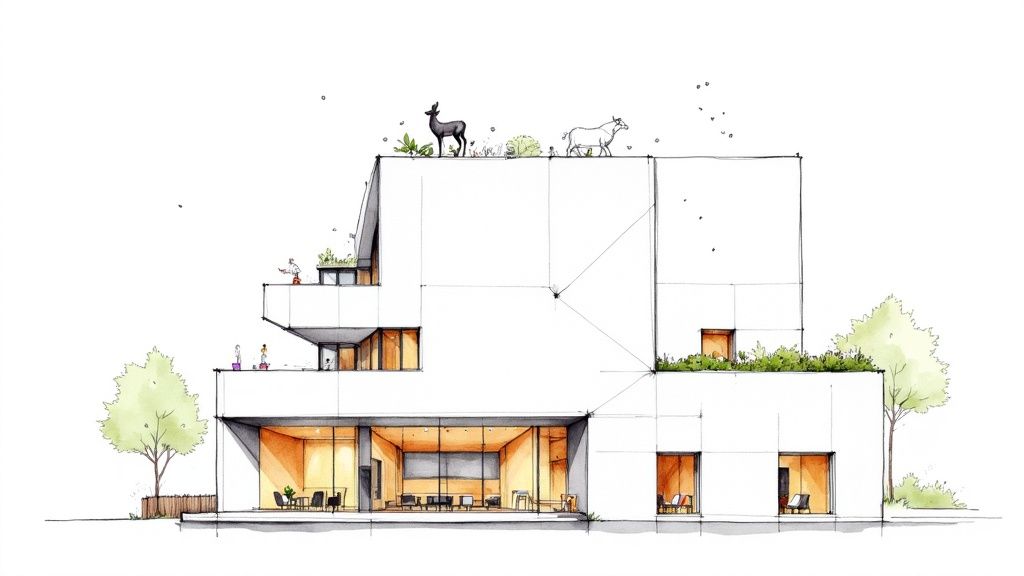
Bikini Berlin is branded as a "Concept Shopping Mall," a title it earns through its unique blend of carefully selected boutiques, well-known contemporary brands, and modular pop-up boxes. These boxes, leased to new designers and start-ups for short periods, ensure there’s always something new to discover. The complex itself is an architectural highlight, a post-war heritage building lovingly restored with a rooftop terrace that offers stunning, direct views into the Berlin Zoo's monkey enclosure.
Beyond the Main Street: An Immersive Experience
This district’s appeal lies in its integration with its surroundings, offering a unique cultural experience. The shopping experience is designed to be combined with other activities. After browsing concept stores, you can ascend to the rooftop for a cocktail at Monkey Bar or enjoy a meal at NENI, both offering panoramic views of the city and zoo. This fusion of retail and leisure makes it a perfect example of experiential commerce, where the visit is as much about the atmosphere and activities as it is about the purchases.
Insider Tip: Check the Bikini Berlin event calendar online before you go. The complex frequently hosts DJ sets, art installations, and temporary exhibitions in its central atrium, adding a cultural layer to your shopping trip that you won't find anywhere else.
Practical Information for Your Visit
- Best Time to Go: Late afternoon on a weekday allows you to transition seamlessly from shopping to enjoying sunset drinks at the popular rooftop bars without the intense weekend crowds.
- Getting There: The Zoologischer Garten station is a major transport hub. It’s easily accessible via U-Bahn (U2, U9), S-Bahn (S3, S5, S7, S9), and numerous regional trains and buses.
- Budget: Prices are in the mid-to-high range. It's a destination for quality design and unique brands rather than bargain hunting.
- Payment: Credit cards and digital payments are the norm in all stores and restaurants, but having a small amount of cash for any incidental purchases is always a good idea.
Comparison of Berlins Top 10 Shopping Areas
| Area | Complexity to Visit 🔄 | Resource Requirements ⚡ | Expected Outcomes ⭐📊 | Ideal Use Cases & Tips 💡 | Key Advantages |
|---|---|---|---|---|---|
| Kurfürstendamm (Ku'damm) | High crowds at peak times; excellent public transit | High budget for luxury; moderate time investment | Luxury shopping, strong tourist draw ⭐⭐⭐⭐ | Luxury shopping & sightseeing; visit mornings or weekdays; use U-Bahn | Iconic status, brand diversity, established infrastructure |
| Alexanderplatz & Mitte District | Straightforward mall navigation; major transport hub | Moderate budget; efficient for one-stop trips | Broad selection, good value, high footfall ⭐⭐⭐ | Mainstream brands & museums; shop weekday mornings; use central transit | Accessibility, modern facilities, value-to-quality |
| Charlottenburg Shopping District | Low crowds; more intimate streets; limited transit links | Higher budget for boutiques; leisurely browsing time | Sophisticated independent retail, curated finds ⭐⭐⭐⭐ | Boutique & antique shopping; combine with palace visit; take S‑Bahn | High-quality independents, relaxed atmosphere |
| Friedrichstraße | Central and busy; historic streets with good links | High budget; shorter targeted visits | Prestigious luxury retail and cultural mix ⭐⭐⭐⭐ | Luxury flagship shopping + culture; use U2/U6; budget accordingly | Historic prestige, architectural appeal, luxury brands |
| Kreuzberg Alternative & Vintage District | Informal layout; variable hours; best explored on foot | Low budget; time-consuming treasure-hunt | Unique vintage and alternative finds; strong cultural vibe ⭐⭐⭐ | Vintage markets & thrift hunting; go daytime; Sundays for flea markets | Authenticity, affordability, creative community |
| Prenzlauer Berg Artisan & Design District | Pedestrian-friendly; busy weekends | Moderate budget; leisurely browsing | Artisan goods and local design; stylish atmosphere ⭐⭐⭐ | Design-focused shopping & cafés; weekdays mornings; use U2/tram | Local craftsmanship, preserved architecture |
| Neukölln Urban & Multicultural Shopping | Mixed infrastructure; markets dominate weekends | Low budget; best for market visits | Diverse, multicultural goods; bargains and street food ⭐⭐⭐ | Weekend markets & street food; explore side streets; use U7/U8 | Affordability, cultural diversity, emerging scene |
| Schöneberg Commercial District | Low complexity; neighborhood-oriented | Moderate budget; routine shopping time | Everyday retail, local character ⭐⭐ | Local errands & relaxed shopping; shop Hauptstraße; use U4/U7 | Community-focused, less crowded, authentic local retail |
| Tempelhof & City West Retail Parks | Car-oriented layout; easy parking; suburban feel | Low budget; car or bus recommended | Efficient bulk and outlet shopping; practical purchases ⭐⭐ | One-stop practical shopping; bring a vehicle; off-peak visits | Convenience, parking availability, competitive pricing |
| Bikini & Zoo District Premium Mixed-Use | Moderate complexity; curated flow and public spaces | Moderate-high budget; time for experience | Curated lifestyle shopping and experiences ⭐⭐⭐⭐ | Experiential shopping & dining; combine with Zoo visit; use S‑/U‑Bahn | Design-forward curation, public spaces, mixed-use programming |
Shop Like a Berliner: Integrating Your Finds into Your Travels
As we’ve journeyed through Berlin’s diverse retail landscapes, from the grandeur of Kurfürstendamm to the gritty, independent spirit of Neukölln, a clear picture emerges. Shopping in this city is not a monolithic activity; it is a deep dive into the very soul of its neighborhoods. You haven’t just read a list of berlin shopping areas; you've been given a cultural map, a local guide to understanding the city's complex identity through its commercial heartbeats.
The key takeaway is that your shopping choices can either skim the surface or provide an immersive experience in the authentic local fabric. Opting for a handcrafted piece from a Prenzlauer Berg designer over a mass-produced souvenir, or spending an hour sifting through vintage racks in Kreuzberg, transforms a simple transaction into a meaningful cultural exchange. You are not just buying an object; you are acquiring a story, supporting a local creator, and participating in the city’s creative economy.
Key Takeaways for Your Berlin Shopping Journey
To truly "shop like a Berliner," remember these core principles that separate a tourist from a traveler:
- Embrace the Hyper-Local: The true magic lies beyond the major international chains. The most memorable finds are often tucked away in a side-street Kiez boutique or at an off-the-beaten-path flea market stall run by a long-time resident.
- Cash is Still King: Never underestimate the importance of carrying Euros (Bargeld). This is especially true in flea markets, independent shops, and smaller eateries where card payments may not be accepted. It's a fundamental part of the local transactional culture.
- Respect the Sonntagsruhe (Sunday Rest): Plan your major shopping trips for any day but Sunday. Embrace this forced pause as the locals do, using the day for leisurely park visits, museum trips, or brunch, aligning your rhythm with the city's.
- Logistics Matter: Pay attention to transport links. Utilizing the U-Bahn and S-Bahn efficiently allows you to hop between disparate berlin shopping areas in a single day, turning your retail exploration into a dynamic city adventure.
From Tourist to Temporary Resident: Your Next Steps
Now, it's time to put this knowledge into action. Before you even pack your bags, create a loose itinerary based on the districts that resonated most with you. Are you hunting for avant-garde fashion? Pinpoint the specific streets in Mitte and Kreuzberg. Are you seeking unique home decor? Focus your energy on the artisan-rich areas of Prenzlauer Berg.
Insider Tip: Don't just plan what to buy; plan to experience. Pair your shopping excursion in Schöneberg with a visit to a traditional market, or follow your vintage hunt in Friedrichshain with a coffee at a neighborhood-favorite café. This contextualizes your purchases and deepens your connection to the place for a full cultural experience.
By moving beyond the checklist of famous landmarks and intentionally engaging with the city’s local commerce, you shift your role. You become more than a visitor; you become a temporary participant in Berlin's daily life. Each purchase, whether a rare vinyl record or a locally designed piece of jewelry, becomes a tangible link to a specific moment and place, a memento imbued with the authentic spirit of Berlin. Your suitcase will hold not just souvenirs, but stories.
Ready to build a truly immersive Berlin itinerary? CoraTravels offers personalized travel planning that goes beyond the obvious, integrating authentic local experiences like navigating the best berlin shopping areas into your trip. Visit CoraTravels to discover how we can help you craft a journey filled with unique discoveries and genuine cultural connections.