
Forget the crowded viewpoints and tourist traps. The true spirit of America's vast wilderness isn't found on a paved overlook; it's earned on the trail, feeling the earth beneath your boots. This guide to the best hiking trails in US is your passport to authentic, immersive experiences, designed for those who seek more than just a quick snapshot. We're bypassing the obvious to bring you actionable insider knowledge, focusing on trails that offer a deep connection to the landscape and the unique local culture surrounding it.
From the granite domes of Yosemite to the sun-baked canyons of Zion and the lush coastlines of Kauai, these aren't just walks. They are journeys into the heart of the country's most spectacular and protected lands. Our focus is on providing practical, off-the-beaten-path insights that transform a good hike into an unforgettable adventure. While we focus on the incredible trails within the US, you can also broaden your horizons and explore some of the best hiking places across the globe for future bucket-list inspiration.
This curated roundup moves beyond simple trail descriptions. For each featured hike, you’ll find:
- Actionable Local Tips: Discover the best time to start to avoid crowds, where to find hidden parking spots, and which nearby cafes locals actually frequent post-hike.
- Practical Logistics: We provide essential details on permits, access points, and season-specific gear recommendations to ensure you're prepared.
- Immersive Itineraries: Learn how to extend your trip with nearby cultural experiences, turning a day hike into a rich, multi-day exploration.
Prepare to hike like a local, uncover secrets that don't make it into mainstream guides, and create stories that go far beyond a simple photograph. Let's hit the trail.
1. Half Dome Trail, Yosemite National Park, California
The Half Dome Trail is not just a hike; it's a legendary pilgrimage for adventurers, earning its reputation as one of the best hiking trails in the US. This grueling 17-mile round-trip trek demands both physical and mental fortitude, ascending nearly 4,800 feet from the Yosemite Valley floor to its iconic granite summit. The final 400 feet involve pulling yourself up a near-vertical rock face using two steel cables, an experience that is as terrifying as it is exhilarating.
The reward for this strenuous effort is an unparalleled 360-degree vista of Yosemite's high country, including Vernal and Nevada Falls, Clouds Rest, and the vast Sierra Nevada landscape. This is a quintessential bucket-list adventure that tests your limits and delivers a profound sense of accomplishment.
Local Insight & Immersive Experience
To gain an off-the-beaten-path perspective, base your trip in the less-visited eastern Sierra town of Lee Vining. After your hike, drive over the scenic Tioga Pass (in season) and visit the Mono Lake Tufa State Natural Reserve, a surreal landscape that feels a world away from Yosemite Valley. For a genuine cultural experience, have a meal at the Whoa Nellie Deli, a surprisingly gourmet eatery inside a gas station, beloved by local climbers and backcountry skiers for its authentic atmosphere and excellent food.
Trail Guide & Practical Tips
- Difficulty: Strenuous
- Length: 16-17 miles (25.7-27.4 km) round-trip
- Elevation Gain: 4,800 feet (1,463 m)
- Time: 10-14 hours
- Best Season: Late May to early October (when cables are up)
Insider Tip: Start your hike between 4:00 and 5:00 AM. This not only helps you avoid the intense afternoon heat and potential thunderstorms but also ensures you are not waiting in a long line at the base of the cables.
Permits are mandatory to ascend the sub-dome and cables. These are awarded via a highly competitive preseason lottery in March and a small daily lottery during hiking season. For those seeking epic views without the lottery stress, the trail to the base of the sub-dome is still an incredible, permit-free hike. For a comprehensive look at other thrilling outdoor challenges, check out these best adventure travel destinations.
2. Appalachian Trail, Maine to Georgia
The Appalachian Trail (A.T.) is the legendary long-distance footpath of the eastern United States, a true giant among the best hiking trails in the US. Spanning roughly 2,190 miles across 14 states, from the rugged peak of Mount Katahdin in Maine to Georgia's Springer Mountain, the A.T. is an epic journey through America's diverse eastern landscapes. Whether you tackle a single scenic section or embark on a multi-month thru-hike, the trail offers a profound connection to nature, history, and a uniquely supportive hiking community.
Completing the A.T. is a monumental undertaking that weaves through dense forests, across grassy balds, and over challenging mountain ranges. It is as much a cultural experience as it is a physical one, defined by trail magic, shelter camaraderie, and the shared goal of reaching the end.
Local Insight & Immersive Experience
For a full cultural immersion, spend time in a lesser-known trail town like Hot Springs, North Carolina. The A.T. runs directly down the main street. Stay at a local hiker hostel like Elmer's Sunnybank Inn to hear stories from thru-hikers. After a day on the trail, soak in the natural mineral waters at the Hot Springs Resort & Spa, a tradition dating back centuries. This offers a deep dive into the local history and the unique culture that has grown around this iconic trail, far from the more crowded access points.
Trail Guide & Practical Tips
- Difficulty: Varies (Moderate to Extremely Strenuous)
- Length:
2,190 miles (3,524 km) total; sections vary - Elevation Gain:
464,500 feet (141,580 m) cumulative for thru-hike - Time: 5-7 months for a thru-hike; 1-7 days for section hikes
- Best Season: Spring/Fall for southern sections; Summer for northern sections
Insider Tip: Section hiking is a fantastic way to experience the A.T. without a six-month commitment. For a stunning and manageable section, try the Grayson Highlands in Virginia, famous for its wild ponies and sweeping highland views.
No single permit is required to hike the entire A.T., but some areas, like Great Smoky Mountains National Park and Baxter State Park (for Mount Katahdin), have their own specific permit and registration systems. Always check the regulations for the section you plan to hike. Resources from the Appalachian Trail Conservancy are essential for planning.
3. The Narrows, Zion National Park, Utah
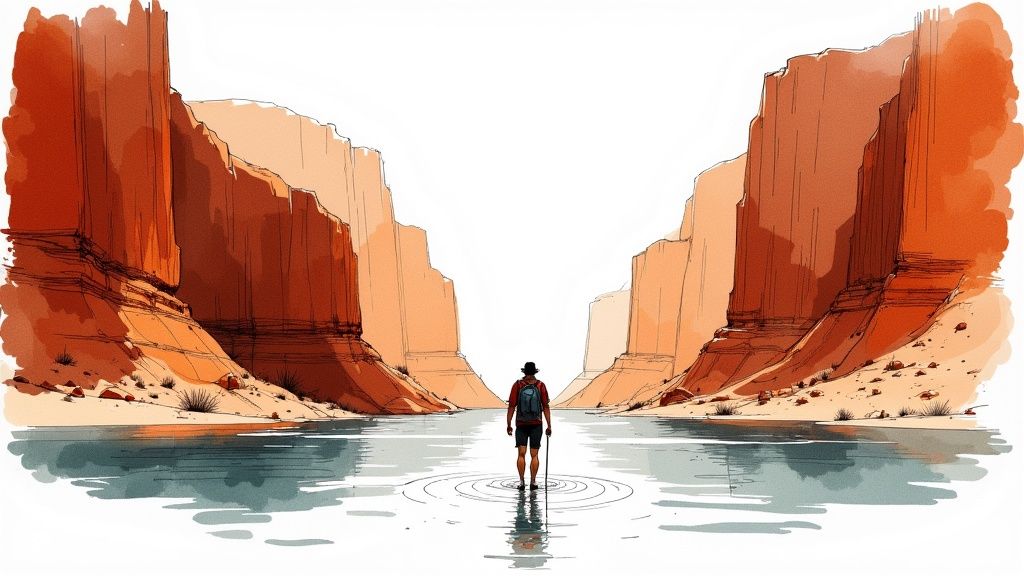
The Narrows is an unparalleled hiking adventure, earning its spot among the best hiking trails in the US for its sheer uniqueness. Instead of a path, your trail is the Virgin River itself. This iconic trek has you wading, and at times swimming, through the narrowest section of Zion Canyon, with thousand-foot sandstone walls soaring dramatically on either side. The experience of walking through water, surrounded by sculpted red rock and hanging gardens, is a truly unforgettable journey into the heart of a canyon.
The full 16-mile "top-down" thru-hike offers a complete immersion, but the more popular "bottom-up" day hike from the Temple of Sinawava allows you to venture as far as you feel comfortable. This flexibility makes The Narrows accessible to a wide range of adventurers, from casual explorers to seasoned canyoneers.
Local Insight & Immersive Experience
To escape the park's main crowds, drive the scenic Kolob Terrace Road to the less-visited western side of Zion. Here you can tackle the Subway trail (permit required) or the Northgate Peaks Trail for solitude and stunning views. For an authentic local meal, head to the small town of La Verkin and eat at the Stage Coach Grille, a favorite among locals for its steaks and Southwestern dishes. This combination provides a more immersive, off-the-beaten-path Southern Utah experience.
Trail Guide & Practical Tips
- Difficulty: Moderate to Strenuous (depending on distance and water levels)
- Length: Up to 10 miles (16 km) for a bottom-up day hike; 16 miles (25.7 km) for a top-down thru-hike
- Elevation Gain: Varies, minimal for bottom-up
- Time: 3-8 hours (bottom-up); 10-14 hours or 2 days (top-down)
- Best Season: Late spring to early fall (June to September for warmest water)
Insider Tip: Rent canyoneering shoes, neoprene socks, and a walking stick from a local outfitter in Springdale. This specialized gear dramatically improves your grip on slippery river rocks and keeps your feet warm, transforming the hike from a difficult slog into a much more enjoyable experience.
Flash floods are a serious and deadly risk. Always check the weather forecast and the official Zion NPS flash flood potential rating before entering the canyon. A top-down permit is required and must be reserved months in advance. For more tips on planning trips to national parks, discover the best times to visit popular destinations.
4. Mist Trail to Vernal Fall, Yosemite National Park, California
The Mist Trail is an iconic Yosemite adventure, offering an up-close and personal encounter with the immense power of Vernal Fall. This relatively short but steep hike is one of the best hiking trails in the US for its sheer sensory impact. The journey involves climbing a 600-step granite staircase alongside the thundering 317-foot waterfall, where you'll be enveloped in its cool, drenching spray, creating a truly unforgettable experience.
While it's a shorter trek, the constant mist and steep, slick stairs demand your full attention. The reward is a breathtaking, roaring view from the top of the fall, looking back down into the scenic Yosemite Valley. Its accessibility and dramatic payoff make it a must-do for any park visitor capable of the ascent.
Local Insight & Immersive Experience
For a full cultural immersion, explore the history of the Miwok people, the original inhabitants of Yosemite Valley. Visit the Yosemite Museum and Indian Village of the Ahwahnee to see cultural demonstrations and learn about their deep connection to the land. After your hike, drive out of the park to the town of Mariposa and have dinner at the 1850 Restaurant and Brewery, a spot that celebrates local history and is frequented by residents, offering a genuine taste of the Sierra Nevada foothills community.
Trail Guide & Practical Tips
- Difficulty: Moderate to Strenuous
- Length: 5.5 miles (8.8 km) round-trip (to top of Nevada Fall via JMT)
- Elevation Gain: 2,000 feet (610 m)
- Time: 3-5 hours
- Best Season: April to June for peak waterfall flow
Insider Tip: Wear waterproof everything. A good rain jacket is essential, but also consider a dry bag for your phone and camera. The mist is no mere sprinkle; it's a full-on shower, especially during peak spring runoff.
No permits are required for this day hike, but its popularity means an early start is crucial. Aim to be on the trail by 7:00 AM to enjoy the stairs with fewer people. For a longer, more scenic loop, continue past Vernal Fall to Nevada Fall, and then descend via the John Muir Trail for different, equally stunning views.
5. Kalalau Trail, Kauai, Hawaii
The Kalalau Trail is an epic 11-mile coastal trek that traverses the dramatic cliffs of Kauai's Na Pali Coast, solidifying its place among the best hiking trails in the US. This demanding path is not for the faint of heart, winding through five lush valleys and across precipitous, narrow ledges high above the Pacific. The trail is often muddy, wet, and technically challenging, requiring sure-footedness and a head for heights.
The incredible payoff is access to a pristine, isolated paradise. Hikers are rewarded with jaw-dropping views of fluted green cliffs plunging into turquoise waters, cascading waterfalls, and the secluded Kalalau Beach at the trail's end. This is a journey into one of Hawaii's last truly wild landscapes, offering an unparalleled sense of solitude and raw natural beauty.
Local Insight & Immersive Experience
To fully appreciate the local culture, spend time in the nearby town of Hanalei before your trek. Skip the tourist shops and visit a local farmers' market to talk with growers and try local fruits. For an authentic meal, find a local spot like the Hanalei Taro & Juice Co., a food truck on a family-run taro farm. Here you can try traditional Hawaiian staples like laulau and poi, offering a genuine taste of the island's agricultural heritage and a chance to support the community directly.
Trail Guide & Practical Tips
- Difficulty: Strenuous
- Length: 22 miles (35.4 km) round-trip
- Elevation Gain: ~5,000 feet (1,524 m) cumulative
- Time: 2-3 days (overnight trip)
- Best Season: May to September (drier season)
Insider Tip: Instead of heavy hiking boots that get waterlogged during stream crossings, opt for sturdy trail runners with excellent grip. They dry faster and provide better agility on slick rock and muddy sections, which you will encounter frequently.
Permits are mandatory for anyone hiking past Hanakāpīʻai Beach (the 2-mile mark) and are extremely limited. You must book a Nāpali Coast State Wilderness Park camping permit online up to 90 days in advance; they often sell out within minutes. For a shorter, permit-free taste of the coast, the 4-mile round-trip hike to Hanakāpīʻai Falls is a fantastic alternative.
6. Angels Landing, Zion National Park, Utah
Angels Landing is a legendary, heart-pounding ascent that has cemented its place among the best hiking trails in the US for its sheer audacity and breathtaking views. This 5.4-mile round-trip hike is infamous for its final half-mile, a narrow sandstone fin that requires hikers to navigate along a spine-chilling precipice while gripping a series of bolted chains. The trail gains 1,488 feet, culminating in a summit that offers an unrivaled 360-degree panorama of Zion Canyon's colossal rock walls and the winding Virgin River below.

This is more than a hike; it's a test of nerve and a walk among giants. The exposure is real and the thrill is palpable, delivering a profound sense of accomplishment for those who reach the top. Its combination of accessibility and high-stakes adventure makes it an unforgettable challenge.
Local Insight & Immersive Experience
For a full cultural experience outside the main park, visit the Grafton Ghost Town just outside Rockville. This well-preserved site offers a poignant glimpse into the lives of early Mormon settlers. Afterward, instead of the crowded Springdale eateries, drive to the nearby town of Hurricane and visit the Main Street Cafe, a local favorite known for its hearty, homestyle meals. This provides a peaceful contrast to the intensity of Angels Landing and a connection to the region's deeper history.
Trail Guide & Practical Tips
- Difficulty: Strenuous (includes rock scrambling and severe exposure)
- Length: 5.4 miles (8.7 km) round-trip
- Elevation Gain: 1,488 feet (453 m)
- Time: 3-5 hours
- Best Season: Spring and Fall (March-May, September-October)
Insider Tip: Start your hike before 7:00 AM on the first park shuttle. This helps you beat the worst of the desert heat and the notorious crowds that form on the chain section, allowing for a safer and more enjoyable climb.
Permits are required year-round to hike the chained section of Angels Landing. Permits are issued through seasonal and day-before online lotteries, which are highly competitive. For a fantastic alternative without the permit hassle or the crowds, consider hiking the Observation Point trail from the East Mesa Trailhead for an even higher, more expansive view of Zion Canyon.
7. Moraine Lake Loop, Indian Peaks Wilderness, Colorado
Tucked away in the Indian Peaks Wilderness near Rocky Mountain National Park, the Moraine Lake Loop offers a quintessential Colorado high-alpine experience without the national park crowds. This stunning 7-mile loop showcases the raw beauty of the Rockies, guiding hikers past vibrant wildflower meadows and subalpine forests to the shores of a brilliant turquoise, glacier-fed lake. The trail rewards with breathtaking panoramas of the Continental Divide, making it a standout among the best hiking trails in the US for its classic mountain scenery.
The journey involves a significant ascent into the alpine zone, where the air is thin and the views are immense. It is a challenging but deeply rewarding trek that encapsulates the spirit of the Rocky Mountains, complete with opportunities to spot wildlife like marmots and pika.
Local Insight & Immersive Experience
To fully connect with the local culture, base yourself in the nearby town of Nederland instead of the more tourist-heavy Estes Park. This quirky mountain town offers a genuine, laid-back Colorado vibe. After your hike, refuel at Crosscut Pizzeria & Taphouse for wood-fired pizza and a selection of local craft beers. For a truly unique cultural experience, visit the Carousel of Happiness, a restored 1910 carousel featuring hand-carved animals, offering a whimsical end to an adventurous day.
Trail Guide & Practical Tips
- Difficulty: Challenging
- Length: 7 miles (11.3 km) round-trip loop
- Elevation Gain: 2,100 feet (640 m)
- Time: 4-6 hours
- Best Season: July to September
Insider Tip: Colorado's high country is notorious for afternoon thunderstorms. Start your hike no later than 7:00 AM to ensure you are below the treeline and heading back down before storms typically roll in around noon.
Acclimatization is crucial for this high-elevation hike. Spend a day or two in the area (above 7,000 feet) before attempting the trail to mitigate the risk of altitude sickness. Weather can change in an instant, so pack weatherproof layers, sun protection, and extra water. Trekking poles are highly recommended, as the descent can be steep and challenging on the knees.
8. Emerald Lake Trail, Rocky Mountain National Park, Colorado
The Emerald Lake Trail is a quintessential Rocky Mountain experience, showcasing the park's stunning subalpine beauty in a relatively short and accessible hike. This 3.6-mile round trip journey leads you past three magnificent alpine lakes: Nymph, Dream, and finally, the breathtaking Emerald Lake. Framed by the dramatic peaks of Hallett Peak and Flattop Mountain, the trail offers an incredible reward-to-effort ratio, making it a favorite for both novice and experienced hikers.
Winding through aspen groves and pine forests, the path offers postcard-perfect views at every turn. Its accessibility and consistent scenic payoff firmly place it among the best hiking trails in the US for those wanting to experience the grandeur of the Rockies without committing to an all-day epic.
Local Insight & Immersive Experience
To escape the crowds and find a more local flavor, drive to the less-visited west side of the park near Grand Lake. Hike the quieter East Inlet Trail to Adams Falls. Afterward, explore the historic town of Grand Lake itself, which has a rustic, old-West feel that Estes Park has largely lost. Enjoy a meal at the Sagebrush BBQ & Grill, a long-standing local institution, for a truly immersive and off-the-beaten-path Rocky Mountain experience.
Trail Guide & Practical Tips
- Difficulty: Easy to Moderate
- Length: 3.6 miles (5.8 km) round-trip
- Elevation Gain: 698 feet (213 m)
- Time: 2-3 hours
- Best Season: June to October
Insider Tip: Parking at the Bear Lake Trailhead fills up extremely early, often before 6:00 AM. Instead of fighting for a spot, use the park's free shuttle service from the Park & Ride lot. It’s efficient and eliminates the stress of finding parking.
Accessing this trailhead during peak season requires a timed entry permit for the Bear Lake Road corridor in addition to a park entrance pass. For a longer, more challenging alternative with equally stunning views, consider continuing from Dream Lake to Lake Haiyaha. This adds about a mile and some rock scrambling but leads to a brilliantly colored lake that fewer visitors see.
9. Angels Peak Trail, Big Bend National Park, Texas
Don't let the short distance fool you; the Angels Peak Trail offers some of the most dramatic and rewarding views in Big Bend National Park, solidifying its spot among the best hiking trails in the US for a desert experience. This 2-mile round trip hike navigates through vibrant desert badlands, culminating on a prominent ridgeline. The trail itself is a journey through time, with exposed layers of rock revealing the park's rich geological history.
The panoramic payoff is immense, providing expansive views of the iconic Chisos Mountains, the winding Rio Grande, and the deep Boquillas Canyon. It’s an accessible but powerful hike that delivers a profound sense of the desert's vast, rugged beauty, making it an essential stop for any park visitor.
Local Insight & Immersive Experience
To truly connect with the region, skip the park's main lodging and stay in the nearby ghost town of Terlingua. This quirky, off-the-grid community offers a genuine taste of West Texas life. After your hike, grab dinner at the Starlight Theatre Restaurant and Saloon, a legendary local haunt housed in an old movie theater, where you can listen to live music and share stories with fellow desert wanderers and lifelong locals. This provides a cultural experience you won't find in the more tourist-centric areas.
Trail Guide & Practical Tips
- Difficulty: Moderate (due to exposure and some rocky sections)
- Length: 2 miles (3.2 km) round-trip
- Elevation Gain: 300 feet (91 m)
- Time: 1-1.5 hours
- Best Season: October to April
Insider Tip: This trail is an absolute paradise for photographers. Hike it just before sunrise or sunset when the low-angle light ignites the colorful badlands and casts dramatic shadows across the landscape, creating unforgettable images.
Water is not available anywhere near the trailhead, so be sure to carry more than you think you'll need, at least two liters per person, even for this short hike. The desert sun is unforgiving; a wide-brimmed hat, sunglasses, and high-SPF sunscreen are non-negotiable. Sturdy hiking boots are recommended to navigate the rocky and sometimes uneven terrain safely.
10. Sunset Lake Trail, Mount Rainier National Park, Washington
For those seeking the quintessential Pacific Northwest landscape, the Sunset Lake Trail delivers an awe-inspiring experience packed into a manageable day hike, solidifying its place among the best hiking trails in the US. Starting near the iconic Reflection Lakes, this 3-mile round-trip journey winds through vibrant subalpine meadows and past crystal-clear mountain streams. The trail offers breathtaking, ever-present views of Mount Rainier’s massive volcanic peak.
The true reward is arriving at Sunset Lake, a serene alpine gem that provides a picture-perfect reflection of the mountain's summit. This trail captures the raw, majestic beauty of Mount Rainier National Park without the grueling commitment of a high-altitude summit push, making it a profoundly rewarding adventure.
Local Insight & Immersive Experience
To escape the main park crowds, base yourself in the small town of Packwood, south of the park. It offers a more authentic, less touristy vibe than Ashford. After your hike, visit the Packwood Brewing Co. for a local craft beer and pizza. For a full cultural immersion, explore the nearby White Pass Scenic Byway, stopping at local fruit stands and small cafes to connect with the agricultural heritage of the region, far from the national park's main hubs.
Trail Guide & Practical Tips
- Difficulty: Moderate
- Length: 3 miles (4.8 km) round-trip
- Elevation Gain: 800 feet (244 m)
- Time: 2-3 hours
- Best Season: July to September (for snow-free conditions)
Insider Tip: Arrive at the trailhead for sunrise. The morning alpenglow on Mount Rainier is spectacular, and you'll capture the best reflection shots at Reflection Lakes and Sunset Lake before the afternoon winds disturb the water's surface.
Check trail conditions with the National Park Service before you go, as snow can linger into early summer. This hike is located in the Paradise area, which is extremely popular. Parking at the Reflection Lakes viewpoint fills up very early, especially on weekends, so an early start is crucial to secure a spot and enjoy the trail in relative solitude.
11. Delicate Arch Trail, Arches National Park, Utah
The hike to Delicate Arch is a pilgrimage to one of the most recognizable natural landmarks in the world, making it an undisputed choice for a list of the best hiking trails in the US. This 3-mile round-trip trail traverses open slickrock and climbs steadily, culminating in a dramatic reveal of the magnificent freestanding arch. The journey through the starkly beautiful Utah desert is an experience in itself, but seeing the iconic arch perched on the edge of a vast sandstone bowl is an unforgettable moment.

The reward for navigating the sun-exposed trail is a breathtaking view that has graced Utah's license plates and countless photographs. The sheer scale and improbable grace of Delicate Arch, set against the backdrop of the La Sal Mountains, create a powerful sense of wonder. It’s a relatively short but deeply impactful hike that delivers one of the most iconic payoffs in the National Park System.
Local Insight & Immersive Experience
For a cultural experience that goes beyond the arch, drive down the scenic Utah Scenic Byway 128 along the Colorado River. This route offers stunning canyon views and a quieter alternative to the park's main road. For a genuine taste of the area, bypass the main street tourist restaurants and head to Milt's Stop & Eat, a classic walk-up burger joint beloved by locals since 1954 for its simple, delicious fare and old-school charm, providing a true slice of Moab culture.
Trail Guide & Practical Tips
- Difficulty: Moderate
- Length: 3 miles (4.8 km) round-trip
- Elevation Gain: 480 feet (146 m)
- Time: 2-3 hours
- Best Season: Spring (April-May) and Fall (September-October)
Insider Tip: To experience the arch in the best light and with fewer people, plan your hike for sunrise. Starting in the pre-dawn darkness with a headlamp is a magical experience, and you'll be rewarded with a crowd-free, golden-hour view that few visitors get to see.
Timed entry reservations are required to enter Arches National Park during peak season and hours. While a specific permit isn't needed for the hike itself, you must have a park entry reservation to access the trailhead. Always carry at least 2 liters of water per person, as there is no shade or water available on the trail.
12. Perdido Key Beach and Coastal Bluffs Trail, Florida Panhandle
The Perdido Key Beach and Coastal Bluffs Trail offers a distinctly different kind of adventure, trading mountain peaks for pristine white-sand beaches and serene coastal ecosystems. This accessible 4-mile hike along Florida's Gulf Coast provides a unique combination of beachcombing and dune exploration. The trail meanders along sugary sands and through vegetated bluffs, offering uninterrupted views of the turquoise Gulf of Mexico and showcasing a vital coastal habitat.
This trail stands out as one of the best hiking trails in the US for its gentle, family-friendly nature and immersive seaside experience. It’s less about conquering elevation and more about connecting with the subtle beauty of the coast, from spotting shorebirds to discovering delicate sand dune flora. This is the perfect hike for those seeking tranquility and a deep appreciation for coastal preservation.
Local Insight & Immersive Experience
For an authentic taste of Gulf Coast culture, visit Joe Patti's Seafood Market in nearby Pensacola. It's a bustling, iconic local institution where you can see the day's catch come in. For a post-hike meal, grab fresh seafood from the market or eat at the Flora-Bama Lounge & Oyster Bar, a legendary roadhouse right on the Florida-Alabama line. This offers a true off-the-beaten-path cultural experience, steeped in local history and flavor, far from the typical tourist resorts.
Trail Guide & Practical Tips
- Difficulty: Easy
- Length: 4 miles (6.4 km) round-trip
- Elevation Gain: Minimal
- Time: 2-3 hours
- Best Season: Late fall to early spring (October to April)
Insider Tip: Plan your hike around low tide. This exposes more compact sand, making the walk significantly easier and revealing a wider variety of seashells and marine life in tidal pools.
No permits are required for this section of Gulf Islands National Seashore, but there is an entrance fee per vehicle. Proper sun protection is non-negotiable; wear a wide-brimmed hat, apply waterproof sunscreen liberally, and bring more water than you think you'll need, especially during warmer months. Consider water shoes for comfortable beach walking.
Top 12 US Hiking Trails Comparison
| Trail | 🔄 Complexity | ⚡ Resources required | 📊⭐ Expected outcome | 💡 Ideal use cases | ⭐ Key advantage |
|---|---|---|---|---|---|
| Half Dome Trail (Yosemite, CA) | Very High — 16–17 mi, 4,800 ft, cable ascent, permit | High — full-day supplies, 3+ L water, gloves, permit, strong fitness | Iconic summit views; strenuous day or overnight accomplishment | Experienced hikers seeking bucket‑list summit | Unparalleled Yosemite Valley panorama |
| Appalachian Trail (Maine → Georgia) | Very High — 2,190 mi; months-long for thru-hike | Very High — long-term resupply, logistics, training, permits in sections | Extended immersive long-distance experience; varied ecosystems | Thru‑hikers or section hikers wanting multi‑month challenge | Longest continuous hiking trail with strong community |
| The Narrows (Zion, UT) | High — 16 mi river wade or 3.2 mi bottom-up; slippery | Moderate — water shoes, dry bag, check flash‑flood forecasts, possible permit | Unique river-canyon hike; dramatic photography opportunities | Adventurous hikers wanting a water hike and canyon scenery | One‑of‑a‑kind river-wading canyon experience |
| Mist Trail to Vernal Fall (Yosemite, CA) | Moderate — 5.5 mi, steep granite stairs, misty/slippery | Moderate — waterproof gear, trekking poles, early start | Close-up waterfall views; spray-soaked dramatic route | Day hikers seeking accessible waterfall experience | Spectacular waterfall access with short effort |
| Kalalau Trail (Kauai, HI) | Very High — 11 mi one‑way, exposed cliffs, stream crossings | High — camping permit, shuttle, 3+ L water, strong skills, reservations | Remote coastal wilderness and secluded beach camping | Experienced wilderness hikers seeking remote coastal adventure | Raw Na Pali Coast cliffs and isolated beach access |
| Angels Landing (Zion, UT) | High — 5.4 mi, narrow ridge, chain‑assisted exposure | Moderate — gloves, sturdy boots, early start; permit in high season | Thrilling ridge scramble with 360° canyon views | Day hikers wanting dramatic viewpoints and adrenaline | Iconic panoramic views from a dramatic ridge |
| Moraine Lake Loop (CO Rockies) | Hard — 7 mi, ~3,200 ft gain, high altitude | High — acclimatize, layers, water, check snow/avalanche | Alpine lakes, wildflowers, classic high‑elevation vistas | Alpine hikers seeking high‑altitude scenery and wildlife | Turquoise glacial lakes and meadow wildflowers |
| Emerald Lake Trail (Rocky Mtn NP, CO) | Moderate — 10.6 mi, ~1,900 ft gain | Moderate — waterproof boots, insect repellent, early start | Multiple alpine lakes, wildflower displays, quieter trails | Intermediate hikers wanting scenic lake loop | Three scenic alpine lakes with less crowding |
| Angels Peak Trail (Big Bend, TX) | Easy–Moderate — 2 mi, exposed desert ridge | Low–Moderate — carry water, sun protection, sturdy shoes | Panoramic desert and canyon views with short effort | Short sunrise/sunset hikes and photography outings | Big views for minimal time commitment |
| Sunset Lake Trail (Mount Rainier, WA) | Easy–Moderate — 3 mi, subalpine conditions | Low–Moderate — layers, water, check snow conditions | Reflections of Mount Rainier, meadows, accessible alpine feel | Families and casual hikers seeking iconic mountain views | Iconic Mount Rainier reflections on a short hike |
| Delicate Arch Trail (Arches, UT) | Moderate — 3 mi, slickrock, heat/exposure | Low–Moderate — water, sun protection, early/late timing | Iconic natural arch views and strong photo opportunities | Visitors wanting quick access to a famous landmark | World‑famous, highly photogenic natural arch |
| Perdido Key Beach & Bluffs (FL Panhandle) | Easy — 4 mi flat beach and bluff walk | Low — water, sun protection, tide awareness | Relaxed beach walk, dune exploration, coastal views | Families, beginners, beach recreation and birding | Highly accessible white‑sand coastal scenery |
Your Adventure Awaits. Hike Responsibly.
From the granite monoliths of Yosemite to the coastal jungles of Kauai and the arid canyons of Zion, our journey across the best hiking trails in the US has revealed a country of staggering natural beauty and immense diversity. The twelve trails we've explored are more than just a list; they represent a cross-section of the American landscape, each offering a unique portal into the geology, ecology, and cultural tapestry of its region. Whether you're drawn to the epic, multi-state thru-hike of the Appalachian Trail or a shorter, powerful ascent to Angels Landing, the perfect path is waiting for your footprints.
The true magic of these trails lies not just in the summit views but in the immersive experience they offer. Hiking the Kalalau Trail isn't just a physical test; it's a step into ancient Hawaiian history and culture. Navigating The Narrows connects you to the raw, water-carved artistry of the desert Southwest. Each trailhead is a gateway to a local story, a chance to move beyond the main tourist stops and engage with the environment on a deeper, more meaningful level. This list is your starting point, a curated guide to inspire your next great outdoor chapter.
From Inspiration to Action: Planning Your Hike
Transforming inspiration into a well-planned adventure requires careful preparation. As you select your next destination from this list of the best hiking trails in the US, move from the "what" to the "how."
- Dive Deeper into Logistics: Research the specific permit systems for popular trails like Half Dome or Angels Landing far in advance. Lotteries and application windows are strict.
- Embrace Local Knowledge: Connect with local outfitter shops or online hiking forums for the area you plan to visit. Their on-the-ground insights about current trail conditions, water sources, and wildlife activity are invaluable and often more up-to-date than official park websites.
- Prioritize Safety and Preparedness: Your gear is your lifeline. Ensure your navigation tools, first-aid kit, and clothing are appropriate for the specific environment. Remember that cell service is often non-existent in these remote areas. For digital nomads, content creators, or anyone needing to stay connected for safety or work, securing a reliable remote internet for outdoor adventures before you leave can be a crucial part of your modern-day gear list.
The Core Principles of Responsible Exploration
Mastering the art of hiking goes beyond physical endurance; it involves adopting a mindset of respect and stewardship. The ultimate goal is to experience these incredible places while ensuring they remain pristine for future generations. This responsible approach is what elevates a simple trip into a truly fulfilling cultural and natural immersion.
Key Takeaway: The best hikers understand that they are guests in a delicate ecosystem and a local community. Your actions, from packing out every piece of trash to respecting trail closures, have a direct impact on the preservation of these national treasures.
Embracing the Leave No Trace principles is non-negotiable. This includes packing out all trash (even organic waste like apple cores), staying on designated trails to prevent erosion, and observing wildlife from a safe and respectful distance. By internalizing these practices, you become an active participant in conservation, ensuring the best hiking trails in the US retain their wild character. This journey is not just about conquering a trail; it's about connecting with the wild heart of America and leaving it better than you found it. Lace up your boots, pack your sense of wonder, and step into the story that awaits.
Ready to transform your travels from a checklist of places to a collection of authentic experiences? CoraTravels provides meticulously curated guides that connect you with local culture, off-the-beaten-path secrets, and immersive adventures. Plan your next journey with insights that go beyond the guidebook at CoraTravels.