
Getting around Costa Rica is an adventure in itself, with a whole menu of options that range from budget-friendly public buses and super-convenient private shuttles to the absolute freedom of a 4x4 rental car. The right choice really comes down to your personal travel style, how much you want to spend, and how deep you want to dive into the local 'Pura Vida' rhythm, venturing far from the tourist trail.
How to Get Around Costa Rica Like a Local
So, you're trying to figure out how to navigate Costa Rica's beautiful—and sometimes baffling—transportation network. You've come to the right place. How you choose to travel is a massive part of the experience here, and getting a handle on your options is the first step to unlocking a truly authentic trip that goes way beyond the main tourist drags and into the heart of the country.
We'll break down the main ways to get from point A to point B, helping you match the method to your mission. Whether you're a backpacker on a shoestring budget ready to embrace the cultural immersion of a local bus, or a family looking for the simple, stress-free comfort of a shuttle, there’s a perfect fit for you.
Choosing Your Travel Style
First things first: what are you optimizing for? Are you all about flexibility and finding those un-Googleable, off-the-beaten-path spots? Or is saving money the top priority? Maybe you just want the easiest, most comfortable ride possible.
- Public Buses: This is the go-to for anyone traveling on a tight budget. It’s also, hands down, the best way to connect with local life, practice your Spanish, and see the country as Costa Ricans do.
- Private Shuttles: A fantastic middle ground. They offer a comfortable, air-conditioned, and totally stress-free way to travel between the most popular destinations, but lack the immersive local flavor.
- Rental Cars (4x4 Recommended): Nothing beats having your own wheels for ultimate freedom. A 4x4 lets you explore those remote sodas, hidden waterfalls, and tiny villages on your own time, no questions asked.
This decision tree gives you a quick visual on how your travel priorities—freedom, budget, or pure convenience—can point you in the right direction.
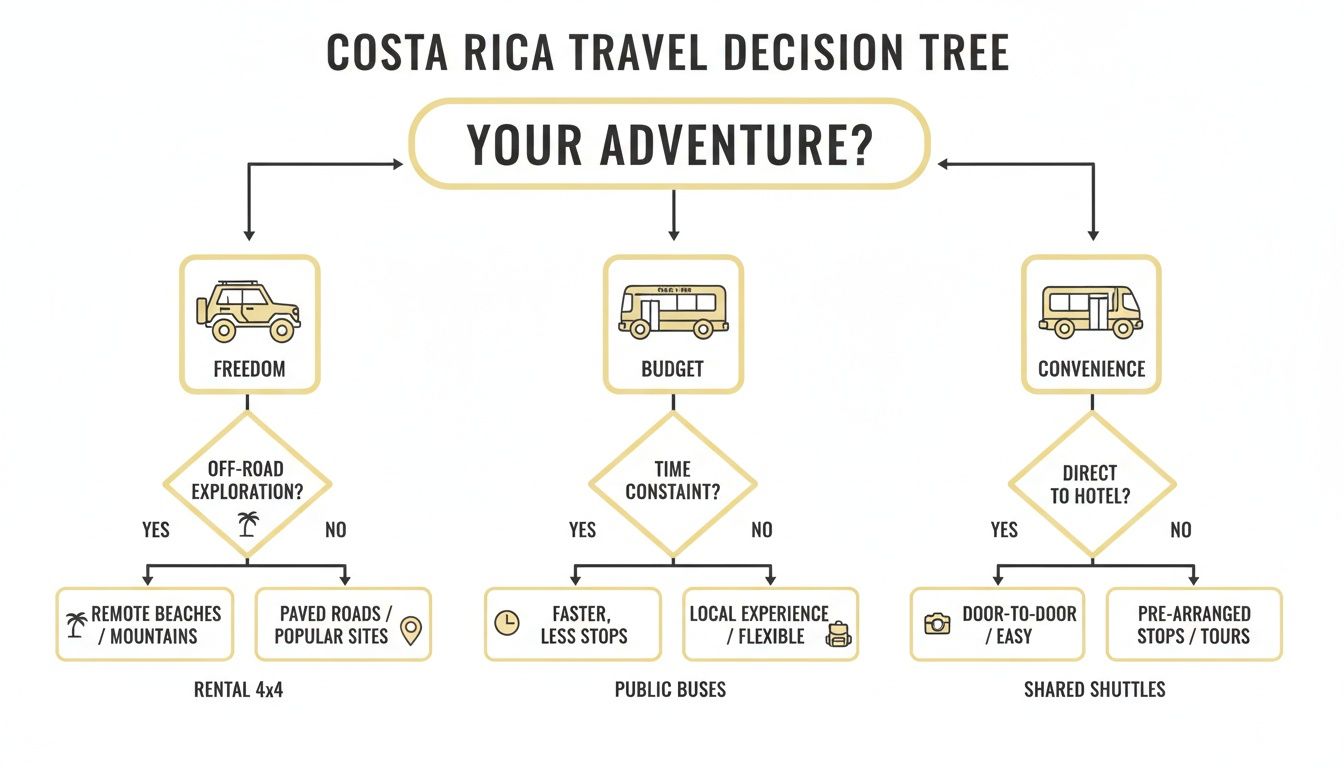
As you can see, there’s no single "best" way to travel Costa Rica. The ideal choice is really just a reflection of what matters most to you on this particular trip.
To help you get a bird's-eye view of your choices, here’s a quick summary table.
Costa Rica Transportation Options at a Glance
This table breaks down the main ways to get around, giving you a quick snapshot of who they're for, what you can expect to pay, and their biggest selling point.
| Transport Mode | Best For | Typical Cost | Key Advantage |
|---|---|---|---|
| Public Bus | Budget travelers & full cultural immersion | $ | Incredibly cheap & authentic local experience |
| Private Shuttle | Convenience & comfort-seekers | $$ | Door-to-door service without stress |
| Rental Car (4x4) | Independent explorers & off-the-path adventurers | $$$ | Ultimate freedom & flexibility to get lost |
| Domestic Flight | Travelers short on time | $$$ | Fastest way to cover long distances |
| Taxi/Ride-Hailing | Short trips within towns & cities | $$-$$$ | Convenient for local transport |
| Ferry | Reaching Nicoya & Osa Peninsulas like a local | $ | Scenic and essential for certain routes |
Hopefully, this gives you a clearer picture as you start piecing together your itinerary.
It's also worth knowing a little about the country's infrastructure. Over the last ten years, the number of cars on the road has doubled, but the highways haven't seen much of an upgrade. This is a huge reason for the notorious traffic jams, especially in and around the capital. This isn't just a fun fact; it has real, practical implications for planning your travel times.
For more on navigating the capital, our guide to San Jose as a Central Valley hub is a great resource. And if you're thinking about greener ways to get around locally, you might find some good ideas in this article on using an electric bike for local commutes.
Riding the Public Buses for a Full Cultural Experience
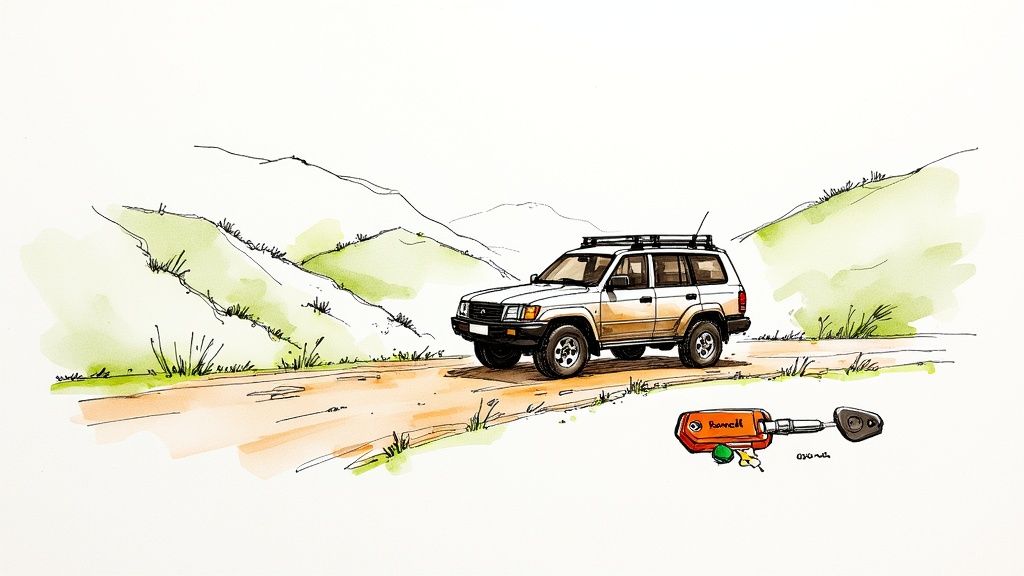
If you want the real Costa Rica experience—and the absolute cheapest way to get around—nothing beats the local bus. This isn’t just about getting from A to B; it's a full-on cultural immersion. You’re swapping the air-conditioned tourist shuttle for a front-row seat to daily life, sharing a ride with Ticos heading to work, school, or the market. It's Pura Vida in motion.
First thing to know: there’s no single, unified bus network. It's more like a patchwork of private companies, each running its own routes from its own terminal. Think of companies like Tracopa, Pulmitan, and Grupo Blanco as independent little airlines. This means your first move is always figuring out which company goes to your destination to find the right station, or "la parada."
Navigating the System Like a Tico
The key is understanding the two main types of buses. For the long haul between major destinations—like San José to Puerto Viejo—you’ll be on an intercity bus. These are usually more comfortable, often with assigned seats and a big storage bay for luggage underneath. For these popular routes, especially during high season (December to April), it's a smart move to buy your ticket at least a day ahead of time.
Then you have the local "colectivos." These are the workhorses of rural Costa Rica, stopping constantly to pick people up and drop them off. Outside of town centers, formal bus stops are rare; locals just know where to wait and flag the bus down as it approaches. This is where you truly leave the tourist bubble behind.
Local Insight: To catch a bus in a rural area, just find a safe spot on the side of the road where the driver can easily pull over. Often, you'll see a small covered bench or a few other people waiting—that's your unofficial "parada." When you want to get off, a loud and clear "¡parada, por favor!" (stop, please!) will do the trick.
Practical Tips for the Road
Riding the bus is an adventure, and a little prep goes a long way. While some of the long-distance buses are modern coaches, many local ones are old school buses with the windows wide open. Just roll with it.
- Cash is King: Always carry Costa Rican colones, especially small bills and coins. On local routes, you pay the driver directly, and they won't be able to break a big bill. The fare is usually posted near the front of the bus.
- Arrive Early: Schedules can be… suggestions. Buses have been known to leave a few minutes early if they fill up. Get to the station at least 30 minutes before departure, and more like an hour if you still need to buy a ticket for a busy route.
- Luggage Etiquette: On bigger buses, the driver will put your main pack in the storage compartment below and give you a ticket for it. Never pack valuables in that bag. Keep your daypack with your passport, phone, and wallet right on your lap or between your feet—not in the overhead rack.
- Learn a Little Spanish: Just a few words will make a huge difference. Being able to ask "cuánto cuesta?" (how much is it?) or understand simple directions is a game-changer, as most drivers don't speak English. It’s also the best way to start a conversation with the person sitting next to you.
This mode of Costa Rica transportation is so much more than a cheap ride. It’s about the journey itself—chatting with a farmer on his way to the market, seeing the incredible landscapes unfold at a slower pace, and truly connecting with the rhythm of the country.
Renting a Car for Ultimate Freedom and Exploration
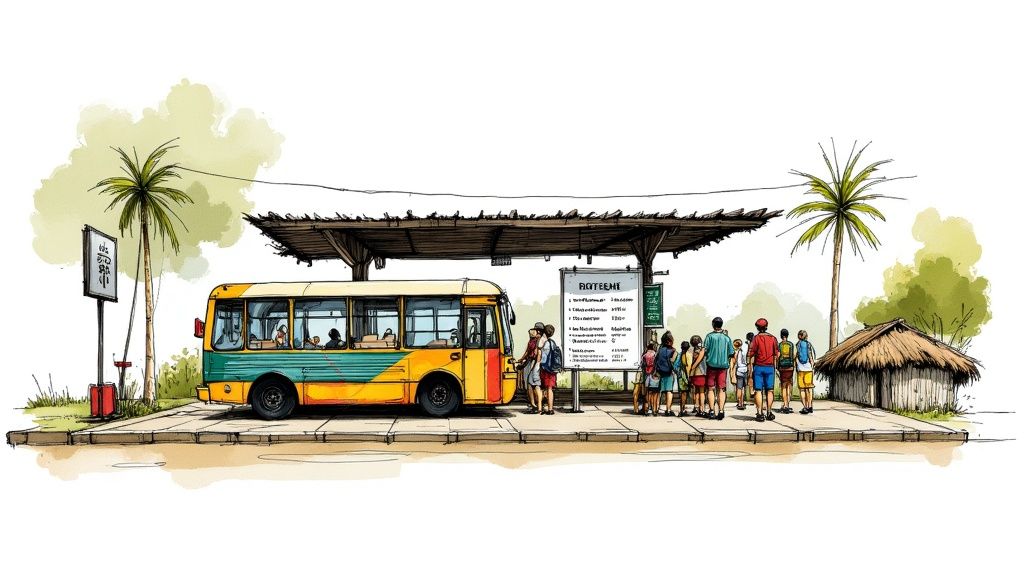
If you’re the kind of traveler who craves spontaneity and wants to discover Costa Rica's hidden corners, nothing beats renting a car. It’s the key to unlocking remote waterfalls, deserted beaches, and those little local sodas (traditional restaurants) that are miles from any tourist hub. Having your own wheels means you can linger where you love, follow a dirt road on a whim, and pull over whenever a jaw-dropping view demands a photo.
But let's be clear: driving in Costa Rica is an adventure in itself. It comes with its own set of rules and challenges. This isn't just about getting behind the wheel; it’s about understanding the roads, the laws, and the local driving culture to make sure your road trip is memorable for all the right reasons.
Understanding Car Rental Essentials
Here’s the single most important thing to know before you even look at rental prices: Costa Rica has a mandatory insurance law. Every single rental vehicle must have third-party liability insurance (TPL), often called SLI or API. This is completely non-negotiable. It has to be purchased from the rental agency, no matter what coverage your credit card or home insurance policy offers.
You’ll see deceptively low daily rates online, but this mandatory insurance will add $15-$30 per day to your final bill. Always factor this in to avoid sticker shock at the rental counter. A good, reputable company will be upfront about these costs from the start.
Beyond that, you can add a Collision Damage Waiver (CDW). Some premium credit cards do offer this coverage, but you must bring a printed letter from your provider that explicitly states this. If you don't have that physical letter, you'll be required to purchase the agency's waiver.
Why a 4x4 Is Often Worth It
Sure, you can get between major cities on paved highways with a standard sedan. But if you want to really explore and find those off-the-beaten-path gems, a 4x4 vehicle is what you want. So many of the country's most beautiful spots are at the end of unpaved gravel or dirt roads that can get seriously sketchy, especially during the rainy season (May to November).
Local Insight: Think of a 4x4 less as a luxury and more as an access pass to authentic experiences. It gives you the high clearance for potholes and the traction for muddy hills, letting you venture to a small village coffee farm or a remote coastline without a second thought.
A 4x4 means you can confidently drive to places like the remote beaches of the Nicoya Peninsula or the cloud forest lodges around Monteverde, where the roads are notoriously rough. It’s all about freedom and peace of mind.
Navigating the Roads Like a Local
Driving here requires a defensive and patient mindset. Main highways can be modern, but rural roads are often narrow, winding, and completely unlit at night. Here are a few essential tips to get you started:
- Waze is Your Best Friend: Google Maps works, but Waze is what everyone—locals and tourists alike—uses. It gives you real-time updates on traffic, accidents, police checkpoints, and road hazards like massive potholes or landslides.
- Embrace the "Pura Vida" Pace: Seriously, don't be in a hurry. Journeys almost always take longer than you think because of winding mountain roads, slow-moving trucks, and random delays. Just build extra time into your schedule.
- Watch for Hazards: Stay alert for cyclists, pedestrians, and animals on the road, especially in rural areas. Potholes can be deep enough to swallow a small car and they appear out of nowhere.
While driving gives you incredible freedom, the cities are a different story. Costa Rica has a serious traffic problem, ranking among the worst in the world. In the capital, San José, a 30-minute drive can easily turn into a 60-minute crawl during rush hour. If you're planning an epic road trip through Costa Rica's diverse landscapes, knowing these realities will help you plan around the headaches and fully embrace the adventure.
Using Shuttles, Taxis, and Ride-Hailing Services
Sometimes you need that sweet spot right between the adventure of a public bus and the complete freedom of renting a car. This is where Costa Rica's shuttles, taxis, and ride-hailing apps come in. They’re your best bet for moving between tourist hubs, getting to and from the airport, or just navigating a new town.
Think of this as the on-the-ground advice you’d get from a local friend. I'll walk you through picking the right shuttle, how to spot an official taxi so you don’t get ripped off, and the smart way to use apps like Uber. Let’s get you moving.
Stress-Free Travel with Shuttles
For those longer hauls between popular spots like La Fortuna, Monteverde, and the beaches of Guanacaste, shuttles are an absolute lifesaver. You get a comfortable, air-conditioned ride without the headache of figuring out foreign roads. They generally come in two flavors:
- Shared Shuttles: These are the go-to for most travelers. They run on fixed routes and schedules, picking up passengers from a few different hotels before hitting the road. It’s a great way to save a few bucks and maybe meet some other people heading the same way.
- Private Shuttles: If you’re traveling with family, a group, or just have a really tight schedule, a private shuttle is worth the splurge. You call the shots—set your own departure time, and you can even ask the driver to pull over for a photo op or a quick bite at a roadside soda.
A quick pro-tip: book your shuttles well in advance, especially if you’re visiting during the high season from December to April. They fill up fast.
Demystifying Costa Rican Taxis
Official taxis in Costa Rica are pretty easy to spot. Across the country, they are bright red with a yellow triangle painted on the side. The only exception is at the airport, where the official taxis are orange. Stick to these, and you'll have a much safer and fairer experience, especially for quick trips around town or from the bus station to your hotel.
Here's the most important rule of thumb: always, always insist the driver uses the meter. Locals call it "la maría." Before you even get moving, just say with a smile, "Ponga la maría, por favor" (Please turn on the meter). If they refuse or give you a story about it being broken, just grab the next cab. It’s the easiest way to avoid getting overcharged.
Local Insight: Watch out for taxi drivers hanging around bus terminals or airports. Some might try to tell you the next bus is cancelled or sold out to talk you into an expensive long-distance fare. Always double-check at the official ticket window yourself. This is a common tactic in many tourist areas.
The Rise of Ride-Hailing Apps
Apps like Uber have definitely found their place in Costa Rica, blending modern convenience with local transport. While they operate in a bit of a legal gray area, they are used everywhere and are generally reliable in the Central Valley (including San José) and bigger tourist towns. For city travel, they’re often a cheaper ride than the official taxis.
The demand is real. The ride-hailing scene here is booming, with revenues expected to climb to around US$53.48 million by 2025. It shows how much locals value the upfront pricing and tracking features these apps offer. You can dig into more of the numbers on Costa Rica's ride-hailing trends on Statista.
One little tip to make the ride smoother: it’s common practice for passengers to sit in the front seat. This makes it look less like a commercial ride and more like you're just getting a lift from a friend. Just keep in mind that once you head out to more remote or rural parts of the country, you'll find their availability drops off a cliff.
Exploring Costa Rica by Water and Air
Sometimes, the most direct path in Costa Rica isn't a road. In a country defined by rugged mountains and two long coastlines, getting around often means looking beyond the asphalt. Water and air travel aren't just quirky alternatives; for many routes, they are the most logical—and scenic—ways to connect the dots and reach off-the-beaten-path destinations.
For anyone trying to reach the Nicoya Peninsula’s famously chill beach towns like Santa Teresa or Montezuma, the ferry is a rite of passage. It's so much more than a boat ride. It’s a cultural bridge, offering incredible views of the Gulf of Nicoya’s islands as you travel shoulder-to-shoulder with Ticos going about their day.
Riding the Waves: The Essential Ferries
The main ferry route that most travelers get to know connects the mainland port of Puntarenas with Paquera, the gateway to the southern part of the Nicoya Peninsula. Another less-trafficked route runs from Puntarenas to Playa Naranjo. Don't think of these as tourist boats; they are a core part of the local infrastructure.
- Puntarenas to Paquera: This is your ticket to Montezuma, Santa Teresa, and Malpaís. The journey itself is a beautiful 70-minute trip across the gulf.
- Puntarenas to Playa Naranjo: A bit less common, this ferry is a good option if you're heading to the northern parts of the peninsula and want to skip the long drive around.
Local Insight: During peak season (December-April) and on weekends, these ferries fill up fast, especially for cars. Do yourself a massive favor and buy your tickets online in advance. A little planning saves you from potentially waiting hours at the terminal wondering if you'll get a spot.
The experience is classic Costa Rica. You'll see local families, produce trucks, and fellow travelers all sharing the deck, watching the mainland shrink as the peninsula grows on the horizon. It’s a moment of forced relaxation that perfectly captures the Pura Vida pace.
Taking to the Skies: Domestic Flights
While the ferry offers a slow, scenic journey, sometimes your itinerary just doesn't have that kind of time. This is where domestic flights come in, turning a grueling six-hour drive into a spectacular 30-minute hop. And this isn't just for luxury travelers; it’s a smart, practical tool for making the most of a short trip, especially to reach remote areas.
Small prop planes connect San José with remote airstrips in places that are a real mission to reach by land, like the canal-laced wilderness of Tortuguero or the wild Osa Peninsula's Drake Bay. Airlines like Sansa are the backbone of this network, operating out of a tiny, stress-free domestic terminal right next to San José's main international airport (SJO).
The flight itself is half the adventure. Flying low over the dense, broccoli-like canopy of the rainforest or along the dramatic Pacific coastline gives you a perspective on Costa Rica's raw geography that you just can't get from the ground. It’s an epic and surprisingly intimate way to appreciate how untamed this country really is.
Travel Time Comparison: Road vs. Air Travel
When you see the numbers side-by-side, it’s clear why hopping on a small plane can be a game-changer for certain itineraries.
| Route | Driving/Shuttle Time (Approx.) | Flight Time (Approx.) | Best For |
|---|---|---|---|
| San José to Tortuguero | 5-6 hours (car + boat) | 30 minutes | Accessing remote nature lodges without the long haul |
| San José to Drake Bay (Osa) | 7-8 hours | 50 minutes | Maximizing precious time for wildlife spotting |
| San José to Tamarindo | 4-5 hours | 45 minutes | Quick beach getaways and avoiding highway traffic |
Ultimately, choosing to fly or take a ferry isn't just about getting from A to B. It’s about leaning into Costa Rica’s geography and finding a deeper connection to the rhythm of the country and the people who call it home.
Insider Tips for Planning Your Travel Itinerary
Connecting the dots on a map is one thing; making your travel days flow smoothly is what turns a good trip into a great one. This is where all the details about buses, shuttles, and rental cars come together into a plan that actually works on the ground here. Nailing the logistics of your Costa Rica transportation is the final, crucial step to a truly immersive adventure.

The first and most important rule? Embrace the Pura Vida approach to time. Journeys here almost always take longer than Google Maps promises. A winding mountain road, an unexpected traffic jam leaving San José, or just getting stuck behind a slow-moving truck can easily add an hour (or more) to your trip.
Building a Flexible Travel Schedule
The secret to a stress-free trip is baking buffer time into every travel day. Seriously, don't try to cram too much in. A day that involves moving from one town to another should be considered a "travel day," full stop. Any activities you manage to squeeze in are a bonus, not a requirement.
Let's look at a classic route to see how this plays out.
Sample Itinerary Leg: La Fortuna to Tamarindo
- Rental Car: The drive is about 4-5 hours if you don't stop. Realistically, plan for 6-7 hours. That gives you time to grab lunch at a local soda, hit potential traffic near Liberia, and pull over for those irresistible photo ops.
- Shared Shuttle: Most shuttles will take around 5-6 hours, door-to-door. It's a super reliable and straightforward way to go.
- Public Bus: This journey requires at least two buses, usually with a connection in Tilarán or Cañas. It will likely eat up most of a full day (7-9 hours), but it's an incredibly cheap and authentic way to see the country. For more on that, check out our detailed guide on traveling Costa Rica on a budget.
This one example shows how the exact same route can have wildly different time commitments. Planning realistically is what keeps you from racing against the clock and getting stressed out.
Factoring in Seasonal Changes
Costa Rica’s seasons don't just change the weather; they change how you travel. The dry season (December to April) is peak tourist time, while the green season (May to November) brings daily rains.
Local Insight: During the green season, those afternoon downpours can turn unpaved roads into a muddy, treacherous mess. The smart move is to do your driving in the morning and aim to be at your destination by early afternoon. Some rural roads might even become completely impassable for a few days after a big storm. This is local knowledge that keeps you safe and on schedule.
During the dry season, the roads are usually in great shape, but your main challenge is competition. Popular shuttle routes get packed and rental cars—especially 4x4s—get booked up weeks, sometimes months, in advance.
To make sure your trip goes off without a hitch, follow these booking timelines:
- High Season (Dec-Apr): Book rental cars, shuttles, and domestic flights 2-3 months before you travel. No joke.
- Green Season (May-Nov): You've got a bit more breathing room, but it’s still wise to book major transport legs at least 2-4 weeks out just to be safe.
When you combine a solid understanding of your transport options with a realistic approach to time and seasonality, you can build an itinerary that flows with the natural rhythm of Costa Rica, not against it.
Your Costa Rica Transportation Questions, Answered
Figuring out how to get around a new country always brings up a bunch of questions. So, let's get into the nitty-gritty details we hear most often from travelers on the ground. Think of this as your final check-in, the stuff you need to know for a smooth, stress-free trip.
We'll cover the big decisions, like what kind of car to rent, and the small local details that actually make a huge difference. The goal is to get you feeling confident enough to navigate Costa Rica like you've been here a dozen times.
Do I Really Need a 4x4 in Costa Rica?
Look, it's not absolutely mandatory for every single trip, but renting a 4x4 is highly recommended if you plan on doing anything more than just driving between major cities on paved highways. Once you venture off that main tourist track to find the real Costa Rica, things change quickly.
During the rainy season (that's roughly May to November), a lot of the unpaved roads leading to remote eco-lodges, hidden beaches, and epic waterfalls turn into muddy, rutted-out tracks. Without four-wheel drive and some decent clearance, they can become tough, if not completely impassable. If your itinerary is strictly San José to La Fortuna on the main roads, a regular sedan will probably be fine. But a 4x4 buys you freedom and peace of mind, opening up a whole other side of Costa Rica most people never get to see.
How Reliable Is the Public Bus for Long-Distance Trips?
You'd be surprised. Costa Rica's public bus network is the backbone of local transportation, and it’s impressively extensive and reliable for getting between major towns and cities. The long-haul buses are generally comfortable, stick pretty close to their schedules, and are an incredible way to save money and meet locals.
Where it gets a little more "pura vida" is on the rural routes. Schedules can be less frequent, and they tend to run on a more flexible, local sense of time.
Local Insight: The best way to handle this is to always swing by the bus terminal the day before you travel to confirm departure times in person. It takes a little patience, but riding the bus is one of the best ways to soak in the local culture, making it a really rewarding part of your Costa Rica transportation plan.
Is Uber Easy to Find in Costa Rica?
Uber exists here, but it operates in a bit of a legal gray area. That said, it's widely used, generally safe, and most common in the Central Valley—which includes San José and the area around SJO airport—and in bigger tourist hubs like Jaco or La Fortuna. In these spots, it's almost always cheaper than the official red taxis.
Once you head out to more rural or remote parts of the country, finding a driver becomes much more difficult. One little local tip: it's common for the passenger to hop in the front seat. This makes the ride look less like a commercial transaction and more like you're just getting a lift from a friend, which helps drivers feel more at ease.
What’s the Best Way to Get from San José Airport to My Hotel?
You’ve got a few solid options, and the best one just depends on what you value most—convenience, cost, or independence.
- Pre-booked Private Shuttle: This is the easiest, most stress-free choice. A driver will be waiting for you with a sign right after you clear customs. No thinking required.
- Official Airport Taxis: These are the orange-colored taxis (city taxis are red). You'll find them waiting right outside the terminal, and they offer a fair, metered price.
- Ride-Hailing Apps: Uber is a solid bet. You’ll probably have to coordinate with your driver to meet them upstairs at the departures level, as pickups at arrivals can be tricky.
- Rental Car: If you're hitting the road right away, all the major rental companies have desks either in the airport or a short shuttle ride away.
Whatever you do, just politely but firmly decline any offers from unofficial drivers soliciting rides inside the terminal. Stick with the official options to stay safe and avoid getting ripped off.
At CoraTravels, we believe that understanding the rhythm of local transit is key to a truly authentic journey. Our guides are built on lived realities and insider knowledge to help you navigate new cultures with confidence. Discover more about how to travel like a local at https://coratravels.com.