Cultural immersion travel is all about a conscious choice: Do you want to see a place, or do you want to live it, even for a short while? It's the difference between snapping a photo of a bustling market from a tour bus and actually haggling for fruit in the local language, even if you only know three phrases. This is the heart of a full cultural experience.
This approach flips a vacation on its head, turning it from a checklist of sights into a rich collection of genuine connections and memorable moments found far from the main touristic places.
What Is Cultural Immersion Travel
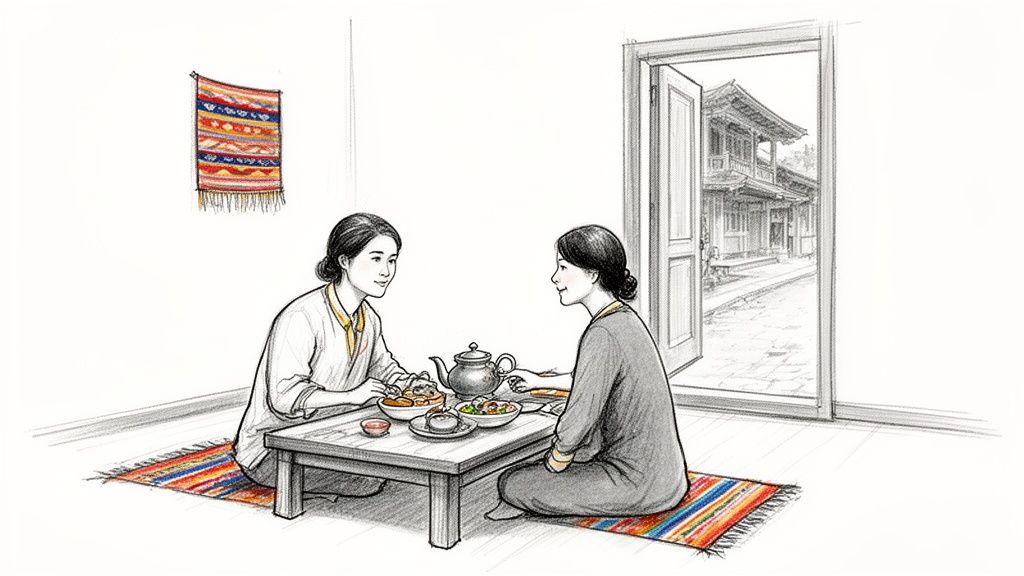
Think of it like this: watching a cooking show is fine, but actually getting your hands dirty and preparing the meal yourself engages all your senses. That’s cultural immersion. One is passive, the other is a hands-on, immersive experience where you learn the rhythms and flavors firsthand.
It’s a mindset, really. It encourages you to step outside that comfortable tourist bubble and connect with a place on its own terms, moving beyond the postcard views to find the real character of a destination. It’s about seeking out the off the beaten path experiences that define a culture.
The Shift from Tourist to Participant
The whole point is to become a temporary participant in the local scene, not just a spectator. This means choosing experiences that offer a genuine peek behind the curtain over those polished for mass tourism. You're building a bridge of understanding, one conversation or shared meal at a time for a full cultural experience.
Cultural immersion is not about where you go, but how you go. It’s a deliberate mindset that favors genuine connection over passive sightseeing, turning simple moments into profound memories.
This shift in perspective is everything. Instead of seeing life through a bus window, you’re in it—navigating the local bus system, trying to order coffee at a packed neighborhood café, or getting lost in the aisles of a corner grocery store.
Why This Travel Style Is Gaining Momentum
Let's be honest, people are tired of superficial trips. The hunger for more meaningful journeys is driving a huge shift in how we travel. We don't just want a great photo for Instagram; we want the story that goes with it, the connection we made, and a real understanding of the world.
The numbers back this up. The global cultural tourism market is on track to explode, growing from around USD 6.73 billion in 2025 to an estimated USD 17.85 billion by 2032. This isn't just a small trend; it's a clear signal that travelers are looking for depth over distance.
And you don't need a huge wallet to do it. Some of the most authentic travel moments are born from simple, low-cost activities. If you’re interested in making this happen, it’s worth checking out some tips on exploring new cultures on a budget. This approach truly makes meaningful travel something anyone can do.
How to Prepare for a Truly Immersive Trip
A genuinely immersive trip doesn't just happen when you land. The real work—and the fun—starts weeks, even months, before you pack a single bag. This groundwork is what shifts your perspective from that of a tourist just passing through to a thoughtful traveler ready to connect with a full cultural experience.
Think of it like learning the rules of a new card game before sitting down at the table. You could just show up and try to figure it out, but you'll probably feel confused and left out. But if you arrive knowing the basics, you can jump right into the action.
It all boils down to one thing: getting curious before you go.
Digging Deeper Than a Guidebook
Your standard guidebook is great for the nuts and bolts—museum hours, train schedules, the top ten sights. But it rarely gets to the heart of a place or encourages you to explore outside of main touristic places. To really get ready, you have to seek out the stories and viewpoints of the people who actually live there.
This is your chance to get a feel for the local rhythm before your plane even takes off. You’ll start to pick up on the local sense of humor, the topics that are lighting up conversations, and the everyday things that matter to the community.
Here’s how to get started:
- Read Local Blogs and Novels: Search for bloggers writing about daily life, food, or art in the city you're visiting. A novel set in the country can give you insights into the cultural psyche and social norms that a list of facts never could.
- Watch Independent Films and Documentaries: Movies are a fantastic window into a culture’s values and aesthetics. Look for films made by local directors to see the world through their eyes, not a Hollywood filter.
- Listen to Local Music: Make a playlist. Music is a universal language, and it can tell you so much about the energy and history of a place before you even get there.
Learning the Language of Respect
You don’t need to become fluent. Not even close. But learning just a handful of key phrases is one of the biggest signs of respect you can show. It signals that you see and value the local culture and you're willing to engage on their terms for a better immersive experience.
An attempt to speak the local language, no matter how clumsy, is a bridge built. It says, "I see you, I respect your culture, and I am a guest in your home." This simple act can transform an impersonal transaction into a warm human interaction.
Focus on the words you'll use constantly. A tiny vocabulary can open doors, leading to warmer, more patient interactions with the people you meet.
Essential Phrases to Master:
- Hello and Goodbye: The absolute fundamentals.
- Please and Thank You: Universal currency for kindness.
- Excuse Me / Sorry: Essential for navigating crowded streets or politely getting someone’s attention.
- Do you speak English?: Asking this in the local language first is a game-changer.
- One of these, please: Incredibly useful at markets or when pointing at a menu you can't read.
Understanding Unspoken Rules and Etiquette
Every culture operates on a network of unspoken social rules. Learning a few of them beforehand can save you from some seriously awkward moments and help you move through your new environment with a bit more grace.
This isn't about memorizing a textbook. It's about practical stuff. What’s the tipping culture? Is there a dress code for religious sites? How do people greet each other—a handshake, a bow, a kiss on the cheek? These small details make a huge difference in how you're perceived.
Making this effort ensures your cultural immersion travel starts from a place of mutual respect, creating a better experience for you and for the communities you have the privilege to visit.
Finding Authentic Experiences with Local Guides
Okay, you've done your homework and researched the culture. Now for the fun part: finding someone on the ground who can help you leave the guidebook behind and truly live the place. This is the moment your trip shifts from a well-planned itinerary to a series of real, unscripted moments. This is where local guides are essential for a full cultural experience.
The most powerful tool for this isn't an app or a map. It's a person—a local who is a resident, not just a tour operator. These are the keepers of neighborhood stories, the ones who know which street food stall has the best noodles, and the people who can lead you to a hidden courtyard that will never show up on a travel blog.
The Unscripted Value of a Local Guide
A professional tour operator shows you the sights; a local guide introduces you to their home. The difference is massive. A standard tour follows a script, polished for mass appeal. A day with a local guide is a conversation, a back-and-forth that follows your curiosity and their own lived experiences, often taking you far outside of main touristic places.
This is how you end up in a tiny, family-run workshop watching an artisan bring a craft to life, or discover a quiet park where locals unwind after work. You can't schedule these moments. They're the heart of an immersive experience.
A local guide doesn’t just show you what to see; they teach you how to see. They provide the cultural context that turns a beautiful building into a story of resilience, or a simple meal into a tradition passed down through generations.
Finding and Vetting Your Guide
The right local guide can make or break your entire trip, so finding them takes a bit more effort than just clicking the first ad you see. You're looking for someone who is genuinely passionate about sharing their culture, not just someone reciting facts for a paycheck.
Here are a few places to start your search for that authentic connection:
- Specialized Local Platforms: Hunt for websites that connect travelers directly with local experts for personalized tours, skipping the big-box tour companies. These platforms often feature guides with niche interests, like street art, culinary history, or the local music scene.
- Community and Cultural Centers: Try reaching out to local community centers or art collectives. They can often recommend passionate residents who offer informal tours or workshops based on what they love.
- Skill-Based Workshops: Signing up for a cooking class, a pottery lesson, or a local dance workshop is a fantastic way to meet locals who are masters of their craft. The instructor often becomes an informal guide to their specific piece of the culture.
When you find someone promising, don't be afraid to ask real questions. A good guide will be excited to share their perspective, while a scripted operator will probably stick to a rigid program. Ask about their connection to the neighborhood, their favorite local spots, and what they love most about their city. This isn't just vetting; it's the start of a real conversation.
The Economic Impact of Choosing Local
Your choice of a guide has real-world consequences. When you hire a local resident, your money directly supports the community you're visiting—a cornerstone of responsible tourism. The global demand for these kinds of interactions is actually a huge driver of the travel economy.
In fact, heritage tourism, a key part of cultural immersion, is a massive market. It hit USD 604.38 billion in 2024 and is projected to reach USD 778.07 billion by 2030. This trend highlights a clear global desire for deep, meaningful experiences that go far beyond surface-level sightseeing.
By hiring a local, you're casting a vote for a more sustainable and equitable form of tourism—one that values people and their stories over profit margins. If you want to dive deeper into this topic, check out our guide on other types of immersive travel experiences you can pursue. This simple choice transforms your trip into a mutually beneficial exchange.
How to Explore Off the Beaten Path Responsibly
Real immersion happens when you step away from the polished tourist centers and into the neighborhoods where life actually happens. This is where you find the real pulse of a place, but it also comes with a responsibility to be a good guest. It’s not just about finding hidden gems—it’s about making sure your presence is a positive one when you venture outside of main touristic places.
Going off the beaten path requires a change in mindset. You're walking through someone's community, their home, not an attraction built for you. Every interaction and every dollar spent has a real impact, no matter how small it feels.
Prioritize Local Economies
One of the easiest ways to be a responsible traveler is to be deliberate about where your money goes. Every purchase is a vote for the kind of tourism you want to see in the world. When you wander into a neighborhood that isn't swarming with tourists, your spending choices create powerful ripple effects.
Skip the global coffee chain and find that small, family-run cafe on the corner. Instead of a fancy restaurant, eat at the local spot with a handwritten menu where the owner is also the cook. This simple shift ensures your money stays in the community, supporting local families and helping preserve the unique character you came to experience.
The diagram below shows it perfectly: a local guide is the bridge between a generic tourist map and a true hidden gem.
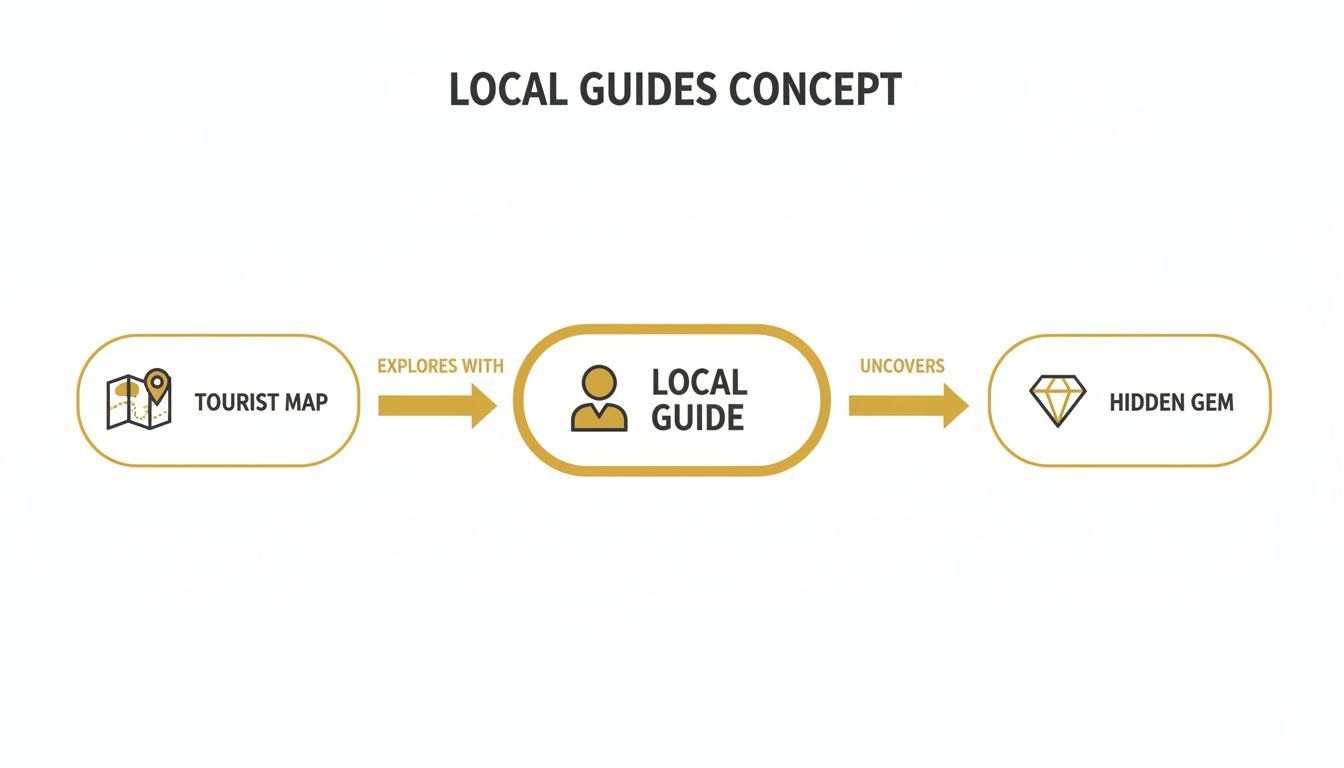
This is the key—local knowledge unlocks a layer of the destination that guidebooks can't touch.
Be a Respectful Observer
Once you’re away from the main drags, you'll see everyday life in motion—kids playing, people haggling at a market, families sharing a meal. These moments are authentic and beautiful, but they aren't a performance for your camera. This is a core part of the immersive experience.
Always think before you shoot. A wide shot of a bustling market is one thing, but a close-up portrait of a stranger requires permission. A simple, friendly gesture toward your camera with a questioning look is usually all it takes to get a nod of approval or a polite head shake. Respect their decision, always. And remember that private homes, schools, and places of worship are just that—private spaces that deserve your respect.
Being a responsible traveler means knowing when to put the camera down and just be present. The goal is connection, not collection. The best souvenirs you'll bring home are memories built on mutual respect.
Swap Tourist Traps for Immersive Alternatives
Making responsible choices isn't about missing out; it’s about upgrading your experience entirely. By trading common tourist activities for more immersive, locally-focused alternatives, you create a more genuine and respectful cultural exchange. This approach not only makes your own trip better but also contributes to a more sustainable way of traveling. For more ideas on this, check out our guide on sustainable travel tips.
The table below gives you a few ideas for how to swap out the usual tourist traps for something far more meaningful.
Tourist Activities vs Immersive Alternatives
| Common Tourist Activity | Immersive Alternative | Why It's a Better Choice |
|---|---|---|
| Dining at a Top-Rated Restaurant | Eating at a Neighborhood Eatery | You directly support a small family business and taste authentic, home-style cooking. |
| Taking a Large Group Bus Tour | Hiring a Local Guide for a Walking Tour | It provides a personalized, unscripted experience, and your money goes directly to a local resident. |
| Shopping for Souvenirs at a Gift Shop | Buying Crafts Directly from an Artisan | You get a unique, handmade item and ensure the creator receives fair compensation for their work. |
Making these kinds of conscious choices is what turns you from a passive consumer into an active, respectful participant. That, right there, is the heart of responsible cultural immersion.
Mastering the Art of Everyday Immersion
The deepest moments of cultural travel rarely happen at the big monuments. They’re hiding in plain sight, tucked away in the small, seemingly ordinary rhythms of daily life. This is where a place shows its true colors—not in a show put on for tourists, but in the honest cadence of its everyday routines.
Learning to master this art is about seeing the culture in the mundane. It's about finding the story in a morning coffee ritual, the community buzz in a local market, or the shared quiet of a public park on a lazy afternoon. These moments are everywhere, just waiting for the traveler who knows to slow down and simply be present.
Navigating Local Life Like a Resident
One of the fastest ways to pop the tourist bubble is to engage with the systems locals use every day. This simple shift moves you from being a passive observer to an active participant, forcing you to connect with the place on its own terms for a true immersive experience.
Take public transportation, for example. Instead of grabbing another taxi, spend an afternoon figuring out the local bus or subway. It might feel clunky at first, but you're getting a crash course in local geography and etiquette, seeing neighborhoods you’d otherwise blow past, and getting a real feel for how the city moves.
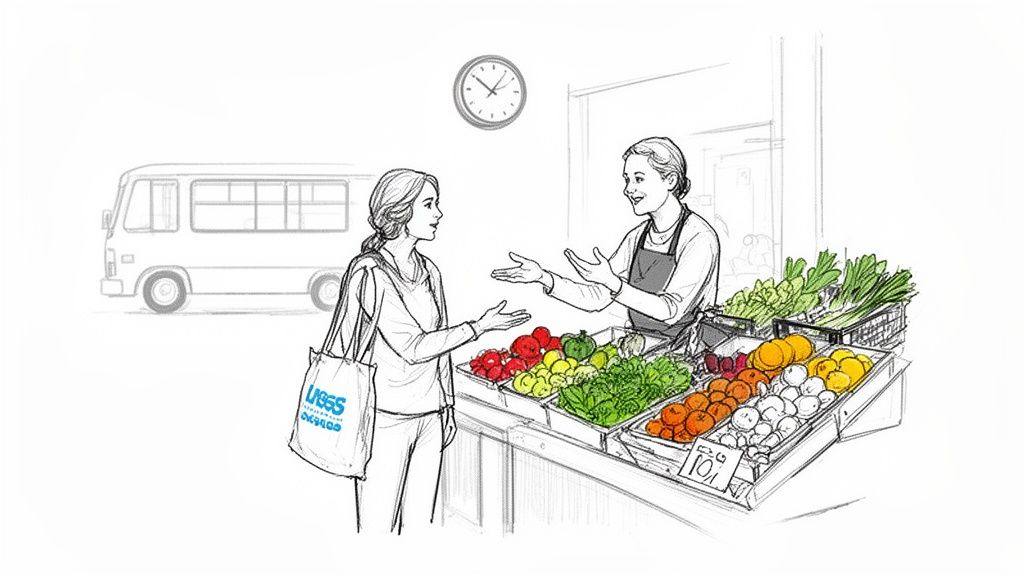
The same goes for the local market. Don't just walk through it—shop in it. Pick out some fruit, try to buy bread, or just watch how people interact. It’s a sensory deep-dive into the culture's flavors, sounds, and social dynamics.
Syncing with the Local Rhythm
Every place has its own internal clock, a rhythm that dictates the day's flow. Real immersion means learning to sync up with this local pulse. It’s not just about what people do, but when they do it. This is a key part of the full cultural experience.
The siesta culture in Spain or parts of Latin America is a perfect example. To an outsider, shops closing in the afternoon seems inconvenient. But for a local, it's a vital part of the day—a time for a big family meal, a rest, and a recharge before the evening comes alive.
Instead of fighting these cultural rhythms, lean into them. Acknowledging and adapting to the local pace of life is a powerful sign of respect. It shows you’re willing to be a guest in their home, not just a customer.
By embracing this flow, you start to experience the destination as its residents do. It unlocks a more relaxed, authentic way of being.
The Power of Micro-Itineraries
You don't need grand plans to have profound experiences. Some of the best immersion comes from "micro-itineraries" built around simple, daily activities. These are small, focused plans that let you soak in the atmosphere of a single place.
- The Café Morning: Find a neighborhood café away from the main square. Order a coffee, bring a book, and just watch. See how people greet the barista, what they order, how long they stay.
- The Park Afternoon: Spend a couple of hours in a local park. Watch families play, friends chat, and couples stroll. It’s a beautiful, unscripted look at community life.
- The Corner Store Challenge: Go into a small grocery store and try to buy the ingredients for a simple snack. This little mission forces you to navigate aisles, read labels, and interact with the cashier.
Communication Beyond Words
Language barriers will happen, but they don’t have to be roadblocks. Often, the most memorable interactions come when you have to rely on more than just words. Patience, a genuine smile, and a willingness to use non-verbal cues go an incredibly long way.
Gestures, pointing, and even a badly drawn picture can bridge the gap. Approaching these moments with good humor instead of frustration can turn a potentially stressful situation into a funny, shared human experience.
This on-the-ground practice is invaluable. And if you're looking to keep that connection alive after you return home, exploring methods for Chinese Immersion At Home can offer great insights. This mindset turns every interaction, whether abroad or at home, into an opportunity.
Bringing Your Cultural Insights Back Home
The trip might be over, but the journey isn’t. Real cultural immersion doesn't just stop the moment you land back home and unpack your suitcase. The whole point is to let those immersive experiences, new perspectives, and moments of understanding weave themselves into the fabric of your everyday life.
That’s how you turn a single trip into a lasting mindset. It’s what keeps those profound connections from just fading into old memories. The goal is to let your travels actually change you, making you a more thoughtful and aware person long after your passport is back in the drawer.
Turning Experience into Understanding
First things first: don’t just dive straight back into your old routine. Rushing back to work and errands is the fastest way to erase all the subtle lessons you just learned. You have to give yourself a little space to actually process what you saw, felt, and experienced. What did it teach you about the world? And more importantly, what did it teach you about yourself?
Here are a few ways to lock in those lessons:
- Journal It Out: Don't just list what you did. Write down how it felt. What surprised you? What challenged your long-held assumptions?
- Give Your Photos a Story: When you're sorting through your pictures, don't just organize them by date. Attach a short story or a key takeaway to the best ones. This turns a simple image into a powerful reminder.
- Talk About It: Share your stories with friends and family, but try to focus on the cultural insights you gained, not just the famous sights you checked off a list.
This kind of intentional reflection is what turns a fun vacation into a source of genuine personal growth.
The real value of an immersive trip isn't measured by the miles you traveled, but by how much it expands your perspective once you’re back home. It’s about carrying the culture with you.
Staying Connected to the Culture
You can keep the connection alive by bringing small pieces of the culture into your daily life. This is a powerful way to honor the people and places that hosted you. Try cooking a dish you absolutely loved, put on a playlist of local artists you discovered, or keep up with your language practice on an app. It keeps the spirit of the place alive.
This isn’t just a niche idea; it’s part of a much bigger trend. A recent study found that 47% of global travelers in 2024 are now choosing their destinations based on cultural attractions. Clearly, people are hungry for these deeper experiences. You can read more about the findings on cultural tourism priorities to see just how much this is reshaping modern travel.
By weaving these small practices into your routine, you make sure your journey fosters a lifelong appreciation. It also gets you thinking about your next trip, ready to dive even deeper from the very start.
Frequently Asked Questions
Diving into a truly immersive trip can feel a little daunting, but a few core ideas can guide you. Let's tackle some of the common questions that pop up when you're planning a trip that goes deeper than the surface.
How Can I Stay Safe Off the Beaten Path
Safety is everything, especially when you’re wandering into neighborhoods that aren't on the typical tourist map. The trick is solid prep and staying aware—not avoiding these places altogether. Before you go, do a little digging on the neighborhood's local reputation and, if you can, connect with a local guide who knows the ground truth.
Ultimately, always trust your gut. If a situation or a place feels off, it’s perfectly fine to walk away. Immersive travel isn't about taking foolish risks; it's about mindfully and respectfully connecting with a community in a way that feels safe for you and for them.
What’s the Best Way to Budget for Authentic Experiences
Here’s the great part: a truly immersive trip often ends up costing less than a standard tourist one. Your spending just shifts. Instead of dropping big money on pre-packaged tours, you’ll find yourself making a series of smaller, more direct "micro-investments" into the local community.
So, instead of one giant tour fee, your money goes toward things like:
- Hiring an independent local guide for a neighborhood walk.
- Eating at family-run spots and buzzing street food stalls.
- Shopping at local markets instead of big, generic souvenir stores.
- Using public transit to get a real feel for the city's rhythm.
This way, you not only save some cash, but you also make sure your money goes directly to the people you're meeting. It creates a much healthier, more sustainable exchange.
How Should I Handle Cultural Misunderstandings
You’re going to make mistakes. It’s inevitable, and honestly, it’s okay. When you accidentally mess up—and you will—the most important thing is how you react. A genuine, humble apology, even if it's just a respectful nod and an embarrassed smile, can smooth over almost any awkward moment.
Gracefully handling a cultural misunderstanding is, in itself, a powerful form of cultural immersion. It shows humility, respect, and a willingness to learn, which locals almost always appreciate more than flawless etiquette.
The goal isn't to be perfect; it's to connect. If you approach every interaction with a bit of patience, a sense of humor, and a real desire to understand, you'll navigate the beautiful messiness of a new culture just fine. That’s where the real memories are made.
At CoraTravels, we believe the best trips are built on local knowledge and genuine connection. Our curated guides help you step beyond the surface, offering the cultural context and on-the-ground tips you need to travel like a local. Start planning your next immersive journey with CoraTravels.