
In an age of hyper-tourism, the desire to travel more responsibly is growing. Sustainable travel, however, is more than just reusable water bottles and carbon offsets; it's a fundamental mindset shift towards deeper, more respectful cultural immersion. It means intentionally moving beyond predictable tourist bubbles to understand the lived realities of a place: the neighborhood rhythms, unspoken social rules, and local pride that truly define a community. This approach transforms a simple vacation into a meaningful exchange, ensuring your presence is a positive force rather than a disruptive one.
This guide provides a comprehensive framework of actionable sustainable travel tips designed to help you connect authentically with the destinations you visit. Drawing on insights from CoraTravels' network of local experts, these strategies focus on practical ways to support local economies, minimize your environmental impact, and foster genuine cultural exchange. We will explore how to find and support neighborhood-based businesses, navigate a new city like a resident, and engage with local customs in a way that shows genuine respect and curiosity.
Forget generic advice. Instead, you'll find specific, context-rich recommendations for every phase of your journey, from planning and packing to your daily activities and interactions. Our goal is to equip you with the tools to travel deeper, not just farther. You will learn how to bypass the main tourist traps in favor of immersive, off-the-beaten-path experiences that benefit both you and the host community. This comprehensive listicle will guide you toward a more conscious and fulfilling way of exploring the world, turning your next trip into a truly transformative experience.
1. Stay in Local Accommodations and Neighborhood-Based Housing
Choosing where you stay is one of the most impactful sustainable travel tips you can implement. Opting for locally-owned guesthouses, family-run hostels, or neighborhood apartments over large international hotel chains ensures your money directly supports the local community. This practice moves beyond simple economics; it's about embedding yourself in the true fabric of a place for a full cultural experience, far from the polished, often sterile, tourist zones.

When you stay in a residential area, you gain an immersive, off-the-beaten-path perspective. You'll observe the daily rhythms, frequent the same bakeries as residents, and understand the unwritten rules that govern community life. This approach transforms tourism from a passive act of observation into an active exchange.
Why This Method Works
Local hosts are more than just key holders; they are invaluable cultural guides. A family running a guesthouse in Valencia can explain the social importance of late paella lunches. A long-term resident in Cape Town can provide practical advice on navigating load-shedding schedules. In Osaka, a host might share crucial etiquette like which side to stand on the escalator, a small detail that shows immense respect for local customs. These insights provide a richer, more authentic travel experience that chain hotels simply cannot replicate.
How to Implement This Tip
- Read Reviews for Local Insight: When browsing platforms like Airbnb or local booking sites, filter reviews for keywords like "local knowledge," "helpful," or "neighborhood." Prioritize hosts praised for their guidance.
- Message Hosts Before Booking: Send a brief, polite message asking about their connection to the neighborhood or for a favorite local spot. Their response can reveal their passion and expertise.
- Choose Residential, Not Touristic: Look at a map and select accommodations situated a short walk or transit ride away from the main tourist hubs. This ensures a quieter, more genuine stay.
- Seek Out Family-Run Operations: Look for establishments that explicitly mention being family-owned. These businesses are more likely to employ local staff and source supplies from nearby vendors.
- Ask for "Unwritten Rules": Upon arrival, ask your host for tips that aren't in guidebooks. This could be anything from the best time to visit the local market to understanding cash-first culture in a Berlin neighborhood like Kreuzberg.
2. Use Public Transportation and Slow Mobility Options
One of the most effective sustainable travel tips is to prioritize public and slow mobility over private transport. Opting for buses, trains, trams, bicycles, and walking instead of rental cars or taxis drastically reduces your carbon footprint. More importantly, it offers an authentic window into how locals navigate their own cities, transforming a simple commute into a rich cultural experience.

Public transit is where the real pulse of a city is felt. You can observe commute patterns, understand the unwritten rules of social space, and see the city unfold as residents do, rather than gliding past it in the isolated bubble of a taxi. This approach moves you from a passive tourist to an active participant in the city's daily rhythm.
Why This Method Works
Using public transport provides unfiltered, off-the-beaten-path insights. Navigating Berlin's U-Bahn reveals its practical, cash-first culture at ticket machines, while a ride on a Cape Town minibus taxi offers a lesson in local communication and resilience. In Tokyo, simply observing escalator etiquette on the meticulous train system teaches a profound respect for shared space. You’re not just moving from A to B; you're learning the subtle social contracts that define a place.
How to Implement This Tip
- Buy a Multi-Day Pass: Upon arrival, purchase a transit pass for your stay. This encourages spontaneous exploration and removes the friction of buying single tickets.
- Observe Before You Act: Watch how locals queue, validate tickets, and use priority seating before you join in. This small act shows immense respect for local norms.
- Download Offline Maps: Use apps like Citymapper or Google Maps to download transit maps for offline use. This is crucial for navigating without a constant data connection.
- Travel Off-Peak Initially: Get comfortable with a new system by traveling during quieter, off-peak hours. This reduces stress and gives you space to learn.
- Walk Between Stops: Get off a stop or two early and walk. This is the best way to discover the micro-neighborhoods and hidden gems that exist between major transit hubs. For more on navigating like a local, explore these tips on getting around in places like Costa Rica.
3. Eat Where Locals Eat—Street Food, Markets, and Family Restaurants
Choosing where to eat is as crucial as choosing where to sleep for a genuinely sustainable and immersive travel experience. Opting for neighborhood markets, street vendors, and family-run restaurants over tourist-oriented establishments channels your money directly into the local food system. This practice is a powerful way to reduce supply chain impacts and gain an authentic understanding of how a community sustains itself through its daily food rituals.
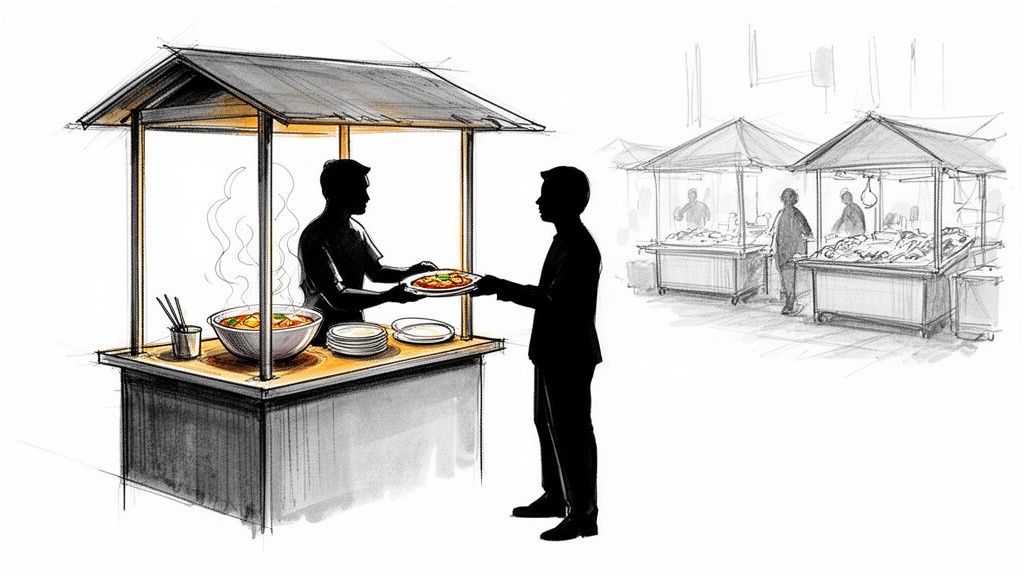
When you eat where locals eat, you step away from the sanitized tourist trail and into the vibrant, living culture of a place. You participate in the daily ebb and flow of community life, from the morning rush at a Berlin currywurst stand to the lively chatter at a neighborhood okonomiyaki joint in Osaka. This is where you find the real flavor of a destination.
Why This Method Works
Food is a universal language, and sharing a meal in a local setting is a direct conversation with the culture. In Mexico City's bustling mercados, you can find vendors specializing in regional mole recipes passed down through generations. In Valencia, eating paella from a neighborhood paellería at lunchtime, not for dinner, aligns you with local tradition and ensures a freshly prepared, authentic dish. These experiences provide a far richer culinary and cultural education than any tourist restaurant with a multi-language menu ever could.
How to Implement This Tip
- Observe Local Meal Times: Pay attention to when residents eat their main meals. Eating lunch between 2-4 PM in Spain or dinner after 8 PM in Italy will lead you to more authentic and bustling environments.
- Look for No English Menus: A restaurant with a menu only in the local language is a strong indicator that it caters to residents, not tourists. Use a translation app to navigate the options.
- Visit Neighborhood Markets Early: Go to local food markets in the morning when produce is freshest and residents are doing their daily shopping. It's a fantastic way to see local ingredients and customs.
- Ask for Recommendations: Ask your guesthouse host or a local shopkeeper for their personal favorite place to eat in the neighborhood, not the most "famous" spot.
- Follow the Crowd: See a long line of locals outside a small, unassuming stall or restaurant? Get in it. Their presence is the most reliable review you can find.
4. Travel During Shoulder Seasons and Avoid Peak Tourist Times
Timing your travel is a powerful yet often overlooked sustainable travel tip that dramatically reduces your environmental and social footprint. Choosing to visit during the "shoulder seasons," the periods just before and after the peak tourist crush, helps alleviate the intense pressure on local infrastructure, ecosystems, and communities. This choice directly combats the negative effects of overtourism and allows for a more genuine connection with the destination.
When you avoid the high-season crowds, you experience a place as it truly is, not as a theme park straining under pressure. You can wander through neighborhoods and observe the normal rhythm of daily life, engaging with locals who are not overwhelmed by seasonal demand. This shift in timing transforms your trip from a consumption-focused vacation into a respectful cultural exchange.
Why This Method Works
Traveling during shoulder seasons gives local resources breathing room. In a city like Dubrovnik, visiting in September instead of August means you aren't contributing to the crisis conditions that damage its historic core and frustrate residents. Similarly, exploring Barcelona in May allows you to enjoy its vibrant neighborhoods without being part of the suffocating summer crowds that strain public services. In Japan, traveling outside the peak cherry blossom season reduces the immense strain on public transportation and accommodations, leading to a more pleasant and responsible visit.
How to Implement This Tip
- Research Specific Shoulder Seasons: Every destination is different. Cape Town's shoulder seasons are April-May and September-October, offering mild weather and fewer crowds. Valencia is perfect in March or October.
- Plan Around Local, Not Foreign, Holidays: Check the destination's national and school holiday calendar. Avoiding these periods, when locals are also traveling, ensures you aren't adding to domestic peak times.
- Ask Hosts for Their Opinion: When booking your stay, ask your local host or guesthouse owner, "When is the best time to visit for a truly local experience, away from the crowds?" Their answer will be more insightful than any guidebook.
- Be Flexible with Dates: Use flight search tools with flexible date options to spot dips in demand and prices that often align with the start or end of a shoulder season.
- Explore During Off-Peak Hours: Even in shoulder season, popular sites can be busy. Visit famous landmarks on a weekday morning and explore local neighborhoods in the evenings or on weekends to align with the local flow.
5. Learn Basic Local Language and Cultural Etiquette Before Arrival
Dedicating time to learn fundamental phrases and cultural norms before you travel is a powerful act of respect that transforms your entire experience. This preparation moves beyond basic courtesy; it is a sustainable travel tip that opens doors to authentic interactions, reduces friction with the host community, and allows you to navigate life outside of the main tourist centers with confidence and grace.
When you make an effort to speak the local language, even just a few words, you signal that you see their culture as valuable and worthy of your time. This simple gesture can turn a transactional encounter at a market into a genuine human connection, helping you access a more immersive, off-the-beaten-path side of your destination.
Why This Method Works
Language is the key to unlocking the subtleties of a culture. Knowing how to perform a proper wai greeting in Bangkok shows you understand its social importance. In Japan, understanding the etiquette of exchanging a business card or the norm of silence on trains demonstrates deep cultural awareness. Similarly, knowing to ask about payment expectations in Berlin's cash-first neighborhoods or understanding the vocabulary around Valencia's meal times prevents misunderstandings and enriches your interactions, providing a full cultural experience.
How to Implement This Tip
- Start Early with Language Apps: Begin learning 4-8 weeks before your trip using apps like Duolingo or Babbel. Focus on survival phrases like greetings, please/thank you, and how to ask for help.
- Focus on Pronunciation: Watch videos of native speakers on YouTube to understand the rhythm and sounds of the language. Correct pronunciation is often more important than perfect grammar for being understood.
- Research Specific Etiquette: Go beyond national customs and look into neighborhood-specific norms. For example, knowing the unwritten rule of which side to stand on an escalator in Osaka shows immense respect for local order.
- Learn Cultural Taboos: Study topics to avoid in conversation, such as sensitive political history or certain religious subjects. This prevents unintentional offense and fosters more positive exchanges.
- Carry a Backup: Keep a small phrasebook or an offline translation app handy. It shows you’re prepared and provides a safety net if you forget a crucial word or phrase.
6. Support Local Artisans, Creatives, and Cultural Institutions
One of the most enriching sustainable travel tips is to consciously invest in a destination’s creative soul. Supporting independent artists, attending local cultural events, and visiting community-run museums ensures your travel funds directly empower creators and preserve cultural traditions. This practice moves your spending away from mass-produced souvenirs and into the hands of people whose work tells the authentic story of a place.
When you buy a ceramic piece from an artist in Osaka or attend a play in a small Cape Town theater, you’re not just acquiring an item or experience; you're becoming a patron of the local culture. This fosters a more respectful and meaningful exchange, valuing genuine creative expression over commercialized caricatures often found in tourist hubs. It’s about experiencing a city’s culture as its residents do.
Why This Method Works
Local artists and cultural institutions are the custodians of a city’s identity. An independent gallery in Berlin’s Kreuzberg neighborhood offers an unfiltered look into the city’s counter-cultural pulse. A visit to a township art collective in Cape Town provides a powerful narrative on South African history and resilience. By engaging with these creators and spaces, you gain a profound, off-the-beaten-path understanding of the local context that a mainstream museum or souvenir shop can rarely offer.
How to Implement This Tip
- Seek Out Neighborhood Galleries: Instead of heading to major national museums, ask your host or a local café owner about their favorite neighborhood art spaces. These are often free to enter and showcase emerging talent.
- Visit Artisan Workshops and Open Studios: Look for opportunities to see creators at work. In Valencia, you can find ceramicists who welcome visitors, allowing you to learn the story and process behind their craft.
- Allocate a "Local Art" Budget: Dedicate a specific portion of your spending money, even just 10-15%, exclusively for purchases made directly from local artists, musicians, or performers.
- Attend Local Performances: Check for listings for live music, independent theater, or dance performances in residential areas. These events provide an immersive cultural experience alongside locals.
- Follow Creatives on Social Media: Before your trip, find and follow local artists, designers, and galleries on Instagram to learn about upcoming shows, markets, or studio open houses.
- Ask About the Story: When purchasing an item, ask the artisan about its meaning or the tradition behind it. This transforms a simple transaction into a memorable cultural exchange.
7. Respect Wildlife, Nature, and Ecosystems—Observe, Don't Exploit
One of the most profound sustainable travel tips involves shifting your mindset from consumption to conservation. This means choosing to observe wildlife in its natural habitat rather than participating in activities that exploit it. Activities like animal riding, forced performances, or attractions with captive animals often cause significant stress and harm. True appreciation comes from seeing animals thrive on their own terms, contributing to a travel experience that is both authentic and ethically sound.
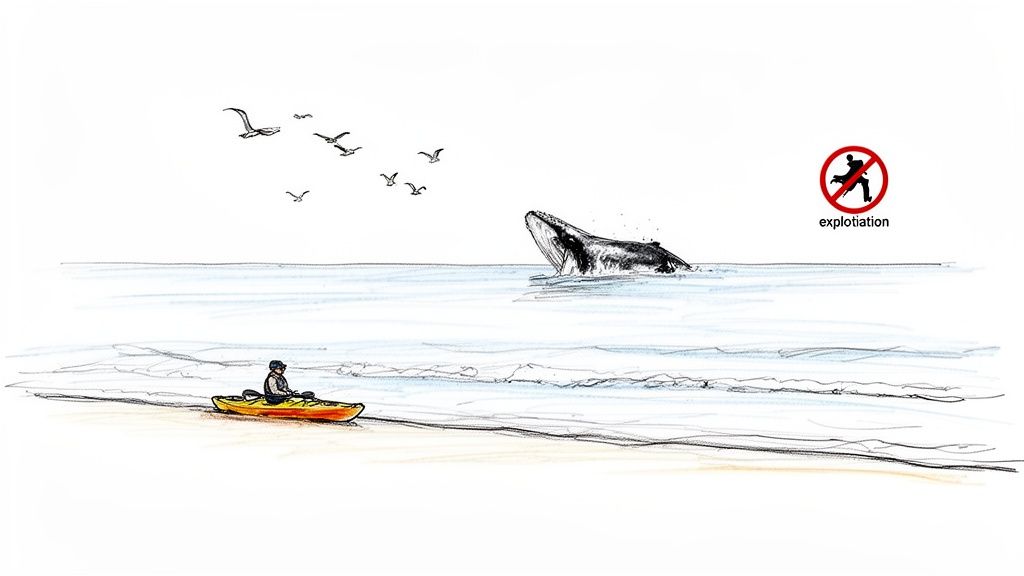
When you prioritize observation, you support ecosystems and the local communities that depend on their preservation. This approach moves you beyond the superficial tourist attraction into a deeper, more meaningful connection with the natural world. It transforms an adventure into a partnership where you become a guardian, not just a spectator, of the environment you are visiting.
Why This Method Works
Local naturalists and conservation-focused guides offer unparalleled insights into the delicate balance of an ecosystem. A local guide in Costa Rica can identify bird calls and explain the symbiotic relationship between a specific orchid and its pollinator. In Kenya, a Maasai guide can interpret animal tracks and explain herd behaviors in a way no guidebook ever could. These interactions provide a rich, immersive education, turning a simple safari or nature walk into a profound lesson in ecology and local heritage.
How to Implement This Tip
- Research Ethics Before Booking: Scrutinize any wildlife-related activity. Look for certifications from reputable organizations like the Global Federation of Animal Sanctuaries and avoid any operation that offers direct contact, riding, or performances.
- Choose Certified Sanctuaries and Reserves: Opt for legitimate rescue and rehabilitation centers over commercial zoos or roadside attractions. A true sanctuary prioritizes animal welfare over entertainment.
- Use Reef-Safe Sunscreen: When snorkeling or swimming in marine environments like those in Southeast Asia, use mineral-based sunscreens without oxybenzone and octinoxate to protect fragile coral reefs.
- Book with Local Naturalists: Seek out tours led by local guides who have a deep, generational understanding of the area's flora and fauna. Their expertise ensures an educational and respectful experience.
- Practice "Leave No Trace": To truly observe and not exploit natural environments, it is crucial to understand core principles of environmental stewardship. Following guidelines like those in this guide to 5 Ways To Leave No Trace When Hammock Camping ensures you minimize your impact.
- Maintain a Respectful Distance: Always use binoculars or a zoom lens to observe animals. Never feed, touch, or crowd them, as this can alter their natural behaviors and cause them stress.
8. Choose Responsible Tour Operators and Question Extraction
One of the most powerful sustainable travel tips is scrutinizing who guides your experiences and where your money flows. Selecting tour companies that are locally owned, employ residents, and are deeply invested in their community's well-being is crucial. This practice shifts tourism from an extractive industry, where profits leave the destination, to a regenerative one that builds local wealth and preserves cultural integrity.
Choosing a tour run by a longtime Valencia resident to explain the Fallas festival or a Cape Town township tour led by someone who grew up there provides an authentic, nuanced perspective. It's the difference between a scripted performance and a genuine conversation, offering an immersive cultural experience far from the generic, large-scale tours that often miss the soul of a place.
Why This Method Works
Responsible operators transform a simple tour into a meaningful cultural exchange. A guide from a Quechua community in Peru doesn't just show you ruins; they share ancestral stories and the living culture connected to that site. In Osaka, a local guide can explain the deep-rooted history behind a quiet neighborhood shrine, a place a larger tour would bypass entirely. These operators provide more than just facts; they offer context, lived experience, and a direct connection to the community, ensuring your visit is respectful and truly enlightening.
How to Implement This Tip
- Investigate Ownership and Employment: Before booking, check the operator’s “About Us” page. Look for language that specifies local ownership or a commitment to hiring guides from the community.
- Ask Direct Questions: Don't be shy. Email the company and ask what percentage of their guides are local residents or how they ensure tour revenue benefits the community directly. Their transparency is telling.
- Prioritize Small, Local Operations: Opt for small-group tours (8-12 people) over large coach excursions. Search for independent guides or companies that focus on a specific neighborhood or theme.
- Look for Community-Based Tourism: Seek out tours explicitly marketed as "community-based" or run by indigenous-led or women-owned cooperatives. These models are designed to keep benefits within the community.
- Book Directly: Whenever possible, book through the local operator's own website rather than a large international aggregator. This simple step ensures more of your money goes directly to them, cutting out the middleman.
9. Reduce Carbon Footprint Through Flight Choices and Offset Strategies
Air travel is often the largest component of a journey's carbon footprint, but conscious decisions can significantly mitigate this impact. By choosing flights thoughtfully, prioritizing longer stays, and compensating for unavoidable emissions, you can engage in climate action as a responsible traveler. This approach acknowledges the environmental cost of travel while empowering you with strategies to explore the world more sustainably.
This method shifts the focus from simple avoidance to strategic engagement. Instead of taking multiple short trips, you could take one extended annual trip, such as a six-week immersive stay in Europe. This amortizes the carbon from a single transatlantic flight over a longer period, making the overall impact per day of travel far lower and allowing for a much deeper cultural connection.
Why This Method Works
Direct flights are more fuel-efficient than connecting flights because takeoffs and landings consume the most fuel. Choosing economy class also reduces your individual footprint, as more passengers share the fuel consumption. For instance, flying direct from New York to Cape Town instead of connecting through Johannesburg saves a significant amount of carbon. Similarly, once in Europe, traveling from Berlin to Prague and then to Vienna by train instead of taking short-haul flights drastically cuts emissions and offers a scenic, off-the-beaten-path travel experience.
How to Implement This Tip
- Prioritize Direct and Economy: Use flight search filters to prioritize nonstop routes and economy seating. The carbon savings often justify a slightly higher cost.
- Extend Your Stays: Whenever possible, consolidate travel into longer, less frequent trips. This is a core sustainable travel tip that also enhances your cultural immersion.
- Embrace Overland Travel: For regional distances, like those in Southeast Asia or Europe, opt for trains or buses. It’s a slower, more deliberate way to see the landscape and connect with the places in between major hubs.
- Calculate and Offset Emissions: Use a reputable carbon calculator to understand your flight's impact. When planning your journey, consider researching and supporting effective carbon offset programs like Stripe Climate to mitigate your environmental impact.
- Budget for Offsetting: Allocate a small portion of your travel budget, typically $5-20 per flight, to invest in verified carbon offset projects like reforestation or renewable energy initiatives.
10. Engage in Cultural Exchange, Not Cultural Tourism
Truly sustainable travel tips go beyond environmental impact; they prioritize creating mutual respect and understanding. Engaging in cultural exchange shifts your role from a passive observer to an active participant, transforming travel from a transactional act of consumption into a reciprocal relationship. This approach ensures locals are seen as peers with valuable knowledge, not as curiosities for tourist observation.
Instead of just watching a culture, you contribute to it by sharing your own skills, language, and perspective. This creates a more profound connection and provides an off-the-beaten-path experience rooted in genuine human interaction. You become part of the community’s daily fabric, participating in its rhythm rather than simply spectating from the outside.
Why This Method Works
Cultural exchange fosters authentic connections that transactional tourism cannot. When you join a neighborhood conversation group in Bangkok or volunteer at a community garden in Valencia, you build relationships based on shared interests, not on a financial exchange. Locals share their lived realities, providing a full cultural experience that guidebooks miss.
For instance, an informal language exchange with a family in Mexico can offer deeper insights into local social dynamics than any guided tour. Similarly, attending a neighborhood meeting in Cape Town gives you a direct window into the community's challenges and triumphs, far from the polished tourist facade. This is the core of creating immersive travel experiences that are respectful and memorable.
How to Implement This Tip
- Seek Reciprocal Exchanges: Offer to share a skill. For example, help your host's children practice English for an hour in exchange for a lesson on preparing a traditional Osaka dish.
- Join Local Community Groups: Use social media or community boards to find hobby clubs, sports teams, or conversation circles that welcome newcomers. This is a direct way to meet people with shared interests.
- Volunteer with Community Organizations: Dedicate one day a week to a local project, such as a neighborhood cleanup or community center. Ensure it's a genuine local initiative, not a "voluntourism" scheme.
- Attend Community Events: Visit local markets, attend festivals, or respectfully join religious services where visitors are welcome. These are excellent opportunities to observe and participate in cultural life.
- Be Transparent About Your Time: When forming connections, be clear about the length of your stay. This respects the emotional and time investment of the people you meet.
10 Sustainable Travel Tips Comparison
| Practice | Implementation Complexity 🔄 | Resource Requirements ⚡ | Expected Outcomes ⭐📊 | Ideal Use Cases 💡 | Key Advantages ⭐ |
|---|---|---|---|---|---|
| Stay in Local Accommodations and Neighborhood-Based Housing | Medium 🔄 — vet hosts and safety | Low–Medium ⚡ — often cheaper but needs time to research | High ⭐📊 — authentic immersion; local economic benefit | Longer stays; neighborhood exploration | Funds local families; true neighborhood access ⭐ |
| Use Public Transportation and Slow Mobility Options | Medium 🔄 — learn routes and etiquette | Low ⚡ — affordable passes; time and physical effort | High ⭐📊 — major emissions reduction; cultural observation | Urban travel; short regional hops; budget trips | Low-carbon travel; local transit insights ⭐ |
| Eat Where Locals Eat — Street Food, Markets, Family Restaurants | Low–Medium 🔄 — find timing and trusted vendors | Low ⚡ — typically cheaper but may need language help | High ⭐📊 — authentic cuisine; supports producers | Food-focused travel; cultural immersion | Fresh, local food; direct support to farmers/vendors ⭐ |
| Travel During Shoulder Seasons and Avoid Peak Tourist Times | Low 🔄 — calendar planning and flexibility | Low–Medium ⚡ — lower prices; flexible dates required | High ⭐📊 — fewer crowds; authentic neighborhood rhythms | Popular destinations suffering overtourism | Cost savings; more meaningful local interactions ⭐ |
| Learn Basic Local Language and Cultural Etiquette | Medium–High 🔄 — study and practice before arrival | Medium ⚡ — weeks of study; apps or classes | High ⭐📊 — better access, respect, and safety | Longer stays; deep neighborhood engagement | Opens doors to locals; reduces friction ⭐ |
| Support Local Artisans, Creatives, and Cultural Institutions | Medium 🔄 — discover authentic makers | Low–Medium ⚡ — higher per-item cost; time to source | High ⭐📊 — cultural preservation; economic support | Arts-focused trips; souvenir buying | Keeps creative economies alive; unique purchases ⭐ |
| Respect Wildlife, Nature, and Ecosystems — Observe, Don't Exploit | Medium 🔄 — research ethical operators and guidelines | Medium–High ⚡ — pricier ethical tours; research time | High ⭐📊 — conservation impact; safer encounters | Nature and wildlife trips; conservation-aware travel | Protects ecosystems; supports conservation operators ⭐ |
| Choose Responsible Tour Operators and Question Extraction | High 🔄 — due diligence on ownership and practices | Medium–High ⚡ — higher cost; research required | High ⭐📊 — money stays local; fair labor practices | Tours in vulnerable communities; cultural experiences | Ensures fair pay and community reinvestment ⭐ |
| Reduce Carbon Footprint Through Flight Choices and Offset Strategies | Medium 🔄 — plan routes, verify offsets | Medium ⚡ — may cost more; longer stays needed | Medium–High ⭐📊 — lower aviation emissions; climate support | Long stays; regional overland travel | Fewer emissions per trip; supports verified projects ⭐ |
| Engage in Cultural Exchange, Not Cultural Tourism | High 🔄 — build reciprocal relationships | High ⚡ — substantial time, language, emotional investment | Very High ⭐📊 — deep mutual learning and lasting ties | Long-term stays; volunteer or exchange programs | Genuine reciprocity; meaningful local relationships ⭐ |
Your Journey Starts Here: Integrating Sustainability Into Every Trip
The journey towards becoming a more conscious traveler isn't about achieving perfection, but about embracing a mindset of continuous improvement and intentionality. The sustainable travel tips detailed throughout this guide are not just isolated actions. They are interconnected principles that, when woven together, transform your relationship with the places you visit and the people you meet. You move from being a passive observer to an active, respectful participant in a global community.
This shift begins long before you board a plane. It starts with the conscious decision to travel during the shoulder season to ease the burden on local infrastructure, and it continues with learning basic greetings in the local language as a sign of respect. It’s choosing a family-run guesthouse over a multinational hotel chain, thereby ensuring your money directly supports the local economy. Each decision, no matter how small it may seem, creates a ripple effect that contributes to a more equitable and regenerative form of tourism.
The Power of Informed, Intentional Choices
The core takeaway from our exploration of sustainable travel is the power of intention. Instead of defaulting to the easiest or most familiar option, we are challenged to ask critical questions. Who benefits from this tour? What is the environmental impact of this activity? Am I engaging with this culture in a way that honors its traditions, or am I treating it as a commodity?
Consider the contrast between two travel approaches:
- Conventional Tourism: Often follows a checklist of famous sights, stays in international hotel districts, eats at tourist-trap restaurants, and interacts primarily with other travelers. The experience can be fun, but it remains on the surface, often extracting value without contributing meaningfully to the local fabric.
- Sustainable Travel: Seeks out neighborhood-based stays, uses public transit to understand the city's rhythm, eats at local markets recommended by residents, and supports artisans preserving traditional crafts. This approach fosters genuine connection, deepens cultural understanding, and leaves a positive, lasting impact.
By adopting the latter, you don’t just see a place; you experience it. You become part of its daily life, even if only for a short time. Your travel becomes a form of exchange, not extraction. You leave with richer memories, and the community you visited is left stronger, not depleted.
Your Path to Deeper, More Meaningful Travel
Mastering these sustainable travel tips is not about memorizing a list of rules. It is about developing a new awareness and curiosity. It's about seeing the world through a lens of respect, empathy, and responsibility. The ultimate goal is to move beyond the well-trodden tourist trails and forge your own path, one that leads to authentic connections and immersive cultural experiences.
This is where the real adventure lies. It's found in sharing a meal at a family-run trattoria in a quiet Roman neighborhood, learning the art of textile weaving from a cooperative in Oaxaca, or hiking a lesser-known trail in Patagonia with a local guide who shares stories of the land. These are the moments that define a journey and leave an indelible mark on your soul. By prioritizing the well-being of the destination, you invariably enrich your own experience tenfold. Let every trip be an opportunity to learn, to connect, and to contribute positively to the beautiful world we all share.
Ready to put these sustainable travel tips into action? CoraTravels provides meticulously crafted local guides that help you discover authentic neighborhoods, support small businesses, and find those unique, off-the-beaten-path experiences. Plan your next trip with intention and uncover the true heart of your destination at CoraTravels.