Figuring out the cost of living in Fiji is less about spreadsheets and more about a mindset. For a solo traveler or a couple, you can live comfortably on about FJD $2,400 to $4,500 (USD $1,050 to $2,000) per month. But hitting that sweet spot all comes down to one thing: your willingness to step away from the tourist bubble and embrace a truly immersive Fijian experience.
Swapping the manicured lawns of a resort for the vibrant, off-the-beaten-path life of a real Fijian neighborhood is the secret to making this paradise a sustainable, long-term home and unlocking a full cultural experience.
Decoding The Real Cost Of Paradise
Forget the glossy brochures and all-inclusive packages for a moment. To get a real handle on the cost of living in Fiji, you have to look beyond the vacation prices. It’s about embracing the local rhythm. Think shopping at the loud, colorful outdoor markets for your produce instead of the air-conditioned supermarkets that cater to tourists. It means hopping on an open-air local bus with the windows down, sharing a laugh with locals, instead of calling a private taxi.
This guide is your on-the-ground look at what it actually costs to live here, not just visit. We'll get into the nitty-gritty of daily expenses, from what it takes to rent a flat in a Suva neighborhood far from the tourist trail to the price of fresh fish bought straight from a fisherman on the Coral Coast.
What To Expect From Your Monthly Budget
To give you a clearer picture, this chart breaks down the estimated monthly costs for different types of households, from a solo digital nomad to a small family.
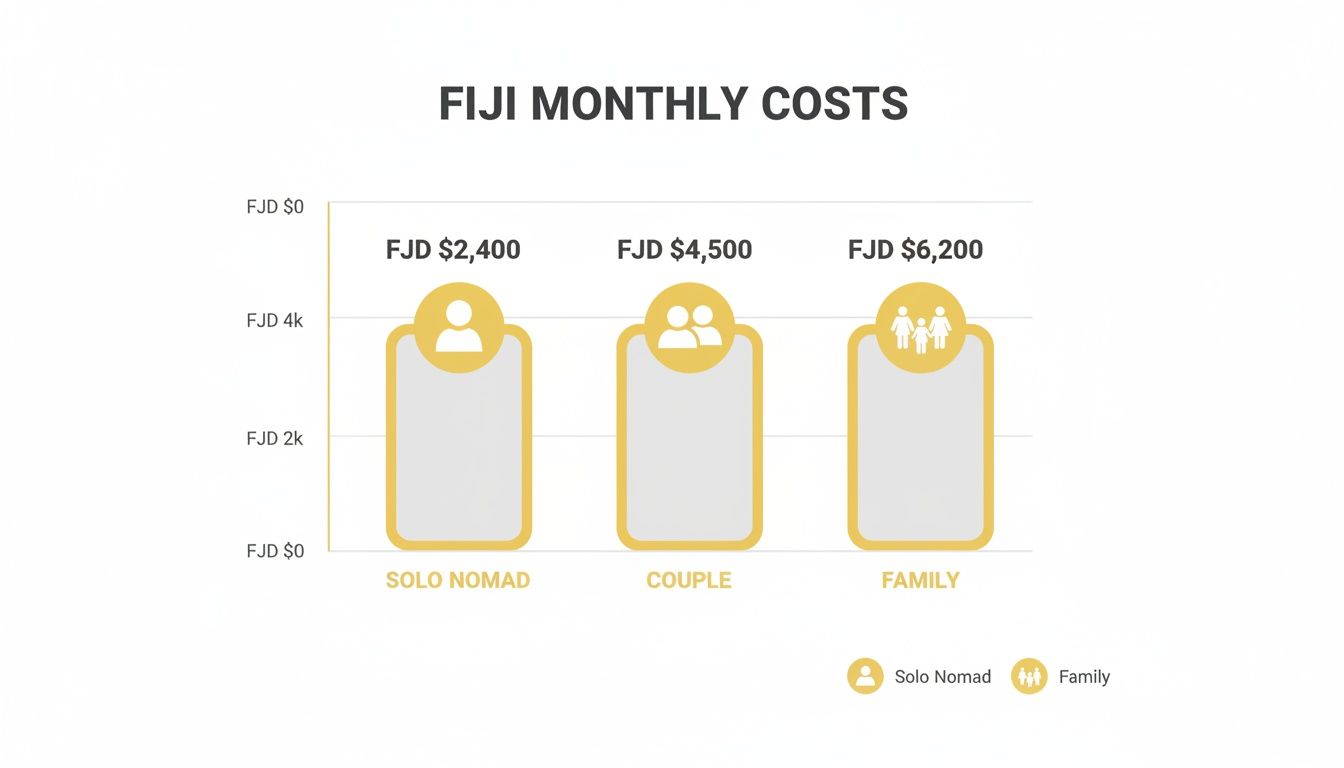
As you can see, while your total spending goes up with more people, the per-person cost drops significantly for couples and families who can split big-ticket items like rent and utilities.
Globally, Fiji holds its own as an affordable spot. It ranks 97th on the Cost of Living Index, with monthly expenses for one person (not including rent) coming in around $565 (FJ$1,288). That makes it a far more accessible option than many other island nations.
Here’s a quick look at how those non-rent expenses might break down for different lifestyles.
Estimated Monthly Budgets in Fiji (FJD)
A quick look at potential monthly expenses for different lifestyles, excluding rent.
| Lifestyle Type | Groceries & Food | Transport | Utilities & Internet | Entertainment | Total Estimated Monthly Cost (FJD) |
|---|---|---|---|---|---|
| Solo Backpacker | FJD $600 | FJD $150 | FJD $180 | FJD $250 | FJD $1,180 |
| Mid-Range Solo Nomad | FJD $900 | FJD $250 | FJD $250 | FJD $400 | FJD $1,800 |
| Mid-Range Couple | FJD $1,500 | FJD $400 | FJD $300 | FJD $600 | FJD $2,800 |
| Expat Family (of 3) | FJD $2,000 | FJD $600 | FJD $450 | FJD $800 | FJD $3,850 |
These are just estimates, of course. Your actual spending will come down to your personal habits and how deeply you immerse yourself in the local way of life.
The secret to an affordable Fijian lifestyle isn't about sacrifice; it's about substitution. It means choosing market-fresh cassava over imported potatoes, taking the local bus instead of a tourist shuttle, and building real community connections over resort isolation for a full cultural experience.
To get the full picture, it also helps to understand concepts like a Cost of Living Adjustment (COLA) and how global economic factors can affect your budget on the ground. This guide will give you the foundation you need to dive into each spending category, proving that an authentic, rich life in Fiji doesn't have to drain your bank account.
Finding A Home Beyond The Tourist Trail
If you want to understand the real cost of living in Fiji, the very first step is to get out of the resort mindset. Finding an actual home here isn't just about saving money—it's about trading the sterile, predictable world of tourism for an authentic local neighborhood, unlocking a life that’s both affordable and deeply connected to Fijian culture.
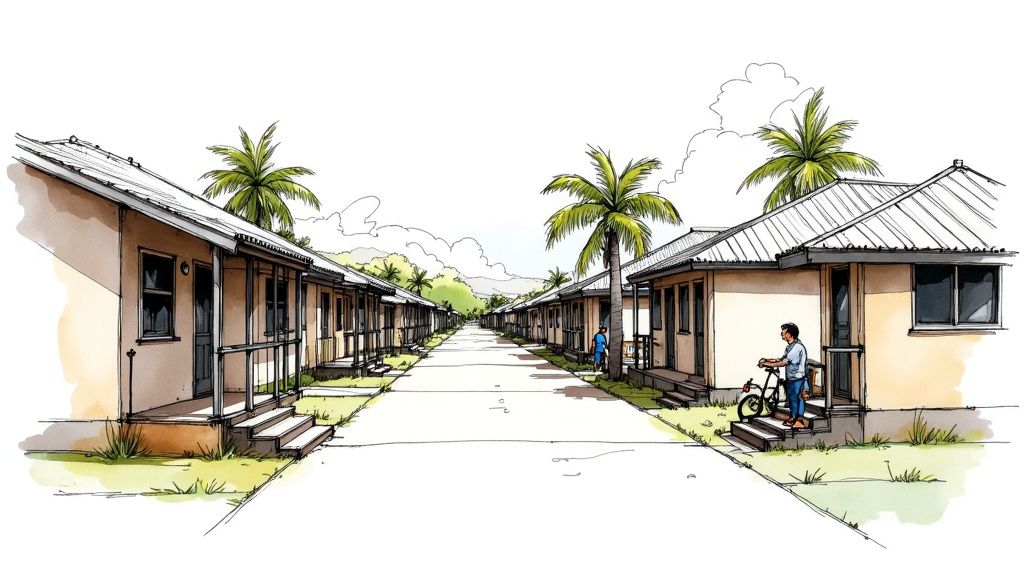
This means looking beyond places like Denarau Island and focusing on communities where Fijians actually live. The price drop is staggering. You can easily save 50-70% on rent for a similar-sized place just by moving a few kilometers away from the main tourist drags and finding an off-the-beaten-path gem.
Where To Begin Your Housing Search
Forget the big international rental websites; the heartbeat of the Fijian rental market is found in much more local, community-driven spaces.
Believe it or not, Facebook is your best friend here. Groups like "Nadi & Lautoka Homes, Properties for Rent or Sale" or "Suva Rentals" are where the action is. This is where you'll find direct access to local landlords, completely bypassing the inflated prices often aimed at expats and immersing yourself in the community from day one.
It also pays to connect with a reputable local real estate agent. They have the on-the-ground knowledge and often know about listings in non-touristic areas that never even make it online. Plus, they can help you navigate the cultural side of securing a lease, which is a huge help for a full cultural experience.
Realistic Rental Prices Across Viti Levu
So, what can you actually expect to pay? Rental costs swing pretty wildly depending on where you are and what you're looking for. Here’s a rough monthly guide in Fijian Dollars (FJD) for an unfurnished place on the main island, outside of the main tourist centers.
- Simple One-Bedroom Flat: In areas like Namaka (near Nadi) or Raiwaqa in Suva, you're looking at FJD $700 - $1,200. These are no-frills but solid options, perfect for a single person or a couple looking for an immersive local life.
- Modern Two-Bedroom Apartment: For something a bit more modern in a popular local neighborhood like Martintar (Nadi) or the Domain area in Suva, prices climb to FJD $1,500 - $2,500.
- Three-Bedroom Family Home: A standalone house with a bit of a yard in a good suburban area will run you FJD $2,000 - $4,000+, depending on its condition and how close it is to schools and shops.
If the capital city's unique energy is calling to you, get a feel for its different neighborhoods and cultural pulse by checking out our guide on Suva the Pacific capital with soul.
Finding a home in Fiji is as much about finding your community as it is about signing a lease. Take the time to walk through local neighborhoods, visit the corner store, and observe the daily rhythm before you commit. This off-the-beaten-path approach ensures you find a place that truly feels like home.
Understanding The Fijian Rental Process
Renting in Fiji feels a lot more personal than what you might be used to back home. It's built on relationships. While you'll still sign a formal lease, that initial connection with the landlord is everything.
You'll need to pay a bond, which is usually one month's rent and is lodged with a government body. Leases typically run for a year. Make sure you read the agreement carefully, paying special attention to what it says about utilities, who fixes what, and the rules for breaking the lease early.
Lastly, don't be afraid to ask questions. Landlords here generally appreciate tenants who show they care about the property and want to be a good neighbor. It’s a simple approach that will not only help you land a great home but also start your new, culturally immersive life in Fiji on the right foot.
How To Shop And Eat Like A Fijian
If you want to manage your food budget and get a full cultural experience in Fiji, the secret isn't some complicated meal plan. It’s a change in mindset. You have to be willing to ditch the familiar, air-conditioned aisles of the tourist-trap supermarkets and dive headfirst into the loud, chaotic, and incredibly rewarding world of how Fijians actually eat.
This is where you find the soul of Fijian cooking and the key to saving a ton of cash. Shopping and eating like a local isn't just a budget hack; it's how you connect with the land and its people, far from the tourist restaurants.
Embrace The Energy Of Local Markets
Instead of instinctively heading to the big-name grocery stores in Nadi or Suva, make a point to find the municipal markets. Places like the Sigatoka Produce Market—famously known as Fiji's "Salad Bowl"—or the sprawling Lautoka Market are a full-blown sensory experience. Here, you're buying produce directly from the farmers who pulled it from the ground and fish from the folks who caught it that morning. This is the ultimate local guide to Fijian food.
The price difference is staggering. A big bundle of fresh bok choy or a pile of sweet potatoes might set you back just a few Fijian dollars, often less than half the price you'd pay for the plastic-wrapped version in a supermarket. You're not paying for international shipping, fancy packaging, or cold storage—just good, fresh food.
This direct-to-consumer approach doesn't just save you money; it puts your cash directly into the hands of local families. You’ll quickly find that a budget of FJD $10-$15 (USD $4.50-$6.50) can fill your bag with enough fresh vegetables to last you several days.
Your Essential Fijian Shopping List
The real trick to an affordable diet here is building your meals around local staples. You have to let go of the imported apples and potatoes and start thinking in terms of tropical fruits and root crops for a truly immersive diet.
Here’s what your shopping list should look like:
- Root Crops: Cassava (tavioka) and taro (dalo) are the absolute foundation of the Fijian diet. They're filling, packed with nutrients, and unbelievably cheap.
- Leafy Greens: Keep an eye out for bundles of bele (a type of hibiscus spinach), tubua (fern shoots), and ota (wild fiddlehead ferns).
- Tropical Fruits: Depending on the season, you'll see mountains of papaya, pineapple, mangoes, and bananas for a tiny fraction of what they cost back home.
- Coconuts: An absolute essential for making fresh coconut cream (lolo), which is the base for so many amazing curries and traditional dishes.
- Fresh Fish: Wander over to the fish section and you'll find line-caught tuna, snapper, or wahoo. Buying a whole fish is almost always cheaper per kilo than getting fillets.
By building your meals around these local ingredients, you can realistically slash your grocery bill by 40-60% compared to a diet of imported goods. It is the single most effective way to control your food costs in Fiji.
Finding Fiji's Hidden Culinary Gems
Just like you should skip the tourist supermarkets, you need to seek out the small, unassuming eateries where the locals go. These are the "hidden gems" where you'll find the most authentic and wallet-friendly Fijian and Indo-Fijian food. Look for the little curry houses tucked away on side streets or the roadside stalls selling fresh roti parcels. These are off-the-beaten-path places that offer a true taste of the culture.
A rich, flavourful chicken or fish curry with rice from a local spot might cost FJD $10-$15. A similar—and often blander—dish in a tourist restaurant could easily be double that. These local kitchens turn every meal into an adventure, serving up incredible flavours that tell the story of Fiji's diverse cultural history.
It’s an interesting time to be living like a local, too. Fiji has recently seen significant deflation, with consumer prices dropping by 3.8% year-on-year in late 2025—the biggest drop since 2019. This was driven by cost reductions in areas like clothing and recreation. You can read more about these economic shifts and what they mean for consumer prices. When you shop locally, you're tapping directly into these favorable conditions, stretching your budget even further while enjoying the very best of what Fiji has to offer.
Getting Around Fiji On A Local's Budget
If you really want to get a handle on the cost of living in Fiji, you’ve got to step away from the tourist shuttles and private transfers. They’re comfortable, sure, but they keep you in a bubble, separate from the real rhythm of the islands. Hopping on Fiji's public transport isn't just a way to save a few bucks; it's your all-access pass to an authentic, immersive experience.
This is where the journey becomes just as memorable as the destination. It’s how you’ll see the real Fiji, one bumpy, beautiful, and incredibly friendly ride at a time, far from the main tourist routes.
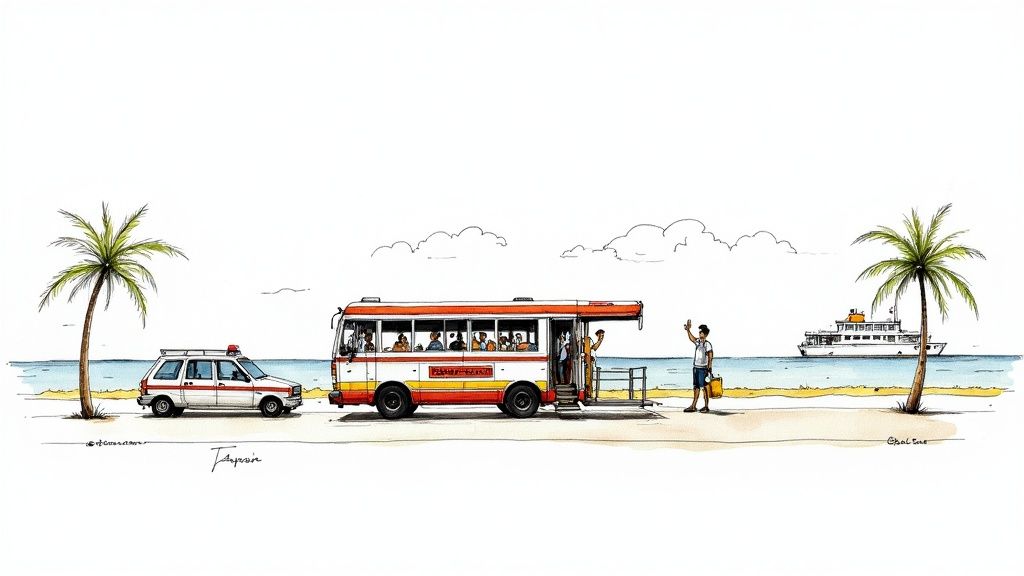
Think of this as your local guide to getting around like you’ve lived here for years. We’ll cover how to catch an open-air bus without a bus stop in sight, negotiate a fair taxi fare without getting ripped off, and book a spot on a local ferry for some serious off-the-beaten-path island-hopping.
Riding The Iconic Open-Air Buses
The backbone of local travel in Fiji is its network of colorful, windowless buses. These aren't just vehicles; they're social hubs on wheels, usually filled with reggae or Hindi music, laughter, and unbeatable views. A long-haul trip, like from Nadi to Suva, will set you back around FJD $30-$60 (USD $13-$26). That's a huge saving compared to a private car.
Using them is a cultural experience in itself. Here’s the lowdown:
- The 'Wave-to-Stop' System: While there are official bus stops in towns, out in the rural areas, the system is wonderfully casual. Just find a safe spot on the side of the road, and when you see your bus coming, give it a confident wave. It’ll almost always pull over for you. This is true off-the-beaten-path travel.
- Paying Your Fare: For most local routes, you'll need a pre-paid electronic card (like Vodafone's e-ticketing). On the longer express routes, you can often pay the driver directly in cash. Fares are dirt cheap, often just a couple of Fijian dollars for short trips.
- Bus Etiquette: Smile and say "Bula!" when you hop on—it’s the local way. Don't be shy if the person next to you starts a conversation; it's all part of the charm of this immersive experience.
Navigating Taxis Like A Local
Taxis are everywhere, but you need to know the difference between the private cars aimed at tourists and the shared taxis that locals rely on. Getting this right is the key to saving money and avoiding the classic "tourist price."
Private taxis, especially the ones lined up outside hotels and the airport, can be pricey. For any trip within a city like Nadi or Suva, always insist they use the meter. For longer journeys, agree on the fare before you even open the car door.
The real game-changer is the shared taxi. These guys run on fixed routes between towns, picking up and dropping off people along the way. You pay for your seat, not the whole car, making it a quick and affordable step up from the bus.
Island-Hopping On Local Ferries
When it's time to travel between islands, ditch the expensive tourist cruises. The real lifelines of Fiji are the local ferry services that connect the main islands, moving residents, cargo, and smart travelers seeking a genuine experience.
Booking a spot on a ferry from Viti Levu to places like Vanua Levu or Taveuni is a fraction of the cost of flying. A ferry ticket can easily be 70-80% cheaper than a domestic flight for the same route. Yes, it's a slower journey, often overnight, but the savings are massive. More importantly, the experience is pure Fiji. You’ll be sharing the deck with families, farmers, and students, watching the stunning archipelago glide by. This is how you get off the beaten path and truly see the islands through a local lens.
Managing Your Bills And Staying Connected
Even in paradise, you've got to keep the lights on and the Wi-Fi humming. The good news is that sorting out your monthly utilities in Fiji is refreshingly straightforward and generally much kinder to your wallet than you might be used to back home.
Let's break down the practical side of island life—power, water, internet, and healthcare—so you can budget like a local and avoid any nasty surprises.
https://www.youtube.com/embed/XMj0R1S0
Powering Your Island Home
In Fiji, a single state-owned company handles electricity, which means pricing is consistent across the country. It’s all metered, so what you use is what you pay for. For a standard two-bedroom apartment, you can budget between FJD $100 and FJD $200 a month.
Fijians are masters of conserving energy, and it's easy to follow their lead. Ditching the air conditioner for a fan, unplugging electronics, and making the most of that beautiful tropical sunlight will keep your bills on the lower end. Water is incredibly cheap, often just FJD $20-$40 per month. For cooking, most homes use bottled gas; a tank runs about FJD $40-$50 and should last you several weeks.
Staying Connected In The South Pacific
For anyone working online, Fiji’s internet scene is dominated by two main players: Vodafone and Digicel. You'll find solid 4G coverage in the main hubs like Suva, Nadi, and along the Coral Coast. But be warned—once you head off the beaten path to more remote islands, that strong signal can become a bit of a treasure hunt.
Most people get online using mobile data, which is very affordable. You can snag a monthly plan with a hefty data allowance (think 30-50GB) for somewhere between FJD $50 and FJD $100. If you need a more stable connection for your home, fiber internet is available in the bigger cities, with plans starting around FJD $100-$150 for decent speeds.
The best advice? Skip the corporate coverage maps and talk to the locals in your specific neighborhood. A strong signal on one side of a village doesn't guarantee the same on the other, and their real-world experience is the best local guide you can get.
Here’s a quick look at what your monthly utility and connectivity costs might look like in a city like Suva.
Sample Monthly Utility & Connectivity Costs in Suva
This table gives you an estimated breakdown of essential monthly services for a standard two-bedroom apartment.
| Service | Low Estimate (FJD) | High Estimate (FJD) | Notes |
|---|---|---|---|
| Electricity | FJD $100 | FJD $200 | Highly dependent on air conditioner usage. |
| Water | FJD $20 | FJD $40 | Generally very affordable. |
| Cooking Gas | FJD $20 | FJD $40 | Based on one tank replacement per month. |
| Mobile Data | FJD $50 | FJD $100 | Varies based on data package and provider. |
| Home Internet | FJD $100 | FJD $150 | Fiber optic plans in urban areas. |
| Total | FJD $290 | FJD $530 |
As you can see, keeping your home running and staying online is quite manageable.
Navigating Healthcare In Fiji
Getting a handle on Fiji’s healthcare system is an absolute must before you arrive. The country has a dual system of public hospitals and private clinics. While public care is very cheap for residents, the facilities can be basic and the wait times can be long.
Because of this, almost all expats and long-term visitors use private clinics for regular check-ups or minor illnesses. A visit to a private GP will usually set you back FJD $50-$80. That's perfectly fine for the occasional sniffle, but it's not a solution for a serious medical emergency.
This is why comprehensive health insurance is non-negotiable. Seriously, don't even think about coming without it. Make sure your policy includes medical evacuation coverage, as anything complex will likely require a flight to Australia or New Zealand. It’s the one expense you hope you’ll never need, but it provides the peace of mind that lets you truly relax and enjoy your immersive Fijian adventure.
Understanding The Broader Economic Landscape
To get a real feel for the cost of living in Fiji, you have to look beyond your grocery bill and see the bigger picture. The prices you pay every day don’t just appear out of thin air; they’re a direct result of the country's unique economic DNA. Think of it like a self-contained island ecosystem where everything is connected.
The two biggest forces shaping costs here are tourism and imports. Fiji’s economy leans heavily on visitors, which is great for bringing money into the country. But it also means that anything remotely related to tourism—from meals at a resort to the taxi from the airport—is priced for international travelers, not locals. This is the core reason why stepping off the beaten path is key to an affordable life here.
At the same time, as a remote island nation, Fiji has to import a massive amount of goods. That box of cereal you like? The fuel for the local buses? Almost all of it has to be shipped in. This heavy reliance on imports means that day-to-day costs can swing based on things happening thousands of miles away, like global fuel prices, shipping logistics, and the strength of the Fijian dollar.
The Impact Of Economic Trends
Recent numbers show just how much tourism drives the engine. In 2024, Fiji welcomed 982,938 visitors, and in 2023, tourism revenue hit about $2.37 billion. This flood of visitors directly affects the price of pretty much everything, especially during the high season. When you're planning, it helps to know the best time to visit Fiji to find that sweet spot between great weather and lower prices.
The economy here can also be a bit of a rollercoaster. Fiji's inflation rate was hovering around 4.5% in 2024 before dipping into negative territory in 2025, which shows you just how quickly your spending power can change. If you're curious, you can get a deeper dive into Fiji's economic outlook and what these figures mean for people on the ground.
It's crucial to understand this connection. A sudden drop in the Fijian dollar might make your home currency stretch further right now, but it's often a sign that prices for imported goods will creep up once new shipments arrive.
Visas And Your Financial Standing
How you’re able to live and work in Fiji is the bedrock of your budget. Your visa status is what determines whether you can earn a local income or if you're living off savings from abroad—two completely different financial worlds.
Fiji has different permits available, like work permits for people with in-demand skills or investor permits if you plan on starting a business. Figuring out the visa process is your first real step. Each option comes with its own financial strings attached that will shape your cost of living. Being able to legally earn a living here, for example, turns your budget from a countdown into something sustainable, letting you truly settle into the local rhythm and have a full cultural experience. Don't even think about making a long-term move without researching this part inside and out.
Your Fiji Cost Questions Answered
We’ve gone through the big picture, but let's be real—sometimes you just need a straight answer. Here are our quick takes on the most common questions we get about the cost of living in Fiji.
How Much Money Do I Need to Live Comfortably in Fiji Each Month?
"Comfortable" means different things to different people, but a solid starting point for a single person seeking an immersive local experience is around FJD $2,500-$3,500 (about USD $1,100-$1,550) a month. This budget gets you a decent apartment away from the tourist hotspots, covers your utilities, lets you eat well from the local markets, use local transport, and still have enough for a bit of a social life.
For a family of three living outside the main tourist centers, you'll want to budget closer to FJD $4,500-$6,000. And if you're dreaming of a luxury villa on Denarau Island, you’ll need to adjust that number way, way up.
Is It Cheaper to Live in Suva or Nadi?
Ah, the classic Fiji question. The answer isn't as simple as you'd think. Generally speaking, rent is a bit higher in Suva. It’s the capital and the economic hub, so there’s more demand for long-term housing from professionals and university students, which pushes prices up.
On the other hand, Nadi is the tourist gateway, so things aimed at visitors—like restaurants and imported groceries—can be pricier. If you’re really committed to an immersive local life, you might find your day-to-day costs slightly lower in Nadi. But Suva has more options for housing and a bigger job market.
The real difference isn't just about cost; it's about lifestyle. Suva offers a bustling city experience with more amenities, while Nadi provides a more laid-back vibe with closer access to western beaches and islands. Your choice depends on the type of cultural experience you're after.
Can You Live in Fiji on $1000 a Month?
Living in Fiji on USD $1,000 (roughly FJD $2,250) a month is tough, but for a single person seeking a truly deep, immersive experience, it’s not totally out of the question. You’d have to dive headfirst into the local way of life.
- Housing: This means looking for very basic accommodation in a rural village or sharing a simple flat in town, far off the beaten path.
- Food: Your diet would be almost entirely fresh produce from the local markets. Say goodbye to most imported goods.
- Transport: You'd be relying exclusively on local buses. Taxis or rental cars would be off the table.
This kind of budget leaves zero wiggle room for emergencies, trips to other islands, or any Western-style comforts. It's a budget for a volunteer or a hardcore backpacker, not someone looking for a typical expat lifestyle.
What Is the Biggest Expense When Living in Fiji?
For almost everyone who moves to Fiji, housing is the single biggest chunk of your monthly budget. You can expect it to eat up anywhere from 30-50% of your spending. While things like local food and transport are incredibly cheap, a quality rental in a safe, convenient neighborhood outside the main touristic places in Suva or Nadi definitely comes at a premium.
Your next biggest cost is often groceries, but only if you stick to a diet heavy on imported goods from Australia and New Zealand. If you're hunting for more tips on living abroad, you can always check out some of the best travel blogs for a wider perspective.
At CoraTravels, we believe the best journeys come from understanding a place from the inside out. Our local guides are built on on-the-ground knowledge to help you have an immersive experience in destinations authentically and respectfully. Start planning your next culturally immersive trip with CoraTravels.