The food in Colombia is a wild, delicious reflection of the country itself—shaped by staggering biodiversity and a rich blend of cultures. Dishes change dramatically from one region to another. You’ll find yourself eating hearty, potato-thickened soups in the chilly Andean highlands one day, then fresh, coconut-laced seafood on the Caribbean coast the next.
It's a cuisine built on local ingredients, ancestral cooking techniques, and a deep-seated regional pride.
Decoding Colombia's Culinary DNA
To really get what Colombian food is all about, you have to go deeper than just a list of popular dishes. Think of it like decoding a country's DNA. Every plate tells a story about the land, the history, and the people who cook it. This isn't one single, national menu; it’s a vibrant patchwork of distinct regional kitchens, each molded by its unique environment and cultural roots.
That means the food you’ll eat in the high-altitude capital of Bogotá feels like it’s from a different planet than the flavors you’ll find in the tropical Amazon. This diversity is the real magic. Getting to the heart of a new culture means eating like the locals do, whether that's in Colombia or when you're eating through a specific region like Dongguan in China.
The Three Pillars of Colombian Cuisine
If you get a handle on the foundations of Colombian food, you’ll appreciate every meal on a much deeper level. It all boils down to three core elements that create the country's rich culinary identity:
- Biodiversity: Colombia is one of the most biodiverse places on Earth. For a traveler, this translates to an incredible, sometimes bewildering, array of fruits, vegetables, and tubers you've likely never seen or heard of before.
- Cultural Fusion: The nation's history is a mix of Indigenous, Spanish, and Afro-Caribbean traditions. You can taste this fusion in everything from the cooking methods to the use of ingredients like plantain and yucca, and in the complex, slow-simmered flavors of its stews and sauces.
- Regionalism: Colombians are fiercely proud of where they come from, and food is one of the main ways they express it. From the massive, everything-on-one-platter meals of the Paisa region to the zesty, bright seafood of the Caribbean, local identity is served up on every plate.
This next map gives you a visual for how these three pillars—biodiversity, culture, and regionalism—form the very core of Colombian food.
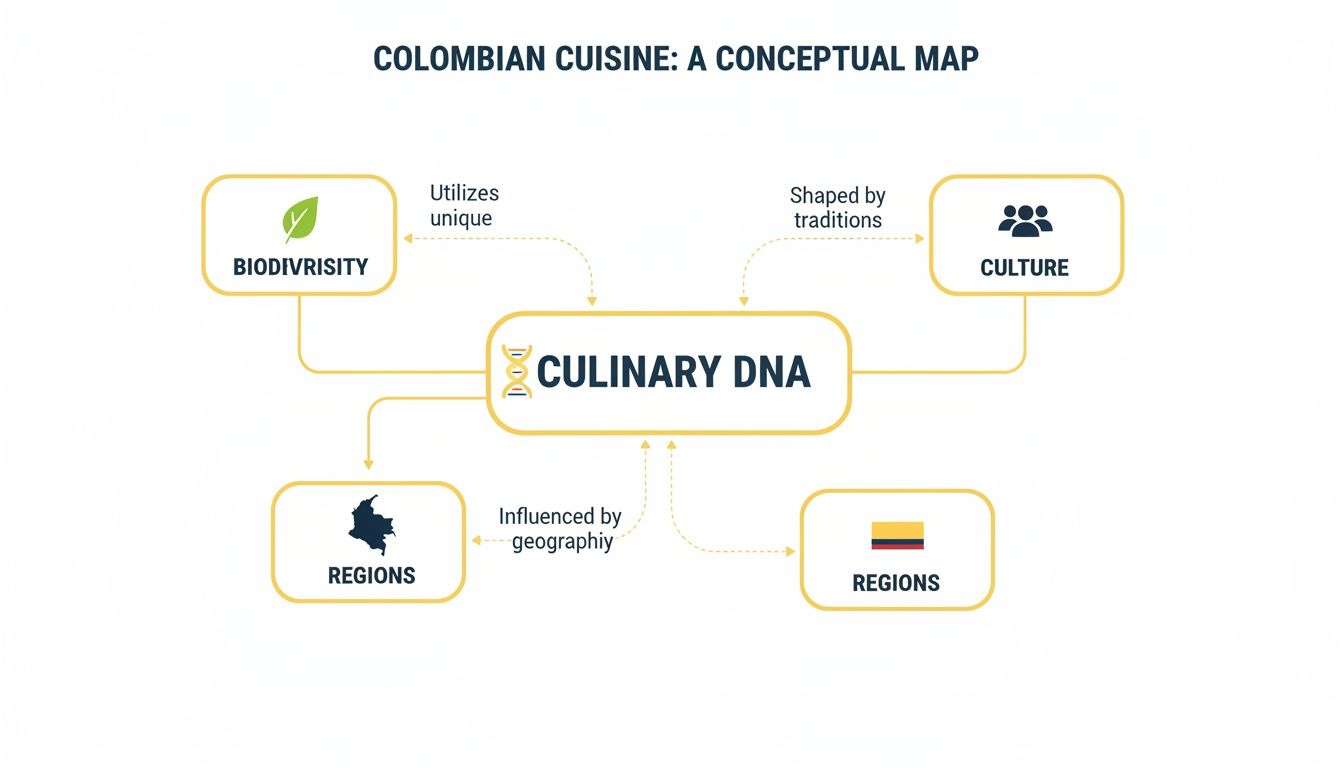
As the map shows, no single element stands alone. It’s the constant interplay between nature, history, and geography that creates such a dynamic and exciting food scene.
For travelers looking for those truly authentic travel experiences, understanding this context is the first step toward eating like a real local. This guide is designed to get you beyond the tourist traps and help you navigate Colombia’s dining scene with the confidence of someone who’s been here before.
Exploring Colombia's Hidden Regional Specialties
Sure, everyone’s heard of Bandeja Paisa. But thinking that’s the beginning and end of Colombian food is like visiting Italy and only eating spaghetti. To really get what the food in colombia is all about, you have to dig into its regional kitchens, where the real magic happens.
Geography and culture have cooked up some seriously distinct flavors across the country. This is where you leave the tourist trail behind and start eating like you know what you're doing.
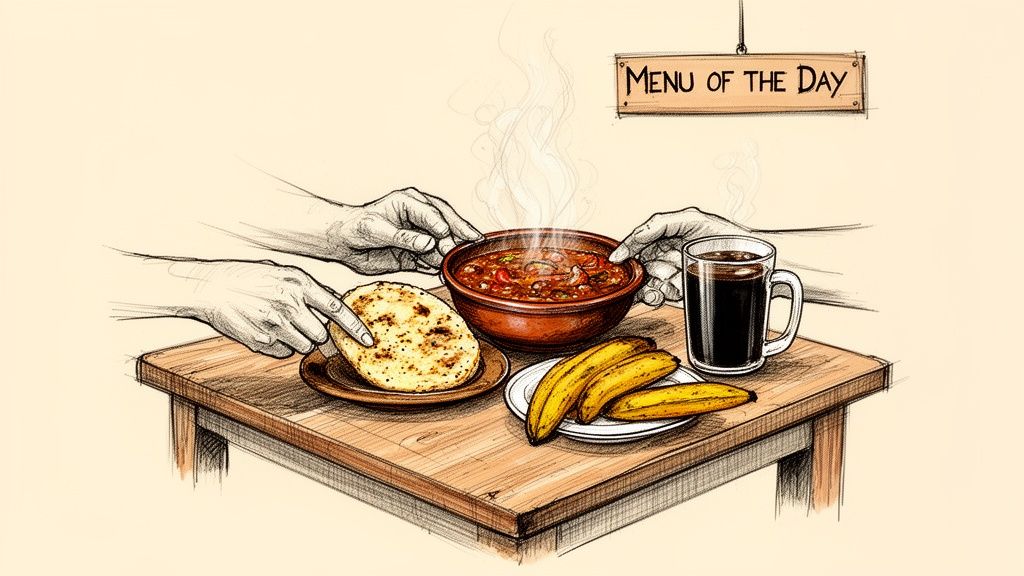
Think of Colombia's food scene less like a single menu and more like a collection of family recipe books. Every region has its own story, its own ingredients, and its own non-negotiable traditions.
Flavors of the Caribbean Coast
Colombia's Caribbean coast feels like a different country, and the food proves it. The vibe here is vibrant and fresh, with a heavy dose of Afro-Caribbean soul. Coconut is king, turning plain rice into the sweet, savory masterpiece arroz con coco that you'll find next to almost everything.
But the real star is the seafood. Don't settle for a simple grilled fish when you can get the ultimate coastal dish: Cazuela de Mariscos. To get the real deal, skip the waterfront tourist spots in Cartagena and find a local joint in a neighborhood like Getsemaní, where it's served rich and bubbling hot with crispy fried plantains (patacones). It's the taste of the ocean, served with local pride.
The Hearty Soul of the Andean Highlands
Head up into the cool, crisp air of the Andes, and the food changes completely. It becomes all about warming, hearty dishes designed to fight off the mountain chill. In Bogotá, the undisputed champion is Ajiaco Santafereño, a creamy chicken and potato soup that’s way more sophisticated than it sounds.
Ajiaco is more of an event than a soup. It’s built on three different kinds of native potatoes, including the tiny yellow papas criollas that melt down and make the broth naturally thick and creamy. Locals serve it with capers, cream, and a side of avocado and rice, so you can customize every single spoonful. The most authentic versions are found in tiny, family-run restaurants in neighborhoods like La Candelaria.
If you push on into the Santander department, you’ll run into one of Colombia’s most legendary—and for some, intimidating—delicacies: Hormigas Culonas. Yep, those are giant leaf-cutter ants, toasted and salted. Eaten like a snack, they have a crunchy, nutty flavor that people compare to popcorn or peanuts. It’s a direct taste of the region’s pre-Hispanic roots.
Pacific Power and Afro-Colombian Roots
Over on the lush, rainy Pacific coast, the culinary scene is powered by Afro-Colombian communities. The food is bold and aromatic, leaning heavily on local staples like plantain, yucca, and a bounty of fresh seafood and river fish.
Dishes here get their deep, complex flavors from local herbs you won't find elsewhere. A classic example is a fish stew simmered in coconut milk with herbs like cilantro cimarrón (wild cilantro), which gives it a powerful, distinct aroma. This is heritage cooking, with techniques and recipes passed down through generations in off-the-beaten-path towns like Guapi or Nuquí.
Tastes of the Amazonian Interior
Venture deep into the Colombian Amazon, and you'll find a food culture completely intertwined with the rainforest and the traditions of its Indigenous peoples. This is as off-the-grid as Colombian cuisine gets, with exotic fruits, unique fish, and ancient cooking methods.
You might find fish wrapped in bijao leaves and cooked over coals, a technique that steams the fish perfectly while infusing it with a subtle, earthy flavor. The Amazon is also a treasure chest of unheard-of fruits, from the antioxidant-packed açaí to the creamy, sweet copoazú. This isn't just farm-to-table; it's forest-to-table, experienced best through a local guide or community stay.
This incredible culinary diversity is backed by a serious agricultural powerhouse. Colombia's food and beverage manufacturing sector makes up a massive 27% of the country's total industrial output. Production of things like cocoa, beverages, and fruits boomed in 2022, keeping local markets stocked with the fresh ingredients that make all these regional dishes possible. You can get more insights into Colombia's booming food sector on EMIS.com.
Mastering Street Food and Bustling Local Markets
To really get to the heart of Colombian food, you’ve got to step away from the sit-down restaurants. The most honest, vibrant, and downright delicious flavors are found on street corners and in the beautiful chaos of the local markets. This is where you taste the real Colombia, a world away from the tourist menus.
This is where daily life happens. It’s the art of spotting a cart in Cartagena with the perfect golden-brown arepa de huevo sizzling away, or finding that neighborhood stall in Medellín where the empanadas are so good, there’s always a line. You’re not just eating; you're feeling the city's pulse, one bite at a time.
Navigating the World of Colombian Street Food
Colombian street food is a masterclass in things you can eat with your hands. It’s fast, satisfying, and deeply traditional food made for people on the move. For travelers, the trick is knowing what to look for and ordering like you know what you’re doing.
The best rule of thumb is simple: follow the locals. A long line is the best review a place can get, signaling that the food is fresh and fantastic. If you see a crowd of office workers or families gathered around a specific cart, get in line. You won't regret it.
The most authentic street food experiences are rarely found in the main tourist plazas. Wander a few blocks into the residential or business districts. That’s where you’ll find the vendors who’ve spent generations perfecting just one or two things.
Here are a few staples you absolutely cannot miss:
- Empanadas: These deep-fried pockets of joy are everywhere. Unlike the baked versions you might know, Colombian empanadas have a crispy cornmeal shell, usually stuffed with spiced ground beef and potatoes. Always ask for ají (a fresh, often spicy salsa) to go with it.
- Arepas: This versatile corn cake is a national obsession, and it comes in countless forms on the street. Keep an eye out for arepa de choclo, a sweet corn pancake filled with salty white cheese, or the coastal classic arepa de huevo, a fried arepa with a whole egg cooked inside.
- Salpicón de Frutas: On a hot day, nothing beats this fruit cocktail. It's a cup filled with finely chopped tropical fruits like watermelon and papaya swimming in a sweet juice, often topped with a scoop of ice cream or a drizzle of condensed milk.
For a deeper dive, you can check out our complete guide on how to eat your way through local street food scenes.
The Plaza de Mercado: A Cultural Experience
Colombia's local markets, or plazas de mercado, are so much more than grocery stores. They are loud, colorful, chaotic centers of community life. Visiting one, like the famous Paloquemao in Bogotá or Minorista in Medellín, is a total immersion into the country's culture.
The first thing that hits you is the sheer abundance. Colombia's incredible biodiversity is on full display, with mountains of fruits and vegetables you’ve probably never seen before. Don't be shy—vendors are usually proud to offer you a sample of something exotic like a tart lulo, a sweet granadilla, or a tangy uchuva.
This is also where you can see the backbone of the local food scene up close. Colombia’s food world isn't dominated by huge chains; it’s powered by small, independent businesses. In fact, 47% of the food retail scene is made up of mom-and-pop 'tiendas,' and the country has over 113,000 eateries and cafes. With food service sales jumping by a massive 24% in 2022, this local food culture is thriving. It’s an authentic scene where Colombians spend a significant 39% of their household income on food. You can learn more by reading this detailed market assessment of Colombia's food sector.
To get the most out of your market trip, here are a few tips from the ground:
- Go Early: The markets are at their best in the morning. The produce is fresh, the energy is high, and the real local shopping is in full swing.
- Bring Cash: Most vendors are cash-only. Make sure you have small Colombian Peso bills to make things easy.
- Eat Inside: Tucked away in many markets are small, family-run kitchens serving some of the best and cheapest menu del día (set lunch) options you’ll find anywhere. This is a non-negotiable for an immersive experience.
- Engage and Ask: A simple "Buenos días" goes a long way. Point to something that looks interesting and ask, "¿Cómo se llama?" (What is it called?). That one question can turn a quick shopping trip into a great memory.
Getting comfortable with the street food and market scene is your ticket to tasting the real, unvarnished flavors of Colombia. This is where you’ll find the food that locals eat every single day—the food that tells the true story of this incredible country.
Understanding Colombia Through Its Drinks
In Colombia, what you're drinking is just as important as what you're eating. Beverages are completely woven into the fabric of daily life—they mark the start of the day, the middle of a celebration, and all the quiet moments in between. Getting a handle on the country's drink culture is the quickest way to tap into its social rhythm.
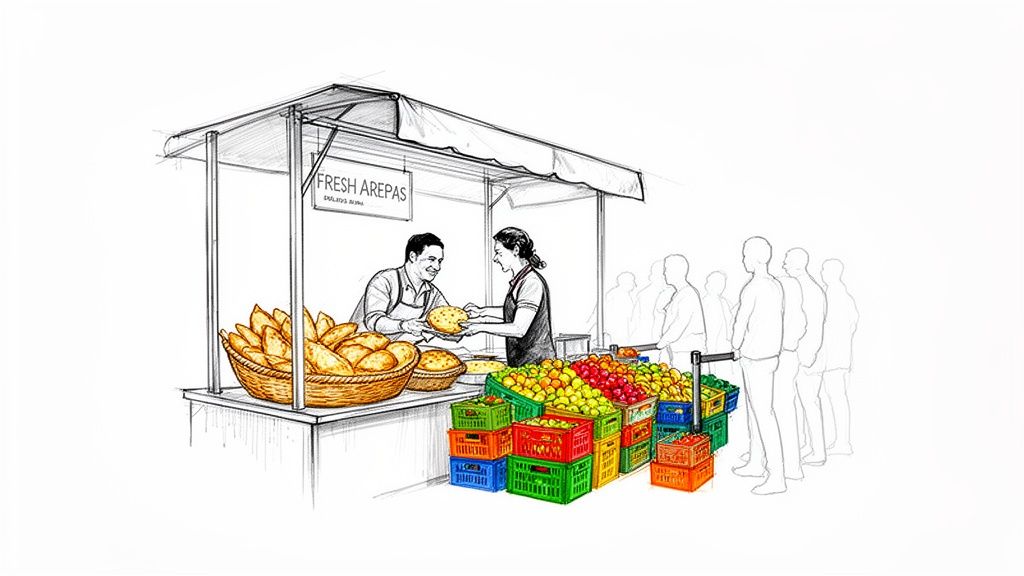
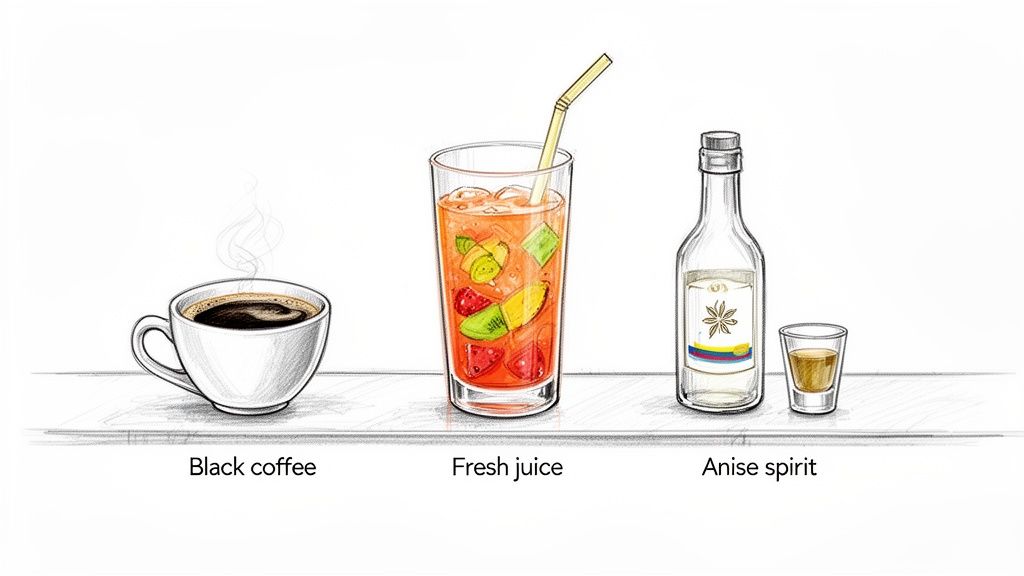
From the simple morning ritual of a sweet, black coffee to the communal energy of sharing a bottle of guaro with friends, every drink here tells a story. This is your guide to drinking like a Colombian, whether you’re on a remote coffee farm or in a bustling city bar.
The Real Colombian Coffee Culture
Colombia is famous for producing some of the best coffees in the world, but the local coffee scene isn't about fancy lattes or pour-overs. The everyday coffee that truly fuels the nation is the humble tinto. It’s a small, simple cup of black coffee, almost always sweetened with panela (unrefined cane sugar).
For an immersive coffee experience, venture into the Eje Cafetero (Coffee Axis) and stay on a family-run finca. This takes you beyond a simple tasting and shows you the entire "bean to cup" process, ending with a tinto brewed by the people who grew it.
The Rainbow of Jugos Naturales
Thanks to its mind-boggling biodiversity, Colombia is a paradise for fresh fruit juices, or jugos naturales. Forget anything from a bottle. Here, juices are blended to order from an incredible lineup of fruits you may have never even heard of, like lulo, guanábana, and maracuyá.
Ordering is a simple two-step process. First, pick your fruit. Then, decide how you want it:
- En agua: Blended with water for a light, crisp drink, similar to an agua fresca.
- En leche: Blended with milk for a rich, creamy, smoothie-like beverage.
These juice stands are everywhere, from markets to street corners, offering a delicious and healthy way to taste the country’s natural bounty.
Aguardiente: The Spirit of Celebration
No Colombian party, family gathering, or friendly get-together is complete without Aguardiente, known affectionately by everyone as guaro. This anise-flavored spirit, distilled from sugarcane, is the undisputed national drink. Its name literally means "fire water," and it’s central to the country's social rituals.
Guaro is almost never sipped or mixed into a cocktail. Locals buy it by the bottle to share among friends, taking it as a straight shot. The ritual of passing the bottle and sharing shots is a genuine symbol of friendship and communal celebration. You'll find it at corner stores (tiendas) and local bars, not just tourist spots.
Beyond the Basics: Regional and Traditional Brews
For the more adventurous, Colombia has a few other unique drinks that give you a direct taste of its regional and historical roots. Keep an eye out for these to get the full cultural experience.
A popular local favorite is Refajo, a simple but surprisingly refreshing mix of beer (usually a light lager like Club Colombia) and a sweet, fizzy soda called Colombiana. It’s the go-to drink for hearty meals and barbecues.
Another fascinating one is Chicha, a fermented corn beverage with deep indigenous roots. While its production was once driven underground, you can still find it in traditional neighborhoods, especially in Bogotá's Chorro de Quevedo. Tasting chicha feels like tasting a piece of pre-Hispanic history.
Essential Tips for Your Culinary Adventure
Alright, diving headfirst into the food in Colombia is an adventure. But knowing a few local ropes can take a meal from just "good" to a truly memorable cultural experience. A little insider knowledge helps you eat better, spend smarter, and really connect with the country's incredible food traditions.
Think of this as your guide to handling everything from paying the bill like a local to ordering with confidence, even if your Spanish is rusty. Armed with these insights, you'll be ready to step off the tourist trail and eat your way through Colombia authentically.
Smart Budgeting for Every Meal
Eating incredibly well in Colombia does not require a fat wallet. In fact, some of the most authentic and delicious food is shockingly affordable. Your daily food budget can swing wildly, but it's easy to keep it low.
Your new best friend for lunch is the menu del día. Seriously. This is the set lunch special you'll see advertised on chalkboards outside non-touristy, local eateries. It almost always includes a soup, a main course (meat with sides like rice, plantain, and a small salad), a drink, and sometimes a little dessert. You'll get a massive, home-cooked meal for between 12,000 to 20,000 COP (that’s roughly $3-$5 USD). It's unbeatable.
Street food is another budget hero. Empanadas, arepas, and other snacks usually cost just a few thousand pesos each, making it easy to piece together a cheap and incredible meal on the go. For comparison, a proper dinner at a mid-range restaurant in Bogotá or Medellín will likely run you 30,000 to 60,000 COP per person.
Understanding Dining Etiquette
Colombian dining culture is wonderfully relaxed and welcoming, but a few local customs are good to know. Politeness is everything. Always greet the staff with a friendly "Buenos días," "Buenas tardes," or "Buenas noches" when you walk into a restaurant.
Tipping, or propina, works a little differently here. For a casual menu del día or at a street food stall, a tip isn't expected at all. In nicer, sit-down restaurants, however, a 10% voluntary tip (propina voluntaria) is usually added to the bill. The server will almost always ask if you want to include it—a simple "sí, gracias" is all that's needed.
Always glance at your bill before you pay. If you see the propina voluntaria is already on there, you're all set. There's no need to add anything extra unless the service was absolutely spectacular. This one little check saves you from the classic traveler mistake of double-tipping.
Navigating Dietary Needs
For vegetarians and vegans, Colombia can be a bit of a mixed bag, but things are improving fast. While traditional plates are very meat-heavy, the bigger cities now have a solid and growing scene of vegetarian-friendly restaurants and health-conscious cafes.
In more traditional spots, you have to be very specific. A few key phrases like "Soy vegetariano/a" (I am a vegetarian) or "Sin carne, por favor" (Without meat, please) are your lifeline. Just be aware that sometimes "sin carne" might still mean the dish was made with chicken or fish broth. For a guaranteed meat-free win, look for places serving big, fresh salads or a hearty sopa de lentejas (lentil soup), which is almost always vegetarian.
A Quick Guide to Ordering in Spanish
Knowing just a handful of Spanish phrases can completely change your dining experience. It's not about being fluent; it's about showing respect and opening the door for better service and maybe even a great recommendation from the staff.
This table has the absolute essentials you'll need to navigate any food situation, from a tiny street cart to a bustling restaurant.
Essential Spanish Phrases for Ordering Food
| English Phrase | Spanish Translation | When to Use It |
|---|---|---|
| The menu, please? | ¿La carta, por favor? | When you first sit down and want to see the options. |
| I would like... | Quisiera... | The go-to polite way to start your order. |
| What do you recommend? | ¿Qué me recomienda? | The magic question for discovering the best thing on the menu. |
| Is it spicy? | ¿Es picante? | Crucial if you're sensitive to heat (most Colombian food isn't). |
| Without meat, please. | Sin carne, por favor. | Essential for vegetarians to specify their needs clearly. |
| The check, please. | La cuenta, por favor. | When you're full, happy, and ready to pay. |
Just getting these few phrases down will give you the confidence to order like a pro. It turns a potentially intimidating moment into a fun, interactive part of the adventure, ensuring every bite you take is a rewarding one.
Your Colombian Food Questions Answered
Alright, you've got the map of what to eat and where to find it. But what about the little things? Every country has its own rhythm, and navigating the food scene is about more than just knowing your arepas from your empanadas.
Think of this as the final briefing before you dive in. We’re covering the practical, on-the-ground questions that pop up when you're trying to pay for street food or figure out why all the shops just closed for lunch. Let's get you eating like a local, hassle-free.
Is It Safe to Eat Street Food in Colombia?
Yes, but you have to be smart about it. The golden rule of street food anywhere in the world applies here: follow the locals. If you see a stall with a long, steady line of Colombians, that’s your green light. A crowd means the food is fresh, turnover is high, and the quality is trusted.
Use your eyes. Does the vendor’s setup look clean? Are they handling money and food separately? For the most part, you’ll find incredible food in Colombia on the street without a single problem. If you have a sensitive stomach, ease into it. Start with things that are cooked right in front of you, like crispy empanadas, grilled arepas, or fresh-from-the-fryer buñuelos.
One more tip: while tap water is generally fine in big cities like Bogotá and Medellín, it’s always safer to stick with bottled water from vendors. And maybe skip the ice in your street-side drink—it’s a simple move that can save you from any potential stomach grief.
What Are the Typical Meal Times in Colombia?
Colombians run on a pretty predictable food clock, and it’s all built around a serious midday meal. Knowing the schedule helps you show up when the good stuff is actually being served.
- Breakfast (Desayuno): It happens early, usually between 6 AM and 9 AM.
- Lunch (Almuerzo): This is the main event, no question. From 12 PM to 2 PM, restaurants are packed for the menu del día. Don't be surprised if smaller shops and businesses shut their doors during this time—lunch is sacred.
- Dinner (Cena): This is a much lighter, more casual affair, typically eaten between 7 PM and 9 PM.
Oh, and don't forget the onces or algo. It’s a small coffee and snack break around 4 or 5 PM that bridges the long gap between that massive lunch and a late dinner.
How Is the Wellness Trend Affecting Traditional Food?
It’s a fascinating mix of old meets new. The hearty, traditional dishes aren’t going anywhere—they're the soul of the culture. But you’ll definitely see a growing wellness movement making its mark, especially in the bigger cities.
Juice bars blending Amazonian superfoods are popping up everywhere, and modern restaurants are putting healthier, creative spins on classic recipes. It creates this great balance where you can smash a deep-fried empanada one day and grab a fresh quinoa salad the next. You get to taste both sides of Colombia's food story as it evolves.
The numbers back it up. The Colombian food supplements market was valued at US$379.20 million in 2024 and is expected to hit US$662.30 million by 2032. You'll see this health-conscious shift in everything from nutrient-packed smoothies to more functional foods appearing alongside the classics.
Should I Carry Cash to Pay for Food?
One hundred percent, yes. If you want to access the most authentic, delicious, and affordable food, you absolutely need to carry Colombian Pesos (COP). Street food carts, tiny local restaurants serving corrientazos, and the stalls inside a plaza de mercado are almost always cash-only.
Sure, the fancier restaurants in Bogotá, Medellín, and Cartagena will take a credit card. But if you only rely on plastic, you'll miss out on the heart and soul of Colombian food. Do yourself a favor and always have a mix of small bills ready to go.
At CoraTravels, we believe the best trips are built on local knowledge. Our guides distill the on-the-ground realities and cultural context you need to move beyond the tourist trail and connect with a place authentically. Start planning your next immersive adventure at https://coratravels.com.