Authentic travel isn't about where you go, but how you show up. It's the decision to shift from being a passive observer, ticking off a checklist of sights, to an active participant in the life of a place. Think of it as trading the crowded monument for a cooking class in a local's kitchen, or a generic guided tour for a real conversation with a shopkeeper. This is what turns a trip into a full cultural experience by taking you outside of main touristic places and deep into the heart of a destination.
What Makes a Travel Experience Authentic?
"Authentic travel" gets thrown around a lot, but at its core, the idea is simple. It’s about peeling back the glossy, curated layer of a destination to connect with its real, lived-in reality. An immersive experience isn't about a specific activity; it’s a mindset focused on understanding the unspoken rhythm of a place.
Knowing that Berlin runs on cash, not cards, or that Cape Town life is scheduled around daily “load-shedding” power cuts isn’t just trivia. It’s participating in the local flow. It’s about showing up with respectful curiosity and a genuine desire to see a place through the eyes of the people who call it home, which is the essence of a full cultural experience.
Moving Beyond the Tourist Trail to Go Off the Beaten Path
Real authenticity lives off the beaten path, far from the predictable crowds you'll find at major tourist spots. It’s found in the small moments that never make it into the guidebooks when you venture outside of main touristic places.
This could be as simple as:
- Wandering through a residential neighborhood just to see how people live.
- Hitting a local market on a weekday morning to watch residents do their grocery shopping.
- Taking the bus instead of a taxi to get a feel for the daily commute.
These aren't glamorous activities, but they transform your trip from a string of photo ops into a collection of genuine memories.
The Power of Local Guides and Immersive Experiences
The secret to unlocking these deeper connections? Local knowledge. A truly immersive experience isn't something you can just pinpoint on a map; it's made possible by a local guide who understands the context. For example, a local can tell you why paella in Valencia is a lunch-only affair or why everyone in Osaka stands on a specific side of the escalator.
True authenticity in travel is about participation, not observation. It’s the conscious choice to engage with a culture on its own terms, leading to a richer, more memorable journey.
This kind of insider knowledge, whether from a person or a resource like CoraTravels, bridges the gap between feeling like a visitor and feeling like a temporary resident. It gives you the confidence to navigate a new place with respect, ensuring your trip is a full cultural experience that sticks with you long after you’ve returned home.
The Growing Demand for Genuine Cultural Immersion
The whole idea of an authentic travel experience has gone from a fringe concept to a full-blown global movement. Today’s travelers are swapping checklist sightseeing for a full cultural experience, driven by a need for connection. People want unique stories—the kind you can only get from real human interaction and a true feel for a place.
This reflects a serious shift in values. Travelers are pushing back against overtourism, where iconic destinations are crushed by crowds. They’re choosing to get off the beaten path and explore “detour destinations”—smaller towns or neighborhoods outside of main touristic places where daily life is still intact. This approach, often called slow travel, is all about depth over distance, encouraging you to stay in one place long enough to actually connect with it.
From Passive Observer to Active Participant
This change in mindset is shaking up the entire travel industry. It’s a move away from passively consuming a destination to actively taking part in its culture for a truly immersive experience. In 2025, a massive 73% of global travelers say they're looking for more authentic, local experiences to really get under the skin of a destination. This isn't just a small shift; it's a clear signal that people want genuine connections over crowded tourist traps.
Think sipping coffee in a Berlin neighborhood café where cash is still king, or timing your Cape Town visit around load-shedding to join locals for candlelit dinners. These are the moments that matter now. You can dive deeper into this trend by exploring the full travel trends report.
This infographic really captures the move from just looking at things to actually getting involved.
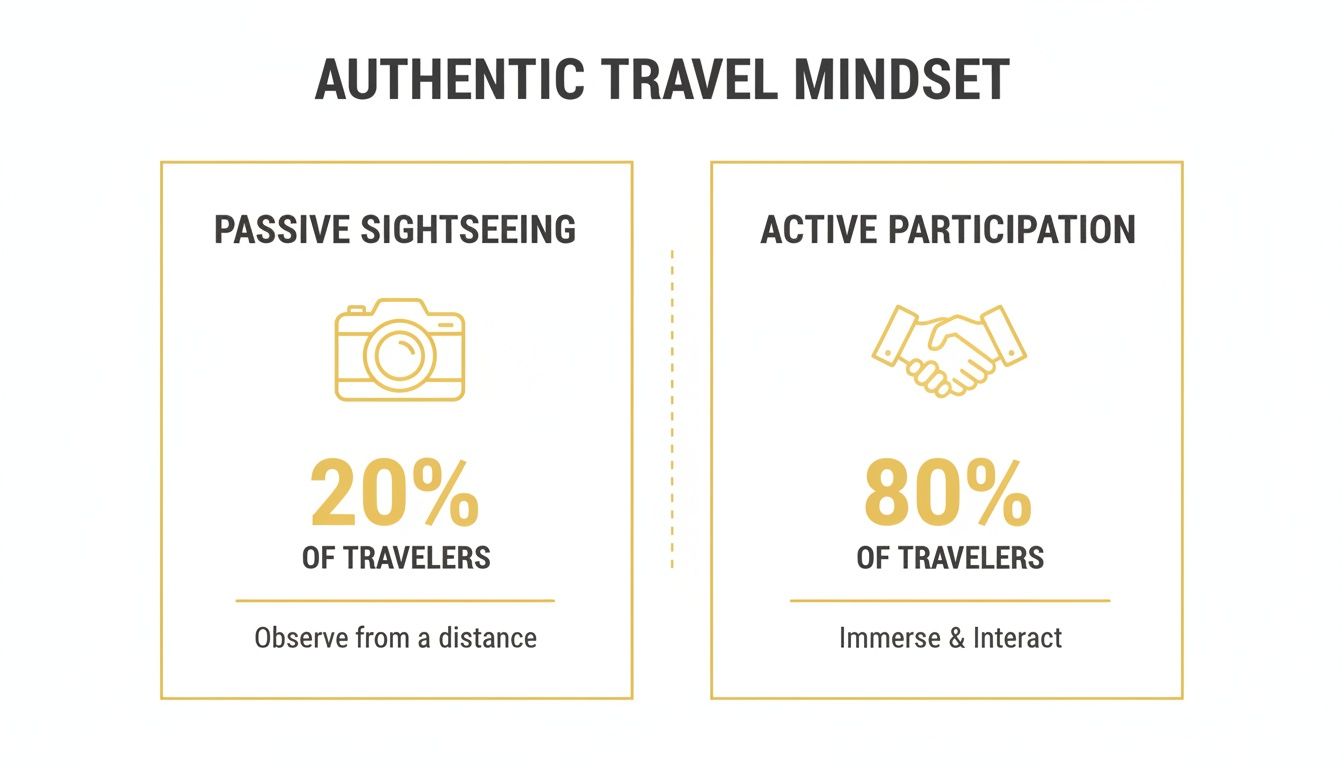
The numbers don't lie. The modern traveler is done watching from the sidelines; they want to be part of the story.
Why This Matters for Modern Explorers
This hunger for authenticity pushes us to make smarter, more sustainable choices. When you seek out local businesses with the help of a local guide, engage with community projects, and respect cultural norms, you're actually contributing to the places you visit. The goal is no longer just to see a place, but to understand it.
An authentic journey is built on curiosity and respect. It’s about learning the unspoken rules of a place and engaging with its people, turning a simple trip into a meaningful exchange.
This is where having real, local insights becomes a game-changer. Platforms like CoraTravels close that gap, giving you the on-the-ground knowledge you need to navigate a new place with respect and confidence. By showing you how locals really live, they give you the tools to create your own full cultural experience—transforming a fleeting vacation into a memory that sticks.
How to Find Experiences Beyond the Tourist Trail
So, how do you actually find these authentic moments? It’s less about a secret map and more about a shift in mindset. It means consciously deciding to walk away from the massive crowds, leaving room for spontaneity, and choosing the quiet side street over the bustling main square outside of main touristic places.
This is the real work of travel. It’s about listening for local advice instead of just blindly following a pre-packaged itinerary. Making this small change is what turns a regular trip into something you’ll remember for years.
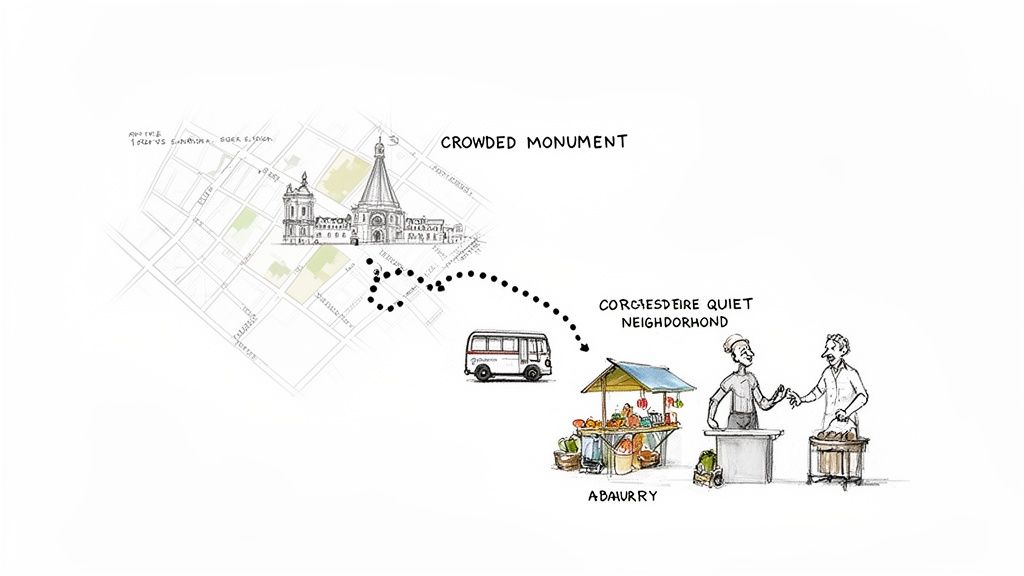
The first step is mental. Stop trying to see everything and start trying to experience the rhythm of daily life. A simple swap, like taking the local bus instead of the tourist shuttle, puts you right in the middle of it all. You’ll be sharing a ride with commuters, students, and families, getting a raw, unfiltered peek into how the city really moves.
Practical Steps to Go Off the Beaten Path
Uncovering those hidden gems means looking for the clues most tourists walk right past. Sometimes, the best starting point is right where you’re staying. An essential electronic guidebook provided by your host can be a goldmine for spots off the beaten path.
Beyond your screen, a few simple, real-world actions can lead to the best discoveries:
- Explore Residential Neighborhoods: Wander into the areas where people actually live, far from the main attractions. Look at the architecture, the small parks, the corner shops. This is the true heartbeat of a city.
- Visit Local Markets on a Weekday: Go when the residents are doing their actual shopping, not on a Saturday designed to impress visitors. Watch the easy back-and-forth between vendors and their regulars—it’s a genuine slice of life.
- Strike Up a Conversation: Seriously, don't be shy. Ask the shopkeeper, the artisan, or the barista where they love to eat or what they do on a day off. These little chats are your most direct line to local secrets.
These small, intentional choices give you the confidence to explore with curiosity. If you want to dive deeper, check out our guide on how to travel like a local for even more ideas.
The Power of Local Perspectives
Honestly, the most memorable moments almost always come from unplanned interactions. The perspective of a local—whether it’s a formal local guide or the person selling you fruit—gives you a context no book ever could. They're the ones who can tell you why a certain dish is so important or explain a local custom that might otherwise seem strange. That kind of insight is everything for a full cultural experience.
Spontaneity is the secret ingredient to authentic travel. The most rewarding discoveries are rarely on the itinerary; they’re found when you allow yourself to get wonderfully, happily lost.
To really bring this home, let’s look at the two mindsets that shape a trip. One traveler sticks rigidly to a checklist, while the other leaves space for the unexpected to happen.
Tourist vs. Traveler: A Comparison
The table below breaks down the difference. It’s not about judging; it's about showing how a simple shift in your approach can completely change the outcome of your journey.
| Activity | Conventional Tourist Approach | Authentic Traveler Approach |
|---|---|---|
| Dining | Eats at restaurants near major attractions with multi-language menus. | Seeks out small, family-run eateries in local neighborhoods. |
| Transportation | Relies on taxis, Ubers, or designated tourist buses for convenience. | Uses public transportation like buses and trains to see daily life. |
| Planning | Follows a strict, pre-planned itinerary to see all the "top sights." | Leaves room for spontaneity and follows recommendations from locals. |
| Accommodation | Stays in large, international hotel chains for familiarity. | Chooses locally-owned guesthouses, homestays, or boutique hotels. |
Ultimately, it comes down to a choice: do you want to observe a place from behind glass, or do you want to step inside and feel its pulse? Choosing the latter is where the real adventure begins.
Connecting with Local Guides for True Immersion
Going off the beaten path is one thing, but actually understanding what you find there? That’s a whole different ballgame. To get that full cultural experience, you need more than a map—you need context. This is where a local guide becomes your most valuable tool, turning a confusing moment into a genuine connection.
A "local guide" isn't always someone you hire for a formal tour. It can be any source of insider info that bridges the gap between just visiting and truly getting the local way of life. That’s exactly what CoraTravels is all about—giving you access to local voices who break down complex cultural habits into simple, practical advice for a truly immersive experience.
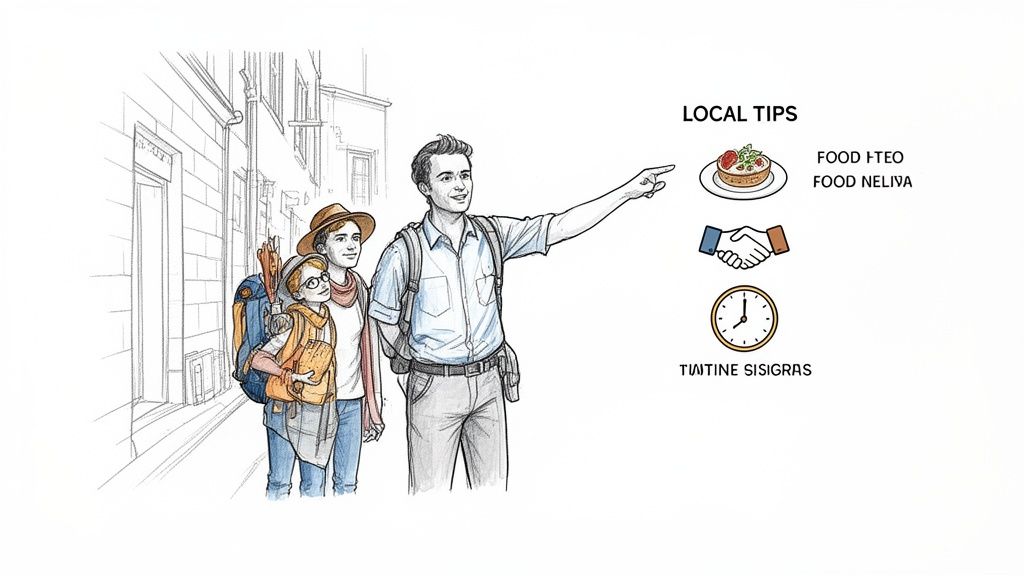
This kind of knowledge helps you move with the flow of a place, not against it. It cuts out the stress of the unknown and helps you sidestep those awkward cultural missteps that instantly make you feel like an outsider.
The Power of Insider Knowledge
It's the small details that make the biggest difference. Think about all the subtle, unwritten rules that govern daily life—the stuff locals just know but you'd never find in a standard guidebook. This is the heart of an authentic travel experience.
Here are a few real-world examples that show what I mean:
- Osaka's Escalator Etiquette: In Osaka, everyone stands on the right side of the escalator, leaving the left open for people in a hurry. Knowing this tiny detail means you blend right in instead of accidentally causing a commuter traffic jam.
- Valencia's Paella Timing: Real Valencians eat paella for lunch, never for dinner. Order it at night, and you're basically wearing a sign that says "tourist." You’ll also likely get a reheated, subpar version of their iconic dish.
- Berlin's Cash Culture: For all its modern cool, many of Berlin's best local cafes, markets, and bars are cash-only. Show up with just a credit card, and you'll miss out on some of the city's most genuine spots.
This is the kind of specific, on-the-ground advice from local guides that completely changes a trip. It lets you engage on a deeper, more respectful level, turning a generic vacation into a series of memorable, authentic moments.
Local knowledge is the key that unlocks a destination's true character. It's not just about knowing where to go, but understanding how to be there.
From Visitor to Temporary Resident
Ultimately, tapping into local expertise helps you shift your mindset. You start to feel less like a tourist on the outside looking in and more like a temporary resident who's part of the scene. When you understand the subtle rhythms of a place, you can navigate it with confidence and real curiosity.
That shift is what makes travel so rewarding. It’s not just about seeing new things; it’s about gaining a real appreciation for the different ways people live. By learning from local voices, you give yourself the tools to find your own authentic travel experiences, no matter where you go.
Traveling Authentically and Responsibly
Let's get one thing straight: real authentic travel experiences aren't just about what you get out of a trip. They’re about what you put back in. It’s about pairing that incredible curiosity you have with a genuine respect for the people and places you visit. When you travel with this responsible mindset, a simple trip transforms into a meaningful, immersive experience.
One of the most powerful ways to do this? Vote with your wallet.
Choosing to support small, locally-owned businesses—that family-run guesthouse, the corner café, the artisan selling their craft—is the most direct way to pour money right back into the community. Your cash goes to a family, not a faceless corporate headquarters thousands of miles away.
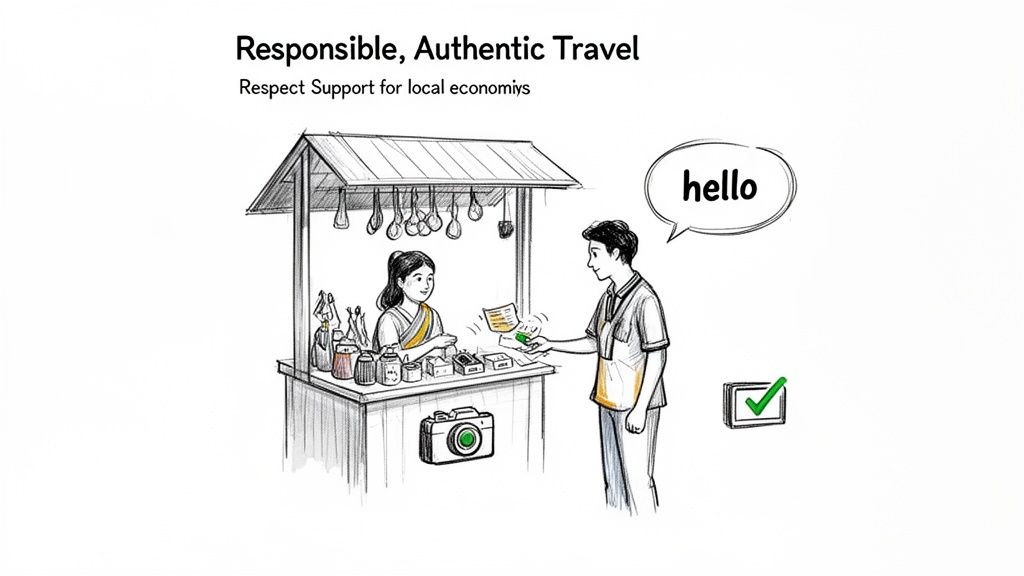
This isn’t just a feel-good gesture; the economic impact is massive. Travelers are already spending somewhere between $250 billion to $310 billion every single year on activities that help them live like a local. And that number is only going up, with experts predicting this slice of the travel pie will grow by over 14% annually through 2025. It’s a clear signal that a new generation of travelers wants more than just a souvenir.
A Practical Guide to Respectful Interaction
Beyond where you spend your money, responsible travel is all about how you show up. The aim is to be a welcome guest, not an awkward, intrusive observer. It just comes down to being mindful of how your actions land with the people around you.
A few simple guidelines can make a world of difference:
- Ask Before You Snap: Always, always ask permission before taking photos or videos of people, especially children. A simple smile and a gesture toward your camera is a universal language.
- Learn a Few Phrases: You don’t need to be fluent, but making an effort to say "hello," "thank you," and "please" in the local language shows you care. It opens doors and earns you warmer smiles.
- Dress Appropriately: Take a few minutes to research local customs on dress, especially if you’re visiting religious sites. What’s normal back home might be seen as disrespectful elsewhere.
This simple foundation of respect is the bedrock of any full cultural experience. If you want to dive deeper into navigating new cultures, check out our guide on cultural immersion travel.
Minimizing Your Footprint
Part of being a responsible traveler is leaving a place just as good as you found it—or maybe even a little better. This means thinking about your environmental impact, too. Simple swaps, like packing some eco-friendly travel products, can make a huge difference. Think a reusable water bottle to cut down on plastic waste or reef-safe sunscreen to protect delicate marine life.
Responsible travel is the bridge between seeing a place and becoming a part of it. It’s a conscious choice to ensure your presence is a positive force, enriching both your journey and the community you visit.
At the end of the day, authentic travel and responsible travel are two sides of the same coin. When you embrace these ethical practices, you’re not just honoring the local culture—you’re deepening your own immersive experience. You stop being just another tourist and start becoming a thoughtful, engaged traveler. And those are the kinds of memories that truly last.
Your Next Adventure Starts with Local Insight
Think back to your best travel memory. Chances are, it wasn't about ticking off another monument from a list. The moments that stick with us come from real human connection—the joy of seeing a place through the eyes of someone who calls it home. This kind of immersive experience isn't just for hardcore explorers; it's for anyone ready to trade passive sightseeing for real participation.
This desire for deeper, more meaningful trips is changing how we see the world. Experiential travel is absolutely booming, expected to hit $988.5 billion this year alone as travelers choose cooking with a local family or learning a traditional craft over another generic bus tour. With online bookings set to grab 76% of this market by 2030, knowing where to get genuine knowledge from a local guide is everything. You can dig into more of these travel industry trends on infosys.com.
The best souvenirs aren't things you buy; they're the stories you collect and the perspectives you gain. Authentic travel is about enriching your life, not just filling a camera roll.
Ready to leave the tourist trail behind? CoraTravels gives you the insider knowledge you need to plan a trip that’s respectful, immersive, and truly unforgettable. Let's start building a better way to explore the world, together.
A Few Final Questions on Authentic Travel
Even seasoned travelers have questions when they're trying to go deeper. Here are a few common ones we hear, with practical answers to help you plan your next trip with a bit more confidence.
How Can I Find a Local Guide I Can Actually Trust?
Finding a great local guide is simpler than you’d think, but it means looking in the right places. Skip the big international tour companies and search for community-based tourism projects or small, family-run operators in your destination. Digging through recent posts on independent travel blogs or niche forums often uncovers the real gems.
Remember, the best guide isn't just a walking fact-book. They're a cultural bridge—someone who gives you context, shares their own stories, and helps you navigate local customs without making a fool of yourself. They are your ticket to getting truly off the beaten path.
What If I Don't Speak the Language?
Don't let a language barrier scare you off. Honestly, it can sometimes lead to the most real and hilarious interactions. Just learning a few key phrases—"hello," "thank you," "sorry"—shows you’re making an effort, and that goes a long way with locals.
A few things that actually work:
- Translation Apps: Google Translate is a lifesaver for quick, practical things like ordering food or asking for directions.
- Gestures and a Smile: It sounds cheesy, but non-verbal cues are universal. You can get surprisingly far with pointing and a friendly expression.
- A Small Notebook: When all else fails, writing down numbers or an address can clear things up instantly.
Trying and failing is part of the immersive experience.
The point of authentic travel isn't to have a perfect, frictionless trip. It’s to connect. A language gap often turns into a moment of shared laughter and creative problem-solving, which you'll remember far longer than a perfectly smooth chat.
Is It Really Safe to Go Off the Beaten Path?
Stepping outside of main touristic places is where the magic happens, but it does require some basic street smarts. Before you go exploring a new neighborhood, do a little research. Understand how the local buses or trains work, and most importantly, trust your gut. If a situation feels off, it probably is.
Always let a friend know your general itinerary, and have the local emergency numbers saved in your phone. Using a verified local guide is one of the surest ways to explore new areas safely and respectfully.
Ready to trade the guidebook for genuine connection? CoraTravels connects you with trusted, on-the-ground knowledge so you can discover your own authentic travel experiences with confidence. Find your next adventure at https://coratravels.com.