Seoul pulses with a vibrant energy that extends far beyond its glittering skyline and K-pop fame. While many guidebooks point to grand palaces and bustling shopping streets, the city's true soul lives in its quiet hanok alleys at dawn, the sizzle of a generations-old tteokbokki recipe in a crowded market, and the shared melodies in a neighborhood noraebang. This guide is designed for the culturally curious traveler seeking to understand the rhythm of local life, from morning mountain hikes to late-night street tent gatherings. It’s for those who want to find truly fun things to do in Seoul by experiencing the city as its residents do.
We will bypass the surface-level attractions to focus on immersive experiences that reveal how Seoulites actually live, work, and play. This is not just a list of places; it's a practical blueprint for a deeper connection with the city. You'll learn not only what to do, but how to do it respectfully and authentically. We provide actionable advice, from navigating the etiquette of a traditional tea house to understanding the unwritten rules of a local pojangmacha.
This curated collection offers a genuine look into the city's heart, focusing on off-the-beaten-path discoveries and the cultural nuances that make for a respectful, enriching journey. Expect specific mini-itineraries, transit tips, and local-approved insights that transform a standard trip into a memorable cultural immersion. Our goal is to equip you with the knowledge to step off the tourist trail and confidently explore the dynamic, authentic, and endlessly fascinating layers of modern Seoul.
1. Explore Bukchon Hanok Village Like a Local
While many tourists visit Bukchon Hanok Village, one of the most fun things to do in Seoul is to experience it not as a museum, but as a living neighborhood. This approach involves stepping off the main, crowded thoroughfares and venturing into the quiet, residential alleyways where locals live, work, and relax. Here, you’ll find the true heart of the village: centuries-old hanok homes with residents tending to their gardens, hidden artisan workshops, and intimate tea houses.
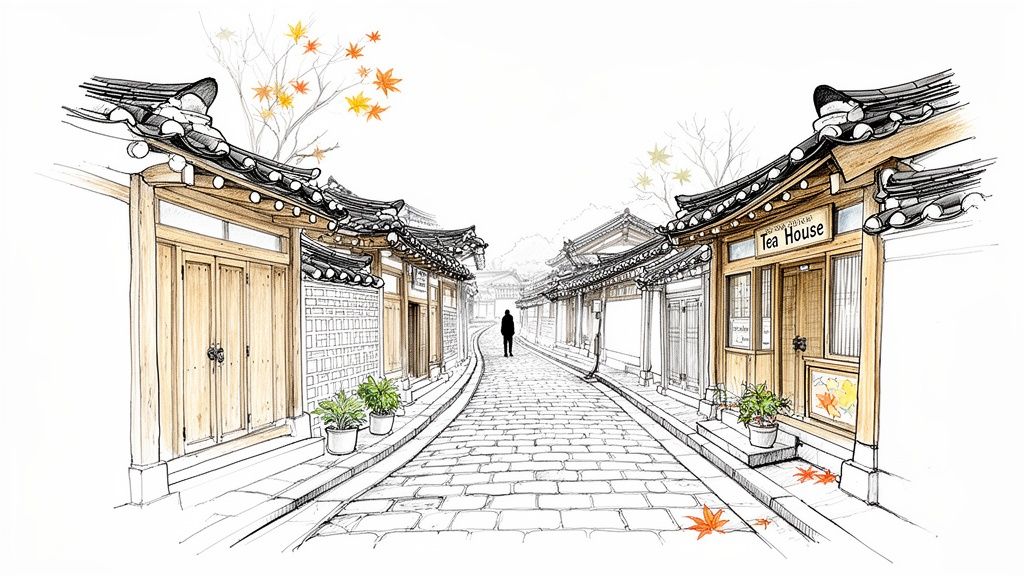
This method transforms a typical sightseeing stop into an immersive cultural experience. Instead of just taking photos, you're observing the delicate balance of history and modern life. Discovering a family-run restaurant tucked away in a restored home or stumbling upon the Gahoe Museum, which showcases folk art within a traditional setting, provides a much deeper connection to Seoul's heritage than sticking to the main photo spots.
How to Do It Right
To truly explore like a local, timing and mindset are key. This is a residential area, so respectful observation is paramount.
- Go Early: Arrive between 7 AM and 9 AM to experience the serene morning atmosphere before tour buses unload. You'll see residents starting their day and have the cobblestone streets almost to yourself.
- Wander Purposefully: Instead of following the main tourist route, pick a small side street on your map and follow it. Don't be afraid to get a little lost; the best discoveries are often accidental.
- Engage Respectfully: Ask a local shopkeeper for a recommendation for a teahouse or a quiet spot. This small interaction can lead you to hidden gems like Dasanhill, a local favorite.
- Look for Details: Notice the intricate roof tiles, the wooden door carvings, and the small potted plants that residents use to decorate their homes. These details tell the story of the neighborhood.
2. Street Food Crawl Through Myeongdong & Namdaemun Markets
One of the most authentic and fun things to do in Seoul is to embark on a street food crawl through its bustling markets. This isn't just about grabbing a quick bite; it's an immersive dive into the city’s culinary soul, where multi-generational vendors share recipes passed down for decades. In places like Myeongdong and Namdaemun, you'll find the vibrant intersection of local life and visitor curiosity, all centered around delicious, freshly-made food.
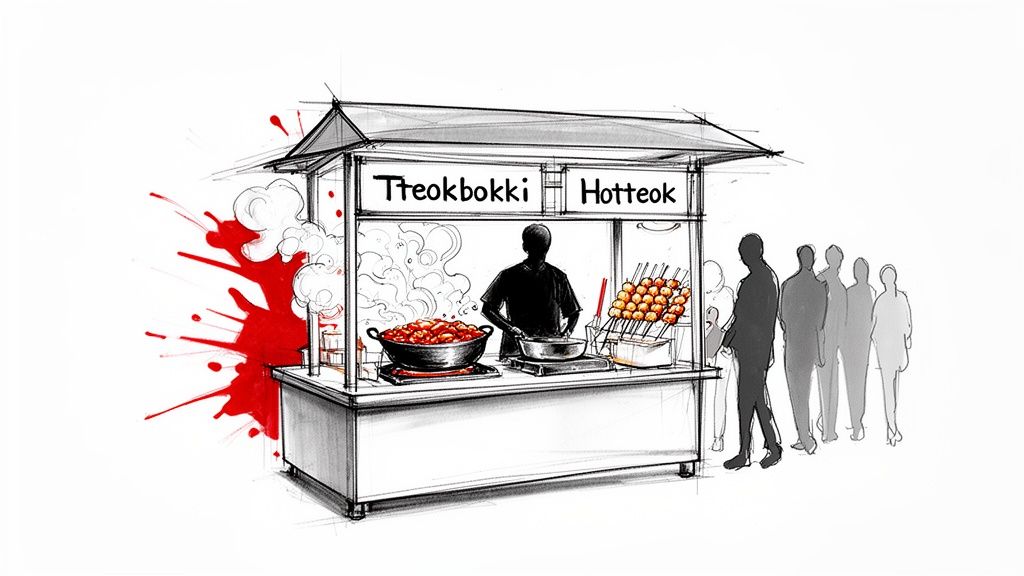
This approach transforms a simple meal into a dynamic cultural exploration. Instead of sitting down at one restaurant, you'll wander through lively lanes, sampling a variety of dishes and observing vendors' incredible skills. You might discover a Namdaemun stall that has served the same tteokbokki (spicy rice cakes) recipe for over 40 years or a legendary hotteok (sweet pancake) vendor at a market entrance. For food enthusiasts, exploring these markets is one of the best experiences for foodies in South Korea.
How to Do It Right
To navigate these markets like a pro, a little strategy goes a long way. This ensures you get the best tastes without feeling overwhelmed.
- Time Your Visit: Arrive mid-morning (10-11 AM) or on a weekday evening to avoid the largest crowds. This gives you more space to watch vendors and enjoy your food.
- Carry Small Cash: While Seoul is a high-tech city, many street food vendors are cash-only. Having small bills (1,000 and 5,000 won) makes transactions quick and easy.
- Sample Strategically: Plan to try 3-4 smaller items, like grilled cheese lobster or tornado potatoes, rather than filling up on one large meal. This allows for a wider tasting experience.
- Watch and Learn: Take a moment to watch the vendors prepare their specialties. This is not only entertaining but also a great way to gauge freshness and hygiene.
3. Hiking Namsan & Seoul Fortress Wall Trails
While Namsan Tower is a famous landmark, one of the most authentically fun things to do in Seoul is to experience the mountain itself by hiking its network of trails. This transforms a simple sightseeing trip into an immersive natural and historical journey, joining locals who use the park as their daily urban escape. Instead of taking the cable car, you'll discover ancient fortress walls, seasonal wildflowers, and quiet viewpoints that offer a different perspective on the bustling city below.
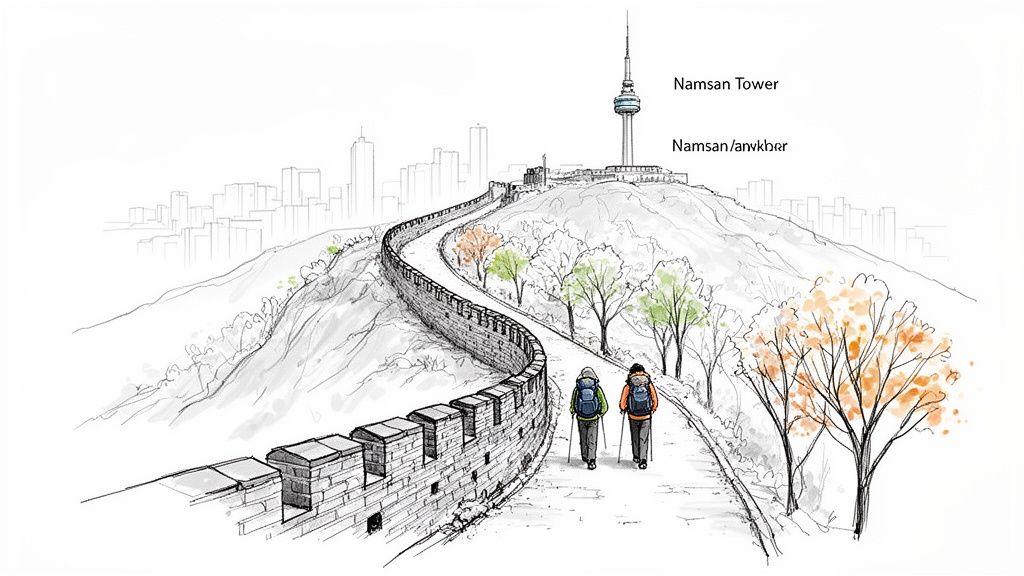
This approach lets you connect with Seoul's deep-rooted hiking culture and its history simultaneously. Following the remnants of the Seoul Fortress Wall (Hanyangdoseong) offers a tangible link to the Joseon Dynasty, weaving through forest paths that suddenly open up to panoramic cityscapes. You might find a hidden temple or a traditional restaurant near the summit, turning a physical activity into a rich cultural exploration far from the typical tourist crowds at the tower's base.
How to Do It Right
To hike Namsan like a resident, focus on preparation and timing. The goal is to enjoy the journey, not just the destination.
- Start Early: Begin your hike between 6 AM and 8 AM. This allows you to experience the crisp morning air and the peaceful atmosphere alongside local elders getting their daily exercise.
- Choose Your Route: For an easy, popular walk, take the main Namsan Park trail. For a more historical hike, follow the section of the Seoul Fortress Wall that loops around the mountain.
- Wear Proper Shoes: Don't underestimate the terrain. The paths can be steep and uneven with rocky sections. Sturdy walking or hiking shoes are essential for a safe and comfortable experience.
- Navigate with Naver Maps: Google Maps is less effective in Korea. Use the Naver Map app to see detailed trail routes, find trailheads, and even check real-time crowd levels.
- Visit Mid-Week: If possible, plan your hike for a weekday morning. You’ll find the trails significantly quieter, offering a more serene and personal connection with nature and the city views.
4. Temple Stay & Meditation at Jogyesa or Bongeunsa
Beyond the city's neon-lit energy, one of the most uniquely fun things to do in Seoul is to find stillness through a temple stay. This isn't just a tour; it’s an immersive program where you live alongside monks, participating in their daily routines of meditation, chanting, and communal temple meals. This experience offers a profound glimpse into the spiritual backbone of Korean culture, moving far beyond a typical sightseeing visit.
Engaging in this tradition at a major urban temple like Jogyesa or Bongeunsa provides a stark, beautiful contrast to the bustling city outside its walls. By participating in a formal program, you are invited into a closed world, learning the philosophies of Korean Buddhism directly from its practitioners. Instead of just observing ancient rituals, you become a part of them, from the pre-dawn wake-up calls to the reflective, silent meals.
How to Do It Right
To gain the most from this spiritual and cultural immersion, preparation and the right mindset are essential. This is a chance to disconnect from the outside world and connect with a deeper part of Korean heritage.
- Book in Advance: Popular programs at temples like Bongeunsa or the official Templestay at Jogyesa often fill up. Reserve your spot online at least one to two weeks ahead, especially for overnight stays.
- Dress for Respect: Wear comfortable, loose-fitting clothing that covers your shoulders and knees. Avoid shorts, sleeveless tops, and overly bright apparel. The provided temple uniform is worn over your clothes.
- Arrive Early: Be at the temple at least 15 minutes before your program begins for orientation. This is when you'll learn about temple etiquette, including how to bow and navigate the sacred grounds.
- Engage with Intention: Use the opportunity to ask monks thoughtful questions about their spiritual practice or the history of the temple. Show genuine curiosity and respect their time and knowledge.
- Embrace the Rules: Photography is often restricted during ceremonies and meditation to maintain a contemplative atmosphere. Always ask for permission before taking photos of monks or sacred interiors.
5. Experience Noraebang Culture Like a True Seoulite
While karaoke exists worldwide, participating in noraebang is one of the most authentically fun things to do in Seoul because it’s a deeply ingrained social ritual. This isn’t about performing for strangers; it’s about sharing a private, soundproof room with friends or colleagues to bond, celebrate, or decompress. Experiencing it locally means understanding it as a crucial part of social life, from post-dinner gatherings to team-building events.
This approach shifts the activity from a simple tourist novelty to a genuine cultural immersion. Instead of just singing, you're participating in a routine that defines Seoul’s nightlife and social fabric. Discovering a neighborhood noraebang filled with locals or trying a PC room combo where gaming sessions seamlessly transition into singing offers a genuine glimpse into how modern Seoulites connect and unwind, far from typical tourist circuits.
How to Do It Right
To truly dive into noraebang culture, your approach and choice of venue matter. It’s a group activity, so embracing the social dynamic is essential.
- Go Socially: Noraebang is best experienced with a group, not solo. It's designed for shared energy and camaraderie, which is central to the local experience.
- Choose Wisely: Opt for noraebangs on the second floor or higher. These often have better sound systems and are cleaner than ground-floor or basement establishments.
- Time It Right: For the authentic nightlife vibe, arrive after 9 PM. Earlier hours are often popular with students. Booking a minimum of one to two hours is standard, as anything less feels rushed.
- Mix Your Playlist: Don't stick only to English hits. Select a mix of K-pop, classic Korean ballads, and Western pop to share in the diverse musical tastes of the group and fully engage in the experience.
6. DJ Bars & Live Music in Hongdae & Itaewon
Beyond the mainstream K-pop clubs, discovering Seoul’s independent music scene is one of the most fun things to do for an authentic night out. Hongdae and Itaewon are the epicenters of this creative culture, offering intimate venues where emerging artists, underground electronic DJs, and international musicians connect with dedicated audiences. This experience trades large, impersonal clubs for the raw energy of live performances and the curated vibes of DJ bars.
This approach offers a genuine window into the city's subcultures. Instead of hearing the same top-40 hits, you're experiencing the sounds that are shaping Seoul's underground. Finding a legendary indie spot like Club FF in Hongdae or an electronic haven like Itaewon's Tinch Club allows you to connect with the local creative community, see future stars before they break, and enjoy a night driven by pure musical passion rather than commercial trends.
How to Do It Right
To properly dive into the live music scene, a little planning and an open mind are essential. These are spaces for music lovers, so showing respect for the artists is key.
- Check Lineups: Before you go, check the venue's social media (usually Instagram) for the weekly schedule of performers and DJ sets. This ensures you find a genre that matches your taste.
- Arrive Early-ish: Aim for 9 PM to 10 PM. This lets you secure a good spot, grab a drink without a long wait, and settle in before the main acts start and the venue fills up.
- Embrace the Unfamiliar: Don’t just stick to what you know. Ask the bartender or a local for recommendations on which artist to see or which hidden venue to check out next.
- Bring Cash: Many smaller, independent venues are cash-only or prefer it, especially for cover charges or merchandise from the artists.
- Go Midweek: For a more focused musical experience, visit on a Wednesday or Thursday. You'll find a crowd of dedicated fans rather than the larger, more casual weekend crowds.
7. Immerse Yourself in Namsangol Hanok Village & Tea Culture
While Gyeongbok Palace gets the spotlight, one of the most authentically fun things to do in Seoul is to experience a curated piece of history at Namsangol Hanok Village. Located at the base of Namsan Mountain, this village is less of a residential area and more of a living museum, featuring five beautifully restored traditional Korean houses relocated from different parts of the city. This setting allows for a focused immersion into Joseon-era life without the residential restrictions of other villages.
This approach trades spontaneous wandering for structured cultural programming. Here, you can step inside the Seo-seobo House to see the lifestyle of a wealthy merchant family or watch artisans at work in the Choi Tae-won House. The village’s main draw is its hands-on cultural activities, from traditional games and craft workshops to seasonal celebrations for Lunar New Year and Chuseok, offering a direct and engaging connection to Korean heritage.
How to Do It Right
To make the most of Namsangol, focus on its unique programming and timing. This is a space designed for learning and participation, so plan ahead to get fully involved.
- Attend a Tea Ceremony: The village offers traditional tea ceremonies. Book your spot at least a week in advance, especially during peak seasons, for a tranquil and educational experience.
- Time Your Visit: Arrive mid-morning between 9 AM and 11 AM. The crowds are smaller, and the morning light is perfect for photographing the intricate architectural details of the hanok.
- Engage with Guides: Don't just look; ask. The guides on-site can share fascinating stories about the original owners of each house and the specific architectural styles.
- Combine with Namsan: After immersing yourself in culture, take a hike up nearby Namsan Mountain. This creates a perfect full-day itinerary blending history with nature.
8. Food Tour of Gangnam's Hidden Alleyways & Local Restaurants
While Gangnam is famous for its upscale boutiques and modern skyline, one of the most fun things to do in Seoul is to uncover its hidden culinary scene. This involves bypassing the flashy main-street establishments and delving into the narrow alleyways where locals truly eat. Here, you’ll discover the district's authentic flavors: decades-old, family-run restaurants serving perfected recipes, sleek chef-driven bistros tucked away from the crowds, and lively eateries catering to the neighborhood's residents.
This approach transforms a simple meal into an exploration of modern Seoul's daily life. Instead of just dining out, you're experiencing the city's culinary evolution firsthand. Finding an ajumma-run kalguksu (handmade noodle) shop bustling with office workers or a specialty grilled meat restaurant near a residential apartment complex offers a much richer taste of local culture than sticking to tourist-centric guides. It’s about seeing how Seoulites live and eat, away from the international spotlight.
How to Do It Right
To truly eat like a local, you need to know where to look and what to ask for. This isn't just about food; it's about observing the rhythm of the neighborhood.
- Follow the Locals: The best time to find authentic lunch spots is between 11:30 AM and 1:30 PM. Look for places with lines of office workers, as these are almost always well-loved neighborhood staples.
- Explore Residential Pockets: Seek out restaurants near large apartment complexes. These eateries survive by serving residents daily, ensuring quality, authenticity, and reasonable prices.
- Hire a Neighborhood Expert: For a curated experience, consider a local food guide (around ₩60,000-₩80,000). Specify that you want to visit places locals frequent, not just famous spots.
- Be Specific with Concierge: When asking for recommendations, request their personal "local favorites for a weekday lunch" instead of general "tourist recommendations." The difference in suggestions can be significant.
9. Dive into Garosu-gil's Street Culture & Vintage Shopping Scene
While many travelers flock to Myeongdong, a more authentic and fun thing to do in Seoul is to immerse yourself in the city’s contemporary fashion identity in Garosu-gil and the surrounding Apgujeong and Cheongdam areas. This isn’t just shopping; it’s an exploration of modern Korean consumer culture, where tree-lined streets house a curated mix of international brands, independent designer boutiques, and hidden-gem vintage shops that tell the story of Seoul’s sartorial evolution.
This approach transforms a simple shopping trip into a cultural deep-dive. Instead of just buying souvenirs, you’re engaging with local trends and the passion projects of Seoul's fashion enthusiasts. Discovering a vintage consignment shop in Apgujeong run by a former stylist or exploring the flagship store of an emerging Korean designer in Cheongdam provides a much deeper connection to the city's creative pulse than visiting a large department store.
How to Do It Right
To experience this district like a local, you need to treat it less like a mall and more like a neighborhood gallery.
- Explore the Alleys: The main Garosu-gil strip is impressive, but the real magic lies in the sero-su-gil (vertical side streets). These narrower alleys are where you'll find independent boutiques and unique concept stores away from the crowds.
- Talk to Shop Owners: Visit on a weekday morning (around 10 AM) before it gets busy. Many shop owners are passionate designers or collectors; ask about a brand’s backstory to hear the personal narratives behind the fashion.
- Time Your Vintage Hunt: The best time for browsing vintage shops is Tuesday through Thursday. Weekends are packed, but mid-week offers a relaxed environment to sift through curated collections without feeling rushed.
- Shop and Socialize: Locals don’t just shop here; they spend hours socializing. Embrace this rhythm by combining your browsing with stops at aesthetically pleasing cafés. Plan to spend at least 3-4 hours to fully absorb the atmosphere.
10. Cheonggyecheon Stream Walk & Urban Renewal Discovery
While many visitors see Cheonggyecheon Stream as a pleasant downtown walk, one of the most fun things to do in Seoul is to experience it as a living testament to urban renewal and local life. This means looking beyond the main path to understand its transformation from a covered-over highway back into a vibrant ecological corridor. It's a space where Seoulites commute, exercise, date, and relax, offering a real-time glimpse into the city's modern culture.
This approach turns a simple stroll into an exploration of environmental design and community. Instead of just walking end-to-end, you can discover how the stream integrates with historic neighborhoods like Jongno and modern business districts in Jung-gu. Observing the seasonal art installations or catching a spontaneous musical performance reveals its role as a dynamic cultural artery, providing a much deeper appreciation for Seoul's innovative urban planning.
How to Do It Right
To experience Cheonggyecheon like a local, you need to treat it less like a single attraction and more like a connecting thread between diverse city experiences.
- Walk at Dawn or Dusk: Visit between 6 AM and 8 AM to join the local joggers, office workers on their commute, and tai chi groups. An evening stroll between 5 PM and 7 PM reveals the after-work crowd and couples enjoying the city lights.
- Explore the Banks: Step off the main stone path and wander into the adjacent neighborhoods. You can easily access the traditional markets of Gwangjang or the old-school tool shops of Euljiro from the streamside.
- Time it with Festivals: Check the local events calendar before your visit. The stream hosts numerous events, like the Seoul Lantern Festival in autumn, which completely transforms the atmosphere with incredible light displays.
- Follow the Tributaries: Look for smaller tributary streams that connect to the main waterway. These quieter paths often lead to hidden local cafes and less-trafficked green spaces, offering a peaceful escape.
11. Embrace Pojangmacha Culture for Late-Night Local Bonding
One of the most authentic and fun things to do in Seoul is diving into its pojangmacha (street tent) culture. These iconic orange tents are more than just street food stalls; they are spontaneous community hubs that come alive late at night. Here, you'll find locals unwinding after work or continuing a night out, sharing soju and conversation over simple, hearty dishes. This isn't just about eating; it's about participating in a grassroots social ritual.
Experiencing a pojangmacha is a direct window into the city's soul, far removed from polished restaurants. In busy areas like Myeongdong, you’ll find clusters serving tourist favorites like tteokbokki. For a more local feel, venture into neighborhood alleys where the menus are handwritten and the atmosphere is more intimate. This is where you can observe real, unfiltered Seoul life, a vibrant alternative to typical nightlife.
How to Do It Right
To properly immerse yourself in pojangmacha culture, a little preparation and the right etiquette go a long way. This is a fast-paced, cash-based environment.
- Best Time to Go: Visit between 11 PM and 1 AM on a Friday or Saturday. The energy is at its peak, creating a lively yet comfortable social atmosphere.
- Bring Cash: Most vendors operate on a cash-only basis. Have smaller bills ready to make payment quick and easy.
- Sit at the Counter: If space allows, sit at the main counter. This vantage point is perfect for observing the action and offers opportunities to interact with the vendor and other patrons.
- Order Simply: Start by ordering one or two well-known items like odeng (fish cake skewers) or dakkochi (chicken skewers). Ask the ajumma (older lady) or ajusshi (older man) for their specialty to build rapport.
- Be Mindful of Pace: These are high-turnover spots. Enjoy your food and drink, but be prepared to move on once you've finished so others can take your place.
12. Practical Tips for Experiencing Local Seoul
One of the most rewarding and fun things to do in Seoul is to move beyond the tourist checklist and engage with the city on a deeper, more local level. This approach means understanding the small nuances of daily life, from how to navigate a bustling market to the etiquette of visiting a quiet neighborhood. Adopting a few key local habits can completely transform your trip from a series of sightseeing stops into a genuine cultural immersion.
This mindset shift helps you connect with the city’s true rhythm. Instead of feeling like an outsider, you’ll find yourself navigating with confidence, discovering hidden gems, and having more meaningful interactions. Knowing when to visit popular spots to avoid crowds or carrying a bit of cash for street food vendors are small adjustments that yield a much richer and more authentic experience of Seoul's vibrant culture.
How to Do It Right
To truly experience Seoul like a resident, focus on practical preparations and a respectful mindset. These small efforts will significantly enhance your journey and open doors to more authentic encounters. To help make your trip more affordable, you can also check out quick travel deals that might apply to your Seoul adventure.
- Go Early or Mid-Week: Visit popular areas like markets and palaces between 7 AM and 9 AM or on a Tuesday/Wednesday to experience them with fewer crowds and more local shoppers.
- Carry Some Cash: While Seoul is highly modern, many traditional market stalls, small family-run restaurants, and pojangmacha (street food tents) prefer or only accept cash. Keep small bills handy.
- Use Local Navigation Apps: Google Maps has limitations in South Korea. Download Naver Map or KakaoMap for accurate directions, real-time transit information, and even crowd-level data.
- Learn Basic Phrases: A simple annyeonghaseyo (hello) and kamsahamnida (thank you) go a long way in showing respect and creating positive interactions with locals.
- Book Key Experiences in Advance: Popular activities like temple stays, traditional tea ceremonies, and sought-after restaurants often require reservations. Book these 1-2 weeks ahead to avoid disappointment. You will also want to come prepared with the right travel gear; you can read up on the specific power adapters needed for Korea here.
12-Item Comparison: Fun Things to Do in Seoul
| Experience | 🔄 Complexity | ⚡ Resources | ⭐ Expected outcome | 📊 Ideal use cases | 💡 Key tips |
|---|---|---|---|---|---|
| Explore Bukchon Hanok Village Like a Local | Moderate — self‑guided walking, navigation skills | Low — comfortable shoes, small cash, time | High authenticity ⭐⭐⭐⭐ — genuine residential culture | Cultural immersion, photography, artisan visits | Visit 7–9am; respect homes; explore side streets |
| Street Food Crawl Through Myeongdong & Namdaemun Markets | Moderate — crowded navigation, basic bargaining | Low — cash, appetite, flexible timing | High culinary authenticity ⭐⭐⭐⭐ — diverse, affordable eats | Food discovery, budget tasting, vendor interaction | Carry cash; go mid‑morning or weekday evening; sample several items |
| Hiking Namsan & Seoul Fortress Wall Trails | Variable — route dependent (easy → strenuous) | Low — hiking shoes, water, navigation app | Scenic + historical experience ⭐⭐⭐⭐ — views + exercise | Outdoor escape, views, historical trails | Start early; bring 1–2L water; use Naver Map |
| Temple Stay & Meditation at Jogyesa or Bongeunsa | Moderate — booking + observance of rules | Medium — program fee, modest packing, time | Deep cultural/spiritual immersion ⭐⭐⭐⭐ | Spiritual retreat, learning Buddhism, quiet reflection | Book 1–2 weeks ahead; wear loose clothing; expect early wakeups |
| Noraebang (Karaoke) Culture | Low — simple social activity | Low — hourly fee, group of friends | High social engagement/fun ⭐⭐⭐ — strong local vibe | Group bonding, nightlife, celebrations | Go with friends; arrive after 9pm; share the mic |
| DJ Bars & Live Music in Hongdae & Itaewon | Moderate — check lineups, possible cover charges | Medium — cover fee, drinks, late‑night transport | High artistic discovery ⭐⭐⭐⭐ — emerging music scenes | Discovering indie artists, solo travelers seeking nightlife | Check social media lineups; arrive early; bring cash |
| Namsangol Hanok Village & Traditional Tea Culture | Low — curated site with scheduled programs | Low — small fees for tea/workshops, advance bookings | Curated cultural understanding ⭐⭐⭐ — structured learning | Family visits, tea ceremony experiences, craft workshops | Book tea sessions; visit 9–11am; combine with Namsan hike |
| Food Tour of Gangnam's Hidden Alleyways & Local Restaurants | High — reservations, route planning, possible guide | High — tasting menus, guide fees, reservations | High culinary insight & quality ⭐⭐⭐⭐ | Food enthusiasts, fine‑dining exploration, guided tours | Reserve ahead; consider a local guide; try weekday lunch |
| Garosu‑gil Street Culture & Vintage Shopping | Low — casual strolling and browsing | Medium — variable spending, time for boutique browsing | Fashion & lifestyle insight ⭐⭐⭐ — trend observation | Shopping, café culture, trend‑spotting | Visit mornings; explore side alleys; ask owners about brands |
| Cheonggyecheon Stream Walk & Urban Renewal Discovery | Low — easy, accessible walk with many entrances | Low — free, minimal gear | Urban planning & leisure insight ⭐⭐⭐ — restorative city space | Leisurely strolls, urban renewal study, commuting locals | Walk 6–8am for locals; check festival schedule and water quality |
| Pojangmacha (Street Tent) Culture & Late‑Night Bonding | Moderate — late hours, crowded social norms | Low — cash, tolerance for noise, late‑night transport | High nightlife authenticity ⭐⭐⭐⭐ — grassroots socializing | Late‑night socializing, casual food culture, local bonding | Go 11pm–1am weekends; sit at counter; bring cash |
| Practical Tips for Experiencing Local Seoul | Low — applies across activities | Low — cash, local apps, sensible clothing | Strong improvement in overall experience ⭐⭐⭐⭐ | Planning, safety, timing across all activities | Use Naver/KakaoMap, carry small cash, prefer early/mid‑week visits |
Making Your Seoul Story Your Own
Seoul is a city that reveals itself in layers. Beyond the shimmering skyscrapers and bustling main avenues lies a metropolis defined by its intricate alleyways, ancient traditions, and the vibrant, everyday rhythms of its people. This guide has journeyed through a curated selection of truly fun things to do in Seoul, moving past the surface-level attractions to offer a blueprint for genuine connection. We’ve explored how to respectfully wander the quiet lanes of Bukchon Hanok Village, decipher the unwritten rules of a Myeongdong street food crawl, and find serene moments along the ancient Seoul Fortress Wall.
The true magic of this city isn't just in what you do, but how you do it. It's about embracing the local way of life, whether that means belting out a K-pop anthem in a Hongdae noraebang or sharing soju and stories with new friends in a pojangmacha tent. By choosing to hike Namsan at sunrise or participate in a meditative temple stay, you are actively stepping into the flow of Seoul's daily life, creating a travel experience that is both immersive and deeply personal.
Key Takeaways for an Authentic Seoul Adventure
To transform your trip from a simple vacation into a memorable story, keep these core principles at the forefront of your planning:
Embrace the Hyper-Local: The most unforgettable experiences often hide just one block away from the main tourist drag. Venture into the back alleys of Gangnam for authentic cuisine, explore the vintage shops tucked away from Garosu-gil’s main street, and seek out the smaller, neighborhood noraebangs. This is where the city's true character shines.
Balance Energy with Serenity: Seoul’s dynamism is electrifying, but its moments of peace are just as vital. Punctuate high-energy nights in Itaewon with a contemplative walk along the Cheonggyecheon Stream or a traditional tea ceremony in Namsangol Hanok Village. This balance is key to understanding the city's complex soul.
Observe and Participate Respectfully: From temple etiquette to the unspoken rules of sharing food at a market stall, mindful observation is your greatest tool. Locals appreciate visitors who show genuine interest and respect for their customs. This approach doesn't just prevent missteps; it opens doors to warmer, more authentic interactions.
Your Next Steps: From Inspiration to Itinerary
You now have a framework for discovering the most authentic and fun things to do in Seoul. The next step is to weave these ideas into a personalized itinerary. Don't feel pressured to do everything; instead, select the experiences that resonate most with your travel style.
Map Your Interests: Are you a foodie, a history buff, a night owl, or an urban explorer? Pin your top 3-5 activities from this list on a map to see how they cluster geographically. This will help you build efficient and logical daily plans.
Create Thematic Days: Structure your days around a theme. For example, a "Traditional Seoul Day" could include a morning at Bukchon Hanok Village, an afternoon tea ceremony, and an evening exploring a local market. A "Modern Seoul Day" might involve cafe hopping in Hongdae, exploring Garosu-gil's boutiques, and finishing with live music.
Leave Room for Spontaneity: The best travel stories are often written in the unplanned moments. Leave gaps in your schedule to simply wander, follow a curious-looking alleyway, or accept a recommendation from a local. This flexibility is where you'll find the hidden gems that make your Seoul story uniquely yours.
By moving beyond the checklist and embracing the city with curiosity and respect, you will uncover a Seoul that is far more rewarding than any guidebook can capture. You will not just see Seoul; you will experience it, becoming a part of its ever-evolving narrative, even if just for a short while.
Planning a trip this detailed can be overwhelming, but you don't have to do it alone. At CoraTravels, we specialize in crafting custom itineraries that connect you with the authentic, local experiences detailed in this guide. Let us help you build your perfect Seoul adventure, from hidden food tours to off-the-beaten-path cultural encounters, by visiting us at CoraTravels.