Living in Montreal is a tale of two continents—it’s got that North American get-it-done drive, but its heart beats with a distinctly European rhythm. It’s a city where the phrase joie de vivre, or "joy of living," isn't just a quaint saying; it's baked into the culture. You feel it in the city’s creative pulse, its love for festivals, and a community spirit that truly comes alive over food and art.
This is a place that gives you permission to slow down and savor the moment, even while offering all the buzz of a major city.
What Is It Really Like Living in Montreal
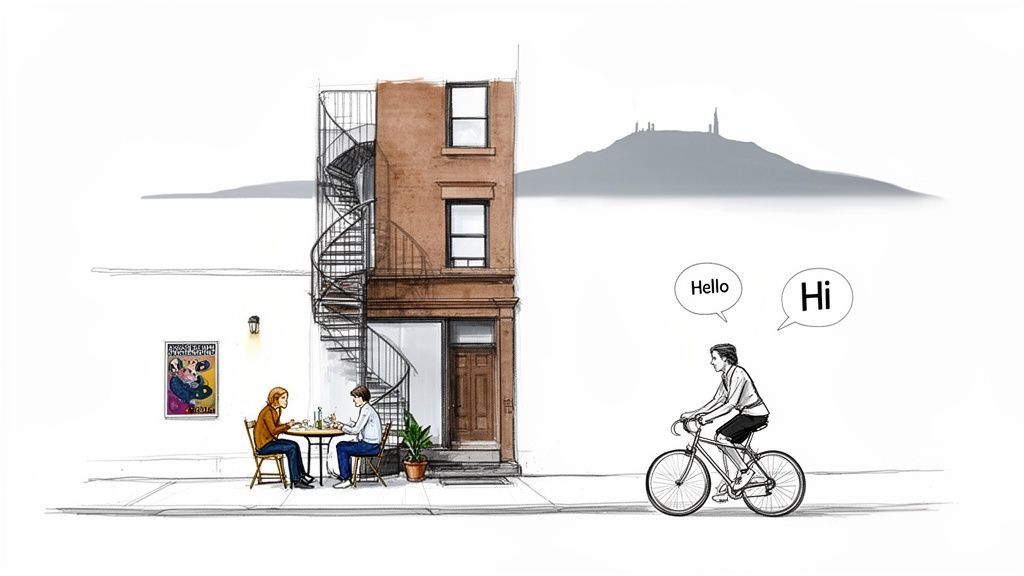
Look past the famous spiral staircases and the charming cobblestone streets of Old Montreal, and you’ll find a city with a complex, captivating soul. Life here just moves differently. It values community and connection over the relentless hustle you might find in other big North American hubs.
To get what it’s really like to live here, you have to go beyond the tourist brochures. It’s about the little rituals: finding your go-to boulangerie for a perfect morning croissant, knowing the best bike paths along the Lachine Canal, and mastering the friendly "Bonjour" that opens doors and sparks warmer conversations.
The True Heartbeat of the City
At its core, Montreal's identity is proudly Francophone, but it's a culture that’s been shaped and enriched by decades of immigration. The result is a vibrant social fabric where you can hear a dozen different languages on a single metro ride. The city's real heart, though, beats in its neighbourhoods—each one a mini-village with its own distinct personality and local haunts.
Life in Montreal isn't just about where you live; it's an immersive experience. It's about embracing a lifestyle where art, food, and community aren't just amenities—they're the very pillars of daily existence.
This guide is designed to get you off the beaten path and into the real city. Forget the main tourist drags; we're diving into the things that truly define the Montreal experience for a local.
- A Bilingual Soul: We’ll get into how language really shapes day-to-day life and social norms here.
- Thriving Independent Spirit: You'll discover the indie arts, music, and food scenes that give the city its unique character.
- Community and Festivals: Learn how Montrealers come together, from packed summer street festivals to enchanting winter light shows.
- Seasonal Living: Get a feel for how locals don’t just survive the dramatic four seasons—they celebrate them.
Think of this as your primer for seeing the city through a resident's eyes, giving you a real sense of the daily rhythm and cultural quirks that make Montreal, Montreal.
Finding Your Niche in Montreal's Neighbourhoods
Choosing where to live in Montreal isn't about finding an address; it's about finding your people. The city is a patchwork of fiercely distinct neighbourhoods, each with its own rhythm and personality. Once you move past the postcard views of the Old Port, you’ll find the real soul of the city in the boroughs where daily life actually happens.
This is less about picking a dot on a map and more about imagining your daily routine. Are you sipping an espresso on a Mile End sidewalk patio, biking the Lachine Canal in Saint-Henri, or grabbing fresh produce for dinner at a market in Verdun? Let's take a walk through a few of the city’s most loved corners to help you find the one that feels like home.
Plateau-Mont-Royal: The Artistic Heart
The Plateau is what most people picture when they think of Montreal, and for good reason. Its colourful façades and iconic spiral staircases are the city's signature look. This is the vibrant, dense hub for artists, students, and young professionals drawn to its creative buzz and bohemian vibe.
Life here pulses along its main arteries—Avenue du Mont-Royal and Boulevard Saint-Laurent—which are packed with indie boutiques, quirky cafés, and legendary smoked meat and bagel shops. But just one street over, you can always find a quiet, tree-lined residential block that feels like a peaceful retreat from the action.
- The Vibe: Artsy, bohemian, and buzzing with a youthful, restless energy.
- Best For: Anyone who wants to be in the middle of it all, with endless food, shopping, and nightlife right on their doorstep.
- Local Tip: Ditch the crowds and explore the ruelles vertes (green alleyways). These community-run gardens tucked behind the apartment blocks are a true local secret.
Mile End: The Creative and Intellectual Hub
Just northwest of the Plateau, Mile End has carved out its own distinct identity. It’s a haven for musicians, writers, and tech innovators, feeling more like a self-contained village where creativity is the main currency. This is where you'll find the legendary bagel rivalry between St-Viateur and Fairmount, iconic music venues, and some of the best third-wave coffee in North America.
The neighbourhood’s character is shaped by its diverse roots, mixing a historic Jewish community with a new wave of digital nomads. The vibe is laid-back but intellectually charged, perfect for someone who appreciates a good bookshop as much as a good bar. Everything is ridiculously walkable, which fosters a genuine sense of community.
Saint-Henri: The Evolving Foodie Destination
Once a working-class industrial neighbourhood, Saint-Henri has completely reinvented itself into one of Montreal's most exciting spots. Tucked along the Lachine Canal southwest of downtown, it nails that perfect blend of historic grit and modern culinary ambition. Its main drag, Rue Notre-Dame Ouest, tells the whole story: you'll find some of the city’s hottest restaurants right next to old-school diners and antique shops.
Choosing a neighbourhood in Montreal is really about choosing a lifestyle. Each pocket of the city offers a different pace, a different community, and a totally different way to experience Montreal's famous joie de vivre. Find the one that matches your personal rhythm.
This area is a magnet for young professionals and food obsessives who love its unpretentious but sophisticated feel. Being so close to the Atwater Market and the beautiful canal bike paths adds a heavy dose of outdoor charm to its urban appeal, making it an amazing all-around place to live.
Verdun: The Laid-Back Riverside Gem
Just south of Saint-Henri, Verdun offers a much more relaxed, community-focused vibe with one major selling point: the river. Once an overlooked borough, it’s now one of the city’s most desirable places to live, thanks to its relatively affordable housing, huge green spaces, and a thriving main street, Wellington.
You'll find a lot of young families and people looking for a better work-life balance here. The pedestrian-friendly streets, a public beach, and tons of parks give it a bit of a suburban feel right inside the city. It’s this mix of urban convenience and access to nature that really defines the Montreal lifestyle.
This urban density is what makes Montreal tick. The metro area is home to around 4.3 million people as of 2025, so it's always buzzing. With a density of 4,517 people per square kilometer in the city proper, the neighbourhoods feel alive and connected. The median age is just 38.8, younger than many other North American cities, and with 41.57% of the population under 35, you can feel that youthful energy fueling the indie shops, craft breweries, and late-night poutine runs. For a deeper dive into how demographics shape the city, check out the stats at CanadaCrimeIndex.com.
What It Really Costs to Live Here
Montreal has a reputation for being one of North America’s most affordable big cities, especially when you glance at rental prices in Toronto or Vancouver. But what does that feel like day-to-day? Cheaper rent is a huge part of the equation, but the true picture includes everything from your weekly grocery run at the Jean-Talon market to enjoying a poutine on a terrasse during festival season.
Let's get past the abstract numbers and map out what your money actually buys you in this city. A good plan means you can move here with confidence, knowing you won’t have any expensive surprises when that first hydro bill arrives.
The city’s energy comes from its people—a dense, relatively young population that keeps the culture vibrant and the rental market in certain neighbourhoods... competitive.
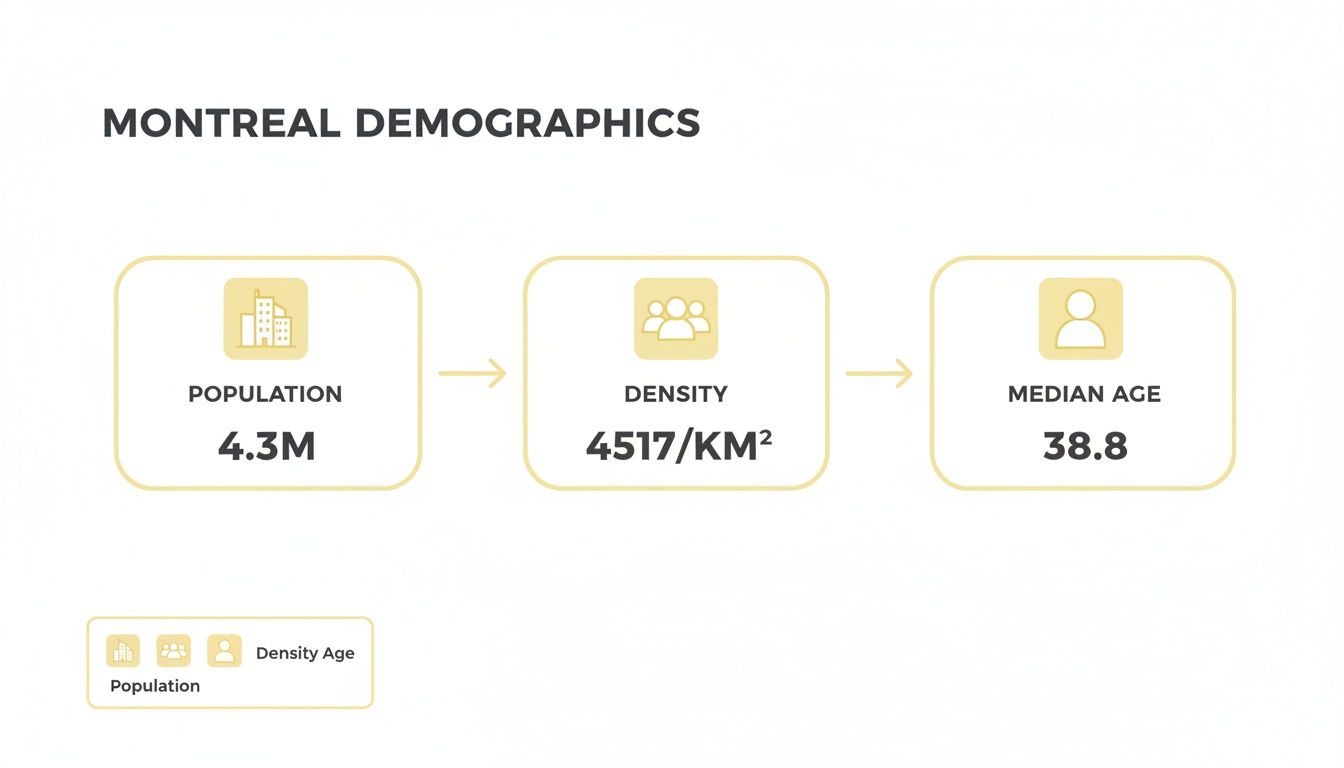
This mix is what fuels both the city’s incredible social scene and the hustle required to find a great apartment in the Plateau or Mile End.
Building Your Monthly Budget
To get a real sense of the numbers, let's sketch out a couple of sample monthly budgets for a single person. Think of these as a starting point; you can easily tweak them based on whether you prefer home-cooked meals or dining out, or if you land an apartment in a pricier spot.
Here’s a look at two common lifestyles and what they might cost.
Sample Monthly Budget for Living in Montreal
| Expense Category | Frugal Lifestyle (CAD) | Comfortable Lifestyle (CAD) |
|---|---|---|
| Rent (Shared vs. 1-BR) | $750 - $950 | $1,500 - $1,900 |
| Utilities (Hydro/Heating) | $60 - $90 | $100 - $150 |
| Internet & Phone | $50 - $80 | $100 - $140 |
| Groceries | $300 - $400 | $500 - $700 |
| Public Transport (OPUS) | $97 | $97 |
| Entertainment & Dining | $150 - $250 | $400 - $600 |
| Estimated Total | $1,407 - $1,867 | $2,697 - $3,587 |
These numbers give you a solid baseline. A "frugal" lifestyle probably means roommates and more picnics in Parc La Fontaine, while a "comfortable" budget allows for your own one-bedroom and regular nights out.
Beyond the Basics: What Life Really Costs
A budget is more than just rent and utilities; it’s about funding the experiences that make living in Montreal so incredible. You have to factor in the "fun" stuff from the get-go.
The real cost of living here isn’t about survival—it's about participation. Your budget for museum visits, festival tickets, and evenings on a terrasse is just as important as your hydro bill.
Here are a few common expenses to keep in mind:
- Dining Out: A meal at a casual BYOW (Apportez Votre Vin) spot will run you $30-$50. A nicer dinner for two can easily hit $100-$150.
- Groceries: Sticking to the big public markets like Jean-Talon or Atwater can save you money on fresh produce. A solid weekly grocery haul for one person is usually $75-$125.
- Entertainment: A pass for a major festival like Osheaga is a big-ticket item, but countless neighbourhood street fairs and events are completely free.
This balance between affordability and a rich cultural life is exactly why Montreal is one of the best cities for remote workers. You can build a fantastic life here without the financial pressure of other major hubs. It's all about planning for both your needs and your wants.
Navigating the Local Culture and Language
To really settle into Montreal, you need to get a feel for its unique rhythm. The city runs on a blend of North American hustle and European appreciation for slowing down. It’s a place where a little effort to connect goes a very long way, and that connection starts with two simple words.
You'll hear "Bonjour-Hi" everywhere. Think of it as a linguistic handshake, an offer to speak either French or English. But if you want to break the ice and show you get it, always, always lead with a warm "Bonjour."
Seriously, this is the master key to the city. Starting with "Bonjour" acknowledges you're in a proudly Francophone place. Locals almost always appreciate the gesture and will happily switch to English if they sense you're struggling. This one small act of respect makes every interaction, from grabbing a coffee to asking for directions, feel warmer.
Unwritten Rules of Montreal Life
Beyond language, there's a certain etiquette to daily life here. These aren't laws, but they're the unspoken habits that keep the city moving and will help you feel less like a tourist.
- Tipping Culture: Just like the rest of North America, tipping is not optional. Plan to leave 15-18% at restaurants and bars for decent service. Forgetting to tip is seen as a major faux pas.
- Escalator Etiquette: This one is non-negotiable in the metro. Stand on the right, walk on the left. It’s a simple rule that keeps commuter traffic flowing, especially during the morning rush. Break it and you'll feel the collective glare.
- Summer 'Terrasses': The moment the snow melts, Montreal moves its social life outdoors onto its terrasses (patios). These aren't just places to get a drink; they are sacred spaces where locals celebrate the return of the sun. Joining in is a cherished city ritual.
Montreal’s culture isn’t about a rigid set of rules; it’s about a shared rhythm. Nailing these little things—from how you greet someone to where you stand on an escalator—is how you start to feel like you actually belong here.
Embracing the City's Multicultural Heart
Living in Montreal means diving headfirst into its incredible diversity. While French is the city's official language, you’ll hear over 120 languages spoken across its neighbourhoods. This blend is what gives Montreal its flavour, from the food in Côte-des-Neiges, where halal butchers are neighbours with Portuguese sardine grills, to the city's jam-packed calendar of cultural festivals.
But French is the city’s soul. With 85.7% of the 1.76 million residents fluent, Montreal is the largest French-speaking city in North America after Paris. This linguistic identity shapes daily interactions, especially in places like Jean-Talon Market, where vendors and shoppers haggle over produce in French.
The city's vibrant character is also shaped by its 31% visible minority population, with large Black, Arab, Latin American, South Asian, and Chinese communities woven into the urban fabric. To dig deeper, check out Montreal's diverse demographics on Wikipedia.
How to Thrive in Every Montreal Season
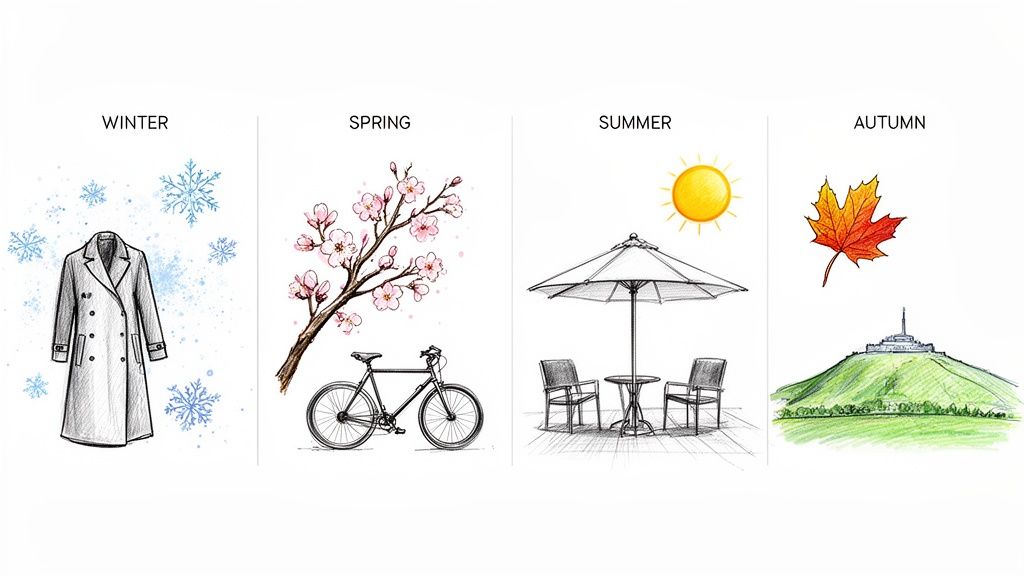
Montreal doesn't have four seasons; it has four completely different personalities, each with its own uniform and attitude. The real secret to loving life here is learning to roll with these dramatic shifts. It's not about toughing out the cold or surviving the humidity—it's about finding what’s uniquely incredible about each part of the year.
Think of this as your playbook for not just surviving, but actually enjoying the city's calendar. From layering like a pro for a bone-chilling January day to claiming your spot on a summer terrasse, here’s how to live like a Montrealer, all year round.
Mastering the Art of a Montreal Winter
Let's be honest: winter is what Montreal is famous for, and it can be a beast. Temperatures regularly hit -20°C (-4°F), and that's before the wind chill bites. But here's the thing—locals don't just disappear. We adapt. We find the magic in the frost.
The first rule is a local mantra: there’s no bad weather, only bad gear. A proper winter setup is completely non-negotiable.
- The Right Coat: You need a high-quality, insulated parka rated for serious cold. It should be waterproof, too. This isn't a fashion statement; it's your personal shield.
- Layering is Key: This is the big one. A thermal base layer, a fleece or wool mid-layer, and your outer coat. This system traps warm air and lets you peel off layers when you step into a sweltering metro station.
- Essential Accessories: Waterproof boots with solid grip are a must. Add a warm tuque (that's our word for a beanie), a scarf, and insulated gloves or mittens. This is your daily uniform from December through March.
Beyond your closet, the city itself gives you a brilliant way to cheat the cold. The RESO, which everyone calls the "Underground City," is a massive network of tunnels stretching over 32 kilometers. It connects metro stations, shopping centres, hotels, and universities, letting you cross a huge chunk of downtown without ever feeling the wind.
You don't just endure a Montreal winter; you embrace it. When the city is glowing for Montréal en Lumière or you're skating on a quiet neighbourhood rink, you realize the cold brings its own kind of warmth and community.
The Rebirth of Spring and Summer Bliss
After a long winter, the city's collective mood explodes with the first signs of spring. The day the terrasses (patios) open is basically an unofficial holiday. As the snow finally melts away, a palpable energy takes over. It's the perfect time for long walks, rediscovering neighbourhoods without the crunch of snow underfoot.
Then comes summer, the city’s glorious reward for getting through winter. Montreal in the summer is something else. Life spills out of apartments and onto the streets, into the parks, and along the waterfront.
The entire city becomes a stage for one festival after another, from the world-famous Montreal International Jazz Festival to charming neighbourhood street fairs. Biking becomes the best way to get around, especially along the beautiful Lachine Canal path. It’s the perfect route to the Atwater Market for picnic supplies. Parks like Parc La Fontaine and Mount Royal turn into the city’s shared backyard, buzzing with people from morning till night.
The Golden Calm of Autumn
Just as the summer festival chaos starts to wind down, autumn rolls in with crisp, clean air. The humidity vanishes, the leaves on Mount Royal blaze in shades of red and gold, and a cozy calm settles over everything.
This is prime time for hiking. A climb up Mount Royal gives you breathtaking views of the city draped in its fall colours. It's also harvest season at public markets like Jean-Talon, where the stalls are overflowing with apples, squash, and pumpkins. Autumn is the perfect, gentle transition—a last deep breath before the city pulls on its winter coat once again.
Getting Your Boots on the Ground: The Practical Setup
Alright, let’s get down to the brass tacks of actually setting yourself up in Montreal. This is where we move past the dreamy stuff and into the real logistics, from landing a great apartment to figuring out your day-to-day work rhythm. Nailing these details is what makes for a smooth, stress-free move.
First up, the housing game. Finding a place in Montreal requires tuning into the city’s very unique pulse. You’ve probably heard stories about July 1st, and they’re all true. It’s the city’s unofficial “Moving Day,” when the vast majority of leases expire all at once, creating a synchronized, city-wide scramble for apartments and U-Haul trucks. It's organized chaos.
To save your sanity, get a head start. Begin your hunt in April or May, well before the June madness sets in. Your best friends will be websites like Kijiji, PadMapper, and even the local Facebook Marketplace groups. Just be ready to move fast—it’s not uncommon to show up to a viewing and find you’re one of a dozen people vying for the same spot, especially in coveted neighbourhoods like the Plateau or Mile End.
Montreal for Digital Nomads
It's no secret that Montreal has become a hotspot for digital nomads, and for good reason. The city hits that perfect sweet spot: an affordable cost of living, an incredible quality of life, and a culture that’s buzzing with energy. It’s a place where you can be productive without sacrificing the chance to actually live and breathe the local scene. If you're new to this world, we have a whole guide on working remotely from another country.
To get your finances in order, you'll need some solid tools. As you’re getting set up, sorting through the best online banks in Canada can make managing your money a whole lot simpler.
When you need a break from your apartment, Montreal has no shortage of places to work:
- Co-working Spaces: You’ve got the big names like WeWork, but also amazing local gems like Crew Collective & Café—a stunning spot in an old bank building that offers a great professional vibe.
- Laptop-Friendly Cafes: Legendary spots like Café Olimpico in Mile End or the bright and airy September Café in Little Burgundy are perfect for a few hours of work, powered by some of the best coffee in the city.
A quick heads-up on the city's pulse: After hitting a population peak of 4.34 million in 2021, the metro area has seen a small dip. Some analysts are even predicting a slight drop on the island itself by 2030, as rising costs nudge some people towards the suburbs.
So, what does this mean for you? It’s actually an interesting opportunity. For anyone planning a medium-term stay, this shift could lead to more stable rent prices in core neighbourhoods like Verdun or Ville-Marie. It might just be the perfect time to lock in a lease and really settle into local life.
Answering Your Montreal Questions
Moving to a new city always comes with a laundry list of practical questions that travel guides just don't cover. What's the real deal with healthcare? Can I get by with just English? How bad are the taxes, really?
Let's get into the nitty-gritty details. Sorting out these fundamentals is the first step to moving past the logistics and actually starting to live in this incredible city.
Can I Get By With Just English?
Yes, but you’ll be missing out. In the downtown core and many of the western neighbourhoods, you can absolutely manage your day-to-day life—shopping, ordering food, using the metro—in English.
But Montreal’s heart beats in French. To truly connect with the city, build meaningful friendships, and open up professional doors, making an effort to learn French is non-negotiable. Even a simple "Bonjour" before you speak English will completely change the tone of an interaction. It’s a sign of respect, and locals genuinely appreciate it.
What's the Healthcare System Like?
Quebec runs its own public healthcare system, managed by the Régie de l'assurance maladie du Québec (RAMQ). Once you’re an official resident, you apply for the provincial health card, which everyone calls the "carte soleil" (sun card).
A heads-up for newcomers: there’s usually a waiting period of up to three months after you establish residency before your RAMQ coverage starts. Private health insurance is an absolute must to cover you during this gap.
Once you have your card, most essential medical care, like visiting a doctor or a hospital, is covered. The biggest challenge for everyone, new and old residents alike, is finding a family doctor. It’s tough. Most people end up using walk-in clinics (cliniques sans rendez-vous) for anything that isn't an emergency.
What Should I Know About Taxes?
Let's be direct: Quebec has some of the highest income tax rates in North America. This is something you absolutely need to factor into your budget. It can be a real shock if you're not prepared for it.
The trade-off is what those taxes pay for—the high quality of life Montreal is known for, including heavily subsidized daycare and, of course, public healthcare.
A couple of key things to know:
- Two Tax Returns: You’ll file two returns every year: one for the federal government and one for the provincial government of Quebec.
- Sales Tax: The combined sales tax (GST and QST) is 14.975%. Expect to see this added to the price tag on most goods and services you buy.
Getting a handle on the tax situation from the get-go will save you a lot of headaches down the road.
At CoraTravels, we’re all about getting to the heart of a place. Our guides are crafted from real local insight, helping you experience a city like Montreal from the inside out. Discover your next authentic journey at https://coratravels.com.