
The world is full of iconic sights, but the most memorable trips happen in the spaces between them. They unfold in the rhythm of a local market, the unspoken rules of public transit, and the flavors of a neighborhood-only café. This guide to the best places to travel in the world is designed for the culturally curious explorer who wants to move beyond the tourist trail and connect with a destination's authentic character. It’s for those who believe true travel is less about seeing landmarks and more about understanding daily life.
We bypass generic advice and dive straight into the on-the-ground realities that make a place unique. This isn't another checklist of monuments to photograph. Instead, you will find practical, actionable insights curated from local sources, focusing on immersive experiences that reveal the soul of a a destination. We cover everything from the cash-only etiquette of Berlin's bars and the hyper-local neighborhood scenes of Tokyo to navigating the distinct cultural divides between Istanbul's European and Asian sides.
This roundup is structured to help you find the travel style that fits your goals, whether you're a digital nomad seeking a productive hub, a food enthusiast chasing regional specialties, or an adventurer looking for off-the-beaten-path experiences. Each entry is packed with concise, local-led notes on timing, transportation, and etiquette to help you move with respect and confidence. Forget the surface-level tours; this is your blueprint for seeing the world as if you lived there, one neighborhood at a time. Let's get started.
1. Japan
Japan offers one of the most compelling travel experiences in the world, where ancient customs and hyper-modernity exist in a delicate, fascinating balance. To truly connect with this unique culture, travelers must look beyond the main tourist sites and embrace neighborhood-level immersion. This means understanding the unspoken social codes that govern daily life, from the quiet reverence on a crowded train to the specific protocols of visiting a Shinto shrine.
Immersive Local Experiences
The key to an authentic Japanese journey lies in its distinct neighborhoods. In Tokyo, skip the crowds of Shibuya Crossing for an afternoon exploring Shimokitazawa’s independent theaters and vintage clothing stores. In Osaka, while Dotonbori’s neon-lit chaos is a must-see, the real culinary magic happens in the tiny, family-run eateries tucked away in its side alleys. Kyoto’s Gion district requires visitors to respect its strict preservation rules, offering a quiet glimpse into the world of geishas. Similarly, the profound historical significance of Hiroshima’s Peace Memorial Park is best understood by observing the deep local reverence.
Off the Beaten Path
For a full cultural experience, venture outside the main cities. Consider a stay in a ryokan (traditional inn) in a smaller town like Takayama to experience omotenashi (Japanese hospitality) firsthand. Explore the art islands of Naoshima and Teshima in the Seto Inland Sea for a unique blend of contemporary art and rural landscapes, a world away from the urban rush. This is where you find the quiet, contemplative soul of Japan.
On-the-Ground Practicalities
- Best Time to Visit: Travel during the shoulder seasons (April-May for spring blossoms or September-October for autumn foliage) for pleasant weather and fewer crowds.
- Getting Around: Master the public transit system with a rechargeable IC card (like Suica or Pasmo). It’s the most efficient way to navigate cities and live like a local.
- Cultural Etiquette: Learn a few basic Japanese phrases (“Arigato gozaimasu” for thank you, “Sumimasen” for excuse me). Always respect photography restrictions, especially in temples and private areas.
Local Guide Insight: To find the best food, look for small restaurants with a short menu and a line of locals outside. These spots often specialize in one dish perfected over generations.
For a deeper dive into local crafts and meaningful souvenirs, explore our guide on what to buy in Japan.
2. Mexico City, Mexico
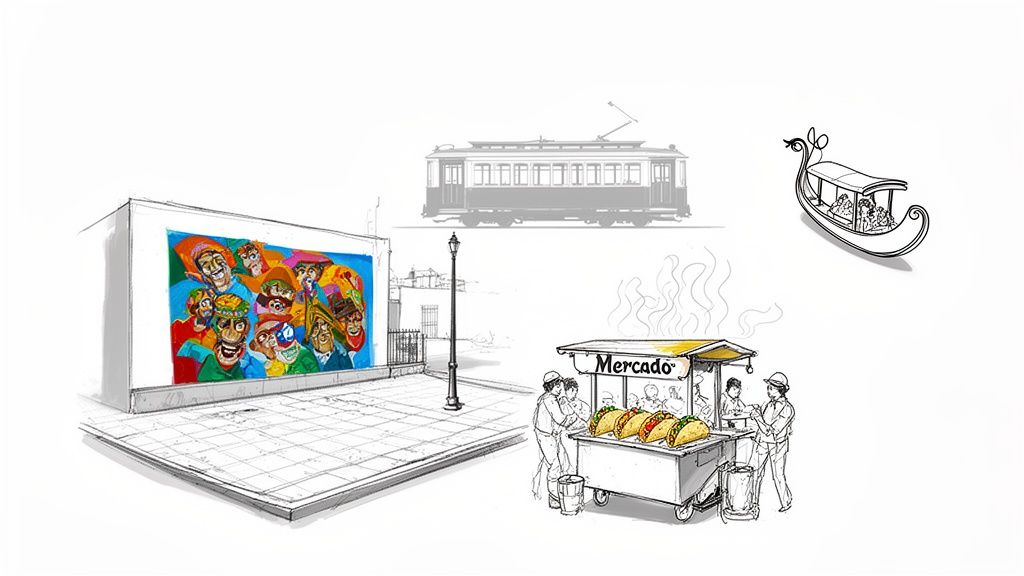
Mexico City is a vibrant, complex megacity where pre-Hispanic heritage, colonial architecture, and contemporary art collide. To truly experience one of the most dynamic places to travel in the world, visitors must venture beyond the historic center and dive into its distinct neighborhoods. This means navigating the city’s unwritten social rhythms, from the boisterous energy of a local market to the quiet artistry found in a neighborhood mural.
Immersive Local Experiences
Authenticity in Mexico City is found within its colonias (neighborhoods). In Roma, explore Mercado Medellín's organic vendors before discovering independent bookstores and craft cocktail bars. Condesa offers a relaxed atmosphere with its outdoor café culture around Parque España and chic vintage shops. For a deeper cultural immersion, Coyoacán’s student-filled plazas and traditional candy makers surround the iconic sites of Diego Rivera and Frida Kahlo. Similarly, a journey to Xochimilco reveals ancient chinampas (floating gardens) and a lively local boat culture sustained by food vendors on the waterways.
Off the Beaten Path
To get outside the main touristic places, explore the San Angel neighborhood on a Saturday for its Bazar Sábado, a sprawling art market where local artisans sell high-quality crafts. For a truly unique cultural experience, attend a lucha libre (professional wrestling) match at Arena México; it's a spectacle of acrobatics and drama beloved by locals and a key part of the city's pop culture.
On-the-Ground Practicalities
- Best Time to Visit: Travel between March and May for warm, dry weather. The autumn months (September-November) also offer pleasant temperatures and cultural events like Día de los Muertos.
- Getting Around: Embrace the local transit system by using the Metro and peseros (shared microbuses). Download an app like Citymapper for reliable navigation through the city's complex network.
- Cultural Etiquette: Learn basic Spanish phrases; locals greatly appreciate the effort. When eating street food, choose busy stalls where locals are queuing, as this indicates both freshness and quality.
Local Guide Insight: Explore the city's powerful muralism by neighborhood rather than taking a generic tour. Each area, from the Centro Histórico to Coyoacán, has murals with distinct political and social messages that tell the story of its community.
To discover the best local dishes and where to find them, see our detailed guide on what to eat in Mexico City.
3. Berlin, Germany
Berlin stands as a testament to European counterculture, where historical weight and artistic rebellion forge a unique urban identity. To truly understand its soul, travelers must move beyond Cold War landmarks and dive into its fierce neighborhood cultures. This means appreciating the city’s preference for authenticity over polish, from the graffiti-covered facades of Kreuzberg to the unpretentious atmosphere of a local kneipe (pub).
Immersive Local Experiences
Berlin’s energy is decentralized, found within its distinct districts or Kieze. While the East Side Gallery in Friedrichshain is essential, the real neighborhood spirit thrives in the adjacent RAW-Gelände, a sprawling complex of alternative art spaces, clubs, and flea markets. In Kreuzberg, experience the deep-rooted Turkish community through its vibrant markets and street food, a world away from the gentrified boutiques of Prenzlauer Berg. For a taste of old West Berlin, explore Charlottenburg's traditional beer gardens, which offer a quiet contrast to the city's modern pulse.
Off the Beaten Path
For a full cultural experience beyond the main tourist areas, spend an afternoon at Tempelhofer Feld, a former airport turned into a massive public park where locals skateboard, grill, and garden. On Sundays, visit Mauerpark for its famous flea market and open-air karaoke, a beloved Berlin ritual that embodies the city's spontaneous and creative spirit. These are places where Berliners live and play.
On-the-Ground Practicalities
- Best Time to Visit: The summer months (May-September) offer the best weather for exploring the city’s parks, open-air markets, and canalside bars.
- Getting Around: Berlin is incredibly bike-friendly. Rent a bike to navigate the city like a local, but be sure to understand and follow the specific traffic rules for cyclists.
- Cultural Etiquette: Always carry cash. Many of Berlin's most beloved independent cafes, bars, and market stalls do not accept credit cards. Plan your ATM visits accordingly.
Local Guide Insight: For an authentic night out, skip the tourist-focused beer halls and seek out a neighborhood kneipe. These unpretentious local pubs are the heart of Berlin’s social life, offering a genuine glimpse into the city's character.
For a comprehensive guide to the city's creative hubs, check out our article on exploring Berlin’s art scene.
4. Istanbul — European-side neighborhoods (Beyoğlu, Balat, Galata)
Istanbul is a city suspended between continents and epochs, offering a travel experience defined by its rich, layered history. To truly understand its soul, one must venture beyond the grand mosques of Sultanahmet and into the vibrant European-side neighborhoods. This means swapping sprawling tour groups for the intimate, cobblestone streets of districts where Byzantine, Ottoman, and modern creative energies collide.
Immersive Local Experiences
The key to an authentic Istanbul journey is exploring its distinct neighborhood characters. In Beyoğlu, bypass the main thoroughfare of Istiklal Street to discover its hidden "han" passageways and underground bars where local musicians perform. While Galata is famous for its tower, the real charm lies in its surrounding alleys filled with artisan shops and international cafes. The bohemian revival of Balat is best experienced by wandering its steep hills, admiring the colorful historic houses, and discovering its Jewish heritage sites alongside vibrant street art. This neighborhood-level focus reveals the city’s multicultural fabric.
Off the Beaten Path
To get outside of the main touristic places, explore the Fener neighborhood, adjacent to Balat. It’s home to the Greek Orthodox Patriarchate and has a quieter, more preserved historical atmosphere. For a full cultural experience, attend a performance of the Whirling Dervishes at a historic tekke (lodge) like the Galata Mevlevi House, which offers a more authentic and spiritual ceremony than the shows staged for tourists.
On-the-Ground Practicalities
- Best Time to Visit: Visit during the spring (April-May) or autumn (September-October) for pleasant weather ideal for walking and fewer crowds than the summer peak.
- Getting Around: Utilize Istanbulkart for seamless access to ferries, trams, and buses. The ferry system is not just transport; it’s a scenic way to appreciate the city's skyline.
- Cultural Etiquette: When visiting mosques, dress modestly (covering shoulders, knees, and hair for women). Accept offers of çay (tea) as a gesture of hospitality, especially in shops or local kahvehanes (tea houses).
Local Guide Insight: For an authentic taste of local life, seek out a neighborhood kahvehane in the morning. This is where locals gather to drink çay, play backgammon, and discuss the day, offering a true window into the community’s rhythm.
Explore our dedicated guide on navigating Istanbul's neighborhoods for more hidden gems.
5. Istanbul — Asian-side & conservative neighborhoods (Kadıköy, Üsküdar)
Istanbul offers a profound travel experience, straddling two continents where history and modernity are in constant dialogue. To truly understand its soul, travelers must venture beyond the European tourist core and explore the city's residential heart. This means embracing the local rhythms of the Asian side and understanding the distinct cultural dynamics of its more traditional neighborhoods, from the bustling markets of Kadıköy to the serene mosques of Üsküdar.
Immersive Local Experiences
The key to an authentic Istanbul journey is crossing the Bosphorus. In Kadıköy, skip the tourist traps and dive into the neighborhood’s famous market, a labyrinth of fishmongers, pickle shops, and bakeries that embodies local life. While Sultanahmet holds the iconic mosques, the waterfront mosques of Üsküdar offer a more contemplative and residential atmosphere, revealing a quieter, more conservative side of the city. Observing the gender and religious dynamics here provides a deeper understanding of Turkish society than any grand monument can.
Off the Beaten Path
For a full cultural experience away from the tourist crowds, explore the Moda neighborhood, a short walk from the Kadıköy ferry terminal. This laid-back, bohemian area is filled with tea gardens, vintage shops, and seaside parks where local families and students relax. It offers a glimpse into the daily life of Istanbul's progressive, creative class and is one of the best places for a traditional Turkish breakfast (kahvaltı).
On-the-Ground Practicalities
- Best Time to Visit: Spring (April-May) and autumn (September-October) provide the most pleasant weather for exploring the city on foot and enjoying the Bosphorus breezes.
- Getting Around: Use the public ferries (vapur) to cross between Europe and Asia. It's not just transport; it’s a daily ritual for locals and offers unparalleled views of the city skyline.
- Cultural Etiquette: In more conservative areas like Üsküdar, dress modestly out of respect. Learning a few Turkish phrases like “Merhaba” (hello) and “Teşekkür ederim” (thank you) will be warmly received.
Local Guide Insight: To experience true Kadıköy culture, visit the Tuesday Market (Salı Pazarı). It's a sprawling, authentic bazaar where locals shop for everything from fresh produce to textiles, offering a genuine slice of Istanbul life.
For a deeper dive into local crafts and meaningful souvenirs, explore our guide on what to buy in Istanbul.
6. Portugal
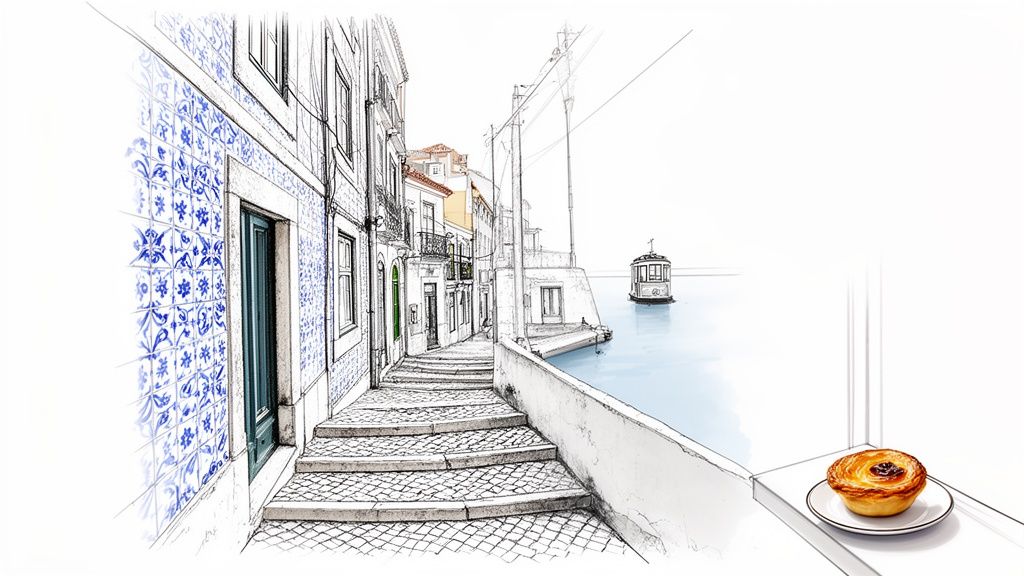
Portugal delivers an authentic Southern European experience where rich history, community, and regional identity define every journey. To truly understand its charm, travelers should venture beyond the main tourist hubs and embrace the distinct character of each region. This means swapping crowded city centers for the lived-in authenticity of neighborhood life, from the fado-filled alleys of Lisbon's Alfama to the slow-paced rhythm of a cork farm in the Alentejo.
Immersive Local Experiences
The soul of Portugal is found in its local communities and landscapes. In Lisbon, bypass the central tourist circuit to explore the quiet, tiled facades of Alfama or the historical depth of Belém, home of the original pastéis de nata. Porto's character unfolds not just in its famous port wine cellars but along the traditional Ribeira waterfront. For a deeper connection, travel to the Douro Valley to stay at a family-run quinta (wine estate) amidst terraced vineyards or experience the profound rural tranquility of the Alentejo’s medieval towns.
Off the Beaten Path
For a full cultural experience, go beyond Lisbon and Porto. Explore the university city of Coimbra, with its ancient library and melancholic strain of fado music, or head to the Costa Vicentina in the southwest for rugged coastlines and fishing villages untouched by mass tourism. Staying in a Pousada—historic properties converted into hotels—offers a unique way to connect with Portugal's heritage outside of the main touristic places.
On-the-Ground Practicalities
- Best Time to Visit: The spring (April-June) offers pleasant weather, blooming landscapes, and fewer crowds, making it an ideal time for exploration.
- Getting Around: Rent a car or use the efficient regional train system to discover smaller villages and rural areas that are inaccessible on large tours.
- Cultural Etiquette: Locals greatly appreciate attempts to speak Portuguese, even basic greetings. Adopt the local meal schedule: lunch is typically from 12:30-2:00 PM, and dinner rarely starts before 8:00 PM.
Local Guide Insight: For the most authentic meals, seek out small, family-run tascas instead of larger restaurants. Look for places busy with locals and ask for the prato do dia (dish of the day) for a fresh, affordable, and traditional meal.
Discover more about Portugal's unique culinary traditions and what to bring home in our guide to authentic Portuguese souvenirs.
7. Vietnam
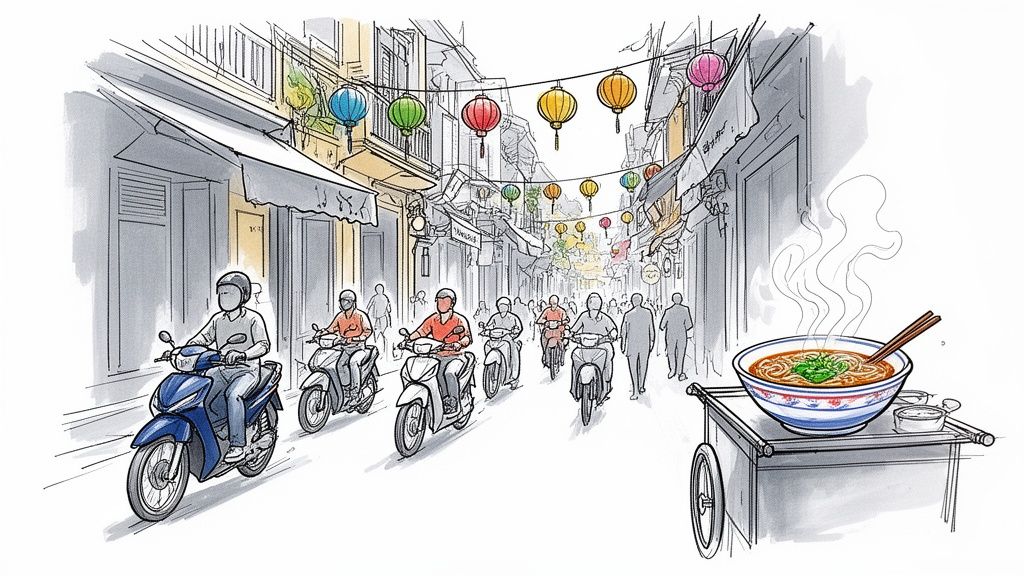
Vietnam offers a vibrant sensory overload, where the roar of motorbikes in Ho Chi Minh City contrasts with the serene beauty of rice paddies and the preserved traditions of ancient towns. To truly appreciate this dynamic country, travelers must dive into its street-level culture. This means embracing the organized chaos of local markets and understanding the deep-rooted customs that define community life, from sharing a meal at a street food stall to navigating the bustling alleyways.
Immersive Local Experiences
Authenticity in Vietnam is found in its distinct regional hubs. In Hanoi, wander beyond Hoan Kiem Lake into the Old Quarter’s 36 Streets, where each lane is dedicated to a specific craft or trade. While Ho Chi Minh City’s colonial architecture in District 1 is impressive, the real city comes alive in the residential alleys of Binh Thanh, home to hidden cafes and phenomenal local food. In Hoi An, look past the lantern-filled ancient town to observe the long-standing tailor traditions and community life along the Thu Bon River. Similarly, the Mekong Delta's floating markets are best experienced at dawn, alongside the locals who live and work on the water.
Off the Beaten Path
For a full cultural experience, consider a motorbike journey through the Ha Giang Loop in the far north, where you can witness the dramatic landscapes and interact with ethnic minority communities. Alternatively, stay in a homestay in the Mekong Delta to participate in daily life, from fishing to cooking with a local family. This provides a much deeper connection to the country than a quick day tour.
On-the-Ground Practicalities
- Best Time to Visit: Vietnam has a complex climate. Aim for spring (March-April) or autumn (September-November) for the best chance of good weather across the country.
- Getting Around: Use ride-hailing apps like Grab for motorbikes and cars in cities; it's an affordable and efficient way to navigate. For inter-city travel, overnight trains offer a unique cultural experience.
- Cultural Etiquette: Learn a few basic phrases like “Cảm ơn” (thank you) and “Xin chào” (hello). When eating at street stalls, observe how locals order and pay; it’s a sign of respect.
Local Guide Insight: The best street food stalls are the busiest ones with a constant queue of locals. Don't be shy; a long line is the clearest sign of high-quality, fresh ingredients and incredible flavor.
For a deeper dive into local crafts and meaningful souvenirs, explore our guide on what to buy in Vietnam.
8. Colombia
Colombia has emerged as one of the most dynamic places to travel in the world, shedding its past to reveal a nation rich in cultural diversity, ecological wonders, and resilient spirit. To truly appreciate its transformation, travelers must engage with its distinct regional identities. This means moving beyond Cartagena’s colorful walls to understand the innovative urban rebirth of Medellín and the high-altitude cultural pulse of Bogotá.
Immersive Local Experiences
Authentic Colombian travel is defined by its vibrant neighborhoods and local traditions. In Bogotá, base yourself in the historic La Candelaria to explore its colonial streets and world-class museums, or experience the weekend artisan market in the more upscale Usaquén. Medellín’s story is best told through a ride on the Metrocable, a public transit system that connects locals from hillside comunas to the city center, offering a unique perspective on the urban art of Comuna 13. For a taste of the Caribbean, Cartagena's walled city offers a stunning backdrop, but the real energy is found in its salsa clubs and bustling street food stalls.
Off the Beaten Path
To get a full cultural experience, venture into the Coffee Triangle (Eje Cafetero) and stay at a family-run finca (coffee farm). Here you can learn about the coffee-making process from bean to cup and experience the slow-paced rural life. For a truly unique adventure, travel to the colorful town of Guatapé from Medellín and climb El Peñol for breathtaking views, a favorite weekend trip for locals.
On-the-Ground Practicalities
- Best Time to Visit: Travel during the dry seasons (December-March and July-August) for the most pleasant weather, especially in the Andean regions and on the coast.
- Getting Around: Utilize city metro systems in Medellín and the TransMilenio bus system in Bogotá. For inter-city travel, domestic flights are affordable and efficient.
- Cultural Etiquette: A few basic Spanish phrases will go a long way. In cities like Cali, participating in a salsa class is not just a tourist activity; it’s a primary way to engage in local social life.
Local Guide Insight: For the most authentic Colombian food, seek out a neighborhood fonda. These small, family-run restaurants serve hearty, traditional meals like bandeja paisa and fresh arepas at a fraction of the cost of tourist-focused eateries.
For more on navigating this incredible country, see our complete guide on what to do in Colombia.
9. Greece — Athens
Athens offers an electrifying travel experience where monumental history converges with a vibrant, modern-day urban culture. To truly understand the city, travelers must look beyond the Acropolis and immerse themselves in its distinct and diverse neighborhoods. This means appreciating the seamless blend of ancient ruins with contemporary street art, lively tavernas, and the daily rituals that define Athenian life, from a morning coffee at a local kafeneio to an evening stroll.
Immersive Local Experiences
The soul of Athens is found within its unique districts. While Plaka’s Byzantine streets offer a charming walk through history, the real energy pulses elsewhere. In Psyrri, you’ll find a hub of nightlife and impressive street art murals down every alley. For a grittier, more authentic vibe, explore Exarchia, the center of the city's counterculture and political history. Alternatively, the upscale Kolonaki district provides a glimpse into affluent Athenian life with its chic boutiques and sophisticated cafés. Each neighborhood offers a completely different perspective on the city.
Off the Beaten Path
For a full cultural experience outside the main tourist centers, visit the Kypseli neighborhood. It's one of Athens' most diverse and multicultural areas, with a bustling municipal market (Dimotiki Agora Kypselis) that hosts community events, pop-up shops, and food stalls. Another local favorite is attending an open-air cinema during the summer, a quintessential Athenian pastime that offers a unique cultural evening under the stars.
On-the-Ground Practicalities
- Best Time to Visit: The shoulder seasons of April-May and September-October provide pleasant weather for exploring on foot and much smaller crowds at major sites.
- Getting Around: The Athens metro is clean, efficient, and connects all major neighborhoods and the airport. For shorter distances, walking is the best way to discover hidden gems.
- Cultural Etiquette: A simple “Yassas” (hello) or “Efcharisto” (thank you) is always appreciated. When dining, embrace a slower pace; meals are social events meant to be savored.
Local Guide Insight: For authentic Greek food, avoid the tourist-heavy plazas. Instead, ask a local for their favorite family-run taverna in a residential area. These spots serve traditional recipes passed down through generations.
To connect more deeply with the culture, review our guide on basic Greek words and phrases before your trip.
10. Greece — Regional islands and maritime culture
Greece offers a journey into ancient history and vibrant maritime culture, where each island and region maintains a fiercely independent identity. To truly experience this Mediterranean gem, one must venture beyond the mainland to discover the diverse traditions and landscapes of its archipelago. This means understanding that the rhythm of life is dictated by the sea, from the daily routines of fishermen to the deep-rooted hospitality found in island communities.
Immersive Local Experiences
The soul of Greece is found in its distinct islands and regional villages. While Santorini’s cliffside views are iconic, a more authentic experience awaits on islands like Naxos, known for its ancient marble quarries and family-run tavernas serving farm-to-table cuisine. In Crete, bypass the resort towns and explore mountain villages where Minoan history coexists with vibrant local music and dance traditions. For a quieter escape, the lesser-known Cyclades, such as Folegandros or Antiparos, offer a glimpse into slow-paced island life, where daily activities revolve around the town square and the harbor.
Off the Beaten Path
To get a full cultural experience outside the main touristic islands, visit Syros, the administrative capital of the Cyclades. Its main town, Ermoupoli, boasts neoclassical architecture and a vibrant year-round cultural scene, offering a glimpse into a working Greek island city. Alternatively, explore the remote villages of Amorgos, famous for its stunning monastery built into a cliffside and its network of ancient walking paths connecting local communities.
On-the-Ground Practicalities
- Best Time to Visit: The shoulder seasons (May-June and September-October) provide warm, sunny weather with fewer crowds and more moderate prices.
- Getting Around: Embrace the island-hopping culture by using the extensive ferry network. Book flexible tickets in advance, especially in summer, but be prepared for occasional schedule changes due to weather.
- Cultural Etiquette: A simple "Yassas" (hello) or "Efcharisto" (thank you) is greatly appreciated. Respect the afternoon siesta, a quiet period typically from 3 to 5 PM when many shops close.
Local Guide Insight: For the most authentic meals, seek out tavernas located away from the main tourist ports. Ask for the "piato tis imeras" (dish of the day) to enjoy what is freshest and most seasonal, often cooked by the family that owns the establishment.
For a comprehensive guide to navigating the islands and finding the best local food, explore our article on how to island hop in Greece.
11. Peru — Highlands & Incan heritage
Peru offers an extraordinary journey through time, where ancient Incan foundations are seamlessly woven into the fabric of colonial and modern life. To truly appreciate its depth, travelers should look beyond the postcard-perfect views of Machu Picchu and immerse themselves in the living culture of the Andean highlands. This means understanding the rhythms of daily life in high-altitude villages and respecting the deep spiritual connection the local Quechua communities have with the land, or Pachamama.
Immersive Local Experiences
The soul of Peru resides in its highland communities and lesser-known archaeological wonders. While Cusco’s blend of Incan masonry and Spanish colonial architecture is captivating, the real cultural immersion begins in the Sacred Valley. Base yourself in a smaller town like Ollantaytambo or Pisac to experience bustling local markets and agricultural traditions that have remained unchanged for centuries. For a more profound connection to Incan ingenuity, consider the challenging but rewarding trek to Choquequirao, often called Machu Picchu’s sister city, which sees only a fraction of the visitors.
Off the Beaten Path
For a full cultural experience, arrange a homestay with a Quechua family in the Sacred Valley. This offers an unparalleled opportunity to participate in daily activities like farming, weaving, and cooking, providing a genuine connection to the local culture. Another option is to visit the Maras salt pans and the Moray agricultural terraces with a local guide who can explain their historical and ongoing significance to the community, far from the large tour buses.
On-the-Ground Practicalities
- Best Time to Visit: The dry season (April to October) offers clear skies and ideal conditions for trekking and exploring archaeological sites.
- Getting Around: In the Sacred Valley, use colectivos (shared taxis) to travel between towns like a local. For longer distances, reputable bus companies offer comfortable and scenic journeys.
- Cultural Etiquette: Always acclimatize to the high altitude in Cusco for at least two days before undertaking strenuous activity. When visiting indigenous communities, hire local guides and purchase artisan goods directly from the makers.
Local Guide Insight: For a truly authentic meal in Cusco, venture into the San Pedro Market and find a small food stall crowded with locals. Order the menú del día for a simple, hearty, and incredibly affordable lunch.
For a more enriching and responsible journey, consider our guide on sustainable things to do in Peru, complementing your exploration of the highlands and Incan heritage.
12. Peru — Coastal, Amazon & practical tips
Peru offers an incredible spectrum of travel experiences, from the world-renowned culinary scenes of its coastal cities to the unparalleled biodiversity of its Amazon basin. To truly appreciate this remarkable country, travelers must look beyond the Andes and engage with the distinct cultures of the coast and jungle. This means understanding the deep connection between geography and tradition, from Lima’s ceviche culture to the Amazon’s sustainable community living.
Immersive Local Experiences
The key to an authentic Peruvian journey is exploring its diverse regions. In Lima, move beyond the central squares to discover the vibrant street art and bohemian cafes of the Barranco district or the upscale culinary innovation in Miraflores. For a true Amazon experience, choose community-run lodges near Iquitos or Puerto Maldonado that offer guided jungle treks and support local conservation. On the coast, towns like Huanchaco reveal ancient fishing traditions, while the Ica desert offers a starkly beautiful landscape to explore. While many focus on the Andes, a well-planned trip to Machu Picchu, Peru can beautifully complement these coastal and jungle explorations.
Off the Beaten Path
For a full cultural experience on the coast, travel north to the city of Trujillo to explore the ancient Moche temples of Huaca de la Luna and Huaca del Sol, which predate the Incas. In the Amazon, go beyond a standard lodge stay by taking a multi-day boat trip down a river tributary. This allows you to visit remote indigenous communities and experience the rainforest's ecosystem in a more profound and less touristic way.
On-the-Ground Practicalities
- Best Time to Visit: The dry season (April-October) is ideal for both Amazon treks and highland adventures. The coast, particularly Lima, has its own milder climate and can be visited year-round.
- Getting Around: Domestic flights are the most efficient way to travel between Lima, the Amazon (Iquitos), and Cusco. Within Lima, use ride-sharing apps for safety and convenience.
- Cultural Etiquette: Always ask before photographing people, especially in indigenous communities. When purchasing textiles or crafts, buying directly from artisans ensures they receive the full profit.
Local Guide Insight: To experience Lima's food scene like a local, visit a "mercado" (market) like Mercado de Surquillo. Here you can sample fresh produce, enjoy incredible set-lunch menus (menús), and see where the city’s top chefs source their ingredients.
12 World Destinations Comparison
| Destination | 🔄 Complexity (logistics & social codes) | ⚡ Resource needs (cost & logistics) | ⭐ Expected experience quality | 📊 Typical outcomes / impact | 💡 Best use cases & quick tip |
|---|---|---|---|---|---|
| Japan | High — many unwritten social rules and seasonal rhythms | High — pricey cities, regional travel needs | ⭐⭐⭐⭐⭐ — deep cultural authenticity | Neighborhood-level cultural immersion; seasonal food traditions | Study basic etiquette; use IC cards and explore neighborhoods on foot |
| Mexico City, Mexico | Medium-high — large, chaotic city systems and altitude effects | Low — very affordable locally; metro + peseros | ⭐⭐⭐⭐⭐ — rich culinary & cultural depth | Street-food immersion, museums, layered heritage | Base in Roma/Condesa; eat where locals queue; learn basic Spanish |
| Berlin, Germany | Medium — cash-first venues, club norms, bike traffic | Low-medium — affordable city but cash/transport logistics | ⭐⭐⭐⭐ — strong countercultural authenticity | Art, street culture, accessible creative communities | Carry cash, rent a bike, explore by district late-night for clubs |
| Istanbul — European-side | Medium — bazaar negotiation, layered heritage, tourist zones | Low — affordable but watch tourist pricing | ⭐⭐⭐⭐ — vivid historical and bohemian mix | Historic bazaars, creative nightlife, multicultural streets | Stay in Beyoğlu/Balat; practice bargaining and respect mosque protocols |
| Istanbul — Asian-side & conservative neighborhoods | Low-medium — more residential norms and gender dynamics | Low — affordable with good ferry links | ⭐⭐⭐ — authentic local life; quieter cultural access | Ferry commutes, neighborhood market life, conservative social rhythms | Use vapur ferries; respect local dress and gender norms; learn basic Turkish |
| Portugal | Low-medium — regional transport limits, seasonal crowds in Lisbon/Porto | Low-medium — generally affordable; car or trains often useful | ⭐⭐⭐⭐ — strong regional food & community culture | Regional culinary/wine experiences; walkable towns | Skip tourist circuit; visit mercados and regional towns; consider car rental |
| Vietnam | Medium — motorbike-dominated streets, vendor schedules | Very low — extremely affordable; local transport and Grab | ⭐⭐⭐⭐ — intense street-food and daily-life authenticity | Street-food culture, motorbike neighborhood rhythms, historic districts | Base outside backpacker zones; use Grab/rent motorbike; eat at busy stalls |
| Colombia | Medium — safety varies by neighborhood; transport limits outside cities | Low — affordable travel with growing infrastructure | ⭐⭐⭐⭐ — vibrant music, coffee, and neighborhood life | Salsa, coffee-region insights, diverse landscapes | Base in local barrios (e.g., La Candelaria); join salsa classes; learn Spanish |
| Greece — Athens | Low-medium — tourist congestion and heat; some service limits | Low-medium — affordable vs. Western Europe | ⭐⭐⭐ — ancient sites plus lively neighborhood cafés | Ancient-historical layering with neighborhood social life | Base in Psyrri/Exarchia/Plaka; visit kafeneio and travel in shoulder seasons |
| Greece — Islands & maritime culture | Medium — ferry schedules, seasonality, service variability | Medium — ferry and island costs; seasonal pricing spikes | ⭐⭐⭐⭐ — strong island identities and maritime traditions | Island-hopping, seafood/wine, village-level hospitality | Avoid over-touristed islands if seeking authenticity; book flexible ferries |
| Peru — Highlands & Incan heritage | High — altitude risks, remote logistics, tour regulation | Medium — guided treks and permits can add cost | ⭐⭐⭐⭐⭐ — unparalleled archaeological and indigenous engagement | Incan sites, indigenous textile and agricultural traditions | Acclimatize before treks; consider lesser-visited sites and reputable local guides |
| Peru — Coastal, Amazon & practical tips | Medium — seasonality for Amazon, coastal urban navigation | Medium — guided Amazon trips and coastal stays vary in cost | ⭐⭐⭐⭐ — world-class cuisine and biodiversity experiences | Lima culinary scene, Amazon biodiversity, coastal seafood culture | Base in Miraflores/Barranco; choose community-based Amazon operators and mind seasonality |
Your Next Trip Starts with Local Knowledge
The world is vast, but as this guide has shown, the most memorable experiences often lie in the smallest details: the taste of a street-side bánh mì in Hanoi, the sound of a tango in a hidden Buenos Aires milonga, or the quiet respect observed in a Kyoto temple. We've journeyed from the vibrant, art-filled streets of Mexico City to the ancient, layered history of Istanbul, and from the Sacred Valley of Peru to the sun-drenched islands of Greece. Each destination offers a universe of its own, but the common thread weaving them together is the value of local insight.
The best places to travel in the world are not static backdrops for your photos. They are dynamic, living ecosystems of culture, tradition, and community. A trip to Berlin is incomplete without understanding its resilient, creative spirit born from a divided past. A visit to Colombia is enriched by appreciating the warmth and complexity of its people, far beyond outdated headlines. True travel isn't about checking off a list; it's about engaging with a place on its own terms.
Key Takeaways: From Tourist to Traveler
To truly connect with the destinations we've explored, remember these core principles that shift your perspective from passive observer to active participant:
- Embrace Hyper-Local Exploration: Don't just visit a city; explore its neighborhoods. In Istanbul, this means experiencing the contrast between the bohemian energy of Kadıköy and the historic, conservative atmosphere of Üsküdar. In Mexico City, it’s about discovering the unique personality of Roma Norte versus the traditional charm of Coyoacán.
- Prioritize Cultural Etiquette: Small gestures build big bridges. Knowing when to haggle in a Vietnamese market versus when to pay the fixed price, understanding the importance of parea (group camaraderie) in Greece, or learning a few basic phrases in Japanese demonstrates respect and opens doors to more genuine interactions.
- Look Beyond the Main Attractions: While the Acropolis and Machu Picchu are undeniable wonders, the soul of a place often resides just outside the tourist circuit. Seek out the family-run taverna, the local artisan market, or the neighborhood park where daily life unfolds. This is where you find the authentic pulse of a destination.
- Travel Seasonally and Mindfully: Understanding the best time to visit a region, as we discussed for Peru's varied climates or Japan's distinct seasons, not only improves your experience but also helps alleviate the pressures of over-tourism. It allows you to see a place when it’s at its most authentic, not just its most crowded.
Putting Local Knowledge into Action
Transforming these ideas into reality is simpler than it seems. Before your next adventure, commit to a few actionable steps. Start by researching one specific neighborhood in your chosen city and plan an afternoon exploring it without a strict itinerary. Use local transport, even if it feels intimidating at first; riding the metro in Berlin or the ferry in Istanbul provides an unfiltered glimpse into the city's rhythm.
When you arrive, make your first stop a local market, not a landmark. Observe what people are buying, what they’re eating, and how they interact. Ask a vendor for a recommendation. This simple act can lead you to the best meal of your trip. By adopting this mindset, you’re not just visiting the top places to travel in the world; you’re actively participating in them, creating memories rooted in genuine connection and discovery. This approach ensures your travels are not only more fulfilling for you but also more respectful and sustainable for the communities you visit. Your journey begins not when you land, but when you decide to see the world through the eyes of those who call it home.
Ready to go beyond the surface? The CoraTravels platform is built on this exact philosophy, offering in-depth guides curated from local experts, artists, and community leaders. Find your next adventure and unlock authentic, neighborhood-level insights by visiting CoraTravels.