When you're figuring out what to buy in Japan, the best souvenirs are always the ones that connect you to a place and its culture. To have a truly immersive experience, think beyond the main tourist hubs. This guide focuses on uncovering regional crafts, specialty foods, and unique items you'll find off the beaten path, offering a full cultural experience that goes deeper than the usual shopping list.
Your Guide to Finding Authentic Japanese Treasures
Welcome to a local's guide on shopping in Japan. This isn't about grabbing a generic magnet from the airport. It's about finding things that feel genuinely Japanese, the kinds of items locals themselves would cherish. This is about seeking an immersive experience outside of the main touristic places.
Think of it this way: you're not just buying a product, you're bringing home a piece of history, a taste of a specific region, or a snapshot of daily life from a place few tourists see. We'll help you navigate the quiet calm of a local craft market and the hidden gems in a neighborhood shotengai to find those perfect treasures.
This chart gives you a bird's-eye view, breaking down the best finds into three main camps: timeless crafts, amazing food, and modern must-haves.
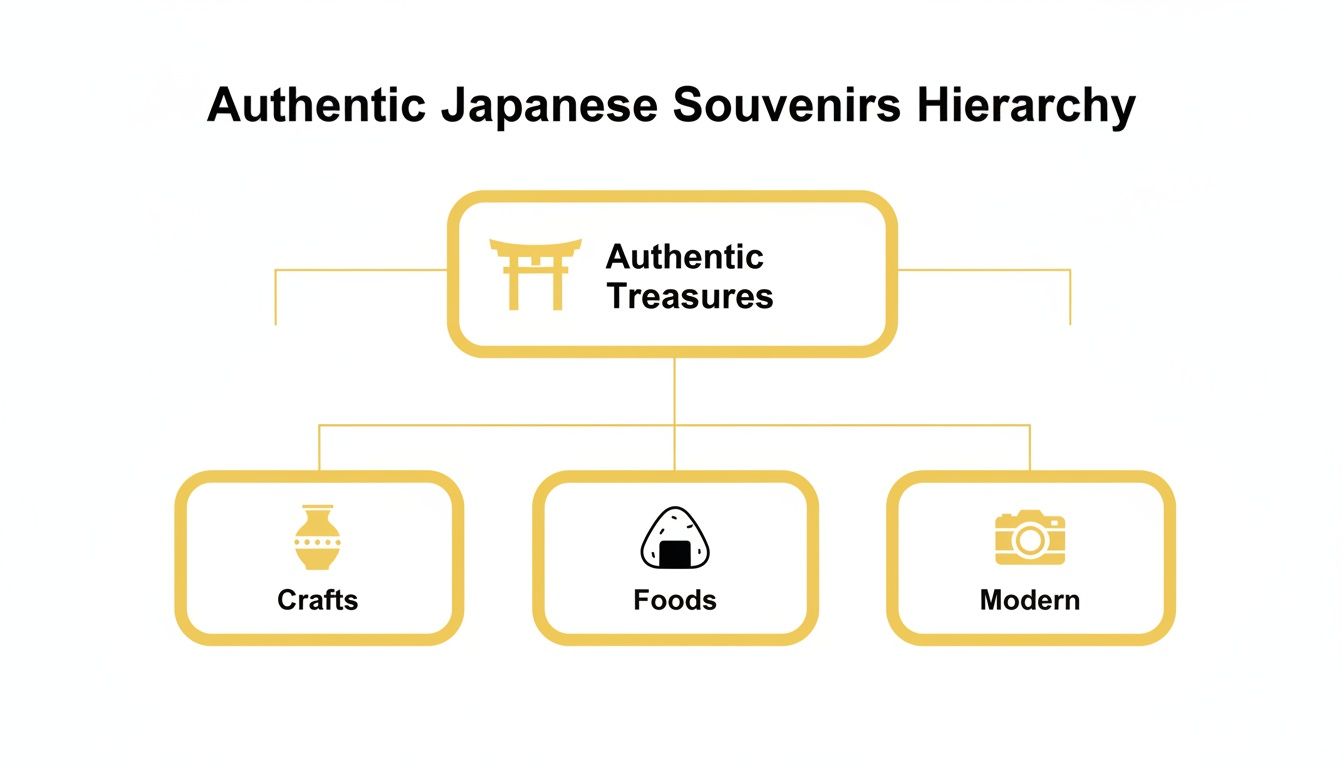
As you can see, shopping can be a whole cultural experience. It's a chance to balance the old with the new and come home with a truly well-rounded haul.
To give you a quick summary of what to look for and where, here's a table breaking down the top categories from a local perspective.
Top Japanese Souvenir Categories at a Glance
| Category | What Makes It Special | Best Places to Shop |
|---|---|---|
| Food & Drink | Hyper-regional specialties, beautiful packaging, unique flavors. | Local markets, family-run shops in shotengai, depachika food halls. |
| Beauty | High-quality ingredients, innovative formulas, elegant design. | Drugstores (Matsumoto Kiyoshi), department stores, Don Quijote. |
| Electronics | "Japan-only" models, innovative gadgets, superior quality. | Tech districts (Akihabara), large electronic stores (Yodobashi). |
| Fashion | Unique Japanese brands, high-quality basics, vintage finds. | Side streets in trendy neighborhoods, local select shops, vintage stores. |
| Crafts | Centuries-old techniques, regional materials, artisan skill. | Craft markets, specialty shops in historical districts, local studios. |
| Stationery | Unmatched quality in paper, pens, and inks; thoughtful design. | Stationery stores (Itoya), department stores, 100-yen shops. |
This table is just a starting point, of course. The real fun is in the discovery and the immersive experience of finding things yourself.
Why Shopping Is a Core Part of the Japan Experience
Let's be real: shopping is a huge part of visiting Japan. It’s not just a side activity; it’s a big reason many people come here in the first place.
According to the Japan National Tourism Organization (JNTO), foreign visitors spend around 20-25% of their total trip budget on shopping. That's the single biggest expense category for most travelers. This isn't just mindless consumerism; it's a very real way people connect with the culture, especially when they venture off the beaten path.
When you're on the hunt for real Japanese treasures, it's worth learning how to identify counterfeit products. Knowing the difference between a genuine artisan piece and a mass-produced knock-off protects your wallet and, more importantly, supports the actual craftspeople.
Our goal here is to help you find souvenirs that bring back a meaningful memory. Let's dive into how you can shop smart, respectfully, and with the insight of a local guide.
Discovering Japan's Regional Shopping Secrets
To really get what makes shopping in Japan special, you have to look past the neon glow of Tokyo and Kyoto's temple-lined streets. The true soul of Japanese craftsmanship isn't in the big cities; it’s tucked away in the regions, where different towns and cities stake their entire reputation on unique local products, or meibutsu. This is your road map to finding those hidden gems and having an immersive cultural experience.
Getting off the beaten path turns a shopping trip into a cultural deep dive. One day you could be elbowing through a crowded city, and the next, you could be standing in a quiet workshop outside the main touristic places, watching a master artisan bring a piece to life. It’s a chance to connect directly with the makers, hear the stories behind their work, and genuinely support local economies.
This is about something bigger than just buying another souvenir. It’s the difference between grabbing a mass-produced kitchen knife and buying one directly from a blacksmith in Sakai, Osaka, whose family has been perfecting that single craft for generations.
Uncovering Local Specialties
Every region in Japan is a treasure chest of specific goods you just won't find anywhere else. Think of it as a culinary map, but for crafts. For instance, a trip to the Ishikawa Prefecture would be incomplete without seeing Kanazawa's stunning gold leaf and lacquerware. Head south to the island of Kyushu, and you’ll find the world-famous Arita and Imari porcelain.
Here are a few iconic regional specialties to hunt for:
- Kanazawa Gold Leaf (Kinpaku): This city produces an incredible 99% of all gold leaf in Japan. You’ll find it on everything from edible flakes for your ice cream to intricate decorative panels.
- Sakai Knives (Sakai Uchihamono): With a forging history stretching back to the 16th century, these knives are the gold standard for professional chefs who demand razor-sharp precision and durability.
- Arita Porcelain (Arita-yaki): Hailing from Saga Prefecture, this is one of Japan's most celebrated types of pottery, instantly recognizable by its delicate, hand-painted blue designs.
- Hakata Dolls (Hakata Ningyo): These unglazed clay dolls from Fukuoka are famous for their incredibly expressive faces and detailed, lifelike craftsmanship.
"The souvenirs you'll actually cherish are rarely found in an airport gift shop. They're discovered in a small, family-run store on a quiet side street, where the owner can tell you the whole story of the item you're holding."
The best way to find these things is to change your mindset. Instead of asking, "what should I buy in Japan?", start asking, "what is this specific region known for?" That simple question is the key to unlocking authentic experiences and truly unforgettable finds.
How to Shop Like a Local Guide
Stepping into these smaller shops and artisan workshops is where the real magic happens, but it helps to know the etiquette. A simple "Konnichiwa" (hello) as you walk in makes a world of difference. It shows respect and opens the door for a friendly interaction.
Remember, when you visit a workshop, you're a guest in someone's creative space. Show genuine interest in what they're doing, and if you have questions, ask them respectfully (a translation app can be your best friend here). And always, always ask for permission before you start snapping photos. It turns a simple purchase into a real cultural exchange, and the story you bring home will be just as valuable as the souvenir itself.
To get you started, here's a quick guide to some of the country's most unique local products and where to find them.
Regional Shopping Guide to Japan's Hidden Gems
Think of this table as your treasure map. It points you toward some of Japan’s most authentic local crafts and specialties, helping you find items with a real story, far from the typical tourist trail.
| Region / City | Signature Item | Why It's a Must-Buy | Where to Find It |
|---|---|---|---|
| Kanazawa | Gold Leaf & Lacquerware | The quality is unmatched, and you're buying a piece of history and artistry. | The Higashi Chaya District is a great start, but also look for small, local workshops. |
| Sakai, Osaka | Kitchen Knives | World-renowned sharpness and craftsmanship. These are the knives professional chefs dream about. | Specialty knife shops and directly from blacksmith studios in the area. |
| Arita, Saga | Porcelain | Delicate, hand-painted ceramics with a rich, 400-year history. | Local potteries and, if you're lucky, the massive Arita Ceramic Fair. |
| Takayama | Wood Carvings (Ichii Ittobori) | Intricate, expressive carvings from Japanese yew wood, often of animals or traditional figures. | Shops in the Old Town district and at the city's famous morning markets. |
Exploring these regional specialties is more than just shopping; it's about connecting with the heart of Japanese culture. Each item tells a story about its place of origin, and bringing one home is like taking a small piece of that story with you.
A Food Lover's Guide to Culinary Souvenirs
If you ask me, some of the best answers to "what to buy in Japan" aren't things you display on a shelf—they're treasures you can taste. Bringing home culinary souvenirs is like packing your suitcase full of memories, letting you share the real flavors of your trip long after you've landed back home. This is your local guide to an immersive food journey.
Think of it as your passport to edible Japanese wonders that go way beyond the typical duty-free chocolate.
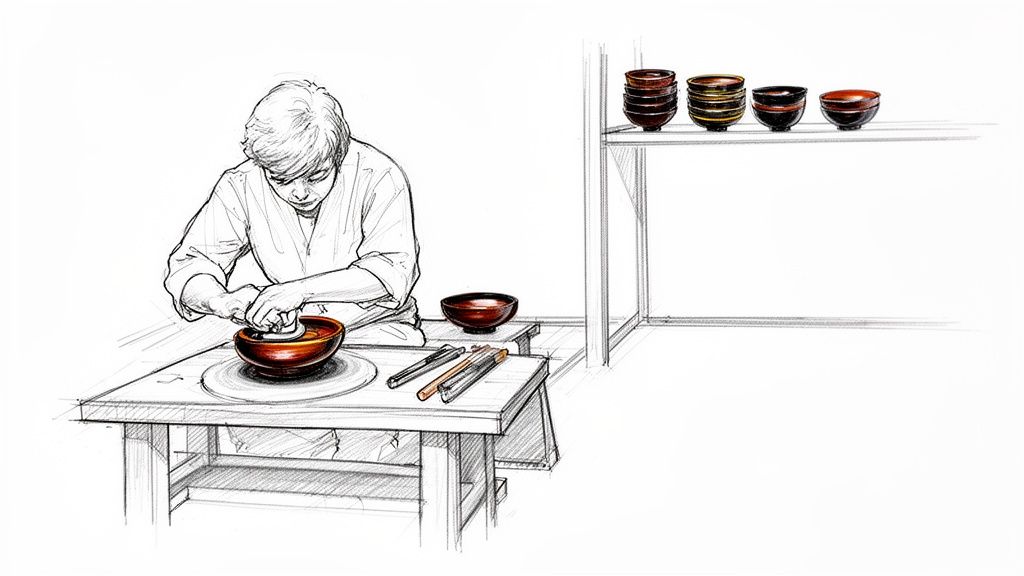
Forget the generic snacks. We're talking about curating a collection of flavors that tells the story of where you've been. Imagine an artisanal soy sauce from a small-town brewery, a rare regional sake, or premium matcha straight from Uji. This is all about finding the local favorites that rarely make it into the big tourist shops.
Your First Stop: The Depachika Food Wonderland
For any serious food souvenir hunt, your first stop has to be a depachika. These are the dazzling food halls tucked into the basements of major department stores, and they are an experience in themselves.
Forget any notion of a regular food court. A depachika is more like a culinary museum, packed with impeccably presented delicacies from all over the country. You'll find everything from beautifully packaged sweets and premium teas to savory pickles and locally brewed sake. It's the perfect place to see what locals actually buy for special occasions. Don't be shy about accepting the free samples—it's the best way to find a new obsession.
People are definitely catching on to how incredible Japan's food scene is. Dining and food shopping now account for an average of ¥46,456 per visitor. That figure is climbing fast, with tourists spending 15-20% more per meal, partly thanks to the favorable yen exchange rate.
Beyond the Basics: Essential Edible Souvenirs
While you're exploring off the beaten path, keep your eyes peeled for items that give you a true taste of a specific place. These are the kinds of finds that make perfect gifts or let you recreate authentic Japanese flavors back in your own kitchen.
- Regional Kit Kats: Forget milk chocolate. In Japan, Kit Kat flavors are a regional obsession. You'll find varieties like sakura mochi, wasabi, and sweet potato that represent different prefectures. The best selections are usually at major train stations and Don Quijote stores.
- High-Quality Matcha: Look for vibrant, electric-green powder from places like Uji or Nishio. Ceremonial-grade matcha is a world away from the bitter, dull-green powders you find elsewhere and makes a fantastic gift for any tea lover.
- Artisanal Soy Sauce and Ponzu: Duck into smaller local shops to find small-batch soy sauces aged in wooden barrels or citrus-infused ponzu sauces. They will completely change your home cooking game.
- Unique Senbei Rice Crackers: These savory crackers come in countless shapes, sizes, and flavors, from classic soy to shrimp and seaweed. They're lightweight, durable, and super easy to pack.
As you're navigating Japan's incredible food scene, you might find that mastering phrases for ordering food in English comes in handy, ensuring you can communicate clearly in restaurants and cafes.
Packing and Customs: The Practical Stuff
Bringing all these delicious things home requires a little planning. The goal is to get your treasures home in one piece and without any drama at customs.
For fragile items like glass bottles of sake or soy sauce, wrap them securely in your clothes and stick them right in the center of your checked luggage. Many depachika will also offer expert wrapping if you just ask.
Most packaged and sealed goods like tea, crackers, and candy are generally fine for international travel. But always, always check your home country's regulations on bringing back meat, dairy, and fresh produce before you buy anything.
And if you get totally inspired by the culinary chaos in a city like Osaka, we've got you covered. Check out our guide on what makes it Japan's kitchen and comedy central for more local tips.
Mastering Japan's Unique Shopping Environments
Shopping in Japan is so much more than just buying things—it's a cultural experience. To really get a handle on what to buy, you first need to understand the country’s wildly diverse retail scenes. Each one offers a completely different vibe. From the hushed elegance of a high-end department store to the glorious, multi-story chaos of a discount shop, where you shop is just as important as what you buy.
Think of this as your playbook for navigating these spots like a local guide, focusing on immersive, off-the-beaten-path experiences.
The Heartbeat of the Neighborhood: Shotengai
Before you even think about the big-name stores, start where the locals do: the shotengai. These are the traditional covered shopping arcades, and they are the true, beating heart of any Japanese neighborhood. Forget sterile, cookie-cutter malls; a shotengai is a lively, friendly corridor lined with small, family-run businesses that have often been there for generations.
You’ll find everything from fresh produce and local snacks to handmade crafts and everyday household goods. This is the perfect place to discover authentic, unpretentious items that feel like a real slice of Japanese life. Don't just see it as a place to shop—think of it as a living museum of the community.
The Contrast of Chaos and Calm
Two of the most iconic, yet polar opposite, shopping experiences in Japan are Don Quijote and the major department stores. Knowing what each one is for is the key to a smart shopping strategy.
Don Quijote (Donki)
- The Vibe: A glorious, multi-floor maze of "compressed display," where products are crammed from floor to ceiling. It's loud, chaotic, and almost always open late (often 24 hours).
- Best For: Discounted snacks, wild souvenirs, cosmetics, and electronics. This is your go-to for finding those bizarre Kit Kat flavors and fun, cheap gifts.
Department Stores (Depato)
- The Vibe: Calm, elegant, and perfectly organized. Think of legendary names like Isetan, Takashimaya, or Mitsukoshi. The service is impeccable, and the whole experience feels like a luxury.
- Best For: High-end fashion, premium cosmetics, exquisite gift items, and, of course, the legendary basement food halls known as depachika.
The real genius of Japanese retail is its sheer variety. You can spend an hour hunting for bargains in the sensory overload of Don Quijote, then walk ten minutes and find yourself in the refined, almost meditative calm of a luxury department store. It's a beautiful contrast.
Uncovering Treasure in Specialty Districts
If you have specific interests, Japan’s specialty districts are your paradise. These are entire neighborhoods dedicated to a single theme, offering a depth of selection you simply won't find anywhere else. They're incredible places to see craftsmanship up close and buy directly from the source.
- Kappabashi Street, Tokyo: Known as "Kitchen Town," this is the ultimate destination for professional chefs and home cooks. You'll find everything from world-class knives to the hyper-realistic plastic food models (sampuru) you see in restaurant windows.
- Akihabara, Tokyo: The world-famous "Electric Town." It’s the global epicenter for electronics, anime, manga, and video games. A non-negotiable stop for any tech enthusiast or pop culture fan.
- Nipponbashi (Den Den Town), Osaka: This is Osaka's answer to Akihabara. It's another haven for electronics and otaku culture, often with even more competitive prices.
Navigating these areas can feel like stepping into another world. To get a feel for the hidden alleys and local favorites, especially in a city as huge as Tokyo, it helps to have some insider knowledge. For a closer look, check out our guide to Tokyo's local secrets.
The Surprising World of 100-Yen Shops
Last but not least, never, ever underestimate the power of the 100-Yen Shop. Far from being filled with cheap junk, stores like Daiso, Seria, and Can Do offer shockingly high-quality and clever products for just ¥100 (roughly one US dollar). They are an absolute goldmine for unique stationery, cute kitchen gadgets, brilliant storage solutions, and fun snacks.
A visit to a 100-Yen shop gives you a fascinating peek into the Japanese appreciation for thoughtful, affordable design in everyday objects. It’s the perfect spot to grab a bunch of small, delightful souvenirs without breaking the bank. Each chain has its own personality, too—Seria, for instance, is often praised for its stylish, minimalist aesthetic.
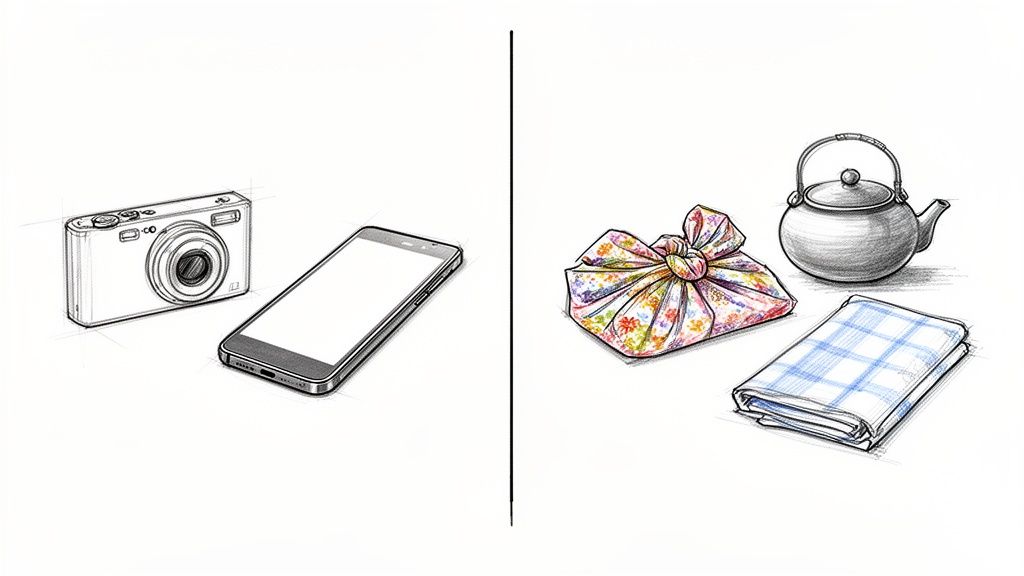
Modern Tech vs. Timeless Traditions
Walking through Japan is like time-traveling. One minute you're surrounded by neon skyscrapers that feel ripped from a sci-fi movie, and the next you're standing before a thousand-year-old temple gate. This incredible contrast is the heart and soul of the country, and it's perfectly reflected in what you can buy here.
Deciding on the perfect souvenir often comes down to a choice: will you bring home a piece of Japan's future or a treasure from its past? This guide breaks down that exact decision, helping you find an authentic piece of the culture, whether it's centuries old or brand new.
The Pulse of Modern Japan
For many, Japan is the land of brilliant innovation and obsessive attention to detail. Shopping for modern goods isn't just about grabbing a product; it's about owning a piece of thoughtful design, often in a model or style you simply can't get back home.
- J-Beauty Products: Japanese beauty isn't about chasing trends; it’s a ritual focused on high-quality ingredients and formulas that just work. Keep an eye out for cult favorites like hydrating lotions (often called essences), powerful sunscreens that feel impossibly lightweight, and gentle oil cleansers that melt makeup away.
- Cutting-Edge Electronics: Head to Tokyo's Akihabara or Osaka's Den Den Town and prepare to be amazed. You'll find cameras, headphones, and gadgets with features designed specifically for the Japanese market. Even something as mundane as a rice cooker is a technological masterpiece here.
- World-Class Stationery: There's a reason Japanese stationery has a global cult following. Brands like Hobonichi and Midori are revered for their minimalist design and exceptional paper quality. A simple pen or notebook from a legendary store like Itoya can turn your to-do list into a small work of art.
Japan’s design philosophy is deeply tied to the idea of monozukuri—literally, "the making of things." It’s a mindset that blends immense pride, masterful skill, and a relentless quest for perfection. You can feel it in everything from a high-tech camera to a humble ceramic bowl.
This dedication means that even mass-produced items feel special and are built to last, making them souvenirs that are both incredibly useful and deeply meaningful.
Embracing Timeless Traditions
On the other side of the coin are the crafts perfected over centuries. These items are steeped in cultural history, showcasing the artistry that forms Japan's foundation. They offer a real, tangible connection to the country's past. Sourcing these from local artisans off the beaten path makes for a truly immersive experience.
Choosing a traditional souvenir isn't just about how it looks; it's about appreciating the skill, patience, and history woven into its very being.
Traditional Crafts with Lasting Appeal
- Furoshiki (Wrapping Cloths): These beautifully patterned square cloths are the original sustainable gift wrap. Versatile and elegant, they can be used to wrap presents, carry your lunch, or even hang on the wall as art. Their multi-purpose nature is classic Japanese ingenuity.
- Tenugui (Hand Towels): Far more than a simple towel, a tenugui is a thin cotton cloth printed with everything from classic geometric patterns to quirky modern designs. Use one as a hand towel, a headband, or a decoration. They're lightweight, affordable, and unmistakably Japanese.
- A Quality Green Tea Set: Tea is absolutely central to Japanese culture, and bringing home a proper tea set is a beautiful way to continue that ritual. A starter set usually includes a small side-handled teapot (kyusu) and a few handleless cups (yunomi). Pair it with some high-quality sencha or matcha, and you've got a gift of pure tranquility.
These aren't just objects; they're artifacts that carry the weight and beauty of Japanese culture. When you bring one home, you're not just decorating a shelf—you're weaving a piece of Japan's enduring legacy into your own life.
Smart Shopping Tips for a Seamless Experience
Knowing what treasures you want to bring home is the fun part, but understanding how to shop in Japan will make the entire experience smoother. Getting the logistics right—from payments to tax refunds—means you can focus on the joy of the hunt, not the headache of the transaction. Let’s get you shopping like a pro.
Demystifying Tax-Free Shopping
As a tourist, you can get a refund on Japan's 10% consumption tax, which is a pretty sweet deal, especially on bigger-ticket items. The best part? The whole process is handled right there in the store, so you don't have to deal with extra paperwork at the airport.
Look for shops with the "Japan Tax-Free Shop" logo. To qualify, you need to spend over ¥5,000 (before tax) in one go. The most important thing to remember is to have your actual passport on you—they won't accept photocopies.
When you get to the checkout, just show them your passport. The shop will either ring you up for the tax-free price right away or have you pay in full and then get your refund at a dedicated counter inside the store. It's an incredibly efficient system built for travelers.
Keep in mind that consumable items like food, skincare, and drinks will be sealed up in a special bag. Technically, you're not supposed to open this until you’ve left Japan. They'll also staple a record of your purchase into your passport, which customs might glance at when you depart.
Navigating Payments and Customs
Japan is a land of incredible technology, but when it comes to shopping, cash is still king in many places. Big department stores and chain shops will happily take your credit card, but you'll absolutely need some yen for the smaller, more authentic spots.
Make sure you've got a decent amount of cash on hand, especially for:
- Local Markets: Many vendors at morning markets or flea markets are cash-only.
- Shotengai Arcades: The little family-run shops selling snacks or local crafts often don't have card machines.
- Artisan Workshops: When you're buying a piece directly from the person who made it, cash is usually the expected (and most appreciated) way to pay.
When you're packing to go home, be smart about customs regulations in your own country. Packaged goodies like candy, crackers, and tea are almost always fine. But things like fresh fruit, meat, and dairy products are often a no-go. It’s always worth a quick Google search of your home country’s rules before you load up on perishable treats.
A Few Helpful Japanese Phrases
You don't need to be fluent, but learning just a couple of phrases goes a long way. It shows respect and can turn a simple purchase into a really lovely interaction.
- "Kore o kudasai." (ko-ray oh koo-da-sai) - "This one, please." Simple, polite, and effective when pointing to what you want.
- "Ikura desu ka?" (ee-koo-ra dess ka?) - "How much is it?" Perfect for those moments when a price isn't clearly marked.
- "Arigatou gozaimasu." (a-ree-ga-toe go-zai-mass) - "Thank you very much." Honestly, this is the most important one you can learn.
Using these simple phrases can make all the difference, creating a warm exchange that leaves both you and the shopkeeper smiling.
Frequently Asked Questions About Shopping in Japan
Shopping in Japan for the first time can feel like stepping into another world. To make sure you’re shopping smart and respectfully, here are the answers to a few questions that pop up all the time.
Cash or Card? What Do Locals Actually Use?
While you'll have no problem using your credit card in big department stores and chain shops in major cities, Japan is still very much a cash society at its heart.
This becomes really obvious the moment you step off the beaten path. Think local markets (shotengai), tiny ramen shops, or independent artisan studios—these are the spots where you'll find the most authentic souvenirs, and they often don't have card machines. Always have a good amount of Japanese Yen on you. My rule of thumb? Use the card for big-ticket items in department stores and keep cash ready for everything else.
What Shopping Etiquette Should I Know?
In Japan, shopping etiquette boils down to respect and mindfulness. It's these small gestures that make for a much better experience.
When you walk into a small, family-run shop, a quiet "Konnichiwa" goes a long way. Handle items with care, especially if they’re handmade. At the register, you'll almost always see a small tray. Place your money or card there instead of handing it directly to the cashier—they’ll do the same with your change. Also, haggling isn't really a thing here. Prices are fixed unless you're at a flea market.
A respectful approach is everything. Observing these little customs shows you appreciate the local culture, which often leads to warmer interactions and a much more memorable trip.
Can I Get a Tax Refund Everywhere I Shop?
That tax-free perk is fantastic, but you can't get it everywhere. You can only get a refund on the 10% consumption tax at licensed "Japan Tax-Free Shop" locations, which are always clearly marked with a logo. You’ll see them all over department stores and big chain retailers.
To qualify, you need to spend over ¥5,000 in a single store on the same day. The most important part? You must have your original passport with you when you pay. If you buy things like food or cosmetics, they'll be sealed in a special bag you can't open until you've left Japan. It's a great system for tourists, so definitely use it when you can, but don't expect to find it in the charming little neighborhood shops.
At CoraTravels, we believe that understanding these local nuances is what transforms a good trip into an unforgettable one. Our guides are built on insider knowledge to help you navigate cultural etiquette and practical tips with ease. Discover how to travel like a local with CoraTravels.