
London is more than a checklist of iconic landmarks. It's a sprawling city of villages, each with its own rhythm, history, and secrets. While the postcard sights of Westminster and the Tower of London have their place, the true magic lies in the everyday moments: the chatter of a neighborhood pub, the creative energy of an artist's studio, and the shared commute on the Tube. This is an off-the-beaten-path guide for a full cultural experience.
This guide is designed to take you beyond the tourist circuits and into the London that locals know and love. We will show you how to navigate the city's complex social fabric, from understanding the unspoken rules of the Underground to discovering the street art that tells the story of its ever-changing communities. This is your resource for finding the things to do in London England that don’t make it into a typical travel brochure, focusing on immersive, local experiences.
Our focus is on immersive experiences that reveal the city's authentic, living soul. You'll learn how to explore Borough Market like a seasoned local, find the best independent shops in Camden, and experience the diverse food cultures that thrive in neighborhoods far from the West End. To uncover the city's true character, explore a curated list of unusual things to do in London and its hidden gems.
This listicle moves past generic advice, offering actionable insights for every traveler seeking a deeper, more authentic cultural connection. Forget the long queues and the predictable crowds; prepare for a journey into the heart of London’s vibrant, multicultural, and constantly evolving identity. Let’s begin.
1. Explore Borough Market Like a Local
Borough Market is more than just a famous food destination; it's a living, breathing part of London's culinary ecosystem where locals, chefs, and producers converge. To truly experience one of the most authentic things to do in London England, you need to go beyond the food stalls and understand its daily rhythm as a neighborhood hub, not just a tourist attraction.
How to Navigate the Market's Rhythm
The key is timing and perspective. An early morning visit between 7am and 10am on a Wednesday or Thursday reveals the market’s true character. This is when local residents do their weekly shop, and chefs from nearby restaurants are selecting the freshest produce. You'll witness genuine interactions and see the market as a functional grocery hub. In contrast, the midday rush (12pm to 2pm) is packed with visitors sampling street food. While vibrant, it lacks the local feel.
Actionable Tips for an Authentic Visit
To blend in and get the most out of your visit, follow these local habits:
- Talk to the Traders: Don't just browse. Ask a cheesemonger what’s perfectly ripe or a baker about their sourdough starter. These conversations are where you'll find the best recommendations and a deeper connection to the food.
- Bring Reusable Bags: Londoners are environmentally conscious. Arriving with your own tote bag signals you're a serious shopper, not just a browser, and helps you blend in.
- Embrace Standing Lunches: Notice how many locals grab a bite and eat it standing near the stall. This is the authentic way to enjoy market food, saving seated areas for those who truly need them.
- Venture to the Edges: Explore the smaller alleyways branching off the main market hall. Here you'll find specialized suppliers and hidden gems often missed by the crowds.
By approaching Borough Market with this insider knowledge, you transform a tourist stop into a rich cultural experience.
Local Insight: For a quieter moment, explore the smaller alleyways branching off the main market hall. Here you'll find specialized suppliers and hidden gems often missed by the crowds. For official hours and vendor lists, visit the Borough Market website.
2. Walk the Thames Path from Westminster to Tower Bridge
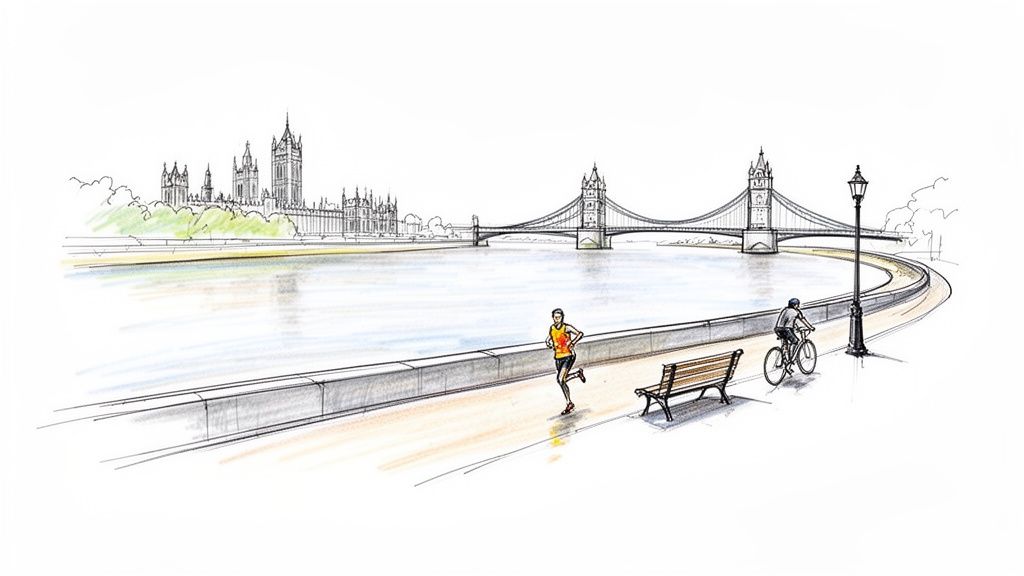
The Thames Path is more than a scenic route; it’s a living artery of the city where Londoners commute, exercise, and socialize. To experience one of the most dynamic things to do in London England, you must see this iconic stretch of river through a local's eyes. The path’s character changes with the city's pulse, offering a glimpse into the capital's daily life far removed from tourist queues.
How to Navigate the Path's Rhythm
The key is timing and perspective. An early morning walk between 6am and 8am on a weekday reveals the path as a functional commuter highway, with cyclists and runners starting their day. This is London at its most authentic. In contrast, a weekend afternoon brings a more leisurely crowd, but the real magic lies in observing the path as an essential part of the city's infrastructure, not just a landmark backdrop.
Actionable Tips for an Authentic Visit
To transform this walk from a simple stroll into a cultural observation, adopt these local habits:
- Alternate Your Route: Walk from Westminster to Tower Bridge on the South Bank, then cross the bridge and return on the North Bank to see contrasting views of the city's architecture and riverside life.
- Observe Working Life: Pay attention to the river traffic, the maintenance crews, and the delivery boats. This is the operational side of London that most visitors miss.
- Seek Out Independent Pubs: Skip the tourist-heavy chains and find a local pub tucked away on a side street, like The Anchor & Hope near the Southbank, for a genuine pint.
- Walk on a Weekday: For a true feel of the city's pace, choose a weekday. You'll share the path with locals on their lunch breaks and commuters heading home.
By walking the Thames Path with intent, you engage with the city on a deeper, more meaningful level.
Local Insight: Check the tide times before you go. At low tide, the foreshore is exposed, and you might spot "mudlarks" searching for historical artifacts. For maps and access points, check the official National Trail guides.
3. Navigate the London Underground Like a Londoner
The London Underground, or "the Tube," is more than transport; it's the city's circulatory system and a cultural institution. For visitors seeking one of the most authentic things to do in London England, learning its unspoken rules and rhythms offers a deep dive into the local mindset. The Tube is where London's diverse communities intersect daily, and understanding its flow is key to seeing the city as its residents do.

How to Navigate the Tube's Rhythm
Mastering the Tube means understanding its etiquette and timing. Riding during off-peak hours (10am to 4pm and after 7pm) allows you to observe the city's true pulse without the chaotic crush of rush hour. This is when you'll see Londoners commuting between neighborhoods, revealing the social geography that guidebooks miss. Notice how the atmosphere on the District Line, serving diverse multicultural areas, differs from the modern Jubilee Line, which reflects the city's southeast expansion.
Actionable Tips for an Authentic Visit
To ride the Tube like you've lived here for years, adopt these local habits:
- Stand on the Right: The most crucial rule. Always stand on the right side of escalators to allow people in a hurry to walk on the left.
- Move Down the Carriage: When you board a crowded train, don't stop near the doors. Moving into the carriage makes space for others and is a sign of a seasoned traveler.
- Have Your Payment Ready: Londoners don't fumble at the ticket barriers. Have your Oyster card or contactless payment method ready to tap and go, keeping the flow of traffic moving.
- Walk Between Stations: In Central London, some stations like Covent Garden and Leicester Square are surprisingly close. Walking between them helps you grasp the city's true scale above ground.
By observing these subtle customs, you move from being a tourist to a temporary Londoner, experiencing the city's daily life firsthand.
Local Insight: Before you travel, check the official Transport for London (TfL) website or their Twitter account for service updates. Following TfL is a daily ritual for Londoners, and staying informed is part of the authentic local experience. For maps and journey planning, visit the Transport for London website.
4. Discover Street Art in Shoreditch and Brick Lane
Shoreditch and Brick Lane are London's living canvases, where street art is a raw, evolving conversation rather than a static gallery exhibit. This isn't just decoration; it's a dynamic reflection of the area's immigrant history, LGBTQ+ identity, and ongoing struggles with gentrification. To properly experience one of the most vibrant things to do in London England, you must see this art as a direct voice of the community.

How to Navigate the Outdoor Gallery
The key to an authentic experience is to treat your visit like a treasure hunt, not a guided tour. Start at Liverpool Street Station and walk east down Brick Lane, observing how the art shifts from commercial to political. The most potent work isn’t always on the main drags but tucked away in side alleys and courtyards. A weekday morning visit allows you to see the art without the weekend crowds, offering a clearer, more personal viewing experience.
Actionable Tips for an Authentic Visit
To engage with the scene respectfully and get more out of your exploration, adopt these local practices:
- Explore Beyond the Obvious: Duck into the smaller streets off Brick Lane and Shoreditch High Street. These less-trafficked areas are where emerging artists often practice and where you'll find more experimental pieces.
- Observe the Layers: Notice how artworks are painted over one another. This constant evolution is part of the culture, reflecting ongoing dialogues and artistic rivalries.
- Engage if Possible: If you see an artist at work, a respectful "hello" can often lead to a fascinating conversation about their piece's meaning and the neighborhood's politics.
- Support Local Businesses: The art is intertwined with the community. Buy a coffee from an independent café or a book from a local shop to support the ecosystem that allows this creative culture to thrive.
By exploring with curiosity, you’ll see Shoreditch not just as a backdrop for photos, but as a neighborhood telling its story on its walls.
Local Insight: Pay attention to how quickly the art changes, especially pieces that respond to current political events. What you see one week might be gone the next. For more on the area's significance, explore other famous streets in London.
5. Experience London's Pub Culture Beyond the Tourist Circuits
London's pub culture is a cornerstone of its social fabric, far more than just a place to grab a pint. To discover one of the most authentic things to do in London England, you must look beyond the historic tourist traps and find a true neighbourhood “local.” These pubs act as community living rooms, where the character of an area is most palpable and social interactions are genuine.
How to Find an Authentic "Local"
The key is observing the clientele and atmosphere. A real local pub thrives on its regulars. Visiting mid-afternoon on a weekday (3-5pm) allows you to see the pub in its quieter state, when regulars might be chatting with the bartender. Instead of choosing a pub from a guidebook, ask a local shopkeeper or resident where they go for a drink. The difference between a tourist-heavy pub like The Sherlock Holmes and a neighbourhood gem like The Churchill Arms in Kensington is stark.
Actionable Tips for a Genuine Pub Visit
To fit in and have a truly local experience, adopt these simple pub protocols:
- Order at the Bar: Queues are rare. Find a space at the bar, make eye contact with the staff, and be ready to order. You pay as you order.
- Know the Lingo: Order a "pint" or a "half-pint." If you’re unsure about the local ales, ask for a small "taster" before you commit.
- Respect the Regulars' Space: You'll often notice a specific area of the bar where the regulars congregate. It’s best to find another spot unless you are invited over.
- Understand Tipping: Tipping isn't expected, but rounding up the bill or saying "and one for yourself" to the bartender is a much-appreciated gesture.
By embracing these customs, you move from being a visitor to a participant in a centuries-old London tradition.
Local Insight: For a true taste of local life, seek out a pub hosting a "pub quiz" night, typically held on a weeknight. It’s a fantastic way to observe community dynamics and even join a team if you’re feeling bold.
6. Shop at Independent Markets and Vintage Shops in Camden and Portobello
Camden and Portobello Road markets are more than shopping destinations; they are living archives of London's subcultures and creative spirit. To experience these iconic spots as a local would, one must look beyond the souvenir stalls and understand their unique identities. Camden is the heart of London's counter-culture, while Portobello Road in Notting Hill showcases a more bohemian, antique-focused heritage.
How to Navigate the Market's Rhythm
Timing is crucial for an authentic experience. Visiting Camden Market on a weekday morning offers a calmer atmosphere, allowing for genuine conversations with artisans and designers. For Portobello Road, the main event is the Saturday antiques market. Arrive between 8am and 10am to see serious collectors and dealers browsing before the crowds descend. This early window is when the most unique and valuable items are discovered and sold.
Actionable Tips for an Authentic Visit
To connect with the true spirit of these markets and find one-of-a-kind treasures, adopt these local practices:
- Engage with the Sellers: Ask traders about the history of an antique piece or the inspiration behind a handcrafted item. Their stories add immense value to your purchase.
- Explore the Fringes: The best finds are often in the smaller, less crowded areas. In Camden, venture into the Stables Market; on Portobello Road, explore the side streets where independent vintage boutiques are tucked away.
- Negotiate Respectfully: For antiques and vintage clothing, a polite negotiation is often expected. Start by offering a reasonable price, showing genuine interest in the item.
- Bring Cash: Many independent and smaller traders, especially in the antiques sections, prefer cash or may offer a better price for it. This simple tip makes transactions smoother.
By treating these markets as cultural hubs rather than just retail spaces, you uncover one of the most rewarding things to do in London England.
Local Insight: On Portobello Road, the market changes its focus throughout the week. Visit on a Friday for a mix of new goods and fashion, or during the week for fresh produce and household items, which offers a completely different, more local atmosphere than the famous Saturday antique hunt. For a deeper dive, check Portobello Road Market's official info.
7. Explore Literary and Historic London Through Writers' Neighborhoods
London's literary history isn't confined to museums; it's etched into the very streets of its neighborhoods. To connect with the city's intellectual soul, skip the exhibitions and instead walk the same paths as legendary authors. This immersive approach reveals how the character of areas like Bloomsbury, Fitzrovia, and Soho directly shaped the work of writers from Virginia Woolf to George Orwell.
How to Navigate Literary Landscapes
The key is to treat the city itself as a living text. A walk through Bloomsbury on a quiet weekday morning lets you see the elegant squares that the Bloomsbury Group called home, feeling the academic and bohemian spirit that still lingers. In contrast, exploring Soho's narrow alleys reveals the grittier world that inspired Orwell's "Down and Out in Paris and London." By matching a neighborhood to its literary era, you experience one of the most intellectually stimulating things to do in London England.
Actionable Tips for an Authentic Visit
To transform a simple walk into a deep literary exploration, follow these insider tips:
- Read Before You Roam: Context is everything. Reading a novel set in a specific area, like a work by Virginia Woolf before exploring Bloomsbury, turns building facades into story backdrops.
- Visit Historic Pubs at Off-Peak Times: Head to The Fitzroy Tavern or The Lamb in the mid-afternoon. You can soak in the atmosphere where Dylan Thomas drank without the evening crowds.
- Talk to Booksellers: Staff at independent bookshops in these neighborhoods, such as those on Charing Cross Road, are often fountains of local literary lore and can recommend contemporary authors who live and work nearby.
- Trace Fictional Footsteps: Use a novel as your map. Following a character's journey through the city offers a unique and personal way to experience the narrative.
This method allows you to discover London's cultural geography and understand its creative pulse on a much deeper level.
Local Insight: For a truly immersive experience, find plaques on buildings marking authors' former residences. Combining a walk through Camden to see William Blake's homes with a visit to a local independent bookshop can provide a rich, multi-layered understanding of the area's artistic heritage.
8. Experience Neighborhood Food Cultures in Chinatown, Little Italy, and Multicultural Communities
London's identity is profoundly shaped by its diverse communities, and their culinary traditions serve as neighborhood anchors. To truly find unique things to do in London England, skip the tourist-centric restaurants and instead immerse yourself in the authentic food cultures of areas like Chinatown, Brick Lane’s Bengali community, or the Turkish enclaves of Harringay. This means eating where locals eat, observing their dining rituals, and understanding how food is woven into the community's daily life.
How to Navigate Local Dining Scenes
The key is to observe and adapt to the local rhythm. For instance, many of Chinatown's best dim sum houses are bustling with families on weekend mornings, while late-night eateries cater to night-shift workers after midnight. Similarly, the curry houses on Brick Lane serve a different purpose for the local Bengali community, offering affordable, hearty meals, than for tourists seeking a generic "curry" experience. Observing these patterns helps you find the most genuine establishments.
Actionable Tips for an Authentic Visit
To connect with these food cultures on a deeper level, adopt the habits of a respectful local:
- Eat at Community Hours: Try dining during off-peak times (e.g., 2-5 pm) or very late, when you’re more likely to be among neighborhood residents rather than tourists.
- Ask for House Specialties: Ignore the familiar, tourist-friendly dishes. Ask what the chef or the family running the restaurant is proudest of; this is where you'll find the authentic flavors.
- Observe What Locals Order: Pay attention to the dishes being served to other tables, especially those with multi-generational families. This is a far better guide than any online review.
- Visit Neighborhood Grocers: Step into a local grocery store in areas like Peckham or East Ham to see the ingredients that form the foundation of the community's cuisine.
By seeking out these experiences, you move beyond mere consumption and gain insight into the living cultures that make London a true global city.
Local Insight: For an authentic taste of London's Turkish community, head to Green Lanes in Harringay. Look for bustling ocakbaşı restaurants where you can see the chefs grilling meat over charcoal. Ask for recommendations from shopkeepers at local Turkish food markets for the best spots.
9. Discover London's Hidden Galleries and Artist Studios
Beyond the grand museums, London's creative pulse beats strongest in its independent galleries, artist collectives, and studio open houses. These spaces, often tucked away in converted warehouses and residential neighborhoods, offer a raw, unfiltered look into the city’s contemporary art scene. Engaging with this network is one of the most immersive things to do in London England, revealing how artists live, work, and shape the city’s cultural identity outside the commercial mainstream.
How to Navigate the Creative Scene
The key is knowing where and when to look. Neighborhoods like Hackney Wick, Walthamstow, and Peckham are epicenters of artistic practice, filled with studios and artist-run spaces. Special events are the best entry points. "First Thursdays," a monthly late-night gallery opening event in East London, offers a fantastic, free way to gallery-hop. Similarly, annual "Open Studios" weekends allow you to step directly into an artist's workspace and see their process firsthand, an experience far removed from a polished exhibition.
Actionable Tips for an Authentic Visit
To connect with London's working artists and their communities, adopt these local approaches:
- Follow the Events: Check listings on sites like Art Licks or local council websites for open studio weekends and art trails. These are your best opportunities for direct access.
- Talk to the Artists: When visiting an open studio, don't be shy. Ask artists about their work, their inspiration, and the challenges of being a creative in London.
- Explore Artist-Run Spaces: Seek out smaller, non-commercial galleries. These venues often showcase more experimental and politically engaged work than their commercial counterparts.
- Venture Beyond Zone 1: The most dynamic art scenes are in East and South London. Take the Overground to Hackney Wick or a train to Peckham to find concentrated creative hubs.
By venturing into these creative pockets, you gain a deeper understanding of the city's vibrant, ever-evolving cultural landscape.
Local Insight: Many artists and independent galleries are most active on social media. Following them on platforms like Instagram is the best way to get real-time updates on pop-up shows, private views, and artist talks. For more ideas on unique cultural spots, see these places to visit in London.
10. Navigate London's Nightlife Beyond West End Clubs
London’s after-dark identity extends far beyond the well-trodden clubs of Soho and the West End. To discover one of the most dynamic things to do in London England, you must understand that authentic nightlife is neighborhood-specific. Each area pulses with its own unique cultural rhythm, shaped by its history, migration patterns, and underground scenes.
How to Navigate London's After-Hours Geography
The key is to match your interests to a neighborhood’s personality. For cutting-edge electronic music, the industrial warehouses of Hackney Wick and the gritty basements of Shoreditch are the epicenters. If you're seeking the vibrant energy of Caribbean culture, Brixton's venues showcase reggae and grime. Meanwhile, intimate jazz clubs thrive in both Soho and Dalston, offering completely different atmospheres. This neighborhood-focused approach lets you experience nightlife as a local cultural expression, not just a generic night out.
Actionable Tips for an Authentic Night Out
To find the city's true pulse after midnight, adopt these local strategies:
- Ask Targeted Questions: Instead of asking a Londoner for a "good club," ask, "Where's the best place for live jazz in East London?" Specificity yields much better recommendations.
- Embrace the Journey: London’s nightlife is spread out. Use the Night Tube or night buses to travel between neighborhoods, which is part of the authentic experience.
- Respect the Scene: Many venues are community hubs. Go to observe and participate, not just to spectate. Understand the history of the music and the space you're in.
- Check Door Policies: Dress codes and entry rules vary wildly. A relaxed warehouse party in Hackney will have a different vibe and policy than a chic bar in Mayfair. Research online beforehand.
By exploring these distinct pockets of nightlife, you uncover the contemporary, diverse, and ever-evolving soul of London after dark.
Local Insight: Many of the best nights are promoted through niche online platforms like Resident Advisor for electronic music or through venue-specific social media. Always check their official channels for the most accurate listings and door times.
11. Investigate London's Industrial Heritage and Transitioning Neighborhoods
London’s identity is forged in its industrial past, and the most authentic way to explore this history is by walking through its evolving neighborhoods. Instead of visiting a museum, you can witness the city's transformation firsthand in places like King's Cross and Hackney Wick. This approach reveals the raw, dynamic process of urban change, offering a profound understanding of how industrial infrastructure shapes contemporary culture and community.
How to Read the Urban Landscape
The key is to look for architectural layers and social shifts. A visit to Battersea Power Station shows a cathedral of industry reborn as a luxury commercial hub, while a walk along Regent's Canal from King's Cross to Camden reveals how a vital transport corridor has become a space for leisure and creativity. These areas are living exhibits of regeneration, gentrification, and cultural adaptation, making them one of the most insightful things to do in London England for curious travelers.
Actionable Tips for an Exploratory Walk
To connect with these neighborhoods on a deeper level, adopt an urban explorer's mindset:
- Walk the Arteries: Follow industrial corridors like canals (Regent's, Grand Union) or railway arches. These paths offer unique perspectives on how old infrastructure is being repurposed.
- Notice the Details: Look for ghost signs on old brick buildings, repurposed warehouse lofts, and the contrast between original industrial architecture and new developments.
- Visit on Weekdays: Explore areas like Hackney Wick or Peckham on a weekday afternoon to see artist studios and small workshops in action, revealing the creative economy that has taken root.
- Talk to Business Owners: Chat with a café owner in a converted railway arch or a gallerist in a former factory. Ask about the neighborhood's changes to hear firsthand accounts of its evolution.
By exploring these transitioning zones, you move beyond static landmarks to engage with London as a city in constant, visible motion.
Local Insight: For a powerful visual contrast, start your walk at the ultra-modern Coal Drops Yard in King's Cross and follow the Regent's Canal towpath east toward the post-industrial artist enclaves of Hackney Wick. This route maps London's economic and cultural shifts over the last century.
12. Engage with London's Community Gardens, Allotments, and Urban Green Spaces
Beyond the famous Royal Parks, London's true green heart beats within its community gardens and allotments. These are more than just patches of land; they are vibrant hubs where Londoners cultivate food, build connections, and create pockets of nature within the dense urban landscape. Engaging with these spaces offers a unique perspective on local life, revealing how communities organize and thrive.
How to Navigate the Urban Growing Scene
The key to an authentic visit is finding a garden with public access or an open day. Many community gardens welcome visitors, especially during growing seasons from spring to autumn. Unlike manicured parks, these spaces are functional and ever-changing, reflecting the efforts of local residents. Visiting on a weekend often means you'll see volunteers at work, offering a chance to observe or even participate in one of the most rewarding things to do in London England.
Actionable Tips for an Authentic Visit
To respectfully explore these community-led spaces, consider the following:
- Check for Open Days: Many gardens, like Dalston Eastern Curve Garden or Brockwell Park Community Greenhouses, have regular public hours or special events. Always check their schedules online beforehand.
- Start a Conversation: If you see volunteers working, a friendly "hello" can go a long way. Ask about what they're growing or the history of the space; people are often proud to share their stories.
- Support Their Work: Many gardens have small cafes, plant sales, or donation boxes. Buying a coffee or a seedling is a great way to contribute to their mission.
- Respect the Space: Remember these are community-run projects. Stick to designated paths, don't pick anything without permission, and be mindful that you are a guest in a shared local space.
By visiting these urban oases, you step away from the tourist trail and connect with the grassroots culture of London's neighborhoods.
Local Insight: Look for Capital Growth gardens, a network of over 2,000 food-growing spaces across the city. Their online map is an excellent tool for finding a community garden or allotment near where you're staying. For details and locations, visit the Capital Growth website.
12-Point Comparison: Things to Do in London
| Experience | Implementation Complexity 🔄 | Resource Requirements ⚡ | Expected Outcomes ⭐📊 | Ideal Use Cases 💡 | Key Advantages ⭐ |
|---|---|---|---|---|---|
| Explore Borough Market Like a Local | Medium 🔄 — requires timing knowledge (avoid peak crowds) | Low ⚡ — short travel, reusable bags, cash/cards, 2–4 hrs | High ⭐📊 — authentic food culture, quality purchases, producer interaction | Food shopping, culinary research, local market immersion 💡 | Direct access to producers; diverse cuisines; weekday quieter experience ⭐ |
| Walk the Thames Path from Westminster to Tower Bridge | Low 🔄 — easy linear route, minimal planning | Low ⚡ — comfortable shoes, 1–3 hrs, optional maps | High ⭐📊 — panoramic river views, local rhythms, photography opportunities | Scenic walking, exercise, observational urban study 💡 | Free, flexible pacing; dual-bank perspectives and heritage views ⭐ |
| Navigate the London Underground Like a Londoner | High 🔄 — steep learning curve (routes, etiquette) | Medium ⚡ — Oyster/contactless, apps, off-peak timing knowledge | Very High ⭐📊 — fast cross-city mobility, neighborhood insight, time savings | Efficient travel, cultural immersion, commuting observation 💡 | Fastest way to traverse London; reveals social geography and daily life ⭐ |
| Discover Street Art in Shoreditch and Brick Lane | Medium 🔄 — requires local navigation and timing (art changes) | Low ⚡ — walking, camera, map or guide app | High ⭐📊 — evolving art insights, neighborhood political/cultural context | Contemporary art exploration, social/political observation 💡 | Free, dynamic artworks; direct connection to local creative movements ⭐ |
| Experience London's Pub Culture Beyond the Tourist Circuits | Low–Medium 🔄 — know local etiquette and peak times | Low ⚡ — cash/cards, modest time for lingering | High ⭐📊 — authentic social interaction, neighborhood character, good local food | Social observation, relaxed evenings, neighborhood study 💡 | Community hubs with varied personalities; affordable and conversational ⭐ |
| Shop at Independent Markets & Vintage Shops (Camden / Portobello) | Medium 🔄 — sifting, bargaining, early arrival advised | Medium ⚡ — cash, transport, time for browsing, market knowledge | High ⭐📊 — unique finds, maker contact, insight into creative economy | Vintage collecting, design hunting, supporting makers 💡 | Access to unique, handmade/vintage items and direct trader relationships ⭐ |
| Explore Literary & Historic London via Walking Tours | Low 🔄 — relatively simple routes but benefits from prep | Low ⚡ — reading prep, walking shoes, 1–3 hrs | Medium ⭐📊 — contextual literary history, neighborhood narrative | Literary enthusiasts, academic context, cultural tourism 💡 | Integrates texts with place; affordable and informative neighborhood walks ⭐ |
| Experience Neighborhood Food Cultures (Chinatown, Brick Lane, etc.) | Medium 🔄 — requires local recommendations and timing | Low–Medium ⚡ — modest budget, possibly language navigation | Very High ⭐📊 — authentic meals, cultural insight, community engagement | Ethnic food exploration, cultural anthropology, community support 💡 | Genuine dishes at community prices; reveals immigration histories and rituals ⭐ |
| Discover London's Hidden Galleries & Artist Studios | Medium–High 🔄 — irregular schedules, event-based visits | Low ⚡ — research, travel to specific neighborhoods, event timing | High ⭐📊 — direct artist engagement, early access to emerging work | Contemporary art discovery, networking with artists, studio visits 💡 | Access to experimental practice and artist communities outside institutions ⭐ |
| Navigate London's Nightlife Beyond West End Clubs | Medium 🔄 — requires research, safety planning, door policies | Medium ⚡ — entry fees, late transport, cash; variable timing | High ⭐📊 — exposure to music scenes, live culture, community nightlife | Music-focused nights, subcultural exploration, late‑night congregations 💡 | Authentic local scenes, better value, discovery of emerging artists ⭐ |
| Investigate Industrial Heritage & Transitioning Neighborhoods | Medium 🔄 — needs research and awareness of changing sites | Low–Medium ⚡ — walking/cycling, time for exploration, some remote access | High ⭐📊 — insight into regeneration, gentrification, adaptive reuse | Urban studies, architecture, socio-economic field observation 💡 | Strong visual interest; reveals real-time urban transformation and community impact ⭐ |
| Engage with Community Gardens, Allotments & Urban Green Spaces | Low 🔄 — seasonal events and community schedules | Low ⚡ — short visit time, possible small donations or volunteer time | Medium ⭐📊 — community connection, food-growing insight, environmental practice | Community engagement, urban ecology, participatory visits 💡 | Local resilience, cross-cultural connection, practical food and environmental initiatives ⭐ |
Your London, Your Way
London is not a city to be merely seen; it is a city to be experienced. As we've journeyed through this guide, from the sensory overload of Borough Market to the quiet creativity of hidden artist studios, a clear picture emerges. The most memorable, authentic, and truly impactful things to do in London, England, are rarely found on a postcard. They are discovered in the rhythm of its neighborhoods, the chatter of its local pubs, and the echoes of its layered history. You've learned how to navigate the city not just geographically via the Tube, but culturally, by understanding the etiquette of pub life and the community spirit of its urban green spaces.
This guide was designed to be a launchpad, not a checklist. The goal was never to have you simply replicate these experiences, but to equip you with a new lens through which to view this sprawling metropolis. Knowing how to explore the street art of Shoreditch gives you the confidence to wander down an intriguing alleyway in Peckham. Understanding the value of independent markets in Camden and Portobello encourages you to seek out similar local hubs in Brixton or Broadway Market. It’s about cultivating a mindset of curiosity and connection.
Key Takeaways for Your London Adventure
The essence of a deep London experience boils down to a few core principles we've explored:
- Embrace the Neighborhood: London is a city of villages. The true character of the city is found by immersing yourself in these distinct areas, from the historic literary haunts of Bloomsbury to the post-industrial cool of Hackney Wick. Don't just visit the landmarks; explore the streets around them.
- Follow the Locals: The best pint, the most authentic curry, and the most vibrant market stalls are found where Londoners themselves congregate. Step away from the tourist-heavy circuits and into the pubs, cafes, and green spaces that serve the local community. This is where the city’s heart truly beats.
- Connect with Culture and History: London's story is written on its streets. Walking the Thames Path isn't just a scenic stroll; it's a journey through centuries of trade, power, and transformation. Seeking out hidden galleries or community gardens connects you to the living, breathing culture that defines the city today.
Actionable Next Steps for Your Trip
To transform this knowledge into action, your planning should be intentional. Instead of creating a rigid itinerary of sights, build a flexible framework around experiences.
- Choose a "Home" Neighborhood: Pick one or two neighborhoods to explore deeply. Spend a full morning there, have lunch, visit a local park, and pop into an independent shop. This provides a much richer experience than rushing between disconnected points on a map.
- Plan One "Off-Path" Activity Per Day: For every major landmark like the Tower of London, schedule something local and low-key. It could be visiting a community garden in Dalston, exploring the street food scene in Tooting, or simply taking a long walk along Regent's Canal. This balance is key.
- Talk to People: Ask your barista for their favorite local spot. Chat with a vendor at a market about their craft. Londoners, despite their reputation for being reserved, are often happy to share insights if approached respectfully. These small interactions are what turn a trip into a collection of genuine memories.
Ultimately, the best things to do in London, England, are the ones that resonate with you personally. This city rewards the curious. It opens itself up to those who are willing to look beyond the obvious, to walk a little further, and to listen to the stories it has to tell. Use these insights as your compass, but let your own interests be your guide. Your perfect London is out there, waiting in a quiet mews, a bustling market, or a friendly neighborhood pub. All you have to do is go and find it.
Ready to dive even deeper into culturally rich, locally-vetted travel? For more guides that champion immersive experiences and help you connect with the true spirit of a place, explore CoraTravels. Our guides are crafted to help you discover the authentic side of global destinations, just like the one you've read today. Start planning your next meaningful adventure at CoraTravels.