
To truly travel like a local is to trade the crowded tour bus for a seat at a neighborhood café, swapping checklists for genuine connections. It means seeing a destination not as a collection of sights, but as a living, breathing community you can temporarily join. This guide is your playbook for going beyond the main touristic places to find a full cultural experience.
We'll focus on the core elements: leveraging local guides, creating an immersive experience, and venturing off the beaten path.
Why Traveling Like a Local Creates a Full Cultural Experience
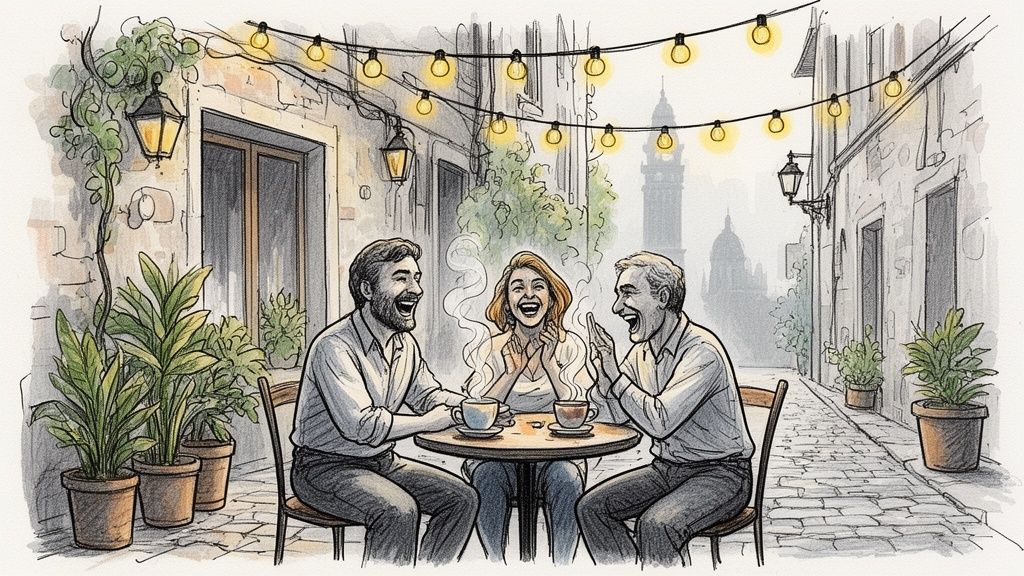
The difference between a tourist and a traveler really comes down to mindset. A tourist often arrives with a hit list of landmarks, moving from one photo op to the next. A traveler, on the other hand, wants to understand the rhythm of a place—how people actually live, eat, and connect for a truly immersive experience.
Adopting this perspective transforms a simple vacation into something far more meaningful. It’s about finding the joy in the ordinary moments: figuring out a bustling local market outside the city center, understanding the unspoken rules of the subway, or stumbling upon a family-run restaurant hidden down a quiet alley. These are the experiences that stick with you long after the memories of crowded attractions fade.
Moving Beyond the Beaten Path
The desire for this kind of travel is growing. Recent data shows that more and more travelers are choosing off-the-beaten-path destinations over the usual tourist hotspots. It's all part of a bigger shift toward "experiential travel," where people care more about discovering how locals actually live than just hitting marquee attractions. You can dig into more about the latest travel trends and see how priorities are changing.
This approach pays off in a few powerful ways:
- Authentic Discovery: You uncover the hidden gems—the parks, shops, and cafes that aren't in the guidebooks but are cherished by residents.
- Meaningful Interactions: Getting away from the tourist centers opens the door to real conversations with the people who call the place home.
- Deeper Understanding: You start to get a real feel for the local culture, traditions, and daily routines, which builds a much greater sense of empathy and appreciation.
By slowing down and just observing, you move from being a passive sightseer to an active participant. This simple change in approach is the key to unlocking a richer, more memorable journey.
Your Pre-Trip Plan for an Immersive Experience
To really travel like a local, your trip starts long before you pack. The most authentic, off-the-beaten-path experiences don't come from top-ten lists on major travel sites; they come from smart research that helps you understand the soul of a place before you even get there.
Forget the usual platforms. Your first move should be to find genuine local guides and voices. I'm talking about neighborhood blogs, hyper-local online zines, or even the Instagram accounts of journalists and artists who actually live in your destination. These are the sources that give you an unfiltered look at daily life—from the best new coffee shop that just opened to a pop-up cultural event no tourist will ever find.
Finding Your Neighborhood Vibe Outside Touristic Places
Where you stay is easily the most important decision you'll make. Camping out in a central tourist hub is convenient, but you trade authenticity for it. Instead, start looking for residential neighborhoods away from the main attractions that actually match your interests.
Are you picturing quiet, tree-lined streets with family-run bakeries? Or is a gritty, artsy district packed with galleries and street murals more your speed? Expat forums are a goldmine for this. You'll find threads titled "best neighborhoods for young professionals" or "quiet areas with good transit links" filled with the kind of honest, on-the-ground advice you can't get anywhere else.
The goal here is simple: find a home base that feels less like a hotel room and more like a temporary apartment. This small shift in location completely changes your daily rhythm, dropping you right into the flow of local life the second you step out the door.
To get a feel for the real differences, think about it like this:
| Aspect | Tourist Hotspot Experience | Local Neighborhood Experience |
|---|---|---|
| Morning Routine | Hotel breakfast buffet, surrounded by other tourists. | A short walk to the local bakery for coffee and pastries. |
| Daily Atmosphere | Crowds, tour buses, and souvenir shops everywhere. | Kids walking to school, neighbors chatting, daily life. |
| Dining Options | Restaurants with menus in five languages, higher prices. | Family-run spots where the menu might not be in English. |
| Cost | Higher prices for everything from coffee to souvenirs. | Local prices for groceries, transport, and food. |
| Cultural Immersion | Observing the culture from the outside, as a spectator. | Participating in the daily rhythm of the community. |
Choosing a local neighborhood over a tourist zone is the first real step toward seeing a city from the inside out, not just looking at it through a window.
Understanding the Unwritten Rules
Every city operates on its own set of unspoken social norms. Knowing these little details is the key to blending in and showing you’re a respectful visitor, not just another tourist. For example, in Berlin, you absolutely need cash because tons of smaller shops and cafés are card-averse. Over in Japan, the side you stand on an escalator can change depending on the city—like in Osaka versus Tokyo.
Taking the time to research these nuances shows you're an observant traveler. It helps you navigate with more confidence and sidestep those classic tourist blunders. A quick search for "local etiquette in [city]" or "things to know before visiting [country]" will turn up some incredibly useful tips.
And as you're getting your packing list together, don't forget practical items that make life easier, like a set of durable leather luggage tags to make sure your bags are easy to spot.
Lodging for a Local-First Experience
Once you've zeroed in on a neighborhood, pick a place to stay that actually deepens your connection to it. Hotels are the default, but other options can put money directly into the community and give you a much richer experience.
- Guesthouses or Pensions: These are often family-run, which means you get to interact with local hosts who can give you the best insider tips.
- Apartment Rentals: There’s nothing like having your own kitchen. Staying in a local’s apartment gives you a real taste of residential life and a reason to explore the neighborhood markets.
- Boutique Inns: Smaller, independently owned inns almost always reflect the unique character of their neighborhood way better than some big international chain ever could.
This kind of prep work lays the foundation for a trip that’s less about checking off sights and more about genuine discovery and connection. It’s what turns a standard vacation into a truly memorable cultural deep-dive.
Mastering the Daily Rhythms Off the Beaten Path
If you really want to travel like a local, you have to find the city’s pulse and sync your own rhythm to it. This is where the real magic happens. It’s about ditching the rigid tourist schedule and sliding into the everyday habits that define life in a new place—how people move, eat, and shop when nobody’s watching.
The goal is to stop being an outsider looking in. Forget taxis and Ubers. The single best way to start is by figuring out the public transit system. Grab a transit card, hop on a bus or a tram, and just pay attention. You’ll learn more in 30 minutes on a local bus than you will in three hours at a museum.
Notice the little things. Do people queue up neatly or just sort of blob together? Do they give up their seats for older folks? These aren't just quirks; they're the unspoken rules of daily life. Blending in starts with showing respect for these small, crucial norms.
The Heartbeat of the Neighborhood: Local Markets
Want to find the soul of a city? It’s not in the souvenir shops. It’s at the local market. This is where residents actually shop for their dinner, catch up on neighborhood gossip, and live their lives. It’s a full-on sensory experience that plugs you directly into the local food and culture.
Go with an attitude of quiet curiosity, not like you're at a tourist attraction. Here are a few tips I've learned over the years:
- Watch and learn first. Before you jump in, just hang back for a minute. See how locals talk to vendors, how they pay, and how they handle the produce.
- A few words go a long way. Seriously. "Hello," "please," "thank you," and "how much?" in the local language can completely change the dynamic of an interaction.
- Bring small change. Market vendors aren't banks. They'll love you for not trying to pay for a tomato with a huge bill.
- Ask for a recommendation. See something you don’t recognize? Politely ask what it is. Most vendors are proud of what they sell and are happy to share.
Choosing your lodging is a huge part of this. Where you sleep determines the rhythm you wake up to. This little decision tree can help you pick a spot that encourages a more local-first experience.
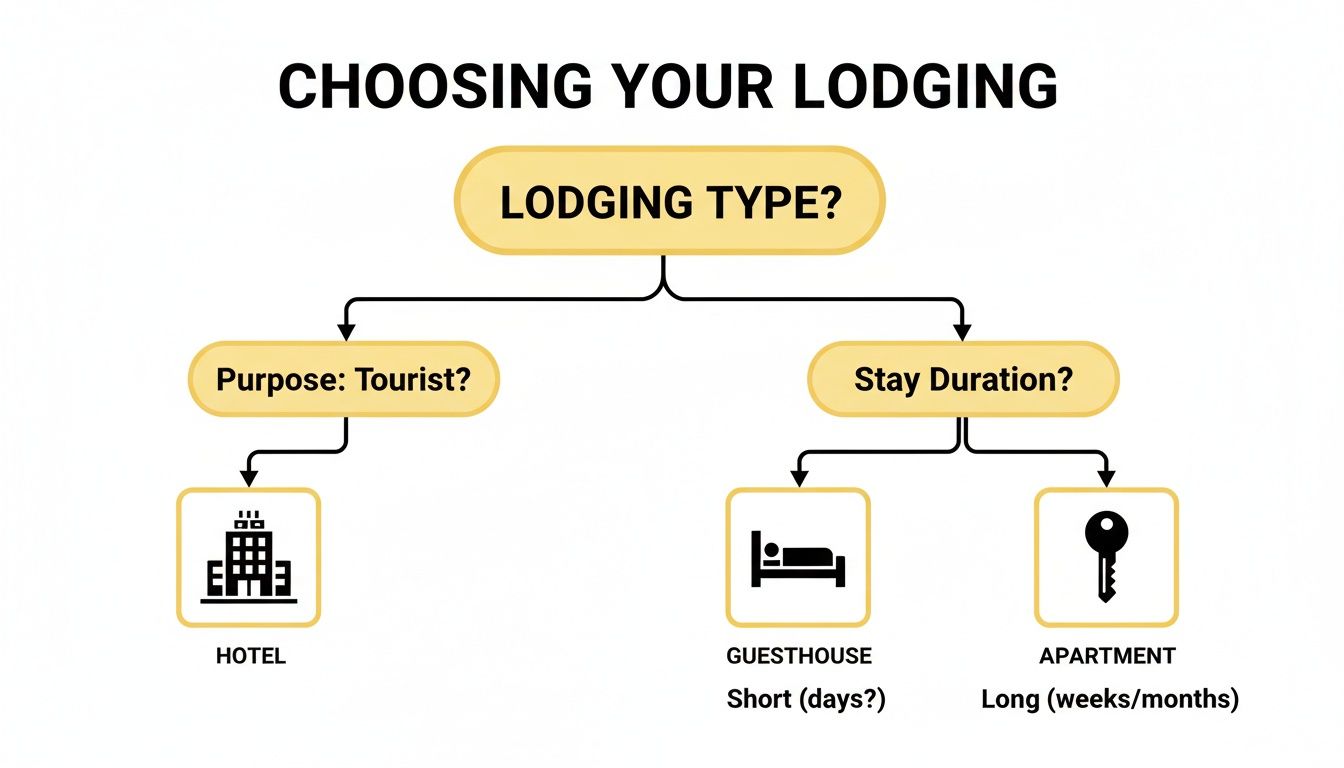
As you can see, shifting away from a standard hotel and toward a guesthouse or apartment automatically drops you into a more residential, immersive setting.
Adopting Local Mealtime Rituals
Food is culture, plain and simple. And mealtime rituals are one of the fastest ways to feel connected. In Spain, for instance, lunch is the main event, a long, leisurely affair kicking off around 2 PM. Show up at a restaurant at noon, and you’ll likely be the only one there.
It’s also about what you eat and when. You'd never see a local ordering paella for dinner in Valencia; it’s strictly a lunchtime meal.
Here's my golden rule for finding great, authentic food: walk at least three blocks away from any major tourist attraction. Look for places with handwritten menus, zero pictures, and a healthy crowd of locals. Those are the family-run gems you’re looking for.
Getting the hang of these daily patterns is what separates a decent trip from an unforgettable one. For a really specific example, this guide to living in Utrecht like a local breaks down the unique rhythms of that city perfectly. Tapping into that flow lets you experience a place from the inside out.
The Art of Cultural Immersion and Connecting with Locals
Really getting the feel for a place has nothing to do with knowing its geography. It’s about cracking the code of its unwritten social rules. When you start traveling like you live there, you realize every tiny interaction is a chance to show you get it—to build a real bridge with the culture you’re visiting.
Immersion isn't just about language; it’s about paying attention. Before you even try to speak, just watch how people move through their day. Notice the personal space they keep, the volume of their voices in a café, or how they greet a shopkeeper. These are the invisible threads that hold a community together.
Your best tools are humility and a sharp eye. This approach tells people you're a guest who's eager to learn, not a tourist who expects the world to bend for them. That simple shift can turn a basic transaction into a genuine moment of connection.
Navigating Everyday Social Scenarios
This is where your observation skills really come into play. The norms around money, greetings, and just hanging out can be worlds apart from what you're used to, and getting them right shows you’ve put in the effort.
Take tipping, for example. In the United States, a 15-20% tip is the unspoken rule. But try leaving a tip in Japan, and you’ll likely get a confused look—it can even be seen as a bit rude. In much of Europe, a service charge is often baked in, so just rounding up the bill is the common way to show thanks.
The same goes for greetings. In Thailand, you'll see the wai (a slight bow with palms pressed together), a beautiful gesture of respect, especially for elders. In Germany, it's all about a firm, confident handshake. In France? Get ready for two quick kisses on the cheek.
The goal isn't to become an overnight expert on every single custom. It's about approaching each situation with curiosity and a readiness to adapt. A polite smile and a little patience will get you through almost any mix-up.
Hiring Local Guides for Deeper Insight
To really sink into the local rhythm, you have to read the room. A pub in Ireland, for instance, runs on a system of "rounds," where everyone in the group takes a turn buying drinks for everyone else. If you're there, joining in is how you become part of the experience. But to truly unlock the culture, consider hiring a local guide for a day. An independent guide can offer a perspective you'll never find in a book, taking you to places well outside of main touristic areas and explaining the nuances of daily life.
Here are a few practical ways to show respect and connect on a deeper level:
- Learn Key Phrases: Knowing how to say "hello," "please," "thank you," and "excuse me" in the local language is non-negotiable. It’s a tiny effort that pays huge dividends in goodwill.
- Ask Before Photographing: Always ask permission before taking photos of people, particularly in markets or more personal settings. A simple smile and a gesture toward your camera usually does the trick.
- Dress Appropriately: Look around and see what locals are wearing, especially when visiting religious sites. Covering your shoulders and knees is a common sign of respect in many cultures.
These small, conscious acts are what separate a tourist from a traveler. If you want to go even deeper, our guide on cultural immersion travel has more strategies for creating meaningful experiences. By learning and respecting these unwritten rules, you’re no longer just a visitor—you’re opening the door to real, memorable connections.
How to Travel Responsibly and Support Local Communities
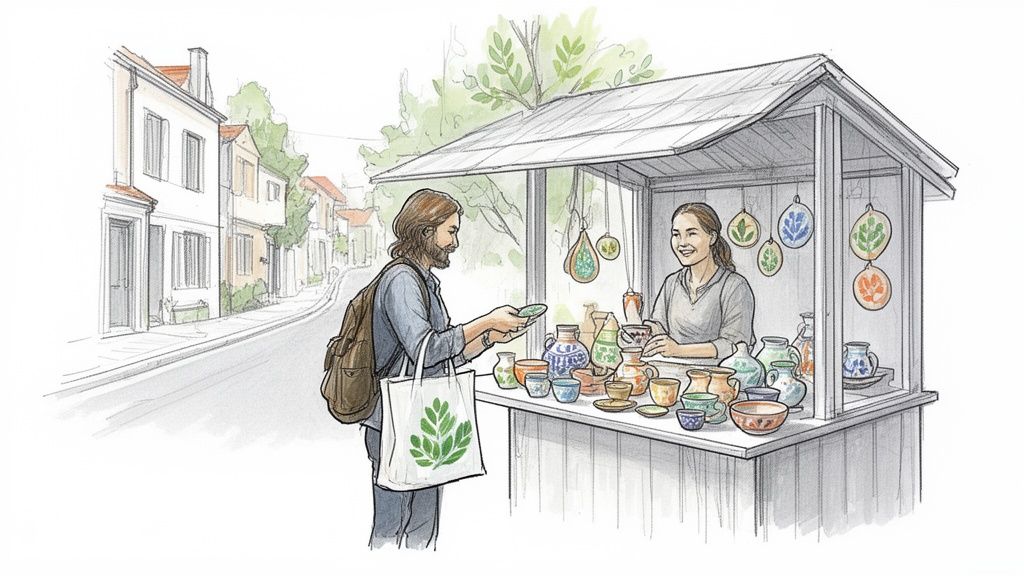
Here's the good news: when you decide to travel like a local, you’re already on the path to being a more responsible and sustainable traveler. It’s a natural consequence.
By seeking out authentic, neighborhood experiences outside main touristic places, your money automatically flows away from huge multinational chains and directly to the people who give a place its character.
Every single decision becomes an opportunity to have a positive impact. Instead of grabbing a latte from a global brand, you’re finding the family-run cafe down a quiet side street. Rather than eating at some generic restaurant on the main tourist square, you're backing a tiny eatery where the recipes have been perfected over generations.
This isn't just about feeling good—it's about conscious spending. When your dollars go straight to local artisans, independent guesthouses, and neighborhood grocers, you’re helping build a more resilient and fair local economy.
Spending with Purpose
Recent travel data shows a fascinating shift. While 47% of travelers are eager for family trips, many are also tightening their belts—driving instead of flying and cutting back on what they spend at their destination. This presents a bit of a challenge for those of us who want a deep, respectful immersion. How do you support locals when you're on a tighter budget?
The answer is to use your newfound local knowledge to spend smarter, not just less. You can dive deeper into the numbers in this analysis of travel trends.
Here’s how to make sure your money truly counts:
- Shop Small and Seasonal. Ditch the supermarket for the local farmers' market. Buy souvenirs directly from the person who made them. You'll get a better-quality item and a story to go with it.
- Hire Local Guides. For any tour or activity, track down an independent, licensed local guide. Their expertise offers a richness that big, impersonal tour companies can never replicate.
- Pay Fair Prices. Haggling might be part of the fun in some markets, but always approach it with respect. Aggressive bargaining devalues someone's craft and hard work.
Choosing to support a small, independent business is a direct investment in that community’s future. It keeps cultural traditions alive and ensures the benefits of tourism are shared more widely.
Minimizing Your Footprint
Being a responsible traveler also means thinking about your environmental impact, especially in places struggling with overtourism. That same "off-the-beaten-path" approach that unlocks authentic experiences also helps relieve the pressure on overcrowded hotspots.
When you explore lesser-known neighborhoods and travel during the shoulder seasons, you’re spreading the economic benefits more evenly and reducing the strain on local infrastructure. It's a win-win.
Simple habits can also make a huge difference. For more on this, check out our guide packed with sustainable travel tips to help you make a difference. These small actions add up, helping preserve the places we love for generations of locals and visitors to come.
Got Questions About Local Travel? Let's Talk.
Even when you're excited to ditch the tour bus, a few perfectly valid questions can pop up. It’s one thing to want to blend in; it’s another to feel totally confident doing it. This is where we tackle those common "what if" moments, giving you some real-world answers to help you get out there.
Think of this as the final pep talk, reinforcing the playbook and giving you the green light to dive in headfirst.
Finding "Off-the-Beaten-Path" Spots Without Getting Lost (or Worse)
Let's clear this up: "off the beaten path" doesn't mean unsafe or isolated. A big mistake travelers make is thinking they need to wander into deserted areas to find something authentic. Don't do that.
The real key is shifting your focus from remote places to residential ones. Look for neighborhoods buzzing with their own character—the ones known locally for their street art, amazing food, or cool independent shops. The goal is to explore lively, lived-in areas, not empty ones.
Safety is just common sense, same as anywhere else. Stick to well-lit main streets, especially at night, and always, always trust your gut. If a street or situation feels off, turn around. It's that simple.
An immersive experience doesn't mean taking dumb risks. It's about being a curious visitor in a real community, which usually means you're surrounded by the normal, everyday hum of local life.
How to Connect When You Don't Speak the Language
Sure, learning a few phrases is a great sign of respect, but fluency is absolutely not required to have a meaningful trip. Your attitude speaks way louder than your grammar.
A warm smile, a bit of patience, and just paying attention will get you surprisingly far. Seriously. Use a translation app for the practical stuff, like figuring out a menu, but for everything else, just lean into the human side of things. Some of the best travel memories come from shared gestures and a laugh over a misunderstood word. Locals appreciate the effort, not perfection.
How to Actually Support Locals (and Dodge Tourist Traps)
Figuring out if a place is a genuine local spot or a tourist trap can feel like a test, but there are some dead giveaways once you know what to look for.
A real-deal local restaurant usually has a simple menu, probably just in the local language—not a glossy photo album with five translations. The easiest tell? Look at the customers. Are they other travelers, or are they people who clearly live down the street?
Here are a few tricks that have never failed me:
- The Three-Block Rule: Walk at least three blocks away from any major tourist landmark before you even think about eating or shopping. The authentic (and cheaper) spots are almost always just around the corner.
- Ask an Unlikely Local: Forget the hotel concierge. Pop into a small, independent business that has nothing to do with tourism—a bookstore, a hardware store, a tailor—and ask the owner where they love to grab lunch. You'll get gold.
- Look at the Details: In a shop, are they selling generic "I ❤️ This City" junk or items that show real local craftsmanship? Ask about the artist or where the product was made.
Following your curiosity this way means your money goes right into the hands of the community, and you end up with much better stories to tell.