Florida is synonymous with sprawling theme parks and sun-drenched beaches, but beyond these well-trodden tourist trails lies a state brimming with eccentric charm, hidden natural marvels, and rich, untold stories. This guide is crafted for the traveler seeking a full cultural experience, the kind that can't be found in a brochure and delves deep into the local spirit. We are venturing far off the beaten path to explore the places and activities that reveal Florida's true, quirky character.
This is not another list of popular attractions. Instead, we have curated a comprehensive roundup of the most unusual things to do in Florida, designed to connect you with the state’s authentic core. From the mysterious, hand-carved Coral Castle Museum to the ethereal glow of bioluminescent waters, each entry is a gateway to an immersive adventure. You will discover how to ethically swim with manatees, navigate the eerie beauty of abandoned attractions, and explore the cool, clear waters of natural freshwater springs hidden from the crowds.
Each recommendation is packed with actionable insights and practical details. We provide the essential information: why a place is unique, the best times to visit, costs, accessibility, and local etiquette to ensure your experience is both memorable and respectful. We'll show you how to participate in authentic swamp tours, visit peculiar museums, and even attend niche community festivals you won't find on mainstream travel sites. Prepare to move beyond the sunshine and discover a side of Florida that is wonderfully weird, profoundly beautiful, and waiting to be explored.
1. Visit The Coral Castle Museum
Nestled in Homestead, South Florida, the Coral Castle Museum stands as a baffling monument to unrequited love and mysterious engineering. This isn't your typical historical site; it's a sprawling oolite limestone structure built single-handedly by one man, Edward Leedskalnin, a Latvian immigrant. Between 1923 and 1951, he quarried, carved, and moved over 1,100 tons of coral rock, some pieces weighing up to 30 tons, using only hand tools and an enigmatic process he kept secret until his death.

This incredible feat, accomplished without modern machinery or electricity, has baffled engineers and scientists for decades. The precision of the stonework, the perfectly balanced nine-ton gate that once moved with the touch of a finger, and the sheer scale of the project make it one of the most unusual things to do in Florida. It’s an immersive dive into one man's monumental obsession and a puzzle that remains unsolved, offering a cultural experience rooted in local legend and off-the-beaten-path discovery.
Practical Details for Your Visit
- Why It's a Must-See: The Coral Castle offers a rare blend of art, science, and mystery. It’s an off-the-beaten-path experience that feels worlds away from Miami's bustling beaches, providing a deep look into local folklore and ingenuity for a full cultural experience.
- Getting There: Located at 28655 South Dixie Highway, Homestead, FL 33033, it is most easily reached by car, approximately a 45-minute drive from downtown Miami.
- Best Time to Go: Visit on a weekday morning to avoid crowds and the intense midday heat. The light is also better for photography at this time.
- Cost & Accessibility: Adult admission is around $18, with discounts for seniors and children. The grounds are mostly flat and accessible, but some pathways are uneven.
- Local Tip: Take the guided tour. The guides are passionate local storytellers who bring the legend of Ed Leedskalnin to life, sharing anecdotes and theories you won't find on the placards, making for a truly immersive experience. For more information, visit the official Coral Castle website.
2. Swim with Manatees (Ethical Wildlife Tourism)
In the warm, spring-fed waters of Crystal River, you can experience one of Florida's most moving and unique wildlife encounters: swimming with West Indian manatees. This isn't a theme park attraction; it's a chance to respectfully observe these gentle giants in their natural winter refuge. Crystal River is the only location in North America where you can legally enter the water with manatees, but this privilege is governed by strict regulations designed to protect the vulnerable species from harm.

This carefully managed activity focuses on passive observation, allowing you to float alongside these slow-moving marine mammals as they graze, rest, and nurse their young. The experience offers an unparalleled connection to Florida's native wildlife, making it one of the most memorable and unusual things to do in Florida. It’s a profound, quiet adventure that highlights the importance of conservation and responsible tourism, far from the main tourist hubs.
Practical Details for Your Visit
- Why It's a Must-See: It's an immersive, non-exploitative wildlife interaction that connects you directly with one of Florida's most iconic and beloved animals. The focus on ethical engagement provides a powerful lesson in conservation. For another inspiring conservation story, consider visiting the Sea Turtle Hospital in Marathon to see their incredible rescue and rehabilitation work.
- Getting There: Crystal River and Homosassa are located in Citrus County on Florida's Gulf Coast, about a 90-minute drive north of Tampa. You must book a tour with a licensed operator, such as Crystal Lodge Manatee Tours or American Pro Diving Center.
- Best Time to Go: Manatees congregate in the warm springs from November to March. Book your tour for a weekday morning in the earlier part of the season (November-December) for clearer water and fewer crowds.
- Cost & Accessibility: Guided tours typically range from $65 to $100 per person and include a wetsuit and snorkel gear. Many tour operators can accommodate swimmers of varying abilities, but confirm accessibility needs when booking.
- Local Tip: Choose a tour led by a local guide with deep knowledge of the ecosystem. Ask operators about their commitment to the "Manatee Safe" program. Before your tour, watch the mandatory "Manatee Manners" video. Remember the golden rule: passive observation. Never pursue, touch, or harass the manatees; let them initiate any interaction.
3. Explore Abandoned Theme Parks and Roadside Attractions
Florida’s landscape is dotted with the ghosts of tourism past, from defunct roadside attractions to entire abandoned theme parks. Exploring these decaying monuments offers a surreal journey into mid-20th century Americana, a time when giant dinosaurs and kitschy castles lured travelers off the main highways. This unique form of urban exploration provides a stark, haunting contrast to the state's gleaming modern resorts and is one of the most unusual things to do in Florida for those interested in history, photography, and an off-the-beaten-path adventure.
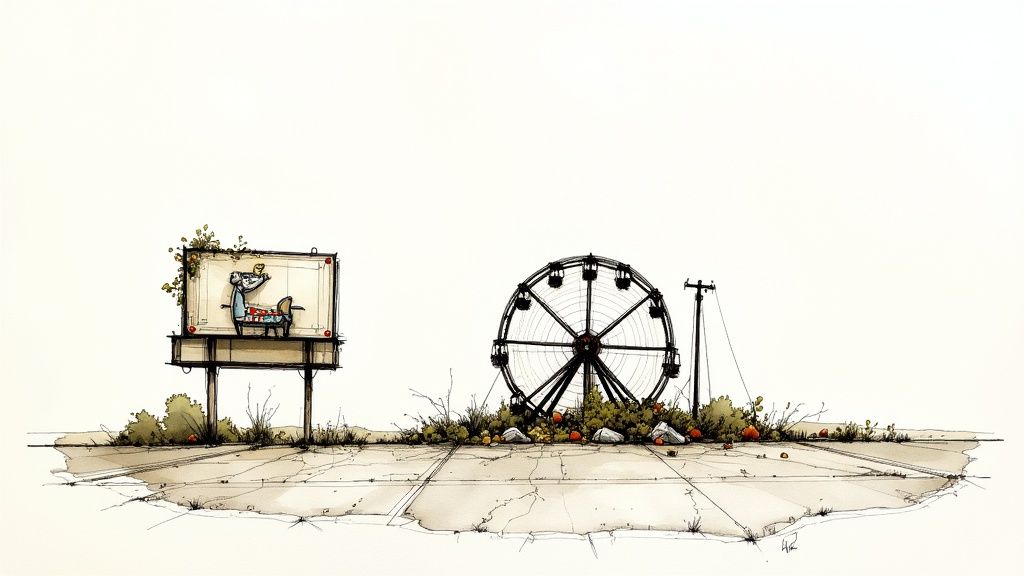
These sites, like the partially reclaimed Spook Hill Fun Park in Lake Wales or the remnants of various water parks scattered across Central Florida, tell a story of changing tastes and forgotten dreams. They are outdoor museums of nostalgia, where nature is slowly reclaiming concrete fantasies. While many are on private property, the act of researching and carefully visiting accessible locations provides a profound cultural experience, connecting you to Florida's quirky history well outside of main touristic places. This journey is much like exploring the historic ghost towns of other regions.
Practical Details for Your Visit
- Why It's a Must-See: It’s an off-the-beaten-path cultural dive into Florida's tourism boom and bust cycles. The eerie beauty of these locations offers unparalleled photographic opportunities and a tangible link to a bygone era of travel, providing a truly immersive experience.
- Getting There: Locations are spread throughout the state, often just off older highways. Research specific sites like the abandoned Nile Theater in Lakeland or former roadside stops near the I-4 corridor. A car is essential.
- Best Time to Go: Always visit during daylight hours for safety and better visibility. Cooler months from October to April are more comfortable for exploring outdoors.
- Cost & Accessibility: This activity is typically free, but accessibility is the main challenge. Many sites are on private land and require permission, while others may be partially viewable from public roads. Always prioritize safety and legality.
- Local Tip: Research is crucial. Before you go, join online urban exploration forums to understand which sites are legally and safely accessible. Always respect "No Trespassing" signs, wear sturdy closed-toe shoes and long pants, and never explore alone. Document with photos, but leave everything exactly as you found it.
4. Visit Peculiar Museums (Odditoriums and Niche Collections)
Florida is a treasure trove of the eccentric, and its museum scene is no exception. Beyond traditional art and history, the state is home to a wealth of "odditoriums" and niche collections dedicated to wonderfully specific subjects. These institutions celebrate the state's quirky culture, offering a deep dive into curiosities that range from circus history and bizarre artifacts to collections focused entirely on bananas or animal skeletons.
From the world-famous Ripley's Believe It or Not! Odditoriums in Orlando and St. Augustine to the hyper-focused Museum of Osteology in Gainesville, these destinations provide a welcome detour from the ordinary. Exploring these collections is one of the most unusual things to do in Florida, offering a genuine, offbeat cultural experience that reveals the state’s love for the strange and wonderful. It's a chance to engage with passions and histories far removed from the typical tourist path.
Practical Details for Your Visit
- Why It's a Must-See: These museums offer a portal into specialized subcultures and local histories. Whether it's the mesmerizing spectacle of circus life at The Ringling in Sarasota or the anatomical wonders at a bone museum, each visit provides a uniquely memorable and immersive cultural experience.
- Getting There: These museums are scattered statewide. Ripley's has locations in major tourist hubs like Orlando, St. Augustine, and Panama City Beach. Niche museums like the Museum of Osteology are often found near university towns, accessible by car.
- Best Time to Go: Weekday mornings are ideal for avoiding the family crowds that flock to places like Ripley's. For smaller, independent museums, check their often limited hours online before you plan your trip.
- Cost & Accessibility: Prices vary widely. Major attractions like Ripley's cost around $25-$30 for adults, while smaller museums can be under $15 or even free. Most are accessible, but it's wise to call ahead for specific needs.
- Local Tip: Many of these smaller, off-the-beaten-path museums are labors of love, so take time to chat with the local guides or curators. They often have incredible stories and insights you won't find anywhere else. For more ideas on quirky collections, you can explore other hubs of the strange, similar to what you might find in these weird museums in NYC.
5. Tour Historic Cemeteries and Mausoleums
Beyond the theme parks and beaches, Florida's historic cemeteries offer a serene and fascinating glimpse into the state's past. These hallowed grounds are more than just burial sites; they are open-air museums filled with ornate Victorian mausoleums, elaborate sculptures, and the final resting places of pioneers, politicians, and influential figures. Exploring them provides a unique look at architectural artistry, social history, and the stories that shaped Florida.
From the hauntingly beautiful, moss-draped oaks of Jacksonville’s Evergreen Cemetery to the historic grounds of St. Augustine's Tolomato and Huguenot Cemeteries, each site tells a different story. These peaceful landscapes offer a profound connection to the past, showcasing a side of the state many travelers miss. Discovering these places is one of the most truly unusual things to do in Florida, offering a quiet, contemplative, and deeply immersive cultural experience far outside the main tourist zones.
Practical Details for Your Visit
- Why It's a Must-See: It's an off-the-beaten-path opportunity to connect with Florida's history on a personal level. The artistry of the monuments and the tranquil atmosphere provide a stark, beautiful contrast to the state's more high-energy attractions.
- Getting There: Notable locations include Evergreen Cemetery in Jacksonville, Woodlawn Cemetery in West Palm Beach, and Key West Cemetery. Most are located within city limits and are best accessed by car.
- Best Time to Go: Early mornings offer cooler temperatures, softer light for photography, and a more peaceful atmosphere. Weekdays are generally less crowded than weekends.
- Cost & Accessibility: Most historic cemeteries are free to enter. Pathways can be uneven with grass, gravel, or old brick, so sturdy walking shoes are recommended. Accessibility may be limited in older sections.
- Local Tip: Research notable figures buried at the cemetery you plan to visit beforehand to enrich your experience. For a full cultural experience, book a tour with a local historical society or guide; they provide invaluable context and stories you won't find on your own. Always be respectful and observe any posted rules.
6. Kayak Through Bioluminescent Waters
Imagine dipping your paddle into dark water and watching it ignite with a shimmering, ethereal blue-green light. This isn't a special effect; it's the natural magic of bioluminescence, and Florida's coastal lagoons offer one of the best places in the world to witness it. This otherworldly glow is created by single-celled organisms called dinoflagellates, which emit light when disturbed. Every paddle stroke, every fish darting beneath your kayak, and even the trail of a manatee creates an explosion of living light.
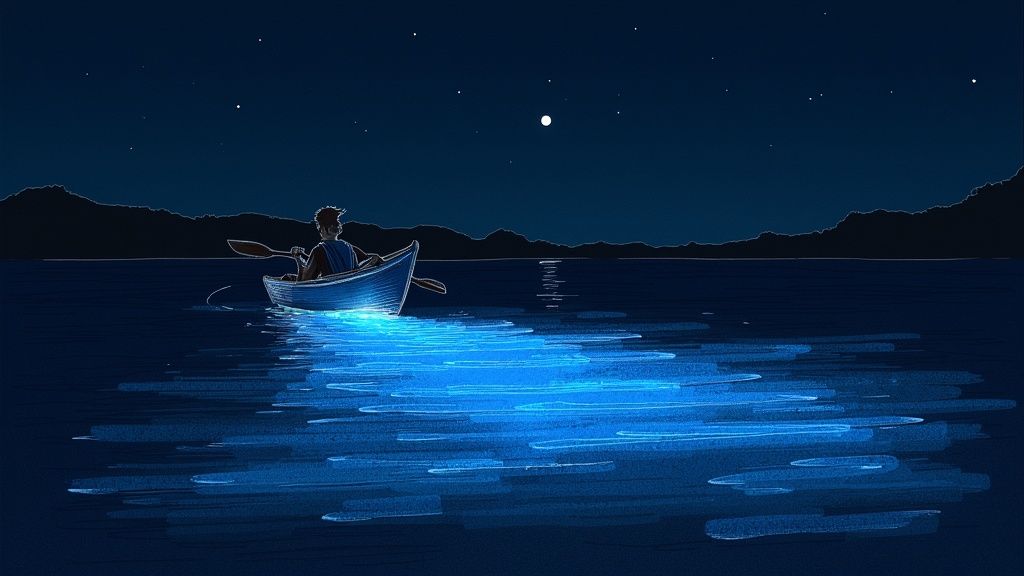
Paddling through this "liquid light" is a deeply immersive experience that connects you directly with a hidden ecosystem. Locations like the Indian River Lagoon and Mosquito Lagoon become natural planetariums where the water mirrors the stars above. This phenomenon makes a nighttime kayak tour one of the most uniquely unusual things to do in Florida, transforming a simple paddle into a mesmerizing, silent light show powered entirely by nature, guided by local experts who know the best spots.
Practical Details for Your Visit
- Why It's a Must-See: It’s a rare opportunity to interact with a stunning natural phenomenon. Unlike a typical tourist attraction, this is a serene, almost spiritual adventure that puts you in the heart of Florida's aquatic wilderness after dark for a full cultural and natural experience.
- Getting There: The most famous areas are along the "Space Coast," particularly the Merritt Island National Wildlife Refuge near Titusville. Other spots include the Halifax River near Daytona Beach and Tomoka State Park. You'll need to book with a local tour operator, who provides the gear and launch location.
- Best Time to Go: The peak season is during the warmest months, from June through September. For the most brilliant display, plan your tour on a new moon (or as close to it as possible) when the sky is darkest.
- Cost & Accessibility: Guided tours typically range from $50 to $75 per person. Kayaking requires moderate physical ability, but many tours are beginner-friendly and move at a slow pace. Clear-bottom kayaks are sometimes available for an enhanced view.
- Local Tip: Listen to your local guide. They know the best, most secluded spots, can explain the science, and will point out glowing fish and other wildlife. This immersive experience is best without artificial light, so avoid using flashlights or camera flashes to preserve your night vision.
7. Visit Weirdly Themed Roadside Stops and Kitsch Attractions
Long before mega-theme parks dominated the landscape, Florida’s highways were lined with a vibrant tapestry of quirky, family-owned attractions designed to catch the eye of the road-tripping tourist. These bastions of vintage Americana and kitsch culture still exist, offering a nostalgic glimpse into the state’s tourism roots. From giant alligator sculptures to peculiar souvenir shops, these stops are the heart of old-school Florida charm.
Exploring these attractions is more than just a photo opportunity; it’s a way to connect with a simpler, more eccentric era of travel. Places like Dinosaur World in Plant City, with its life-sized prehistoric creatures, or the iconic gator-mouth entrance to Gatorland, provide a delightful counterpoint to the polished experiences of modern resorts. Seeking out these spots is one of the most authentically unusual things to do in Florida, rewarding travelers with unique memories and a deeper, immersive appreciation for the state's playful cultural history.
Practical Details for Your Visit
- Why It's a Must-See: These roadside stops are living museums of kitsch culture, offering a genuine and often humorous look at what captivated travelers for generations. It’s an immersive cultural experience far removed from typical tourist trails.
- Getting There: These attractions are designed for road trips. They are scattered along older highways like US-41 (Tamiami Trail), US-1, and US-19. A car and a willingness to explore these off-the-beaten-path roads are essential.
- Best Time to Go: Any time of year is great for a roadside adventure, but cooler months from October to April make exploring more comfortable. Weekdays are typically less crowded.
- Cost & Accessibility: Many stops are free to view from the outside, while others have modest entry fees (often under $20). Accessibility varies greatly; these are often older, family-run establishments, so expect uneven ground and limited modern amenities.
- Local Tip: Don’t over-plan. The best part of this adventure is spontaneous discovery. Keep your camera ready and be prepared to pull over for that giant orange, peculiar shell shop, or mysterious tourist trap you didn't know existed. For a taste of classic Florida food culture, stop by a local-favorite spot like The Yearling Restaurant in Cross Creek.
8. Attend Niche Community Events and Festivals
Beyond the major theme parks and crowded beaches, Florida's true character shines through in its quirky, hyper-local festivals. These niche community events celebrate everything from a specific type of fish to elaborate costumed artistry, offering a genuine window into the state's diverse and often eccentric subcultures. Attending one is a fantastic way to immerse yourself in local traditions and meet the people who make Florida so unique.
From the Panhandle's Boggy Bayou Mullet Festival, an ode to the humble "local's fish," to the world-famous Fantasy Fest in Key West, a ten-day extravaganza of parades and costume contests, these gatherings are far from your typical fair. They are deeply rooted in community history and provide one of the most unusual things to do in Florida for travelers seeking an authentic cultural experience. It’s an opportunity to step off the tourist trail and into the heart of a real Florida celebration.
Practical Details for Your Visit
- Why It's a Must-See: These festivals offer an unfiltered, immersive look at local life, passions, and traditions. You can experience everything from regional food specialties to paranormal conferences and counterculture art shows, making for a truly memorable, off-the-beaten-path trip.
- Finding Events: Search online for "quirky Florida festivals" or check the event calendars of local visitor bureaus. Community Facebook groups and local guides are also excellent resources for discovering lesser-known gatherings outside of main touristic places.
- Best Time to Go: Festival schedules are spread throughout the year. Key West's Fantasy Fest is in late October, while the Mullet Festival is also in the fall. Plan your trip around an event that piques your interest.
- Cost & Accessibility: Many smaller community festivals are free or have a nominal entry fee. Larger events like Fantasy Fest have ticketed portions. Accessibility varies greatly, so check the event's specific website beforehand.
- Local Tip: Arrive early, especially for smaller festivals, to secure parking and get the lay of the land. Bring cash, as many local vendors may not accept cards. Most importantly, talk to the locals; they are the best guides to the event's hidden gems and history.
9. Explore Cenotes and Underground Freshwater Springs
While Florida is famous for its beaches, its true geological wonders lie inland, hidden beneath the surface. The state is home to one of the world's largest concentrations of freshwater springs, creating a subterranean network of crystal-clear rivers and stunning cenote-like caverns. Formed by karst topography, where limestone has dissolved to create underwater caves, these springs offer a glimpse into a primordial world of vibrant blue water and unique ecosystems.
Exploring these natural aquariums is one of the most authentically unusual things to do in Florida. Sites like Devil's Den in Williston, a prehistoric spring inside a dry cave, allow you to descend a staircase into an ancient, glowing blue pool. Further north, Ichetucknee Springs offers a gentle, gin-clear river perfect for tubing, while Rainbow Springs enchants kayakers with its vibrant aquatic life. This is a far cry from theme parks, offering an immersive connection to Florida's raw, natural beauty off the beaten path.
Practical Details for Your Visit
- Why It's a Must-See: It's an opportunity to experience a completely different side of Florida's environment, well outside of the main tourist draws. Swimming, snorkeling, or diving in water that maintains a constant 72°F year-round is a refreshing and otherworldly adventure.
- Getting There: The major springs are clustered in North-Central Florida. Devil's Den is in Williston, Ichetucknee is near Fort White, and Rainbow Springs is in Dunnellon. A car is essential for reaching these often-rural locations.
- Best Time to Go: Weekday mornings are ideal to avoid the crowds that flock here on weekends, especially during summer. The water clarity is often best before swimmers stir up the sediment.
- Cost & Accessibility: State park entrance fees typically range from $2 to $8 per person. Gear rentals for tubing, snorkeling, or diving are additional. Accessibility varies; many parks have paved paths and viewing decks, but entering the water can be challenging.
- Local Tip: Always use reef-safe sunscreen or a rash guard to protect the fragile spring ecosystems. For a unique cultural experience at Ichetucknee Springs State Park, arrive early and chat with the local park rangers who can guide you on the best float plan for the day to avoid crowds.
10. Participate in Swamp Tours and Airboat Adventures
Skimming across the "River of Grass" on a high-speed airboat is a quintessential Florida experience that blends adrenaline with an immersive nature lesson. Far from a typical theme park ride, these tours take you deep into the pristine wetlands of the Everglades and other swamp ecosystems. Knowledgeable local guides navigate the labyrinthine waterways, pointing out alligators sunning on the banks, wading birds searching for a meal, and the subtle beauty of the sawgrass prairies.
This adventure offers a genuine connection to Florida's wild heart, a world that has remained largely unchanged for centuries. The combination of thrilling speed and serene moments of wildlife observation makes this one of the most unusual things to do in Florida for those wanting to escape the coastal cities. It’s a powerful reminder of the raw, untamed beauty that defines the state's interior landscape. For those eager for a full cultural and ecological immersion, an Everglades National Park day trip guide can help you plan your swamp tour adventure.
Practical Details for Your Visit
- Why It's a Must-See: It's an authentic encounter with Florida’s most famous ecosystem. You'll experience the thrill of an airboat ride while gaining a deeper appreciation for the delicate balance of the Everglades from local experts.
- Getting There: Major hubs for airboat tours include the areas surrounding Everglades National Park (near Miami and the Tamiami Trail), Kissimmee (south of Orlando), and various locations in Central Florida. Operators like Captain Jack's or Boggy Creek Airboat Adventures are easily accessible by car.
- Best Time to Go: Go early in the morning. Wildlife, particularly alligators and birds, is most active before the midday heat sets in, and you’ll often find smaller, less crowded tour groups.
- Cost & Accessibility: Tour prices generally range from $25 to $60 per person for a standard 30 to 60-minute ride. While the docks are often accessible, the boats themselves may present challenges for those with mobility issues; it's best to call ahead.
- Local Tip: Opt for a smaller boat tour. A six-passenger airboat offers a more immersive and personalized experience, allowing for better wildlife viewing and direct interaction with your local guide and captain. Remember to secure hats and sunglasses, and always wear the provided ear protection.
Comparison of 10 Unusual Florida Activities
| Experience | 🔄 Implementation Complexity | ⚡ Resources & Cost | 📊 Expected Outcomes | 💡 Ideal Use Cases | ⭐ Key Advantages |
|---|---|---|---|---|---|
| Visit The Coral Castle Museum | Low — straightforward site visit; guided tour optional | Low — admission ~$18–20, travel required | Educational + mysterious architectural interest | Short cultural stop; architecture/history visitors | Unique one-person engineering mystery; affordable |
| Swim with Manatees (Ethical) | Moderate–High — regulated protocols and seasonal limits | High — $150–300+, wetsuit, advance booking | Intimate wildlife encounter; conservation support when ethical | Wildlife enthusiasts in winter (Nov–Mar); ethical tourism | Rare legal close-up manatee viewing in US; clear springs |
| Explore Abandoned Theme Parks & Roadside Attractions | High — safety, legal access, planning required | Low–Moderate — travel, protective gear, possible permits | Atmospheric photography; historical curiosity; some risk | Urban explorers, photographers, nostalgia seekers | Distinctive nostalgic visuals; often low or no cost |
| Visit Peculiar Museums (Odditoriums) | Low — easy visits, modest time commitment | Low — typical admission $15–25 | Entertaining, quirky exhibits; photo-friendly | Quick stops, families, social-media content | Offbeat collections; affordable and short visits |
| Tour Historic Cemeteries & Mausoleums | Low–Moderate — etiquette and guided options | Low — often free/low-cost; travel | Educational, reflective, architectural appreciation | History/architecture buffs; quiet daytime visits | Rich historical context; scenic monuments and grounds |
| Kayak Through Bioluminescent Waters | Moderate — night conditions, seasonal variability | Moderate — $40–80, guided tour and gear | Magical sensory experience; visibility not guaranteed | Nature lovers, night paddling, summer months (Jun–Sep) | Truly unique natural phenomenon; low environmental impact |
| Visit Weirdly Themed Roadside Stops & Kitsch | Low — drive-up visits, minimal planning | Low — typically free–$10 plus travel | Nostalgic, photogenic, brief entertainment | Road trips, vintage-Americana fans, casual stops | Inexpensive, authentic kitsch and photo ops |
| Attend Niche Community Events & Festivals | Moderate — scheduling & local research needed | Low — usually free–$20; travel | Authentic local interaction; cultural insight | Cultural immersion, food/folk festivals, niche hobbies | Direct community access; diverse, affordable experiences |
| Explore Cenotes & Underground Freshwater Springs | Moderate–High — snorkeling to technical cave diving | Moderate — gear rental, certification may be required | Stunning underwater scenery; geological education | Divers/snorkelers, geology/ecology enthusiasts | Crystal-clear water, stable temps, unique cave systems |
| Participate in Swamp Tours & Airboat Adventures | Low–Moderate — bookable guided tours, safety briefings | Moderate — $50–100+, possible extras | High-energy wildlife viewing; some environmental trade-offs | Families, thrill-seekers, wildlife spotting | Fast access to remote wetlands; strong wildlife opportunities |
Embracing the Real Florida: Your Next Adventure Awaits
As we've journeyed from the Panhandle's hidden springs to the quirky marvels of the Keys, a different picture of Florida has emerged. It's a state that thrives far beyond the velvet ropes of its theme parks and the manicured sands of its famous beaches. This exploration of unusual things to do in Florida isn't just about collecting odd experiences; it’s about discovering the authentic soul of a place defined by its wild nature, eccentric history, and resilient local communities.
You’ve seen that Florida’s magic isn't manufactured. It's found in the quiet glow of a bioluminescent bay, the silent mystery of the Coral Castle, and the gentle presence of a manatee in its natural winter refuge. These are not passive attractions but immersive invitations. They ask you to trade the spectator’s bench for the explorer's kayak, to swap crowded boardwalks for the serene paths of historic cemeteries, and to listen to the stories whispered by the swamp winds instead of the roar of a roller coaster.
Key Takeaways for the Curious Traveler
The experiences detailed in this guide share a common thread: they reward curiosity and encourage a deeper connection with your surroundings. Here’s what to remember as you plan your own offbeat Florida adventure:
- Embrace the Hyper-Local: The most memorable moments often happen at a niche community event like the Mullet Toss or a small, peculiar museum dedicated to a single passion. These are the places where you can connect directly with the local culture and the people who shape it.
- Prioritize Ethical Engagement: When you choose to swim ethically with manatees or support a family-run airboat tour, you're investing in the preservation of Florida’s unique ecosystems and heritage. Your travel choices have a real, positive impact.
- Adventure is Year-Round: Florida’s off-the-beaten-path activities are not confined to a single season. Bioluminescence peaks in the summer, manatee viewing is best in winter, and its bizarre roadside attractions welcome visitors anytime. There is always an unusual thing to do in Florida, no matter when you visit.
- Plan for the Unplanned: While practical details like cost and accessibility are crucial, leave room in your itinerary for spontaneity. The best discoveries are often the ones you stumble upon while looking for something else entirely, like a forgotten roadside oddity or a hidden spring just off the main highway.
Your Next Steps into Florida's Weird and Wonderful World
Mastering this approach to travel transforms you from a tourist into a true explorer. It’s about more than just seeing new places; it’s about understanding them. By venturing into Florida’s cenotes, abandoned theme parks, and historic cemeteries, you gain a richer, more nuanced perspective that few visitors ever experience. You learn that the state's identity is a complex tapestry woven from natural wonders, human ingenuity, and a healthy dose of pure eccentricity.
This guide is your starting point, a map to the state’s hidden treasures. Use it not as a rigid checklist but as a source of inspiration. Let the story of one quirky attraction lead you to another. Let the tranquility of one natural spring spark a desire to find the next. The true spirit of adventure lies in following that curiosity wherever it may lead.
Florida’s most authentic, strange, and beautiful secrets are waiting for those willing to look beyond the obvious. They are found on the backroads, in the mangrove tunnels, and within the walls of its most peculiar museums. This is the real Florida, and it’s ready to be discovered. Your next great adventure is not in a brochure; it’s out there, waiting for you to find it.
Ready to dive deeper and uncover even more local secrets? CoraTravels provides immersive guides and insider tips to help you experience destinations like a local, not a tourist. Find your next unforgettable, off-the-beaten-path adventure in Florida and beyond at CoraTravels.