🇦🇿 Azerbaijan
Azerbaijan Travel Guide - The Land of Fire Where Guests Are Sacred and Two Continents Argue
1 destinations · Budget level 1
Overview
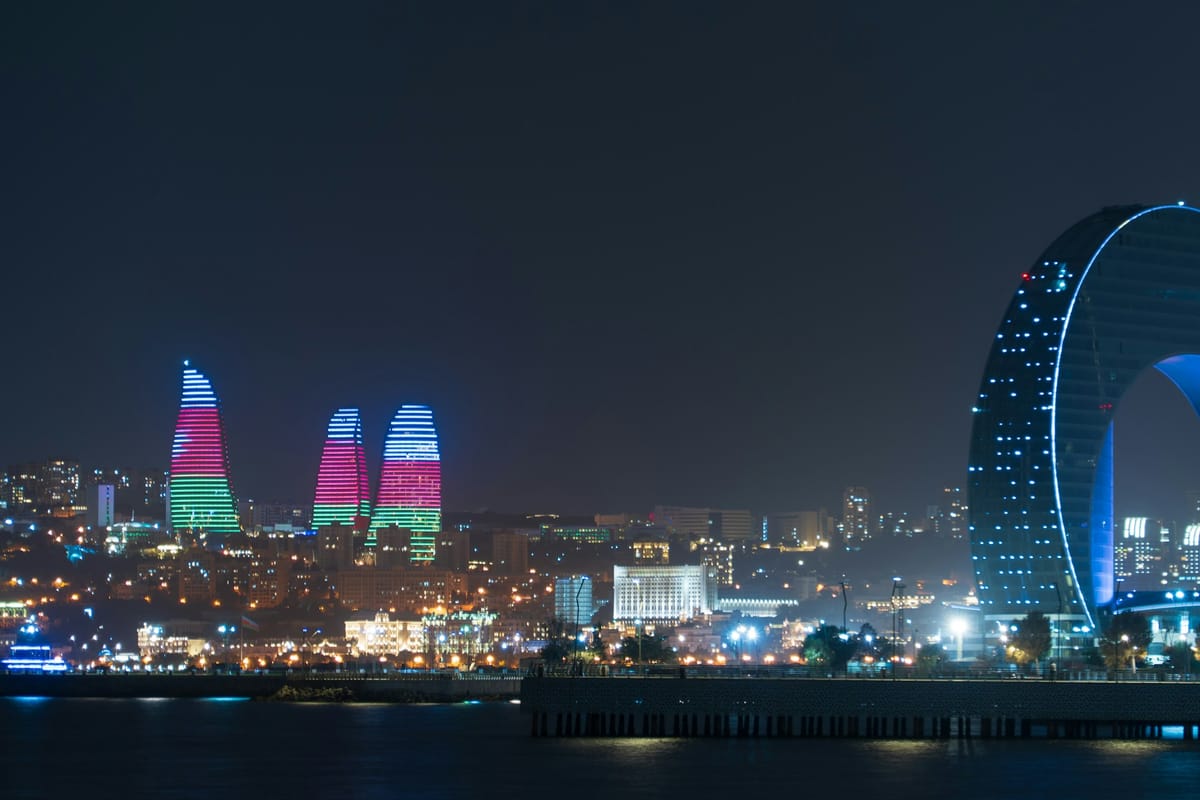
Azerbaijan sits at a genuine crossroads - not the marketing kind, but a literal fault line where Turkic language, Persian cultural influence, Shia Islam, and seventy years of Soviet secularism all landed on top of each other and never fully separated. Azerbaijanis are ethnically and linguistically Turkic (Azerbaijani is mutually intelligible with Turkish for basic conversation), religiously Shia Muslim like Iran next door, and socially shaped by Soviet-era secularism that pushed religion into private life and normalized alcohol, mixed-gender education, and women in the workforce decades before that was common across much of the Muslim world. The result is a country that looks and feels far less religious day-to-day than outsiders expect - headscarves are a personal choice rather than a norm in Baku, bars and wine are everywhere, and the loudest cultural force in daily life isn't the mosque but 'qonaqperverlik' (hospitality) - a near-sacred obligation to feed, seat, and refuse payment from any guest, stranger or not. The 12th-century poet Nizami Ganjavi is still quoted from memory in ordinary conversation, and the medieval epic Dede Qorqud contains the line 'let the house that does not welcome a guest collapse' - a proverb locals still repeat unprompted. Oil built modern Azerbaijan twice: once under the Nobel brothers and Rothschilds in the 1880s when Baku produced half the world's oil, and again after independence from the USSR in 1991, when Caspian oil wealth financed the glass-and-flame skyline visitors now photograph. Between those two booms sat seven decades of Soviet rule that erased Cyrillic-versus-Latin certainty (the alphabet switched from Arabic script to Latin to Cyrillic to Latin again across the 20th century) and a brutal, still-unresolved wound: the Nagorno-Karabakh conflict with Armenia, which displaced hundreds of thousands of Azerbaijanis in the 1990s and dominated national politics until Azerbaijan retook the territory by force in 2020 and 2023. That conflict is not a footnote here - it shapes what you should and shouldn't say as a traveler, discussed later in this guide. Regionally, Azerbaijan is far less uniform than its Baku skyline suggests: the capital and Absheron Peninsula are cosmopolitan and increasingly Western in feel, the Talysh-populated south around Lankaran keeps its own Iranian-linked language and subtropical tea-and-citrus economy, Sheki in the northwest preserves Silk Road caravanserai architecture and its own distinct cuisine - the same trade-route heritage that shaped Istanbul as a bridge between worlds further west - and Nakhchivan is a separate autonomous exclave cut off from the rest of the country by Armenian territory, reachable only by air or through Iran or Turkey.
Travel tips
Guest Etiquette: If invited into a home, refusing tea or food outright is genuinely rude - taking a small amount and eating slowly is the polite middle ground if you're full. Hosts will insist on paying at restaurants even if you invited them; a brief protest is expected, but don't turn it into a real argument. Tea Ritual: Tea (çay) is served in pear-shaped armudu glasses with jam or a sugar cube to bite between sips rather than stir in - a proper teahouse (çayxana) visit lasts an hour minimum, and rushing through it reads as antisocial. Political Topics: Avoid bringing up Armenia, Nagorno-Karabakh, or the 2020/2023 war unless a local raises it first - it's an intensely personal subject given how many families were displaced, and foreign 'balanced perspectives' are unwelcome. Never carry anything with Armenian branding or an Armenian passport stamp near the border. Dress Code: Baku is genuinely relaxed - shorts, sleeveless tops, and no headscarves are all fine outside mosques. Rural areas and conservative pockets like Nardaran near Baku expect more modest dress; when visiting any mosque, cover shoulders and knees and bring a headscarf for women (usually provided at the door anyway). Backgammon and Park Culture: Older men gather in parks and teahouses to play nard (backgammon) - watching is welcome, but don't assume you can join a game uninvited. Carpets and Crafts: Azerbaijani carpet weaving is UNESCO-recognized Intangible Cultural Heritage - if you buy one, ask about the regional pattern (Guba, Shirvan, Ganja, and Karabakh styles differ) rather than treating it as generic souvenir. Photography: Avoid photographing military checkpoints, government buildings, or anything near the Armenian border - Azerbaijan takes this seriously and locals will warn you before a guard does.
Cultural insights
Hospitality in Azerbaijan isn't a nicety - it's closest to a moral obligation, rooted in centuries of Silk Road travel where sheltering a stranger could mean the difference between life and death crossing the Caucasus. The medieval epic Dede Qorqud's line about a house 'collapsing' if it doesn't welcome guests still gets quoted by ordinary Azerbaijanis explaining their own culture to visitors, and the 12th-century Ganja-born poet Nizami Ganjavi wrote hospitality into his verse so often that it's treated as a literary as well as social value. Practically, this means a guest (qonaq) who visits a home will be served tea, fruit, and sweets within minutes of arriving regardless of whether the visit was planned, and letting a guest leave without at least one cup of tea is considered a small failure of the host. Religion sits differently here than in most Muslim-majority countries: roughly 97% of Azerbaijanis are nominally Shia Muslim, aligning historically with Safavid Persia rather than the Ottoman Sunni world, but 70 years of Soviet secularism pushed religious practice into private life so thoroughly that Azerbaijan is constitutionally secular and functions socially closer to Turkey than to Iran - alcohol is normal, headscarves are optional, and religious conservatism is geographically concentrated (Nardaran, a village near Baku, is a notable exception and a center of pro-Iranian Shia sentiment) rather than universal. Zoroastrian fire worship predates Islam here by over a millennium and never fully disappeared culturally - Azerbaijan's nickname 'Land of Fire' comes from natural gas seeps that have burned continuously for centuries at sites like Yanar Dag, and the country's flag and national symbolism still lean on fire imagery. The Soviet legacy cuts both ways: it built literacy, gender parity in education and work, and Baku's metro and apartment blocks, but it also severed a generation from religious and literary tradition and left a scar of forced Russification that the post-1991 government has actively reversed by pushing the Azerbaijani language back toward its Turkic roots and away from Russian loanwords. The most defining and least discussed-by-outsiders element of modern identity is the Nagorno-Karabakh conflict: a war with Armenia over a mountainous enclave that displaced roughly 600,000-800,000 Azerbaijanis from their homes in the early 1990s, simmered as a frozen conflict for nearly three decades, and ended with Azerbaijan retaking the territory in the 2020 war and a final 2023 operation. Nearly every Azerbaijani family has a personal connection to displacement or the war, national holidays now mark the victory, and the football club Qarabağ FK - named for the region - carries symbolic weight far beyond sport. Regionally, the Absheron Peninsula around Baku is cosmopolitan and rapidly Westernizing on oil wealth, the Talysh minority in the subtropical south around Lankaran speaks its own Iranian-branch language and keeps distinct customs, Sheki in the northwest preserves Silk Road caravanserai life and its own dialect and cuisine, and Nakhchivan is a landlocked exclave separated from mainland Azerbaijan by Armenian territory, giving it a semi-isolated identity with its own parliament despite being fully part of the country.
Best time to visit
Spring (April-June): The best overall window - Baku warms to 18-25°C with wildflowers across the countryside, mountain regions like Sheki and Quba become fully accessible as snow melts, and Novruz Bayram (March 20-22) gives a front-row seat to the country's biggest holiday if you arrive right at the edge of this season. Summer (July-August): Hot and dry in Baku and the lowlands, often hitting 35-40°C with strong, sudden winds (Baku's nickname as the 'city of winds' is literal) - escape to highland towns like Sheki, Gabala, or Quba where temperatures stay comfortable, or the Caspian beaches on the Absheron Peninsula. Formula 1's Baku City Circuit race (late April, sometimes bleeding into early summer) spikes hotel prices and closes parts of the Old City. Autumn (September-October): Widely considered locals' favorite season - warm, sunny days (18-28°C), harvest festivals, wine and pomegranate season in regions like Ganja and Nakhchivan, and comfortable hiking weather without summer's heat. Winter (November-March): Cold and often below freezing, especially in the mountains, with Baku itself milder (2-10°C) than the interior - lowest prices and fewest tourists, but limited access to highland villages and shorter daylight hours. Azerbaijan's nine distinct climate zones mean coastal Absheron, subtropical Lankaran, and alpine Quba can feel like different countries in the same week.
Getting around
Baku Metro: Three lines, 27 stations, a flat 0.60 AZN fare using a rechargeable BakuCard tapped at turnstiles - fast, clean, and Soviet-grand in its older stations, though a few lines have had service changes during ongoing expansion work, so check current routing before relying on it. BakuBus and Marshrutkas: City buses use the same BakuCard system (around 0.60-0.80 AZN per ride); shared marshrutka minivans fan out to suburbs and nearby towns, leaving when full rather than on a fixed schedule - locals flag them down anywhere along the route rather than waiting at marked stops. Intercity Buses: Coaches connect Baku to Ganja, Sheki, Lankaran, Gabala, and other regional cities from the international bus terminal, typically 10-25 AZN depending on distance, with genuinely scenic routes through the interior. Trains: Limited but improving - the Baku-Ganja and Baku-Sheki lines exist, slower than buses but cheap and used by locals who prioritize cost over speed; Baku's central railway station anchors longer routes toward Georgia. Taxis and Ride-Hailing: Bolt and local apps are the safer default over hailing a taxi on the street, where price negotiation and occasional overcharging of tourists is common - a cross-city Baku ride runs roughly 4-10 AZN via app. Getting to Nakhchivan: Because the exclave is cut off from mainland Azerbaijan by Armenian territory, the only practical way in is by domestic flight from Baku (about 1.5 hours) - there's no overland route without transiting Iran or Turkey. Car Rental: Viable for exploring Sheki, Gabala, and Quba independently, with generally decent road quality on main routes; avoid driving anywhere near the Armenian border or former conflict zones, which remain restricted and in places still mined.
Budget guidance
Budget Travel (35-60 AZN/day, ~$20-35): Hostel beds or budget guesthouses 15-30 AZN, street food like qutab or kebab 2-6 AZN, metro and bus rides under 1 AZN each, free wandering through Icherisheher (Old City) and public parks, teahouse visits 3-5 AZN. Mid-Range (60-130 AZN/day, ~$35-75): Comfortable guesthouses or 3-star hotels 60-120 AZN, sit-down restaurant meals 10-25 AZN, occasional taxis 5-15 AZN, museum entries 2-10 AZN, day trips to the Gobustan Rock Art Cultural Landscape, a UNESCO World Heritage site with over 6,000 prehistoric petroglyphs, or Yanar Dag by hired driver 40-80 AZN split among a group. Luxury (130+ AZN/day, ~$75+): Boutique or international-chain hotels 150-400+ AZN, fine dining with Caspian caviar and premium plov 40-80 AZN per person, private guided tours to Sheki or Gabala, spa experiences in Naftalan's famous oil-therapy resorts. Baku itself has gotten noticeably pricier in tourist-facing areas over the past decade thanks to oil wealth and Formula 1-era investment, but regional towns like Sheki, Ganja, and Lankaran remain considerably cheaper than the capital for the same quality.
Language
Azerbaijani (Azərbaycan dili) is a Turkic language close enough to Turkish that basic conversation is often mutually intelligible, though vocabulary carries heavy Persian and Arabic influence from centuries under Persian cultural orbit, plus Russian loanwords from the Soviet period that younger generations and language policy are actively phasing out. The alphabet is Latin-based since a 1991 post-independence reform, after passing through Arabic script, then Latin, then Cyrillic across the 20th century - older Azerbaijanis still read Cyrillic signage fluently from Soviet-era habit. Essential phrases: 'Salam' (sah-LAHM) - hello, 'Sağ olun' (sahh oh-LOON) - thank you (formal), 'Zəhmət olmasa' (zeh-MET ol-mah-SAH) - please, 'Bağışlayın' (bah-uhsh-lah-YIN) - excuse me/sorry, 'Bəli/Yox' (BEH-lee/yokh) - yes/no, 'İngiliscə bilirsiniz?' (in-gee-lees-JEH bee-leer-see-NIZ) - do you speak English? Russian is still widely understood by anyone over roughly 40 and remains a practical second language for travel outside Baku, useful in markets and with older taxi drivers. English proficiency is growing fast among younger Bakuvians, hospitality workers, and the Formula 1-adjacent service industry, but drops sharply outside the capital and tourist sites. Locals respond warmly to even mangled attempts at Azerbaijani greetings - it's read as genuine effort rather than expected fluency, and using Turkish phrases (if you know them) generally lands fine too given the linguistic overlap.
Safety
Azerbaijan is generally safe for travelers with low rates of violent crime, and the qonaqperverlik hospitality culture means locals are often protective of visible foreigners who look lost. The real risks are narrower and specific: petty pickpocketing in crowded markets and on the metro, occasional taxi overcharging or drivers claiming a broken meter (use Bolt or agree a price before getting in), and rare reports of people posing as plainclothes police demanding on-the-spot fines - politely ask to go to a station or call the tourist police line rather than paying cash on a street corner. The one non-negotiable safety issue is the border region: Nagorno-Karabakh and areas near the Armenian border remain heavily militarized, in places still contain unmarked landmines and unexploded ordnance from the 2020 and 2023 fighting, and have essentially no tourist infrastructure - do not travel there independently, and never within roughly 5 km of the Armenian border. Avoid any political commentary about Armenia or Karabakh with locals, officials, or on social media while in-country. Tap water is generally safe in Baku but bottled water is the easier default outside the capital; street food from busy, high-turnover stalls is normally fine. Emergency numbers: 102 (police), 101 (fire), 103 (ambulance), or the unified 112. Healthcare is solid in Baku with several modern private clinics catering to expats and oil-industry workers, but thinner and more basic in rural regions - travel insurance with medical evacuation coverage is worth having for trips beyond the capital. LGBTQ+ travelers should be discreet - homosexuality is legal but social attitudes remain conservative and there's no meaningful public visibility or legal protection.
Money & payments
The Azerbaijani Manat (₼/AZN) is the currency, pegged at a stable rate of roughly 1 USD = 1.70 AZN for years, which makes budgeting predictable. Cards are widely accepted in Baku hotels, restaurants, and shops, but cash is still essential in regional towns, village markets, teahouses, and for marshrutka fares - ATMs are common in cities but sparser in rural areas, so withdraw enough manat before heading to Sheki, Lankaran, or Nakhchivan. Typical costs: tea in a çayxana 2-4 AZN, qutab street snack 2-5 AZN, restaurant plov 8-15 AZN, dolma 7-15 AZN, local beer 3-5 AZN, metro/bus ride under 1 AZN, budget guesthouse 30-60 AZN/night, mid-range hotel 80-150 AZN/night. Tipping isn't deeply traditional but is increasingly expected in Baku's tourist-facing restaurants - 10% is generous and appreciated, rounding up is fine elsewhere, and tipping taxi drivers isn't expected unless they've gone out of their way. Bargaining is normal in bazaars and for informal taxis but not in shops, restaurants, or with metered app-based rides. Because hosts frequently refuse to let guests pay for shared meals or small purchases as an extension of hospitality culture, carrying enough cash to reciprocate generously (buying the next round of tea, insisting on covering a bill) is both polite and appreciated.