🇨🇾 Cyprus
Cyprus Travel Guide - Philoxenia, Halloumi and a Line Through the Capital
1 destinations · Budget level 2
Overview
Cyprus is a small island carrying an outsized weight of history, and every layer of that history is still visible in daily life. Greek Cypriots in the south speak Greek and follow Orthodox Christianity; Turkish Cypriots in the north speak Turkish and follow Islam, and since 1974 the two communities have been physically separated by a UN-patrolled buffer zone that cuts straight through the capital, Nicosia (Lefkosia) - the only divided capital left in Europe. Beneath that division sits a shared island temperament shaped by 'philotimo', a Greek concept meaning something between honor, dignity and doing right by your community, which quietly governs how Cypriots treat guests, family and each other. 'Philoxenia' (love of the stranger) sits alongside it: hospitality here is not a service, it is a duty rooted in ancient custom, and refusing a coffee or a plate of food offered by a host can genuinely offend. Life outside the resort towns moves at 'siga-siga' pace - unhurried, present-focused, resistant to rushing - centered on the village 'kafeneio' where farmers, retirees and off-duty soldiers still gather over backgammon and thick Cypriot coffee. Cyprus joined the EU in 2004 (with the acquis suspended in the unrecognized north) and has absorbed British colonial administration, centuries of Ottoman rule, Venetian fortification, Lusignan French nobility and ancient Greek mythology - locals will point out the rock where Aphrodite supposedly rose from the sea - into a single, layered identity. Regional character varies sharply: Limassol is cosmopolitan and increasingly corporate (Russian, Lebanese and now tech-money influence is visible), Larnaca feels like the island's working-class, unpretentious soul, Paphos leans tourist-resort but sits on staggering archaeology, and the Troodos mountain villages preserve a slower, older Cyprus almost entirely untouched by the coastal boom.
Travel tips
Coffee Ordering Is Not Small Talk: Cypriot coffee ('kafes') comes as 'sketos' (no sugar), 'metrios' (medium) or 'glykos' (sweet) - state your preference or you'll get metrios by default, and nurse it slowly since rushing a coffee is read as rude. Kafeneio Etiquette: These village coffee shops are informal men's social clubs in older villages (increasingly mixed in towns) - if you sit down, expect to be studied, occasionally interrogated about your origins, and possibly bought a round you can't refuse without insult. The 'No' That Isn't 'No': Cypriots avoid blunt refusals to save face for both sides - 'maybe' or 'it will be difficult' often means no. Read hesitation as an answer rather than pushing for a direct one. Name Day Invitations: If invited to someone's 'giorti' (name day, tied to their saint), it's a bigger deal than a birthday - bring a small gift, expect an open-house atmosphere with constant food, and don't be the first to leave. Church Dress Code: Cover shoulders and knees in Orthodox churches and monasteries (Kykkos Monastery in Troodos is a major pilgrimage site); women may be asked to cover their heads in more traditional parishes. Crossing the Green Line: Crossing between the Republic of Cyprus and the north is straightforward with a passport at checkpoints like Ledra Street in Nicosia, but avoid political commentary about the division with locals from either side - it remains a genuinely painful, unresolved subject, not a curiosity. Meze Is a Marathon, Not a Starter: A proper meze can run 15-20 small dishes over two-plus hours - pace yourself, and don't expect to finish; locals treat leftovers as normal. Siga-Siga Applies to Service: Restaurant and bureaucratic service can feel slow by design - complaining or rushing rarely speeds things up and can be seen as poor manners.
Cultural insights
'Philotimo' is the closest thing Cyprus has to an unwritten constitution - it roughly translates as 'love of honor' but functions as a personal code covering generosity, respect for elders, keeping one's word, and not shaming your family through selfish behavior. It's invoked approvingly ('he has philotimo') far more than it's explained, because everyone already knows what it means. Family remains the core social unit - extended families often live within a few streets of each other, Sunday lunch is a standing institution, and major decisions (buying property, marrying, changing careers) are still discussed with parents and grandparents even among urban, university-educated Cypriots. The division of the island isn't background history - it's a living wound. Roughly 1,500 people remain missing from the 1963-1974 intercommunal violence and Turkish invasion, and Cyprus is unique in Europe for still having a capital city split by a physical barrier: walking Ledra Street in Nicosia, you pass through a UN checkpoint and the shopfronts, language and currency change within a hundred meters. Greek Cypriots and Turkish Cypriots share far more culturally - the same island cuisine, similar hospitality codes, sweet coffee rituals, backgammon obsession - than either side's politics would suggest, which makes the division feel more tragic than tribal to many locals. Regional identity runs deep: mountain villagers in Troodos see themselves as the keepers of 'real' Cypriot tradition (this is where you'll find the last generation of UNESCO-recognized Lefkara lace-makers and Commandaria wine producers using centuries-old methods), while coastal Limassol has absorbed waves of Lebanese, Russian and now international remote-worker money, creating visible tension between old Cyprus and new money. Religion structures the calendar rather than daily devotion for most urban Greek Cypriots - churches fill for Easter, name days and weddings more than routine Sunday mass - but Orthodox identity is inseparable from Greek Cypriot self-understanding, the same way it shapes national identity in Greece and Serbia. The kafeneio remains the most honest window into older Cypriot social life: unlike a café, it's not about the coffee, it's about the seat at the table, the ongoing tavli (backgammon) game, and the right to sit for four hours over a €1.50 coffee without anyone expecting you to leave.
Best time to visit
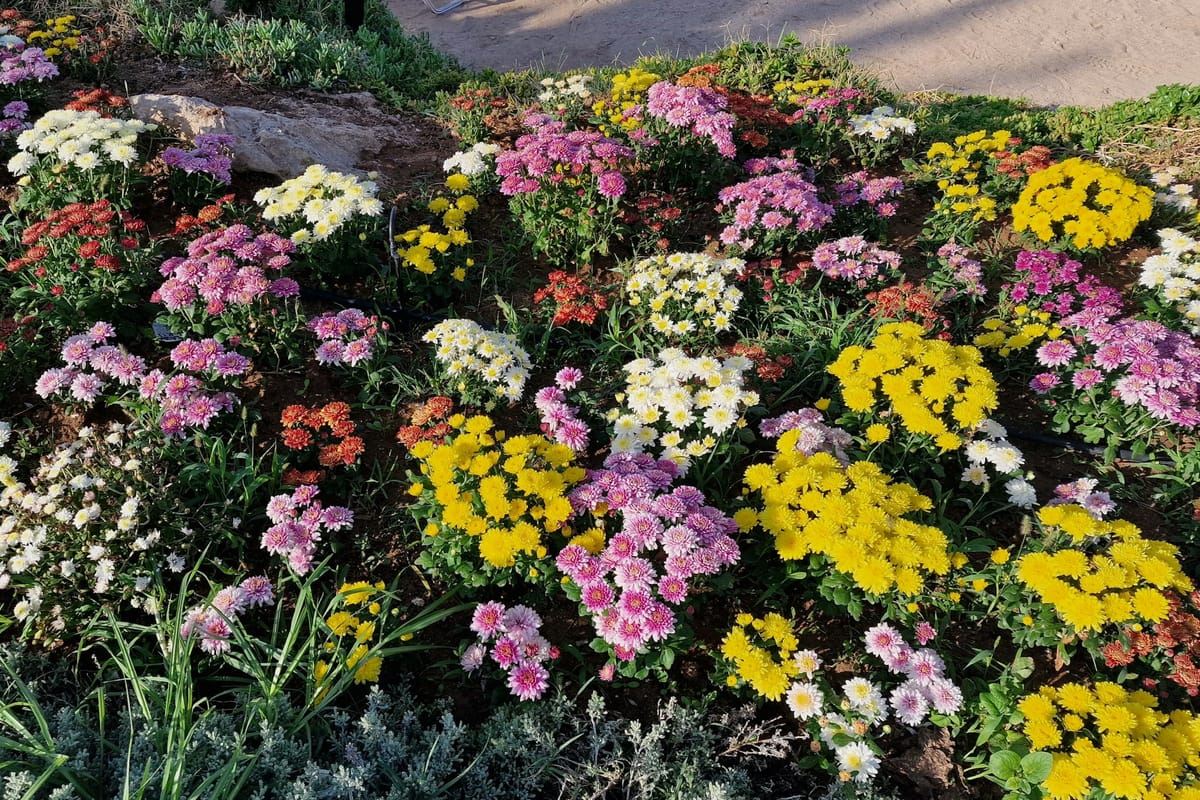
Spring (March-May): The best all-round window - wildflowers cover the Akamas peninsula and Troodos foothills, temperatures sit at a comfortable 18-24°C, Orthodox Easter (the island's most important religious event, dates vary from Western Easter) brings village processions and midnight resurrection services, and tourist numbers stay low outside the holiday itself. Summer (June-August): Hot and dry, regularly 32-38°C on the coast and drier heat inland, beach towns like Ayia Napa and Protaras hit peak capacity and peak prices, Troodos mountain villages offer a genuine escape at 10°C cooler, and Kataklysmos (Festival of the Flood, 50 days after Easter) fills Larnaca and Limassol seafronts with water-throwing, boat races and folk music blending Christian and ancient Aphrodite-cult traditions. Autumn (September-November): Sea stays warm into October, temperatures ease to 22-28°C, grape harvest season animates Troodos wine villages (Krasochoria) producing Commandaria, one of the world's oldest named wines, and crowds thin dramatically after mid-September. Winter (December-February): Mild coastal winters around 12-17°C make Cyprus a viable winter-sun escape while Troodos gets genuine snow and a functioning small ski resort on Mount Olympus - a combination almost no other Mediterranean island offers. Christmas and New Year bring family-centered celebrations rather than public spectacle.
Getting around
Buses: Cyprus has no railway, so intercity buses fill the gap - operators like Intercity Buses connect Nicosia, Limassol, Larnaca and Paphos for €4-8 a route, while rural buses reach villages with limited, often once-daily frequency that locals plan their whole day around. Airport Shuttles: Kapnos Airport Shuttle runs round-the-clock between Larnaca and Paphos airports and Nicosia/Limassol for roughly €8-15 per person - the practical option since there's no direct rail link. Car Rental: The realistic way to see the island properly, especially Troodos villages and the Akamas peninsula's dirt tracks - expect €25-50/day, driving is on the left (British legacy), and roads are generally excellent on the highway network, rougher in the mountains. Taxis: Urban taxis use meters and run €3-8 for short city hops; rural (village) taxis operate from fixed bases without meters at a flat kilometer rate with a roughly €3.64 minimum - agree the fare before you get in. Crossing to the North: Regular taxis and rental cars generally can't cross the Green Line without separate northern insurance - most visitors cross on foot at Ledra Street or Ledra Palace checkpoints in Nicosia and use local transport once across. Walking: Old Nicosia, Larnaca's seafront, and Troodos villages are all genuinely walkable; the coastal resort strips (Ayia Napa, Protaras) are more spread out and car-dependent.
Budget guidance
Budget Travel (€45-70/day): Hostel dorms or basic guesthouses €15-30, village taverna meals €8-15, souvlaki or halloumi wraps €3-5, rural bus tickets €1.50-3, free beaches and archaeological sites like Kourion's amphitheater views from outside. Mid-Range (€80-140/day): Three-star hotels or Airbnb €50-90, sit-down meze dinners €18-25 per person, rental car €30-45/day plus fuel, museum and archaeological site entries €4-10, comfortable coastal-to-mountain trips. Luxury (€200-400+/day): Boutique or five-star coastal resorts €150-350, fine dining with Cypriot wine pairings €50-90 per person, private guided tours of Paphos mosaics and Troodos monasteries, spa days at Limassol's marina hotels. Cyprus sits mid-pack for Mediterranean pricing - noticeably cheaper than Malta or the Amalfi Coast, comparable to inland Greece, pricier than the Balkans. North Cyprus (Turkish Lira currency) runs 25-40% cheaper across the board for food and accommodation, a genuine consideration for budget travelers willing to cross the Green Line.
Language
Greek is the official language in the Republic of Cyprus (south) and Turkish in the north, but the everyday spoken language most visitors encounter is Cypriot Greek, a dialect distinct enough from standard Modern Greek that mainland Greeks sometimes struggle with it - it carries centuries of Venetian, French, Turkish and English loanwords layered onto its Greek base. English is genuinely widespread thanks to British colonial rule until 1960 and a large British expat and tourist population - road signs, menus and most transactions in the south work fine in English, more so than almost anywhere else in the Mediterranean. Essential phrases: 'Yia sas' (hello, formal), 'Efharisto' (thank you), 'Parakalo' (please/you're welcome), 'Signomi' (sorry/excuse me), 'Poso kani?' (how much is it?), 'Kalimera' (good morning). In the north, Turkish is standard alongside English in tourist areas - 'Merhaba' (hello) and 'Teşekkürler' (thank you) cover the basics. Attempting Greek in the south (or Turkish in the north) still earns visible appreciation even where English works fine, since it signals respect for local identity rather than treating the island as a generic beach destination.
Safety
Cyprus ranks among the safer Mediterranean destinations, with violent crime rare and the main risks being petty theft, bag-snatching in crowded tourist strips (Ayia Napa, Paphos harbor) and inflated prices rather than physical danger. The most notorious tourist scam involves friendly strangers - often in Ayia Napa or Limassol nightlife areas - steering visitors toward cabaret bars or clubs with wildly inflated drink bills; treat unsolicited nightlife invitations from new acquaintances with skepticism. Confirm taxi fares or insist on the meter before riding, particularly with rural taxis that charge flat rates rather than metered fares. Tap water is safe to drink island-wide. Emergency number is 112 (works across both the Republic and the north); English-speaking police staff are available at stations in major tourist areas. The Green Line buffer zone itself is UN-patrolled and safe to cross at official checkpoints during opening hours, but wandering off marked paths near the zone (including abandoned areas like Varosha in the north) is genuinely restricted and enforced. Check current government travel advisories before visiting given periodic regional tension - conditions can shift, so verify status close to your travel dates rather than relying on older information. Sun and heat are the more mundane real risk in summer - 35°C+ days with strong UV call for real hydration and shade discipline, especially hiking in Troodos or visiting exposed archaeological sites like Kourion at midday.
Money & payments
The Republic of Cyprus (south) uses the Euro (€), having joined the eurozone in 2008; Northern Cyprus uses the Turkish Lira, though euros are widely accepted there too, often at a locally set (sometimes unfavorable) rate. Cards are accepted almost everywhere in the south, including small tavernas and kiosks, but rural kafeneia, village markets and rural taxis still run cash-first. ATMs are abundant in cities and tourist towns, sparser in mountain villages. Typical costs in the south: Cypriot coffee €1.50-2, souvlaki wrap €3-5, halloumi and meze dinner for two €35-50, draft Keo or Carlsberg beer €3-4, bottle of local Commandaria or village wine €8-15, rural bus ride €1.50-3, mid-range hotel double €70-110/night. Tipping runs 10% at restaurants when service isn't already included (check the bill - some tack on a service charge), rounding up is standard for taxis and cafés. Bargaining isn't customary in shops or restaurants but is normal and expected for handmade goods like Lefkara lace or silverwork bought directly from village artisans.