🇮🇸 Iceland
Iceland Travel Guide - Where Þetta Reddast Meets the Edge of the World
1 destinations · Budget level 3
Overview
Iceland sits alone in the North Atlantic, shaped by fire and ice into the world's most geologically young country - and perhaps its most philosophically distinct. Settled by Norse Vikings and Celtic settlers in the 9th century, Icelanders established the Alþingi in 930 AD at Þingvellir - now a UNESCO World Heritage Site - one of the world's oldest parliaments, and forged a national character defined by isolation, resilience, and radical self-reliance. The core cultural concept is þetta reddast - loosely 'it'll work out' - a phrase that sounds passive but runs deeper: it's a practiced optimism born from centuries of volcanic eruptions, harsh winters, and sudden storms. You don't panic; you adapt and trust in collective problem-solving. The other pillar of Icelandic identity is jafnrétti (equal rights) - an egalitarianism so embedded it functions as social architecture. Iceland has ranked #1 in the World Economic Forum's Gender Gap Index for 16 consecutive years. Everyone from the president to the checkout clerk uses first names only. Hierarchy is viewed with suspicion. The national pool culture - geothermal pools in every town, UNESCO-recognized in 2025 - functions as a classless public commons where politicians and taxi drivers soak alongside each other discussing weather and politics. Icelanders also live alongside Huldufólk (hidden people) - elves, wights, and supernatural beings believed to inhabit specific rocks and hills. This isn't purely folklore: road projects have genuinely been rerouted to avoid disturbing suspected elf habitats. And the Icelandic Sagas, written 800 years ago, are still readable by modern Icelanders in the original language - because the language has barely changed. A small island nation of 380,000 people, Iceland punches extraordinarily hard culturally, scientifically, and artistically. Understanding why requires understanding a culture shaped by necessity, equality, the long dark winter, and the constant reminder that the ground beneath your feet is still being made.
Travel tips
Pool Etiquette (Non-Negotiable): You must shower thoroughly - naked - before entering any public pool or hot pot. Attendants will send you back if you skip this. It's not optional and it's not embarrassing; it's simply how it works, and locals take it seriously. Embrace Þetta Reddast: Plans in Iceland fall apart regularly - weather closes roads, volcanic activity reshapes itineraries, forecast lies. Locals shrug and adapt. Don't fight it; find the alternative adventure. Shoes Off Inside: Remove shoes at the door when entering any Icelandic home - this is universal and deeply important. First Names Always: Address everyone by first name, including in professional settings. Calling someone 'Mr. Jónsson' sounds stiff and foreign. Silence Is Not Rude: Icelanders are comfortable with silence in ways that can unsettle visitors. Don't fill pauses with nervous small talk - locals see it as forced. Real conversation happens when there's something worth saying. Check Safetravel.is Before Driving: Register your itinerary, check road conditions at road.is, and download the 112 Iceland app before any rural driving. This is what locals do, not just tourists. Tipping Is Minimal: Tipping isn't customary in Iceland - wages are decent and service charges included. A small tip (rounding up) is appreciated but never expected. Respect the Landscape: 'Leave no trace' is deeply embedded here - walking off marked paths damages fragile moss that takes decades to grow and is taken personally by Icelanders. Summer Midnight Sun: Pack a sleep mask. The midnight sun at midsummer means full daylight at 2am - your body clock will revolt if you're not prepared.
Cultural insights
Icelandic culture is built on three invisible pillars: resilience forged by nature, equality enforced by community, and heritage preserved with almost obsessive care. Þetta reddast isn't laziness - it's a philosophical position born from living on a volcanic island where catastrophe is always a few kilometers underground. When 30% of medieval Icelandic infants didn't survive their first year, when volcanic eruptions could destroy entire communities overnight, an anxiety-driven culture would have collapsed. Instead, Icelanders developed collective practical optimism: problems are real, solutions exist, we'll figure it out together. This attitude explains everything from Iceland's rapid economic recovery after the 2008 financial crash (they jailed bankers instead of bailing them out) to how locals react when your rental car gets stuck in a river crossing. Jafnrétti (equal rights) isn't a political position - it's a cultural reflex. The 1975 Women's Strike, when 90% of Icelandic women took a day off to protest wage inequality, paralyzed the country in a single day and accelerated cultural change faster than any legislation. Iceland currently has female heads in multiple government roles simultaneously, not as remarkable exceptions but as expected normalcy. This extends to social interactions: Icelanders deeply resist status performance, name-dropping, or hierarchy signaling. Boasting about money or titles makes you immediately suspicious. Huldufólk (hidden people) sit at an interesting cultural junction between genuine folk belief and national identity symbol. Studies suggest 35-55% of Icelanders won't categorically deny elves exist - and road construction projects have been genuinely modified to protect suspected elf habitats, with the Icelandic Road and Coastal Administration officially acknowledging the cultural consideration. Whether Icelanders 'believe' is less important than understanding that these beings represent a serious relationship with the land - a refusal to treat the natural world as merely a resource. The Sagas function as living cultural memory. Modern Icelanders can read 13th-century Njáls Saga and Egils Saga in the original because the language has changed so little. The website Íslendingabók allows Icelanders to trace their genealogy directly to saga-era settlers. This connection to ancestors isn't abstract history - it's a felt, documented lineage that shapes how Icelanders see themselves. Pool culture is the daily social glue. The local sundlaug (swimming pool) is where decisions get made, gossip spreads, children learn to swim, elderly people maintain health, and political debates happen. It's classless and age-inclusive in a way that bars and cafés aren't. The nude showering requirement isn't discomfort for locals - it's a small daily act that says 'we're all just people here.' Regional identity matters: Reykjavík (home to two-thirds of the population) is cosmopolitan, creative, and internationally connected - with a cultural energy that echoes the Nordic innovation spirit you'll also find in Copenhagen. Akureyri in the north is the 'capital of the countryside' with stronger folk traditions. The Westfjords remain deeply isolated, with fishing culture and self-reliance that feels different from the capital's energy. The Highlands are essentially uninhabited - traversed only in summer, speaking more to Iceland's geological reality than its human culture.
Best time to visit
Summer (June-August): Midnight sun, all highland roads open, puffins nesting, wildflowers, temperatures 10-18°C in Reykjavík. Peak tourist season with highest prices and longest days. The summer solstice period (June 21) is a cultural event - locals stay up all night. This is prime time for Ring Road self-drives and highland access. August 2026 is particularly popular due to an eclipse event - book everything early. Autumn (September-October): Northern Lights season begins, crowds thin, prices drop, temperatures 5-13°C. The first Aurora forecasts arrive in late August and locals get excited. Fewer tourists means more genuine interactions, better accommodation availability, and dramatic storm-lit landscapes. Winter (November-February): Polar nights with only 4-5 hours of daylight around December solstice. Northern Lights peak season, but also the most challenging driving conditions. Prices lowest of the year for flights and accommodation. Locals embrace the darkness with cozy indoor culture, hot pools at midnight, and Christmas markets. The midwinter feast of Þorrablót happens January-February - this is when traditional fermented foods appear and communities gather. Spring (March-May): Snow begins clearing from highland roads, puffins return in May, waterfalls are at peak flow from snowmelt, temperatures 0-10°C. A sweet spot between winter prices and summer crowds. The light returns rapidly and Icelanders visibly lighten in mood by April.
Getting around
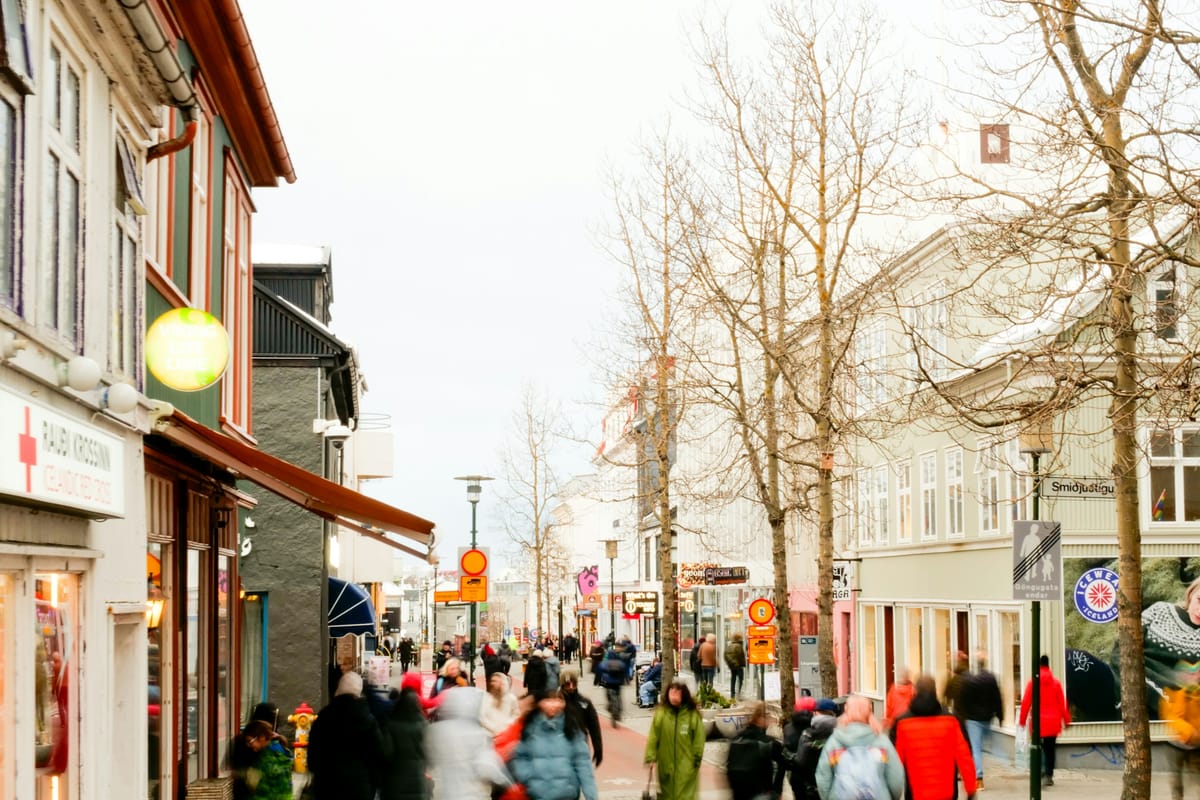
Rental Car: The dominant and often essential way to explore beyond Reykjavík. Ring Road (Route 1) circles the entire island - roughly 1,332 km - and takes 7-10 days if doing it properly. As of January 2026, Iceland introduced a Kilometer Tax of approximately 8.81 ISK/km (including admin fees) for all rental vehicles. A 4x4 is essential for highland F-roads (Landmannalaugar, Þórsmörk) and strongly recommended for winter driving. Check road.is obsessively. Domestic Flights: Ísavia operates domestic routes from Reykjavík City Airport to Akureyri, Ísafjörður (Westfjords), and Egilsstaðir (East Iceland) - often cheaper and faster than driving remote regions. Strætó Bus System: Connects Reykjavík to major towns with intercity buses - affordable but slow and infrequent. Route 1 bus circles the Ring Road during summer. Within Reykjavík, Strætó buses cover the city (ISK 560/ride with app, free transfers within 75 min). Ferries: Sæferðir ferry connects Stykkishólmur to the Westfjords across Breiðafjörður - scenic and practical. Smyril Line sails from Denmark/Faroe Islands to Seyðisfjörður for those bringing their own vehicles. Cycling: Growing cycling infrastructure in Reykjavík. Long-distance cycling possible in summer on the Ring Road - hardcore and popular with adventurous travelers, locals do it too. Walking in Reykjavík: The capital is very walkable - Old Harbor, Hallgrímskirkja, Harpa Concert Hall, and the main shopping street Laugavegur all reachable on foot.
Budget guidance
Iceland is genuinely expensive - one of the priciest destinations in Europe, with wages high enough to justify it for locals. Budget realistically. Budget Travel (ISK 20,000-30,000/day or €130-200): Camping at official campsites (ISK 1,500-4,000/person/night), cooking own meals from Bónus or Krónan supermarkets, packing lunches, using Strætó buses, skipping paid attractions. Reykjavík hot dogs (pylsur) from Bæjarins Beztu are the legendary cheap local eat at around ISK 600. Self-catering for a week is realistic. Mid-Range (ISK 30,000-55,000/day or €200-360): Guesthouses/hostels with private rooms (ISK 15,000-25,000/night), mix of restaurant meals and supermarket cooking, rental car (split between travelers), Reykjavík pool entries (ISK 950), some paid tours. A decent bowl of soup at Café Loki runs ISK 2,500-3,500. Comfortable Travel (ISK 55,000-100,000/day or €360-650): Mid-range hotels (ISK 25,000-40,000/night), dining out most meals, guided tours, whale watching (ISK 12,000-15,000), cave tours, lava tube experiences. Luxury (ISK 100,000+/day or €650+): Boutique hotels (ISK 40,000-100,000+/night), fine dining (ISK 8,000-15,000/person), helicopter glacier tours, private geothermal lagoons, exclusive wilderness lodges. Money-saving: Bónus supermarket (the yellow pig) is where locals shop; Costco at Reykjavík has cheap fuel and hot dogs; municipal pools cost ISK 950 vs Blue Lagoon's ISK 9,990+.
Language
Icelandic is a North Germanic language descended directly from Old Norse, largely unchanged for 800+ years - Icelanders can still read the medieval Sagas in the original. This linguistic time-capsule is deliberate: Iceland's Language Council actively coins new Icelandic words from Old Norse roots rather than adopting loanwords. A 'computer' is tölva (combining 'tala' meaning number and 'völva' meaning prophetess). A 'telephone' is sími from an ancient word for 'long thread.' This linguistic purism is a point of national pride and identity. Essential phrases: Halló (hello), Takk / Takk fyrir (thank you / thanks for that), Fyrirgefðu (excuse me/sorry), Já (yes), Nei (no), Hvernig hefurðu það? (How are you?), Skál! (Cheers!), Verði þér að góðu (bon appétit / you're welcome). Almost all Icelanders under 50 speak excellent English - tourism is a major industry and English instruction is mandatory from primary school. In Reykjavík you can get by entirely in English. In remote rural areas, especially with older generations, English may be limited but Danish or basic Scandinavian languages sometimes help. Learning even two words of Icelandic (Takk, Halló) gets a warmer response than speaking English from the start - locals genuinely appreciate the effort toward their language. The patronymic naming system means 'Gunnar Sigurðsson' is Gunnar son of Sigurður, not a family surname - his sister would be 'Gunnarsdóttir.' Never call someone by their last name as a formality; it's a source of confusion, not respect.
Safety
Iceland is one of the world's safest countries for travelers - violent crime is extremely rare and locals are genuinely helpful. The real dangers are entirely natural. Volcanic Activity: The Reykjanes Peninsula near Grindavík has erupted repeatedly since 2023 (12+ times by mid-2025). Eruptions are monitored and authorities provide clear guidance. The Blue Lagoon has been evacuated and reopened multiple times. Always check vedur.is (Iceland Met Office) for current volcanic status before visiting the Reykjanes area. Weather: Iceland's weather is genuinely unpredictable and severe - strong storms with 40m/s winds, sudden snow in summer at altitude, sandstorms from glacial outwash plains. Check en.vedur.is before any outdoor plans. Glacial Floods (Jökulhlaup): Sudden floods from beneath glaciers can overwhelm rivers with little warning. Don't camp in riverbeds or glacial valleys. Driving: Iceland's F-roads (highland tracks) are only passable in summer with a 4x4. River crossings require assessment of depth and speed - many rental agreements void coverage for river crossings. Sudden weather changes can close roads quickly. Road.is provides real-time conditions. Hypothermia: Sea spray, wind, and rapid temperature drops catch unprepared hikers. Dress in waterproof layers even in summer. Hot Springs: Natural geothermal pools vary in temperature from pleasant to scalding - test water temperature carefully before entering any unmarked natural pool. Emergency Resources: Emergency number: 112. Download the 112 Iceland app for GPS location sharing with rescue teams. Register hiking/driving plans at safetravel.is. The Icelandic Association for Search and Rescue (ICE-SAR) operates free tours about safety - genuinely useful. Health: Tap water is among the world's purest - drink it freely. Healthcare is excellent but expensive without European Health Insurance Card (EHIC for Europeans) or travel insurance. Get travel insurance that covers volcanic events and natural disaster cancellations.
Money & payments
Icelandic Króna (ISK / kr) is the official currency. Iceland is one of the most cashless societies on earth - you can pay by card or contactless for virtually everything, including public toilets, parking meters, small market stalls, and ISK 200 coffee. Carrying cash is genuinely unnecessary for most travelers. ATMs (available at banks and major shops) work fine but are rarely needed. Currency exchange: airports charge poor rates; bank apps like Wise or Revolut offer competitive rates and are what savvy travelers use. Reference prices in ISK (2026): Bæjarins Beztu hot dog: ~ISK 600. Municipal pool entry: ISK 950. Supermarket lunch: ISK 1,500-2,500. Restaurant main course: ISK 3,500-6,500. Coffee at a café: ISK 700-1,000. Domestic beer at a bar: ISK 1,200-1,800. Skyr (500g at supermarket): ISK 450-600. Campsite per person per night: ISK 1,500-4,000. Mid-range hotel: ISK 20,000-35,000/night. Whale watching tour: ISK 12,000-15,000. Blue Lagoon entry: ISK 9,990-14,990. Exchange rate reference: roughly ISK 150 = €1 (check current rates). Tipping: Not culturally embedded. A small tip (rounding up) at restaurants is appreciated but absolutely not expected. Never tip in coins - considered slightly insulting. No need to tip taxis or guesthouses.