🇰🇬 Kyrgyzstan
Kyrgyzstan Travel Guide - Nomadic Soul of the Tien Shan Mountains
1 destinations · Budget level 1
Overview
Kyrgyzstan is Central Asia's most ruggedly authentic country - a landlocked mountain republic where 90% of the territory sits above 1,500 meters and nomadic pastoralism never fully died. Unlike neighboring Kazakhstan, which traded its steppe identity for oil wealth and gleaming capitals, or Uzbekistan, which packaged its Silk Road cities into polished tourist circuits, Kyrgyzstan stayed raw. Locals call themselves 'the free people of the mountains,' and this isn't idle pride - Kyrgyzstan is the only Central Asian country with a genuine parliamentary democracy (chaotic as it is), has changed governments through popular revolution twice, and has a civil society culture that debates rather than submits. The cultural anchor is the Manas Epic - a 500,000-line oral poem twenty times longer than Homer's Iliad and Odyssey combined, recited by 'manaschi' storytellers from memory. Manas (the warrior-hero) is more than folklore; he's the cultural GPS Kyrgyz people use to navigate questions of identity, courage, and what it means to be Kyrgyz. This reverence for oral tradition, for elders (aksakal, literally 'white beard'), and for hospitality (meimandostuk) shapes everyday interactions. A stranger who arrives at a yurt will be fed before being asked their name. Bread must never be placed upside down or thrown away - it's sacred. Islam arrived in the 8th century but layered on top of older Tengri sky-worship and shamanic practices, creating a distinctly Central Asian Islam where shrines to ancestral spirits (mazar) coexist with mosques, and where locals might visit both without seeing contradiction. The north-south divide runs deep: Bishkek in the north is post-Soviet cosmopolitan, where women wear miniskirts and men drink vodka alongside tea; Osh in the south is older, more Uzbek-influenced, more conservative, more devout. Understanding Kyrgyzstan means understanding it as a country still negotiating between nomadic tradition and post-Soviet modernity, between mountains and the outside world.
Travel tips
Hospitality Protocol: If invited into a yurt or home, remove shoes at the entrance. Accept the first bowl of tea (chai) offered without hesitation - refusing is a genuine insult. You will receive more food than you can eat; pace yourself early. Bring a small gift (sweets, fruit, something from your home country) when visiting families. Bread Is Sacred: Never place bread upside down, toss it aside, or step over it. If given bread, hold it respectfully. Locals notice and appreciate this immediately. Elders First: In any group setting - sharing food, entering a room, making toasts - the eldest person goes first. Addressing elders as 'ata' (father/grandfather) or 'apa' (mother/grandmother) is respectful even with strangers. Dress Code by Region: Bishkek is relaxed - any normal outfit works. Rural villages, Osh, and mosque areas require covered shoulders and knees; women should carry a scarf. Photography: Always ask before photographing people, especially women in traditional dress, nomadic families at work, or religious sites. Most locals are happy to pose; some are not. Never photograph military or government buildings. South vs. North: Osh and southern regions are noticeably more conservative and devout than Bishkek. Adjust behavior accordingly - public affection even more discreet, dress more covered. Cash Is King: Outside Bishkek and Karakol, cash in KGS is mandatory. Stock up before heading to mountain areas - no ATMs exist beyond major towns. Altitude: Much of the country sits above 2,000m. Headaches and fatigue are normal first-day symptoms. Drink water, rest, and ascend gradually. Son-Kol lake sits at 3,016m and can surprise unprepared visitors.
Cultural insights
Kyrgyz identity is inseparable from the horse. Horses aren't transport - they're status, companion, and metaphor. The national sport kok-boru (teams of riders competing over a headless goat carcass) is not a tourist spectacle but a serious competition that draws betting crowds and genuine passion. Eagle hunting, practiced by Kyrgyz berkutchi for over a thousand years, is still passed from grandfather to grandson in rural Issyk-Kul and Naryn. The aksakal system (council of white-bearded elders) remains the real social authority in villages - disputes over land, marriage, and community resources go to aksakal courts before or instead of state courts. Young men defer; women navigate it differently depending on region. The concept of 'meimandostuk' (hospitality) isn't customer service - it's a moral obligation embedded in nomadic survival logic: the stranger who arrives at your camp might be your salvation one day. Refusing to offer what you have marks you as spiritually deficient, not just impolite. Soviet rule (1917-1991) attempted to erase clan and tribal identity but largely failed - Kyrgyz people maintained networks of extended family (uruk) and tribal affiliation that functioned underground. Post-independence, these identities resurged - a sharp contrast to how neighboring Kazakhstan channeled its own post-nomadic identity into Astana's boldly reinvented capital. Knowing someone's tribal region (Sary-Bagysh, Buguu, Solto) still matters in employment, politics, and marriage. The ala kachuu practice (bride kidnapping, literally 'grab and run') is Kyrgyzstan's most controversial social reality. Criminalized in 2013 but still practiced in rural areas, it exists in a spectrum from mutually consensual elopement theater to genuinely coercive abduction. Young urban Kyrgyz overwhelmingly oppose it; rural elders often defend it as tradition. Traveling visitors won't encounter it directly, but understanding it illuminates the gap between Bishkek's liberal civil society and rural conservatism. The Manas Epic functions as cultural operating system - manaschi storytellers can recite for hours from memory, improvising and updating themes while staying true to the epic's moral core. UNESCO recognized it as Intangible Cultural Heritage. Hearing a manaschi perform is one of the most viscerally Kyrgyz experiences possible - the rhythmic guttural verses carry centuries of collective memory.
Best time to visit
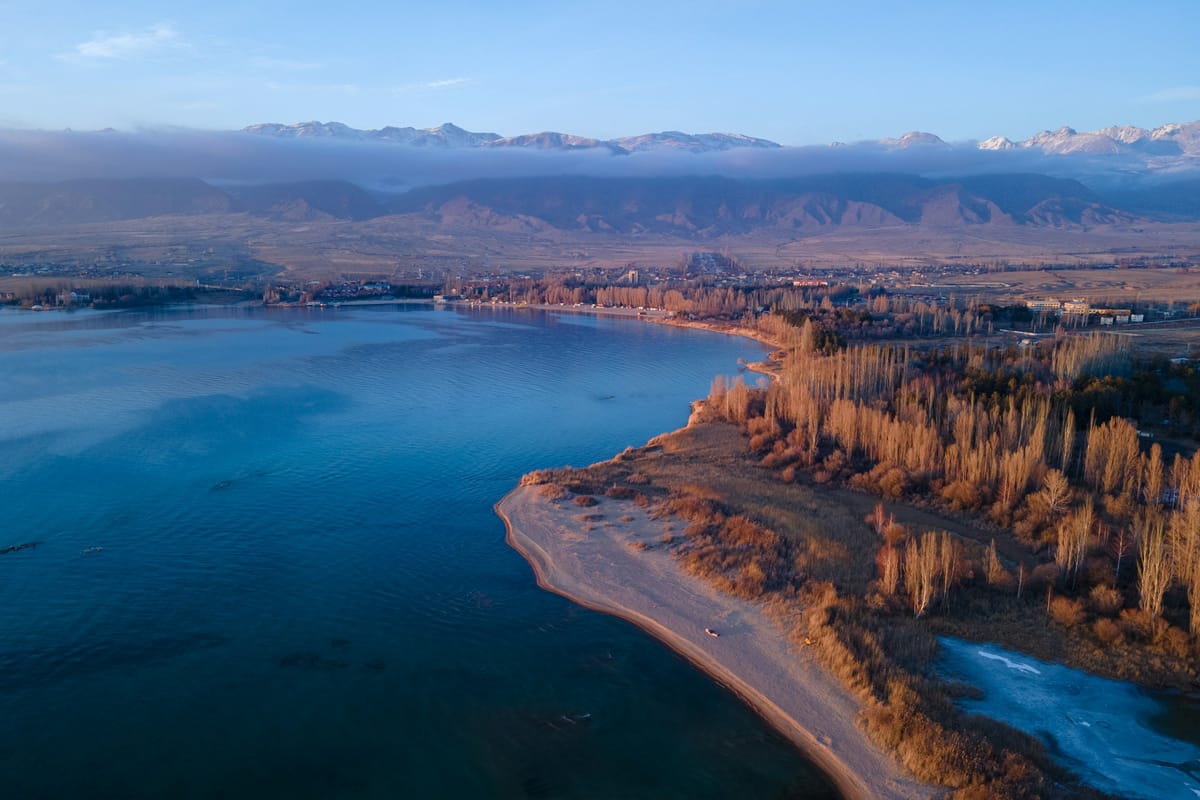
Summer Peak (July-August): The golden window for mountain trekking - passes above 3,500m clear of snow, all yurt camps fully operational, Son-Kol and Issyk-Kul glittering under long days. Temperatures at altitude 15-25°C by day, dropping sharply to 5-10°C nights. August is peak and busiest. Expect to share popular routes. Early Summer (June): Fewer tourists, meadows carpeted in wildflowers, some high passes still snow-patchy but most trekking possible. Locals prefer early June for the uncrowded atmosphere. 10-20°C in valleys. Shoulder Autumn (September-October): Arguably the most spectacular - golden larches, red mountain grasses, harvest festivals, and Nooruz energy still in the air. Trekking above 3,500m closes by mid-October. Cool 10-20°C, crisp air. Winter (November-March): Bishkek cold at -5 to 5°C, mountains brutal at -20°C or below. Karakol Ski Base runs December-March, a genuine local ski scene without alpine price tags. Very few foreign tourists - authentic urban Kyrgyzstan experience. Spring (April-May): Muddy, unpredictable, road conditions poor in mountains. Nooruz (March 21) is the most important celebration - spring equinox festival with massive public gatherings, traditional games, and communal feasts. Worth timing a visit around it.
Getting around
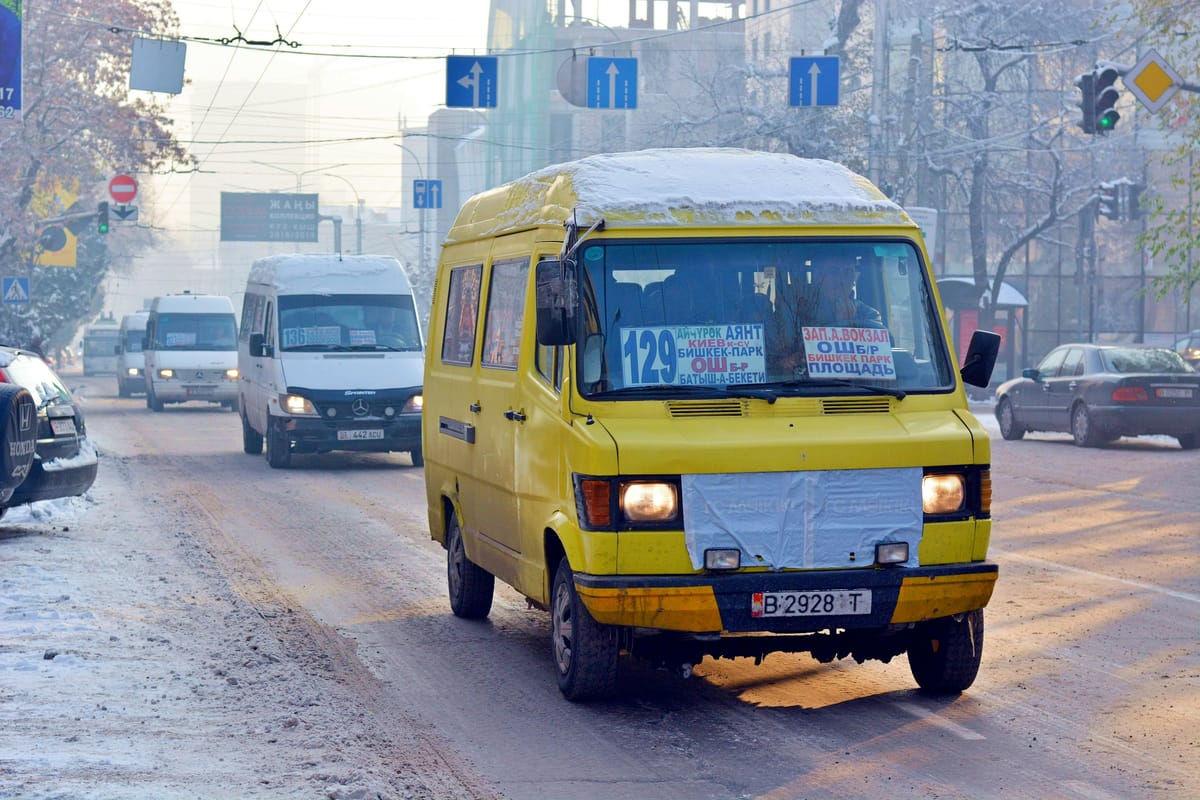
Marshrutka (Shared Minivans): The backbone of Kyrgyz transport - cramped, fast, and authentic. Fixed routes connecting cities, leave when full (not on schedule). Bishkek to Karakol KGS 300-400 (~$3.50-4.50), about 5-6 hours. Always agree on luggage space for backpacks. Shared Taxis: Faster than marshrutkas but old Soviet-era Mercedes without working rear seatbelts - drivers frequently speed on mountain switchbacks. Use for shorter legs or when marshrutka timing doesn't work. Bishkek to Osh shared taxi ~KGS 800-1,200 ($9-14). Yandex Go / Bolt: Works well in Bishkek and Osh for city transport. Far cheaper and more transparent than negotiating with traditional taxis. Airport transfer Bishkek should cost KGS 600-800 ($7-9) by app. Manas International Airport: Located 30km north of Bishkek. Licensed taxi desk inside arrivals - negotiate before or use Yandex Go once you have local SIM. Car Rental: Best option for Issyk-Kul circuit and rural exploration, KGS 2,500-4,500/day ($28-50). Roads are paved on main routes but unpaved 4WD-required tracks branch into virtually every valley. Community Based Tourism (CBT): The CBT network coordinates homestays, yurt camps, and horse treks across the country. CBT offices in Bishkek, Karakol, Naryn, and Osh connect travelers with families offering genuine rural accommodation. Horse treks KGS 2,000-3,000/day ($22-34) with guide. Domestic Flights: Avia Traffic and Air Manas connect Bishkek to Osh (1 hour vs. 12-hour road, KGS 3,000-6,000 one-way). Useful for south-north itineraries; Osh's ancient Silk Road position also makes it a natural gateway for travelers continuing west to Tashkent's mosques and bazaars.
Budget guidance
Budget Travel (KGS 1,100-2,200/$13-25/day): Hostel dorm in Bishkek KGS 500-700/night, CBT village homestay including meals KGS 700-1,000/night, shashlik lunch at bazaar KGS 150-250, marshrutka transport KGS 200-400/leg. Free hiking, free lakes, free cultural sites. This is genuinely comfortable budget travel - not suffering. Mid-Range (KGS 2,200-4,500/$25-50/day): Guesthouse private room KGS 900-1,800/night, restaurant meals KGS 400-700, occasional car hire or private transfer, guided day treks with horses. Comfortable travel with local flavor intact. Organized Trekking (KGS 4,500-8,700/$50-100/day): Multi-day guided treks with pack horses, tents or yurt accommodation, meals included. Still exceptional value compared to equivalent Himalayan or Alpine experiences. Yurt Camp Stays: Tourist yurt camps on Son-Kol and Issyk-Kul KGS 1,500-2,500 ($17-28) per person including dinner and breakfast. Shepherd family yurts through CBT KGS 600-900 per person. Specific Costs: Beer in Bishkek bar KGS 120-200, beshbarmak restaurant meal KGS 350-600, samsa (meat pastry) at bazaar KGS 30-50, SIM card with 10GB data KGS 200-300, Manas airport transfer KGS 700, Karakol Ski Base day pass KGS 800-1,200. Kyrgyzstan remains one of the most genuinely affordable adventure destinations on earth.
Language
Kyrgyz and Russian are both official languages - and understanding which dominates where matters practically. In Bishkek, Russian is the urban default: signs, menus, and business transactions often happen in Russian. In rural areas and Osh, Kyrgyz dominates. Young educated Bishkekis frequently speak English, especially those in tourism. Elsewhere, English is rare. Essential Kyrgyz: 'Salam' (hello), 'Rahmat' (thank you), 'Keche koyung' (excuse me), 'Qancha turaat?' (how much does it cost?), 'Kömök kerek!' (I need help!). Essential Russian phrases supplement Kyrgyz in cities: 'Privet' (hi), 'Spasibo' (thank you), 'Skolko stoit?' (how much?). The Kyrgyz language belongs to the Turkic family, related to Kazakh and Uzbek - speakers of any of those will find substantial overlap. The Manas Epic is recited in classical Kyrgyz, and hearing even a few words of effort from a foreign traveler brings visible warmth from locals. Google Translate handles Kyrgyz adequately for basic communication. Download offline packs before heading to mountain areas without internet. Russian is more reliably translated and more useful in cities. Kyrgyz language is written in Cyrillic script (same as Russian) though a Latin-based script reform is periodically discussed. Learning to read Cyrillic basics (enough to decode signs and menus) is worth one afternoon of effort before arriving.
Safety
Kyrgyzstan is genuinely safe for travelers by global standards - violent crime against tourists is extremely rare. The main risks are practical rather than criminal. Altitude Sickness: The most common medical issue travelers face. Son-Kol (3,016m), Ala-Kol Pass (3,860m), and high-altitude treks above 3,500m can cause acute mountain sickness. Acclimatize gradually, drink 3-4 liters of water daily, ascend no more than 500m/day above 2,500m. Symptoms: headache, nausea, dizziness. Descend immediately if breathing difficulty develops. Mountain Weather: Conditions change violently in the Tien Shan. Snow possible even in July at altitude. Always carry waterproof layers, warm fleece, and enough food/water for extended delays. Inform someone of your trekking route. Traffic: Roads are genuinely dangerous - mountain switchbacks, speeding shared taxis, and livestock on roads create real hazard. Use seatbelts when available. Avoid night driving in mountains. Fake Police Scam: Plainclothes individuals claiming to be police officers may ask to see your passport or wallet, particularly in Bishkek. Real police wear uniform. Never hand over your wallet - offer to walk to the nearest police station. Taxi Overcharging: At Manas Airport especially. Use Yandex Go app or agree on price firmly before entering any taxi. KGS 600-800 should reach central Bishkek. ATM Skimming: Use ATMs inside banks or large hotels rather than standalone street machines. Select 'charge in KGS' to avoid dynamic currency conversion scams. Southern Regions: Osh and Batken Provinces near the Tajik/Uzbek border experienced ethnic tensions historically (2010 Osh violence). The situation has been calm since but check current travel advisories before visiting Fergana Valley border areas. Emergency Numbers: 102 (police), 103 (ambulance), 101 (fire). Medical facilities adequate in Bishkek, very limited in rural areas - travel insurance with evacuation coverage strongly recommended.
Money & payments
The Kyrgyzstani Som (KGS) is the currency - written 'с' locally. As of 2025-2026, approximately 87-90 KGS equal 1 USD, and 95-100 KGS equal 1 EUR. Cash Reality: Outside Bishkek and Karakol, cash is essentially mandatory. Card machines exist in major Bishkek supermarkets, hotels, and restaurants, but rural areas, CBT homestays, yurt camps, markets, and small restaurants operate cash-only. Stock up in Bishkek before any mountain excursion - there are no ATMs beyond major towns. ATMs: Available throughout Bishkek and Osh, present in Karakol and Naryn, essentially nonexistent in mountains. Maximum withdrawal typically KGS 25,000 per transaction. ATM fees range from free to KGS 500 ($5.50) per transaction depending on bank. Use ATMs inside Demir Bank or Optima Bank branches for most reliability. Exchange: Licensed exchange bureaus (obmennik) in Bishkek offer better rates than airport or hotel exchange. USD and EUR most easily exchanged; Russian rubles also accepted widely. Never exchange on the street. Tipping: Not expected but appreciated. Round up for restaurant bills, KGS 50-100 tip for good service at CBT homestays, KGS 200-500/day for trekking guides is generous. Typical Prices: Samsa (baked meat pastry) KGS 30-50, Shashlik skewer KGS 80-150, Full beshbarmak meal for two KGS 600-1,000, 1.5L water bottle KGS 40-60, Local beer (Baltika) KGS 100-180, SIM card with generous data KGS 200-350, CBT homestay with meals KGS 700-1,200/person.