🇵🇦 Panama
Panama Travel Guide - Bridge of the World, Seven Cultures, One Crossroads
1 destinations · Budget level 2
Overview
Panama's national motto — 'Puente del mundo, corazón del universo' (Bridge of the World, Heart of the Universe) — is not tourist marketing. It's a psychological fact locals live with daily. The country is a 77-kilometer strip of land where every major global trade route converges, and that geography has shaped everything: the demographic mosaic, the cultural negotiations, the national identity complex, and the constant tension between being a crossroads for others and building something coherent for themselves.
Panamanian national identity was forged through foreign control more than local choice. Spain colonized it, the French failed to build the canal, the United States bankrolled a 1903 independence from Colombia then immediately extracted a perpetual canal zone treaty most Panamanians viewed as neo-colonial humiliation. The Torrijos-Carter Treaties of 1977 — which returned canal sovereignty in 1999 — are the defining political triumph in collective memory. The Canal is not just infrastructure; it's the site of recovered dignity, and locals will tell you this without prompting.
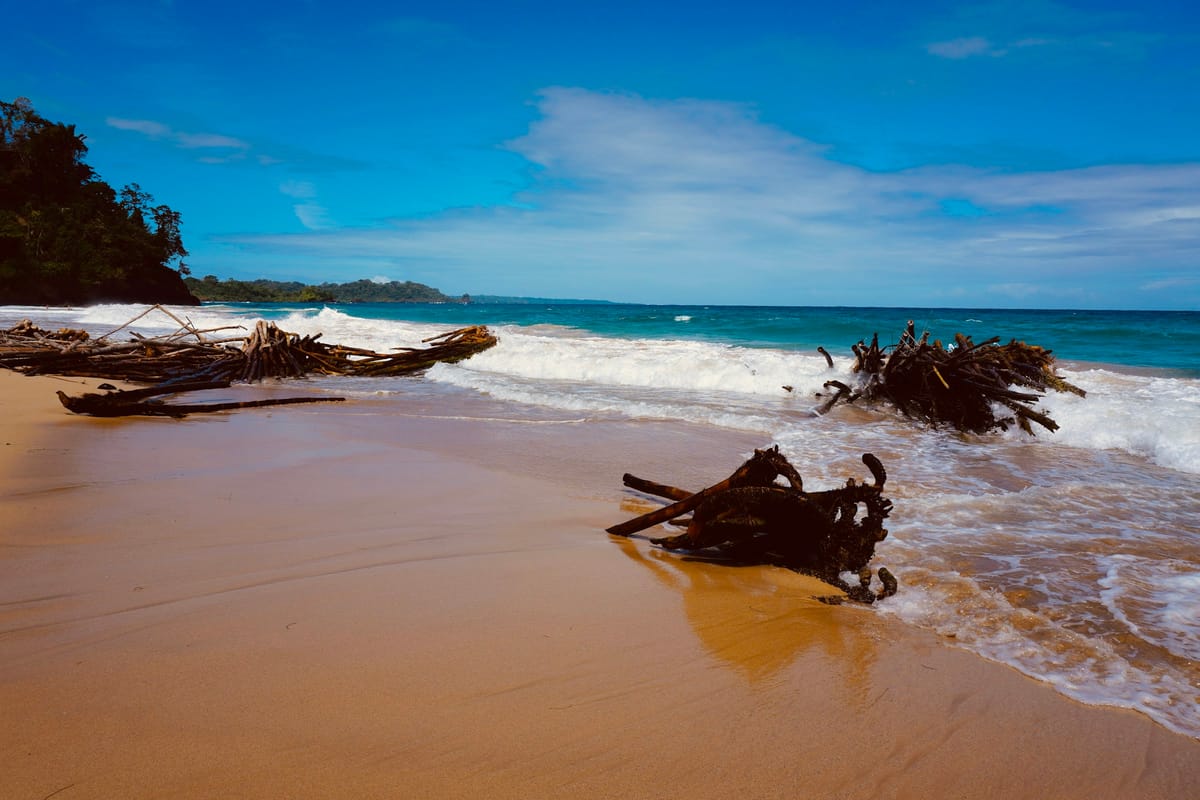
But beyond the Canal narrative, Panama is seven distinct indigenous nations (Guna, Emberá, Wounaan, Ngäbe-Buglé, Naso Tjerdi, Bribri, and Bokota), a significant Afro-Panamanian population descended from both colonial-era enslaved people and Caribbean laborers brought for canal construction, a Chinese-Panamanian community so embedded that Chinese restaurants and hardware stores appear in towns with 500 people, and a mestizo majority navigating all of this while watching Panama City's skyline become indistinguishable from Miami. The country shares its Caribbean soul most visibly in Bocas del Toro, where Afro-Antillean culture, Ngäbe indigenous traditions, and backpacker arrivals all collide on the same driftwood dock.
The concept most useful for understanding Panama is not a single word like Georgia's 'supra' or Serbia's 'inat' — it's a duality: 'el que tiene padrino se bautiza' (he who has a godfather gets baptized). Connections, relationships, and informal networks are the operating system. Bureaucracy runs on who you know. Business deals close after the third family lunch. Locals call it viveza criolla — creative resourcefulness that routes around obstacles through personal relationships rather than systems. It can frustrate outsiders seeking straightforward transactions; locals see it as adaptive wisdom honed through centuries of navigating institutions that were never built for them.
Travel tips
Panama Time is Real: Arrive 30 minutes late to social gatherings and you're early. For business meetings, punctuality is expected but 15 minutes grace is standard. Don't interpret lateness as disrespect — locals read over-punctuality as anxiety. Dress Code by Zone: Panama City's financial district (Obarrio, Marbella, San Francisco) expects smart casual. Casco Viejo is casual-chic. Indigenous comarcas require modesty and ask permission before photographing — mola-wearing Guna women absolutely do not want your camera without consent. Greetings Matter: Handshake for first meetings with men, cheek kiss for women or when introduced through mutual contacts. Jumping straight to business is rude — ask about family, weather, where someone is from. Refusing Hospitality: If a Panamanian invites you to eat, accept something, even if it's just juice. Outright refusal reads as contempt. 'Gracias, estoy lleno' (I'm full, thank you) is the polite exit. Cash and Cards: Panama uses the US dollar (called 'balboa' locally for coins) which simplifies budgeting, but fondas, markets, and smaller towns are cash-only. ATMs widely available in cities. Colón and the Darién: Colón city is genuinely dangerous — don't wander; stick to the free trade zone if you have business there. The Darién Gap beyond Yaviza is absolutely off-limits without serious security assessment and local guides — drug trafficking routes, armed groups, and near-zero emergency services.
Cultural insights
Panama's social architecture is built on extended family networks (familia) and the compadrazgo system — a web of godparents, sponsors, and informal alliances that creates obligation and reciprocity across class lines. When a child is baptized or confirmed, the godparents (padrinos) become quasi-family, and the relationship carries real social weight for decades. Locals don't view this as corruption; they see it as the logical response to institutions that historically excluded them.
Regional identity runs deeper than national identity for many Panamanians. Azuerenses (from the Azuero Peninsula — Los Santos, Herrera, Veraguas) are the self-appointed guardians of Panamanian tradition: they produce the finest polleras (the national dress, so elaborate it takes artisans months to hand-embroider a single garment), maintain the Carnaval tradition at its most intense, and carry themselves with a specific pride locals call 'azuereño de pura cepa' (pure-blooded Azuerense). They view Panama City with mild suspicion — too Americanized, too transactional, culturally hollow. Panama City residents return the disdain quietly, calling interior provinces 'el interior' with the faint condescension of capital cities everywhere.
The Guna people of the San Blas archipelago (Guna Yala comarca) represent Panama's most visible example of indigenous self-governance. Theirs is a matriarchal society — men take their wives' family name and move into the wife's household. Mola art (layered reverse appliqué textiles depicting cosmological and natural imagery) is not craft tourism; it is a living language of Guna cultural identity that survived and flourished through Spanish colonization. The Guna successfully revolted against Panamanian government interference in 1925 (the Dule Revolution), and their autonomous comarca gives them significant legislative independence today. The Smithsonian Tropical Research Institute, headquartered in Panama, has documented the Guna's remarkable ecological knowledge and the biodiversity of Guna Yala — one of the most biodiverse marine environments on the planet.
Afro-Panamanian culture divides into two distinct streams: the colonial-era Congo tradition (descendants of enslaved Africans from the Spanish period, concentrated in Portobelo and Colón) whose Carnival traditions enact the historical resistance of cimarrones (escaped enslaved people); and the Afro-Antillean community (descendants of English-speaking Caribbean workers brought for canal and railroad construction, concentrated in Bocas del Toro, Colón, and Panama City) who maintained Protestant traditions, English language, and Caribbean cultural practices that remain distinct today. Both groups face significant discrimination that Panamanian society discusses only recently and uncomfortably.
The Chinese-Panamanian community (chinos, as locals affectionately call both Chinese-Panamanians and the corner stores they run) arrived in two waves: the 19th century for railroad construction, and the 20th century for commerce. Chinese-owned tiendas exist in virtually every Panamanian town regardless of size — a kind of commercial infrastructure locals depend on and rarely think to explain to visitors.
Machismo exists but is negotiated differently than in some Latin American countries — Panama City's cosmopolitan economy and significant English-speaking professional class creates more gender-mixed spaces than many neighbors. The interior provinces operate more traditionally. LGBTQ+ life is visible in Panama City's Casco Viejo and El Cangrejo neighborhoods; public affection is acceptable in these zones, more complex elsewhere.
Best time to visit
Dry Season (December–April): The classic tourist window with the Pacific coast getting essentially no rain, skies clear, humidity lower, temperatures 24–32°C. February is peak — ideal weather, Carnaval season, and maximum cultural activity. Book accommodation months ahead for Las Tablas Carnaval specifically. The Canal locks are most accessible for viewing during this period.
Rainy Season (May–November): Misunderstood and underrated. Mornings almost always clear and sunny; rain typically arrives as powerful afternoon thunderstorms that last 1–3 hours then clear. Landscape is spectacularly lush and green, waterfalls full, prices 20–30% lower, and fewer tourists. Serious birdwatchers prefer this window — hundreds of migratory species in transit. The Caribbean coast (Bocas del Toro, Colón) has rain year-round with its own micro-seasons, so the dry/wet dichotomy is primarily a Pacific coast phenomenon.
Chiriquí Highlands Year-Round: Boquete and Volcán operate in their own microclimate — cool (16–24°C), coffee harvest December–March, flower festivals January–February, highland hiking best April–November when crowd levels drop. The bajareque (light misty drizzle locals swear nurtures the coffee) can appear any month.
Azuero Peninsula (January–March): This is when the heartland of Panamanian culture fully activates — Carnaval de Las Tablas (5 days before Ash Wednesday), followed by Semana Santa processions of extraordinary devotional intensity. If you want to understand what Panama is at its cultural core, Azuero during these months is non-negotiable.
Getting around
Panama City Metro and Metrobuses: The best public transit system in Central America, and locals are quietly proud of it. Metro lines run $0.35/ride; Metrobuses $0.25/ride (with free transfers within 40 minutes). Load a Metro card (SeguroClave) at any station. Buses don't accept cash, so get the card immediately on arrival. The metro connects Albrook terminal to Tocumen via Transistmica — covers most useful city movement.
Uber: Recommended over yellow taxis for safety, price transparency, and reliability. Rides across Panama City typically $5–15. Airport transfers $15–25 to Casco Viejo or Miraflores area. Yellow taxis are plentiful but meters are rarely used — negotiate fare before boarding or download the app Easy Taxi for metered alternative.
Intercity Buses from Albrook Terminal: The hub for all long-distance travel. David (Chiriquí, 7–8 hours, $18–25) via Expreso Panameño. El Valle de Antón (2 hours, $4–6). Chitré/Las Tablas (4 hours, $9–12) for Azuero Peninsula. Quality coaches with A/C available on most routes; book ahead for Carnaval and holiday periods.
Domestic Flights: Air Panama connects Panama City (Albrook domestic airport, not Tocumen) to Bocas del Toro (35 min, ~$100), David, and remote Darién airstrips. Worth considering for Bocas del Toro vs. the 8-hour bus-plus-water-taxi alternative.
Bocas del Toro Water Taxis: Once in Bocas Town (Isla Colón), water taxis connect the archipelago islands for $1–5/person. Boats are the street-level transport.
Car Rental: Useful for Azuero Peninsula, Chiriquí highlands, and Pacific beach hopping. $30–60/day for compact vehicles. Roads between major cities are mostly paved and well-maintained; secondary roads in the interior can be rough after heavy rain.
Budget guidance
Budget Travel ($40–65/day): Hostel dorm beds $12–22, private rooms $28–45. Lunch at a fonda (family restaurant) with the menú del día — soup, rice, protein, patacones, juice — $4–7 and keeps you full for hours. Panama City's Mercado de Mariscos serves huge ceviche portions for $5–8. Metrobuses everywhere $0.25. Free: Casco Viejo wandering, Miraflores Locks viewing from Canal pedestrian area, metropolitan park hiking. A budget traveler who eats locally and moves by bus can do $40–50/day including accommodation.
Mid-Range ($80–150/day): Boutique guesthouse in Casco Viejo $70–130, good hotel in El Cangrejo $80–140. Restaurant meals $15–30 in Casco Viejo or Marbella. Miraflores visitor center Canal entry $20. Embera village tour $60–90. Day trip to San Blas from Panama City $100–150 (all-inclusive). This tier unlocks most of what Panama is famous for comfortably.
Luxury ($200+/day): Megapolis and Sortis hotels $200–400+. Aqua Blu Bocas del Toro from $250/night. Fine dining at Maito or Donde José (New Panamanian cuisine that's earned international recognition) $60–100 per person. Private Canal transit day trips, Seaplanes to San Blas, Finca Lerida coffee estate in Boquete, Canopy Lodge birding packages.
Note: Panama uses USD, eliminating currency exchange friction. Panama City is noticeably more expensive than the interior — budget travelers gain 20–30% purchasing power by basing themselves in Chitré, David, or Pedací.
Language
Spanish is the official language and daily tongue of most Panamanians, but Panama Spanish has its own flavor. Locals say 'dónde tú estás?' (where are you?) instead of 'dónde estás?' — the subject pronoun inserted Caribbean-style. 'Chuleta!' is a mild expletive (literally 'pork chop') equivalent to 'damn!' 'Buco' (from English 'beaucoup' via Caribbean English) means 'a lot.' 'Chombo' is an Afro-Caribbean Panamanian person — can be affectionate between community members, requires extreme care from outsiders.
English is widely spoken in Panama City's business and professional circles, Bocas del Toro's Afro-Antillean community (where it's the mother tongue for many families), and in the Canal Zone's legacy communities. In the interior and smaller towns, assume Spanish only.
Seven indigenous languages remain actively spoken: Ngäbere, Guna (or Dulegaya), Emberá, Wounaan, Naso, Bribri, and Bokota. The Guna of San Blas use Dulegaya in daily life and radio broadcasts — Spanish is a second language for many residents, particularly older generations.
Useful Spanish: 'Buenos' (shorthand greeting Panamanians use for buenos días/tardes/noches at any hour), 'Provecho' (said to someone eating — roughly 'enjoy your meal' but also used when walking past a restaurant), 'Plena' (all good, everything fine — the Panamanian 'todo bien'), 'Yuca' (problem or difficulty — 'eso estuvo yuca' = that was tough).
Safety
Panama is statistically the safest country in Central America, but safety is intensely location-specific — you cannot generalize. Panama City's Casco Viejo, Miraflores, Marbella, and San Francisco neighborhoods are generally safe for tourists day and night with standard urban awareness. Calidonia, El Chorrillo, and San Miguelito require caution after dark; these are not no-go zones but demand awareness and preferably local guidance.
Colón city has one of the highest violent crime rates in Latin America — do not wander independently. If visiting the Colón Free Trade Zone for shopping, go in a taxi or with your hotel's guidance and return directly.
The Darién Gap beyond Yaviza is non-negotiable: do not cross into the Darién without professional security assessment, experienced local guides, and group travel. Drug trafficking organizations and armed groups operate there. Several independent travelers have been killed or kidnapped in recent years. The route to Colombia through the Darién is not a travel adventure — it's a serious security risk; fly or take a boat instead.
Common scams: Airport taxi drivers claiming Uber is illegal (it isn't) to charge $50+ for a $15–20 ride. Distraction scams in Avenida Central and Albrook bus terminal — someone spills on you, accomplice takes bag. Fake police plainclothes stopping you to 'check currency for counterfeits' — real police don't do this; walk away.
ATM safety: Use ATMs inside banks, supermarkets (El Rey, Super 99), or shopping malls. Avoid standalone street ATMs after dark.
Emergency numbers: 911 (general emergency), 104 (police), SENAFRONT (border police) for Darién/border issues. Medical care is excellent in Panama City (Hospital Nacional, Clínica Hospital San Fernando); more basic in rural areas. Travel insurance strongly recommended.
Money & payments
Panama uses the US Dollar as its official currency — called locally the 'balboa' for coins (1 balboa = $1 exactly, coins are identical in size to US coins). This eliminates currency exchange entirely for US travelers and removes volatility for everyone else. Change money before arriving if you're carrying Euros or Sterling — banks and Aeropuerto exchange desks are your options.
Cards accepted widely in Panama City hotels, restaurants, and supermarkets. Small fondas, markets, buses, water taxis, and most interior businesses are cash-only. Carry $20–40 in small bills daily — $50 and $100 notes cause problems in small establishments that can't make change.
Typical prices: Fonda lunch (menú del día) $4–7; street ceviche $4–8; local beer (Balboa, Atlas, or Soberana) $1.50–3 in a tienda, $3–6 in a bar; coffee at a Panama City specialty café $3–5; chicha fresca (street fruit drink) $0.75–1.50; metro ride $0.35; intercity bus to David $18–25.
Tipping: 10% at restaurants is standard and appreciated (check if servicio is already included — some add it automatically). Taxis: round up or add $1–2 for friendly service. Guides and tour operators: $10–20/day per person is appropriate. Hotels: $1–2/day for housekeeping.
ATMs are abundant in Panama City. In smaller towns, withdraw enough before heading to the interior or Bocas del Toro — ATMs in Bocas Town occasionally run dry during high season.