Arizona's vast landscapes hold more than just stunning natural beauty; they cradle the silent stories of boomtowns, ancient civilizations, and resilient communities. This guide moves beyond the typical tourist spots to explore the true abandoned places in Arizona, not as sterile museum pieces, but as living landscapes rich with local culture and untold histories. We provide the context you need to visit these sites respectfully, understanding them through the eyes of those who live, work, and preserve their heritage nearby.
Forget glossy brochures; this is a journey into the authentic heart of the Sonoran Desert and its high-country histories. Our focus is on the immersive experience, designed for the culturally curious traveler seeking off-the-beaten-path adventures. Many journeys into Arizona's past begin or pass through major hubs like Phoenix, which serves as an excellent starting point for exploration into the state's more remote corners.
This comprehensive list offers more than just locations. You'll find practical, actionable insights for each site, including:
- Concise Histories: Learn the stories behind the ruins without dense explanations.
- Access & Safety: Get clear guidance on legal access, trespassing warnings, and how to stay safe.
- Responsible Exploration: Understand how to visit these delicate places without causing harm.
- Photography & Local Tips: Discover the best ways to capture these sites and find nearby attractions.
We'll focus on the 'how' and 'why,' offering the crucial cultural context needed to ensure your exploration of Arizona's ghost towns and ancient dwellings is both profound and responsible. Prepare to step into the quiet echoes of the past.
1. Jerome Historic Mining Town
Perched precariously on Cleopatra Hill, a staggering 5,246 feet above sea level, Jerome is one of the most compelling abandoned places in Arizona. Once dubbed the "Wickedest Town in the West," this former copper mining boomtown roared with a population of 15,000 in the 1920s. When the Phelps Dodge mine closed in 1953, the population dwindled to fewer than 50 residents, cementing its status as a ghost town.
However, Jerome refused to die. Today, it’s a living ghost town where history and creativity collide. A small, resilient community of artists, historians, and entrepreneurs has repopulated its Victorian-era buildings, creating an authentic destination that feels less like a tourist trap and more like a time capsule. Visitors can wander through a maze of winding streets, exploring crumbling mining relics, beautifully preserved historic saloons, and abandoned mansions that hint at a prosperous past.
An Immersive Local Experience
To truly connect with Jerome's spirit, step off the main drag. The town's enduring charm lies in its people. Strike up a conversation with a local artist in their studio or a long-time resident at a café like The Flatiron. They often share personal anecdotes and untold stories that you won't find in any guidebook. Exploring the back alleys and residential streets reveals the delicate balance between preservation and modern life, a core element of its identity.
Actionable Guide for Your Visit
- Best Time to Visit: Arrive mid-week in spring (March-April) or fall (October-November) to avoid crowds and enjoy pleasant weather.
- Getting Around: Park in the large public lot at the town's entrance. The streets are extremely narrow and steep, making driving impractical. The town is best explored on foot, so wear comfortable shoes.
- Photography Tips: The best light for capturing the panoramic views from Cleopatra Hill is during the golden hours of early morning or late afternoon. The decaying mining equipment and weathered buildings offer incredible textures and compositions.
- Insider Tip: Stay overnight. Day-trippers leave by late afternoon, and the town's atmosphere transforms. The evening quiet allows you to experience the ghostly, historic ambiance that makes Jerome unique.
Why Jerome Stands Out
Unlike other ghost towns that feel like manufactured attractions, Jerome offers a genuine look into a community that has creatively repurposed its haunted, industrial past. The juxtaposition of decay and vibrant artistry makes it one of the most fascinating abandoned places in Arizona. For those interested in how different regions preserve their historic settlements, you can explore further with this guide to ghost towns in South Dakota.
2. Sycamore Canyon (Sycamore Creek Ruins)
Tucked away near Camp Verde, Sycamore Canyon offers a different kind of abandonment, one where nature is slowly reclaiming the works of an ancient civilization. This lush riparian corridor is home to scattered and largely unexcavated Sinagua pueblo ruins, some dating back more than 800 years. Unlike the preserved monuments at popular archaeological sites, these crumbling adobe and stone structures offer an unfiltered, intimate glimpse into pre-Columbian life. The area itself is a hauntingly beautiful convergence of human history and wild ecology.
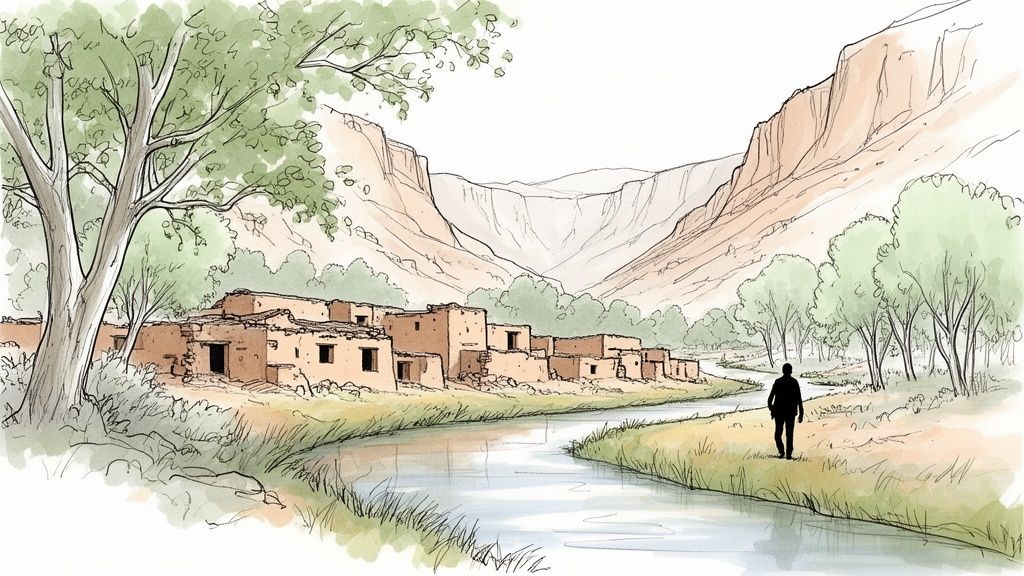
Exploring Sycamore Canyon is less about a single destination and more about a journey into a landscape saturated with history. The perennial creek has created an oasis in the high desert, attracting wildlife and allowing native vegetation to thrive among the ruins. As you hike, you’re not just an observer; you are walking through a living museum where every stone and shard tells a story of survival, trade, and eventual departure. This is one of the abandoned places in Arizona that demands respect and a sense of adventure.
An Immersive Local Experience
To truly understand the significance of the ruins, connect with their descendants. The Yavapai-Apache Nation Cultural Resource Center can offer invaluable context on the Sinagua people and their legacy. Hiring a local guide from the Nation transforms a simple hike into a profound cultural lesson, providing insights into the beliefs, daily life, and agricultural practices tied to this specific land. This approach moves beyond sightseeing and fosters a genuine appreciation for the canyon's deep historical roots.
Actionable Guide for Your Visit
- Best Time to Visit: September through May is ideal. Summer brings extreme heat and the risk of dangerous monsoon flash floods in the narrow canyon.
- Getting Around: A high-clearance vehicle is recommended for the unpaved access roads. Once there, the ruins are accessible only via hiking. Download offline maps, as cell service is nonexistent.
- Photography Tips: Focus on capturing the relationship between the structures and their environment. Use a wide-angle lens to show how the pueblos are integrated into the canyon walls and landscape. Remember to photograph from a respectful distance without disturbing the sites.
- Insider Tip: Before you go, research the Sinagua culture, particularly their trade networks and relationship with neighboring groups. This background knowledge will enrich your visit, allowing you to better interpret the layouts of the settlements and the artifacts you might see. Contact the Camp Verde Ranger District for current road conditions and any seasonal closures.
Why Sycamore Canyon Stands Out
Sycamore Canyon offers a raw, authentic encounter with the past, free from interpretive signs, railings, and crowds. It stands out because it challenges visitors to become active explorers and responsible stewards of a fragile historical landscape. The experience is a powerful reminder of the civilizations that thrived in Arizona long before its western boom, making it a uniquely compelling destination for those seeking a deeper connection to history.
3. Chloride Historic Mining District
Tucked away in the Cerbat Mountains northwest of Kingman, Chloride is Arizona's oldest continually inhabited mining town, founded in 1862. This high-desert community, home to around 350 residents, offers a stark contrast to more commercialized ghost towns. It has stubbornly remained a genuine working town, a place where the legacy of silver and turquoise mining is still a part of daily life, not just a historical exhibit.
Chloride never truly died, but it has been shaped by cycles of boom and bust. Today, its unpaved streets are a mix of historic buildings from its silver-rush heyday, active homes, and abandoned structures slowly surrendering to the elements. This living relic is populated by a blend of old-time miners, artists drawn to its isolation, and folks seeking an alternative lifestyle. The surrounding mountains are a treasure trove for explorers, riddled with countless abandoned mines and claims.
An Immersive Local Experience
To grasp Chloride's unique character, you must engage with its community. The town’s soul is found not in a museum but in places like the Chloride General Store or the local watering hole. This is where you’ll meet residents whose families have been here for generations or artists who can tell you about the massive murals painted on the nearby granite cliffs by artist Roy Purcell. Their stories provide a raw, unfiltered perspective on life in one of Arizona’s most resilient outposts.
Actionable Guide for Your Visit
- Best Time to Visit: Spring (March-April) and fall (October-November) offer the most comfortable weather. Summers are brutally hot, often exceeding 100°F.
- Getting Around: Chloride is remote. Fill up your gas tank and stock up on water and supplies in Kingman before you head out. Cell service is unreliable, so bring a physical map or download one for offline use.
- Photography Tips: The stark desert landscape and decaying structures are photogenic, but the real prize is astrophotography. The lack of light pollution makes for breathtaking night skies. Bring a tripod and a wide-angle lens for capturing the Milky Way.
- Insider Tip: Always ask for permission before approaching private property or any mining claims. Many of the seemingly abandoned sites in the hills are still actively worked by hobbyists and small-scale miners who value their privacy.
Why Chloride Stands Out
Chloride offers an unvarnished glimpse into a mining town that has refused to become a tourist caricature. It’s one of the few abandoned places in Arizona where the line between past and present is almost nonexistent. The town’s independent spirit and its blend of historical decay and modern-day grit provide an authentic experience for travelers seeking to understand the state’s rugged heritage.
4. Castle Dome Mines Museum & Ghost Town
In the sun-scorched desert near Yuma, Castle Dome offers one of the most authentic glimpses into Arizona's silver mining past. Unlike towns that faded into dust, this historic site was carefully preserved, essentially frozen in the 1880s. With over 60 original and meticulously restored buildings, including saloons, a church, and miners' cabins, it feels less like a ruin and more like a community paused in time.
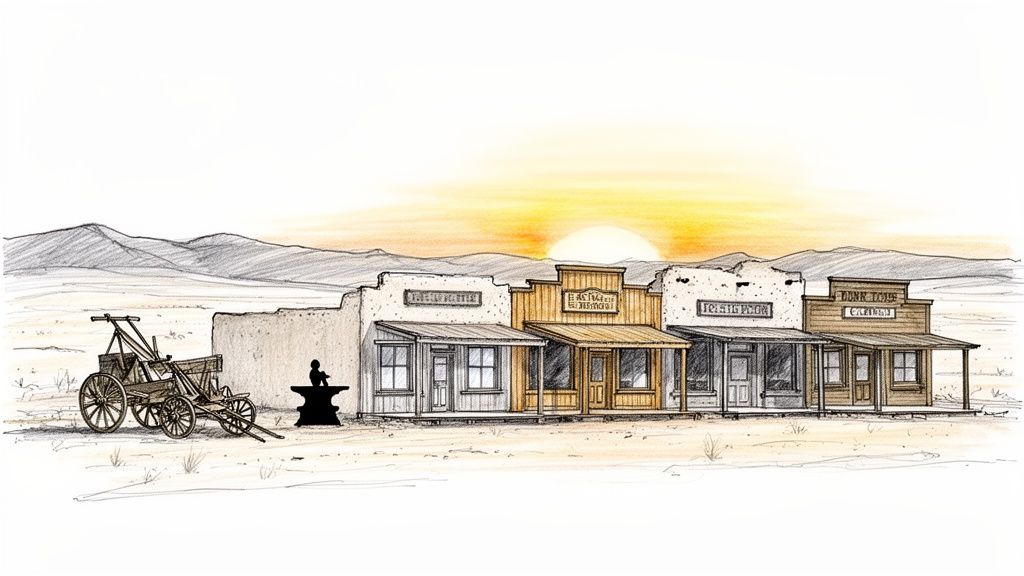
What makes Castle Dome unique is its dedication to authenticity. The town is managed by historians and descendants of mining families who act as interpreters, providing genuine context about the harsh realities of life in a remote boomtown. The buildings are furnished with period-appropriate artifacts, creating an immersive experience that transports you directly to the late 19th century, making it one of the most compelling abandoned places in Arizona.
An Immersive Local Experience
To truly understand Castle Dome's soul, engage with the interpreters. Ask specific questions about the daily struggles of a miner's family, the tools they used, or the social dynamics of the town. These are often people with direct family ties to the area, and their personal stories add a layer of depth you can't get from a plaque. Spend time in the town cemetery; the weathered headstones tell powerful stories about life, loss, and the diverse community that once thrived here.
Actionable Guide for Your Visit
- Best Time to Visit: The desert heat is extreme. Visit between October and April. Arrive before 10 AM to enjoy cooler temperatures and fewer people.
- Getting Around: The site is a sprawling outdoor museum. Wear sturdy walking shoes, a hat, and sunscreen. You will need to drive to the remote location, but once there, everything is explored on foot. Bring ample water.
- Photography Tips: The harsh desert sun creates strong shadows. Use the sharp contrast to your advantage by focusing on the textures of weathered wood and rusting metal. The interiors of the buildings, dimly lit, offer moody, evocative photo opportunities.
- Insider Tip: Check the museum's schedule for special events or seasonal programs. These often feature enhanced interpretations, live demonstrations, and deeper historical context that bring the ghost town to life in a unique way.
Why Castle Dome Stands Out
Castle Dome distinguishes itself through its commitment to preservation over commercialization. It’s not a theme park; it's a living history lesson curated with academic rigor and personal passion. This dedication provides a raw, unfiltered look at the economic forces and human stories that built, and eventually abandoned, so many settlements in the American West.
5. Superstition Mountain Ghost Towns (Goldfield & Tortilla)
Nestled in the shadow of the formidable Superstition Mountains, the ghost towns of Goldfield and Tortilla Flat are vivid relics of Arizona's frenzied 1880s gold rush. These settlements sprang to life almost overnight, drawing prospectors to one of the state's most rugged and legendary landscapes. When the gold veins ran dry, the populations vanished, leaving behind skeletal remains of a boom-and-bust era that defined the American West.
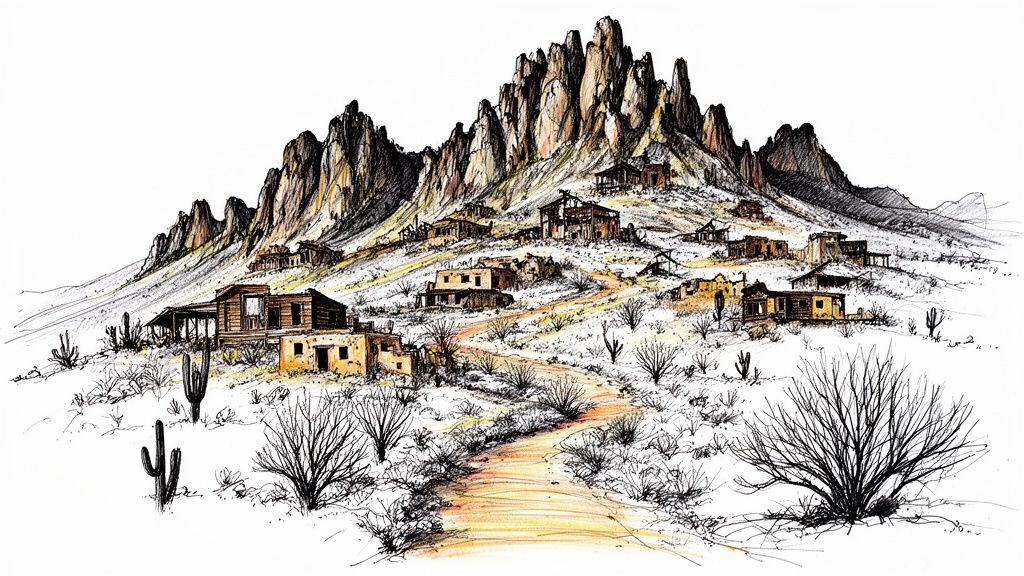
Today, these sites offer a glimpse into the harsh realities of desert mining life. While Goldfield has been partially reconstructed into a tourist town, its original mine shafts and outlying ruins tell a more authentic story. Tortilla Flat, further along the historic Apache Trail, maintains a population of just a handful, preserving its remote, end-of-the-road feel. These abandoned places in Arizona are more than just old buildings; they are gateways to understanding the region's complex history, including its deep significance to the Apache people.
An Immersive Local Experience
To truly grasp the spirit of the Superstitions, look beyond the reconstructed storefronts. The real experience lies in understanding the land itself. Before visiting, research the Apache history tied to these mountains, which they hold as sacred. This context transforms a simple visit into a more respectful and meaningful exploration of a contested landscape. Engaging with the interpretive displays at the nearby Lost Dutchman State Park can also provide deeper insights into both the mining and Indigenous histories that converge here.
Actionable Guide for Your Visit
- Best Time to Visit: Plan your trip between November and March to avoid the extreme summer heat and monsoon storms. The desert is unforgiving, and temperatures can be dangerous.
- Getting Around: A vehicle is necessary to reach these sites. Goldfield is easily accessible off the Apache Trail (State Route 88), while Tortilla Flat is further down the scenic, winding road. Wear sturdy hiking boots to explore the rocky terrain around the towns.
- Photography Tips: The dramatic, jagged peaks of the Superstition Mountains provide a stunning backdrop. Capture the contrast between the weathered wood of the old buildings and the golden rock formations during the late afternoon light for the most striking images.
- Insider Tip: Start your hike or exploration at sunrise. Not only will you beat the heat, but you'll also experience the profound silence and solitude of the desert. Always carry more water than you think you need (at least 4 liters per person) and download offline maps, as cell service is unreliable.
Why the Superstition Ghost Towns Stand Out
Unlike more isolated ghost towns, Goldfield and Tortilla Flat are set against a landscape steeped in myth and legend, from the Lost Dutchman's Gold Mine to the sacred stories of the Apache. This powerful combination of documented history and cultural folklore makes exploring these abandoned places in Arizona a uniquely compelling adventure. It’s an opportunity to see how different narratives, both colonial and Indigenous, are etched into the very rocks of the desert.
6. Walnut Canyon Cliff Dwellings & Walnut Creek Settlement Ruins
Tucked into the dramatic limestone cliffs near Flagstaff, Walnut Canyon National Monument protects the ancient homes of the Sinagua people, some of the most profound abandoned places in Arizona. These remarkable cliff dwellings, constructed between 1100 and 1300 CE, offer a silent testament to a civilization that thrived in a challenging high-altitude desert. While the main monument is a well-preserved window into the past, the greater Walnut Creek drainage hides dozens of less-developed ruins and agricultural terraces, remnants of a sophisticated society.
The abandonment of these dwellings around 1300 CE remains a mystery, with theories pointing to drought, resource depletion, and social conflict. Today, walking the canyon trails feels like stepping back 800 years. The Sinagua engineered their homes directly into the natural alcoves, creating a sustainable and defensible community. This landscape isn't just about ruins; it tells a story of adaptation, ingenuity, and the eventual, quiet departure of an entire people, leaving behind echoes in the stone.
An Immersive Local Experience
To connect with the deeper history of the canyon, move beyond just viewing the dwellings. Sit quietly on one of the trail benches and imagine the daily sounds that once filled the air: children playing, people grinding corn, and conversations echoing across the canyon walls. Before your hike, spend time at the visitor center to understand the Sinagua chronology and architectural styles. This context transforms the ruins from simple stone structures into a complex narrative of family life, agriculture, and community.
Actionable Guide for Your Visit
- Best Time to Visit: Plan your trip for May-June or September-October. The weather is comfortable for hiking, the crowds are thinner, and the canyon is often decorated with wildflowers.
- Getting Around: The primary way to experience the dwellings is by foot. The one-mile round-trip Island Trail is strenuous, with a steep descent and ascent, but it provides an intimate, up-close look at 25 cliff dwelling rooms.
- Photography Tips: Arrive before 9 AM for soft, golden light that illuminates the canyon walls without harsh shadows. The best shots often contrast the intricate masonry of the dwellings against the vast, rugged canyon landscape.
- Insider Tip: While the main trails are fantastic, inquire with park rangers about any permissible backcountry exploration. Experienced hikers with the right permissions may be able to see less-documented settlement ruins, offering a more raw and authentic perspective.
Why Walnut Canyon Stands Out
Unlike ghost towns from the mining era, Walnut Canyon offers a glimpse into a much older form of abandonment, preserving a pre-Columbian way of life. It’s a powerful lesson in human resilience and the enduring cycles of settlement and migration in the American Southwest. The combination of archaeology, nature, and history makes it a uniquely compelling stop for anyone exploring the abandoned places of Arizona. For those who love combining history with hiking, you can discover more inspiration in this guide to the best hiking trails in the US.
7. Congress Mining Town & Ruins
In the stark and remote Weaver Mountains, Congress represents the raw, precarious nature of Arizona's frontier mining economy. Founded in 1884 around the exceptionally rich Congress Gold Mine, the town swelled to a population of 1,500. When the gold veins ran thin, the town’s fortune evaporated, and its population plummeted. Today, only about 100 residents remain, making it a nearly abandoned yet stubbornly living relic.
Congress is a striking example of a boom-and-bust cycle frozen in time. Unlike more polished ghost towns, its ruins feel authentic and untouched. Weather-beaten saloons, crumbling boarding houses, and a skeletal general store are scattered across the landscape, stark against the harsh desert backdrop. The presence of a small, dedicated community adds a layer of depth, transforming the town from a simple ruin into a living museum of resilience and isolation.
An Immersive Local Experience
The heart of Congress lies not just in its ruins, but in the stories of its few remaining residents. These are people who have chosen a life of quiet solitude, surrounded by history. If you encounter a local, a polite greeting can open the door to fascinating conversations about the challenges and rewards of living in such an isolated environment. They hold the town's oral history, offering a perspective on its past and present that no plaque could ever convey. Respectfully observing their active mining claims and private properties provides a rare glimpse into the modern realities of a historic industry.
Actionable Guide for Your Visit
- Best Time to Visit: Visit only between November and March. Summer temperatures are dangerously high, and the remote location makes any emergency critical.
- Getting Around: A high-clearance vehicle is recommended. Park respectfully and explore on foot. Never approach mine shafts or active operations without explicit permission, as they are extremely dangerous and on private land.
- Photography Tips: The intense desert light is best managed during early morning or late afternoon. The stark shadows and golden light will highlight the textures of decaying wood and rusted metal. A polarizing filter can help manage the glare.
- Insider Tip: Prepare thoroughly in Wickenburg before you head out. Stock up on all essentials: water (at least one gallon per person), food, and fuel. Cell service is unreliable, so bring a physical map and a GPS device.
Why Congress Stands Out
Congress offers an unfiltered look at the life cycle of a mining town. It lacks the commercial sheen of other abandoned places in Arizona, providing a more authentic and rugged experience. The visible scars of mining on the landscape, coupled with the desert’s slow reclamation, tell a powerful story of human ambition versus nature's endurance, making it a compelling destination for serious explorers.
8. Hassayampa River Preserve Ruins & Riparian Archaeological Sites
Nestled near Wickenburg, the Hassayampa River Preserve is not a single abandoned building but a living landscape layered with the ghosts of past civilizations. This rare desert oasis, where the river flows above ground year-round, has supported life for millennia. The preserve protects not only a vital riparian ecosystem but also the subtle ruins and archaeological sites left by those who came before, from pre-Columbian Hohokam farmers to Yavapai communities and early American settlers.
Unlike a ghost town frozen in a single era, the Hassayampa offers a more complex story of abandonment and re-habitation over centuries. Scattered throughout the lush cottonwood-willow forest are faint traces of Hohokam agricultural systems, remnants of Yavapai encampments, and the foundations of early American homesteads. Exploring these grounds reveals how profoundly a reliable water source shaped human settlement, survival, and eventual migration in the harsh Sonoran Desert.
An Immersive Local Experience
To truly grasp the preserve's significance, you must look beyond the beautiful scenery. The real story is etched into the landscape itself. Instead of just hiking the trails, slow down and observe the terrain for signs of human modification: ancient irrigation ditches, bedrock grinding holes, or subtle clearings where encampments once stood. Participating in a guided birdwatching walk or an ecological restoration day connects you with the modern stewards of this land, who often share insights into ongoing archaeological discoveries.
Actionable Guide for Your Visit
- Best Time to Visit: Visit from October to April to avoid the extreme summer heat and potential for monsoon flooding. Migration seasons in spring and fall offer spectacular birdwatching.
- Getting Around: The preserve has well-marked, mostly flat walking trails. Wear sturdy walking shoes suitable for sandy or uneven paths. The main loop is easily accessible from the visitor center.
- Photography Tips: Focus on the interplay of light and shadow within the dense riparian forest. Capturing the subtle archaeological features is challenging; early morning or late afternoon light can help reveal faint depressions and rock alignments in the landscape.
- Insider Tip: Before your visit, do a little research on Hohokam irrigation techniques. Understanding the sophistication of their canals will transform what might look like simple ditches into evidence of an advanced, ancient society.
Why Hassayampa Stands Out
The Hassayampa River Preserve offers a unique look at abandonment on a landscape scale, demonstrating how entire cultures adapted to and eventually moved on from this critical life source. It is one of the more subtle abandoned places in Arizona, rewarding patient observation with a deep sense of historical continuity. For those interested in how ancient cultures shaped the American Southwest, you can explore further with this guide to visiting archaeological sites responsibly.
Abandoned Arizona: 8-Site Comparison
| Site | 🔄 Implementation Complexity | ⚡ Resource Requirements | 📊 Expected Outcomes | 💡 Ideal Use Cases | ⭐ Key Advantages |
|---|---|---|---|---|---|
| Jerome Historic Mining Town | Moderate — preserved, lived‑in historic fabric; narrow steep streets | Low–Moderate — short drives, parking at entrance, bring cash; seasonal closures | Authentic lived‑in mining town experience; strong photographic and cultural value | Cultural exploration, photography, art/community visits, short overnight stays | High authenticity; active artist community; well‑preserved Victorian buildings |
| Sycamore Canyon (Sycamore Creek Ruins) | High — fragile, largely undocumented archaeological landscape | High — navigation skills, offline maps, guide/permission recommended, water and safety gear | Intimate archaeological encounters; ecological observation; minimal crowds | Archaeological fieldwork, guided cultural hikes, experienced backcountry explorers | Undisturbed Sinagua ruins; rich riparian ecology; research opportunities |
| Chloride Historic Mining District | Moderate–High — working mining town with off‑grid character | High — remote access, unpaved roads, high‑clearance vehicle, self‑supply required | Genuine working‑town insights; strong frontier culture and stargazing | Independent explorers, mining interest, night photography, researchers | Active claims and authentic mining culture; exceptional solitude and storytelling |
| Castle Dome Mines Museum & Ghost Town | Low — museum‑managed, restored exhibits and programs | Low — admission fee, day‑trip logistics from Phoenix, guided tours available | Educational, interpretive visits with authentic period contexts | Families, students, heritage tourists, guided history programs | High restoration standards; knowledgeable interpreters; living‑history programming |
| Superstition Mountain (Goldfield & Tortilla) | Moderate — multiple sites, mixed preservation, rugged terrain | Moderate–High — hiking gear, maps/GPS, ranger contact; seasonal weather risks | Comparative exploration of multiple ghost towns within dramatic landscape | Hikers, archaeology enthusiasts, day‑trippers from Phoenix | Multiple sites in one area; managed preservation plus striking scenery |
| Walnut Canyon Cliff Dwellings & Settlement Ruins | Low–Moderate — National Monument trails plus surrounding undocumented sites | Low — monument fee, moderate hiking, altitude considerations | Accessible cliff‑dwellings viewing with strong interpretation; option for backcountry study | Educational visits, families, archaeology students, moderate hikers | Excellent interpretation and access; many cliff dwellings; cool high‑elevation setting |
| Congress Mining Town & Ruins | High — extremely remote, unsafe structures, active mining nearby | Very High — long travel, full supplies, high‑clearance vehicle, strong self‑reliance | Raw, unpolished mining landscape; solitude and contemporary mining context | Serious photographers, researchers, solitude seekers accustomed to remote travel | Authentic frontier atmosphere; living mining operations; minimal tourism impact |
| Hassayampa River Preserve Ruins & Riparian Sites | Low — managed preserve with trails and visitor center | Low — modest admission, guided programs, binoculars recommended | Integrated archaeology + ecology education; rich birdwatching and conservation focus | Naturalists, birdwatchers, educational groups, family visits | Protected riparian ecosystem; active research and guided interpretation |
Exploring with Respect: A Final Word on Arizona's Past
The journey through Arizona's abandoned places is a profound expedition into the heart of its history. From the cliff dwellings of Walnut Canyon, whispering tales of ancient ingenuity, to the rusting mining equipment of Jerome, a testament to industrial ambition, each site offers a unique window into the human spirit. Our exploration of locations like the Sycamore Canyon ruins and the forgotten corners of the Hassayampa River Preserve reveals that these are not merely empty spaces; they are outdoor museums, holding the unfiltered stories of survival, prosperity, and eventual departure.
As we've seen, discovering these locations is about more than just sightseeing. It’s an immersive cultural experience that connects you to the authentic, off-the-beaten-path soul of the state. The quiet streets of Chloride and the meticulously preserved artifacts at Castle Dome are living archives, challenging us to look beyond the decay and see the vibrant communities that once thrived against the odds. These adventures provide a raw, tangible connection to the past that you simply cannot find in a conventional museum exhibit.
From Inspiration to Action: Your Ethical Exploration Checklist
The true value of visiting the abandoned places in Arizona lies in approaching them with mindfulness and respect. Before you set out on your next adventure, internalize these key takeaways to ensure your visit is both memorable and responsible.
1. Prioritize Safety Above All Else:
- Vehicle & Supplies: Always use the right vehicle for the terrain, such as a high-clearance 4x4 for remote desert tracks. Pack more water and food than you think you will need, along with a first-aid kit and reliable navigation tools that work offline.
- Structural Integrity: Never enter unstable buildings, mine shafts, or tunnels. The allure of a photograph is not worth the risk of structural collapse. Observe from a safe distance.
- Wildlife Awareness: Be mindful of desert wildlife, including rattlesnakes, scorpions, and coyotes, especially around dawn and dusk.
2. Embrace the "Leave No Trace" Philosophy:
- Take Only Photos: The golden rule of urban exploration is simple: take nothing but pictures, leave nothing but footprints. Resist the temptation to take a souvenir, whether it's a piece of pottery, a rusted nail, or an old bottle.
- Pack It In, Pack It Out: Ensure you leave the site cleaner than you found it. This includes all trash, food wrappers, and water bottles.
- Respect the Ground: Acknowledge that many of these locations are situated on or near ancestral lands of Indigenous peoples. Treat the ground you walk on with reverence and respect.
3. Engage with the Living History:
- Connect with Local Communities: When visiting places like Chloride or Castle Dome, engage with the locals who are the modern-day stewards of this history. Their stories and insights provide a depth of context you won't find anywhere else.
- Support Local Economies: Buy a coffee, a meal, or a souvenir from a nearby town. Your support helps sustain the communities that preserve these historical areas.
The Lasting Impact of Mindful Travel
By embracing these principles, you transform from a passive tourist into an active participant in historical preservation. Your responsible visit helps protect these fragile landscapes, ensuring their stories can inspire future generations of explorers, historians, and adventurers. The silent ruins of Arizona teach a powerful lesson: our actions today determine which parts of our history will survive tomorrow. Let your legacy be one of respect, curiosity, and conservation.
As you reflect on the ghost towns, mining camps, and ancient dwellings we've covered, let them fuel your desire for authentic travel. The Grand Canyon State is filled with countless hidden gems, and the true cultural experience awaits those willing to look beyond the main tourist hubs. Carry this spirit of ethical exploration with you, and you will find that the richest discoveries are the ones made with care and intention.
Ready to dive deeper and uncover more local secrets? For immersive guides that connect you to the cultural fabric of destinations like Arizona, explore CoraTravels. We provide the insider knowledge you need to travel like a local, not a tourist. Discover your next authentic adventure at CoraTravels.